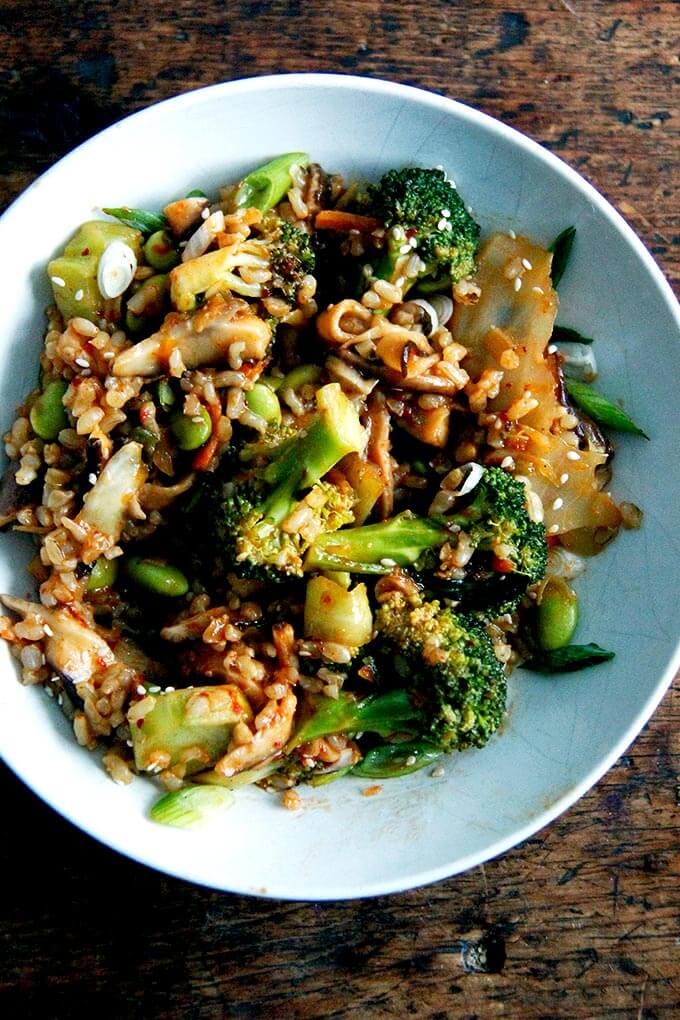
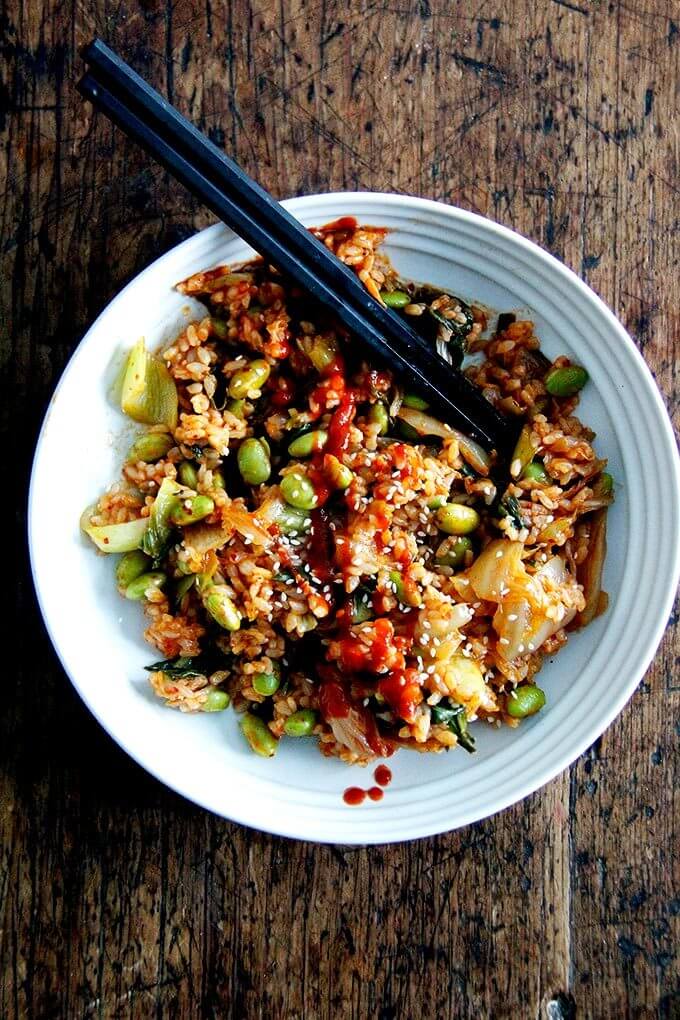
This vegan kimchi fried rice, which calls for an entire 16-oz jar of kimchi, comes together in a snap and is so flavorful. I love the combination of bok choy and mushrooms, but the recipe is adaptable to any number of vegetables. Be sure to have your ingredients prepped and measured, because once the first vegetables hit the pan, the process moves incredibly quickly. So easy and good!
A little over two years ago, I bought my first vegan cookbook, Food52 Vegan , by Gena Hamshaw. Prior to opening it, I had dismissed a vegan diet as impossible given that I started every day with a bowl of muesli soaked in cow’s milk .
The book’s arrival, however, coincided with an evening of watching Cowspiracy , a movie that concludes — spoiler alert — that a vegan diet is the only globally sustainable diet. Feeling inspired to make some changes, I made Gena’s cashew milk, which turns out to be creamy and delicious, and which sent me on a many-months’-long-homemade-cashew-milk bender.
The bender has since ended. The nut milk obsession has not. I now soak my morning muesli with store-bought almond milk.
Friends, as you know, I am not vegan. I am, however, constantly inspired by vegan recipes, Gena’s in particular. From the recipes she posts weekly on her blog, The Full Helping , to the recipes from Food52 Vegan , including freekeh salad with roasted cabbage and kale, homemade cashew milk , cashew milk chia puddings , and roasted ratatouille pasta , which became a weekly favorite late last summer and fall, the food Gena makes is incredibly delicious and satisfying—nothing about it leaves me wanting.
Kimchi Fried Rice
Gena’s kimchi fried rice from her latest book, Power Plates , is no exception. Thanks to my recent Instant Pot brown rice discovery, which has left me with a reliable stash of rice in the fridge, I have made this so many times now, and what I love about the recipe is its adaptability.
The original recipe calls for bok choy, which I love, but I’ve loved it with broccoli and shiitake mushrooms, too, and I imagine so many vegetables could work.
Also, because I am without a proper kitchen and am constantly taking shortcuts, I’ve discovered I can throw the frozen edamame right into the mix without thawing or blanching it—it works like a charm.
My favorite part about the recipe? It calls for an entire jar (16 oz) of kimchi.
With cooked rice on hand, this recipe is especially weeknight friendly — see step-by-step process below — and because it comes together so quickly, it’s important to have all your ingredients prepped before cooking.
Macro-Nutrient Balanced
More to the point, this one-pan wonder is macro-nutrient balanced. Um, excuse me?
Gena notes in Power Plates that “what makes a meal balanced isn’t always clear. Our culture is flooded with conflicting philosophies regarding nutrition and strident opinions about what is and isn’t healthy.”
Through her work as a nutritionist and through personal experience, Gena has found that one way to think about balance is to place an emphasis on all three macronutrients within each meal.
Eating meals that include quality protein, fat and carbs, as well as a ton of fresh produce, can lead to increased satiety and energy and, in turn, prevent cravings and midday hunger.
Each of the recipes in Power Plates is designed around this philosophy. That said, it’s not a diet book. Gena set out to write Power Plates with the goal of offering 100 practical, flavor-packed, balanced vegan meals.
There are no snacks, no desserts, no appetizers — every recipe, whether it’s a breakfast, a salad, a soup, or other, is a balanced meal, which are the sorts of recipes these days I look for more and more.
In addition to the kimchi fried rice, I have made the cauliflower-chickpea scramble, which is seasoned with turmeric and smoked paprika and is loaded with kale—it is incredibly delicious (photo below), and I have so many other recipes bookmarked.
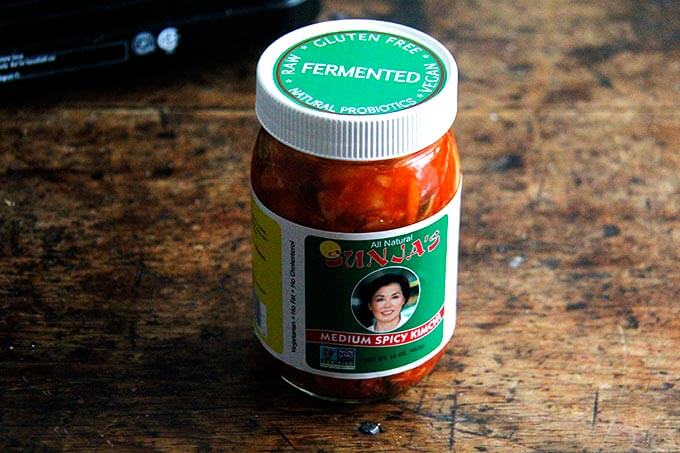
Sunja’s kimchi :
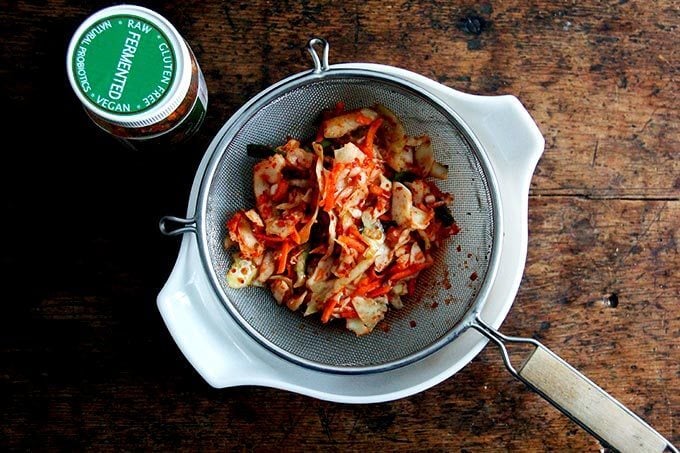
Here’s how to make this kimchi fried rice: Drain the kimchi:
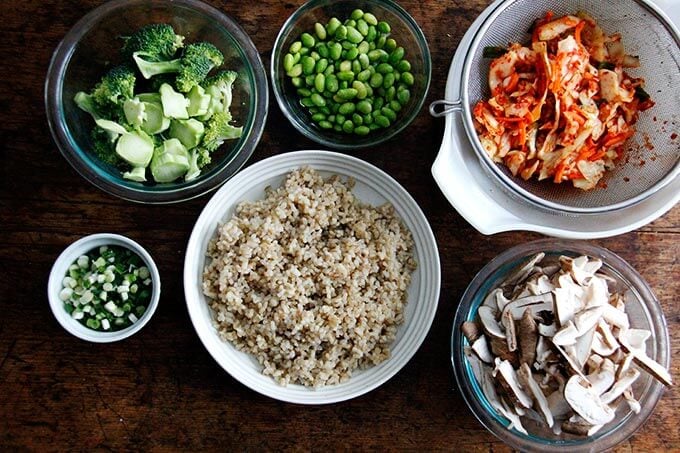
Here I’ve used brown rice, broccoli, and shiitake mushrooms, but I really love it with …:
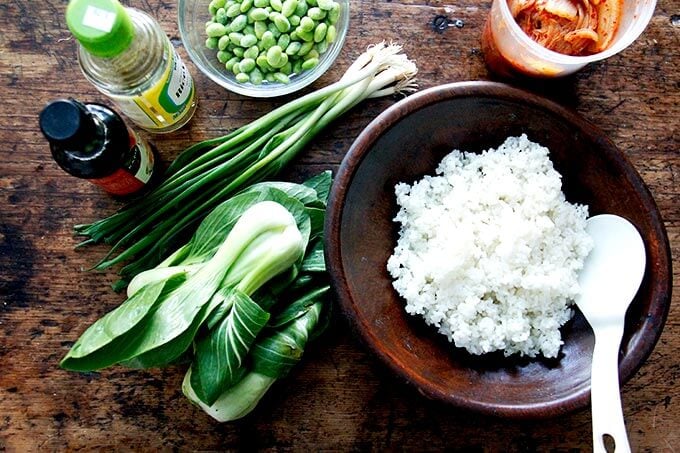
white rice and bok choy, too:
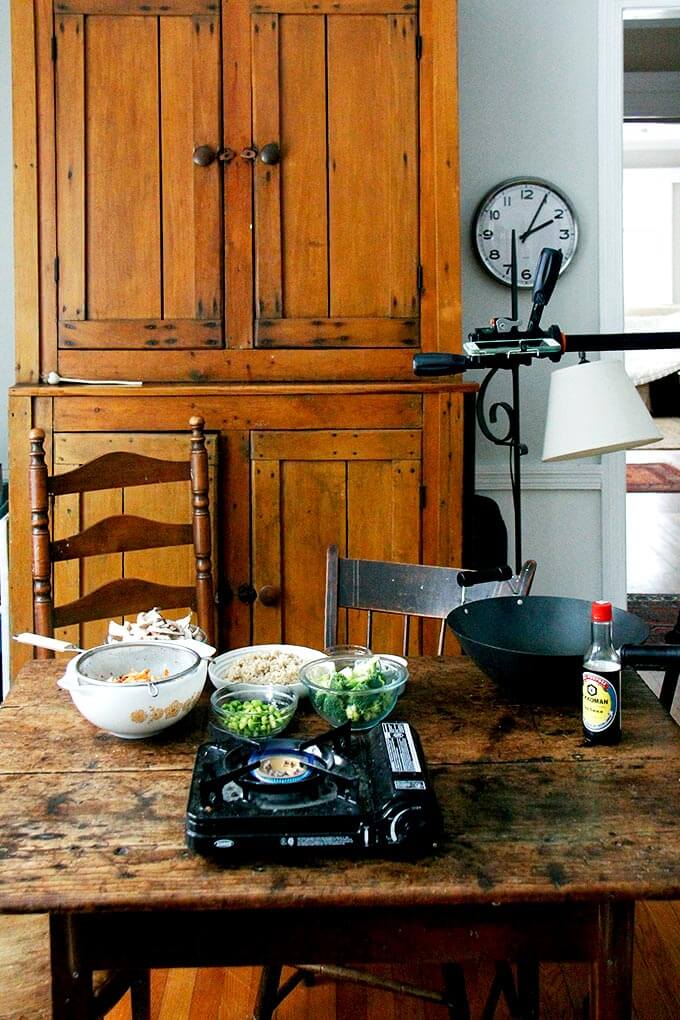
My kitchen:
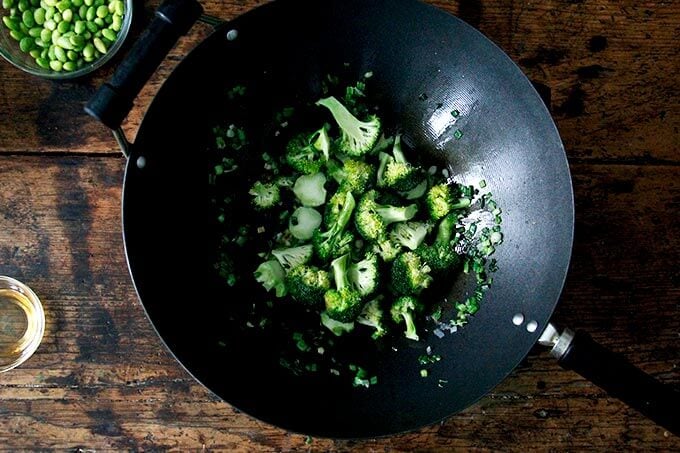
Cooking the broccoli:
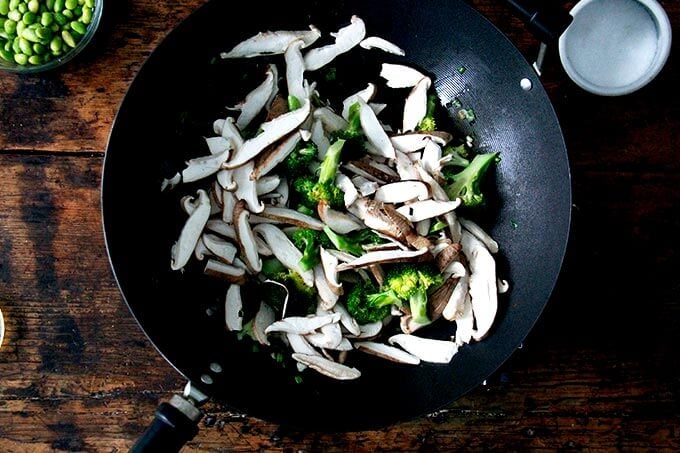
Adding the shiitakes:
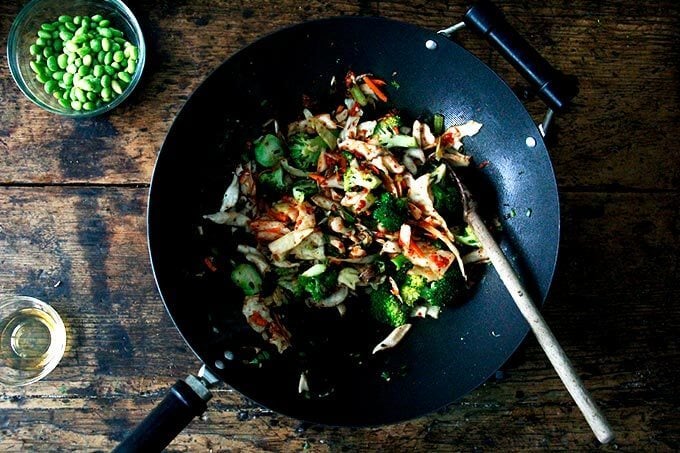
Adding the kimchi:
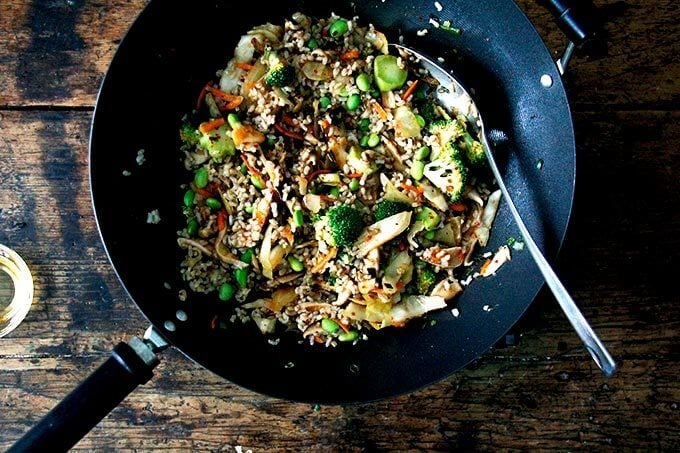
Adding everything else:
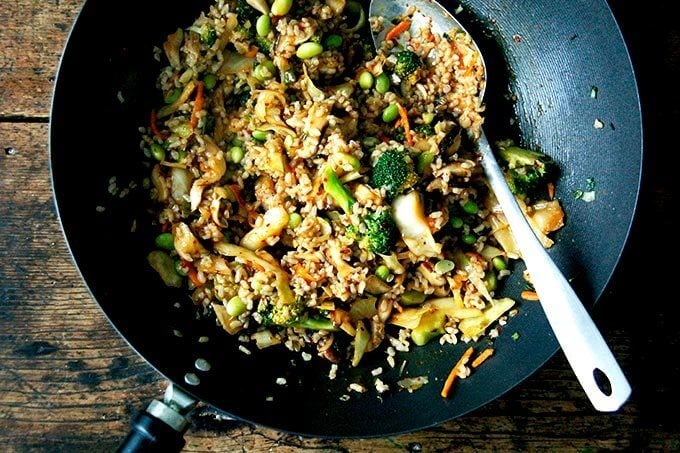
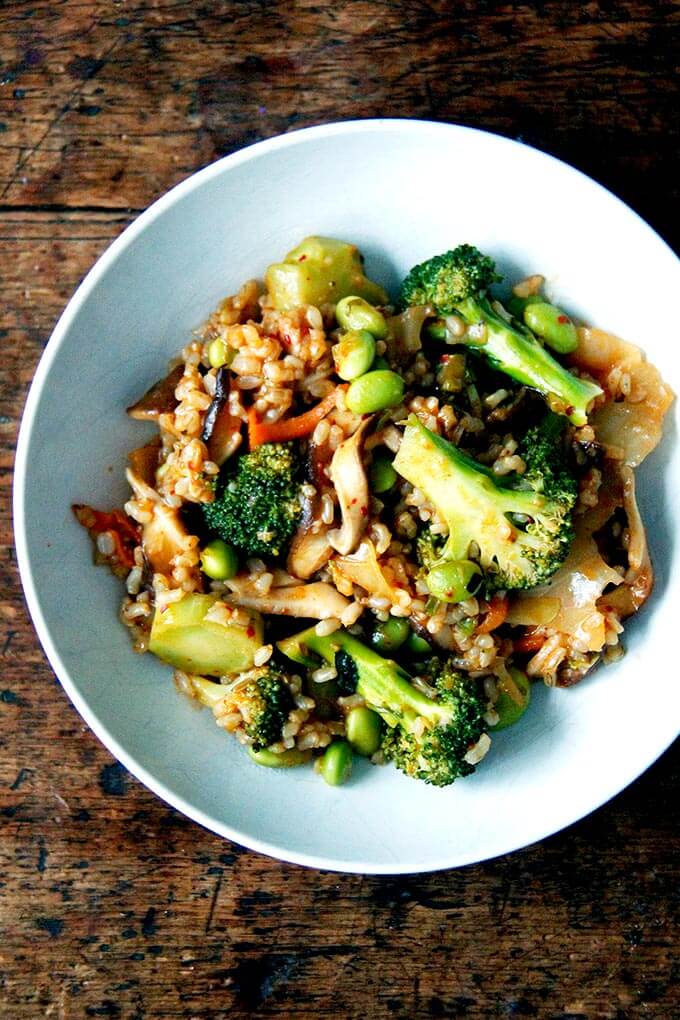
Kimchi fried rice:
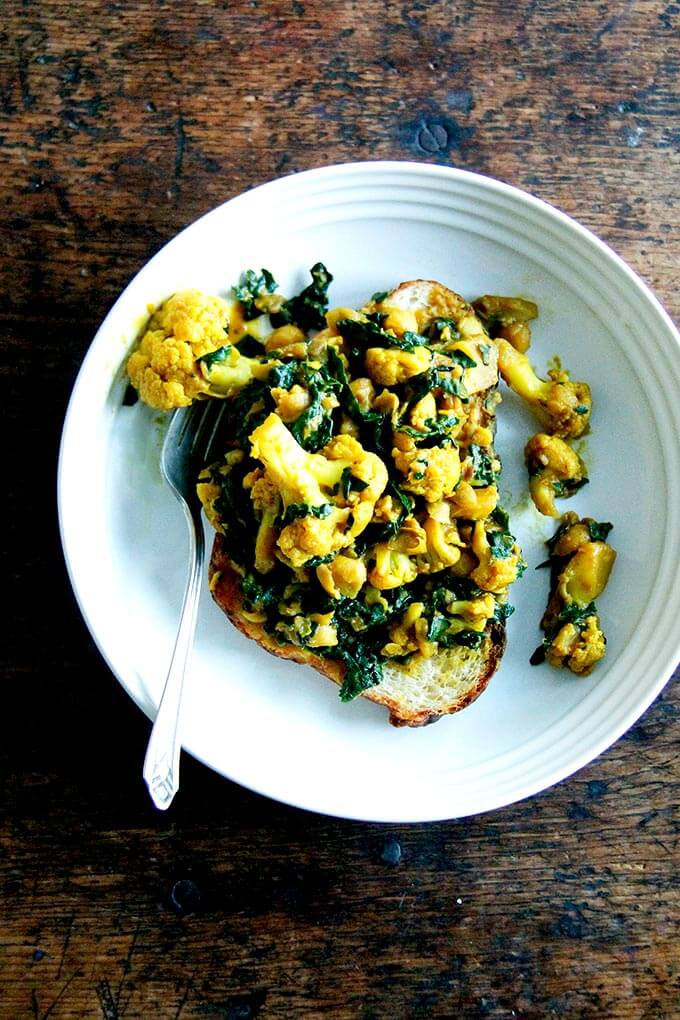
This is the chickpea-cauliflower scramble, which is so, so good:
Description
From Gena Hamshaw’s Power Plates
I used Sunja’s Kimchi , the medium-spicy jar , which I found at Honest Weight Food Co-op. I really love this kimchi. It’s already chopped into small-ish pieces, which is nice for this recipe because otherwise you have to chop it, and in addition to the cabbage there are lots of other vegetables: carrots, sweet red pepper, leek, and scallion, garlic, and ginger, all of which add to the flavor.
To simplify things, because I still do not have a kitchen, I don’t thaw or blanch the edamame — I just add them frozen directly to the wok…it works just fine. Give it a go!
Veg: My favorite combo is bok choy and shiitake mushrooms, but use what you like.
- 3 cups ( 540 g ) leftover cooked brown rice
- 1 16-oz jar kimchi, see notes
- 1 cup frozen edamame
- 3 baby bok choy, chopped, or other vegetables, such as 1 small head broccoli and 1/2 lb. shiitake mushrooms, see notes
- 2 tablespoons neutral vegetable oil
- 1 bunch scallions, white and pale green parts, chopped
- 1 teaspoon toasted sesame oil
- 2 teaspoons rice vinegar
- Tamari or soy sauce as needed, I use about 1 tablespoon
- sesame seeds, scallions, Sriracha, and/or pickled ginger for serving, optional
- Drain the kimchi in a colander or sieve, reserving the liquid. If necessary chop the kimchi — with the … brand, there’s no need to chop it.
- Heat the vegetable oil in a large skillet over medium-high heat. Add the scallions and cook, stirring frequently, for 2 to 3 minutes, or until tender. Add the bok choy (or broccoli if using), season with a pinch of salt, and cook, stirring occasionally, for 2 to 3 minutes, until the bok choy (or broccoli) is bright green and tender. If using shiitake mushrooms, add them now with another pinch of salt, and cook for another 2 minutes or until they are tender. Add the kimchi and cook for another minute, or until heated through.
- Stir in the rice, edamame, kimchi brine, toasted sesame oil, and rice vinegar. Cook, stirring frequently, for about 2 to 3 minutes until heated through. Taste and adjust the seasonings if desired. I add a tablespoon of Tamari or soy sauce, but you may not need it or as much of it depending on the acidity and saltiness of the kimchi. Serve right away with any desired toppings.
- Prep Time: 20 minutes
- Cook Time: 10 minutes
- Category: Dinner
- Method: Stovetop
- Cuisine: Asian
Description
From Gena Hamshaw’s Power Plates
I used Sunja’s Kimchi , the medium-spicy jar , which I found at Honest Weight Food Co-op. I really love this kimchi. It’s already chopped into small-ish pieces, which is nice for this recipe because otherwise you have to chop it, and in addition to the cabbage there are lots of other vegetables: carrots, sweet red pepper, leek, and scallion, garlic, and ginger, all of which add to the flavor.
To simplify things, because I still do not have a kitchen, I don’t thaw or blanch the edamame — I just add them frozen directly to the wok…it works just fine. Give it a go!
Veg: My favorite combo is bok choy and shiitake mushrooms, but use what you like.
- 3 cups ( 540 g ) leftover cooked brown rice
- 1 16-oz jar kimchi, see notes
- 1 cup frozen edamame
- 3 baby bok choy, chopped, or other vegetables, such as 1 small head broccoli and 1/2 lb. shiitake mushrooms, see notes
- 2 tablespoons neutral vegetable oil
- 1 bunch scallions, white and pale green parts, chopped
- 1 teaspoon toasted sesame oil
- 2 teaspoons rice vinegar
- Tamari or soy sauce as needed, I use about 1 tablespoon
- sesame seeds, scallions, Sriracha, and/or pickled ginger for serving, optional
- Drain the kimchi in a colander or sieve, reserving the liquid. If necessary chop the kimchi — with the … brand, there’s no need to chop it.
- Heat the vegetable oil in a large skillet over medium-high heat. Add the scallions and cook, stirring frequently, for 2 to 3 minutes, or until tender. Add the bok choy (or broccoli if using), season with a pinch of salt, and cook, stirring occasionally, for 2 to 3 minutes, until the bok choy (or broccoli) is bright green and tender. If using shiitake mushrooms, add them now with another pinch of salt, and cook for another 2 minutes or until they are tender. Add the kimchi and cook for another minute, or until heated through.
- Stir in the rice, edamame, kimchi brine, toasted sesame oil, and rice vinegar. Cook, stirring frequently, for about 2 to 3 minutes until heated through. Taste and adjust the seasonings if desired. I add a tablespoon of Tamari or soy sauce, but you may not need it or as much of it depending on the acidity and saltiness of the kimchi. Serve right away with any desired toppings.
- Prep Time: 20 minutes
- Cook Time: 10 minutes
- Category: Dinner
- Method: Stovetop
- Cuisine: Asian
Find it online : https://alexandracooks.com/2018/01/26/vegan-kimchi-fried-rice-from-gena-hamshaws-power-plates/
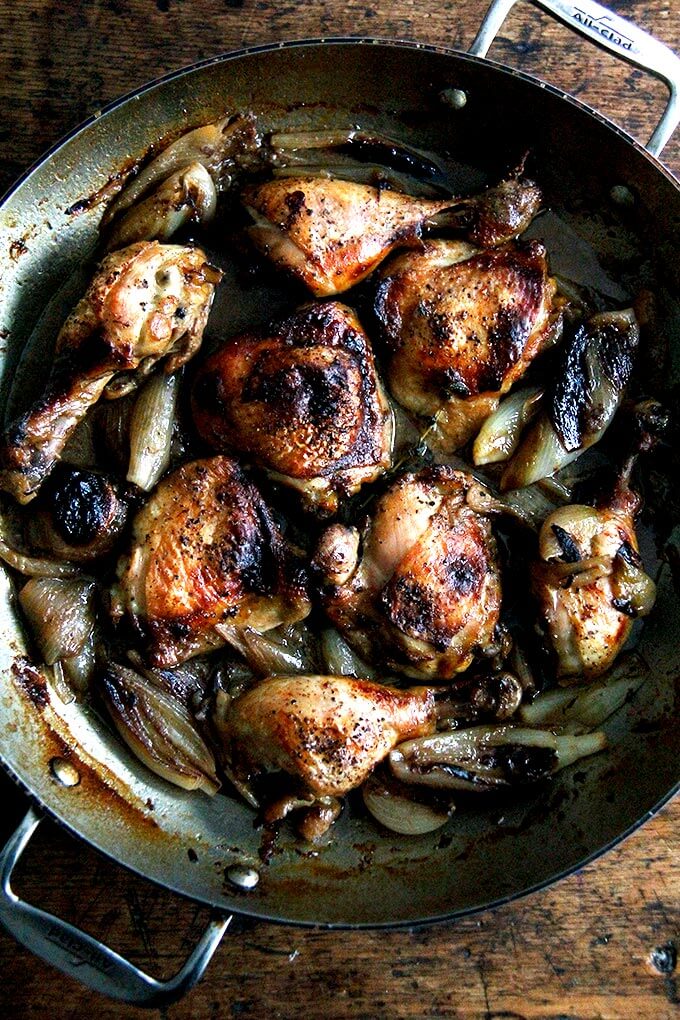
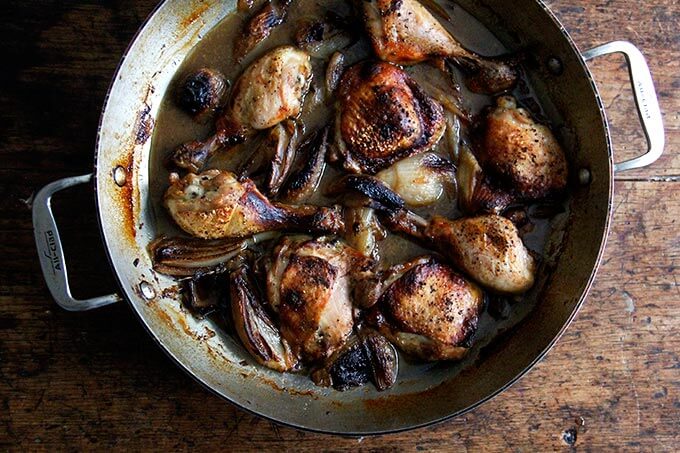
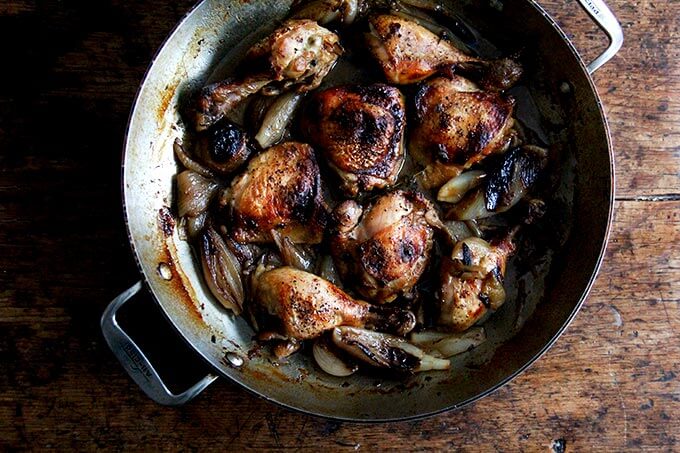
This one-pan roast chicken and shallots is completely delicious, requires no browning, and emerges from the oven with burnished skin and meat falling off the bone in just about 45 minutes. The best part? The shallots, which caramelize in the oven and melt into the sauce, infusing it with sweetness. Though the 15 shallots nearly make this a one-pan wonder, I serve it with a kale salad and, of course, bread for sopping.
Andrew’s wife, Rishia, had adapted the recipe from Martha Stewart. Sam made the recipe right away, then posted his adaptation in Cooking , where it has since received thousands of rave reviews.
Is Browning Chicken Necessary?
Rishia’s recipe calls for flouring and browning the chicken before adding shallots, mustard, and white wine. I couldn’t help but wonder if the flouring and browning was necessary. I gave it a go, skipping the flouring and browning, jumping straight to the sautéing of the shallots, then adding the mustard, thyme, and white wine.
Guess what? It worked.
After about 45 minutes in the oven, the chicken emerged as hoped: with burnished skin and meat falling off the bone. This chicken is delicious, but my favorite part about the recipe is the shallots, which further caramelize in the oven and melt into the sauce, infusing it with sweetness. Though the 15 shallots nearly make this a one-pan wonder, I served it with a kale salad and, of course, bread for sopping.
Friends: I don’t brown chicken anymore, and I don’t think you should either 🙂
5 Favorite No-Browning Chicken Recipes
- Diana Henry’s Moroccan Chicken and Rice
- One-Pan Chicken with Sherry Vinegar Sauce
- Chicken legs with white wine, parmigiano, and olive oil
- One-Pot Thai Chicken Curry with Spinach
- Spatchcocked Chicken with Za’atar and Lemon
PS: 18 Weeknight Chicken Recipes Here .

Description
Changes I’ve made include: skip the browning. Ever since making Diana Henry’s Moroccan chicken and rice , which calls for a chuck-everything-in-the-oven-at-once technique, I don’t brown chicken anymore. Not browning yields crispy skin in said Moroccan chicken and rice recipe as well as in this Chicken with Sherry Vinegar recipe and here with this roast chicken and shallots.
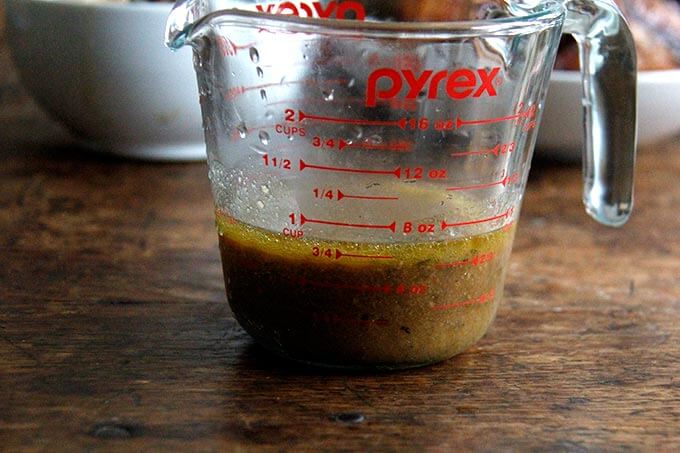
One caveat: If you use large or fattier chicken pieces, your sauce may be overwhelmed with rendered fat. I rarely have this issue, but every so often, if I taste the sauce at the end of cooking, and it tastes too fatty, I’ll remove the meat (and shallots, here), pour the sauce into a Pyrex, let the fat rise to the top, and skim it off. I find this easier than browning especially since this step isn’t always necessary.
Also, I use thyme because I can’t always find tarragon — not similar flavors, but each works well with the other flavors in this dish.
Also, given the season, I do not add tomatoes.
- 2 tablespoons unsalted butter
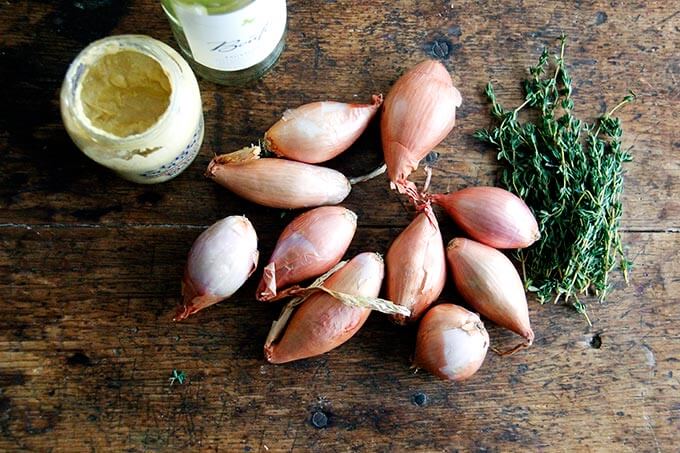
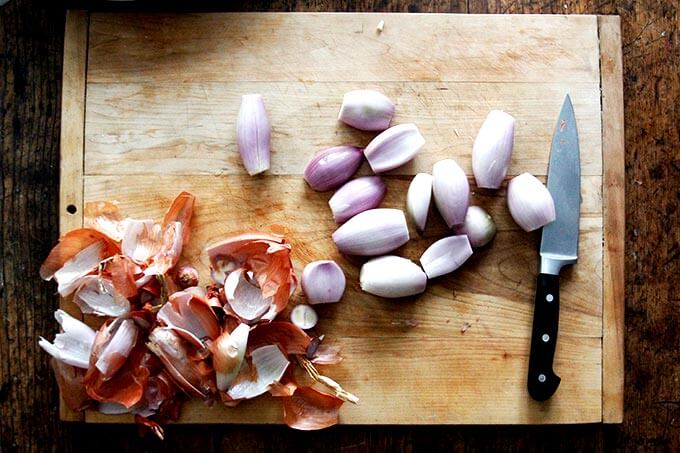
- 12 to 15 whole medium shallots, peeled, halved if large
- kosher salt to taste
- 2 tablespoons Dijon mustard
- a few sprigs tarragon or thyme
- 2 cups white wine
- fresh-cracked black pepper
- 8 bone-in skin-on chicken thighs or drummies or a combination
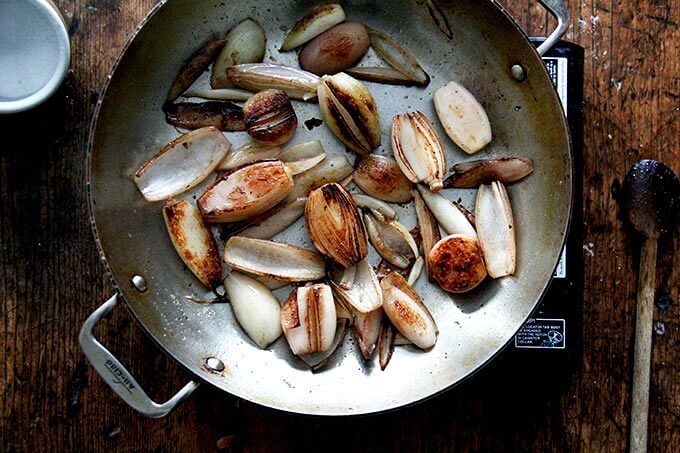
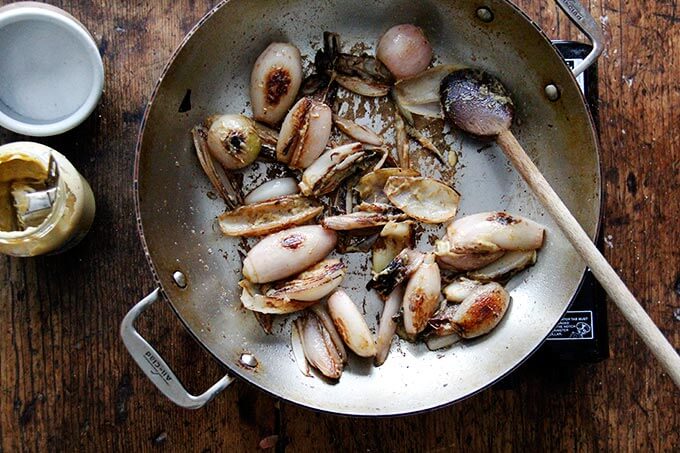
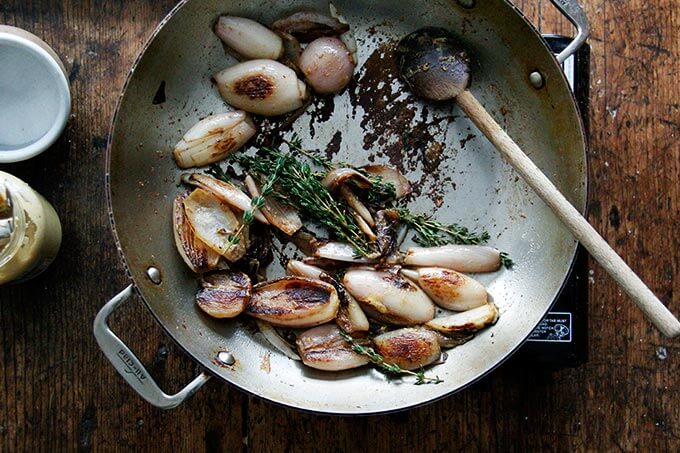
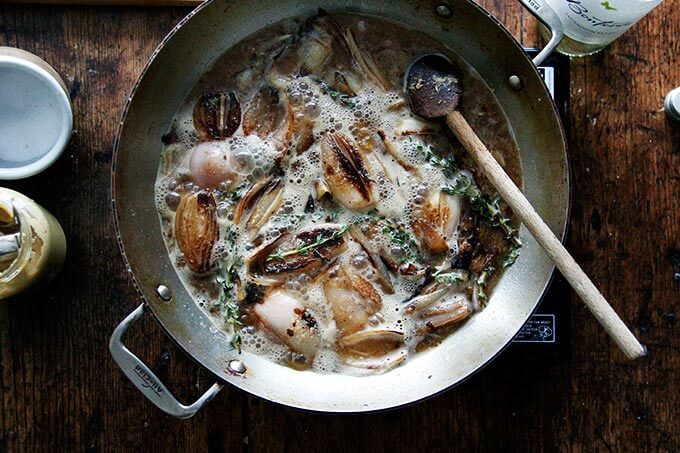
- Preheat the oven to 400ºF. Melt the butter in a large, heavy-bottomed oven-safe pot or skillet set over medium-high heat. When the butter foams, add the shallots to the pot, season with salt, and sauté them in the butter until they begin to soften and caramelize, approximately 10 to 12 minutes. Lower the heat as needed if shallots are browning too quickly. Add the mustard and thyme and stir until the mustard coats the shallots evenly and begins to brown. Add the wine and bring to a simmer, scraping the bottom of the pot with a wooden spoon to release any brown bits.
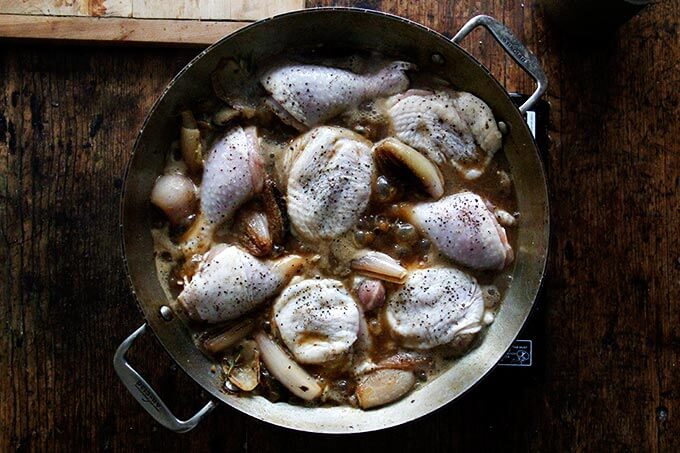
- Meanwhile, season the chicken pieces generously with salt and pepper on both sides. When the wine simmers, add the chicken pieces to the pan and transfer the pan to the oven. Cook for 40 to 50 minutes or until the skin is nicely brown and crisp. Remove pan from oven.
- Using a spoon, swirl around the sauce and take a taste. If it tastes good, serve it. If it tastes fatty, transfer the meat and shallots to a platter, pour the juices into a Pyrex and let them sit until the fat rises, about 5 minutes. Skim off the fat. Return the juices, chicken and shallots to the pan. Return to the oven or bring to a simmer stove top to reheat. If chicken isn’t as brown as you would like, you can stick it under the broiler too. Serve immediately with crusty bread and a salad.
- Prep Time: 10 minutes
- Cook Time: 1 hour
- Category: Dinner
- Method: Stovetop/Oven
- Cuisine: American
