This gluten-free pizza crust is shockingly easy to make, producing a thin and crisp crust with a nice snap and chew that tastes like the real deal.
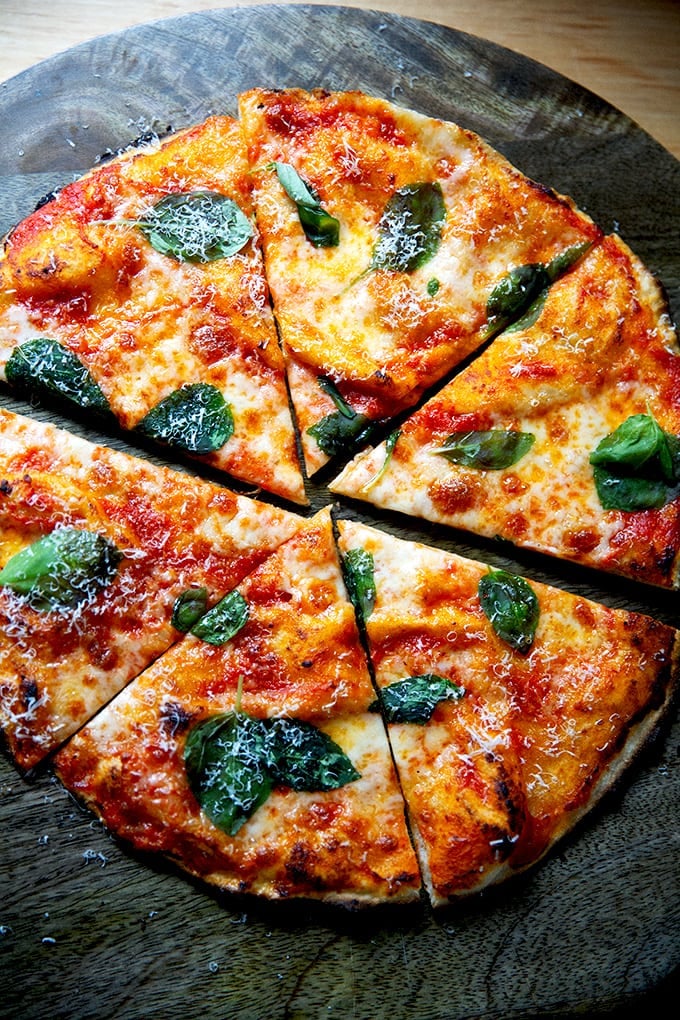
Any time I post a recipe for a baked good, whether it’s a muffin or a loaf of bread, I get this question: Can I make this with gluten-free flour?
With muffins, cakes and the like, I often say “yes” or “likely yes” because over the years I’ve learned from various commenters that swapping in any number of one-for-one gluten-free flours tends to work seamlessly.
But with yeast- and sourdough-leavened items, I am less encouraging, explaining that replicating the chew and feel of breads and pizzas with gluten-free flour isn’t as easy as swapping in gluten-free flour. Gluten-free breads need a little bit more help, often in the form of eggs, stabilizers, and thickeners for structure.
Moreover, all gluten-free flours absorb water differently. When working on the gluten-free pizza crust recipe for Pizza Night , I quickly learned that using the same amount of water with one brand of gluten-free flour would not work the same as with another: one might resemble a soupy mess and another a stiff, stodgy mass. And so for Pizza Night , I wrote a recipe for a specific brand of gluten-free flour that I love, which I can’t wait for you to have … in April .
In the meantime, I’ve written another recipe or actually King Arthur Baking did — I’m using the recipe nearly verbatim included on the back of the King Arthur Gluten-Free Pizza Flour bag: I use more salt, and rather than shape my rounds Neapolitan-style with a puffy outer rim, I roll them thinly and parbake them, which produces a pizza with a thin and crisp crust.
Friends, I think you’ll be so pleased by the texture, flavor, and overall likeness to the real thing of this gluten-free pizza. KA’s gluten-free pizza flour is widely available, the dough comes together in no time, and it rises quickly. The shaped dough rounds can be stored in the fridge for at least a week.
Tips for Success
- Use the right flour: As noted above, this recipe is specifically formulated to work with KAF’s Gluten-Free Pizza Flour . I find mine at Hannaford’s, and I’ve seen it at other supermarkets as well. This recipe will not work as written with other gluten-free flours.
- Use a scale to measure: You will not be measuring accurately if you use measuring cups and spoons, and in turn, you will not be able to troubleshoot in a meaningful way should the recipe not work out for you.
- Watch the video above: The texture of the dough upon being mixed will not feel familiar: it’s very wet, more like a thick batter. The dough in fact is 121% hydration — yes, you’re reading that correctly: there is more water by weight (284 grams) than flour (233 grams).
Gluten-Free Pizza Crust, Step-by-Step
Gather your ingredients:
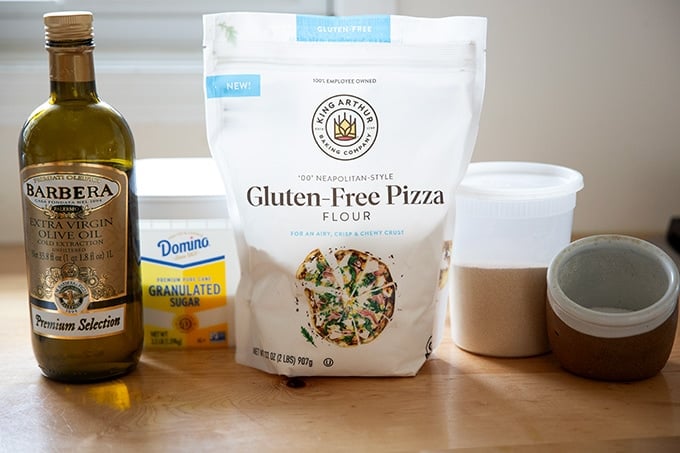
For best results, use a scale to measure everything out:
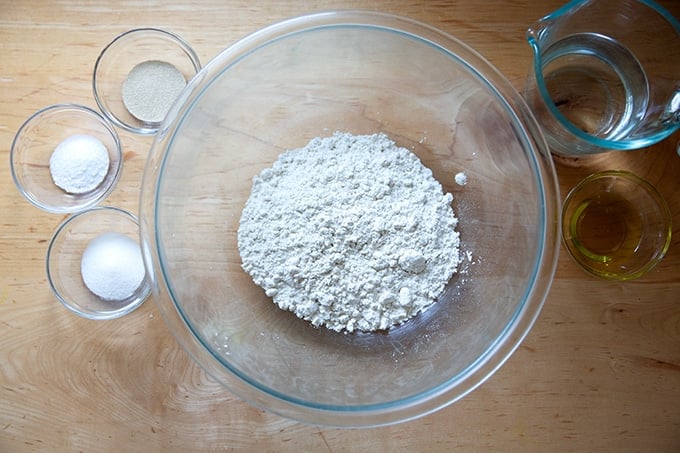
First, place the dry ingredients in a large bowl:
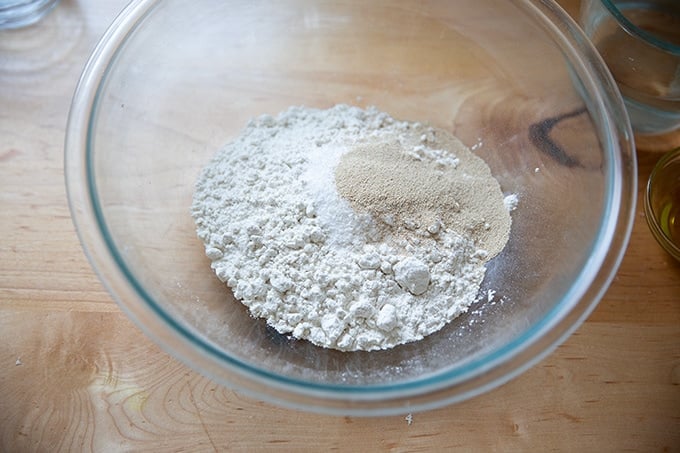
Whisk them together:
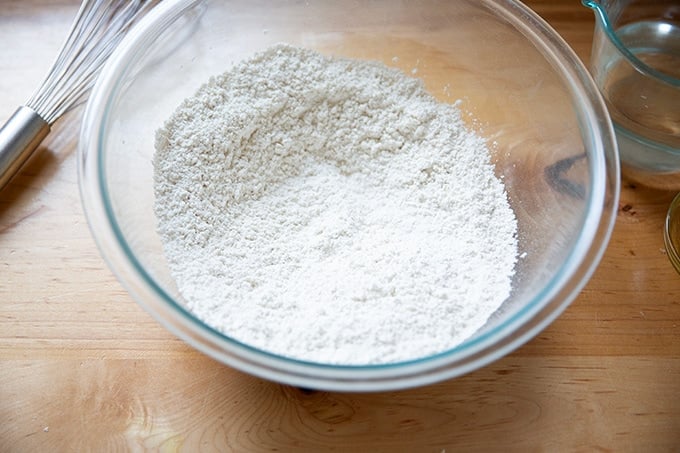
Add the water and olive oil:
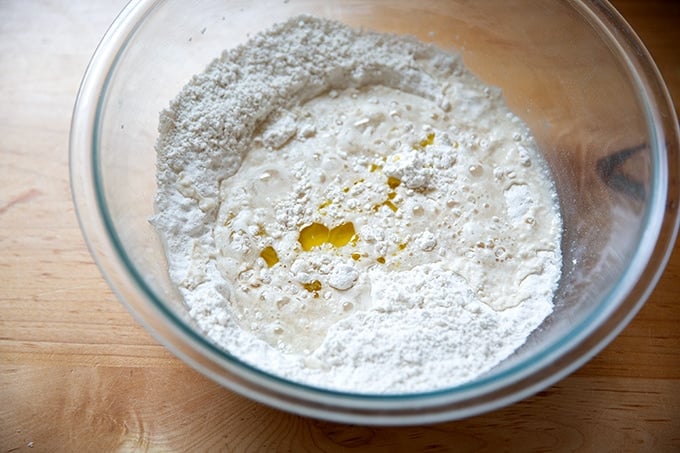
And stir with a spatula until you have a very wet mass:
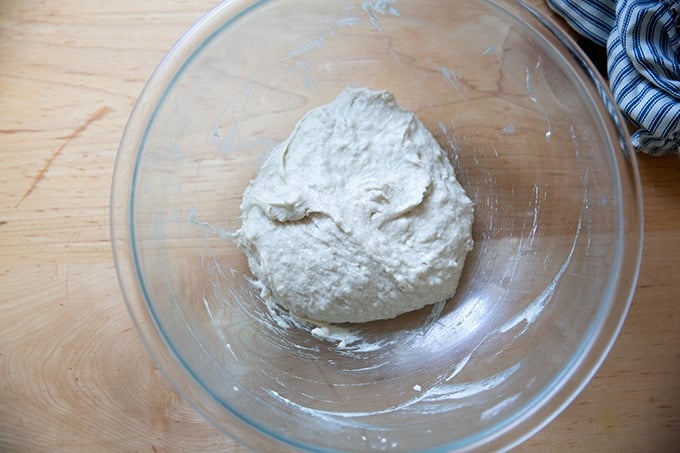
Cover the bowl and let rise for 2-3 hours …
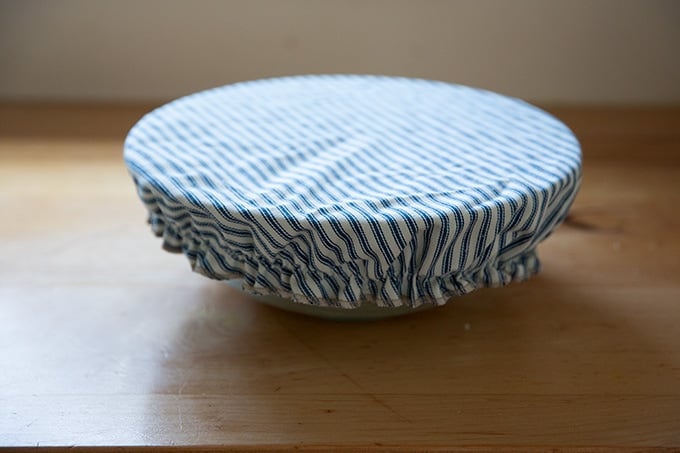
… or until doubled in volume:
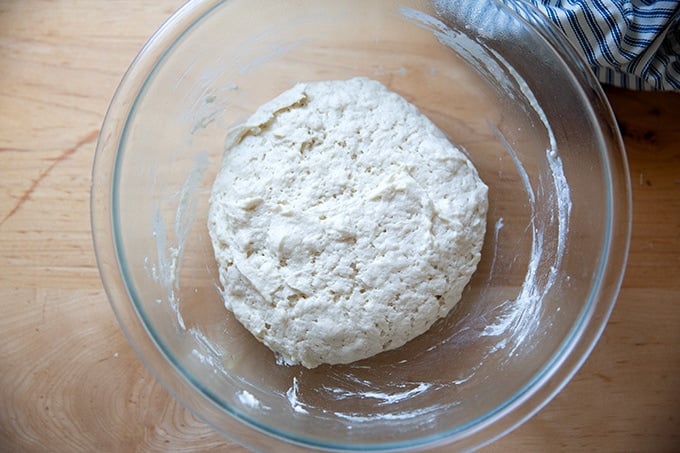
Turn the dough out into a lightly floured (using rice flour or other gluten-free flour) work surface:
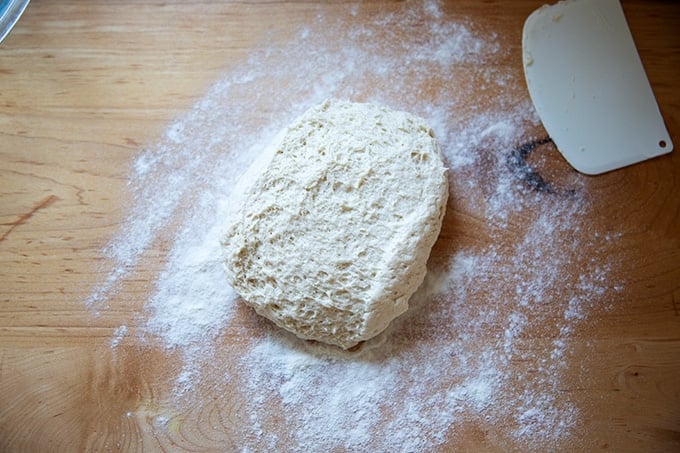
Divide the dough into two equal portions:
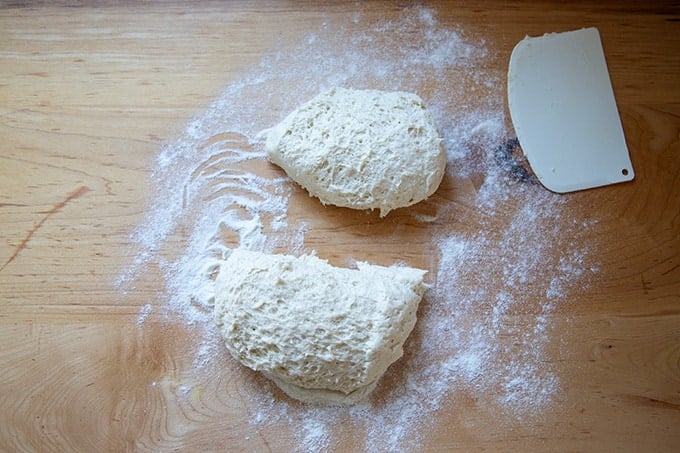
Then ball up each portion:
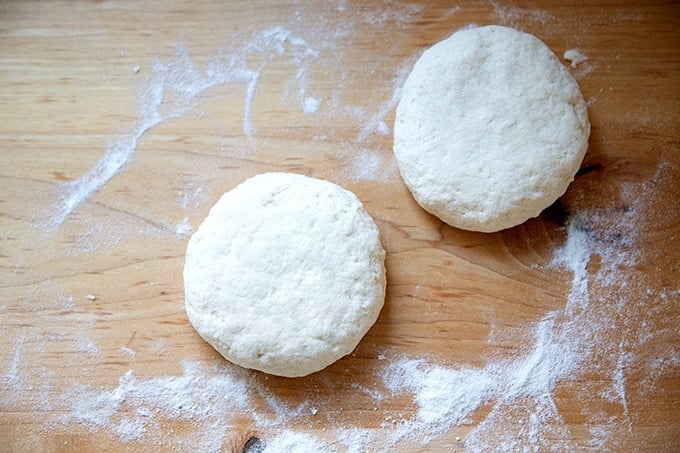
Gently roll out the portion …
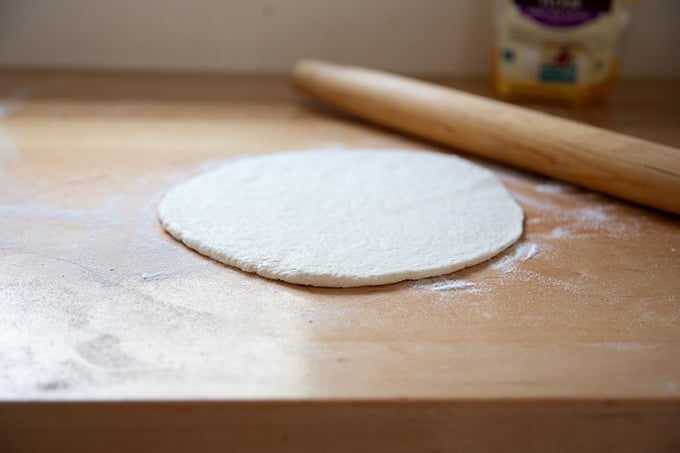
into roughly a 12-inch round:
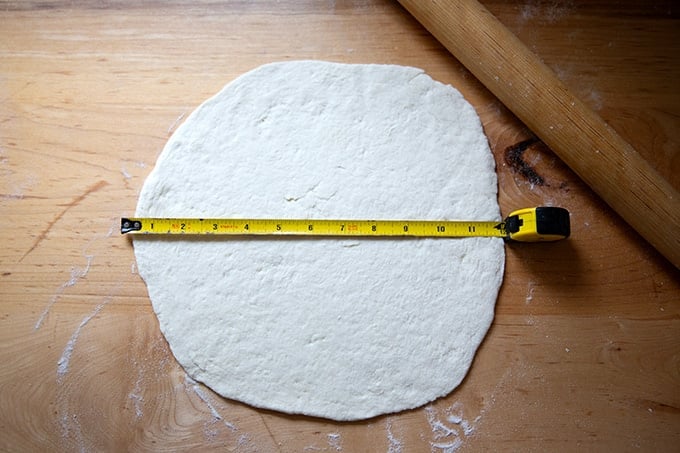
Transfer it to a parchment-lined peel and pinch the edges:
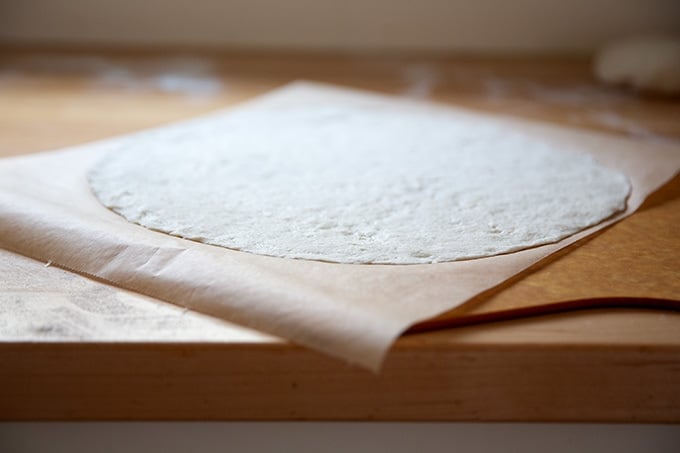
Parbake on a preheated Baking Steel (ideally) or pizza stone for 2 minutes:
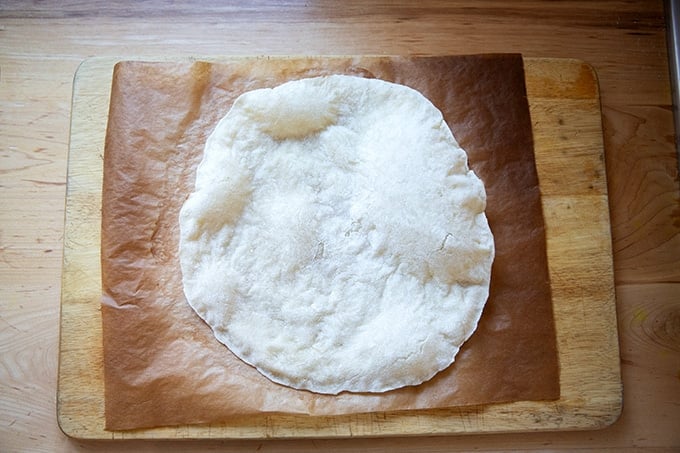
It will puff up in spots. Gently deflate those spots:
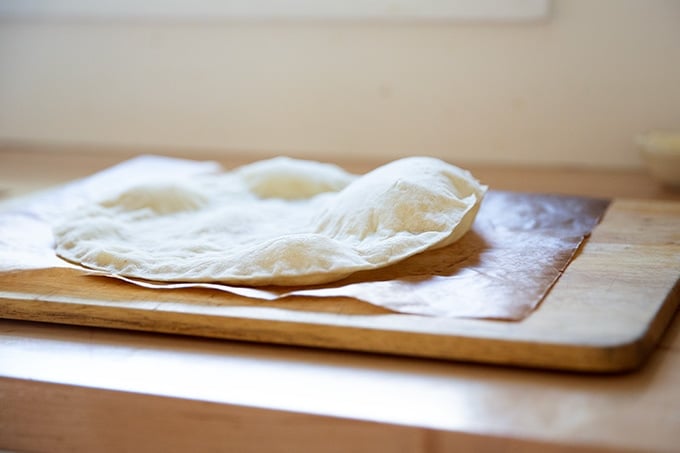
Top with tomato sauce and mozzarella as well as a drizzle of olive oil and a pinch of sea salt:
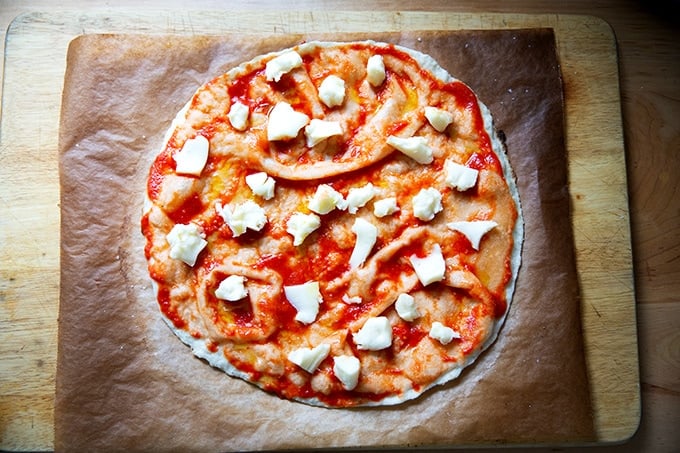
Return to the oven for 4-5 minutes or until blistered to your liking:
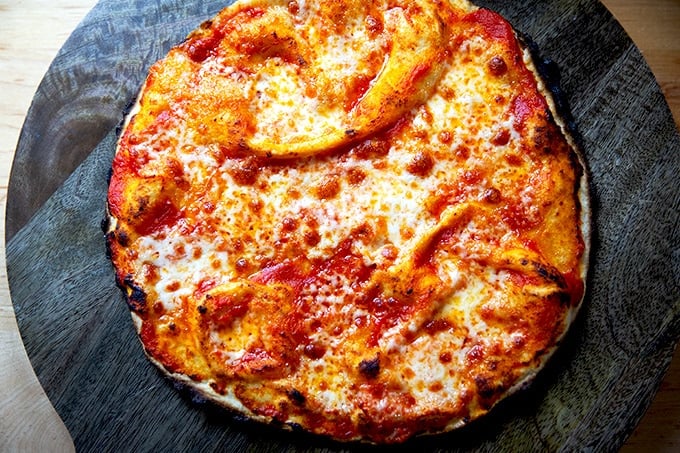
Shower with fresh basil and shave Parmigiano Reggiano over the top, if you wish.
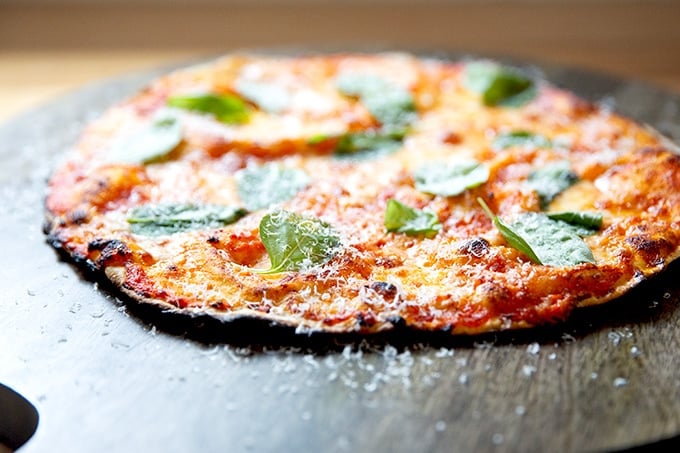
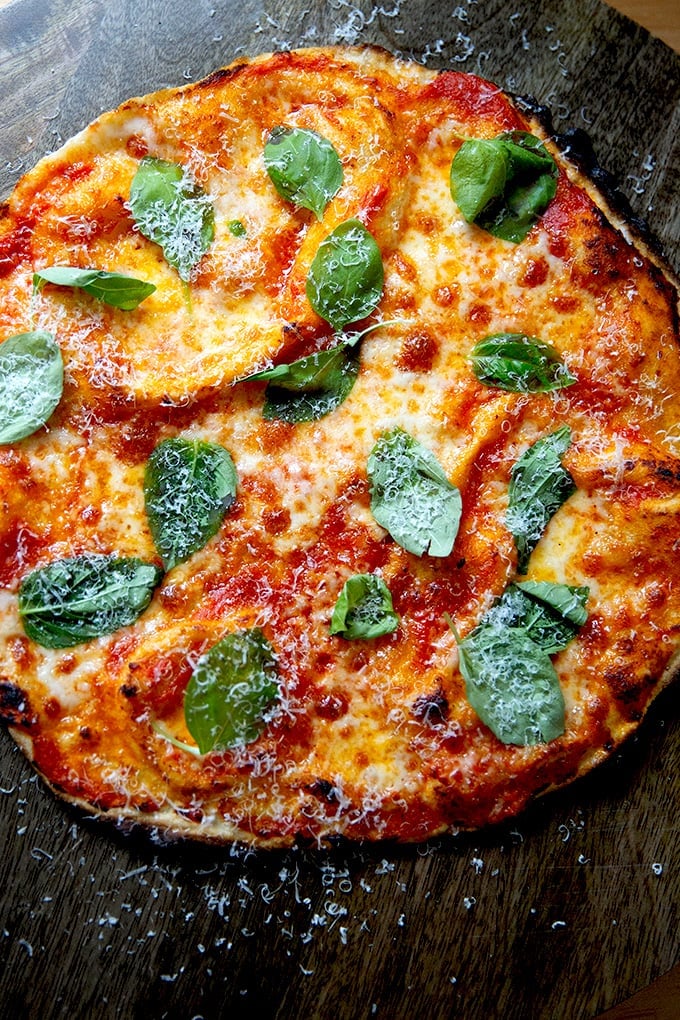
Cut and serve:
Description
Adapted from the recipe on the back of the King Arthur Flour Gluten-Free Pizza Flour bag.
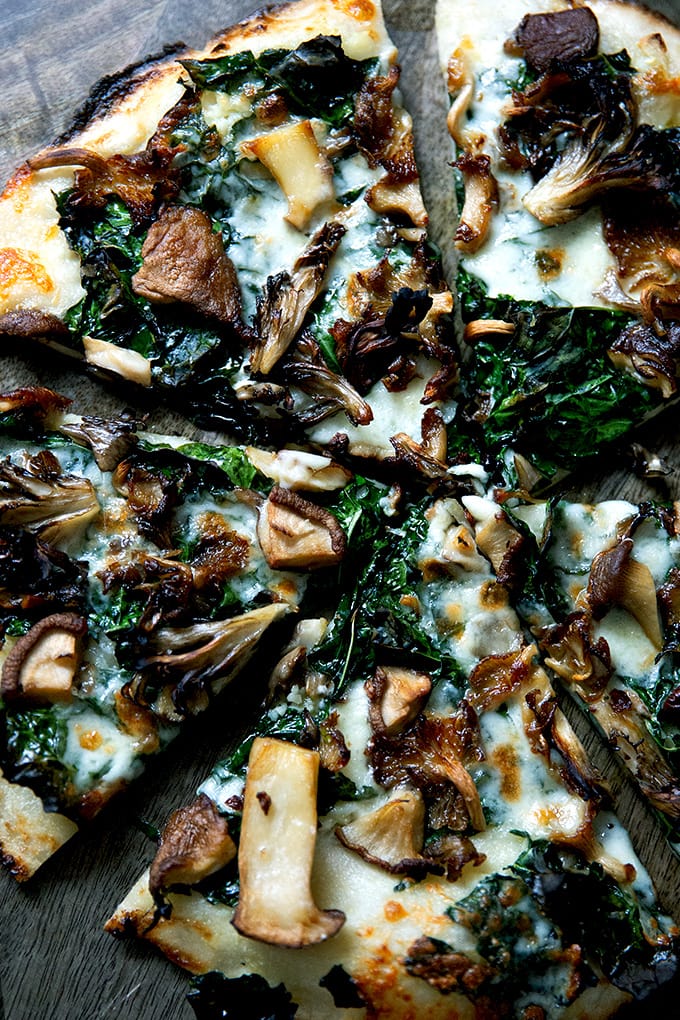
If you’re looking for the mushroom- and kale-topped gluten-free pizza, find it here .
Important Notes:
- This recipe is specifically formulated to work with KAF gluten-free pizza flour . It very likely will not work with other varieties of gluten-free flour without making adjustments to the amount of water. You can order this flour online or find it in your grocery store — I’ve seen it at Hannaford’s and other supermarkets.
- Note: KAF’s gluten-free flour uses gluten-free wheat starch, a common ingredient in gluten-free foods. You can read more about it on the National Celiac Association’s website , which says: “Wheat starch is simply a starch made from the processed endosperm of the wheat grain. Gluten-free wheat starch has had the gluten (a protein) washed out to a trace level, making it safe for people on a gluten-free diet.” That said, if you have a wheat allergy, you should avoid products containing wheat starch.
- Please invest in a scale before attempting this recipe. You will not be measuring accurately if you use measuring cups and spoons, and in turn, you will not be able to troubleshoot in a meaningful way should the recipe not work out for you.
- Salt: If you are using Morton Kosher salt or fine sea salt, use half as much by volume (or the same amount by weight).
- Lukewarm water: To create lukewarm water, combine 1/4 cup (56 g) boiling water with 1 cup (228 g) room-temperature or cold tap water.
Equipment:
- Baking Steel
- Pizza Peel
- Rolling pin
- parchment paper
No-Cook Tomato Sauce
I have not published this recipe elsewhere on my blog. It’s included in Pizza Night , which is available for preorder now (🎉🍕).
Makes 1 quart
- 1 garlic clove
- 28-oz can peeled San Marzano tomatoes, such as La Valle or Bianco Di Napoli
- 1 to 1.5 teaspoons Diamond Crystal kosher salt (or half as much Morton or sea salt)
- 3 tablespoons extra-virgin olive oil
Place the garlic in a food processor and purée until smooth. Add the tomatoes, 1 teaspoon of the salt, and the olive oil, and purée until smooth. Taste. Add the remaining 0.5 teaspoons salt if desired. Purée again. Transfer to a storage jar and keep in the fridge for at least one week.
For the dough:
- 2 1/3 cups ( 233g ) King Arthur Gluten-Free Pizza Flour , see notes above
- 1 tablespoon ( 13 – 15 g) granulated sugar
- 2 teaspoons ( 7 – 8 g) instant yeast
- 1.5 teaspoons ( 6 g ) Diamond Crystal kosher salt, see notes above
- 1 1/4 cups ( 284 g ) lukewarm water, see notes above
- 1 tablespoon ( 13 g ) extra-virgin olive oil
- rice flour or more gluten-free flour for dusting
For the Margherita pizza:
- gluten-free flour for dusting
- extra-virgin olive oil
- 3 tablespoons no-cook tomato sauce (see recipe in the notes above)
- 3 ounces low-moisture whole milk mozzarella, pulled into small pieces (about 3/4 cup )
- flaky sea salt
- fresh basil leaves
- Parmigiano Reggiano, to taste
Make the Dough
- In a large bowl, whisk together the flour, sugar, yeast, and salt. Add the water followed by the oil, and use a spatula to combine. Stir vigorously and thoroughly — the mixture will feel more like a wet (but smooth) batter. As the dough rises, it will thicken.
- Cover the bowl with a bowl cover or lid and place in a warm spot to rise for 2 to 3 hours or until roughly doubled in volume.
- Turn the dough out onto a lightly floured (using rice flour or other gluten-free flour) work surface. Divide into two equal portions (roughly 271 grams each if you care to measure). Gently ball up each portion using rice flour (or other gluten-free flour) as needed — it will be sticky. At this point, you can transfer the portions to a container topped with an airtight lid and place in the fridge for up to 1 week. Otherwise, proceed with the recipe.
Make the Pizza
- Place a Baking Steel or pizza stone in the top third of your oven and preheat your oven to its hottest setting — for me, this is 550ºF convection roast. If time permits, allow the Steel to preheat for 1 hour.
- On a lightly floured work surface (using rice flour or other gluten-free flour), gently roll out the dough into roughly an 11- or 12-inch round — as you approach 12 inches, the dough will begin to get fragile so handle it delicately. (Note: Do not worry about holes or tears, all of which can be easily patched once the dough is on the parchment paper and peel.)
- Place a sheet of parchment paper onto a pizza peel. Pour 1 teaspoon of olive oil into the center and rub with your hand to spread. Gently transfer the dough to the prepared peel and, if the dough is not yet 12 inches in diameter, spread it with your hands until it gets there. (Note: If the dough tears during the transfer, just push on and press the dough back together.) Pinch the outer edge of the dough firmly with your fingers so that it’s very thin.
- Shimmy the dough, parchment paper and all, onto the preheated Steel and cook for 2 minutes. Remove the dough, parchment paper and all, and transfer to a cutting board or other work surface.
- Spread the tomato sauce over the dough all the way to the edges. Scatter the cheese evenly over the top. Drizzle lightly with olive oil. Season with a pinch of salt. Shimmy the topped parbaked round, parchment paper and all, onto the Steel and cook for 4 – 5 minutes or until the pizza is cooked to your liking.
- Transfer the pizza to a cutting board. Scatter basil to taste over the top. Shave Parmigiano Reggiano over the top if you wish. Cut and serve.
- Prep Time: 3 hours
- Cook Time: 7 minutes
- Category: Pizza
- Method: Oven
- Cuisine: American, Italian
Description
Adapted from the recipe on the back of the King Arthur Flour Gluten-Free Pizza Flour bag.
If you’re looking for the mushroom- and kale-topped gluten-free pizza, find it here .
Important Notes:
- This recipe is specifically formulated to work with KAF gluten-free pizza flour . It very likely will not work with other varieties of gluten-free flour without making adjustments to the amount of water. You can order this flour online or find it in your grocery store — I’ve seen it at Hannaford’s and other supermarkets.
- Note: KAF’s gluten-free flour uses gluten-free wheat starch, a common ingredient in gluten-free foods. You can read more about it on the National Celiac Association’s website , which says: “Wheat starch is simply a starch made from the processed endosperm of the wheat grain. Gluten-free wheat starch has had the gluten (a protein) washed out to a trace level, making it safe for people on a gluten-free diet.” That said, if you have a wheat allergy, you should avoid products containing wheat starch.
- Please invest in a scale before attempting this recipe. You will not be measuring accurately if you use measuring cups and spoons, and in turn, you will not be able to troubleshoot in a meaningful way should the recipe not work out for you.
- Salt: If you are using Morton Kosher salt or fine sea salt, use half as much by volume (or the same amount by weight).
- Lukewarm water: To create lukewarm water, combine 1/4 cup (56 g) boiling water with 1 cup (228 g) room-temperature or cold tap water.
Equipment:
- Baking Steel
- Pizza Peel
- Rolling pin
- parchment paper
No-Cook Tomato Sauce
I have not published this recipe elsewhere on my blog. It’s included in Pizza Night , which is available for preorder now (🎉🍕).
Makes 1 quart
- 1 garlic clove
- 28-oz can peeled San Marzano tomatoes, such as La Valle or Bianco Di Napoli
- 1 to 1.5 teaspoons Diamond Crystal kosher salt (or half as much Morton or sea salt)
- 3 tablespoons extra-virgin olive oil
Place the garlic in a food processor and purée until smooth. Add the tomatoes, 1 teaspoon of the salt, and the olive oil, and purée until smooth. Taste. Add the remaining 0.5 teaspoons salt if desired. Purée again. Transfer to a storage jar and keep in the fridge for at least one week.
For the dough:
- 2 1/3 cups ( 233g ) King Arthur Gluten-Free Pizza Flour , see notes above
- 1 tablespoon ( 13 - 15 g) granulated sugar
- 2 teaspoons ( 7 - 8 g) instant yeast
- 1.5 teaspoons ( 6 g ) Diamond Crystal kosher salt, see notes above
- 1 1/4 cups ( 284 g ) lukewarm water, see notes above
- 1 tablespoon ( 13 g ) extra-virgin olive oil
- rice flour or more gluten-free flour for dusting
For the Margherita pizza:
- gluten-free flour for dusting
- extra-virgin olive oil
- 3 tablespoons no-cook tomato sauce (see recipe in the notes above)
- 3 ounces low-moisture whole milk mozzarella, pulled into small pieces (about 3/4 cup )
- flaky sea salt
- fresh basil leaves
- Parmigiano Reggiano, to taste
Make the Dough
- In a large bowl, whisk together the flour, sugar, yeast, and salt. Add the water followed by the oil, and use a spatula to combine. Stir vigorously and thoroughly — the mixture will feel more like a wet (but smooth) batter. As the dough rises, it will thicken.
- Cover the bowl with a bowl cover or lid and place in a warm spot to rise for 2 to 3 hours or until roughly doubled in volume.
- Turn the dough out onto a lightly floured (using rice flour or other gluten-free flour) work surface. Divide into two equal portions (roughly 271 grams each if you care to measure). Gently ball up each portion using rice flour (or other gluten-free flour) as needed — it will be sticky. At this point, you can transfer the portions to a container topped with an airtight lid and place in the fridge for up to 1 week. Otherwise, proceed with the recipe.
Make the Pizza
- Place a Baking Steel or pizza stone in the top third of your oven and preheat your oven to its hottest setting — for me, this is 550ºF convection roast. If time permits, allow the Steel to preheat for 1 hour.
- On a lightly floured work surface (using rice flour or other gluten-free flour), gently roll out the dough into roughly an 11- or 12-inch round — as you approach 12 inches, the dough will begin to get fragile so handle it delicately. (Note: Do not worry about holes or tears, all of which can be easily patched once the dough is on the parchment paper and peel.)
- Place a sheet of parchment paper onto a pizza peel. Pour 1 teaspoon of olive oil into the center and rub with your hand to spread. Gently transfer the dough to the prepared peel and, if the dough is not yet 12 inches in diameter, spread it with your hands until it gets there. (Note: If the dough tears during the transfer, just push on and press the dough back together.) Pinch the outer edge of the dough firmly with your fingers so that it’s very thin.
- Shimmy the dough, parchment paper and all, onto the preheated Steel and cook for 2 minutes. Remove the dough, parchment paper and all, and transfer to a cutting board or other work surface.
- Spread the tomato sauce over the dough all the way to the edges. Scatter the cheese evenly over the top. Drizzle lightly with olive oil. Season with a pinch of salt. Shimmy the topped parbaked round, parchment paper and all, onto the Steel and cook for 4 – 5 minutes or until the pizza is cooked to your liking.
- Transfer the pizza to a cutting board. Scatter basil to taste over the top. Shave Parmigiano Reggiano over the top if you wish. Cut and serve.
- Prep Time: 3 hours
- Cook Time: 7 minutes
- Category: Pizza
- Method: Oven
- Cuisine: American, Italian
Find it online : https://alexandracooks.com/2024/01/06/thin-and-crispy-gluten-free-pizza-crust/
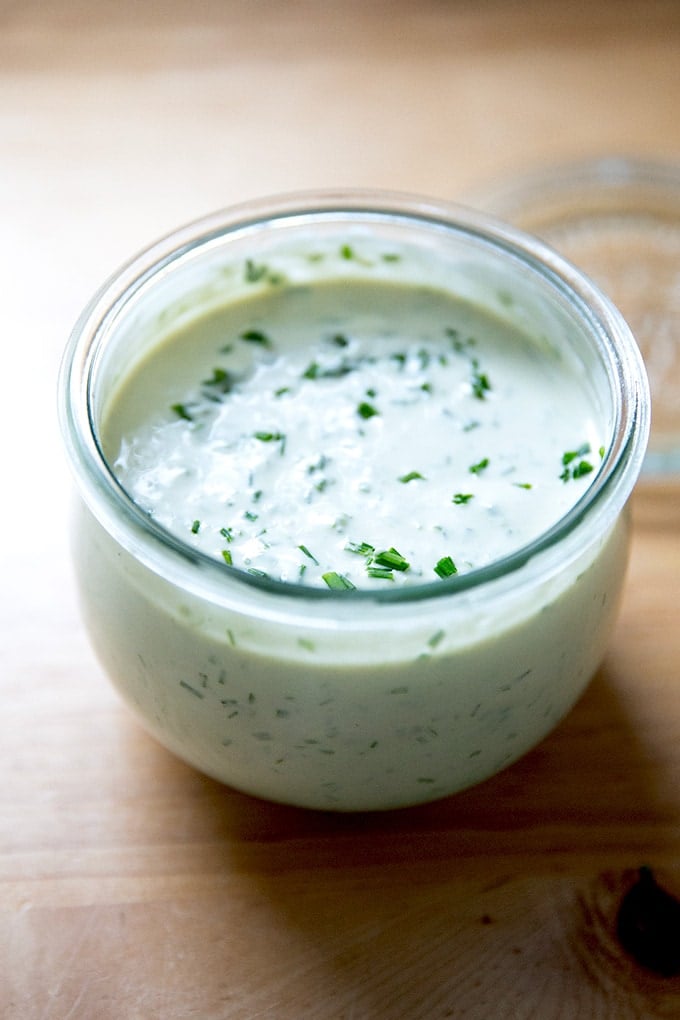
Creamy and loaded with fresh onion and garlic flavor, this vegan ranch dressing tastes shockingly similar to the real thing. Made with raw but unsoaked cashews, it comes together in seconds, and after a brief chill in the fridge, it’s ready for all of your veggie dipping and salad needs!
My friend Gena Hamshaw, who writes the blog The Full Helping , introduced me to the wonders of cashew cream several years ago. She was visiting for the weekend, and one night, while I prepared our chickpea taco bowls for dinner, she soaked a few cups of cashews in water. Just before serving, she drained them, and then blitzed them in a blender with water, salt, and fresh lemon juice.
In seconds, the nuts transformed into a silky smooth, bright white emulsion, which we then drizzled over our bowls. There was neither sour cream nor cheese on the table that evening, and I didn’t miss either, the cashew cream lending all the tang, richness, and creaminess the dairy would have provided.
Gena describes cashew cream as a “secret weapon” recipe she wishes she could share with anyone “who’s nervous about giving up dairy,” and as I spooned more of the cashew cream over my chickpeas as I ate, I understood why: nothing about it tasted like a sacrifice.
Although I am not vegan, I continue to make cashew cream and other cashew-based dressings because I so enjoy their flavor and texture. Earlier this month I used Gena’s base recipe for cashew cream and adapted it into a ranch dressing by adding garlic, tons of chives, and a small amount of olive oil.
Creamy, tangy, and loaded with allium flavor, it tastes astonishingly similar to the real thing, and it is such a treat to have on hand for raw veggies, simple salads, and — dare I say it — to serve alongside pizza . I hope you’ll agree.
Vegan Ranch Dressing, Step by Step
First, gather your ingredients:
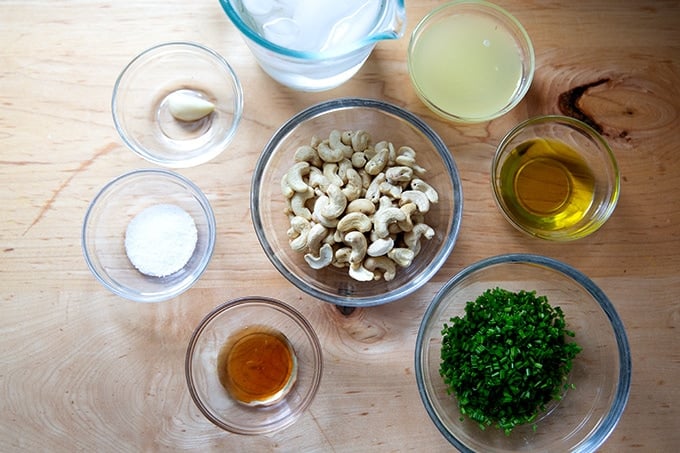
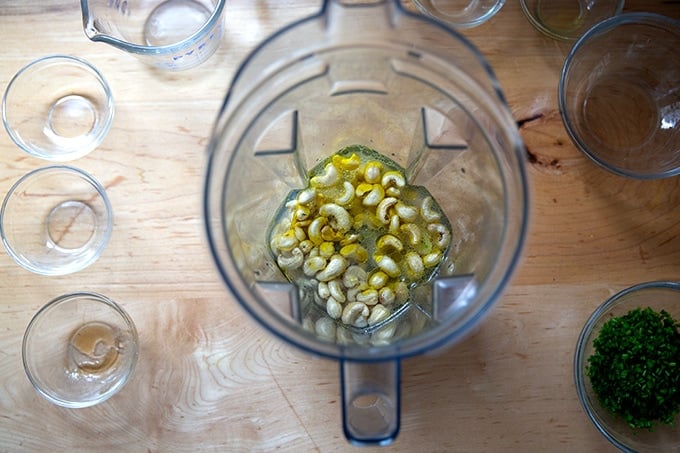
Place all of the ingredients, except for the chives, in a high-speed blender. I’m using a Vitamix.
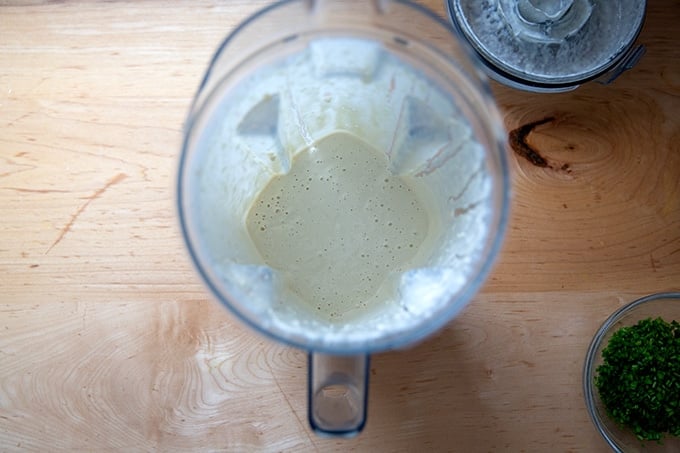
Blend at high speed for 1 minute.
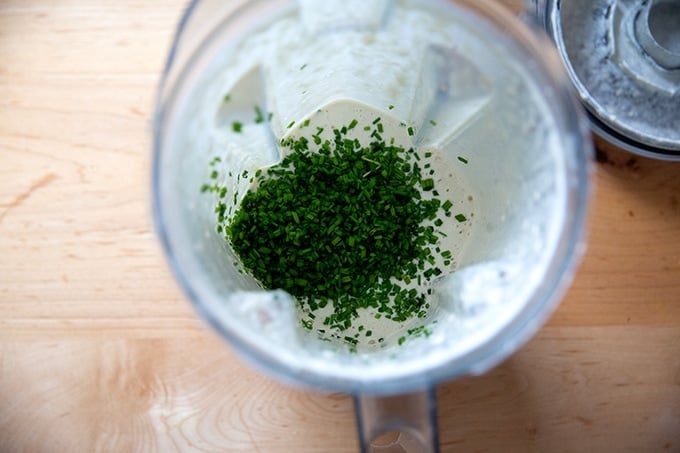
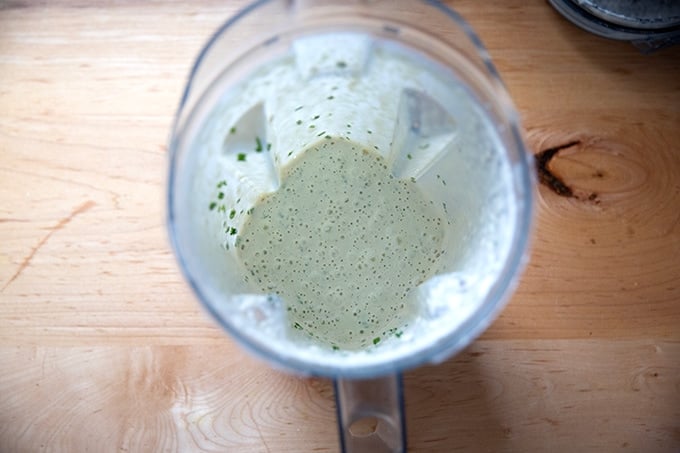
Add the chives and blend for another 10 seconds.
Transfer to a storage jar and place in the fridge for at least 2 hours.
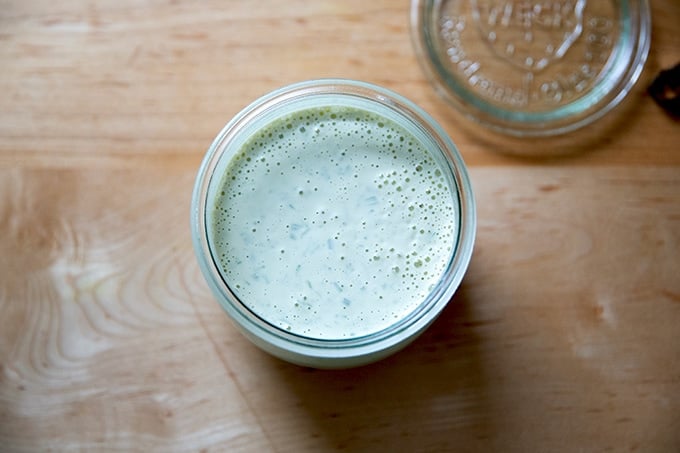
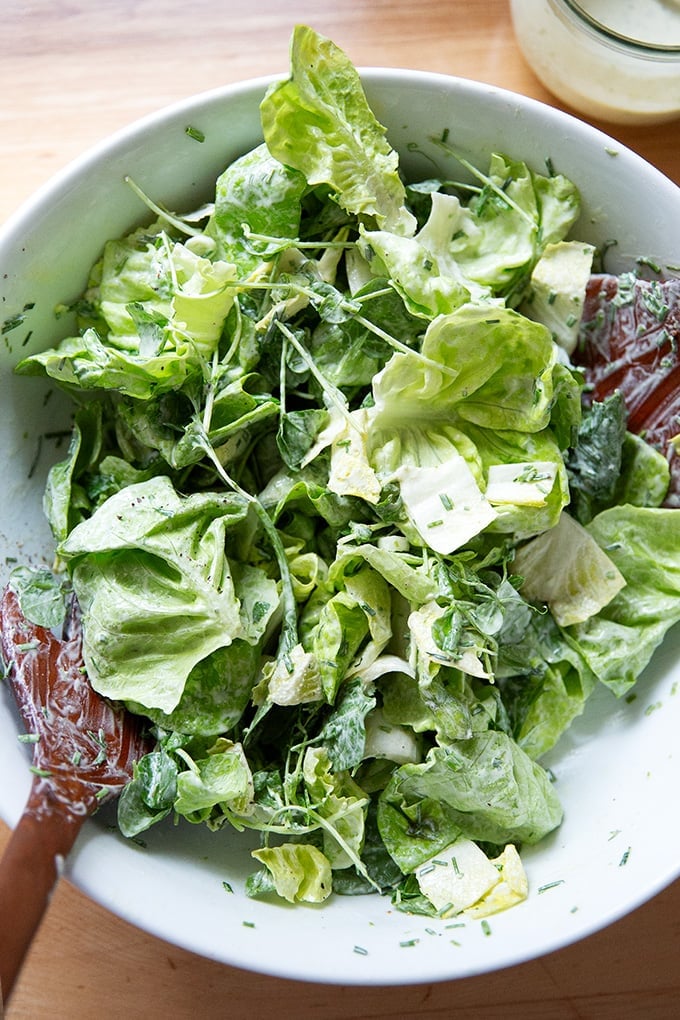
Remove from the fridge, thin with water if necessary, then use as you please: as a dip for veggies or drizzled all over your favorite greens.
Description
Adapted from The Full Helping’s all-purpose cashew cream recipe .
Notes:
Salt: If you are using Morton Kosher salt or fine sea salt, use 3/4 teaspoon (or the same amount by weight.
I have only ever used a high speed blender, which makes an especially creamy dressing without having to soak the cashews. If you do not have a Vitamix or other powerful blender, consider soaking the cashews in water for at least 2 hours before making the dressing.
1 cup ( 135 g ) raw cashews
3/4 cup ( 176 g ) ice water, plus more as needed
1½ (5 g) teaspoons Diamond Crystal kosher salt, see notes above
1/4 cup ( 65 g ) fresh lemon juice
1 garlic clove
2 tablespoons ( 28 g ) extra-virgin olive oil
1 teaspoon maple syrup
1/2 cup ( 20 g ) chives
Flaky sea salt, optional, to taste
- In a high-speed blender combine the cashews, ice water, salt, lemon juice, garlic, olive oil, and maple syrup. Blend at low speed for 10 seconds, then turn the blender to its highest setting and blend for another 50 seconds.
- The mixture should be completely smooth. Taste. And adjust with a pinch of flaky sea salt if necessary. Add the chives, and blend on low for another 10 seconds.
- The mixture will be slightly warm due to the intensity of the blending, and because of this, it’s difficult to accurately evaluate the flavor. Because of this, I recommend transferring it to a storage vessel and transferring it to the fridge for at least 2 hours before using. In this time, the ranch flavors will intensify and the dressing will thicken — you may want to thin the dressing with another tablespoon of water to make it a more pourable consistency before using. You may also want to add a pinch more kosher salt or flaky sea salt to taste.
- Prep Time: 20 minutes
- Category: Dressing
- Method: blender
- Cuisine: American
