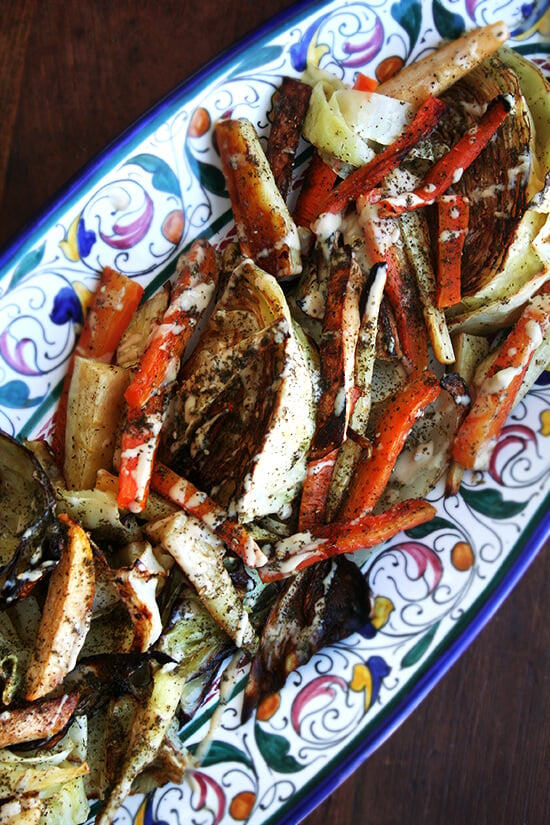
Tired, pale, wrinkled — it’s a sad lot of vegetables gracing the farmers’ market tables these days.
But I’m not judging. Those very three words came to mind as I looked in the mirror this morning. I could use a little help right now — some sun, some fresh air, spring — and so could those vegetables. And I’ve got just the thing.
I had read about this tahini sauce in Jerusalem , where it’s used in various places, most notably in a recipe for roasted butternut squash with pine nuts and za’atar, but I never felt compelled to make it until I read this note under my friend’s Instagram photo: “I will never tire of this: roasted CSA root veg and squash, tahini with lemon and za’atar.”
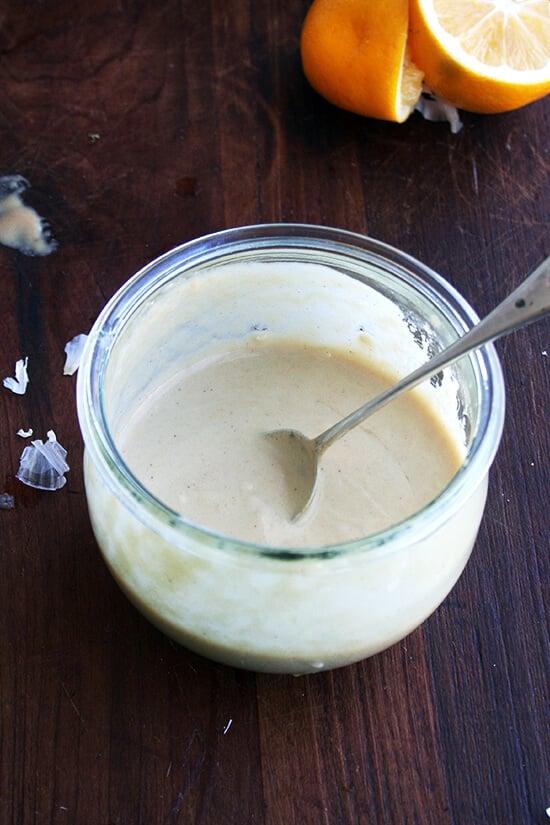
I have since been making the dressing, a combination of tahini, olive oil, lemon juice and garlic, every few nights and roasting everything I can get my hands on from cauliflower to broccoli, carrots to parsnips, onions to cabbage. And when I’ve run out of vegetables to roast, I’ve exhumed what’s left in my vegetable drawer — an endive head, a grapefruit, some pea shoots — and drizzled it on those, too.
I find this dressing, especially in combination with the za’atar, to be irresistible but I know tahini is not everyone’s favorite flavor. In the preface to the tahini sauce recipe in Jerusalem , in fact, Ottolenghi warns that for some people the flavor of tahini spoils everything it touches, from a juicy kabob to a fresh salad.
I have not, to be clear, tried this. Hoping one of you might for me? Just a thought.
PS: Making the most of your CSA | A few ideas for using those CSA vegetables
Description
Inspired by my friend, Emily Teel; Recipe adapted from Jerusalem
For the vegetables:
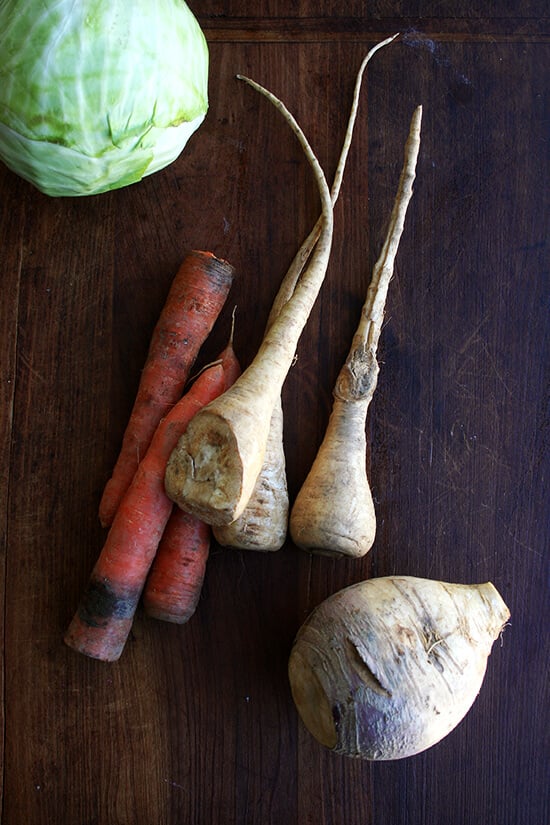
- a mix of the saddest vegetables you can find at the market: cabbage, carrots, parsnips are all great options; onions, sweet potatoes, butternut squash, cauliflower, broccoli — anything, really — could work here
- olive oil
- kosher salt
- freshly cracked black pepper
For the tahini sauce:
- 3 Tbsp . olive oil
- 3 Tbsp . tahini
- 1½ Tbsp . lemon juice (about ½ a lemon)
- 2 Tbsp . water
- ¼ teaspoon kosher salt
- 1 to 2 cloves garlic, crushed
- 1 teaspoon maple syrup, optional
For finishing:
- za’atar (to taste)
- nice sea salt (like Maldon)
- freshly ground black pepper
- Preheat the oven to 450ºF.
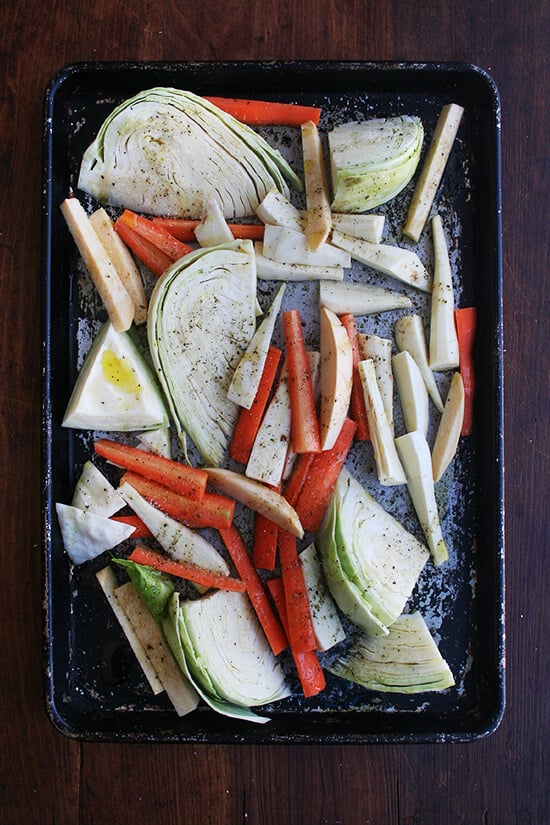
- Peel vegetables if appropriate. Cut them into uniform pieces — sticks or cubes or whatever you like. Cut cabbage into wedges keeping the core intact if possible.
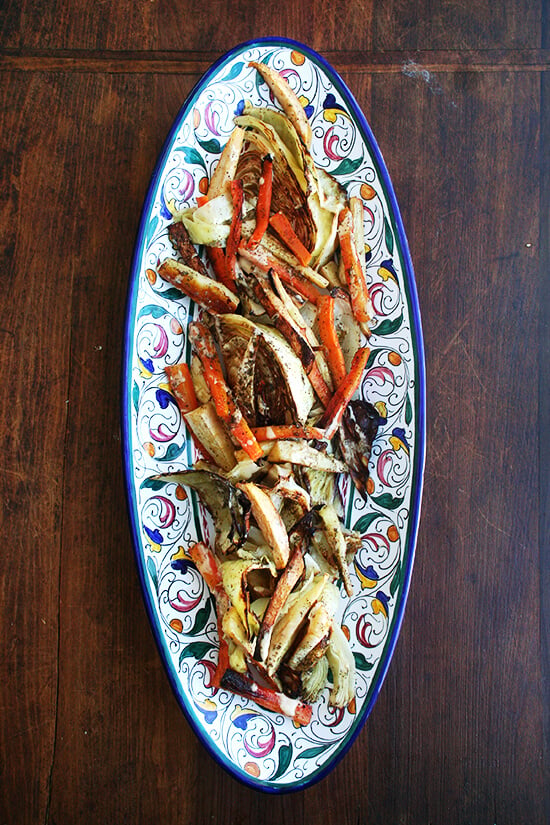
- Spread vegetables onto a sheetpan. Season with salt and pepper to taste. Drizzle with olive oil (2 to 3 tablespoons should do it) to coat. Toss gently, then spread in an even layer. Roast for 20 minutes. Check, and give them a stir if you wish. Roast for another 15 to 20 minutes or until nicely caramelized. Note: If your cabbage is getting too brown, you can always remove it after 30 minutes or so, then return the pan to the oven to allow the carrots and parsnips or whatever else you are roasting finish cooking.
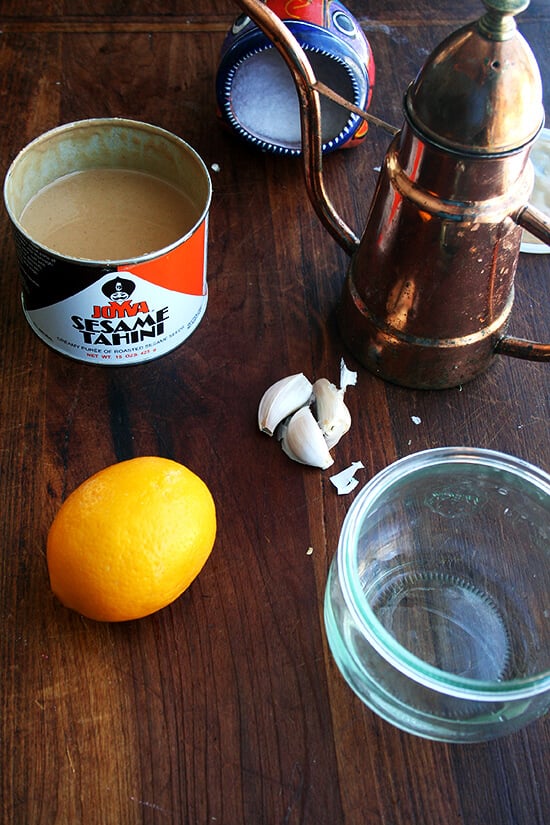
- Meanwhile, make the dressing: In a small bowl, stir together the olive oil, tahini (being sure to stir the tahini itself first to make sure it is emulsified), lemon juice, water, salt, and garlic. Taste. Add the maple syrup, if desired. (I like this dressing with a touch of sweetness.) Taste. Adjust with more salt, if necessary, and thin out with more water if necessary, too — the sauce should be pourable or the consistency of a traditional dressing.
- Transfer roasted vegetables to a platter. Taste one. Sprinkle vegetables with a pinch of nice salt if necessary and more pepper if desired. Spoon dressing overtop — depending how many vegetables you made, you likely won’t need all of the dressing. Sprinkle za’atar to taste overtop if using.
- Prep Time: 15 minutes
- Cook Time: 35 minutes
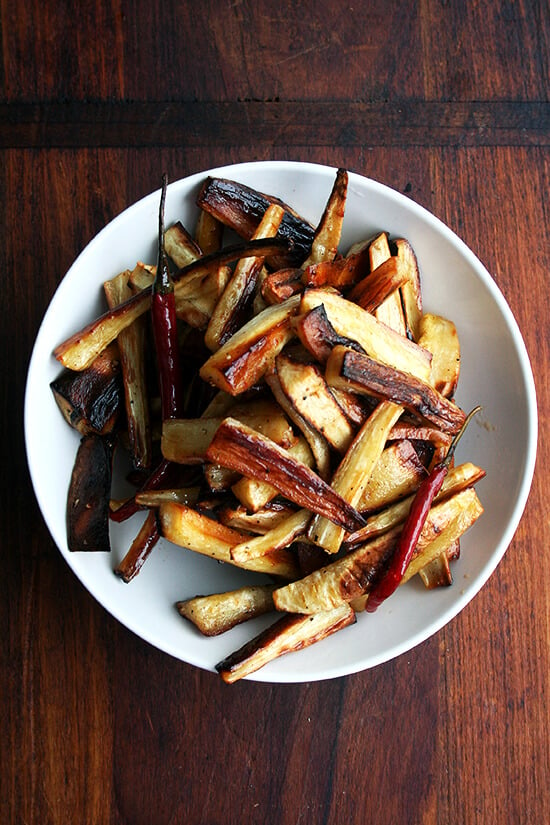
Here is another one to help you through these last few months of winter veg: Bon Appetit’s parsnips with chili butter . They are SO good:
Tired, pale, wrinkled — it’s a sad lot of vegetables gracing the farmers’ market tables these days.
But I’m not judging. Those very three words came to mind as I looked in the mirror this morning. I could use a little help right now — some sun, some fresh air, spring — and so could those vegetables. And I’ve got just the thing.
I had read about this tahini sauce in Jerusalem , where it’s used in various places, most notably in a recipe for roasted butternut squash with pine nuts and za’atar, but I never felt compelled to make it until I read this note under my friend’s Instagram photo: “I will never tire of this: roasted CSA root veg and squash, tahini with lemon and za’atar.”
I have since been making the dressing, a combination of tahini, olive oil, lemon juice and garlic, every few nights and roasting everything I can get my hands on from cauliflower to broccoli, carrots to parsnips, onions to cabbage. And when I’ve run out of vegetables to roast, I’ve exhumed what’s left in my vegetable drawer — an endive head, a grapefruit, some pea shoots — and drizzled it on those, too.
I find this dressing, especially in combination with the za’atar, to be irresistible but I know tahini is not everyone’s favorite flavor. In the preface to the tahini sauce recipe in Jerusalem , in fact, Ottolenghi warns that for some people the flavor of tahini spoils everything it touches, from a juicy kabob to a fresh salad.
I have not, to be clear, tried this. Hoping one of you might for me? Just a thought.
PS: Making the most of your CSA | A few ideas for using those CSA vegetables
Description
Inspired by my friend, Emily Teel; Recipe adapted from Jerusalem
For the vegetables:
- a mix of the saddest vegetables you can find at the market: cabbage, carrots, parsnips are all great options; onions, sweet potatoes, butternut squash, cauliflower, broccoli — anything, really — could work here
- olive oil
- kosher salt
- freshly cracked black pepper
For the tahini sauce:
- 3 Tbsp . olive oil
- 3 Tbsp . tahini
- 1½ Tbsp . lemon juice (about ½ a lemon)
- 2 Tbsp . water
- ¼ teaspoon kosher salt
- 1 to 2 cloves garlic, crushed
- 1 teaspoon maple syrup, optional
For finishing:
- za’atar (to taste)
- nice sea salt (like Maldon)
- freshly ground black pepper
- Preheat the oven to 450ºF.
- Peel vegetables if appropriate. Cut them into uniform pieces — sticks or cubes or whatever you like. Cut cabbage into wedges keeping the core intact if possible.
- Spread vegetables onto a sheetpan. Season with salt and pepper to taste. Drizzle with olive oil (2 to 3 tablespoons should do it) to coat. Toss gently, then spread in an even layer. Roast for 20 minutes. Check, and give them a stir if you wish. Roast for another 15 to 20 minutes or until nicely caramelized. Note: If your cabbage is getting too brown, you can always remove it after 30 minutes or so, then return the pan to the oven to allow the carrots and parsnips or whatever else you are roasting finish cooking.
- Meanwhile, make the dressing: In a small bowl, stir together the olive oil, tahini (being sure to stir the tahini itself first to make sure it is emulsified), lemon juice, water, salt, and garlic. Taste. Add the maple syrup, if desired. (I like this dressing with a touch of sweetness.) Taste. Adjust with more salt, if necessary, and thin out with more water if necessary, too — the sauce should be pourable or the consistency of a traditional dressing.
- Transfer roasted vegetables to a platter. Taste one. Sprinkle vegetables with a pinch of nice salt if necessary and more pepper if desired. Spoon dressing overtop — depending how many vegetables you made, you likely won’t need all of the dressing. Sprinkle za’atar to taste overtop if using.
- Prep Time: 15 minutes
- Cook Time: 35 minutes
Here is another one to help you through these last few months of winter veg: Bon Appetit’s parsnips with chili butter . They are SO good:
Description
Inspired by my friend, Emily Teel; Recipe adapted from Jerusalem
For the vegetables:
- a mix of the saddest vegetables you can find at the market: cabbage, carrots, parsnips are all great options; onions, sweet potatoes, butternut squash, cauliflower, broccoli — anything, really — could work here
- olive oil
- kosher salt
- freshly cracked black pepper
For the tahini sauce:
- 3 Tbsp . olive oil
- 3 Tbsp . tahini
- 1½ Tbsp . lemon juice (about ½ a lemon)
- 2 Tbsp . water
- ¼ teaspoon kosher salt
- 1 to 2 cloves garlic, crushed
- 1 teaspoon maple syrup, optional
For finishing:
- za’atar (to taste)
- nice sea salt (like Maldon)
- freshly ground black pepper
- Preheat the oven to 450ºF.
- Peel vegetables if appropriate. Cut them into uniform pieces — sticks or cubes or whatever you like. Cut cabbage into wedges keeping the core intact if possible.
- Spread vegetables onto a sheetpan. Season with salt and pepper to taste. Drizzle with olive oil (2 to 3 tablespoons should do it) to coat. Toss gently, then spread in an even layer. Roast for 20 minutes. Check, and give them a stir if you wish. Roast for another 15 to 20 minutes or until nicely caramelized. Note: If your cabbage is getting too brown, you can always remove it after 30 minutes or so, then return the pan to the oven to allow the carrots and parsnips or whatever else you are roasting finish cooking.
- Meanwhile, make the dressing: In a small bowl, stir together the olive oil, tahini (being sure to stir the tahini itself first to make sure it is emulsified), lemon juice, water, salt, and garlic. Taste. Add the maple syrup, if desired. (I like this dressing with a touch of sweetness.) Taste. Adjust with more salt, if necessary, and thin out with more water if necessary, too — the sauce should be pourable or the consistency of a traditional dressing.
- Transfer roasted vegetables to a platter. Taste one. Sprinkle vegetables with a pinch of nice salt if necessary and more pepper if desired. Spoon dressing overtop — depending how many vegetables you made, you likely won’t need all of the dressing. Sprinkle za’atar to taste overtop if using.
- Prep Time: 15 minutes
- Cook Time: 35 minutes
Find it online : https://alexandracooks.com/2014/03/17/roasted-vegetables-with-tahini-lemon-zaatar/
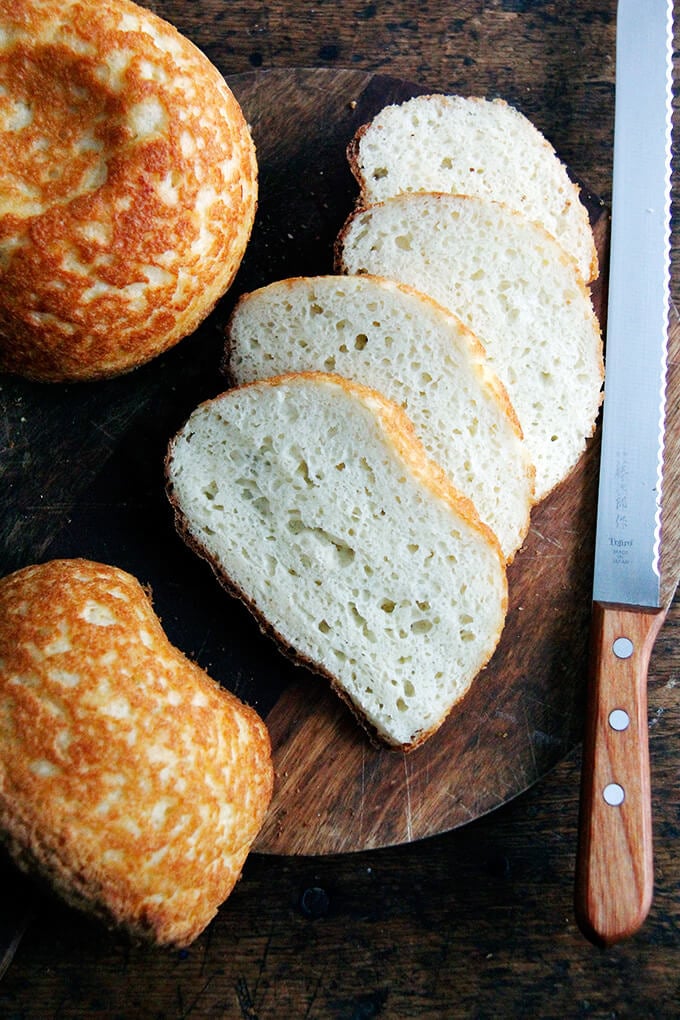
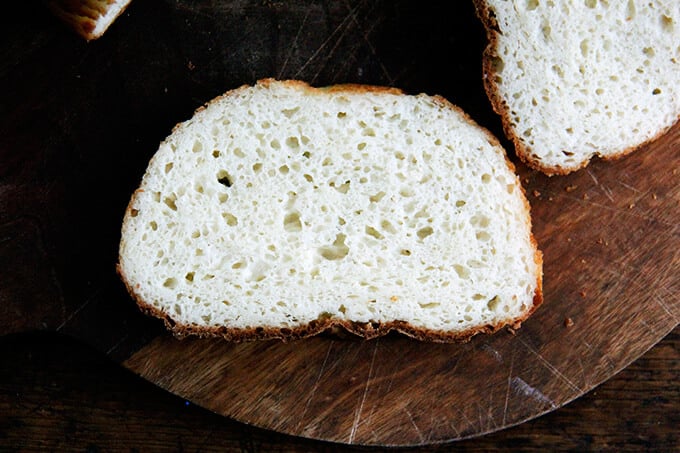
This gluten-free peasant bread has such a nice texture — soft and spongy, light and moist — and moreover, when sliced, the pieces hold their shape. Bread lovers, even those not adhering to a gluten-free diet, rave about the texture and flavor of this bread . This recipe comes from my cookbook, Bread Toast Crumbs !

For the past year, the most frequent question asked on this blog is this: Can the peasant bread be made gluten-free?
Everyone knows someone — a friend, an uncle, a cousin — recently diagnosed with Celiac disease who has had to forget bread as he/she once knew it.
You might have this friend, this uncle, this cousin. I do. And you might want to treat him/her to a loaf of freshly baked bread but you don’t know where to begin.
This is the position my mother found herself in a month ago while preparing for the arrival of her brother-in-law, who had recently adopted a gluten-free diet. Panicked by the thought of serving dinner without warm, fresh bread on the table, she called asking if I had ever successfully made the peasant bread gluten free. I answered as I have to everyone who has asked thus far: no, not yet.
It seemed like a good time to take an earnest stab at making a gluten-free peasant bread. Unfortunately, a respectable loaf did not materialize before my uncle’s arrival, but one has since.
Gluten-Free Bread Baking Tips
- For every cup of flour (128g), use about a teaspoon of xanthum gum.
- For every 2 cups of flour (128g), use 1 egg.
- Use a little more yeast proportionally to help lighten the bread’s texture.
- Use a high-quality gluten-free mix, such as C4C or King Arthur Flour. If your gluten-free flour mix contains xanthum gum, no need to add additional.

Description
From my cookbook, Bread Toast Crumbs .
For best results, use a digital scale . It makes all the difference with bread baking.
Note: If you are using a different brand of gluten-free flour, you may not need all of the liquid. Because all gluten-free flours and mixes absorb water at a different rate, you may find your dough to be much more liquidy than mine — this is due to the flour. This is what I suggest: add the liquid a little bit at the time, mixing with a spatula to combine. Reference the video to see what the dough should look like as far as texture goes.
Loaf Pan: I have not tried this yet, but someone emailed me recently letting me know she bakes the entire batter in a 9×5-inch loaf pan, so if you don’t have the 1-quart Pyrex bowls, know that a 9×5-inch loaf pan is an option.
- 4 cups ( 500 g ) gluten-free flour—my favorite is Cup4Cup, see notes above if using a different type of gluten-free flour
- 2 teaspoons ( 10 g ) kosher salt
- 2 1/4 teaspoons ( 8 g ) instant yeast
- 2 cups ( 455 g ) lukewarm water
- 2 tablespoons ( 42 g ) honey
- 2 eggs lightly beaten
- 2 tablespoons ( 28 g ) olive oil or grapeseed or other neutral oil
- 1 teaspoon ( 4 g ) white wine or cider vinegar
- softened unsalted butter for greasing
- In a large bowl, whisk together the flour, salt, and instant yeast. In a medium bowl, pour the water over the honey and stir to dissolve. Add the eggs, oil, and vinegar. Add the wet ingredients to the dry and mix with a spatula to form a batter. (See notes above if you are using a different brand of gf flour.)
- Grease two 1-quart oven-safe bowls (or a 9×5-inch loaf pan, see notes above) with the softened butter—be generous. Divide the dough evenly between the prepared bowls. With wet hands, smooth the surface of the dough. Let the dough rise in a warm or draft-free spot for 30 to 45 minutes, until the top of the dough just crowns the rims of the bowls — this may take longer… just be patient and wait till the dough crowns the rim: it might take as long as 2 hours if your kitchen is cool. Halfway through the rising, set a rack in the middle of the oven and preheat it to 425 degrees F.
- Transfer the bowls to the oven, and bake for 15 minutes. Reduce the heat to 375 degrees F and bake for 17 to 20 minutes more, until golden all around. Remove the bowls from the oven and turn the loaves out onto the cooling racks. Let the loaves cool for at least 20 minutes before cutting.
- Prep Time: 15 minutes
- Cook Time: 40 minutes
- Category: Bread
- Method: Bake
- Cuisine: Gluten-Free
