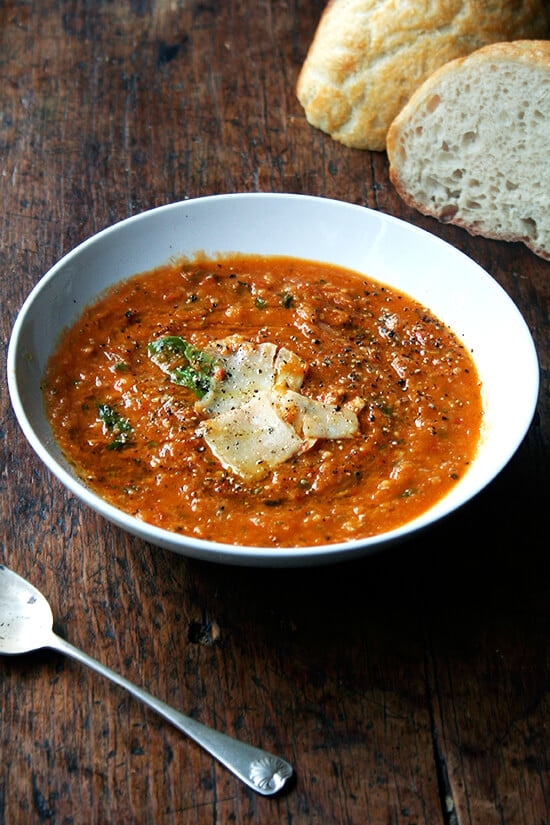
I first posted this recipe for tomato and bread soup (pappa al pomodoro) several years ago, but since publishing it, I’ve learned two things about the soup that inspired its creation:
- The chef used water as opposed to stock.
- The chef used canned San Marzano tomatoes.
Both details surprised me, and while I have never successfully made the soup with canned tomatoes, I now only use water.
If this sounds suspicious or if you can’t help but think stock could only make this soup taste better, let’s review: remember that French onion soup we made last winter? Or that delectable fresh tomato-red pepper pasta sauce we made last summer?
Each of these recipes calls for water exclusively.
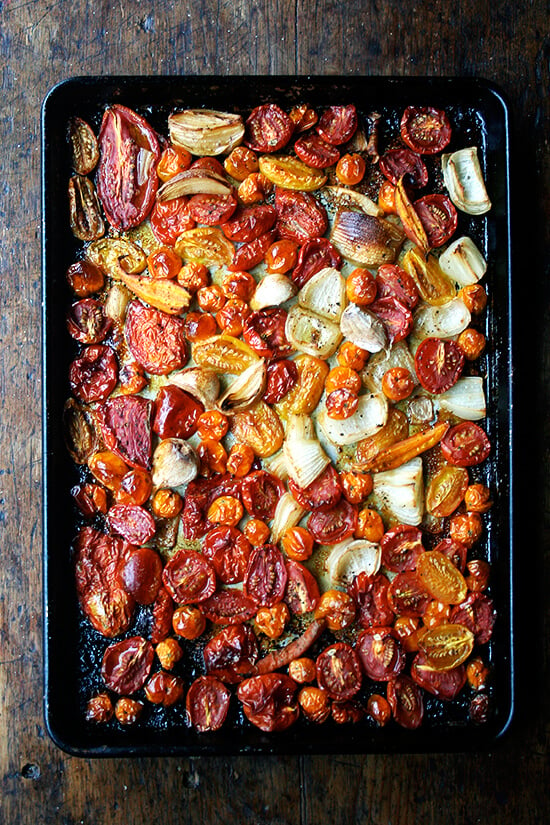
Here, slow-roasting the tomatoes, onions, carrots and garlic concentrates all of the flavors, making any liquid but water unnecessary. Furthermore, water doesn’t muddy the pure tomato flavor. As with the onion soup, you need to plan ahead — the onions roast for almost three hours — but the work is mostly hands off.
I know it’s hard this time of year not to eat tomatoes any other way but raw, with a sprinkling of salt and a drizzle of olive oil , but if you’re lucky enough to have a glut, this one’s for you.
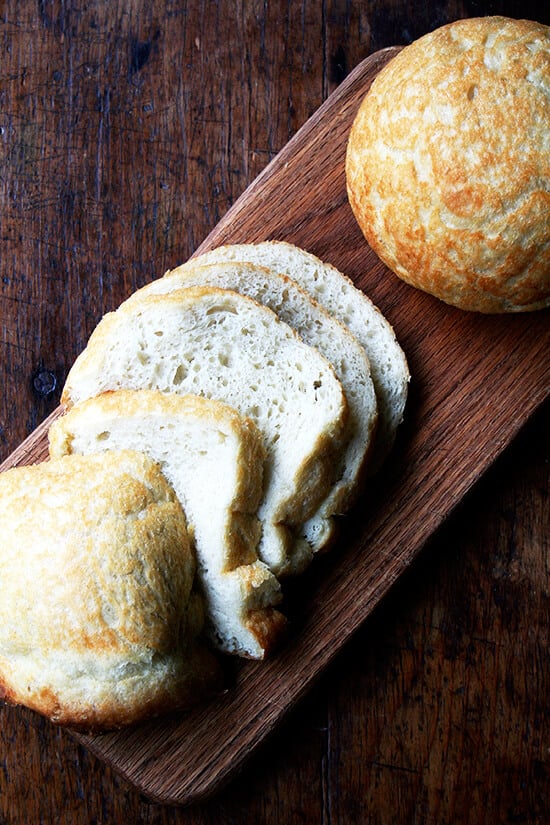
Of course: peasant bread on the side.
Description
Inspired originally by a soup served at Cafe Mimosa in San Clemente.
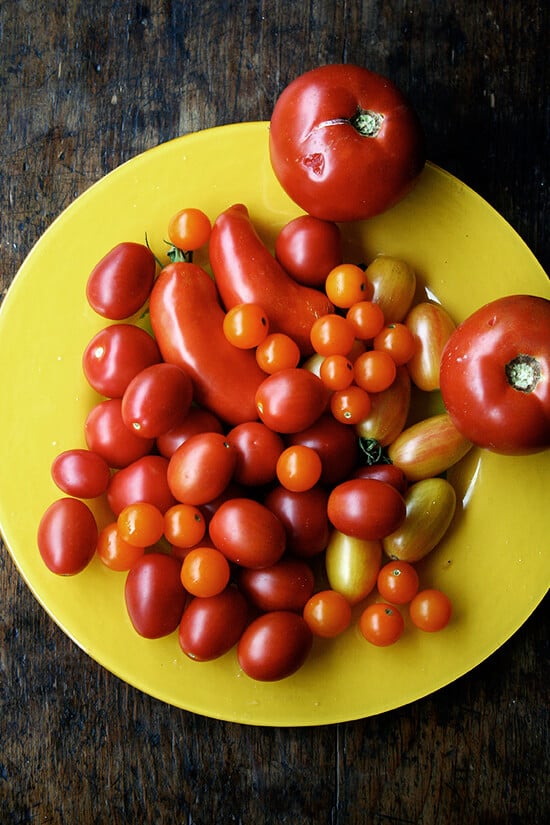
- 3 lbs (1.36 kg) tomatoes, about, halved if large, left whole if cherry or grape, enough to fill a sheet tray
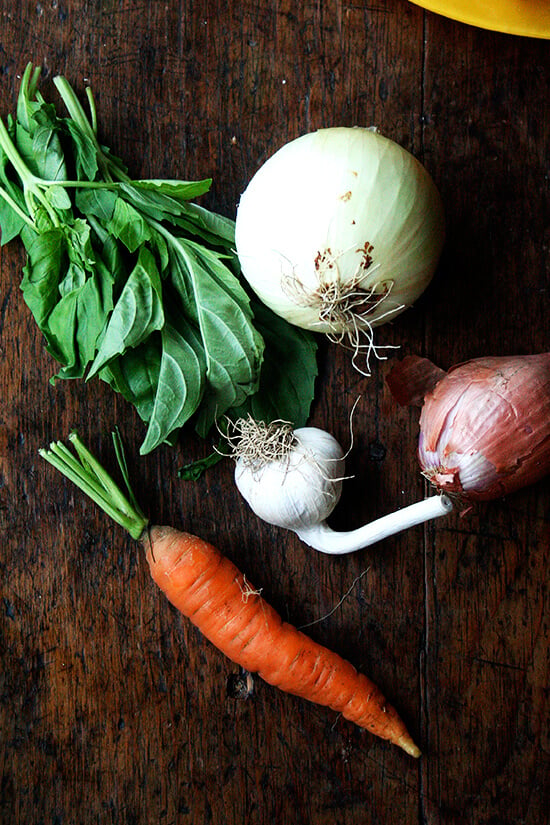
- 1 onion, peeled and chopped into big chunks ( 9.5 oz | 256 g once trimmed)
- 1 shallot, peeled and chopped into big chunks ( 3⅛ oz | 88 g once trimmed)
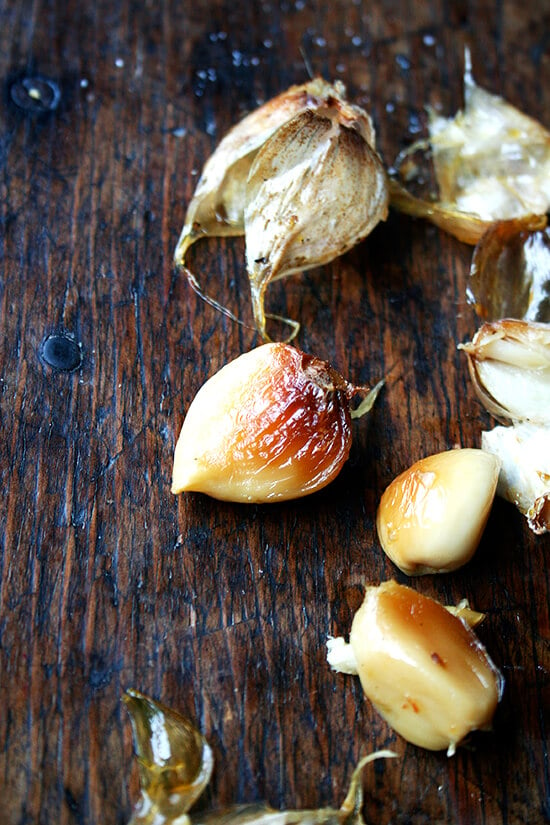
- 1 head garlic, cloves separated but left peeled, lightly smashed ( 1.5 oz | 42 g )
- one large carrot, unpeeled, roughly chopped ( 2 oz | 55 g )
- 3 tablespoons olive oil, about
- 1 teaspoon kosher salt plus more to taste
- fresh cracked pepper
- 4 to 5 oz | 135 g (a couple slices) bakery style bread or peasant bread
- 2 to 3 cups water
- 1 bunch (1 oz | 28 g) fresh basil
- crushed red pepper flakes to taste
- Shaved Parmigiano Reggiano and more bread for serving, optional
- olive oil for drizzling, optional
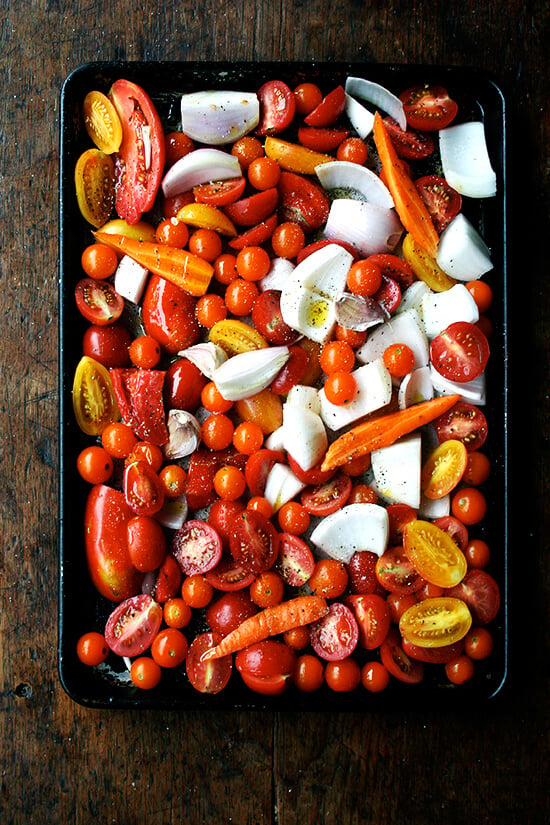
- Preheat the oven to 300ºF. Line a rimmed sheet tray with all of the vegetables. The vegetables should cover the tray in a single layer. (Note: the total weight of vegetables is about 4 lbs or 1.812 kg.) Drizzle olive oil over top. Season with 1 teaspoon kosher salt and pepper to taste. Roast for about three hours, but start checking after 2 hours — sometimes they are done in 2.5 hours. The vegetables should be soft and slightly caramelized.
- Meanwhile, toast the bread. If you haven’t already, slice the bread into ½-inch thick pieces. Place on the counter to dry or toast briefly in the toaster. You can also stick the bread in the oven for about 20 minutes or so while the tomatoes are roasting. You just want to dry out the bread; you’re not trying to brown it.
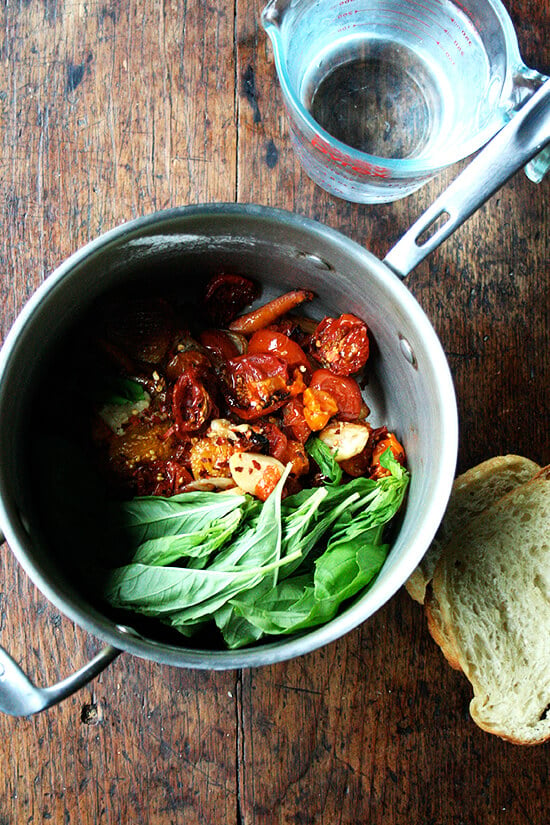
- When the vegetables are done, place them in a pot with 2½ cups of water. Bring to a simmer. Note: It’s best to bring this soup to a simmer slowly — it spits violently if you heat it too quickly. Also, reheat with the lid on over low heat for the same reason.
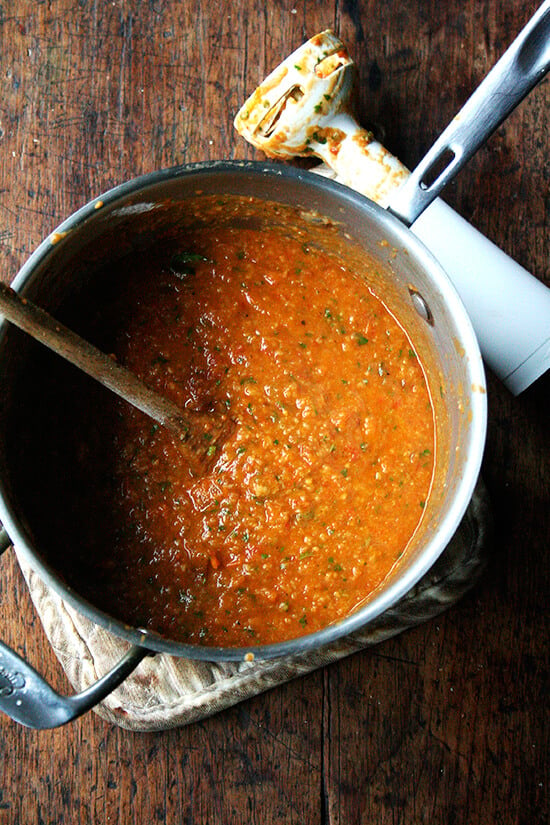
- Season with a pinch of salt and crushed red pepper flakes if using. Add the bunch of basil. Break one slice of bread into medium-sized cubes and add to the pot. Using an emersion blender or food processor or traditional blender, puree the soup roughly. Add the other slice of bread if necessary. The soup should be slightly chunky. Taste and add more salt or bread if necessary. Thin with more water until soup reaches desired consistency.
- Serve with a drizzle of olive oil and a few shavings of Parmigiano Reggiano.
- Prep Time: 15 minutes
- Cook Time: 3 hours
- Category: Soup
- Method: Oven, Roast
- Cuisine: American, Italian
I first posted this recipe for tomato and bread soup (pappa al pomodoro) several years ago, but since publishing it, I’ve learned two things about the soup that inspired its creation:
- The chef used water as opposed to stock.
- The chef used canned San Marzano tomatoes.
Both details surprised me, and while I have never successfully made the soup with canned tomatoes, I now only use water.
If this sounds suspicious or if you can’t help but think stock could only make this soup taste better, let’s review: remember that French onion soup we made last winter? Or that delectable fresh tomato-red pepper pasta sauce we made last summer?
Each of these recipes calls for water exclusively.
Here, slow-roasting the tomatoes, onions, carrots and garlic concentrates all of the flavors, making any liquid but water unnecessary. Furthermore, water doesn’t muddy the pure tomato flavor. As with the onion soup, you need to plan ahead — the onions roast for almost three hours — but the work is mostly hands off.
I know it’s hard this time of year not to eat tomatoes any other way but raw, with a sprinkling of salt and a drizzle of olive oil , but if you’re lucky enough to have a glut, this one’s for you.
Of course: peasant bread on the side.
Description
Inspired originally by a soup served at Cafe Mimosa in San Clemente.
- 3 lbs (1.36 kg) tomatoes, about, halved if large, left whole if cherry or grape, enough to fill a sheet tray
- 1 onion, peeled and chopped into big chunks ( 9.5 oz | 256 g once trimmed)
- 1 shallot, peeled and chopped into big chunks ( 3⅛ oz | 88 g once trimmed)
- 1 head garlic, cloves separated but left peeled, lightly smashed ( 1.5 oz | 42 g )
- one large carrot, unpeeled, roughly chopped ( 2 oz | 55 g )
- 3 tablespoons olive oil, about
- 1 teaspoon kosher salt plus more to taste
- fresh cracked pepper
- 4 to 5 oz | 135 g (a couple slices) bakery style bread or peasant bread
- 2 to 3 cups water
- 1 bunch (1 oz | 28 g) fresh basil
- crushed red pepper flakes to taste
- Shaved Parmigiano Reggiano and more bread for serving, optional
- olive oil for drizzling, optional
- Preheat the oven to 300ºF. Line a rimmed sheet tray with all of the vegetables. The vegetables should cover the tray in a single layer. (Note: the total weight of vegetables is about 4 lbs or 1.812 kg.) Drizzle olive oil over top. Season with 1 teaspoon kosher salt and pepper to taste. Roast for about three hours, but start checking after 2 hours — sometimes they are done in 2.5 hours. The vegetables should be soft and slightly caramelized.
- Meanwhile, toast the bread. If you haven’t already, slice the bread into ½-inch thick pieces. Place on the counter to dry or toast briefly in the toaster. You can also stick the bread in the oven for about 20 minutes or so while the tomatoes are roasting. You just want to dry out the bread; you’re not trying to brown it.
- When the vegetables are done, place them in a pot with 2½ cups of water. Bring to a simmer. Note: It’s best to bring this soup to a simmer slowly — it spits violently if you heat it too quickly. Also, reheat with the lid on over low heat for the same reason.
- Season with a pinch of salt and crushed red pepper flakes if using. Add the bunch of basil. Break one slice of bread into medium-sized cubes and add to the pot. Using an emersion blender or food processor or traditional blender, puree the soup roughly. Add the other slice of bread if necessary. The soup should be slightly chunky. Taste and add more salt or bread if necessary. Thin with more water until soup reaches desired consistency.
- Serve with a drizzle of olive oil and a few shavings of Parmigiano Reggiano.
- Prep Time: 15 minutes
- Cook Time: 3 hours
- Category: Soup
- Method: Oven, Roast
- Cuisine: American, Italian
Description
Inspired originally by a soup served at Cafe Mimosa in San Clemente.
- 3 lbs (1.36 kg) tomatoes, about, halved if large, left whole if cherry or grape, enough to fill a sheet tray
- 1 onion, peeled and chopped into big chunks ( 9.5 oz | 256 g once trimmed)
- 1 shallot, peeled and chopped into big chunks ( 3⅛ oz | 88 g once trimmed)
- 1 head garlic, cloves separated but left peeled, lightly smashed ( 1.5 oz | 42 g )
- one large carrot, unpeeled, roughly chopped ( 2 oz | 55 g )
- 3 tablespoons olive oil, about
- 1 teaspoon kosher salt plus more to taste
- fresh cracked pepper
- 4 to 5 oz | 135 g (a couple slices) bakery style bread or peasant bread
- 2 to 3 cups water
- 1 bunch (1 oz | 28 g) fresh basil
- crushed red pepper flakes to taste
- Shaved Parmigiano Reggiano and more bread for serving, optional
- olive oil for drizzling, optional
- Preheat the oven to 300ºF. Line a rimmed sheet tray with all of the vegetables. The vegetables should cover the tray in a single layer. (Note: the total weight of vegetables is about 4 lbs or 1.812 kg.) Drizzle olive oil over top. Season with 1 teaspoon kosher salt and pepper to taste. Roast for about three hours, but start checking after 2 hours — sometimes they are done in 2.5 hours. The vegetables should be soft and slightly caramelized.
- Meanwhile, toast the bread. If you haven’t already, slice the bread into ½-inch thick pieces. Place on the counter to dry or toast briefly in the toaster. You can also stick the bread in the oven for about 20 minutes or so while the tomatoes are roasting. You just want to dry out the bread; you’re not trying to brown it.
- When the vegetables are done, place them in a pot with 2½ cups of water. Bring to a simmer. Note: It’s best to bring this soup to a simmer slowly — it spits violently if you heat it too quickly. Also, reheat with the lid on over low heat for the same reason.
- Season with a pinch of salt and crushed red pepper flakes if using. Add the bunch of basil. Break one slice of bread into medium-sized cubes and add to the pot. Using an emersion blender or food processor or traditional blender, puree the soup roughly. Add the other slice of bread if necessary. The soup should be slightly chunky. Taste and add more salt or bread if necessary. Thin with more water until soup reaches desired consistency.
- Serve with a drizzle of olive oil and a few shavings of Parmigiano Reggiano.
- Prep Time: 15 minutes
- Cook Time: 3 hours
- Category: Soup
- Method: Oven, Roast
- Cuisine: American, Italian
Find it online : https://alexandracooks.com/2014/08/27/roasted-tomato-and-bread-soup/

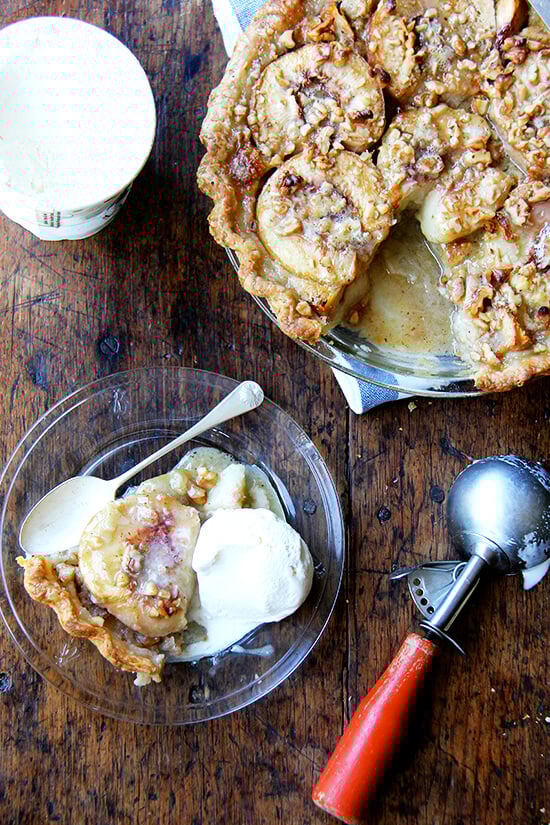
No recipe was provided, and I couldn’t find an exact match with my googling, but I think the point is that you don’t need a recipe here. Every bubbling-fruit, crumb-topped concoction you make can be adapted to have vanilla bean-flecked brown butter.
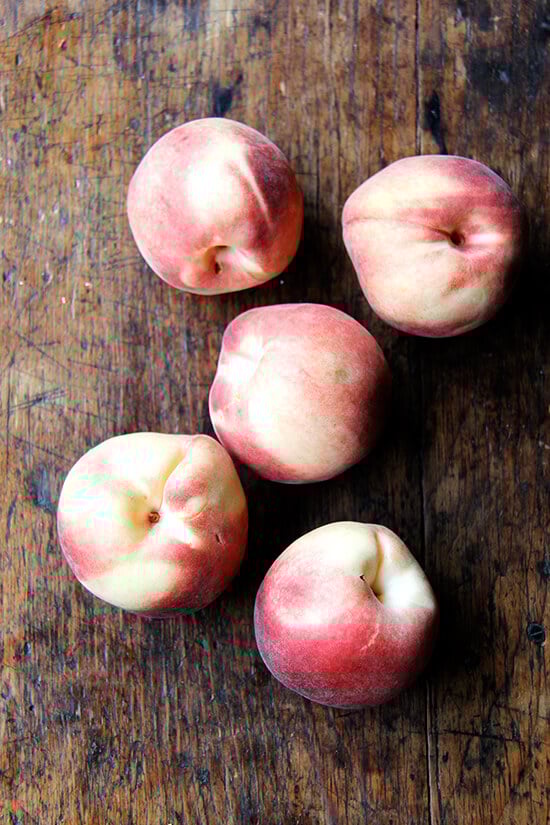
The letter almost inspired me to sacrifice the half dozen peaches on my counter, but it sort of felt like a crime — the peaches have been so good this summer, and to eat them any other way but leaning over the sink, juices dripping down chin and arm, felt wrong.
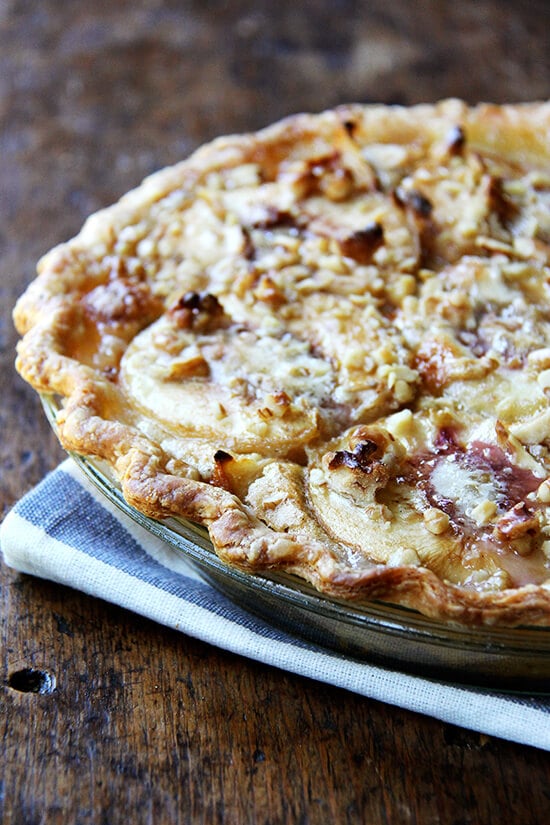
But it also felt wrong to let summer pass without making a single pie, cobbler, or crisp. How has this happened?! Where does life go?! Over the Labor Day weekend, I took action and made this German peach pie, an old recipe my mother has had scribbled on scratch paper for years. I adapted the recipe to include brown butter, vanilla bean paste, and walnuts in place of pecans.
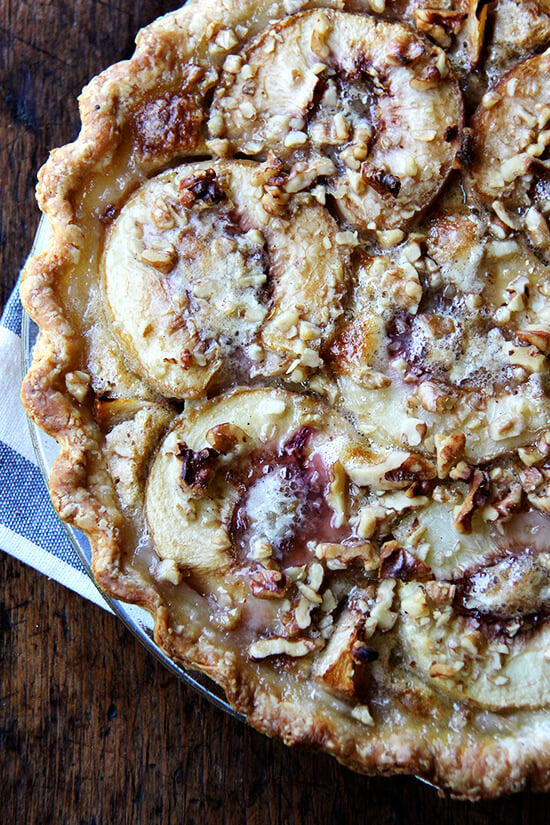
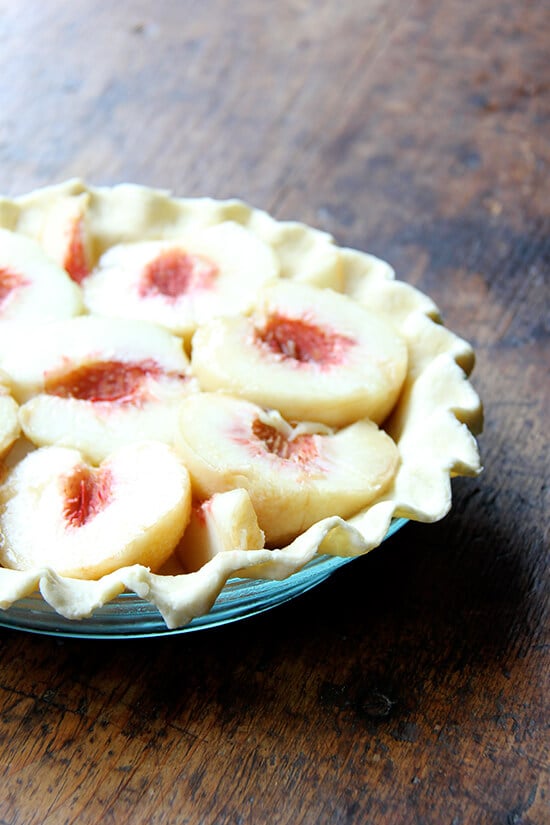
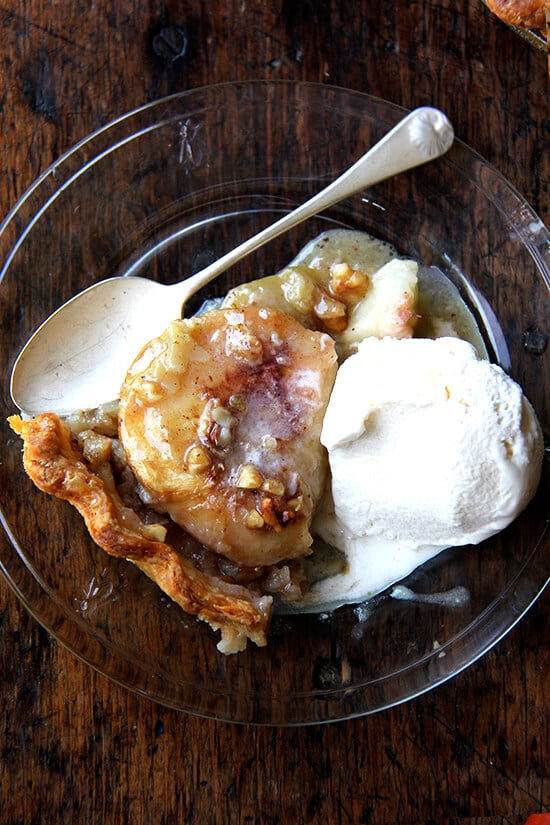
German peach pie, which may or may not be German at all, is like an open-faced pie made with four halved, peeled peaches topped with a butter-sugar-egg mixture and a small sprinkling of nuts. When it bakes, this vanilla custard bubbles around the peach halves, which, after the hour in the oven, become spoon tender and are utterly delicious. Vanilla ice cream is a must as is a crew to help polish off the spoils, though pie for breakfast isn’t the worst thought either.
All I can say is that I’ve been sleeping easy with “make pie” crossed off my summer bucket list. Hope you all have been, too.
This is a really boring video demonstrating the magic of the Catamount Flameware measuring cup . You can place the measuring cup directly over a flame. I love it.
Description
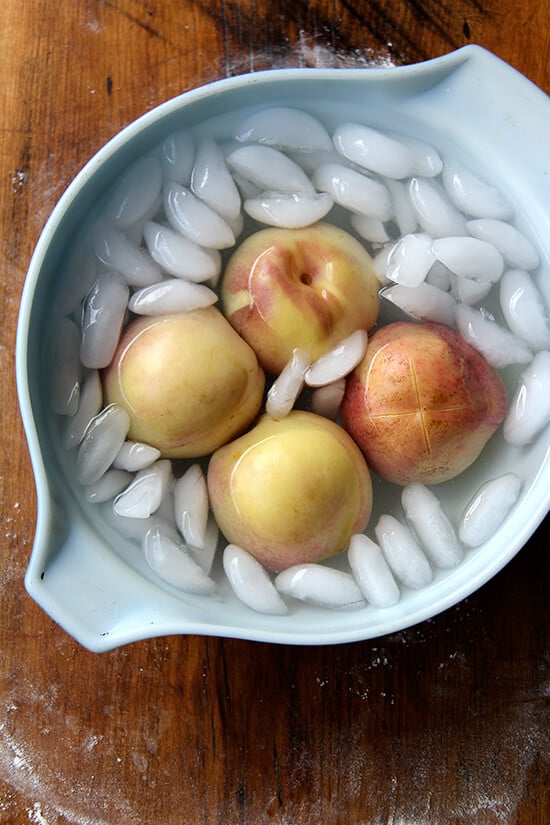
This is the pie dough I use for every recipe requiring a crust. For more guidance on pastry and pie making, see this Basic Apple Pie post . King Arthur Flour has a great peach-peeling tutorial. In sum, boil water, prepare an ice bath, blanch peaches for 30 seconds total, transfer to ice bath, peel skin, which should come off easily if peaches are ripe. This recipe source is unknown. My mother has had it scribbled on scratch paper for years. I made a few changes to the recipe: brown butter vs melted, the addition of vanilla and salt, walnuts in place of pecans, omitted cinnamon.
- 1 nine-inch unbaked pie shell (see recipe below)
- 3 tablespoons butter
- 4 peaches, peeled , pitted and halved
- 1/2 cup sugar
- 2 eggs
- 1 teaspoon vanilla bean paste or vanilla extract
- 1/4 teaspoon kosher salt
- 1/4 cup chopped walnuts or pecans or almonds>for the pie crust (this yields 2 9-inch rounds, freeze one for later or cut recipe in half):
- 2½ cups ( 11.25 oz | 320g ) all-purpose flour
- 2 T. sugar
- ½ tsp . table salt
- 16 T. (8 oz | 227g) unsalted butter
- ½ C. + 2 T. ( 4 oz | 114 g + 1 oz | 28g ) ice water
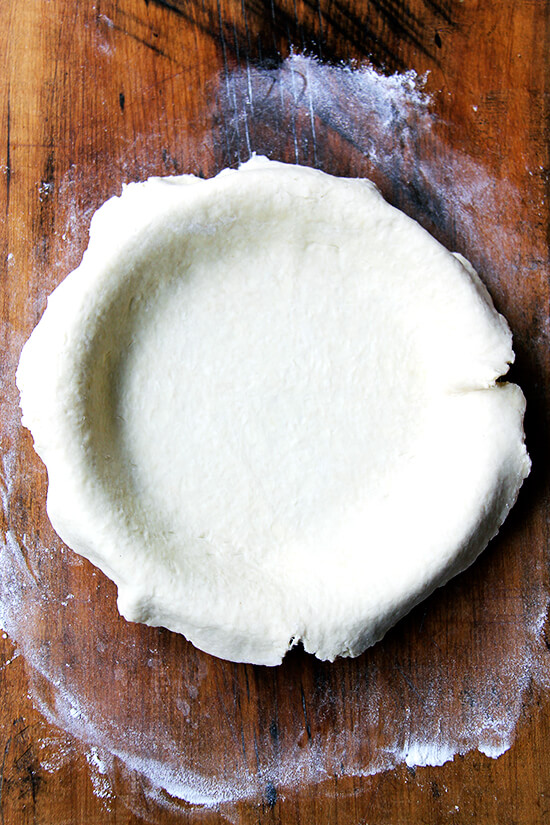
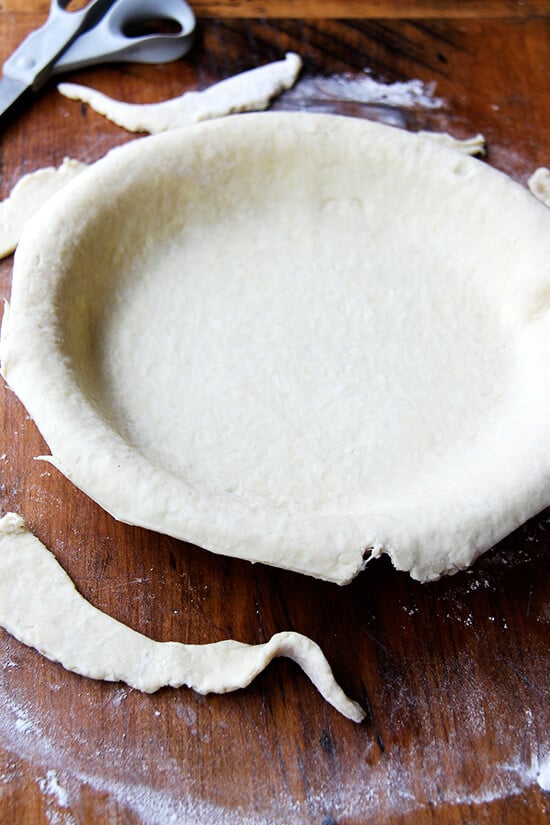
- Preheat oven to 400ºF. Roll dough into a circle about an inch larger in diameter than your pie dish. Transfer dough to dish. Press gently to make sure dough fills pie plate. Trim excess dough. Save for cinnamon snails. Crimp edges if you wish. Place shell in fridge while you prepare the rest of the recipe.
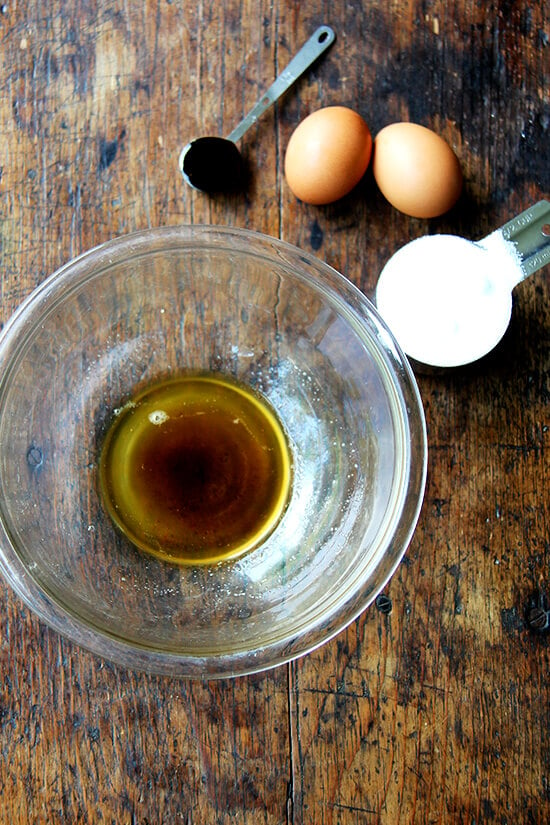
- Brown the butter: Place butter in a small saucepan or skillet or catamount flameware measuring cup and bring to a bubble over medium heat. Let the butter gently bubble, swirling the pan occasionally, until the mixture smells nutty and starts turning brown. Before the mixture starts turning brown, the bubbles at the surface of the butter will get really small and will be moving rapidly — be careful at this point as the mixture can quickly turn from brown butter to burnt butter. Remove pan from heat and let cool slightly before using.
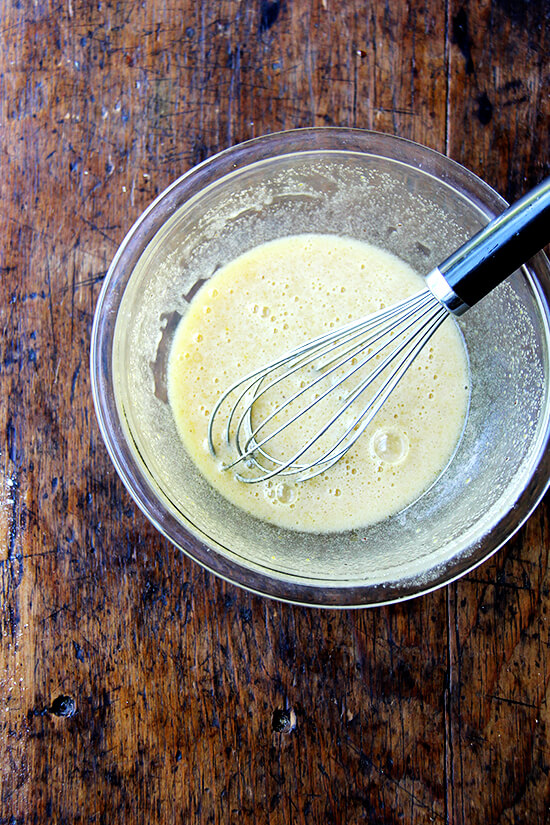
- Whisk butter with sugar. Add eggs, vanilla and salt and whisk until smooth.Arrange halved peaches flat side up in shell. If all of the peaches don’t fit, cut up the one that doesn’t and nestle the pieces in between the spaces.
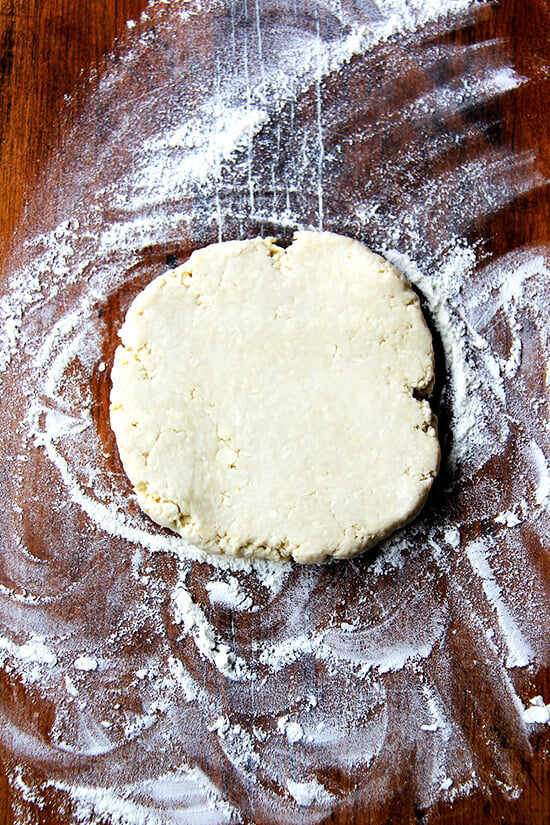
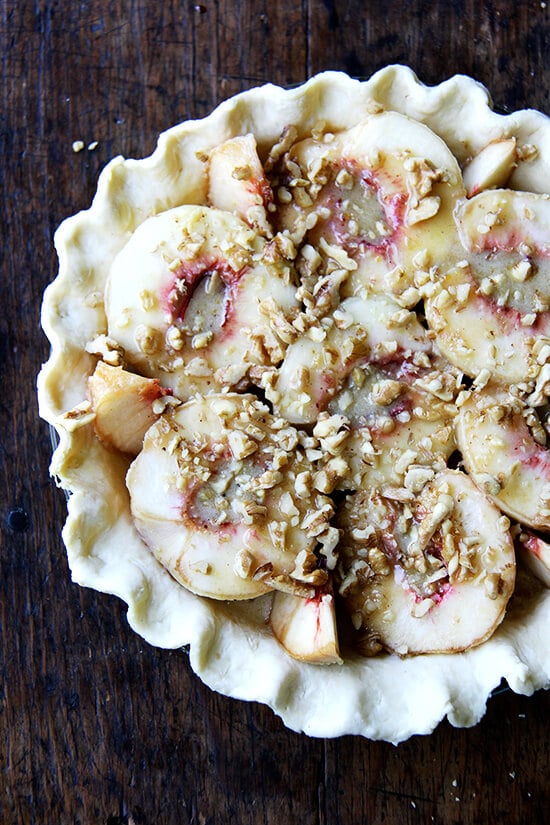
- Pour the custard over the peaches. Sprinkle with the nuts. Place pie on sheet pan. Bake 15 minutes. Reduce to 325ºF and bake for 35 to 45 minutes more or until crust is brown and peaches are bubbling. To make the the pie crust:In a large bowl, whisk flour, sugar and salt together (or pulse in food processor). Cut butter into flour and using the back of a fork or a pastry cutter, incorporate butter into flour mixture until butter is in small pieces. (If using food processor, pulse at 1-second intervals until butter is the size of peas.) Add ice water and continue to stir with fork until mixture comes together to form a mass. Add more ice water if necessary, one tablespoon at a time. Gently form mass into a ball, divide in half, flatten each half into a disk and wrap each disk in plastic wrap. Chill until ready to use.
