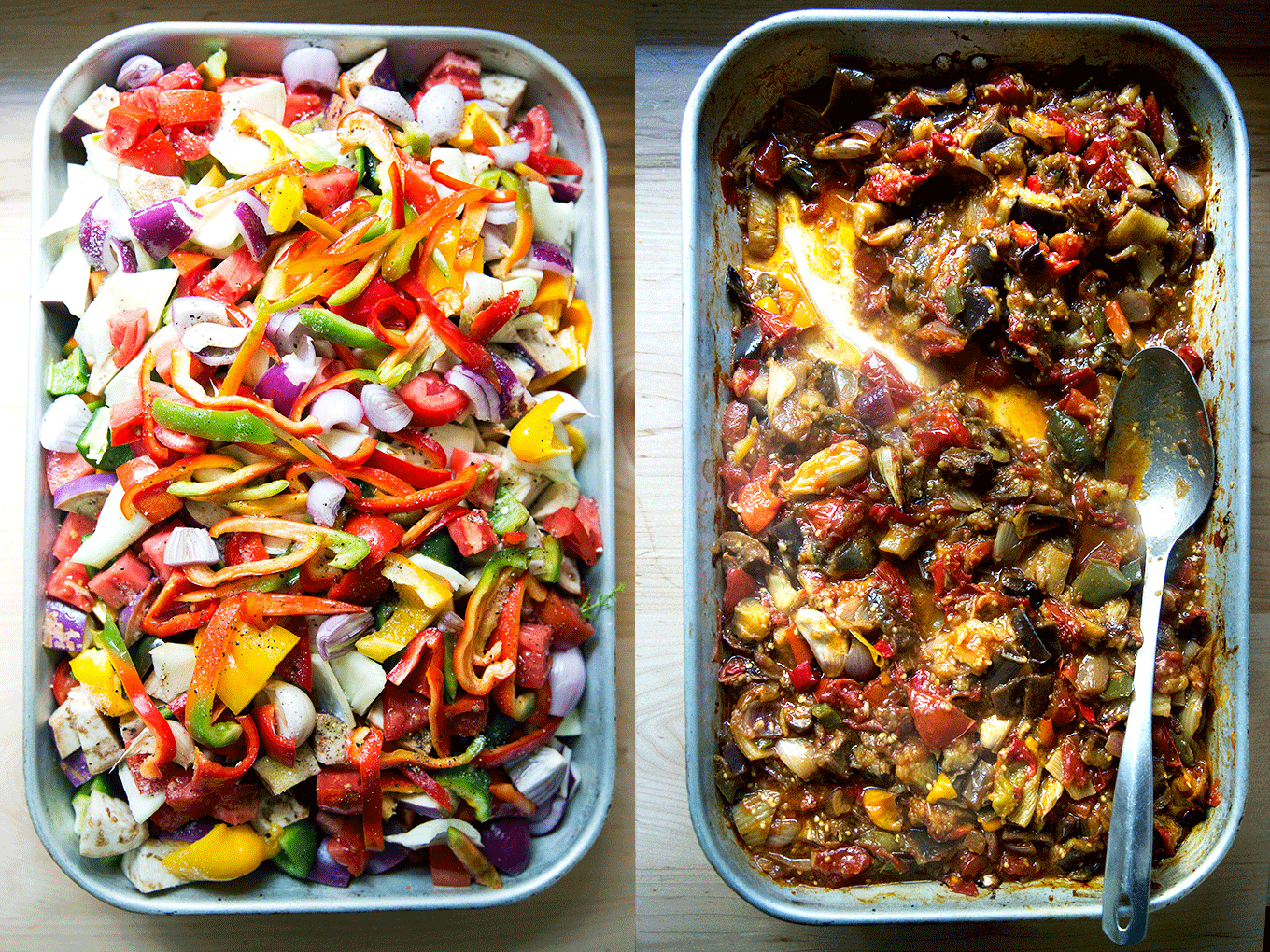
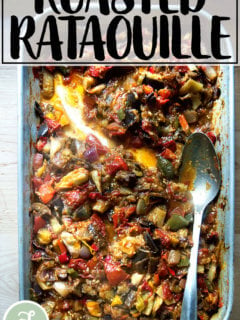
Last Friday, before heading out to see friends for a long weekend, I made the roasted ratatouille from my friend Gena Hamshaw’s Food52 Vegan . I chopped up every pepper, onion, eggplant, tomato, and zucchini I could find, threw them into my largest roasting pan, tossed them with olive oil, white balsamic vinegar, fresh thyme, and salt, and cooked them till they released their juices and melted into a stewy mix.
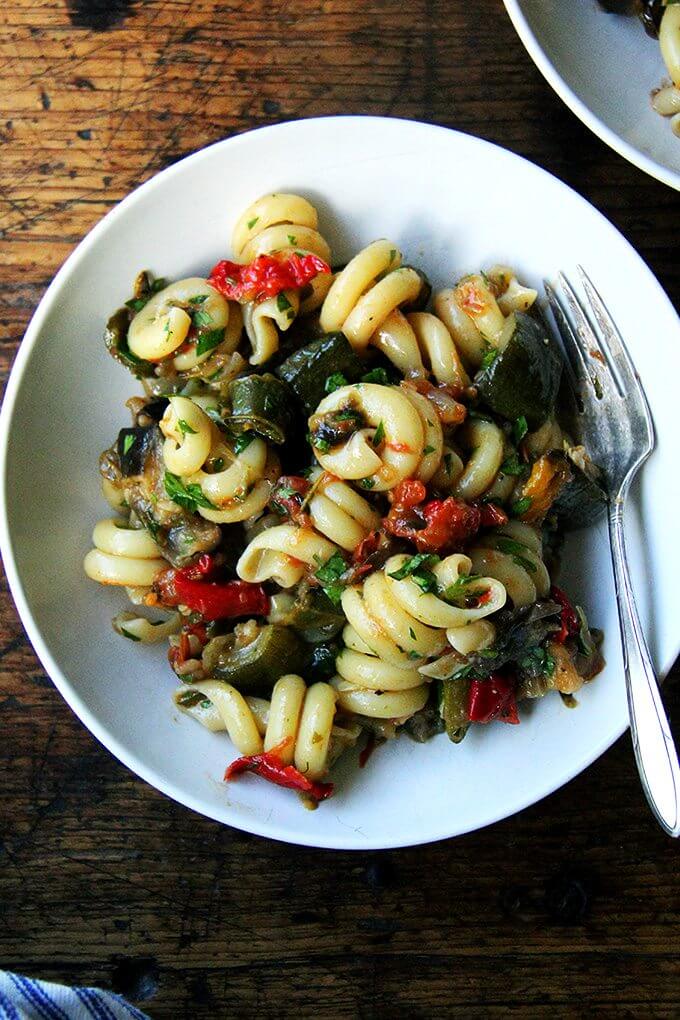
That evening, I tossed the ratatouille, as Gena suggests, with pasta, then packed up what remained for the road. My friends and I ate the ratatouille all weekend, cold straight from the fridge for lunch, spread over grilled bread before dinner.
What I love about this ratatouille’s flavor is the subtle bite lent by the balsamic vinegar, which evokes eggplant caponata though the sharpness here is more mellow. It is irresistible.
What I also love about this roasted ratatouille is how unfussy and forgiving it is. In the notes, Gena writes: “Traditional ratatouille can be a little high maintenance: It simmers on the stovetop for an hour or longer and often requires adding specific vegetables at specific times.” With roasting, on the other hand, all of the vegetables and seasonings enter the pan at once.
With the exception of a quick stir halfway through cooking, the process is hands off—there’s no sautéing, no (vigilant) monitoring, no staggering the entry of the vegetables. When the vegetables release their juices, and when those juices then reduce down into a thick, stewy mix, it’s done.
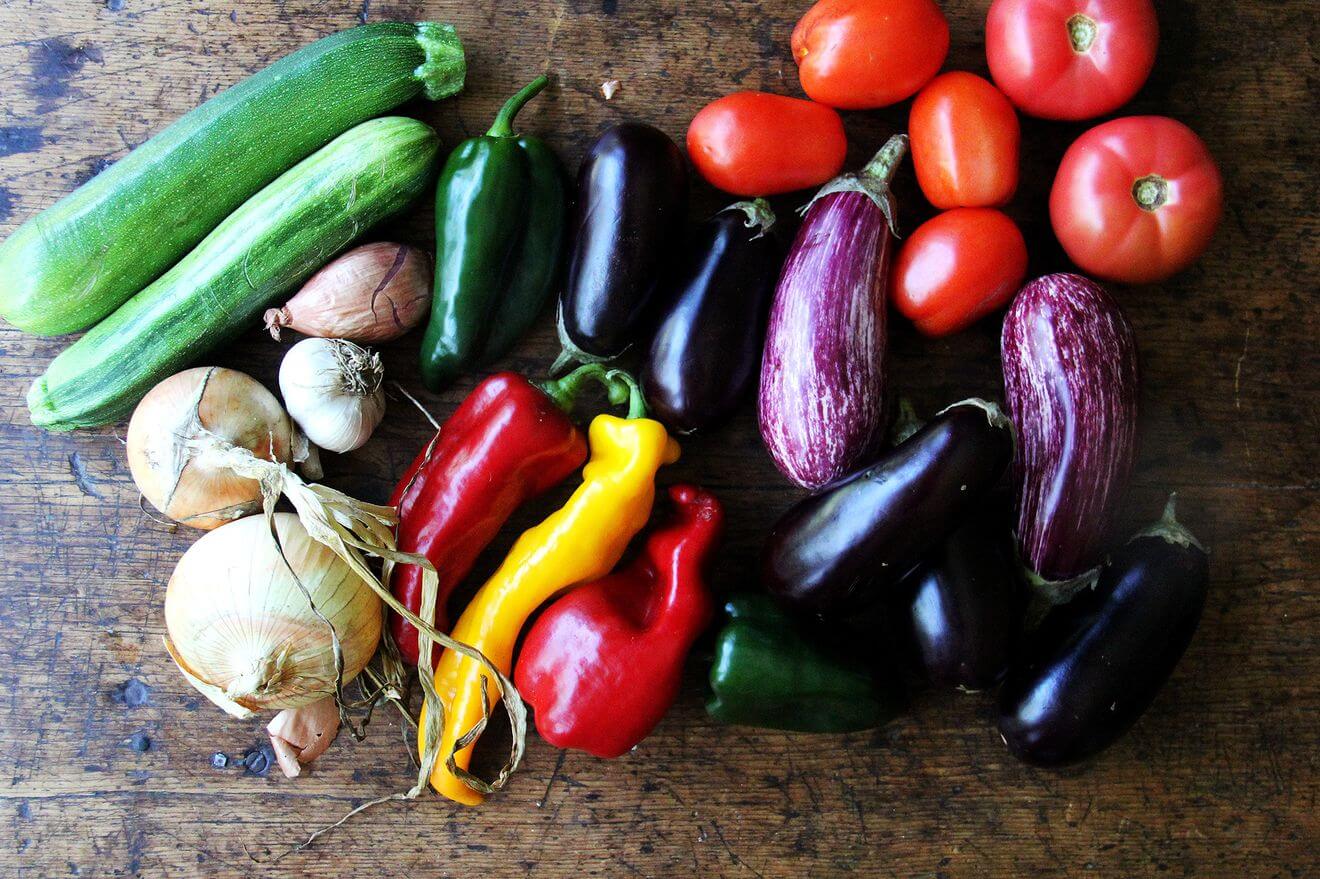
How to Make Roasted Ratatouille
Here’s what you do: Gather all of your ratatouille vegetables: tomatoes, eggplant, peppers, onions, summer squash, and garlic.
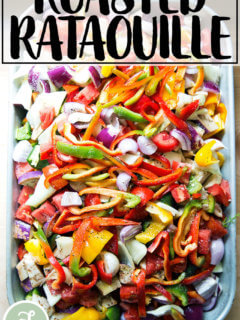
Roughly chop everything. As you chop, pile the vegetables into your largest roasting pan, seasoning each layer of vegetables with salt.
Pour olive oil and vinegar over top. Crack pepper over top.
If your pan looks like this, don’t worry! (And don’t stir either.)
Transfer pan to the oven and roast at 400ºF for 45 minutes. At this point, when the vegetables have released some of their juices and have shrunk down considerably, you can remove the pan, and carefully give it all a stir.
Return the pan to the oven and continue to cook for 2 hours (or more or less), stirring halfway, until the vegetables become completely stewy, almost jammy in texture.
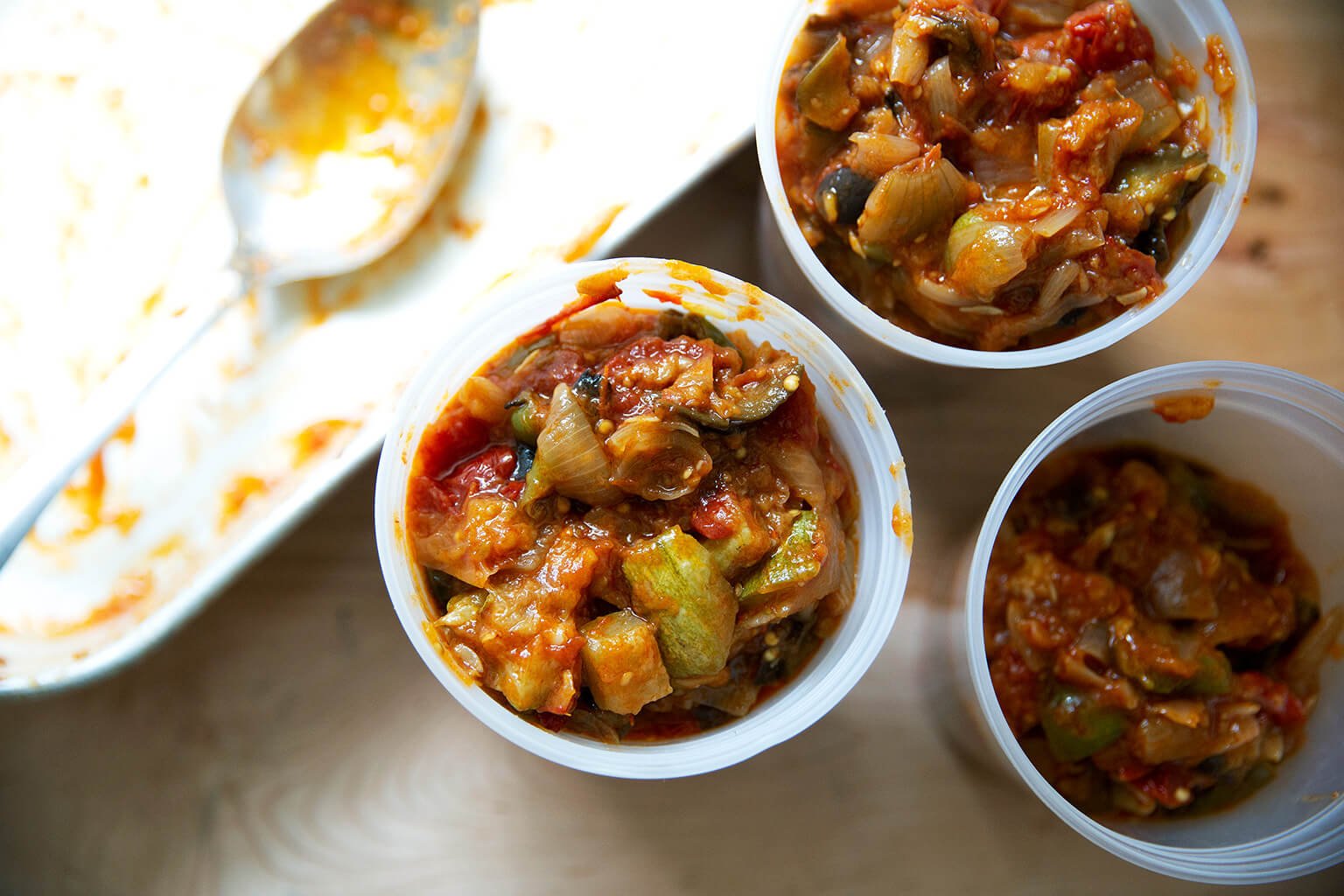
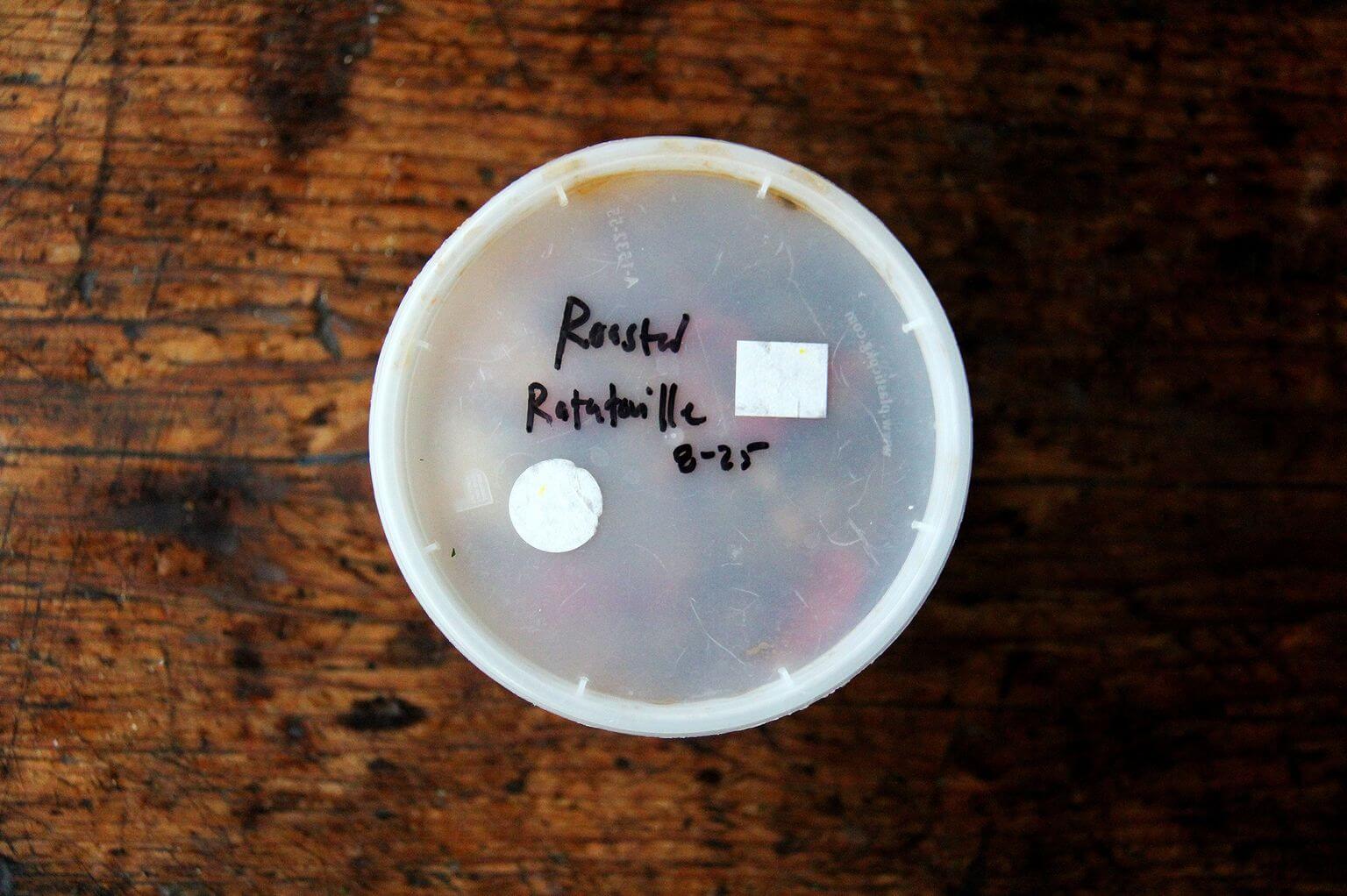
Spread your ratatouille over toast, toss with pasta, use as a layer in a summer lasagna , or simply eat with a spoon. Ratatouille freezes beautifully, too, so don’t be afraid to pack it into quart containers, and stash it away for a future use.
Description
This is adapted from Food52 Vegan by Gena Hamshaw.
Use this recipe as a guide: It’s best to use a balanced mix of vegetables, but the roasting process is forgiving. For instance, I’ve made this with and without zucchini; I’ve used a mix of vegetables that leans heavy on the eggplant at times and heavy on the tomatoes at others. I’ve used all sorts of peppers, tomatoes, eggplant, etc.
Also, I often make a quadruple (or more!) recipe, so don’t be afraid to load up your largest roasting pan. The key is to be patient with the roasting. Let the vegetables cook until the liquids reduce, and the mixture becomes thick and stewy. When I double/triple/quadruple the recipe, I scale the dressing as needed. When my roasting pan is completely loaded, I use 1 cup olive oil and 1/2 cup white balsamic vinegar (or 1/2 cup olive oil and 1/4 cup vinegar), and I cook the vegetables for 3 hours.
Also, I often omit the thyme altogether: I simply season each layer of vegetables with salt as I add them to the pan. Then once all of the vegetables are in, I pour over the olive oil and white balsamic vinegar. After 1 hour, I stir it; then I stir it again every hour after that until it has roasted for 3 hours total.
For the roasted ratatouille:
- 12 ounces eggplant, (about 1 ), chopped into 1 -inch pieces, see notes above re quantities
- 1 1/4 pounds tomatoes, chopped into 1 -inch pieces
- 12 ounces zucchini (about 2 ), chopped into 1 -inch pieces
- 2 red bell (or other) peppers, seeded and coarsely chopped
- 1 yellow or white onion, chopped
- 1 shallot, thinly sliced
- 4 cloves garlic, minced
- 1/4 to 1/2 cups olive oil, see notes above
- 2 to 4 tablespoons white balsamic vinegar
- 2 teaspoons chopped fresh thyme, optional
- 1 teaspoon kosher salt plus more to taste
- Freshly cracked pepper to taste
For the pasta:
- dried pasta
- roasted ratatouille
- freshly grated parmesan
- basil
- Preheat the oven to 400° F.
- In a large roasting pan or casserole, combine the tomatoes, eggplant, zucchini, peppers, onion, shallot, and garlic. Note: I add the vegetables to the pan as I finish chopping them, and sprinkle each layer of vegetables lightly with salt.
- In a small bowl or measuring cup, whisk together the olive oil, vinegar, thyme, and 1 teaspoon kosher salt. Pour over the vegetables. Toss to coat. Season with pepper. (Alternatively: If you’ve seasoned each layer of vegetables generously with salt, simply pour the olive oil and vinegar over the vegetables. As noted above, I omit the thyme.)
- Bake for 30 minutes, then stir well. Bake for another 30 to 45 minutes (or longer, especially if you’ve increased the quantities: if my roasting pan is really loaded, I roast the vegetables for 3 hours, stirring once every hour, until the juices really begin to reduce/thicken) until the vegetables are all very tender and the released juices are beginning to thicken. Taste and adjust seasoning with more salt and pepper as desired.
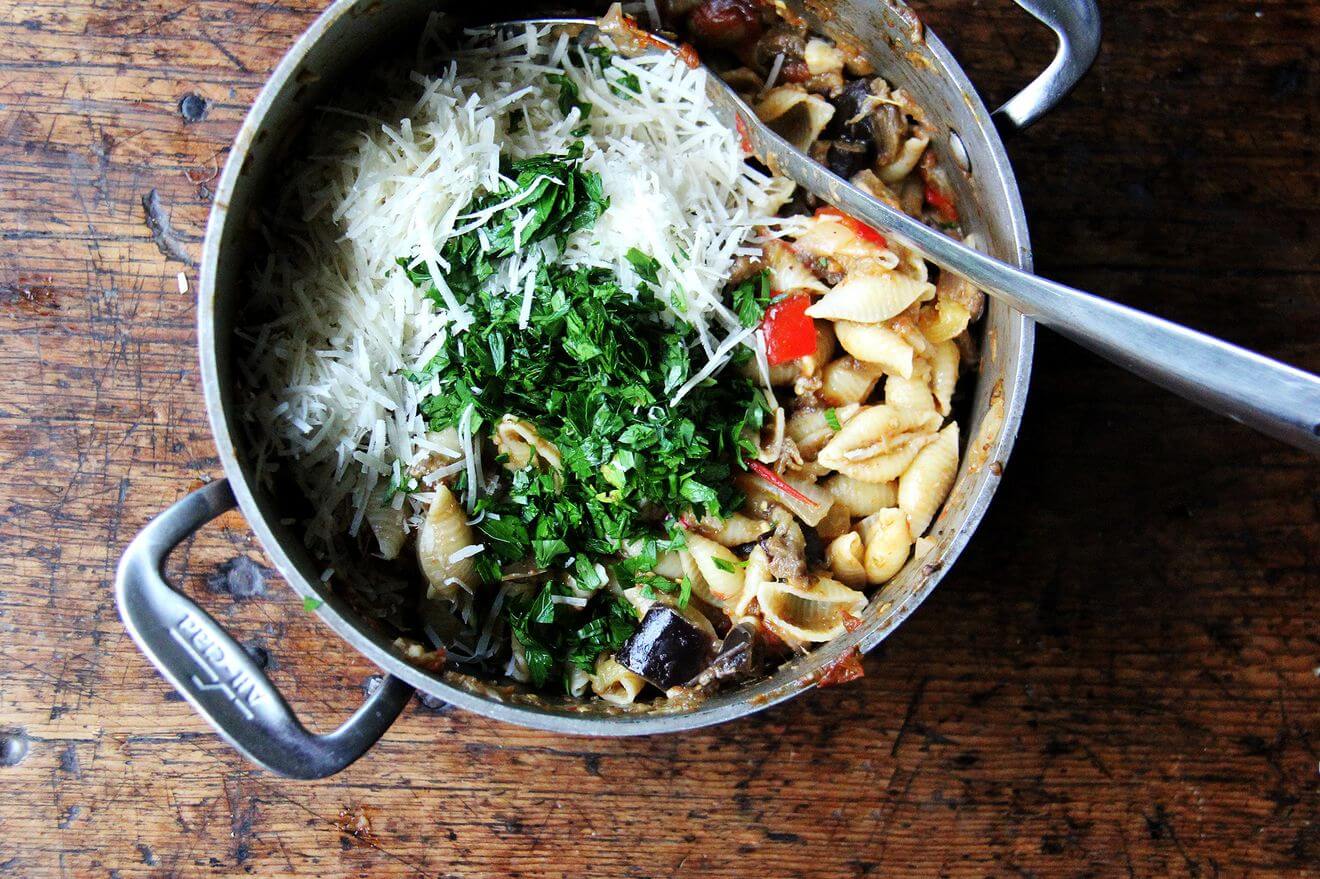
- To serve, spoon over toast or toss with cooked pasta, grated parmesan, finely chopped basil and enough of the reserved pasta cooking liquid to make a nice sauce.
- Prep Time: 20 minutes
- Cook Time: 1 to 2 hours (or more)
- Category: Vegetable
- Method: Roasted
- Cuisine: French
Last Friday, before heading out to see friends for a long weekend, I made the roasted ratatouille from my friend Gena Hamshaw’s Food52 Vegan . I chopped up every pepper, onion, eggplant, tomato, and zucchini I could find, threw them into my largest roasting pan, tossed them with olive oil, white balsamic vinegar, fresh thyme, and salt, and cooked them till they released their juices and melted into a stewy mix.
That evening, I tossed the ratatouille, as Gena suggests, with pasta, then packed up what remained for the road. My friends and I ate the ratatouille all weekend, cold straight from the fridge for lunch, spread over grilled bread before dinner.
What I love about this ratatouille’s flavor is the subtle bite lent by the balsamic vinegar, which evokes eggplant caponata though the sharpness here is more mellow. It is irresistible.
What I also love about this roasted ratatouille is how unfussy and forgiving it is. In the notes, Gena writes: “Traditional ratatouille can be a little high maintenance: It simmers on the stovetop for an hour or longer and often requires adding specific vegetables at specific times.” With roasting, on the other hand, all of the vegetables and seasonings enter the pan at once.
With the exception of a quick stir halfway through cooking, the process is hands off—there’s no sautéing, no (vigilant) monitoring, no staggering the entry of the vegetables. When the vegetables release their juices, and when those juices then reduce down into a thick, stewy mix, it’s done.
How to Make Roasted Ratatouille
Here’s what you do: Gather all of your ratatouille vegetables: tomatoes, eggplant, peppers, onions, summer squash, and garlic.
Roughly chop everything. As you chop, pile the vegetables into your largest roasting pan, seasoning each layer of vegetables with salt.
Pour olive oil and vinegar over top. Crack pepper over top.
If your pan looks like this, don’t worry! (And don’t stir either.)
Transfer pan to the oven and roast at 400ºF for 45 minutes. At this point, when the vegetables have released some of their juices and have shrunk down considerably, you can remove the pan, and carefully give it all a stir.
Return the pan to the oven and continue to cook for 2 hours (or more or less), stirring halfway, until the vegetables become completely stewy, almost jammy in texture.
Spread your ratatouille over toast, toss with pasta, use as a layer in a summer lasagna , or simply eat with a spoon. Ratatouille freezes beautifully, too, so don’t be afraid to pack it into quart containers, and stash it away for a future use.
Description
This is adapted from Food52 Vegan by Gena Hamshaw.
Use this recipe as a guide: It’s best to use a balanced mix of vegetables, but the roasting process is forgiving. For instance, I’ve made this with and without zucchini; I’ve used a mix of vegetables that leans heavy on the eggplant at times and heavy on the tomatoes at others. I’ve used all sorts of peppers, tomatoes, eggplant, etc.
Also, I often make a quadruple (or more!) recipe, so don’t be afraid to load up your largest roasting pan. The key is to be patient with the roasting. Let the vegetables cook until the liquids reduce, and the mixture becomes thick and stewy. When I double/triple/quadruple the recipe, I scale the dressing as needed. When my roasting pan is completely loaded, I use 1 cup olive oil and 1/2 cup white balsamic vinegar (or 1/2 cup olive oil and 1/4 cup vinegar), and I cook the vegetables for 3 hours.
Also, I often omit the thyme altogether: I simply season each layer of vegetables with salt as I add them to the pan. Then once all of the vegetables are in, I pour over the olive oil and white balsamic vinegar. After 1 hour, I stir it; then I stir it again every hour after that until it has roasted for 3 hours total.
For the roasted ratatouille:
- 12 ounces eggplant, (about 1 ), chopped into 1 -inch pieces, see notes above re quantities
- 1 1/4 pounds tomatoes, chopped into 1 -inch pieces
- 12 ounces zucchini (about 2 ), chopped into 1 -inch pieces
- 2 red bell (or other) peppers, seeded and coarsely chopped
- 1 yellow or white onion, chopped
- 1 shallot, thinly sliced
- 4 cloves garlic, minced
- 1/4 to 1/2 cups olive oil, see notes above
- 2 to 4 tablespoons white balsamic vinegar
- 2 teaspoons chopped fresh thyme, optional
- 1 teaspoon kosher salt plus more to taste
- Freshly cracked pepper to taste
For the pasta:
- dried pasta
- roasted ratatouille
- freshly grated parmesan
- basil
- Preheat the oven to 400° F.
- In a large roasting pan or casserole, combine the tomatoes, eggplant, zucchini, peppers, onion, shallot, and garlic. Note: I add the vegetables to the pan as I finish chopping them, and sprinkle each layer of vegetables lightly with salt.
- In a small bowl or measuring cup, whisk together the olive oil, vinegar, thyme, and 1 teaspoon kosher salt. Pour over the vegetables. Toss to coat. Season with pepper. (Alternatively: If you’ve seasoned each layer of vegetables generously with salt, simply pour the olive oil and vinegar over the vegetables. As noted above, I omit the thyme.)
- Bake for 30 minutes, then stir well. Bake for another 30 to 45 minutes (or longer, especially if you’ve increased the quantities: if my roasting pan is really loaded, I roast the vegetables for 3 hours, stirring once every hour, until the juices really begin to reduce/thicken) until the vegetables are all very tender and the released juices are beginning to thicken. Taste and adjust seasoning with more salt and pepper as desired.
- To serve, spoon over toast or toss with cooked pasta, grated parmesan, finely chopped basil and enough of the reserved pasta cooking liquid to make a nice sauce.
- Prep Time: 20 minutes
- Cook Time: 1 to 2 hours (or more)
- Category: Vegetable
- Method: Roasted
- Cuisine: French
Last Friday, before heading out to see friends for a long weekend, I made the roasted ratatouille from my friend Gena Hamshaw’s Food52 Vegan . I chopped up every pepper, onion, eggplant, tomato, and zucchini I could find, threw them into my largest roasting pan, tossed them with olive oil, white balsamic vinegar, fresh thyme, and salt, and cooked them till they released their juices and melted into a stewy mix.
That evening, I tossed the ratatouille, as Gena suggests, with pasta, then packed up what remained for the road. My friends and I ate the ratatouille all weekend, cold straight from the fridge for lunch, spread over grilled bread before dinner.
What I love about this ratatouille’s flavor is the subtle bite lent by the balsamic vinegar, which evokes eggplant caponata though the sharpness here is more mellow. It is irresistible.
What I also love about this roasted ratatouille is how unfussy and forgiving it is. In the notes, Gena writes: “Traditional ratatouille can be a little high maintenance: It simmers on the stovetop for an hour or longer and often requires adding specific vegetables at specific times.” With roasting, on the other hand, all of the vegetables and seasonings enter the pan at once.
With the exception of a quick stir halfway through cooking, the process is hands off—there’s no sautéing, no (vigilant) monitoring, no staggering the entry of the vegetables. When the vegetables release their juices, and when those juices then reduce down into a thick, stewy mix, it’s done.
How to Make Roasted Ratatouille
Here’s what you do: Gather all of your ratatouille vegetables: tomatoes, eggplant, peppers, onions, summer squash, and garlic.
Roughly chop everything. As you chop, pile the vegetables into your largest roasting pan, seasoning each layer of vegetables with salt.
Pour olive oil and vinegar over top. Crack pepper over top.
If your pan looks like this, don’t worry! (And don’t stir either.)
Transfer pan to the oven and roast at 400ºF for 45 minutes. At this point, when the vegetables have released some of their juices and have shrunk down considerably, you can remove the pan, and carefully give it all a stir.
Return the pan to the oven and continue to cook for 2 hours (or more or less), stirring halfway, until the vegetables become completely stewy, almost jammy in texture.
Spread your ratatouille over toast, toss with pasta, use as a layer in a summer lasagna , or simply eat with a spoon. Ratatouille freezes beautifully, too, so don’t be afraid to pack it into quart containers, and stash it away for a future use.
Description
This is adapted from Food52 Vegan by Gena Hamshaw.
Use this recipe as a guide: It’s best to use a balanced mix of vegetables, but the roasting process is forgiving. For instance, I’ve made this with and without zucchini; I’ve used a mix of vegetables that leans heavy on the eggplant at times and heavy on the tomatoes at others. I’ve used all sorts of peppers, tomatoes, eggplant, etc.
Also, I often make a quadruple (or more!) recipe, so don’t be afraid to load up your largest roasting pan. The key is to be patient with the roasting. Let the vegetables cook until the liquids reduce, and the mixture becomes thick and stewy. When I double/triple/quadruple the recipe, I scale the dressing as needed. When my roasting pan is completely loaded, I use 1 cup olive oil and 1/2 cup white balsamic vinegar (or 1/2 cup olive oil and 1/4 cup vinegar), and I cook the vegetables for 3 hours.
Also, I often omit the thyme altogether: I simply season each layer of vegetables with salt as I add them to the pan. Then once all of the vegetables are in, I pour over the olive oil and white balsamic vinegar. After 1 hour, I stir it; then I stir it again every hour after that until it has roasted for 3 hours total.
For the roasted ratatouille:
- 12 ounces eggplant, (about 1 ), chopped into 1 -inch pieces, see notes above re quantities
- 1 1/4 pounds tomatoes, chopped into 1 -inch pieces
- 12 ounces zucchini (about 2 ), chopped into 1 -inch pieces
- 2 red bell (or other) peppers, seeded and coarsely chopped
- 1 yellow or white onion, chopped
- 1 shallot, thinly sliced
- 4 cloves garlic, minced
- 1/4 to 1/2 cups olive oil, see notes above
- 2 to 4 tablespoons white balsamic vinegar
- 2 teaspoons chopped fresh thyme, optional
- 1 teaspoon kosher salt plus more to taste
- Freshly cracked pepper to taste
For the pasta:
- dried pasta
- roasted ratatouille
- freshly grated parmesan
- basil
- Preheat the oven to 400° F.
- In a large roasting pan or casserole, combine the tomatoes, eggplant, zucchini, peppers, onion, shallot, and garlic. Note: I add the vegetables to the pan as I finish chopping them, and sprinkle each layer of vegetables lightly with salt.
- In a small bowl or measuring cup, whisk together the olive oil, vinegar, thyme, and 1 teaspoon kosher salt. Pour over the vegetables. Toss to coat. Season with pepper. (Alternatively: If you’ve seasoned each layer of vegetables generously with salt, simply pour the olive oil and vinegar over the vegetables. As noted above, I omit the thyme.)
- Bake for 30 minutes, then stir well. Bake for another 30 to 45 minutes (or longer, especially if you’ve increased the quantities: if my roasting pan is really loaded, I roast the vegetables for 3 hours, stirring once every hour, until the juices really begin to reduce/thicken) until the vegetables are all very tender and the released juices are beginning to thicken. Taste and adjust seasoning with more salt and pepper as desired.
- To serve, spoon over toast or toss with cooked pasta, grated parmesan, finely chopped basil and enough of the reserved pasta cooking liquid to make a nice sauce.
- Prep Time: 20 minutes
- Cook Time: 1 to 2 hours (or more)
- Category: Vegetable
- Method: Roasted
- Cuisine: French
Last Friday, before heading out to see friends for a long weekend, I made the roasted ratatouille from my friend Gena Hamshaw’s Food52 Vegan . I chopped up every pepper, onion, eggplant, tomato, and zucchini I could find, threw them into my largest roasting pan, tossed them with olive oil, white balsamic vinegar, fresh thyme, and salt, and cooked them till they released their juices and melted into a stewy mix.
That evening, I tossed the ratatouille, as Gena suggests, with pasta, then packed up what remained for the road. My friends and I ate the ratatouille all weekend, cold straight from the fridge for lunch, spread over grilled bread before dinner.
What I love about this ratatouille’s flavor is the subtle bite lent by the balsamic vinegar, which evokes eggplant caponata though the sharpness here is more mellow. It is irresistible.
What I also love about this roasted ratatouille is how unfussy and forgiving it is. In the notes, Gena writes: “Traditional ratatouille can be a little high maintenance: It simmers on the stovetop for an hour or longer and often requires adding specific vegetables at specific times.” With roasting, on the other hand, all of the vegetables and seasonings enter the pan at once.
With the exception of a quick stir halfway through cooking, the process is hands off—there’s no sautéing, no (vigilant) monitoring, no staggering the entry of the vegetables. When the vegetables release their juices, and when those juices then reduce down into a thick, stewy mix, it’s done.
How to Make Roasted Ratatouille
Here’s what you do: Gather all of your ratatouille vegetables: tomatoes, eggplant, peppers, onions, summer squash, and garlic.
Roughly chop everything. As you chop, pile the vegetables into your largest roasting pan, seasoning each layer of vegetables with salt.
Pour olive oil and vinegar over top. Crack pepper over top.
If your pan looks like this, don’t worry! (And don’t stir either.)
Transfer pan to the oven and roast at 400ºF for 45 minutes. At this point, when the vegetables have released some of their juices and have shrunk down considerably, you can remove the pan, and carefully give it all a stir.
Return the pan to the oven and continue to cook for 2 hours (or more or less), stirring halfway, until the vegetables become completely stewy, almost jammy in texture.
Spread your ratatouille over toast, toss with pasta, use as a layer in a summer lasagna , or simply eat with a spoon. Ratatouille freezes beautifully, too, so don’t be afraid to pack it into quart containers, and stash it away for a future use.
Description
This is adapted from Food52 Vegan by Gena Hamshaw.
Use this recipe as a guide: It’s best to use a balanced mix of vegetables, but the roasting process is forgiving. For instance, I’ve made this with and without zucchini; I’ve used a mix of vegetables that leans heavy on the eggplant at times and heavy on the tomatoes at others. I’ve used all sorts of peppers, tomatoes, eggplant, etc.
Also, I often make a quadruple (or more!) recipe, so don’t be afraid to load up your largest roasting pan. The key is to be patient with the roasting. Let the vegetables cook until the liquids reduce, and the mixture becomes thick and stewy. When I double/triple/quadruple the recipe, I scale the dressing as needed. When my roasting pan is completely loaded, I use 1 cup olive oil and 1/2 cup white balsamic vinegar (or 1/2 cup olive oil and 1/4 cup vinegar), and I cook the vegetables for 3 hours.
Also, I often omit the thyme altogether: I simply season each layer of vegetables with salt as I add them to the pan. Then once all of the vegetables are in, I pour over the olive oil and white balsamic vinegar. After 1 hour, I stir it; then I stir it again every hour after that until it has roasted for 3 hours total.
For the roasted ratatouille:
- 12 ounces eggplant, (about 1 ), chopped into 1 -inch pieces, see notes above re quantities
- 1 1/4 pounds tomatoes, chopped into 1 -inch pieces
- 12 ounces zucchini (about 2 ), chopped into 1 -inch pieces
- 2 red bell (or other) peppers, seeded and coarsely chopped
- 1 yellow or white onion, chopped
- 1 shallot, thinly sliced
- 4 cloves garlic, minced
- 1/4 to 1/2 cups olive oil, see notes above
- 2 to 4 tablespoons white balsamic vinegar
- 2 teaspoons chopped fresh thyme, optional
- 1 teaspoon kosher salt plus more to taste
- Freshly cracked pepper to taste
For the pasta:
- dried pasta
- roasted ratatouille
- freshly grated parmesan
- basil
- Preheat the oven to 400° F.
- In a large roasting pan or casserole, combine the tomatoes, eggplant, zucchini, peppers, onion, shallot, and garlic. Note: I add the vegetables to the pan as I finish chopping them, and sprinkle each layer of vegetables lightly with salt.
- In a small bowl or measuring cup, whisk together the olive oil, vinegar, thyme, and 1 teaspoon kosher salt. Pour over the vegetables. Toss to coat. Season with pepper. (Alternatively: If you’ve seasoned each layer of vegetables generously with salt, simply pour the olive oil and vinegar over the vegetables. As noted above, I omit the thyme.)
- Bake for 30 minutes, then stir well. Bake for another 30 to 45 minutes (or longer, especially if you’ve increased the quantities: if my roasting pan is really loaded, I roast the vegetables for 3 hours, stirring once every hour, until the juices really begin to reduce/thicken) until the vegetables are all very tender and the released juices are beginning to thicken. Taste and adjust seasoning with more salt and pepper as desired.
- To serve, spoon over toast or toss with cooked pasta, grated parmesan, finely chopped basil and enough of the reserved pasta cooking liquid to make a nice sauce.
- Prep Time: 20 minutes
- Cook Time: 1 to 2 hours (or more)
- Category: Vegetable
- Method: Roasted
- Cuisine: French
Description
This is adapted from Food52 Vegan by Gena Hamshaw.
Use this recipe as a guide: It’s best to use a balanced mix of vegetables, but the roasting process is forgiving. For instance, I’ve made this with and without zucchini; I’ve used a mix of vegetables that leans heavy on the eggplant at times and heavy on the tomatoes at others. I’ve used all sorts of peppers, tomatoes, eggplant, etc.
Also, I often make a quadruple (or more!) recipe, so don’t be afraid to load up your largest roasting pan. The key is to be patient with the roasting. Let the vegetables cook until the liquids reduce, and the mixture becomes thick and stewy. When I double/triple/quadruple the recipe, I scale the dressing as needed. When my roasting pan is completely loaded, I use 1 cup olive oil and 1/2 cup white balsamic vinegar (or 1/2 cup olive oil and 1/4 cup vinegar), and I cook the vegetables for 3 hours.
Also, I often omit the thyme altogether: I simply season each layer of vegetables with salt as I add them to the pan. Then once all of the vegetables are in, I pour over the olive oil and white balsamic vinegar. After 1 hour, I stir it; then I stir it again every hour after that until it has roasted for 3 hours total.
For the roasted ratatouille:
- 12 ounces eggplant, (about 1 ), chopped into 1 -inch pieces, see notes above re quantities
- 1 1/4 pounds tomatoes, chopped into 1 -inch pieces
- 12 ounces zucchini (about 2 ), chopped into 1 -inch pieces
- 2 red bell (or other) peppers, seeded and coarsely chopped
- 1 yellow or white onion, chopped
- 1 shallot, thinly sliced
- 4 cloves garlic, minced
- 1/4 to 1/2 cups olive oil, see notes above
- 2 to 4 tablespoons white balsamic vinegar
- 2 teaspoons chopped fresh thyme, optional
- 1 teaspoon kosher salt plus more to taste
- Freshly cracked pepper to taste
For the pasta:
- dried pasta
- roasted ratatouille
- freshly grated parmesan
- basil
- Preheat the oven to 400° F.
- In a large roasting pan or casserole, combine the tomatoes, eggplant, zucchini, peppers, onion, shallot, and garlic. Note: I add the vegetables to the pan as I finish chopping them, and sprinkle each layer of vegetables lightly with salt.
- In a small bowl or measuring cup, whisk together the olive oil, vinegar, thyme, and 1 teaspoon kosher salt. Pour over the vegetables. Toss to coat. Season with pepper. (Alternatively: If you’ve seasoned each layer of vegetables generously with salt, simply pour the olive oil and vinegar over the vegetables. As noted above, I omit the thyme.)
- Bake for 30 minutes, then stir well. Bake for another 30 to 45 minutes (or longer, especially if you’ve increased the quantities: if my roasting pan is really loaded, I roast the vegetables for 3 hours, stirring once every hour, until the juices really begin to reduce/thicken) until the vegetables are all very tender and the released juices are beginning to thicken. Taste and adjust seasoning with more salt and pepper as desired.
- To serve, spoon over toast or toss with cooked pasta, grated parmesan, finely chopped basil and enough of the reserved pasta cooking liquid to make a nice sauce.
- Prep Time: 20 minutes
- Cook Time: 1 to 2 hours (or more)
- Category: Vegetable
- Method: Roasted
- Cuisine: French
Find it online : https://alexandracooks.com/2017/09/01/roasted-ratatouille-pasta/
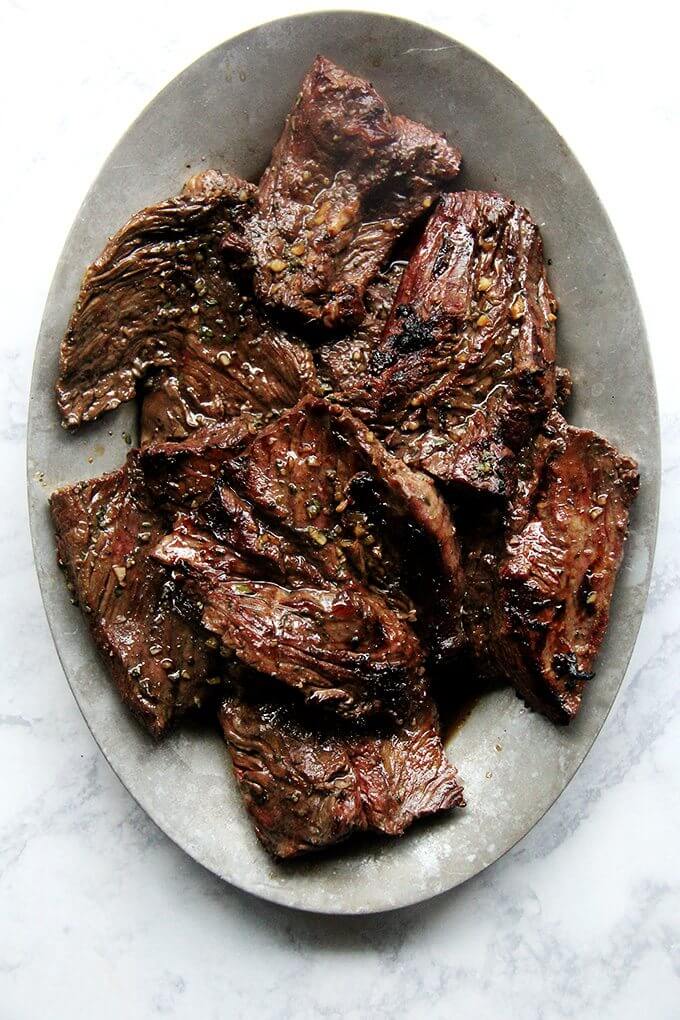
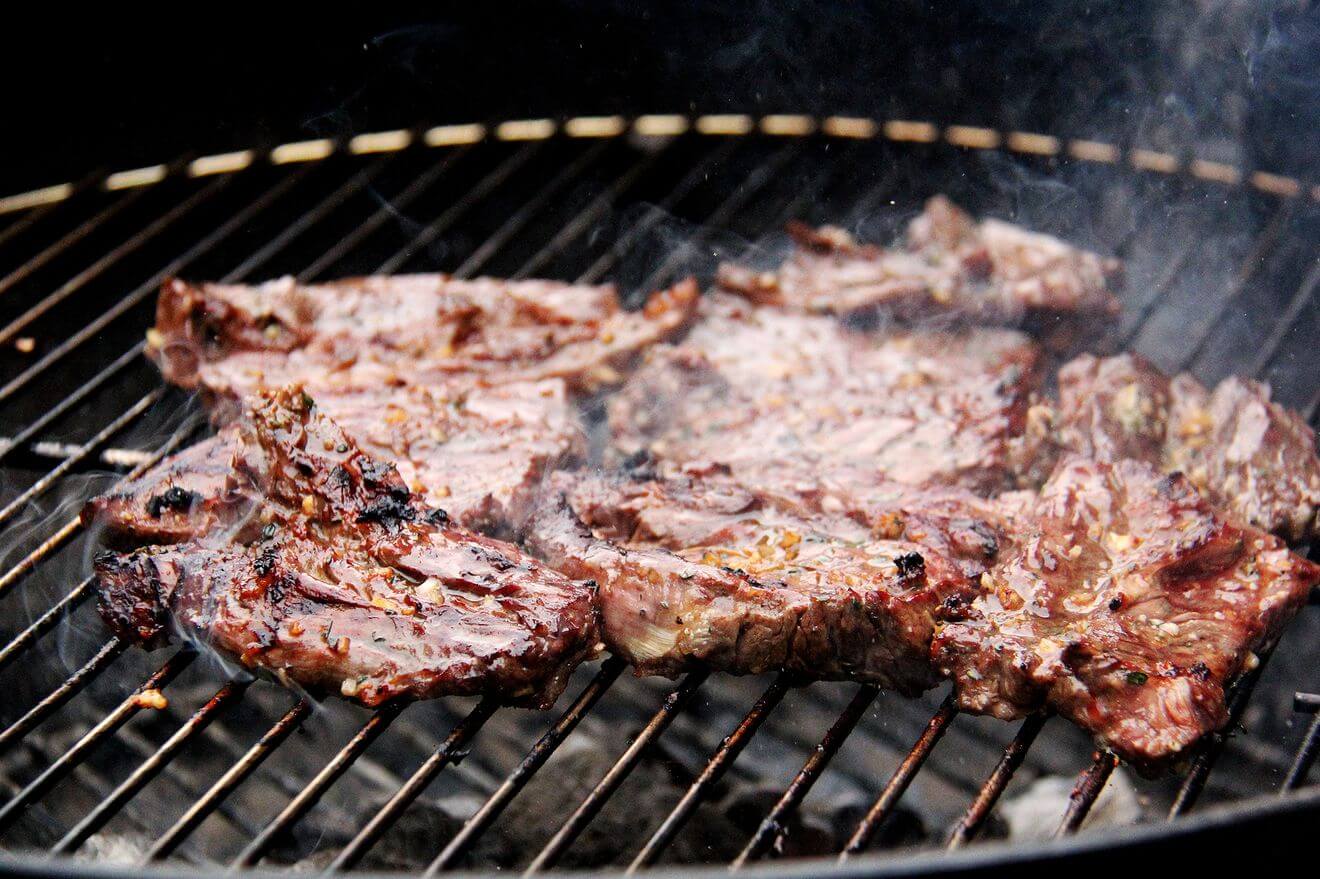
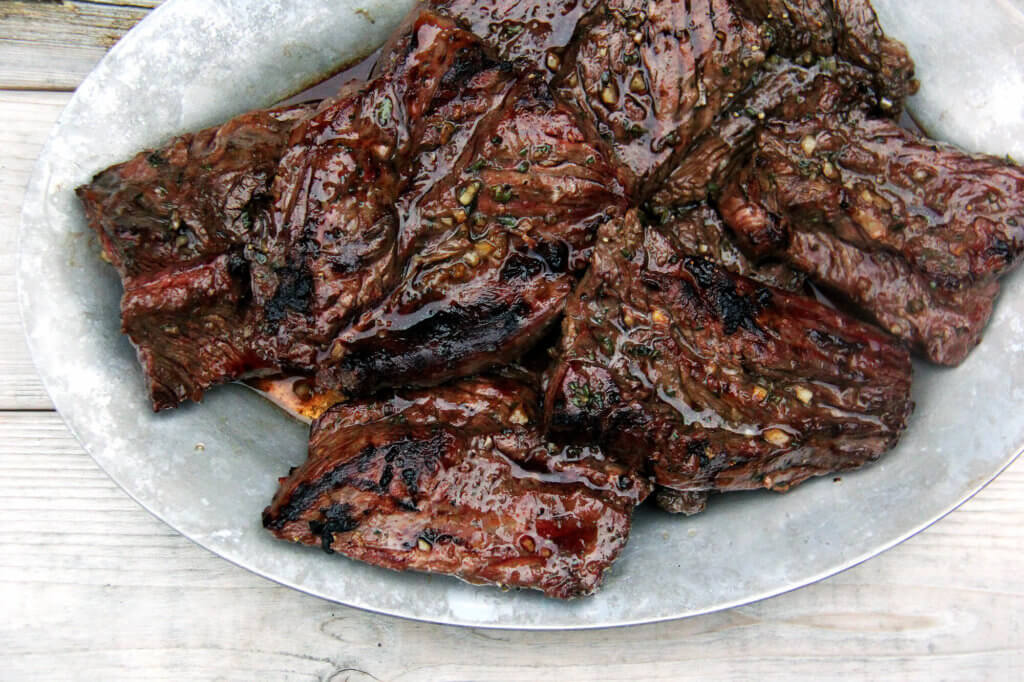
A few weeks ago, I taught a grilling class at the Hillsdale General Store . We made garlic-basil chicken skewers (similar to this souvlaki ), cedar plank salmon , and the hanger steak pictured here marinated with Worcestershire, garlic, and thyme.
It was all quick grilling, which afforded us time to make some summery side dishes: Mark Bittman’s raw corn salad (a favorite!), soba noodles with cucumbers and scallions , dilly cucumber-yogurt sauce , and quick-pickled onions (onions + salt + vinegar).
It was also all charcoal grilling. Early in the summer, upon seeing the state of our neglected gas grill, I bought a charcoal Weber , a pair of chimney starters , and some new tools, including a Thermapen , a fancy instant-read thermometer that I cannot encourage enough people to buy.
Hanger Steak
I first learned about hanger steaks a million years ago when I worked at Fork in Philadelphia. It was always always always on the menu in some shape or form, often aside yucca frites and sautéed Swiss chard. It continues to be one of my favorite cuts of meat.
A few notes:
- Hanger steak comes from the diaphragm (in the lower belly or plate) of a cow, and it is incredibly tender and flavorful.
- It can be really hard to find, but it’s worth seeking out.
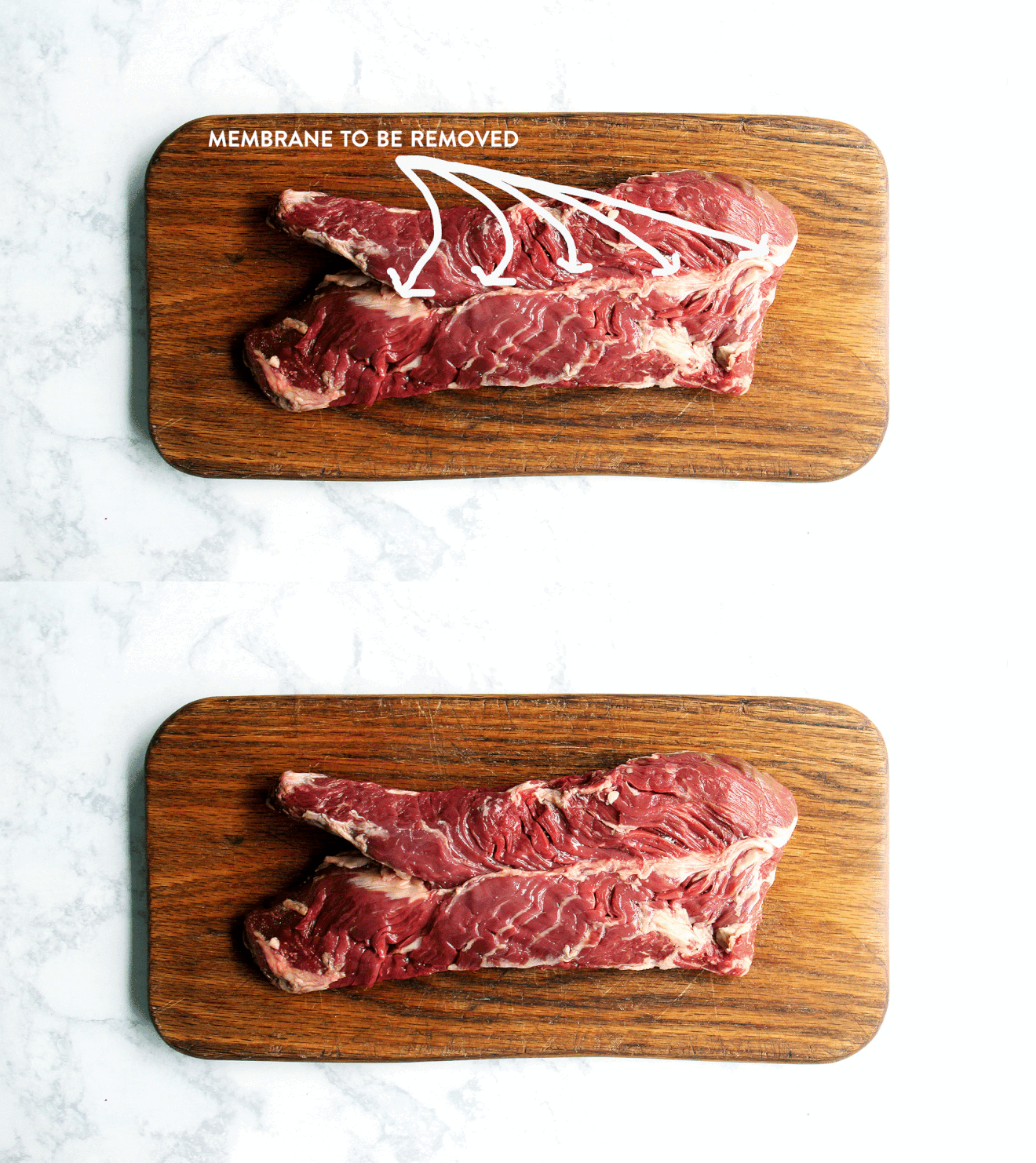
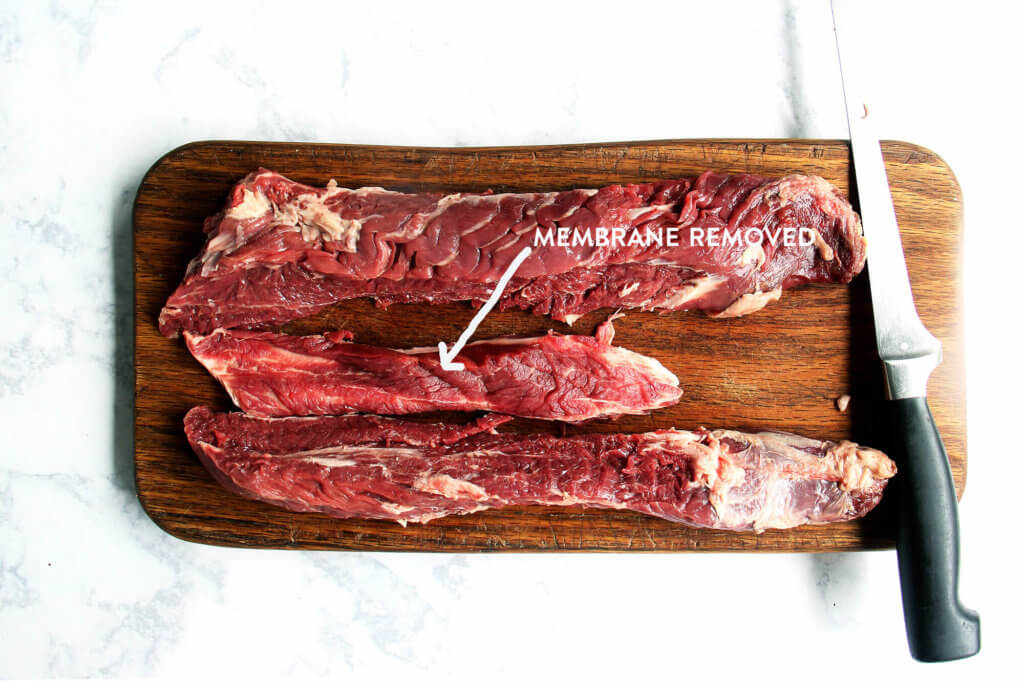
- If you find it and it arrives as pictured above in the video, you need to remove the membrane running down its center — ask the butcher to do this for you or watch the video above for guidance. Ideally, you’ll want to butterfly the remaining loins, too, to ensure fast, even cooking.
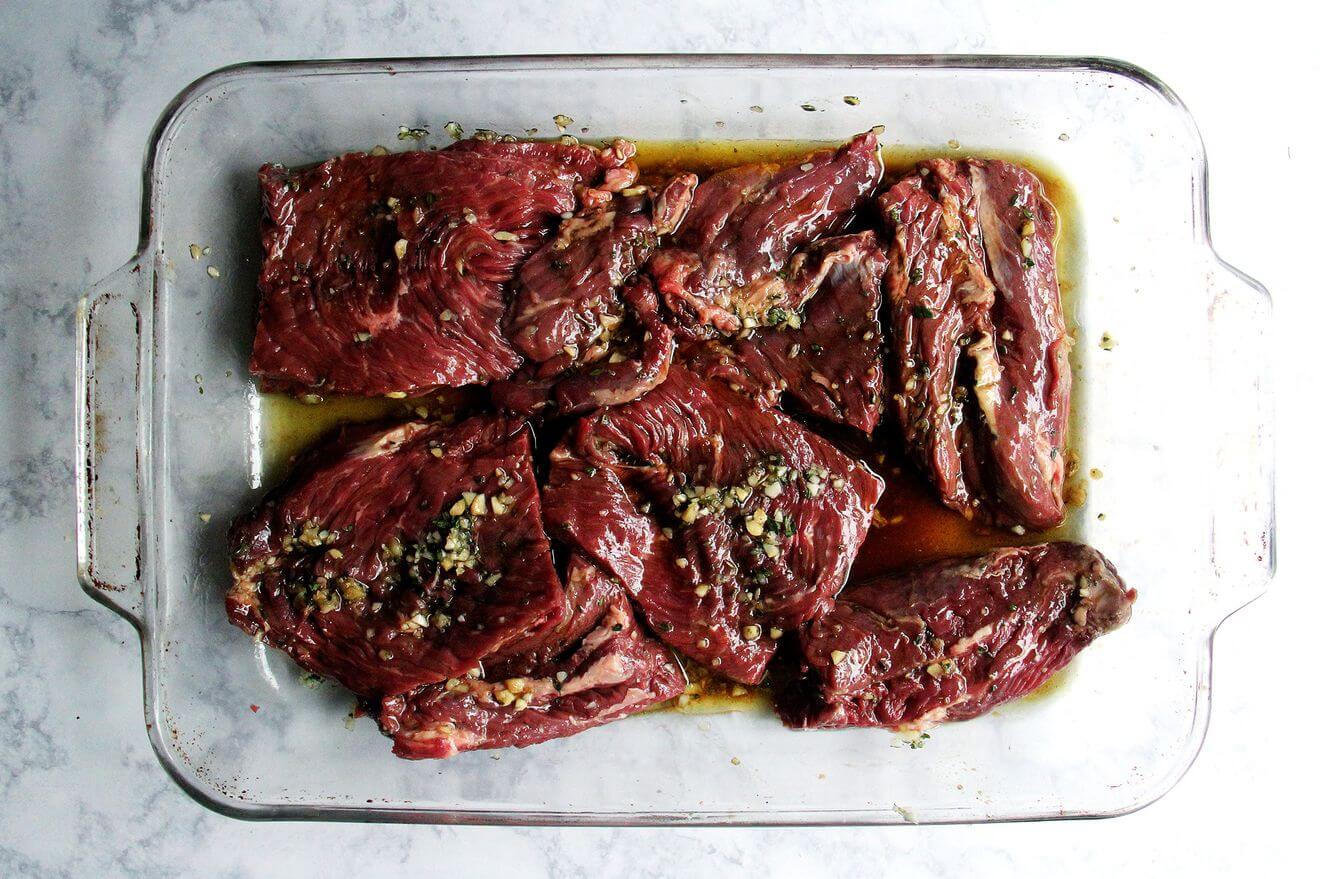
- This hanger steak, seasoned with garlic, thyme, and Worcestershire sauce, is one of my favorites. It marinates for one hour—during which time you can slice up some tomatoes, toss together a raw corn salad with herbs and feta , or cut cucumbers into spears—but cooks in five minutes.
Description
Notes:
I can find hanger steak at my local farm, Buckley Farm in Ballston Lake, but also at Whole Foods Market. Be sure to call ahead. Also, if you get your hands on a hanger steak, it may have a membrane running through it. Ask the butcher to remove it and then have him/her butterfly the remaining loins. Or you can do it yourself.
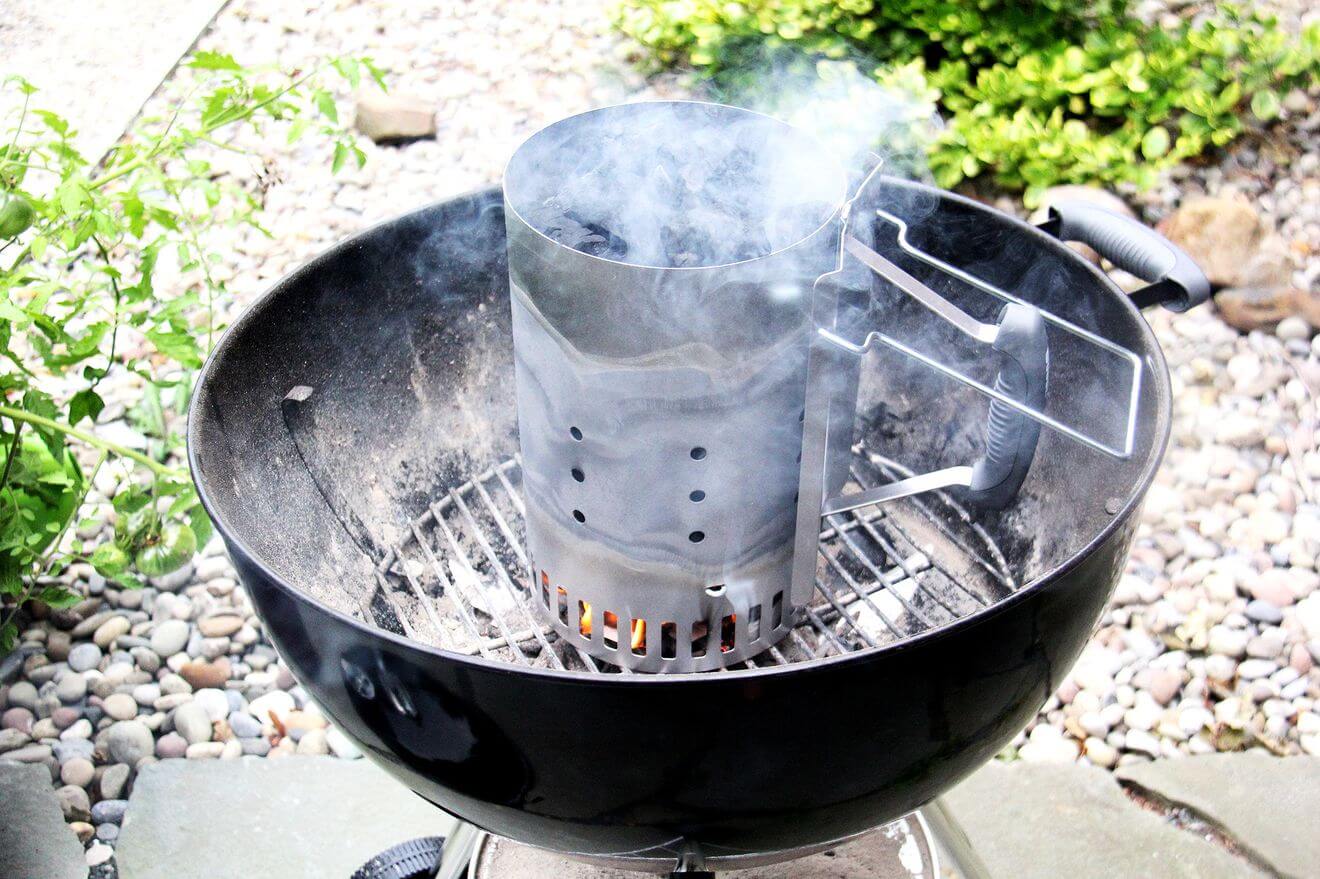
For charcoal grilling, I fill two chimney starters with coals and let them burn for about 30 minutes. Then I dump the coals into grill, replace the grate and let it heat for at least 5 minutes before placing the meat on top. I grill these uncovered when using charcoal, but when using my gas grill, I cover the grill.
- 4 cloves garlic
- A few sprigs thymes, leaves removed
- Kosher salt and pepper to taste
- 1/4 cup olive oil
- 2 tablespoons Worcestershire sauce
- 1.75 pounds hanger steak, membrane removed, loins butterflied, see notes above
- In the bowl of a food processor, make a paste with the garlic, pepper, thyme, and a pinch of salt. Place the meat in a shallow vessel. Rub the paste over the meat. In a small bowl, whisk together the oil and Worcestershire. Pour this mixture over the meat. Turn the meat to coat in the marinade. Refrigerate for at least 1 hour.
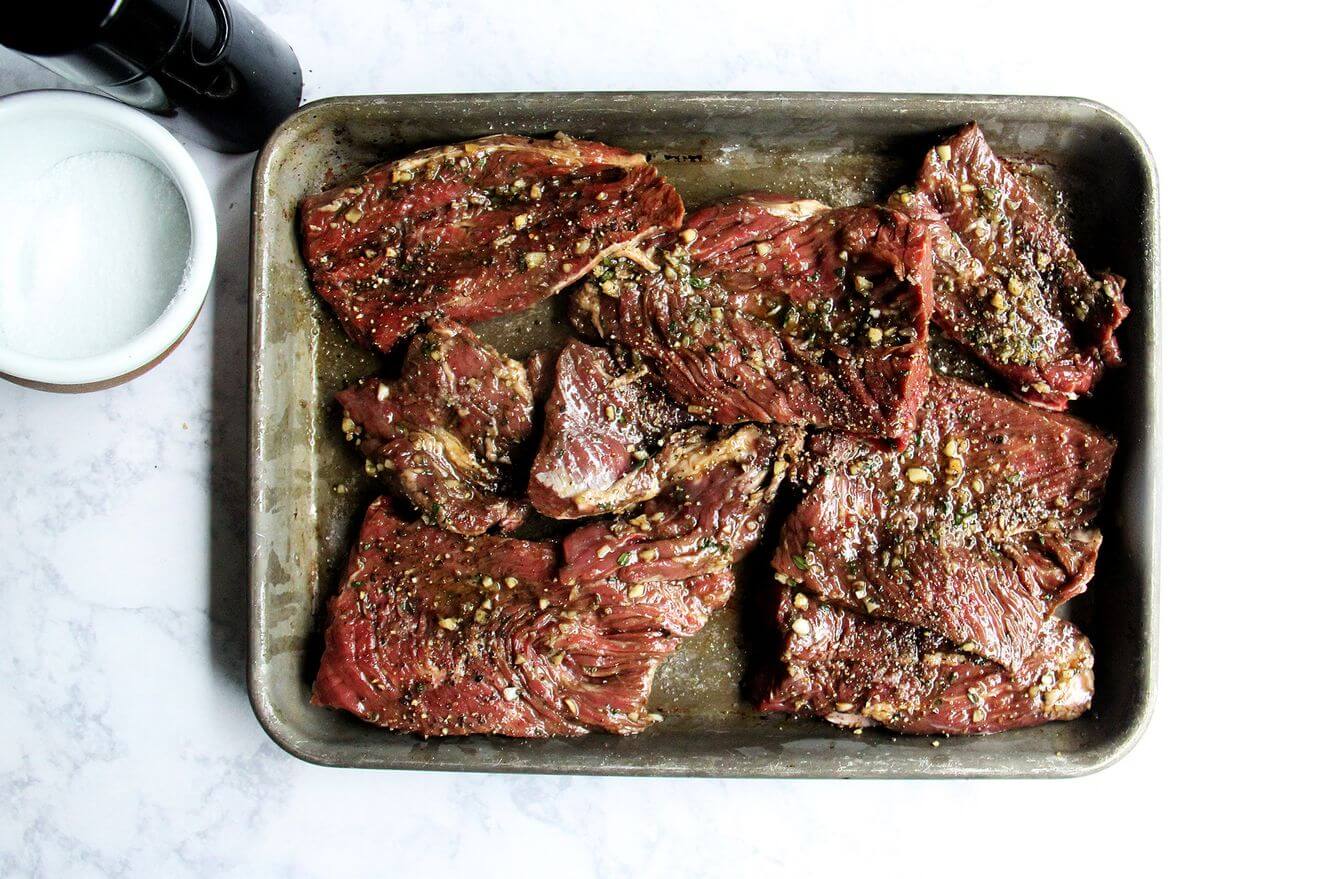
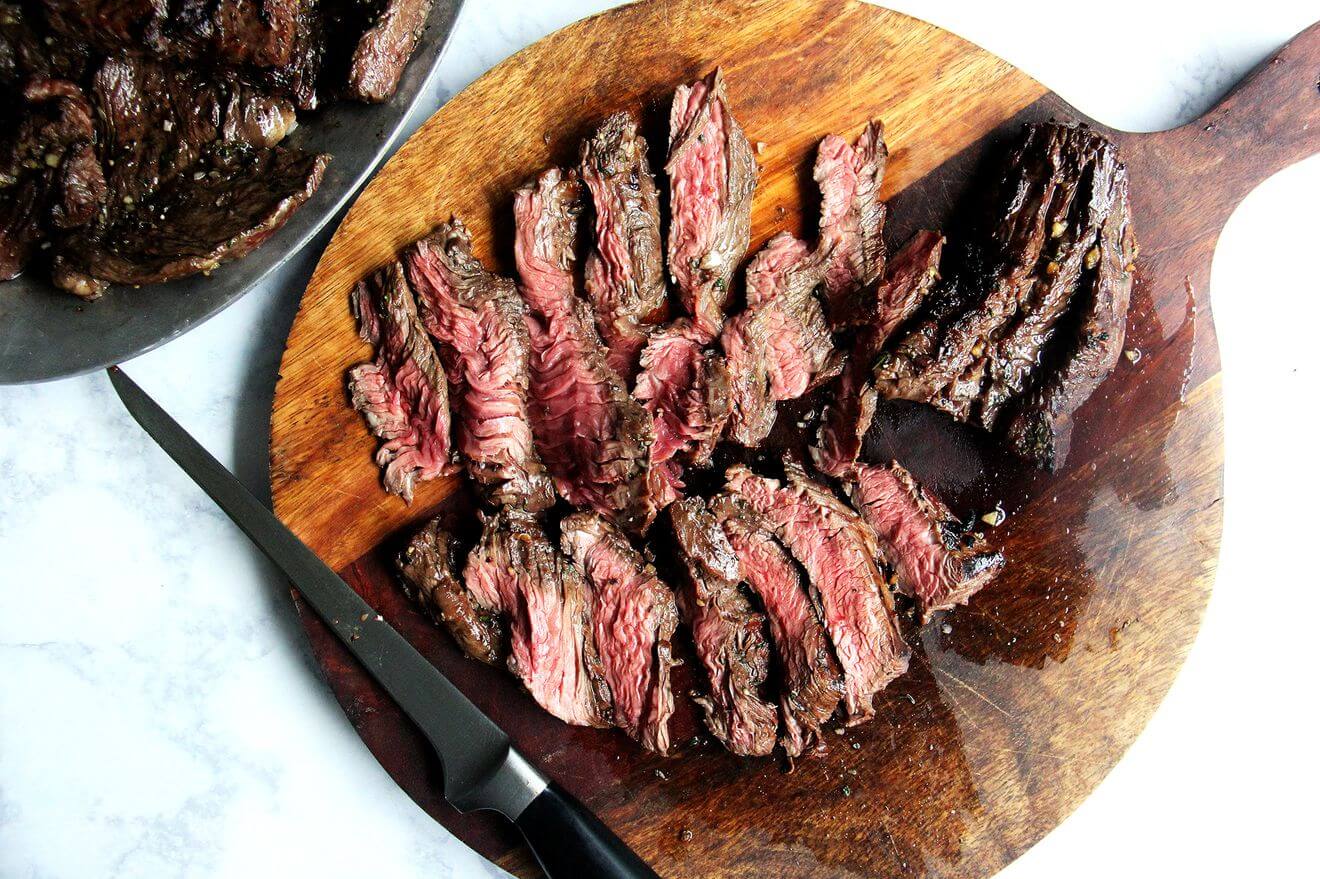
- Meanwhile, prepare a grill for high heat. (See notes above). Wipe off excess marinade. Season meat on both sides generously with salt and pepper. Grill over hot coals uncovered, 2 to 3 minutes a side until a thermometer registers 125ºF for medium rare or 135ºF for medium. Transfer meat to a board to rest for 10 minutes before slicing against the grain. Reference the video above if you are having a hard time figuring out which way is against the grain — it’s not always easy to tell.
- Prep Time: 1 hour
- Cook Time: 6 minutes
- Category: Dinner
- Method: Grill
- Cuisine: American
