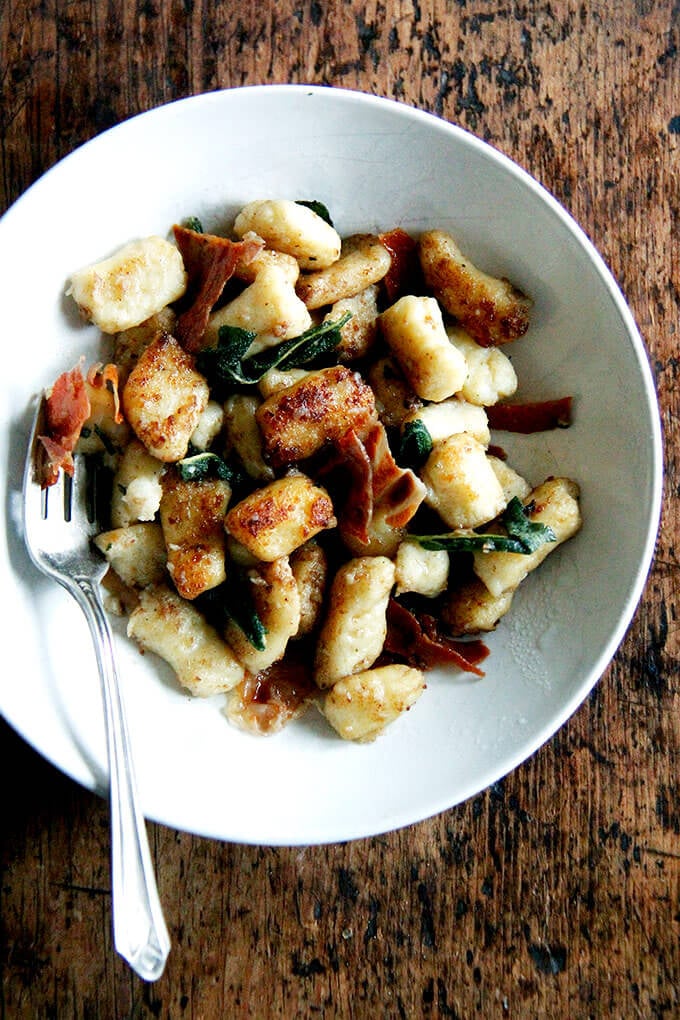
At the end of February, I spent a weekend in NYC with my mother at a food conference. Upon entering one of the large banquet halls for a food sampling from local restaurants, my mother disappeared. I eventually found her at the Fork table, eating gnocchi tossed with a lamb ragu and fermented sunchokes*. The scent of the lamb no doubt had percolated her Greek blood, leading her to the table, but I am convinced she would have lingered there regardless of what the gnocchi were tossed with—they were, as they say, light and pillowy, and just so darn good.
After my third plate, I asked the chef, John Patterson, if he could offer any gnocchi-making tips, and while I can’t remember all of the details, I do remember him telling me to roast the potatoes at high heat for a considerable amount of time and to work the riced potatoes into a dough when they are still warm.
I returned home thinking I would replicate those pillowy gnocchi immediately, but a month passed and so did the motivation. Until, that is, Jessica Battilana’s cookbook, Repertoire , arrived at my door.
I had met Jessica last fall when I visited California Olive Ranch , so I knew what Repertoire was about: Jessica’s collection of never-fail recipes, the ones she serves for both weeknight meals and dinner parties alike, the recipes she turns to when it’s time to celebrate. But I didn’t know the specifics. I didn’t know there would be a gnocchi recipe, and when I came to it and read the method, which sounded so similar to John’s, instead of dreaming about those potato pillows, I raced to the grocery store to pick up a couple pounds of russets, sage leaves, and prosciutto.
Jessica , if you are unfamiliar, writes the “Repertoire” column for the San Francisco Chronicle and has co-authored half a dozen other books. She is an expert recipe writer: detailed, precise, thoughtful. She notes why things can go wrong, e.g.: “Adding too much flour to gnocchi dough can cause them to be leaden and dense, but if you don’t add enough, they’ll fall apart when boiled.” And offers visual cues, too: “You’re looking for a dough that is soft but not sticky, and the amount of flour that you add to each batch may change, since the moisture content of the potatoes (and flour) can vary.”
For the cooks that can channel their inner nonna , making gnocchi may feel intuitive, something to be made by feel. But for the rest of us, the details are so helpful: exactly how many pounds of potatoes, exactly how much flour, exactly how much salt, etc. I followed Jessica’s recipe to a T and felt confident every step of the way, which is not a feeling I’ve ever experienced when making gnocchi. And the result? Potato pillows of my dreams.
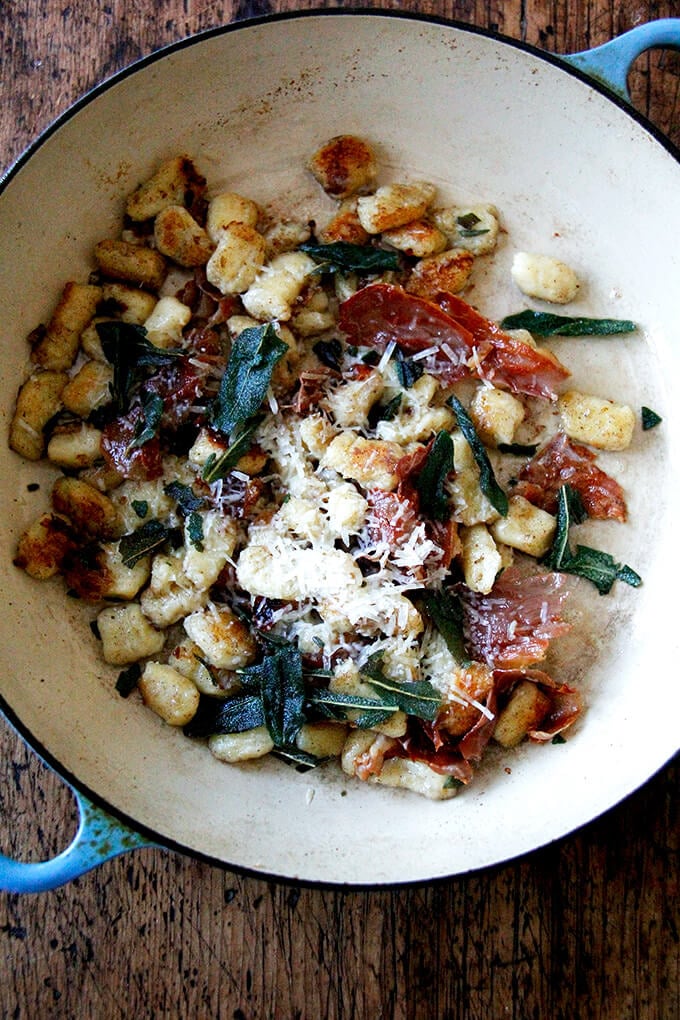
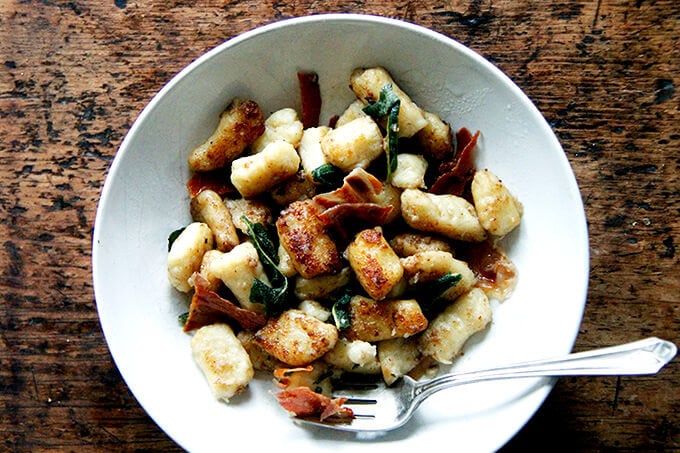
Description
From Jessica Battilana’s Repertoire
Notes:
Gnocchi can feel like a real task: roast potatoes, rice them, make a dough, shape them, boil them, sauté them, eat them. There are a few things you can do to make the endeavor not feel like so much of a process:
- You can can freeze the shaped unboiled gnocchi; then boil them directly from the freezer.
- You can boil them; then stash them in an airtight container in the fridge until you are ready to sauté them.
- 2 pounds russet potatoes (about 2 to 3)
- 6 tablespoons unsalted butter
- 1 egg
- 1/4 cup plus 2 tablespoons finely grated Parmigiano-Reggiano
- 1 teaspoon kosher salt
- 1 cup all-purpose flour
- Extra-virgin olive oil
- 4 ounces thinly sliced prosciutto
- 15 sage leaves
- Freshly ground pepper
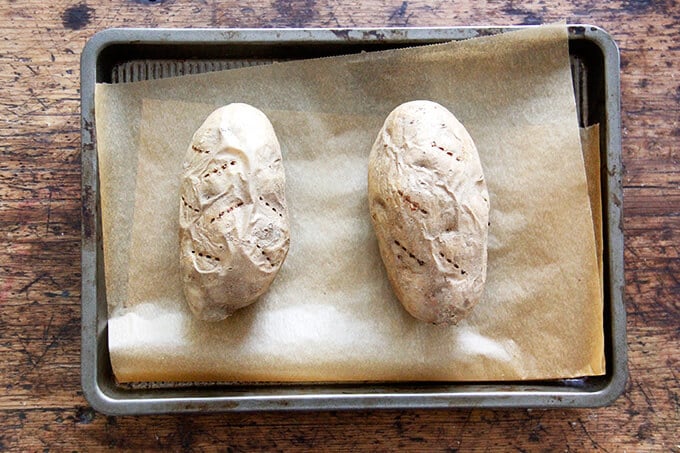
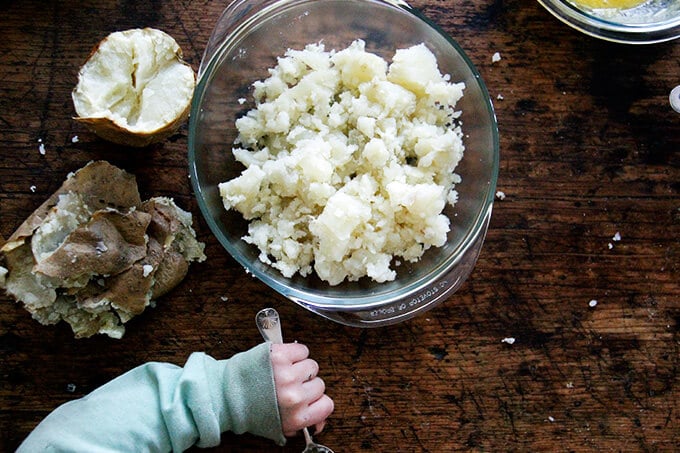
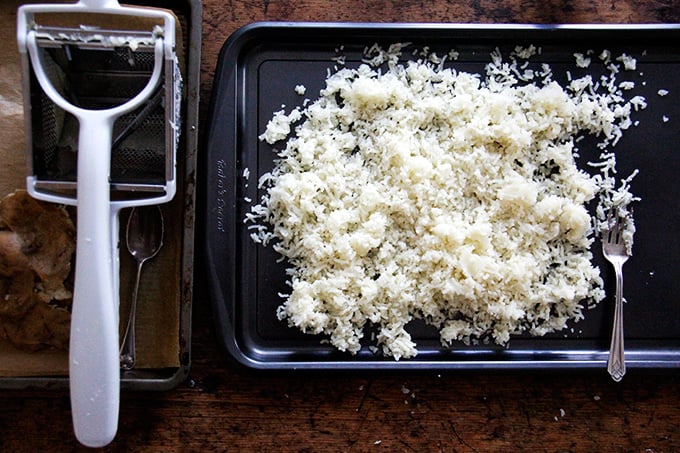
- Preheat the oven to 400°F. Rinse the potatoes and place them on a rimmed baking sheet. With a fork, poke holes in each potato. Bake until tender, about 1 hour. Remove from the oven and when just cool enough to handle but still very warm, split the potatoes in half and scoop out the flesh. Discard the skin. Pass the potato flesh through a ricer onto a rimmed baking sheet and spread in an even layer.
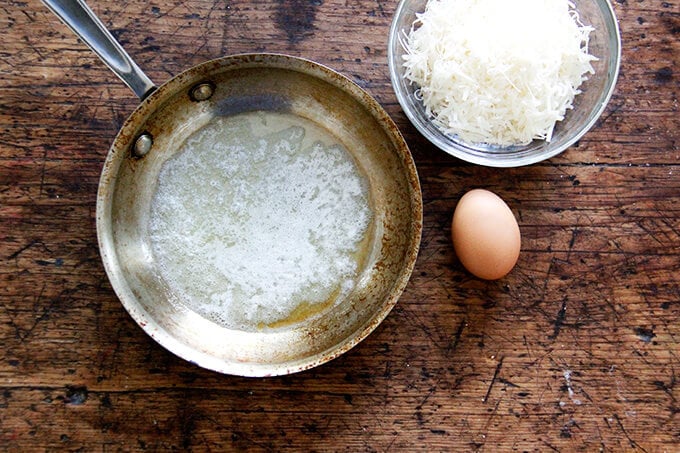
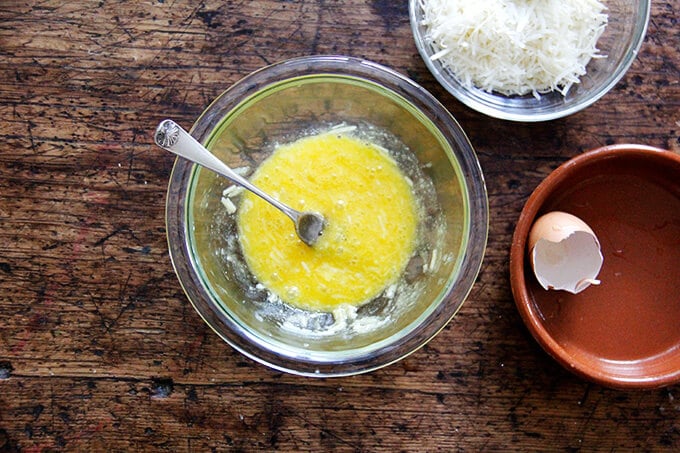
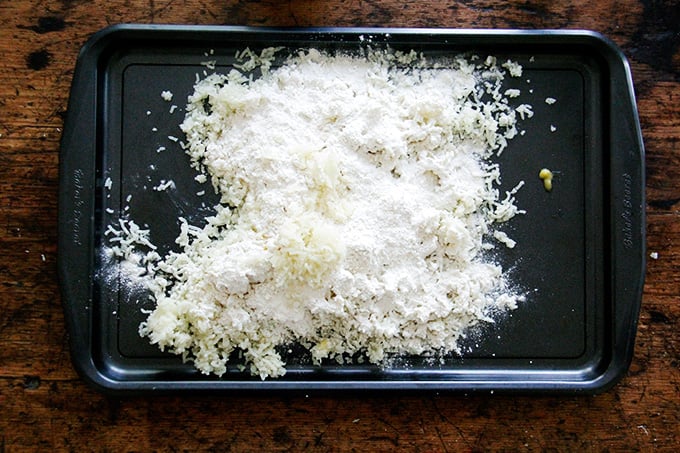
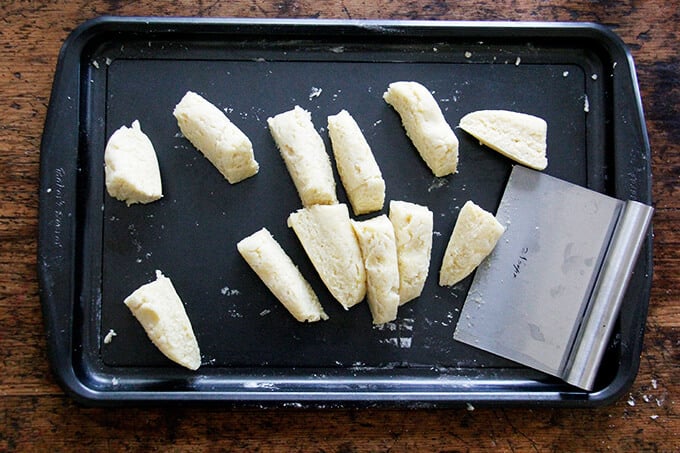
- Melt 2 tablespoons of the butter. In a small bowl, whisk together the melted butter, egg, 2 tablespoons of the Parmigiano, and the salt. Drizzle over the warm riced potatoes, then sprinkle about 3/4 cup of the flour over. With your fingertips, gently work the mixture into a ball. The dough should be soft but not sticky; if it’s sticky, add some of the remaining flour by the tablespoonful. Form the dough into a disk and cut the disk into 1-inch slices. Roll each slice into a ball.
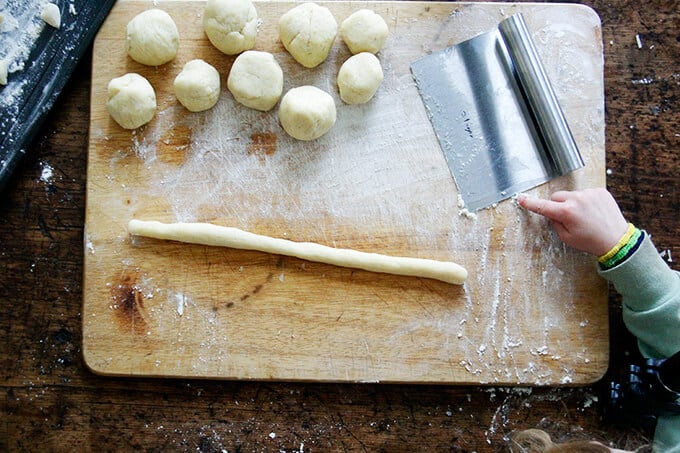
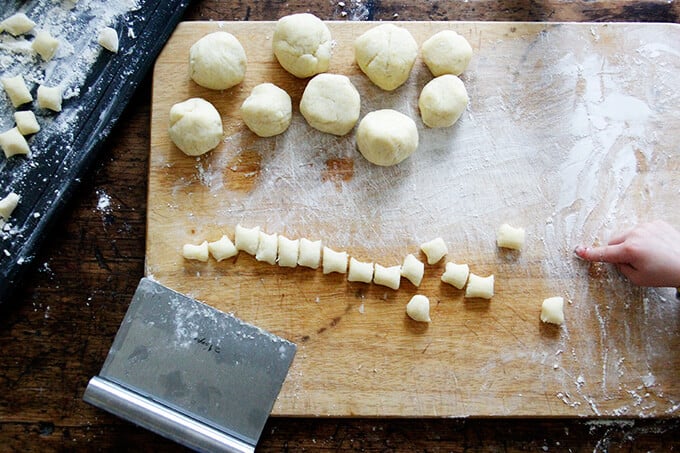
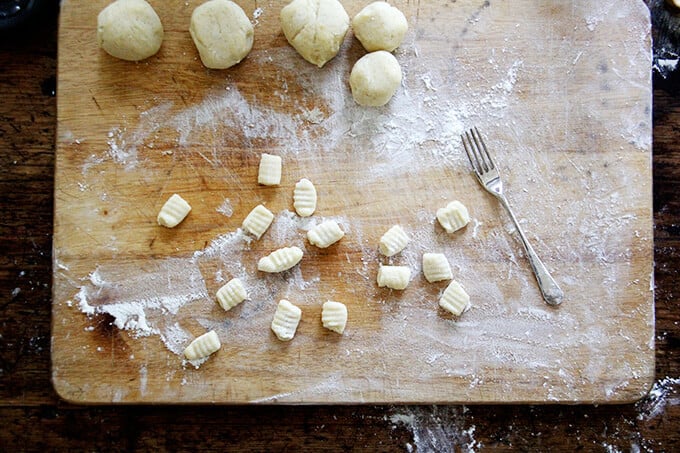
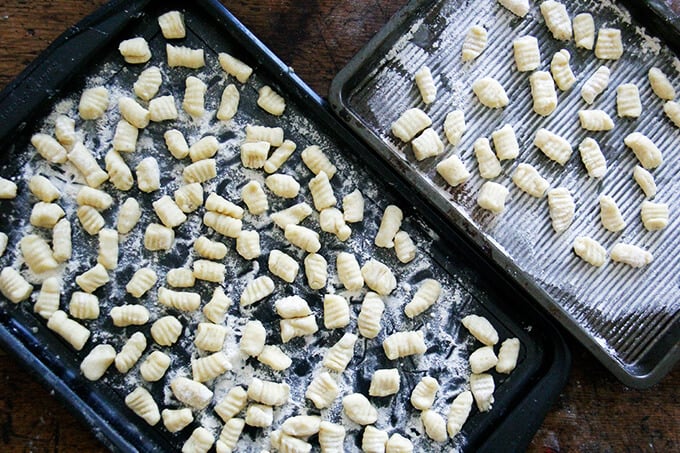
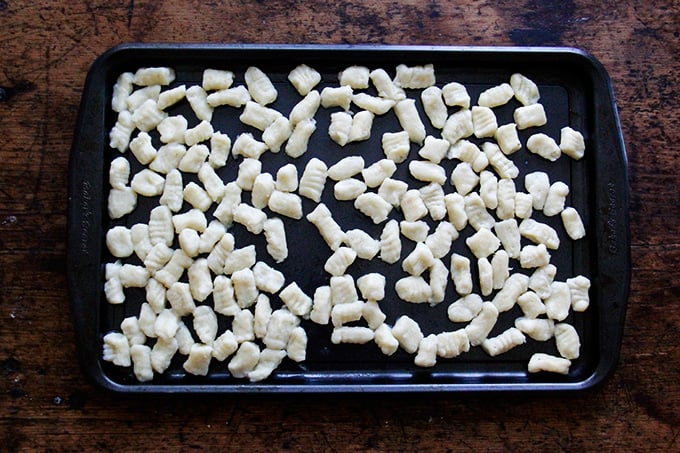
- Lightly dust a rimmed baking sheet with flour and set nearby. On a lightly floured work surface, working with one ball of dough at a time, roll into a snake about 3/4 inch around. Cut each snake crosswise into 3/4-inch pieces. Using your thumb and working with one piece of dough at a time, roll each piece across a gnocchi paddle or the tines of an overturned fork, pressing down lightly so the gnocchi curve around your thumb slightly, then drop onto the prepared baking sheet. Repeat with the remaining balls of dough until all of the gnocchi have been formed. (You can make the gnocchi to this point, freeze them on the baking sheet, and then transfer them to plastic freezer storage bags. They can be boiled from frozen.)
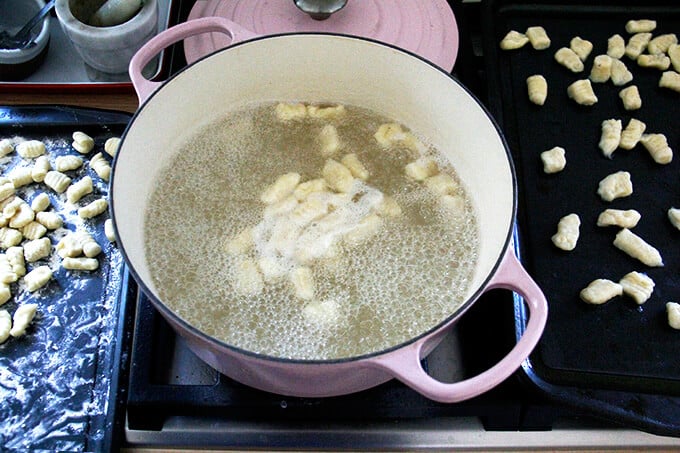
- Bring a large pot of salted water to a boil. Drizzle a rimmed baking sheet with a small amount of olive oil. When the water is boiling, add the gnocchi to the water in batches. The gnocchi will sink and then float; when they rise to the top, boil them for 2 minutes. With a spider or slotted spoon, transfer the gnocchi to the baking sheet.
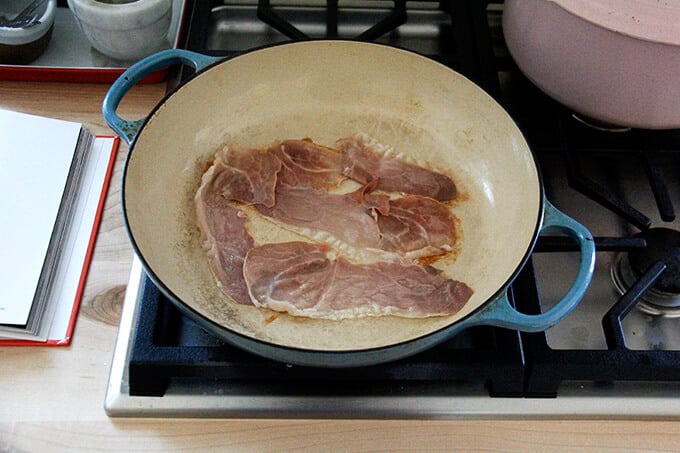
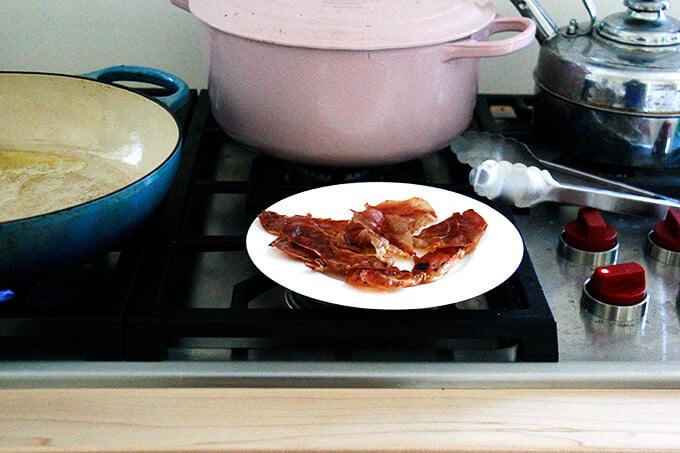
- Heat a large nonstick frying pan over medium heat. Lay a few slices of the prosciutto in the pan in a single layer and cook, turning once, until crispy, about 2 minutes. Transfer to a plate and repeat until all of the prosciutto has been fried. Add the remaining 4 tablespoons butter to the pan and, when it melts, add the sage leaves and fry until crisp. Transfer the fried sage to the plate with the prosciutto.
- Let the butter continue to cook until it’s light golden brown and has a nutty aroma. Slide the gnocchi into the pan and, with a rubber spatula, stir gently to coat the gnocchi in butter. Cook without stirring until the gnocchi are heated through and beginning to develop a golden-brown crust on the bottom, about 2 minutes. Crumble the prosciutto into the pan and stir gently with the rubber spatula to combine. Season to taste with salt and pepper, then transfer to a platter and garnish with the fried sage and remaining 1/4 cup grated Parmigiano. Serve immediately.
At the end of February, I spent a weekend in NYC with my mother at a food conference. Upon entering one of the large banquet halls for a food sampling from local restaurants, my mother disappeared. I eventually found her at the Fork table, eating gnocchi tossed with a lamb ragu and fermented sunchokes*. The scent of the lamb no doubt had percolated her Greek blood, leading her to the table, but I am convinced she would have lingered there regardless of what the gnocchi were tossed with—they were, as they say, light and pillowy, and just so darn good.
After my third plate, I asked the chef, John Patterson, if he could offer any gnocchi-making tips, and while I can’t remember all of the details, I do remember him telling me to roast the potatoes at high heat for a considerable amount of time and to work the riced potatoes into a dough when they are still warm.
I returned home thinking I would replicate those pillowy gnocchi immediately, but a month passed and so did the motivation. Until, that is, Jessica Battilana’s cookbook, Repertoire , arrived at my door.
I had met Jessica last fall when I visited California Olive Ranch , so I knew what Repertoire was about: Jessica’s collection of never-fail recipes, the ones she serves for both weeknight meals and dinner parties alike, the recipes she turns to when it’s time to celebrate. But I didn’t know the specifics. I didn’t know there would be a gnocchi recipe, and when I came to it and read the method, which sounded so similar to John’s, instead of dreaming about those potato pillows, I raced to the grocery store to pick up a couple pounds of russets, sage leaves, and prosciutto.
Jessica , if you are unfamiliar, writes the “Repertoire” column for the San Francisco Chronicle and has co-authored half a dozen other books. She is an expert recipe writer: detailed, precise, thoughtful. She notes why things can go wrong, e.g.: “Adding too much flour to gnocchi dough can cause them to be leaden and dense, but if you don’t add enough, they’ll fall apart when boiled.” And offers visual cues, too: “You’re looking for a dough that is soft but not sticky, and the amount of flour that you add to each batch may change, since the moisture content of the potatoes (and flour) can vary.”
For the cooks that can channel their inner nonna , making gnocchi may feel intuitive, something to be made by feel. But for the rest of us, the details are so helpful: exactly how many pounds of potatoes, exactly how much flour, exactly how much salt, etc. I followed Jessica’s recipe to a T and felt confident every step of the way, which is not a feeling I’ve ever experienced when making gnocchi. And the result? Potato pillows of my dreams.
Description
From Jessica Battilana’s Repertoire
Notes:
Gnocchi can feel like a real task: roast potatoes, rice them, make a dough, shape them, boil them, sauté them, eat them. There are a few things you can do to make the endeavor not feel like so much of a process:
- You can can freeze the shaped unboiled gnocchi; then boil them directly from the freezer.
- You can boil them; then stash them in an airtight container in the fridge until you are ready to sauté them.
- 2 pounds russet potatoes (about 2 to 3)
- 6 tablespoons unsalted butter
- 1 egg
- 1/4 cup plus 2 tablespoons finely grated Parmigiano-Reggiano
- 1 teaspoon kosher salt
- 1 cup all-purpose flour
- Extra-virgin olive oil
- 4 ounces thinly sliced prosciutto
- 15 sage leaves
- Freshly ground pepper
- Preheat the oven to 400°F. Rinse the potatoes and place them on a rimmed baking sheet. With a fork, poke holes in each potato. Bake until tender, about 1 hour. Remove from the oven and when just cool enough to handle but still very warm, split the potatoes in half and scoop out the flesh. Discard the skin. Pass the potato flesh through a ricer onto a rimmed baking sheet and spread in an even layer.
- Melt 2 tablespoons of the butter. In a small bowl, whisk together the melted butter, egg, 2 tablespoons of the Parmigiano, and the salt. Drizzle over the warm riced potatoes, then sprinkle about 3/4 cup of the flour over. With your fingertips, gently work the mixture into a ball. The dough should be soft but not sticky; if it’s sticky, add some of the remaining flour by the tablespoonful. Form the dough into a disk and cut the disk into 1-inch slices. Roll each slice into a ball.
- Lightly dust a rimmed baking sheet with flour and set nearby. On a lightly floured work surface, working with one ball of dough at a time, roll into a snake about 3/4 inch around. Cut each snake crosswise into 3/4-inch pieces. Using your thumb and working with one piece of dough at a time, roll each piece across a gnocchi paddle or the tines of an overturned fork, pressing down lightly so the gnocchi curve around your thumb slightly, then drop onto the prepared baking sheet. Repeat with the remaining balls of dough until all of the gnocchi have been formed. (You can make the gnocchi to this point, freeze them on the baking sheet, and then transfer them to plastic freezer storage bags. They can be boiled from frozen.)
- Bring a large pot of salted water to a boil. Drizzle a rimmed baking sheet with a small amount of olive oil. When the water is boiling, add the gnocchi to the water in batches. The gnocchi will sink and then float; when they rise to the top, boil them for 2 minutes. With a spider or slotted spoon, transfer the gnocchi to the baking sheet.
- Heat a large nonstick frying pan over medium heat. Lay a few slices of the prosciutto in the pan in a single layer and cook, turning once, until crispy, about 2 minutes. Transfer to a plate and repeat until all of the prosciutto has been fried. Add the remaining 4 tablespoons butter to the pan and, when it melts, add the sage leaves and fry until crisp. Transfer the fried sage to the plate with the prosciutto.
- Let the butter continue to cook until it’s light golden brown and has a nutty aroma. Slide the gnocchi into the pan and, with a rubber spatula, stir gently to coat the gnocchi in butter. Cook without stirring until the gnocchi are heated through and beginning to develop a golden-brown crust on the bottom, about 2 minutes. Crumble the prosciutto into the pan and stir gently with the rubber spatula to combine. Season to taste with salt and pepper, then transfer to a platter and garnish with the fried sage and remaining 1/4 cup grated Parmigiano. Serve immediately.
At the end of February, I spent a weekend in NYC with my mother at a food conference. Upon entering one of the large banquet halls for a food sampling from local restaurants, my mother disappeared. I eventually found her at the Fork table, eating gnocchi tossed with a lamb ragu and fermented sunchokes*. The scent of the lamb no doubt had percolated her Greek blood, leading her to the table, but I am convinced she would have lingered there regardless of what the gnocchi were tossed with—they were, as they say, light and pillowy, and just so darn good.
After my third plate, I asked the chef, John Patterson, if he could offer any gnocchi-making tips, and while I can’t remember all of the details, I do remember him telling me to roast the potatoes at high heat for a considerable amount of time and to work the riced potatoes into a dough when they are still warm.
I returned home thinking I would replicate those pillowy gnocchi immediately, but a month passed and so did the motivation. Until, that is, Jessica Battilana’s cookbook, Repertoire , arrived at my door.
I had met Jessica last fall when I visited California Olive Ranch , so I knew what Repertoire was about: Jessica’s collection of never-fail recipes, the ones she serves for both weeknight meals and dinner parties alike, the recipes she turns to when it’s time to celebrate. But I didn’t know the specifics. I didn’t know there would be a gnocchi recipe, and when I came to it and read the method, which sounded so similar to John’s, instead of dreaming about those potato pillows, I raced to the grocery store to pick up a couple pounds of russets, sage leaves, and prosciutto.
Jessica , if you are unfamiliar, writes the “Repertoire” column for the San Francisco Chronicle and has co-authored half a dozen other books. She is an expert recipe writer: detailed, precise, thoughtful. She notes why things can go wrong, e.g.: “Adding too much flour to gnocchi dough can cause them to be leaden and dense, but if you don’t add enough, they’ll fall apart when boiled.” And offers visual cues, too: “You’re looking for a dough that is soft but not sticky, and the amount of flour that you add to each batch may change, since the moisture content of the potatoes (and flour) can vary.”
For the cooks that can channel their inner nonna , making gnocchi may feel intuitive, something to be made by feel. But for the rest of us, the details are so helpful: exactly how many pounds of potatoes, exactly how much flour, exactly how much salt, etc. I followed Jessica’s recipe to a T and felt confident every step of the way, which is not a feeling I’ve ever experienced when making gnocchi. And the result? Potato pillows of my dreams.
Description
From Jessica Battilana’s Repertoire
Notes:
Gnocchi can feel like a real task: roast potatoes, rice them, make a dough, shape them, boil them, sauté them, eat them. There are a few things you can do to make the endeavor not feel like so much of a process:
- You can can freeze the shaped unboiled gnocchi; then boil them directly from the freezer.
- You can boil them; then stash them in an airtight container in the fridge until you are ready to sauté them.
- 2 pounds russet potatoes (about 2 to 3)
- 6 tablespoons unsalted butter
- 1 egg
- 1/4 cup plus 2 tablespoons finely grated Parmigiano-Reggiano
- 1 teaspoon kosher salt
- 1 cup all-purpose flour
- Extra-virgin olive oil
- 4 ounces thinly sliced prosciutto
- 15 sage leaves
- Freshly ground pepper
- Preheat the oven to 400°F. Rinse the potatoes and place them on a rimmed baking sheet. With a fork, poke holes in each potato. Bake until tender, about 1 hour. Remove from the oven and when just cool enough to handle but still very warm, split the potatoes in half and scoop out the flesh. Discard the skin. Pass the potato flesh through a ricer onto a rimmed baking sheet and spread in an even layer.
- Melt 2 tablespoons of the butter. In a small bowl, whisk together the melted butter, egg, 2 tablespoons of the Parmigiano, and the salt. Drizzle over the warm riced potatoes, then sprinkle about 3/4 cup of the flour over. With your fingertips, gently work the mixture into a ball. The dough should be soft but not sticky; if it’s sticky, add some of the remaining flour by the tablespoonful. Form the dough into a disk and cut the disk into 1-inch slices. Roll each slice into a ball.
- Lightly dust a rimmed baking sheet with flour and set nearby. On a lightly floured work surface, working with one ball of dough at a time, roll into a snake about 3/4 inch around. Cut each snake crosswise into 3/4-inch pieces. Using your thumb and working with one piece of dough at a time, roll each piece across a gnocchi paddle or the tines of an overturned fork, pressing down lightly so the gnocchi curve around your thumb slightly, then drop onto the prepared baking sheet. Repeat with the remaining balls of dough until all of the gnocchi have been formed. (You can make the gnocchi to this point, freeze them on the baking sheet, and then transfer them to plastic freezer storage bags. They can be boiled from frozen.)
- Bring a large pot of salted water to a boil. Drizzle a rimmed baking sheet with a small amount of olive oil. When the water is boiling, add the gnocchi to the water in batches. The gnocchi will sink and then float; when they rise to the top, boil them for 2 minutes. With a spider or slotted spoon, transfer the gnocchi to the baking sheet.
- Heat a large nonstick frying pan over medium heat. Lay a few slices of the prosciutto in the pan in a single layer and cook, turning once, until crispy, about 2 minutes. Transfer to a plate and repeat until all of the prosciutto has been fried. Add the remaining 4 tablespoons butter to the pan and, when it melts, add the sage leaves and fry until crisp. Transfer the fried sage to the plate with the prosciutto.
- Let the butter continue to cook until it’s light golden brown and has a nutty aroma. Slide the gnocchi into the pan and, with a rubber spatula, stir gently to coat the gnocchi in butter. Cook without stirring until the gnocchi are heated through and beginning to develop a golden-brown crust on the bottom, about 2 minutes. Crumble the prosciutto into the pan and stir gently with the rubber spatula to combine. Season to taste with salt and pepper, then transfer to a platter and garnish with the fried sage and remaining 1/4 cup grated Parmigiano. Serve immediately.
At the end of February, I spent a weekend in NYC with my mother at a food conference. Upon entering one of the large banquet halls for a food sampling from local restaurants, my mother disappeared. I eventually found her at the Fork table, eating gnocchi tossed with a lamb ragu and fermented sunchokes*. The scent of the lamb no doubt had percolated her Greek blood, leading her to the table, but I am convinced she would have lingered there regardless of what the gnocchi were tossed with—they were, as they say, light and pillowy, and just so darn good.
After my third plate, I asked the chef, John Patterson, if he could offer any gnocchi-making tips, and while I can’t remember all of the details, I do remember him telling me to roast the potatoes at high heat for a considerable amount of time and to work the riced potatoes into a dough when they are still warm.
I returned home thinking I would replicate those pillowy gnocchi immediately, but a month passed and so did the motivation. Until, that is, Jessica Battilana’s cookbook, Repertoire , arrived at my door.
I had met Jessica last fall when I visited California Olive Ranch , so I knew what Repertoire was about: Jessica’s collection of never-fail recipes, the ones she serves for both weeknight meals and dinner parties alike, the recipes she turns to when it’s time to celebrate. But I didn’t know the specifics. I didn’t know there would be a gnocchi recipe, and when I came to it and read the method, which sounded so similar to John’s, instead of dreaming about those potato pillows, I raced to the grocery store to pick up a couple pounds of russets, sage leaves, and prosciutto.
Jessica , if you are unfamiliar, writes the “Repertoire” column for the San Francisco Chronicle and has co-authored half a dozen other books. She is an expert recipe writer: detailed, precise, thoughtful. She notes why things can go wrong, e.g.: “Adding too much flour to gnocchi dough can cause them to be leaden and dense, but if you don’t add enough, they’ll fall apart when boiled.” And offers visual cues, too: “You’re looking for a dough that is soft but not sticky, and the amount of flour that you add to each batch may change, since the moisture content of the potatoes (and flour) can vary.”
For the cooks that can channel their inner nonna , making gnocchi may feel intuitive, something to be made by feel. But for the rest of us, the details are so helpful: exactly how many pounds of potatoes, exactly how much flour, exactly how much salt, etc. I followed Jessica’s recipe to a T and felt confident every step of the way, which is not a feeling I’ve ever experienced when making gnocchi. And the result? Potato pillows of my dreams.
Description
From Jessica Battilana’s Repertoire
Notes:
Gnocchi can feel like a real task: roast potatoes, rice them, make a dough, shape them, boil them, sauté them, eat them. There are a few things you can do to make the endeavor not feel like so much of a process:
- You can can freeze the shaped unboiled gnocchi; then boil them directly from the freezer.
- You can boil them; then stash them in an airtight container in the fridge until you are ready to sauté them.
- 2 pounds russet potatoes (about 2 to 3)
- 6 tablespoons unsalted butter
- 1 egg
- 1/4 cup plus 2 tablespoons finely grated Parmigiano-Reggiano
- 1 teaspoon kosher salt
- 1 cup all-purpose flour
- Extra-virgin olive oil
- 4 ounces thinly sliced prosciutto
- 15 sage leaves
- Freshly ground pepper
- Preheat the oven to 400°F. Rinse the potatoes and place them on a rimmed baking sheet. With a fork, poke holes in each potato. Bake until tender, about 1 hour. Remove from the oven and when just cool enough to handle but still very warm, split the potatoes in half and scoop out the flesh. Discard the skin. Pass the potato flesh through a ricer onto a rimmed baking sheet and spread in an even layer.
- Melt 2 tablespoons of the butter. In a small bowl, whisk together the melted butter, egg, 2 tablespoons of the Parmigiano, and the salt. Drizzle over the warm riced potatoes, then sprinkle about 3/4 cup of the flour over. With your fingertips, gently work the mixture into a ball. The dough should be soft but not sticky; if it’s sticky, add some of the remaining flour by the tablespoonful. Form the dough into a disk and cut the disk into 1-inch slices. Roll each slice into a ball.
- Lightly dust a rimmed baking sheet with flour and set nearby. On a lightly floured work surface, working with one ball of dough at a time, roll into a snake about 3/4 inch around. Cut each snake crosswise into 3/4-inch pieces. Using your thumb and working with one piece of dough at a time, roll each piece across a gnocchi paddle or the tines of an overturned fork, pressing down lightly so the gnocchi curve around your thumb slightly, then drop onto the prepared baking sheet. Repeat with the remaining balls of dough until all of the gnocchi have been formed. (You can make the gnocchi to this point, freeze them on the baking sheet, and then transfer them to plastic freezer storage bags. They can be boiled from frozen.)
- Bring a large pot of salted water to a boil. Drizzle a rimmed baking sheet with a small amount of olive oil. When the water is boiling, add the gnocchi to the water in batches. The gnocchi will sink and then float; when they rise to the top, boil them for 2 minutes. With a spider or slotted spoon, transfer the gnocchi to the baking sheet.
- Heat a large nonstick frying pan over medium heat. Lay a few slices of the prosciutto in the pan in a single layer and cook, turning once, until crispy, about 2 minutes. Transfer to a plate and repeat until all of the prosciutto has been fried. Add the remaining 4 tablespoons butter to the pan and, when it melts, add the sage leaves and fry until crisp. Transfer the fried sage to the plate with the prosciutto.
- Let the butter continue to cook until it’s light golden brown and has a nutty aroma. Slide the gnocchi into the pan and, with a rubber spatula, stir gently to coat the gnocchi in butter. Cook without stirring until the gnocchi are heated through and beginning to develop a golden-brown crust on the bottom, about 2 minutes. Crumble the prosciutto into the pan and stir gently with the rubber spatula to combine. Season to taste with salt and pepper, then transfer to a platter and garnish with the fried sage and remaining 1/4 cup grated Parmigiano. Serve immediately.
Description
From Jessica Battilana’s Repertoire
Notes:
Gnocchi can feel like a real task: roast potatoes, rice them, make a dough, shape them, boil them, sauté them, eat them. There are a few things you can do to make the endeavor not feel like so much of a process:
- You can can freeze the shaped unboiled gnocchi; then boil them directly from the freezer.
- You can boil them; then stash them in an airtight container in the fridge until you are ready to sauté them.
- 2 pounds russet potatoes (about 2 to 3)
- 6 tablespoons unsalted butter
- 1 egg
- 1/4 cup plus 2 tablespoons finely grated Parmigiano-Reggiano
- 1 teaspoon kosher salt
- 1 cup all-purpose flour
- Extra-virgin olive oil
- 4 ounces thinly sliced prosciutto
- 15 sage leaves
- Freshly ground pepper
- Preheat the oven to 400°F. Rinse the potatoes and place them on a rimmed baking sheet. With a fork, poke holes in each potato. Bake until tender, about 1 hour. Remove from the oven and when just cool enough to handle but still very warm, split the potatoes in half and scoop out the flesh. Discard the skin. Pass the potato flesh through a ricer onto a rimmed baking sheet and spread in an even layer.
- Melt 2 tablespoons of the butter. In a small bowl, whisk together the melted butter, egg, 2 tablespoons of the Parmigiano, and the salt. Drizzle over the warm riced potatoes, then sprinkle about 3/4 cup of the flour over. With your fingertips, gently work the mixture into a ball. The dough should be soft but not sticky; if it’s sticky, add some of the remaining flour by the tablespoonful. Form the dough into a disk and cut the disk into 1-inch slices. Roll each slice into a ball.
- Lightly dust a rimmed baking sheet with flour and set nearby. On a lightly floured work surface, working with one ball of dough at a time, roll into a snake about 3/4 inch around. Cut each snake crosswise into 3/4-inch pieces. Using your thumb and working with one piece of dough at a time, roll each piece across a gnocchi paddle or the tines of an overturned fork, pressing down lightly so the gnocchi curve around your thumb slightly, then drop onto the prepared baking sheet. Repeat with the remaining balls of dough until all of the gnocchi have been formed. (You can make the gnocchi to this point, freeze them on the baking sheet, and then transfer them to plastic freezer storage bags. They can be boiled from frozen.)
- Bring a large pot of salted water to a boil. Drizzle a rimmed baking sheet with a small amount of olive oil. When the water is boiling, add the gnocchi to the water in batches. The gnocchi will sink and then float; when they rise to the top, boil them for 2 minutes. With a spider or slotted spoon, transfer the gnocchi to the baking sheet.
- Heat a large nonstick frying pan over medium heat. Lay a few slices of the prosciutto in the pan in a single layer and cook, turning once, until crispy, about 2 minutes. Transfer to a plate and repeat until all of the prosciutto has been fried. Add the remaining 4 tablespoons butter to the pan and, when it melts, add the sage leaves and fry until crisp. Transfer the fried sage to the plate with the prosciutto.
- Let the butter continue to cook until it’s light golden brown and has a nutty aroma. Slide the gnocchi into the pan and, with a rubber spatula, stir gently to coat the gnocchi in butter. Cook without stirring until the gnocchi are heated through and beginning to develop a golden-brown crust on the bottom, about 2 minutes. Crumble the prosciutto into the pan and stir gently with the rubber spatula to combine. Season to taste with salt and pepper, then transfer to a platter and garnish with the fried sage and remaining 1/4 cup grated Parmigiano. Serve immediately.
Find it online : https://alexandracooks.com/2018/04/12/potato-gnocchi-with-brown-butter-crispy-prosciutto-and-sage-from-jessica-battilanas-repertoire-a-giveaway/
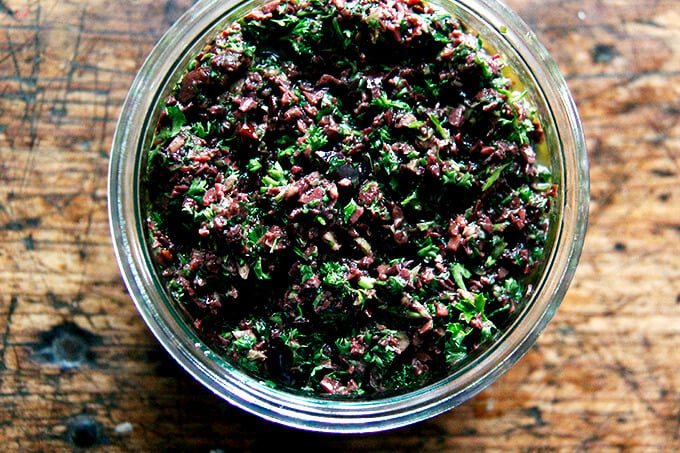
This black olive tapenade recipe is so darn easy and so tasty. What’s more? The food processor does 95% of the work. 🎉🎉🎉
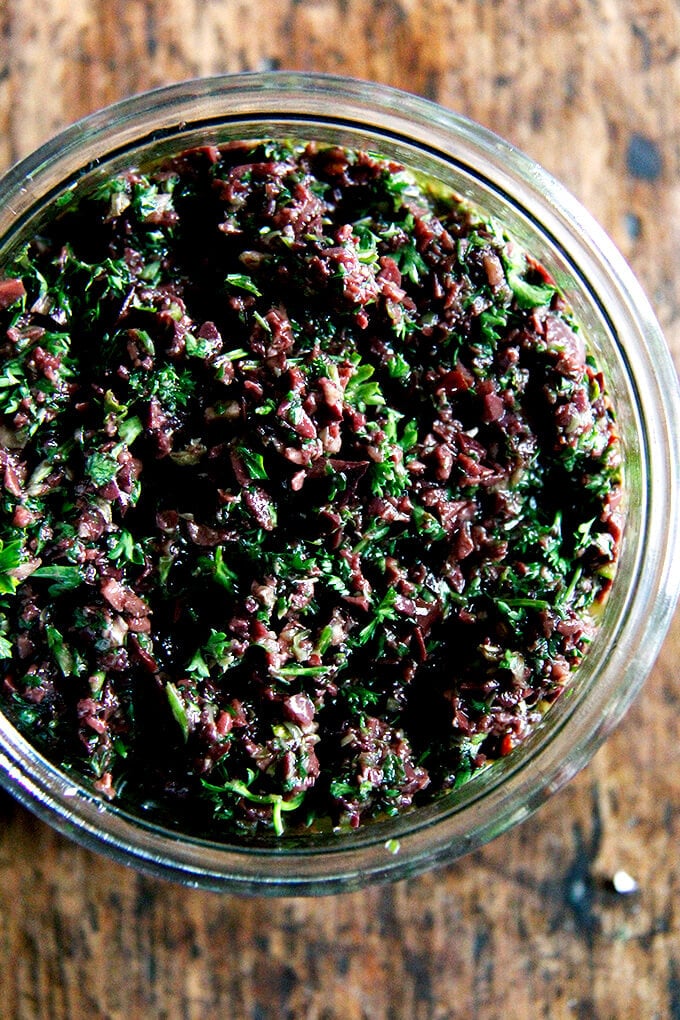
I made this black olive tapenade to serve as an appetizer for a smaller gathering earlier this year, and I’ve since made it for a number of occasions since because it’s so darn easy and good. The food processor does 95% of the work: after 30 or so quick pulses, the recipe is nearly complete.
But the key, I think, to making a really good tapenade, lies in the care you take while completing the last 5% of the job: chopping a heap of parsley by hand.
Why is this important? If you rely on the food processor to chop all of the parsley, your finished tapenade will still taste delicious, but it will lack variety in color, and I find those pops of green punctuating the dark purée to be so visually appealing and, in turn, appetizing.
Stirring in the olive oil by hand, moreover, as opposed to while the food processor blade is whirring, also prevents the texture from turning to mush. In sum, to make great olive tapenade every time:
- Pulse. Don’t purée.
- Chop half of the parsley by hand and stir it into the tapenade by hand.
- Don’t add the olive oil to the food processor. Stir it in by hand.
What to serve with olive tapenade?
Serve this tapenade with bread , of course, for a simple appetizer. It’s also nice with lamb .
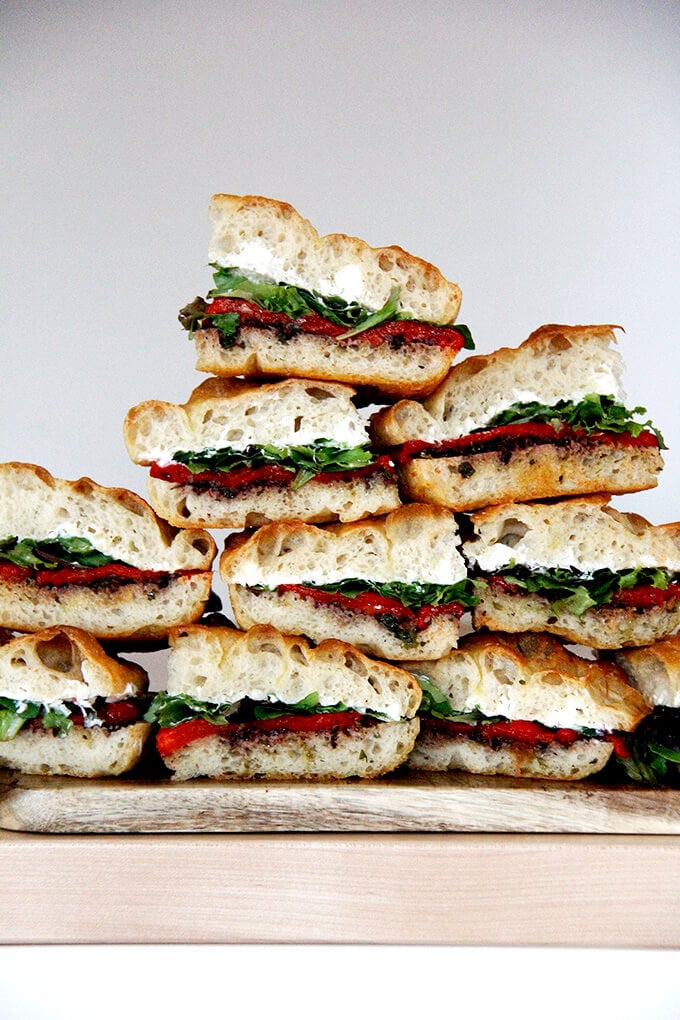
Recently, I’ve been making slab sandwiches with the overnight focaccia , this tapenade, roasted red peppers, greens, and whipped honey goat cheese.
Or, you can serve it as part of an array of dips and spreads:
More Dips and Spreads
- Homemade “Ranch” Dip (made with Greek yogurt, a huge crowd pleaser!)
- Raw Beet Dip with Toasted Almonds (The hue of this dip is striking!)
- Smoky Eggplant Dip with Za’atar (Serve this with homemade pita !)
- Tzatziki (I could eat this with anything.)
- Spicy Cashew Dip (addictive!)
Can green olives be used in place of black olives?
Yes, absolutely! I typically use Kalamata olives here, but you can absolutely use green olives, such as Castelvetrano , in their place. Buy pitted olives to save yourself the trouble of having to pit the olives.
How do you store olive tapenade? And for how long?
Store olive tapenade in the refrigerator for 1 week. Bring to room temperature before serving. If the parsley looks dull after the tapenade has spent a few days in the fridge, spruce it up by adding freshly chopped parsley.
Here’s the play-by-play: Gather your ingredients:
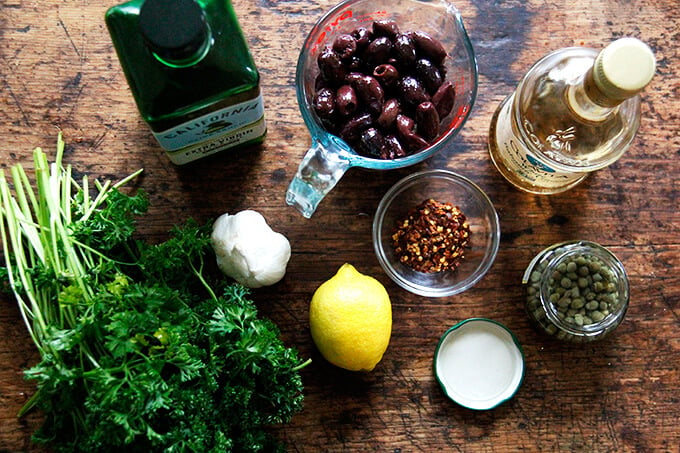
Place everything into the food processor with the exception of half of the parsley and the olive oil.
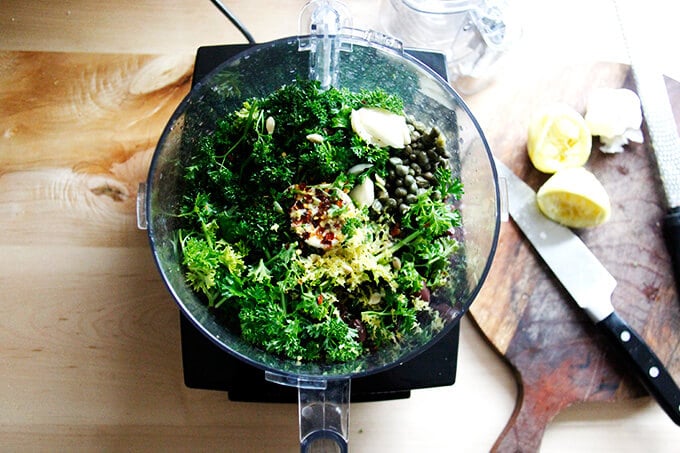
Pulse until finely chopped but don’t let it turn to mush.
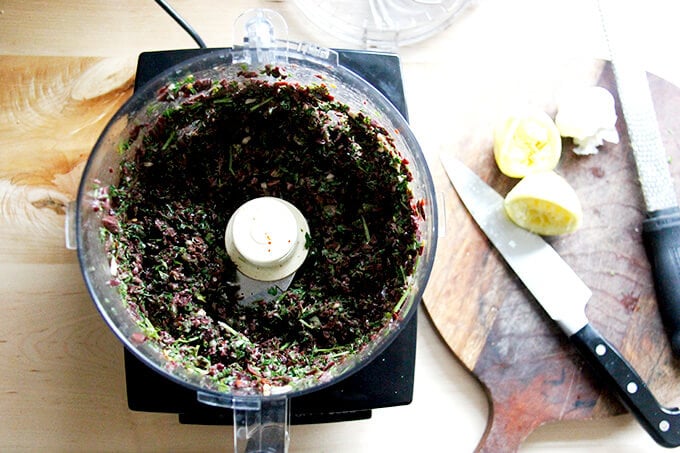
Transfer to a bowl. Chop the remaining parsley by hand.
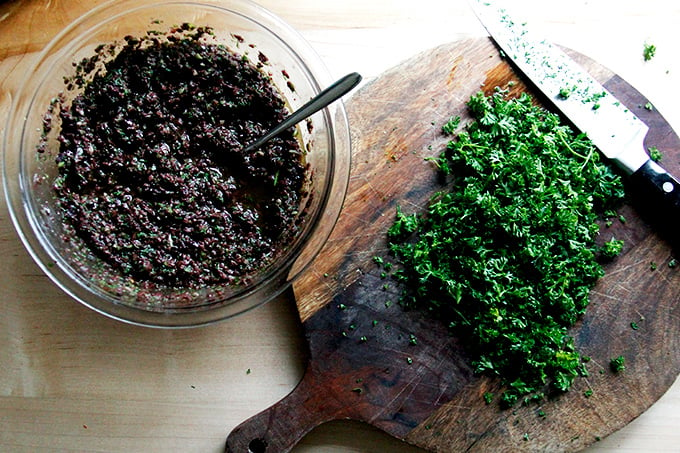
Add the parsley and the olive oil, and stir to combine.
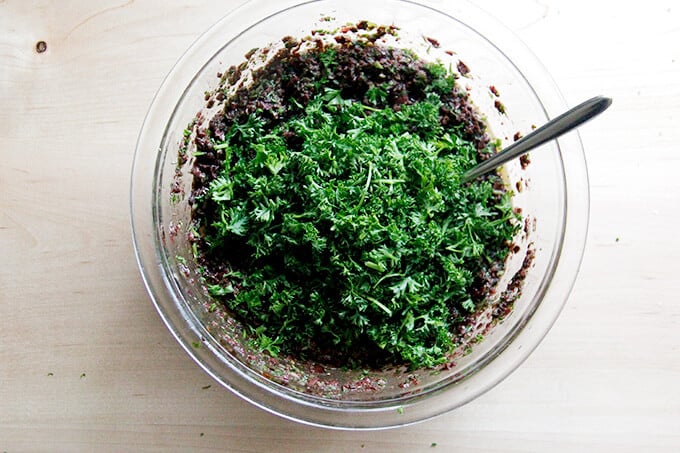
Serve or transfer to the fridge. Store for up to 1 week. Bring to room temperature before serving.
Slab sandwich: Roasted Red Peppers, whipped honey goat cheese, tapenade and greens :
Description
A favorite spread to put out for guests, to smear over sandwich bread, and to eat straight up with a spoon, this tapenade is loaded with parsley, lemon and olive oil. You can tailor the heat to your liking by increasing or decreasing the pepper flakes as you please.
Olives: I typically use Kalamata olives here, but you can absolutely use green olives, such as Castelvetrano , in their place.
Roasted red peppers pair nicely with this tapenade as does whipped honey goat cheese . Serve with toasty bread or make a sandwich . Irresistible.
- 2 cups pitted black olives, such as Kalamata, see notes above
- grated zest and juice of ½ to 1 lemon
- pinch crushed red pepper flakes, optional
- 2 cloves garlic, peeled
- 2 tablespoons capers, drained
- 1 tablespoon white balsamic vinegar
- 2 cups (about) parsley, divided roughly into two 1-cup portions
- 1/3 cup olive oil, plus more to taste
- Pulse the olives, zest, juice of half a lemon, pepper flakes, garlic, capers, vinegar, and half of the parsley in the food processor until a coarse paste is formed—be sure to pulse to avoid turning the purée into complete mush. It may take 20 to 30 quick pulses.
- Transfer the mixture to a bowl. Finely chop the remaining parsley, and stir it in. Stir in the olive oil. Taste; then adjust seasoning as necessary with more lemon, pepper flakes, or olive oil. I almost always end up using the remaining half lemon, and I always stir in more olive oil by the tablespoon until the mixture both looks and tastes right.
- Store olive tapenade in the refrigerator for 1 week. Bring to room temperature before serving. If the parsley looks dull after the tapenade has spent a few days in the fridge, spruce it up by adding freshly chopped parsley.
- Prep Time: 15 minutes
- Category: Condiment
- Method: Food Processor
- Cuisine: Greek
