
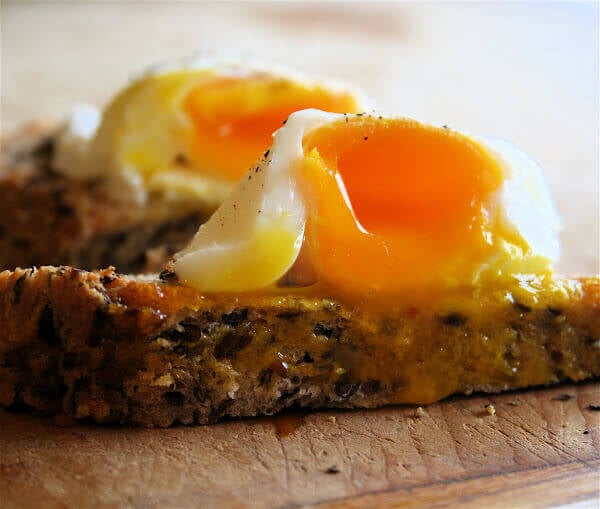
Knowing how to poach eggs allows simple, healthy meals to materialize in no time. I love poached eggs over toast, of course, but I also love them over pasta, greens, polenta, rice, tortillas, soup, and more — very few savory dishes do not welcome an egg on top.
How to Make Foolproof Poached Eggs
- Before you begin, gather your equipment: slotted spoon, small bowls, paper towel-lined plate, etc. There are instructions in the recipe box below for cooking 1 or 4 eggs at a time, but this is the basic process:
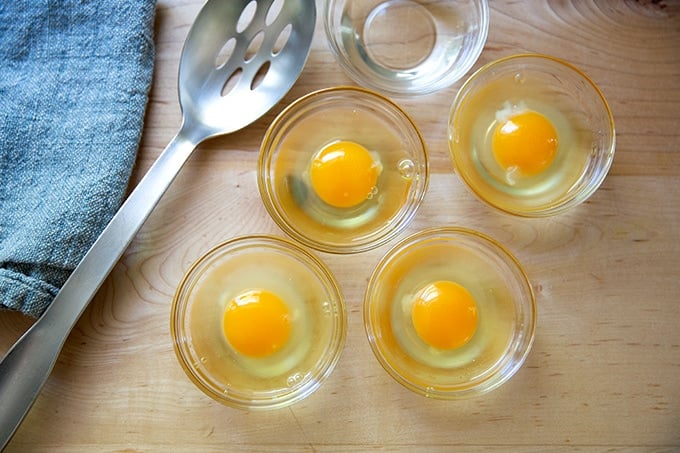
- Fill a shallow saucepan with water. Bring it to a simmer.
- Add vinegar. TURN OFF THE HEAT.
- Carefully lower the eggs into the water. COVER. Set a timer for 5 to 6 minutes depending on how well you like your eggs cooked.
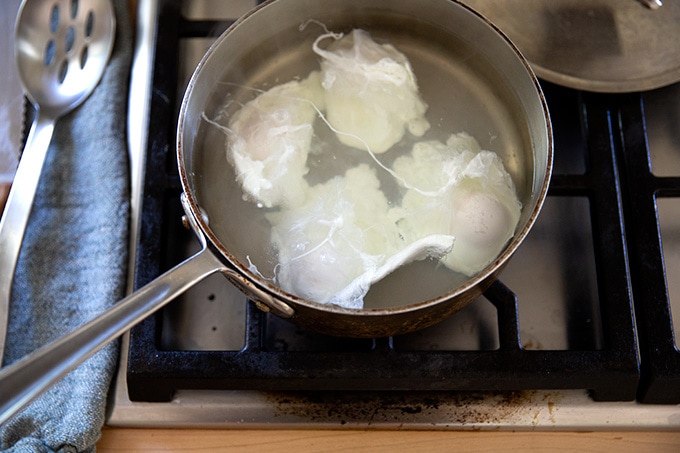
- Uncover. Transfer eggs to a towel-lined place. Let rest 30 to 60 seconds; then use the eggs as you wish.
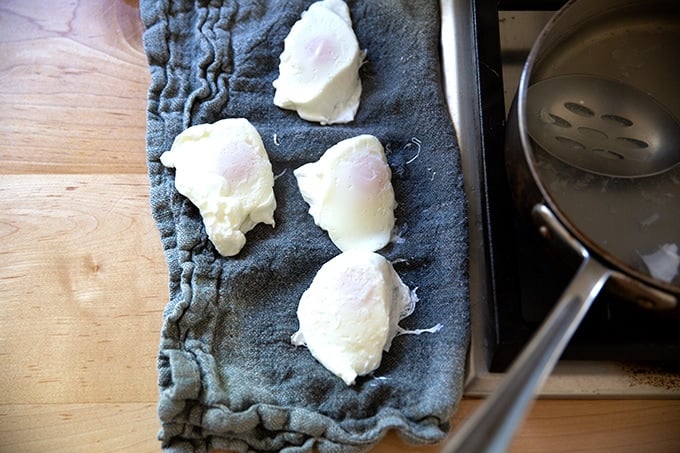

Why Use Vinegar to Poach Eggs?
Vinegar helps the egg whites set, preventing them from spreading all around the pot of water. I never find my eggs taste vinegary with the ratio of vinegar to water suggested in the recipe below: 1 tablespoon vinegar for 2 cups of water.
If you don’t want to use the vinegar because you don’t like the flavor, omit it. If you are using especially fresh eggs, you may find the vinegar to be unnecessary.
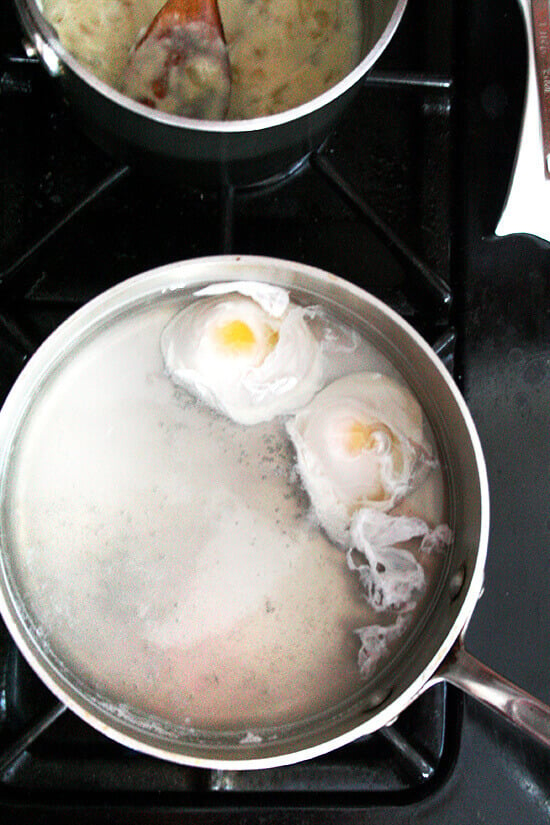

A Few Delicious Recipes to Use Your Perfectly Poached Eggs:
Croque Monsieur

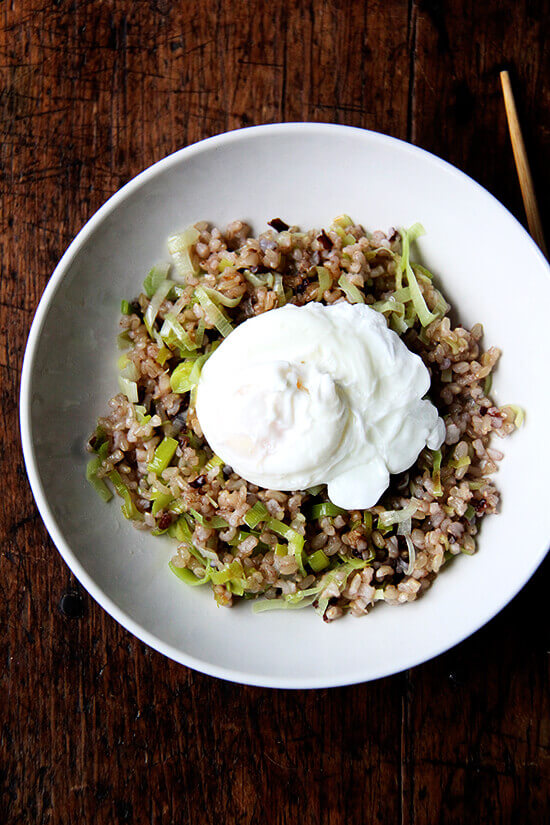
Ginger Fried Rice
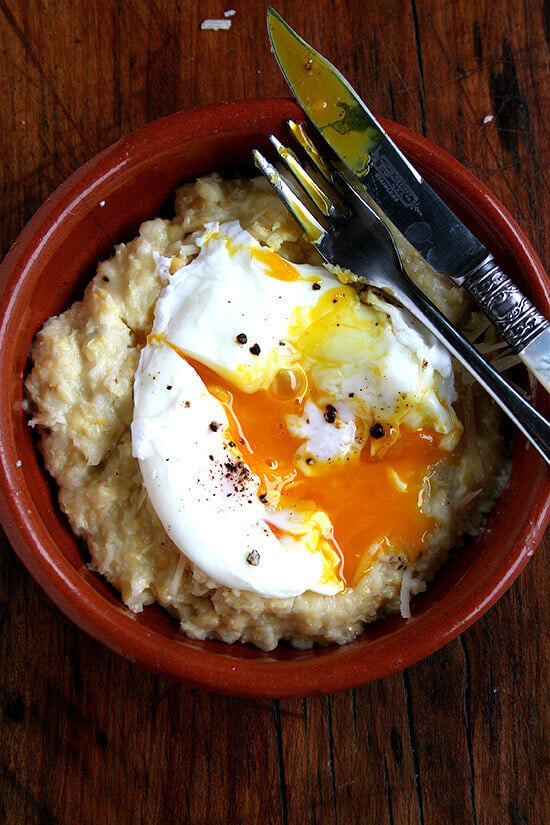
Fresh Corn Polenta
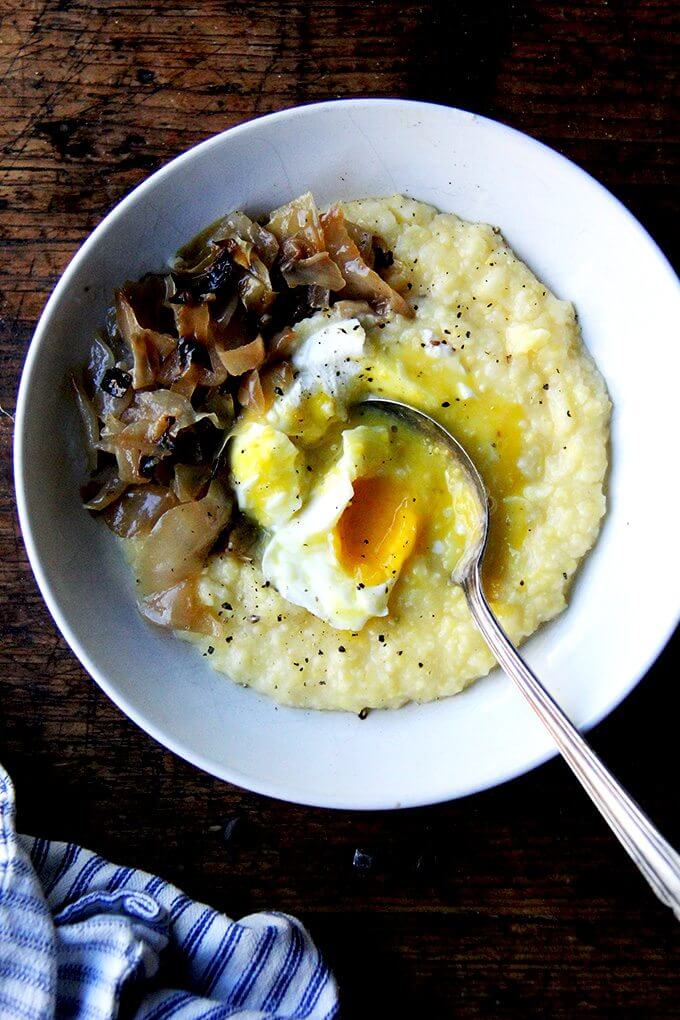
Oven-Baked Polenta (A Miracle!)
Huevos Rancheros with Blistered Salsa Roja

Description
I learned this method from a woman named Sandy Gluck, a wonderful recipe tester who tested recipes for my cookbook, Bread Toast Crumbs .
- 1 to 4 eggs
- 1 to 2 tablespoons vinegar, such as white wine, white balsamic, rice, or apple cider
Method for Making 1 Poached egg:
- Fill a shallow saucepan with 2 cups of water, cover it, and bring to a simmer. Crack an egg into a small bowl. Place 1 tablespoon of vinegar into a small bowl. Line a plate with paper towels or a cloth napkin. Have a wooden spoon and a slotted spoon nearby.
- Once the water simmers, uncover it, and TURN OFF THE HEAT. Add the vinegar. Make a whirlpool (optional) with the end of the wooden spoon. Carefully lower the egg into the center of the vortex. Cover the pot. Set a timer for 5 minutes.
- Uncover the pot. Transfer the egg to the prepared plate using a slotted spoon. Let rest briefly, 30 seconds to a minute. Then use as you wish. Notes: It may take some trial and error to get the timing right for you: 5 minutes will yield an egg with completely set whites and a runny yolk. You may want a runnier yolk, in which case, set the timer for 4.5 minutes.
Method for Making 4 Poached eggs:
- Fill a wide shallow saucepan with 4 cups of water, cover it, and bring to a simmer. Crack 4 eggs each into their own small bowls. Place 2 tablespoons of vinegar into a small bowl. Line a large plate with paper towels or a cloth napkin. Have a slotted spoon nearby.
- Once the water simmers, uncover it, and TURN OFF THE HEAT. Add the vinegar. Carefully lower the eggs into the pot one by one. Cover the pot. Set a timer for 5 to 6 minutes, depending on how runny you like your yolks: 5 minutes will yield very runny yolks; 6 minutes will yield less runny yolks.
- Uncover the pot. Transfer the eggs to the prepared plate using a slotted spoon. Let rest briefly, 30 seconds to a minute. Then use as you wish. Notes: It may take some trial and error to get the timing right for you.
- Prep Time: 5 minutes
- Cook Time: 4 to 6 minutes
- Category: Breakfast
- Method: Stovetop
- Cuisine: American
Description
I learned this method from a woman named Sandy Gluck, a wonderful recipe tester who tested recipes for my cookbook, Bread Toast Crumbs .
- 1 to 4 eggs
- 1 to 2 tablespoons vinegar, such as white wine, white balsamic, rice, or apple cider
Method for Making 1 Poached egg:
- Fill a shallow saucepan with 2 cups of water, cover it, and bring to a simmer. Crack an egg into a small bowl. Place 1 tablespoon of vinegar into a small bowl. Line a plate with paper towels or a cloth napkin. Have a wooden spoon and a slotted spoon nearby.
- Once the water simmers, uncover it, and TURN OFF THE HEAT. Add the vinegar. Make a whirlpool (optional) with the end of the wooden spoon. Carefully lower the egg into the center of the vortex. Cover the pot. Set a timer for 5 minutes.
- Uncover the pot. Transfer the egg to the prepared plate using a slotted spoon. Let rest briefly, 30 seconds to a minute. Then use as you wish. Notes: It may take some trial and error to get the timing right for you: 5 minutes will yield an egg with completely set whites and a runny yolk. You may want a runnier yolk, in which case, set the timer for 4.5 minutes.
Method for Making 4 Poached eggs:
- Fill a wide shallow saucepan with 4 cups of water, cover it, and bring to a simmer. Crack 4 eggs each into their own small bowls. Place 2 tablespoons of vinegar into a small bowl. Line a large plate with paper towels or a cloth napkin. Have a slotted spoon nearby.
- Once the water simmers, uncover it, and TURN OFF THE HEAT. Add the vinegar. Carefully lower the eggs into the pot one by one. Cover the pot. Set a timer for 5 to 6 minutes, depending on how runny you like your yolks: 5 minutes will yield very runny yolks; 6 minutes will yield less runny yolks.
- Uncover the pot. Transfer the eggs to the prepared plate using a slotted spoon. Let rest briefly, 30 seconds to a minute. Then use as you wish. Notes: It may take some trial and error to get the timing right for you.
- Prep Time: 5 minutes
- Cook Time: 4 to 6 minutes
- Category: Breakfast
- Method: Stovetop
- Cuisine: American
Find it online : https://alexandracooks.com/2019/01/13/perfect-poached-eggs/
This 4-ingredient homemade ricotta tastes vastly better than anything you could buy at the store and can be ready in just about 30 minutes!
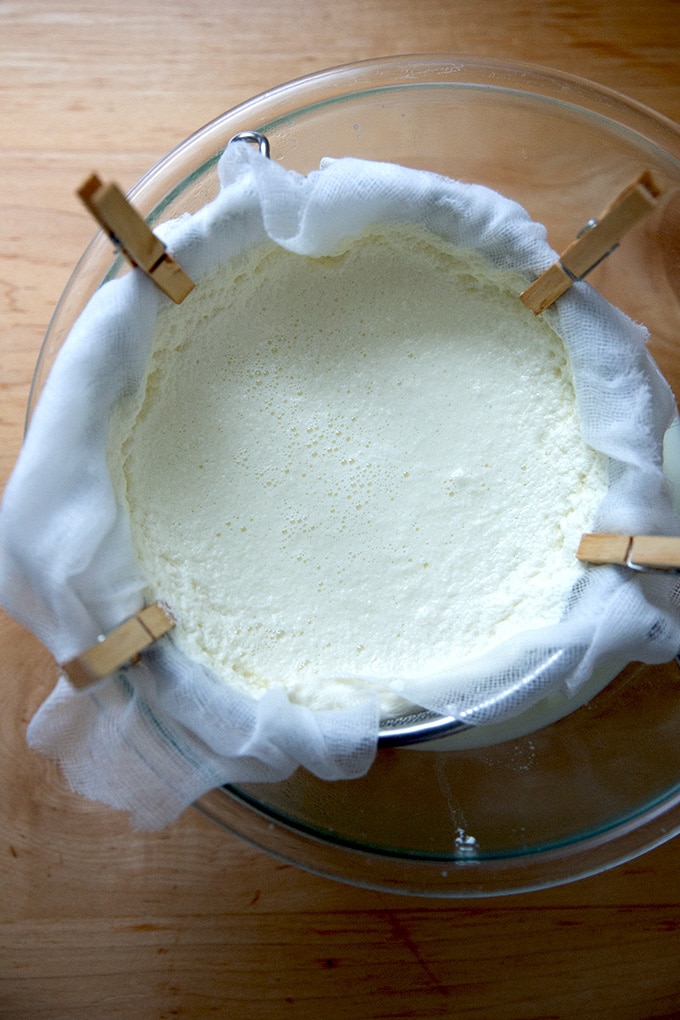
I never thought I liked ricotta until I made it from scratch. The difference in taste and texture between homemade ricotta and store-bought is dramatic. If you, too, think you don’t like ricotta, I have no doubt this recipe will change your mind.
Homemade Ricotta: Tips
- Get Organized. You’ll need to line a fine-meshed sieve with a few layers of cheesecloth. It’s helpful to have some kitchen clips or clothespins on hand to fasten the cheesecloth to the sieve.
- Stay focused. Every cook at some point in his/her life has made the mistake of walking away from a pot of near-boiling milk or cream only to return to find the pot boiling over. In this recipe, you’ll bring 4 cups of milk and 2 cups of heavy cream with a teaspoon of kosher salt to a simmer over medium heat. Do not walk away. As soon as the milk-cream mixture comes to a boil remove it from the heat. Add 3 tablespoons vinegar and let it sit for 1 minute, until the mixture begins to curdle.
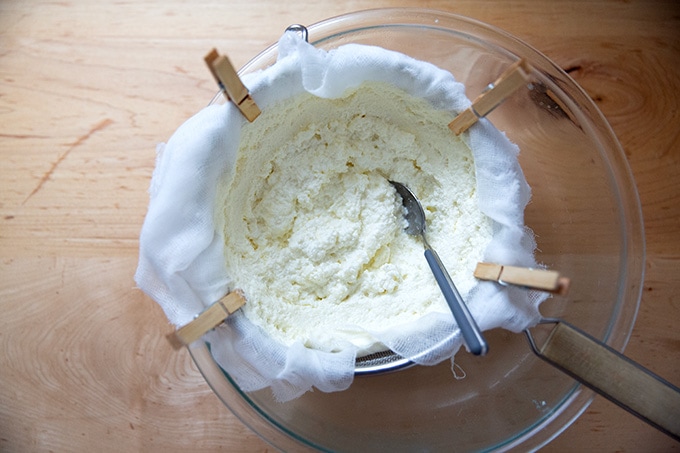
- Be Patient . It takes 20 to 30 minutes for the curds to separate from the whey. If you line your sieve especially well, it will take longer. Once the ricotta (the curds) has reached a consistency you like, spoon it into a serving vessel or storage jar and use as you wish. A few ideas follow. Save the whey! You can use it to make bread ; you can use it to thin out the ricotta to the consistency you like on subsequent days.
How To Make Ricotta, Step by Step
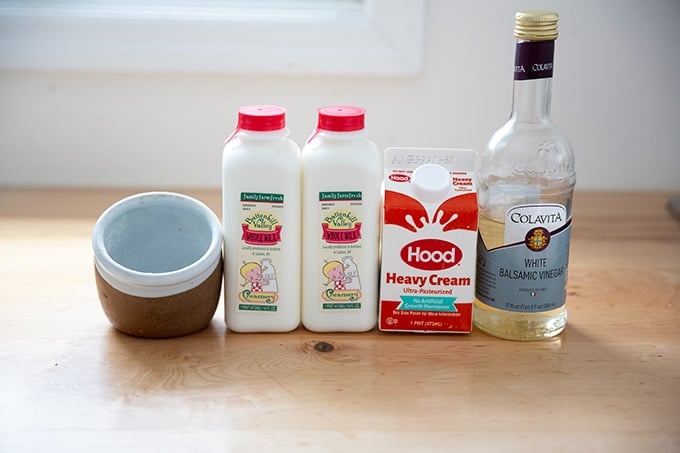
First, gather your ingredients: whole milk, heavy cream, salt, and vinegar.
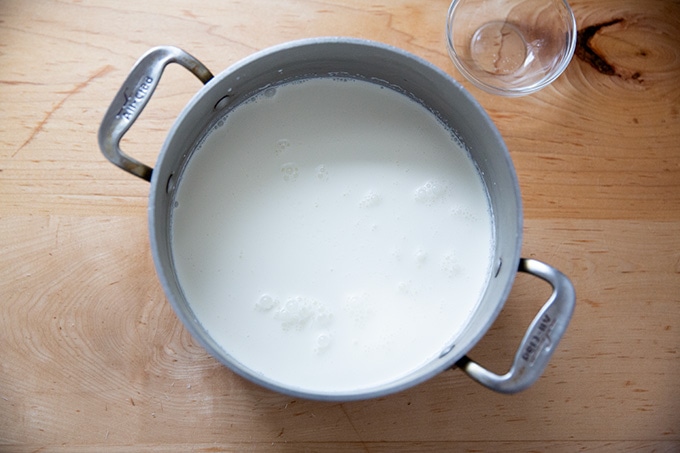
Combine the milk, cream, and salt in a pot:
Bring to a simmer over medium heat. Monitor closely and stir occasionally.
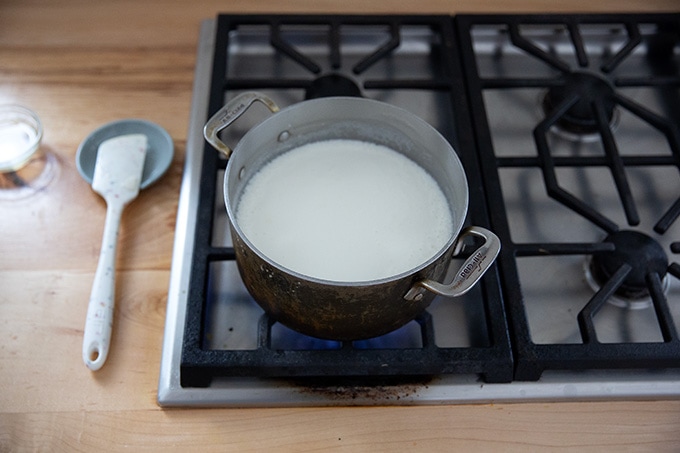
Once it comes to a simmer, turn off the heat, and add the vinegar:
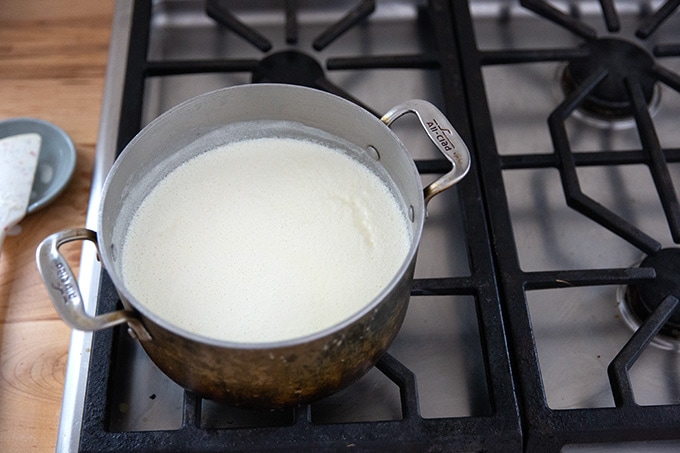
Let it stand for a minute or until it curdles:
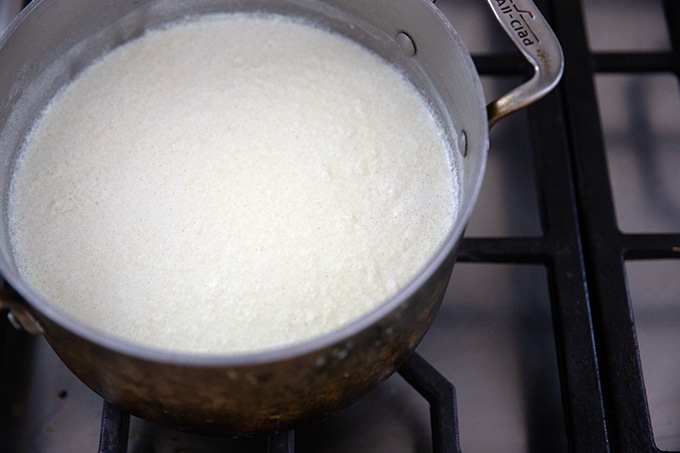
Strain it through a few layers of cheese cloth in a sieve set over a bowl:
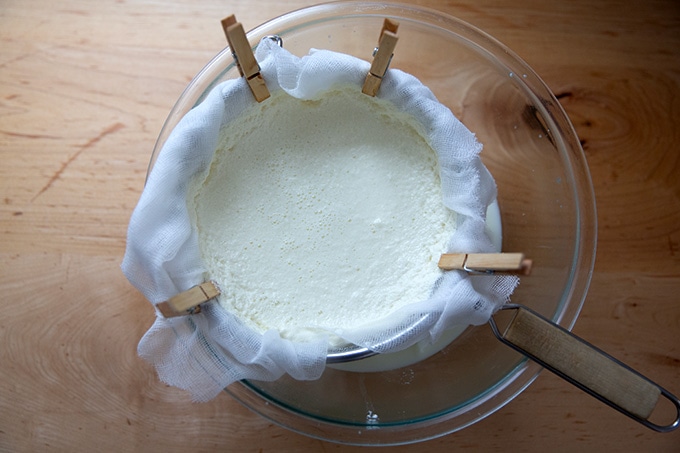
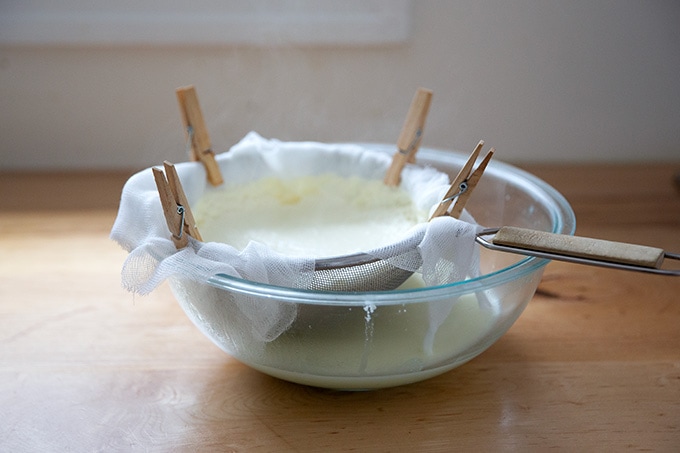
In just about 20 minutes, it will be done:
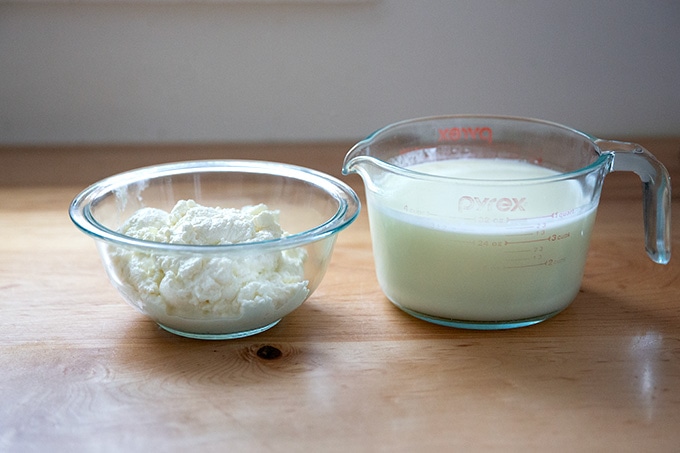
By the end, you will have two cups of ricotta and 4 cups of whey:
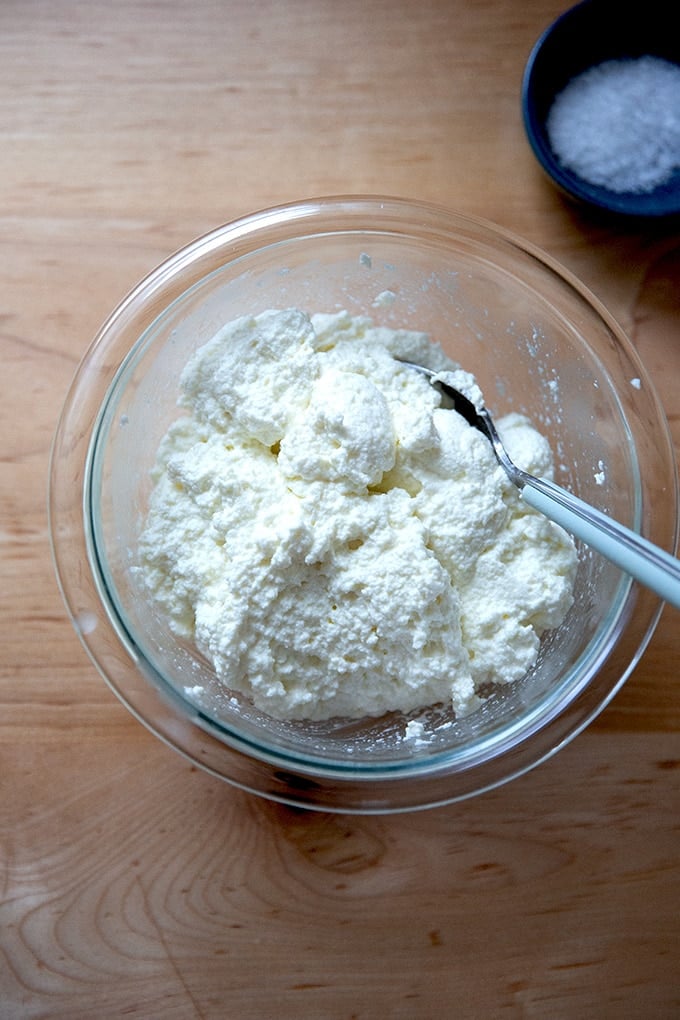
Taste the ricotta: you may want to season it with more salt.
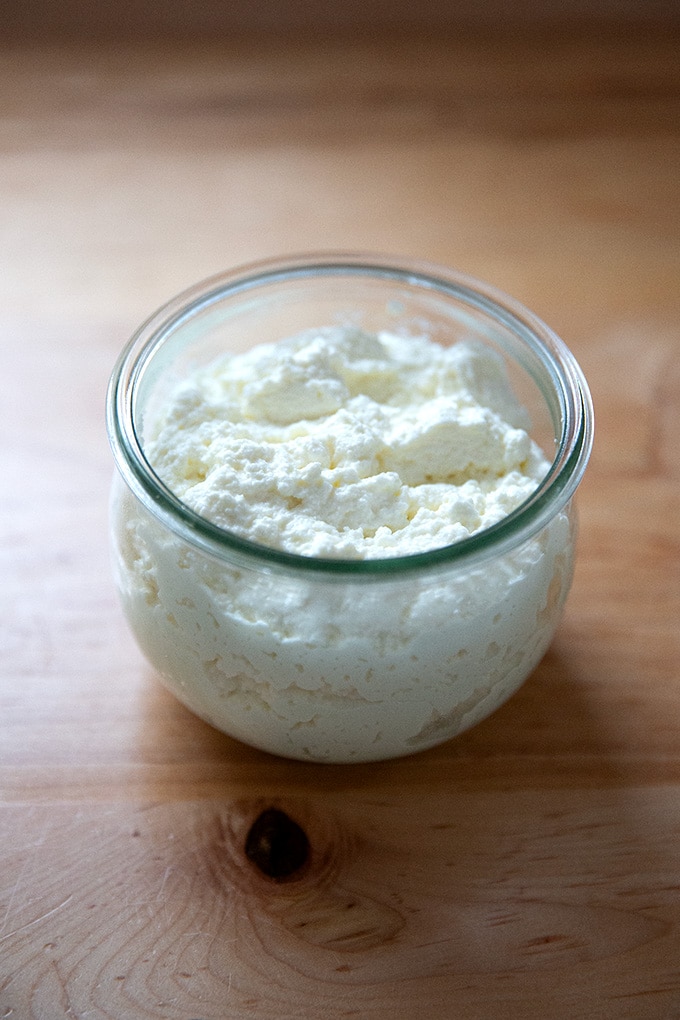
Store in the fridge for at least 1 week.
How to Use Your Homemade Ricotta

Bruschetta with Thyme-Roasted Grapes

A Summer Lunch: Tomatoes, Basil, Grilled Bread, Homemade Ricotta
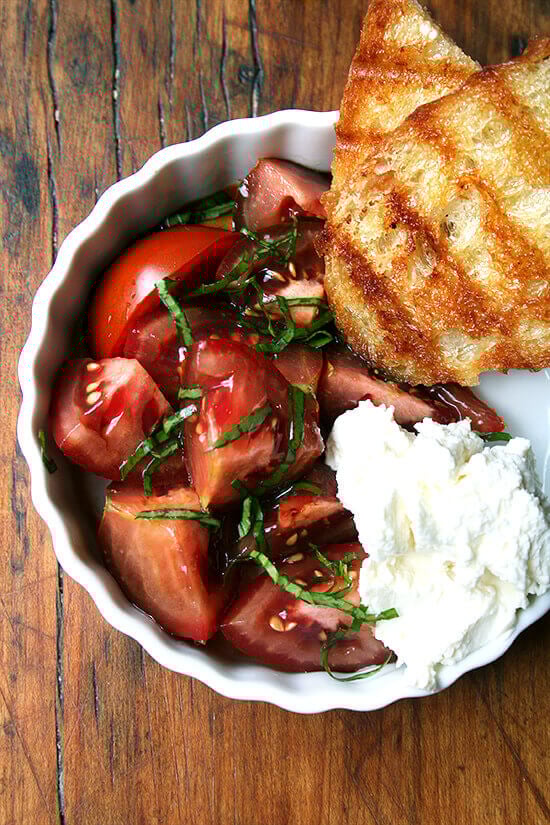
An Irresistible Appetizer: Whipped Ricotta with Olive Oil and Herbs

Endive and Fava Tartines with Herbed Ricotta

Description
Salt: If you are using Morton Kosher salt or sea salt, use 3/4 teaspoon.
Milk and Cream: If you can find milk and cream that is not “ultra-pasteurized”, buy them. I never can find non “ultra-pasteurized” heavy cream but it doesn’t seem to matter.
- 4 cups whole milk, see notes above
- 2 cups heavy cream
- 1.5 teaspoons Diamond Crystal kosher salt, see notes above
- 3 tablespoons white balsamic vinegar or other white vinegar you like
- Set a large fine-mesh sieve over a deep bowl. Line the sieve with two layers of folded cheesecloth (so roughly 4 single layers).
- Pour the milk and cream into a stainless steel or enameled pot. Stir in the salt. Bring to a full boil over medium heat, stirring occasionally — do not walk away. Turn off the heat and stir in the vinegar. Allow the mixture to stand for 1 minute or until it curdles. It will separate into thick parts (the curds) and milky parts (the whey).
- Pour the mixture into a cheesecloth-lined sieve and allow it to drain into the bowl at room temperature for 20 to 25 minutes, occasionally transferring the liquid that collects in the bowl to another storage vessel. In the end you will have 2 cups of ricotta and 4 cups of whey. Transfer the ricotta to a bowl, discarding the cheesecloth. Save the whey — you can make bread with it.
- Taste the ricotta. Season with more salt if you wish. Use the ricotta immediately or transfer it to a storage vessel, and refrigerate. The ricotta will keep refrigerated for 4 to 5 days. It will thicken considerably once chilled for 24 hours.
- Prep Time: 2 minutes
- Cook Time: 25 minutes
- Category: Cheese
- Method: Stovetop
- Cuisine: American/Italian
