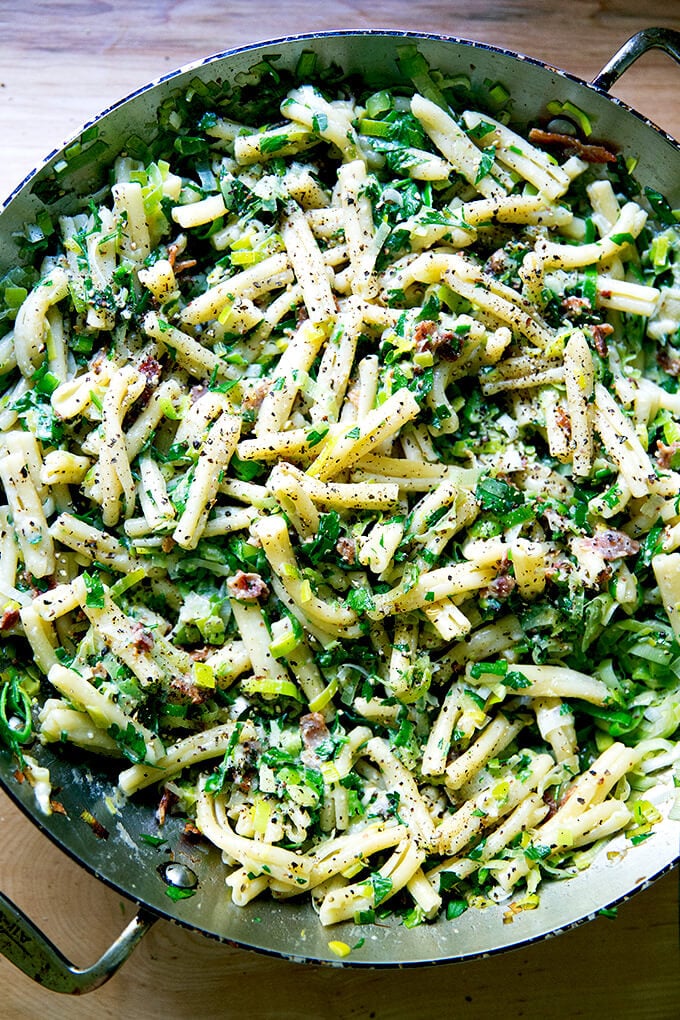
I know what you’re thinking: Pasta carbonara? The week after Thanksgiving? Thank s, but no thanks.
But, and forgive me if I’m wrong, I think you might be thinking of an entirely different dish, one containing vast amounts of cheese and butter?
I had misconceptions, too. But true pasta carbonara is in fact light, and this recipe, from Everyday Food , calls for sautéed leeks, grated lemon zest, and freshly squeezed lemon juice, flavors that make this carbonara preparation particularly fresh and light. What I love most about this dish is the sauce, made with two whisked eggs, 1/4 cup of the pasta cooking liquid, and 1/4 cup of grated Parmigiano Reggiano, an incredibly creamy mixture (despite containing no cream at all) that coats the pasta so well, making every bite especially tasty. Oddly, it tastes not the least bit eggy. Just creamy and delicious. Yum.
With bacon and eggs on hand, dinner can be assembled in a flash. I’ve made this dish once a week since my Everyday Food magazine arrived in mid-October. Nothing makes me happier than whisking that pasta cooking liquid with the eggs and cheese, watching it transform into a magically flavorful sauce, and throwing dinner on the table. I think you’ll enjoy it, too.
PS: Pasta Carbonara with Asparagus
PPS: No-Bacon Carbonara with ALL the Greens
How to Make Pasta Carbonara, Step by Step
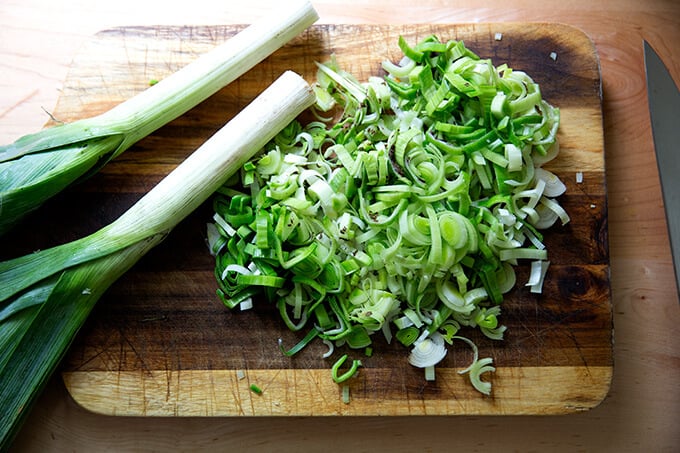
First, slice up some leeks. Transfer them to a large bowl of cold water to soak and to let the dirt settle — leeks can be very dirty.
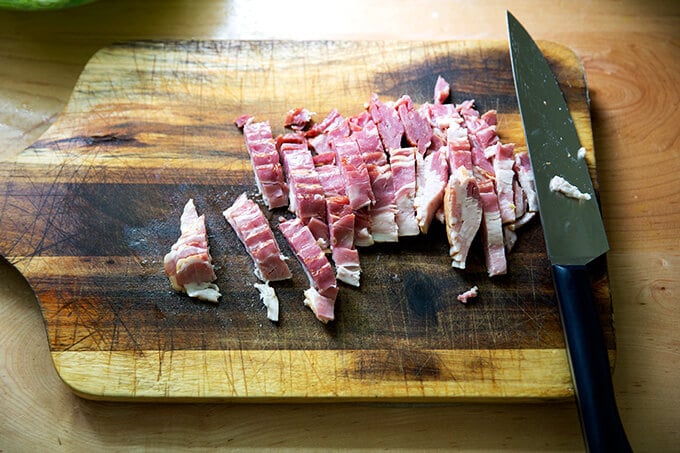
Then, dice up some bacon and …
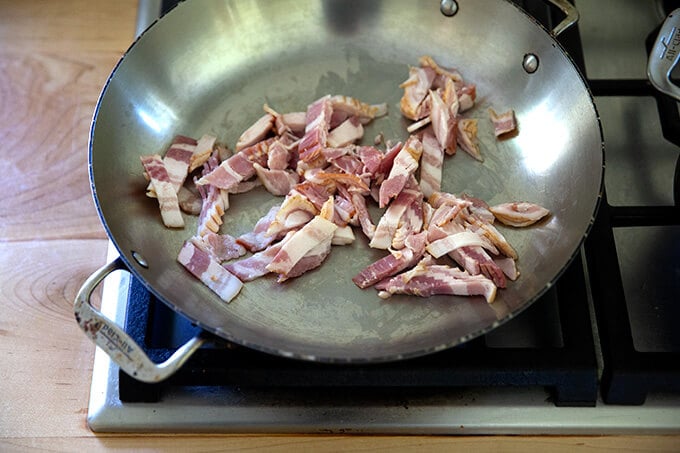
… crisp it up in a pan.
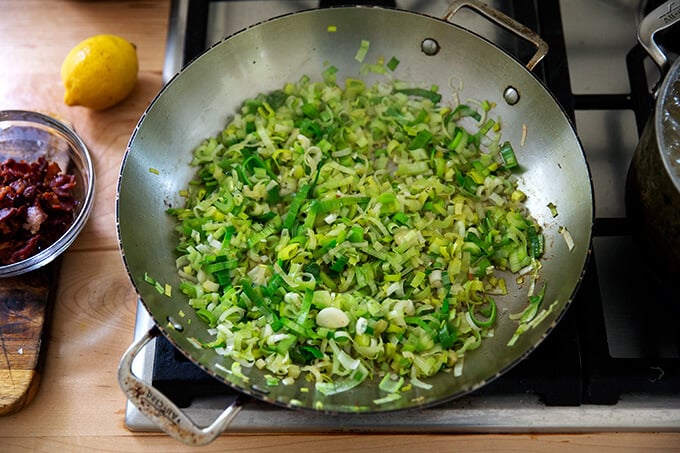
Set it aside; then cook the leeks in the bacon fat.
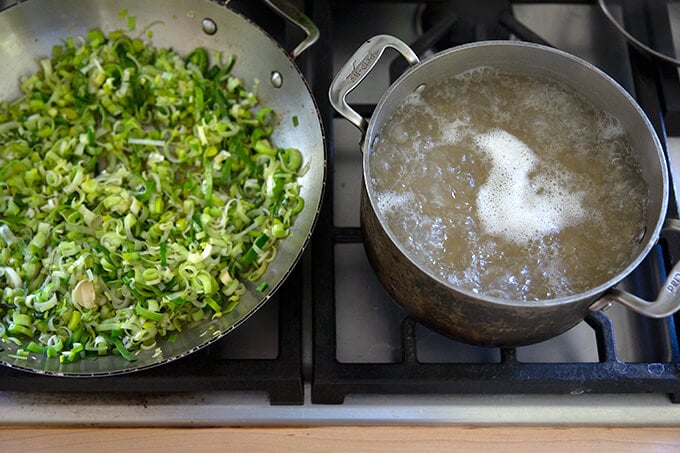
Boil a pot of water; then cook whatever pasta you like till al dente.
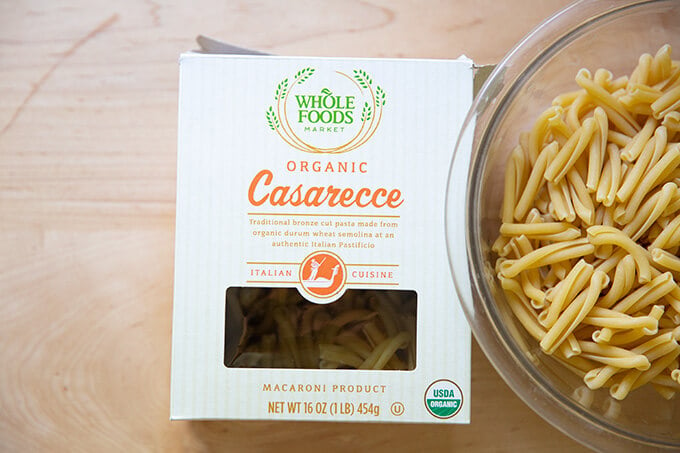
I’ve been loving this Casarecce:
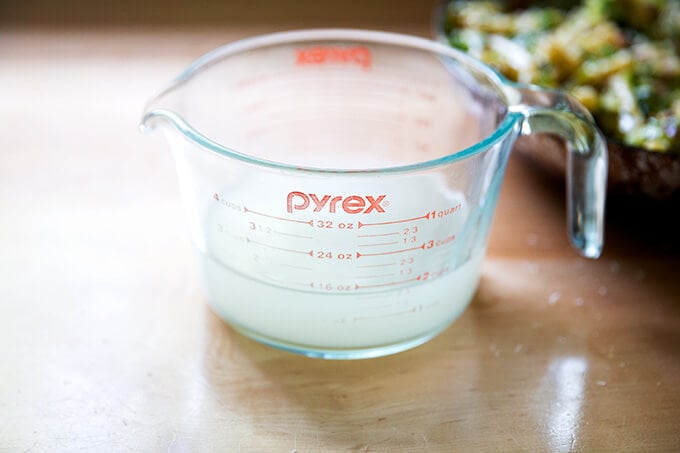
This is the key step: be sure to reserve some of the pasta cooking liquid. You only need 1/4 cup initially, but I suggest reserving much more because it’s so nice having on hand for reheating.
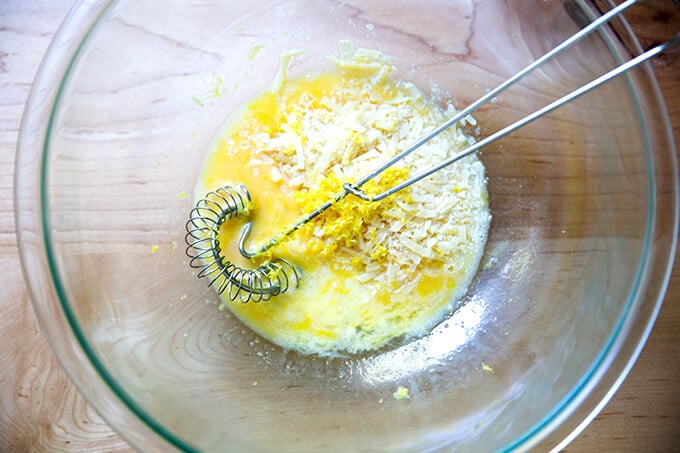
Whisk together the sauce: 2 eggs, 1 tablespoon lemon juice, 1/4 cup parmesan, and 1/4 cup reserved pasta cooking liquid.
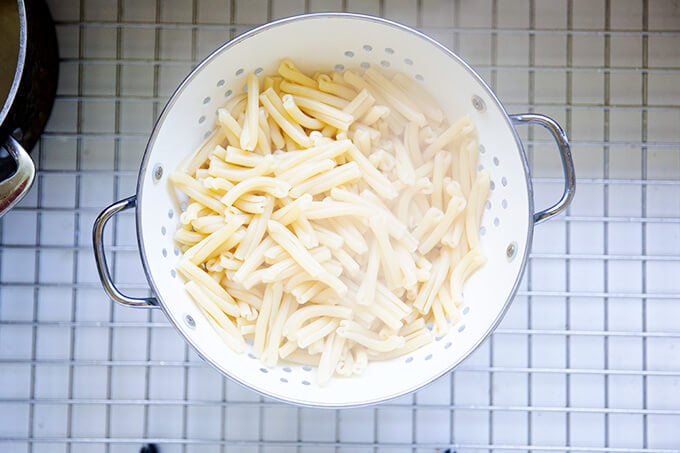
Drain the pasta.
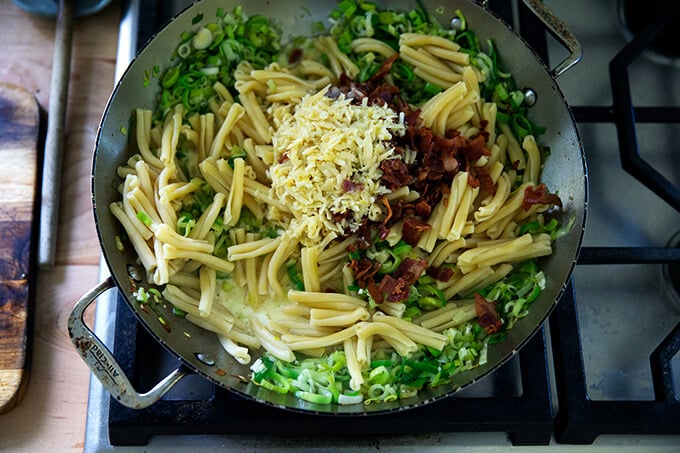
Add it to the skillet with the leeks, the crisped bacon, and the sauce.
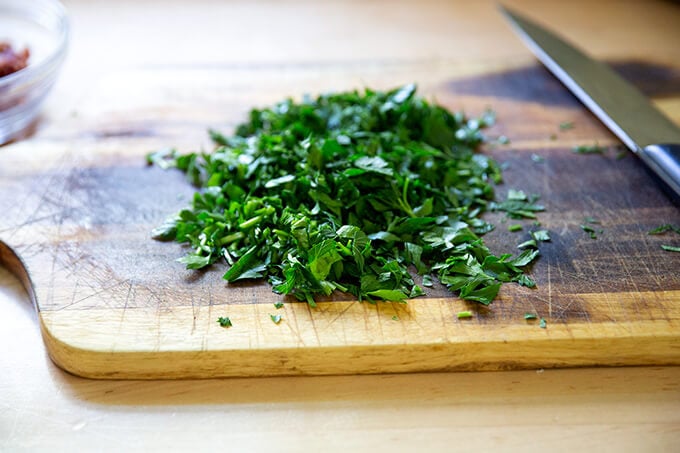
Chop up some parsley.
Add it to the skillet and stir to combine.
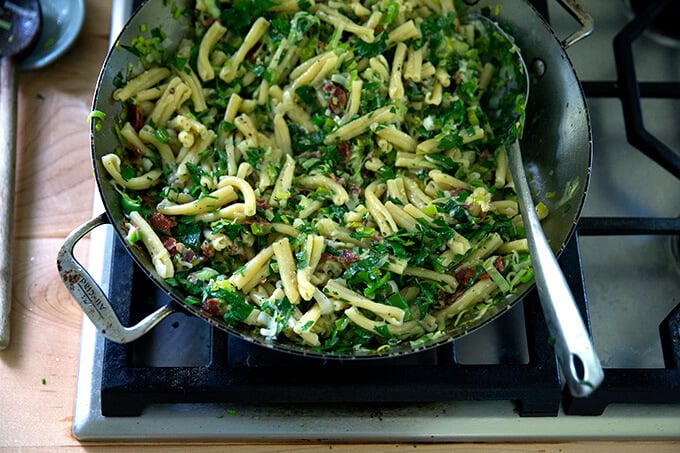
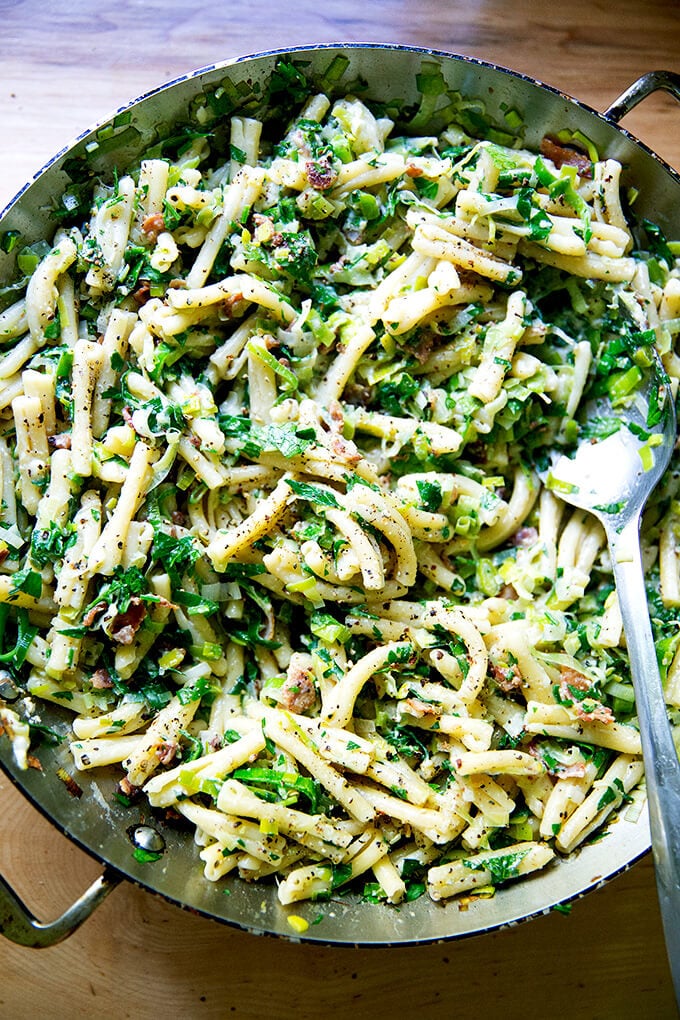
Shave more parmesan and crack more pepper over top to taste.
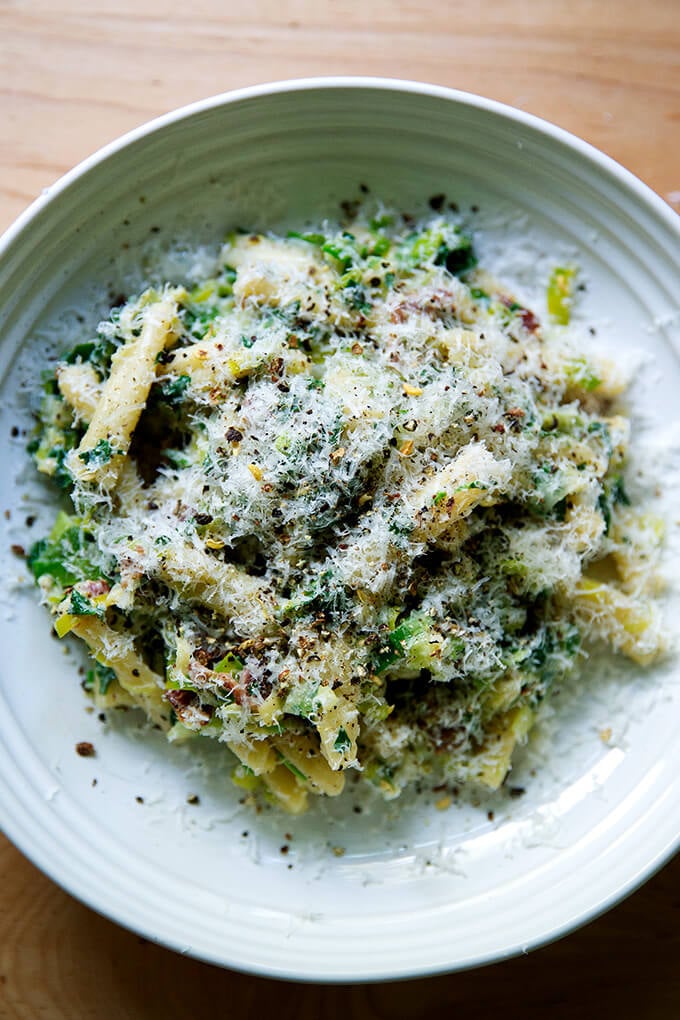
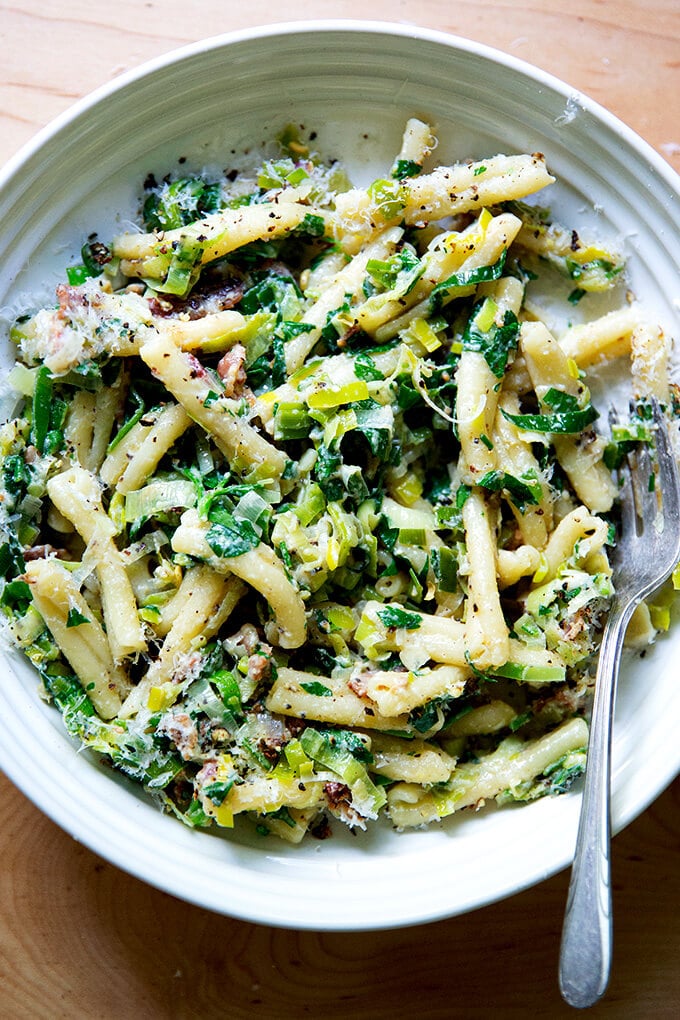
Soooo good.
Description
Adapted from: Everyday Food
Note: If you want to make this vegetarian, use 3 tablespoons of olive oil in place of the bacon.
- Coarse salt and ground pepper
- 6 slices bacon, cut crosswise into 1-inch pieces or 3 tablespoons extra-virgin olive oil
- 4 leeks (white and light-green parts only), halved lengthwise, thinly sliced, soaked in cold water and drained
- 3/4 pound pasta, such as campanelle, orecchiette, or gemelli
- 2 large eggs
- 1/2 cup grated Parmigiano Reggiano, plus more for serving
- zest of 1 lemon
- 1 tablespoon fresh lemon juice
- 1 cup fresh parsley leaves, roughly chopped
- 1 pound of asparagus, finely chopped (optional)
- Set a large pot of salted water to boil (I use 1 tablespoon kosher salt).
- In a large skillet, cook bacon over medium heat, stirring occasionally, until crisp, 8 to 10 minutes. With a slotted spoon, transfer bacon to paper towels to drain. Pour off all but 3 tablespoons fat from skillet. (Alternatively use 3 tablespoons of olive oil in place of the bacon.) Add the leeks, season lightly with salt to taste, and cook over low heat, stirring occasionally, until leeks are soft and beginning to brown at the edges, about 10 minutes.
- Add pasta to pot and cook al dente according to package instructions. Reserve 1 to 2 cups of the pasta cooking liquid. In a medium bowl, whisk together eggs, parmesan, lemon zest, and lemon juice. Whisk 1/4 cup pasta water into egg mixture.
- If using the asparagus, add it to the pot of pasta, then drain the pot immediately. Add the pasta and asparagus to the skillet with the leeks and immediately add the egg mixture, along with the bacon, and parsley. Season with salt and pepper to taste and add more pasta cooking water as needed. Serve immediately with more parmesan and pepper on the side.
- Prep Time: 15 minutes
- Cook Time: 10 minutes
- Category: Pasta
- Method: Stovetop
- Cuisine: Italian, American
I know what you’re thinking: Pasta carbonara? The week after Thanksgiving? Thank s, but no thanks.
But, and forgive me if I’m wrong, I think you might be thinking of an entirely different dish, one containing vast amounts of cheese and butter?
I had misconceptions, too. But true pasta carbonara is in fact light, and this recipe, from Everyday Food , calls for sautéed leeks, grated lemon zest, and freshly squeezed lemon juice, flavors that make this carbonara preparation particularly fresh and light. What I love most about this dish is the sauce, made with two whisked eggs, 1/4 cup of the pasta cooking liquid, and 1/4 cup of grated Parmigiano Reggiano, an incredibly creamy mixture (despite containing no cream at all) that coats the pasta so well, making every bite especially tasty. Oddly, it tastes not the least bit eggy. Just creamy and delicious. Yum.
With bacon and eggs on hand, dinner can be assembled in a flash. I’ve made this dish once a week since my Everyday Food magazine arrived in mid-October. Nothing makes me happier than whisking that pasta cooking liquid with the eggs and cheese, watching it transform into a magically flavorful sauce, and throwing dinner on the table. I think you’ll enjoy it, too.
PS: Pasta Carbonara with Asparagus
PPS: No-Bacon Carbonara with ALL the Greens
How to Make Pasta Carbonara, Step by Step
First, slice up some leeks. Transfer them to a large bowl of cold water to soak and to let the dirt settle — leeks can be very dirty.
Then, dice up some bacon and …
… crisp it up in a pan.
Set it aside; then cook the leeks in the bacon fat.
Boil a pot of water; then cook whatever pasta you like till al dente.
I’ve been loving this Casarecce:
This is the key step: be sure to reserve some of the pasta cooking liquid. You only need 1/4 cup initially, but I suggest reserving much more because it’s so nice having on hand for reheating.
Whisk together the sauce: 2 eggs, 1 tablespoon lemon juice, 1/4 cup parmesan, and 1/4 cup reserved pasta cooking liquid.
Drain the pasta.
Add it to the skillet with the leeks, the crisped bacon, and the sauce.
Chop up some parsley.
Add it to the skillet and stir to combine.
Shave more parmesan and crack more pepper over top to taste.
Soooo good.
Description
Adapted from: Everyday Food
Note: If you want to make this vegetarian, use 3 tablespoons of olive oil in place of the bacon.
- Coarse salt and ground pepper
- 6 slices bacon, cut crosswise into 1-inch pieces or 3 tablespoons extra-virgin olive oil
- 4 leeks (white and light-green parts only), halved lengthwise, thinly sliced, soaked in cold water and drained
- 3/4 pound pasta, such as campanelle, orecchiette, or gemelli
- 2 large eggs
- 1/2 cup grated Parmigiano Reggiano, plus more for serving
- zest of 1 lemon
- 1 tablespoon fresh lemon juice
- 1 cup fresh parsley leaves, roughly chopped
- 1 pound of asparagus, finely chopped (optional)
- Set a large pot of salted water to boil (I use 1 tablespoon kosher salt).
- In a large skillet, cook bacon over medium heat, stirring occasionally, until crisp, 8 to 10 minutes. With a slotted spoon, transfer bacon to paper towels to drain. Pour off all but 3 tablespoons fat from skillet. (Alternatively use 3 tablespoons of olive oil in place of the bacon.) Add the leeks, season lightly with salt to taste, and cook over low heat, stirring occasionally, until leeks are soft and beginning to brown at the edges, about 10 minutes.
- Add pasta to pot and cook al dente according to package instructions. Reserve 1 to 2 cups of the pasta cooking liquid. In a medium bowl, whisk together eggs, parmesan, lemon zest, and lemon juice. Whisk 1/4 cup pasta water into egg mixture.
- If using the asparagus, add it to the pot of pasta, then drain the pot immediately. Add the pasta and asparagus to the skillet with the leeks and immediately add the egg mixture, along with the bacon, and parsley. Season with salt and pepper to taste and add more pasta cooking water as needed. Serve immediately with more parmesan and pepper on the side.
- Prep Time: 15 minutes
- Cook Time: 10 minutes
- Category: Pasta
- Method: Stovetop
- Cuisine: Italian, American
Description
Adapted from: Everyday Food
Note: If you want to make this vegetarian, use 3 tablespoons of olive oil in place of the bacon.
- Coarse salt and ground pepper
- 6 slices bacon, cut crosswise into 1-inch pieces or 3 tablespoons extra-virgin olive oil
- 4 leeks (white and light-green parts only), halved lengthwise, thinly sliced, soaked in cold water and drained
- 3/4 pound pasta, such as campanelle, orecchiette, or gemelli
- 2 large eggs
- 1/2 cup grated Parmigiano Reggiano, plus more for serving
- zest of 1 lemon
- 1 tablespoon fresh lemon juice
- 1 cup fresh parsley leaves, roughly chopped
- 1 pound of asparagus, finely chopped (optional)
- Set a large pot of salted water to boil (I use 1 tablespoon kosher salt).
- In a large skillet, cook bacon over medium heat, stirring occasionally, until crisp, 8 to 10 minutes. With a slotted spoon, transfer bacon to paper towels to drain. Pour off all but 3 tablespoons fat from skillet. (Alternatively use 3 tablespoons of olive oil in place of the bacon.) Add the leeks, season lightly with salt to taste, and cook over low heat, stirring occasionally, until leeks are soft and beginning to brown at the edges, about 10 minutes.
- Add pasta to pot and cook al dente according to package instructions. Reserve 1 to 2 cups of the pasta cooking liquid. In a medium bowl, whisk together eggs, parmesan, lemon zest, and lemon juice. Whisk 1/4 cup pasta water into egg mixture.
- If using the asparagus, add it to the pot of pasta, then drain the pot immediately. Add the pasta and asparagus to the skillet with the leeks and immediately add the egg mixture, along with the bacon, and parsley. Season with salt and pepper to taste and add more pasta cooking water as needed. Serve immediately with more parmesan and pepper on the side.
- Prep Time: 15 minutes
- Cook Time: 10 minutes
- Category: Pasta
- Method: Stovetop
- Cuisine: Italian, American
Find it online : https://alexandracooks.com/2011/11/28/pasta-carbonara-easiest-weeknight-dinner/
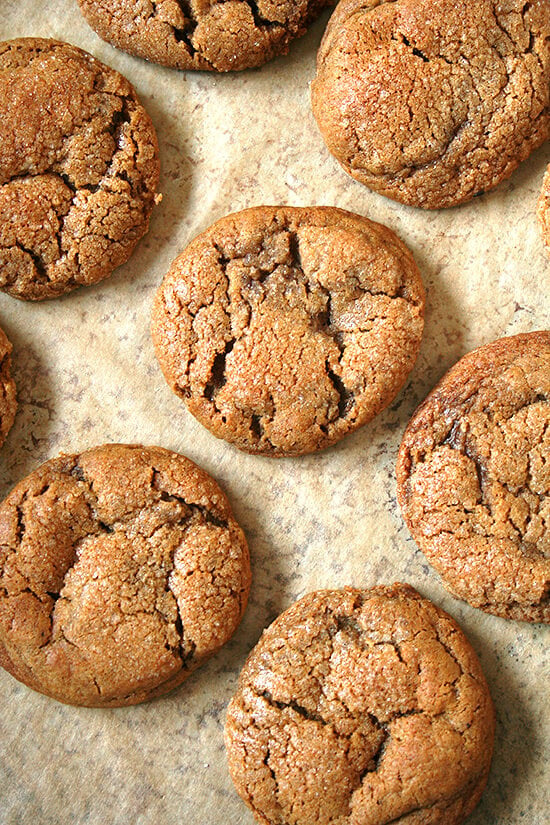
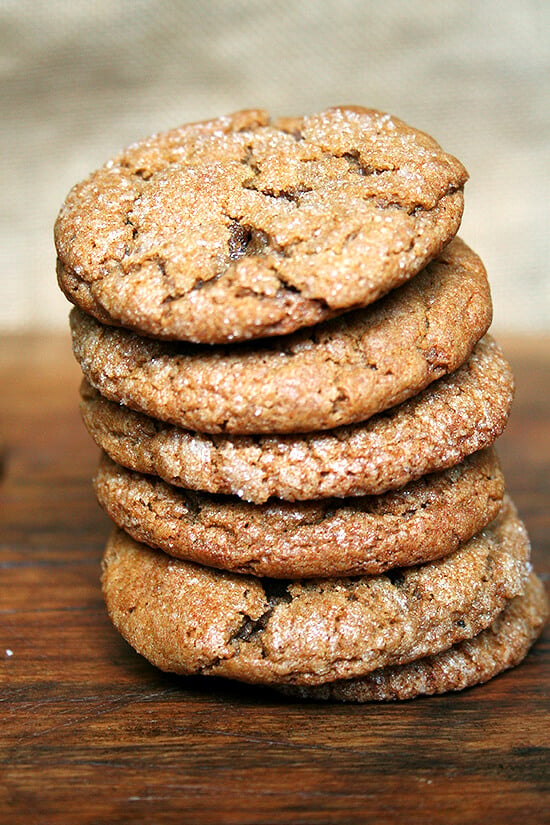
These sugar-crusted molasses cookies are soft and chewy thanks to brown sugar and molasses and perfectly seasoned with all of the wintry, warm spices of the season: ginger, cinnamon, and cloves, oh my! This recipe can be made with or without a mixer, and the cookies stay soft and moist for days, so don’t be afraid to make them ahead of time.
My cousin Kristina makes the very best molasses cookies I have ever tasted. And they’re not just the best molasses cookies ever; they’re one of the best cookies ever. Last December when I received Kristina’s recipe in the mail and discovered that her legendary molasses cookies were made with shortening, my earth sort of shattered. How was it possible for me to really really love a shortening-based cookie?
But perhaps this was an opportunity, I thought. I would substitute butter for the shortening and then blog about the nearly perfect cookie I had perfected with butter. But once again, my earth shattered. The cookies I prepared with the butter-for-shortening substitution were terrible. The texture lacked the softness and chewiness of Kristina’s, and the flavor, perhaps tarnished by over baking, was not as I had remembered. Did Kristina in fact use shortening in her cookies? I was still in disbelief.
It was time for me to try shortening. Throughout the process, I wished the shortening molasses cookies to fail. But when I pulled from the oven a pan with nine perfectly golden-domed mounds crinkling up at me, I began to believe. And then, after they cooled and I took a bite, and the soft and chewy texture was just as I had remembered, and the flavor, too, was buttery and not at all artificial tasting and spiced with those wintry flavors of cinnamon and cloves, I was convinced. These were Kristina’s molasses cookies.
I had to call Kristina to discuss. “So Kristina,” I said when she answered the phone, “your molasses cookies and I have been on a long journey together, and I’ve finally accepted that you do in fact use shortening, right?”
“Shortening?” she replied. “No, I always use butter. I don’t know what shortening is.”
I had to laugh. I couldn’t believe what I was hearing. What had gone wrong the first time I had attempted Kristina’s recipe? Was it just a terribly off day for me in the kitchen?
Butter or Shortening, Which to Use?
I have no idea what went wrong that day in the kitchen many years ago, but what I do know now is that I always use butter. I just can’t get myself to buy shortening despite my success with it in the kitchen.
The key here to ensure your cookies don’t flatten into thin disks is to chill the portioned dough balls. You can chill them for as few as 3 hours, but overnight is ideal.
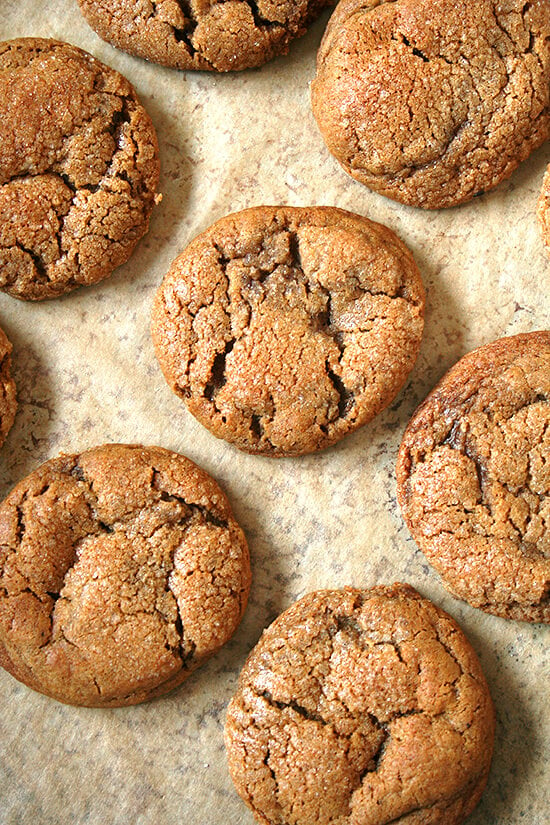
And to ensure the cookies emerge soft and chewy, do not overbake them — the cookies will puff way up in the oven, and they might look slightly underdone at the time of removal, but they will continue to cook on the sheet pan as they cool.
PS: Rum Balls: The Best, Easiest, Most Festive Cookie to Make and Gift All Season Long
How to Make Soft and Chewy Molasses Cookies, Step by Step
First, gather your ingredients:
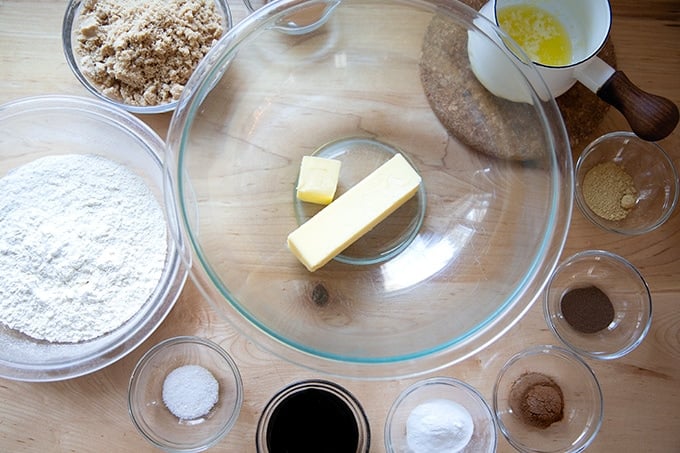
If your butter isn’t completely soft, melt 2 tablespoons of it; then mix it into the remaining butter. It works like a charm to get your butter into that super soft, mayonnaise-like texture.
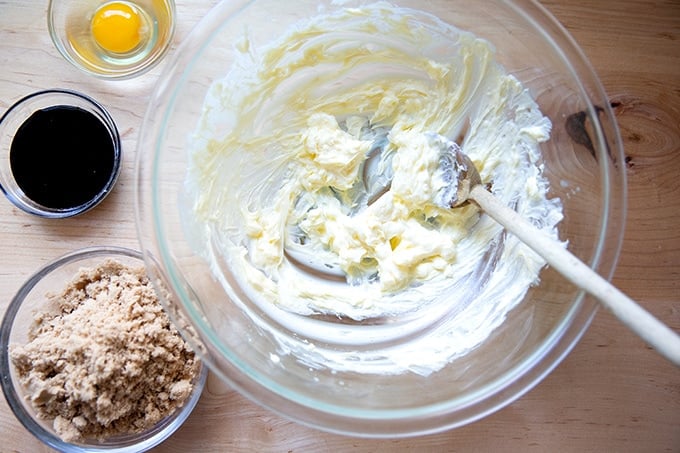
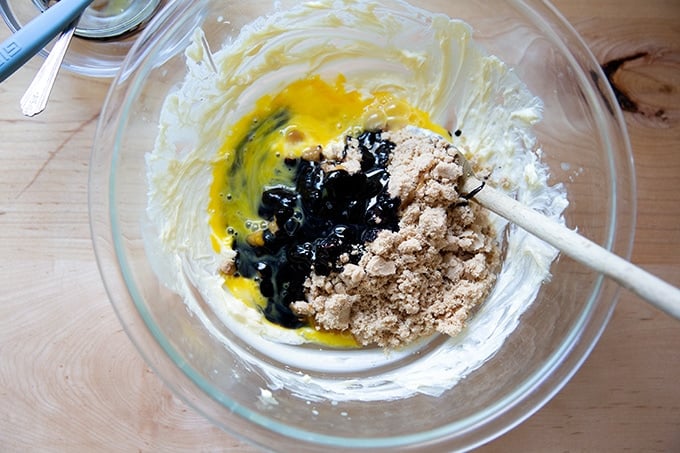
Add the brown sugar, molasses, and beaten egg, and stir to combine.
Whisk together the dry ingredients.
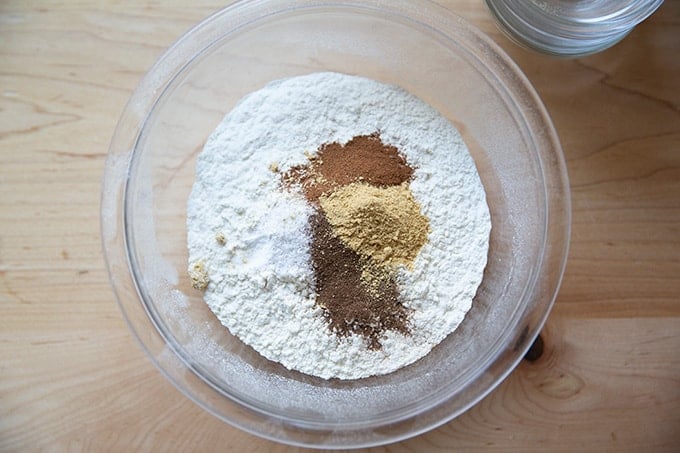
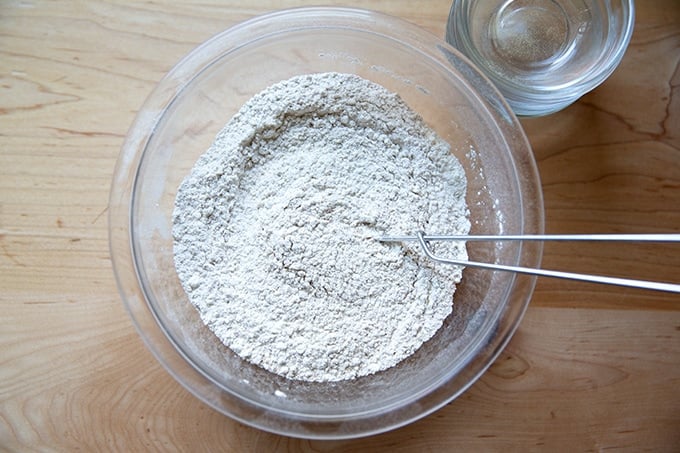
Then add the dry ingredients to the wet ingredients.
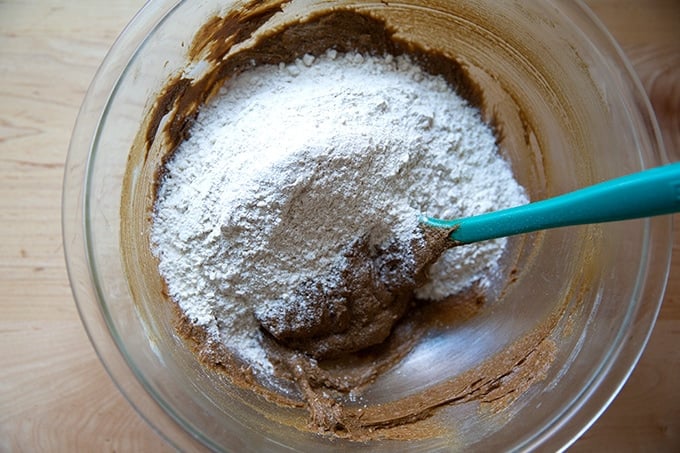
Stir to combine.
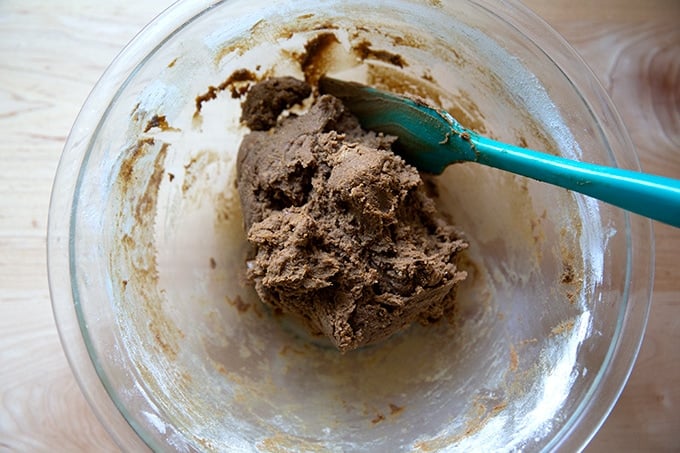
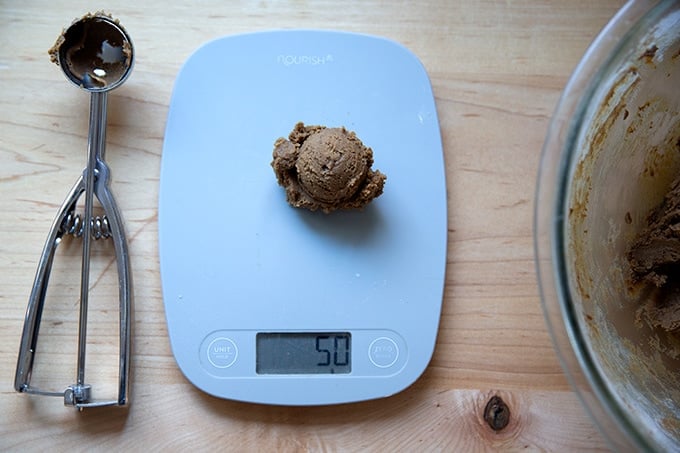
Portion the dough into 25- or 50-gram balls. I’ve been liking the 50-gram size for my cookies, but the 25-gram size is nice especially if you are gifting or making a variety of cookies for a cookie box.
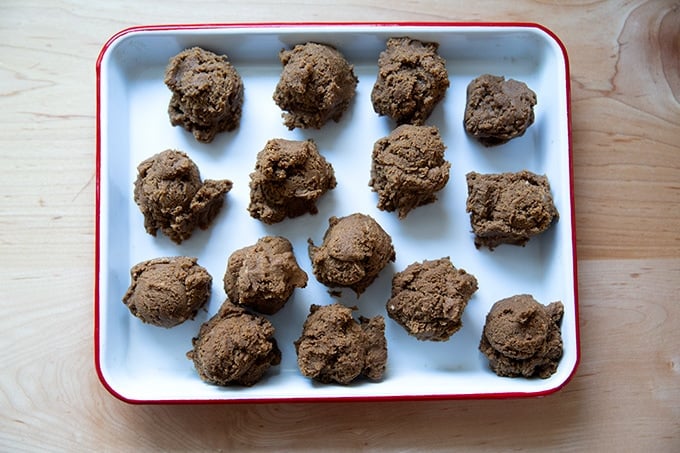
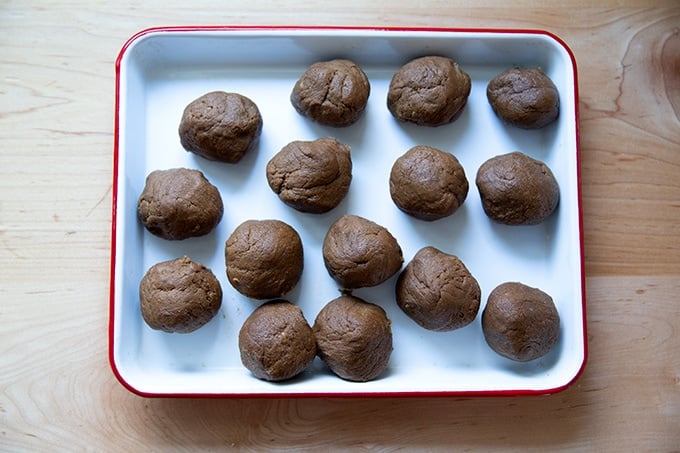
Roll the dough portions into balls…
… then dip each ball into sugar.
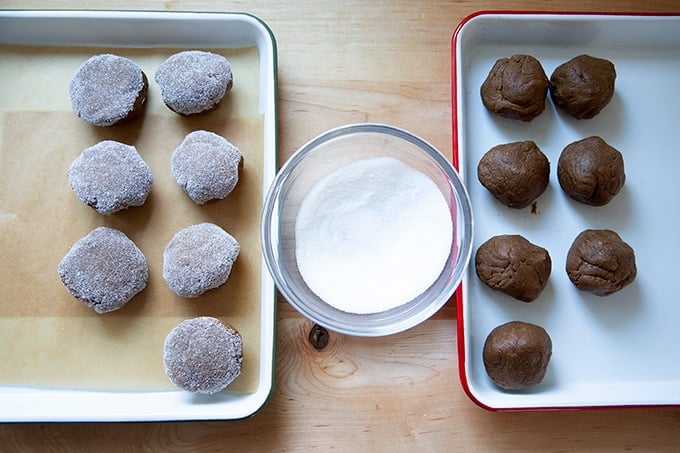
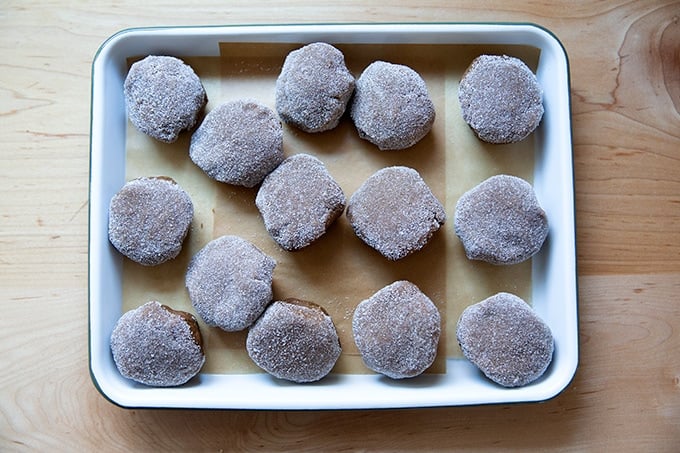
Chill the balls for at least 3 hours.
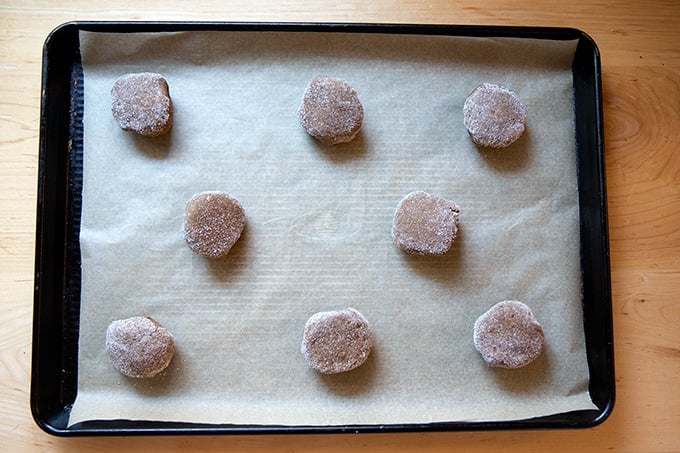
Transfer the chilled balls to a sheet pan and bake for 8 to 11 minutes.
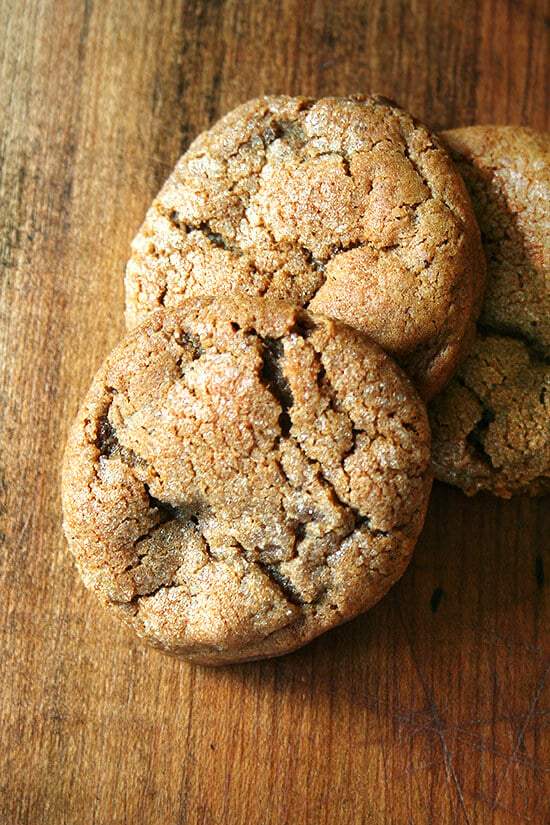
The cookies will puff way up in the oven, but will collapse and crinkle as they fall.
Description
- 3/4 cup ( 170 g ) butter, softened
- 1 cup ( 200 g ) brown sugar (packed)
- 1 egg, beaten
- 1/4 cup ( 70 g ) molasses
- 2 cups ( 260 g ) all-purpose flour
- 2 teaspoons ( 11 g ) baking soda
- 1/2 teaspoon ( 2 g ) kosher salt
- 1/2 teaspoon cloves
- 1 teaspoon ( 4 g ) cinnamon
- 1 teaspoon ( 2 g ) ginger
- 2 to 4 tablespoons granulated sugar
- Make the dough: Mix butter, sugar, egg and molasses thoroughly using a stand mixer. Sift or whisk all of the dry ingredients together. Add dry ingredients to wet and stir until combined. (If you do not have a stand mixer, you can make these by hand: melt 2 tablespoons of the butter; then stir it into the softened butter until the texture is mayonaisse-like. Add the sugar, beaten egg, and molasses and mix to combine. Add the whisked-together dry ingredients, and stir until the dough comes together.)
- Portion the dough: I portion my dough into either 25 gram or 50 gram balls using my digital scale. Alternatively, use your scoop of choice. Roll each portion into a ball. Place the granulated sugar into a small bow. Dip each ball into the sugar, then place sugar-side up on a small, parchment-lined tray. Chill for at least three hours. If you are going to chill for longer, wrap the tray with plastic wrap or place it in a large ziplock bag.
- Bake the cookies: Heat oven to 350ºF. Place 8 dough balls sugar side up on a parchment-lined sheet pan. Bake for 8 to 11 minutes (8 minutes for the smaller size cookies, 11 minutes for the larger cookies). Remove from oven and let cool completely on sheet pan before eating.
- Prep Time: 10 minutes
- Cook Time: 10 minutes
- Category: Cookie
- Method: Oven
- Cuisine: American
