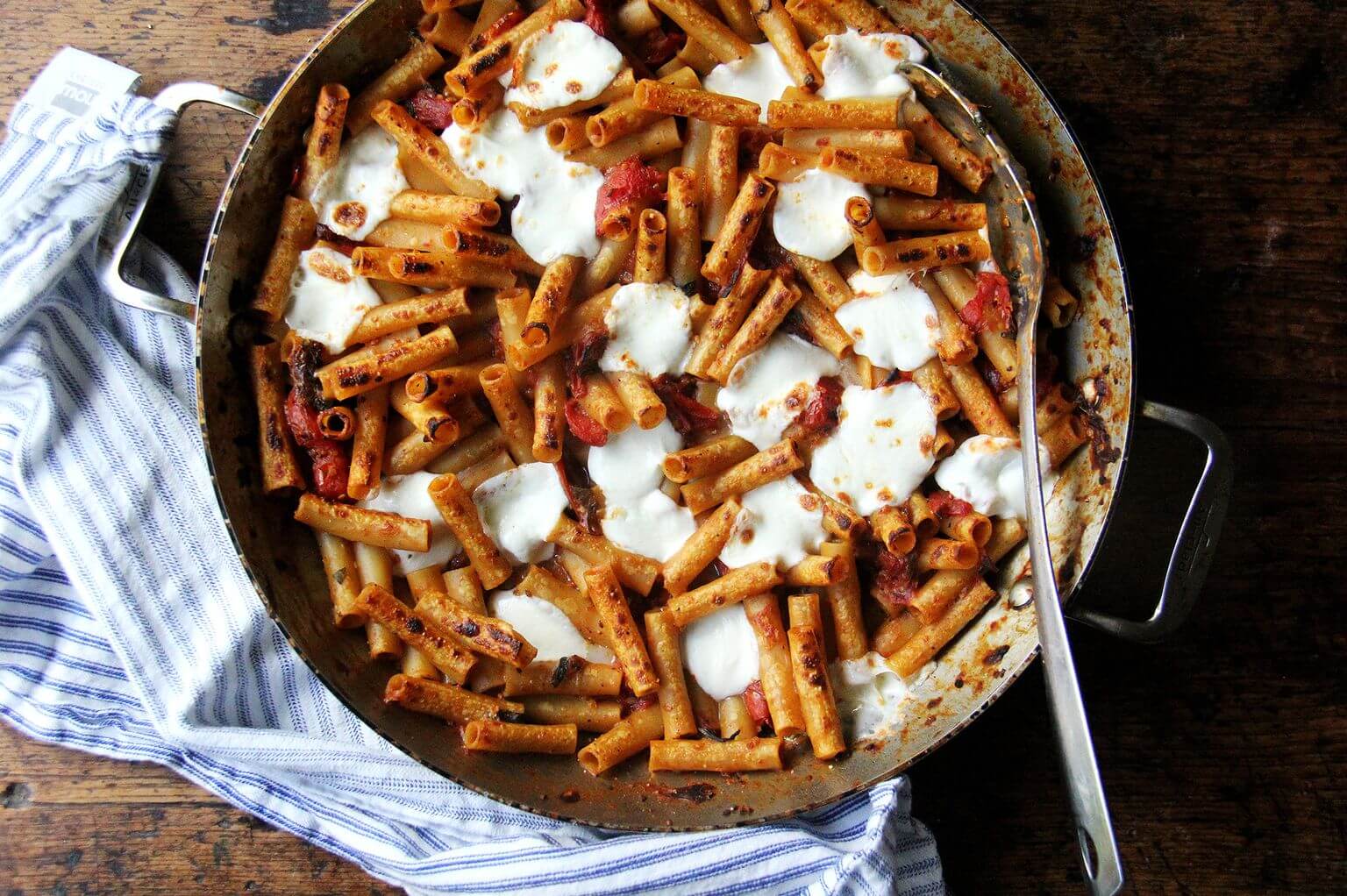
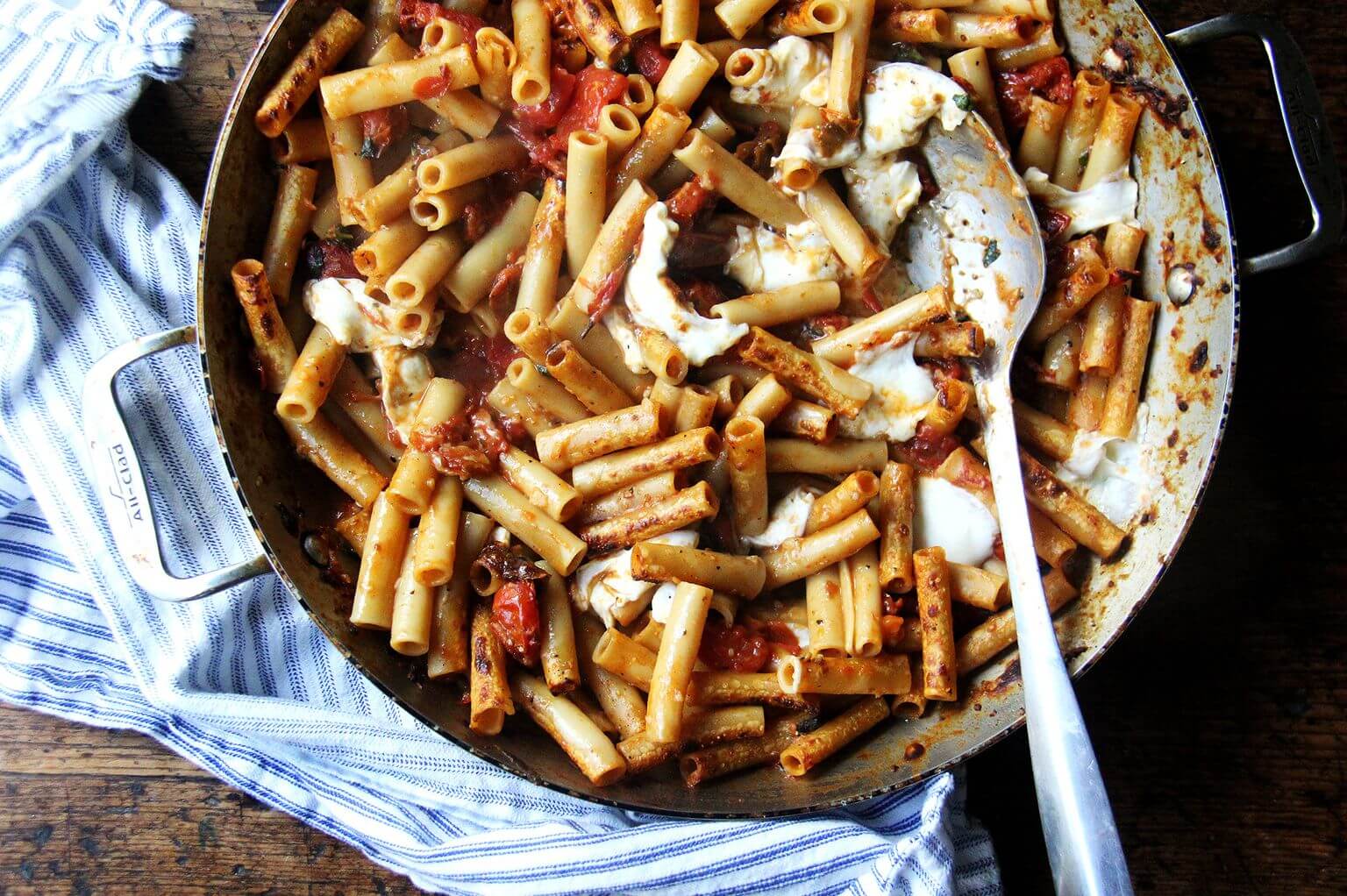
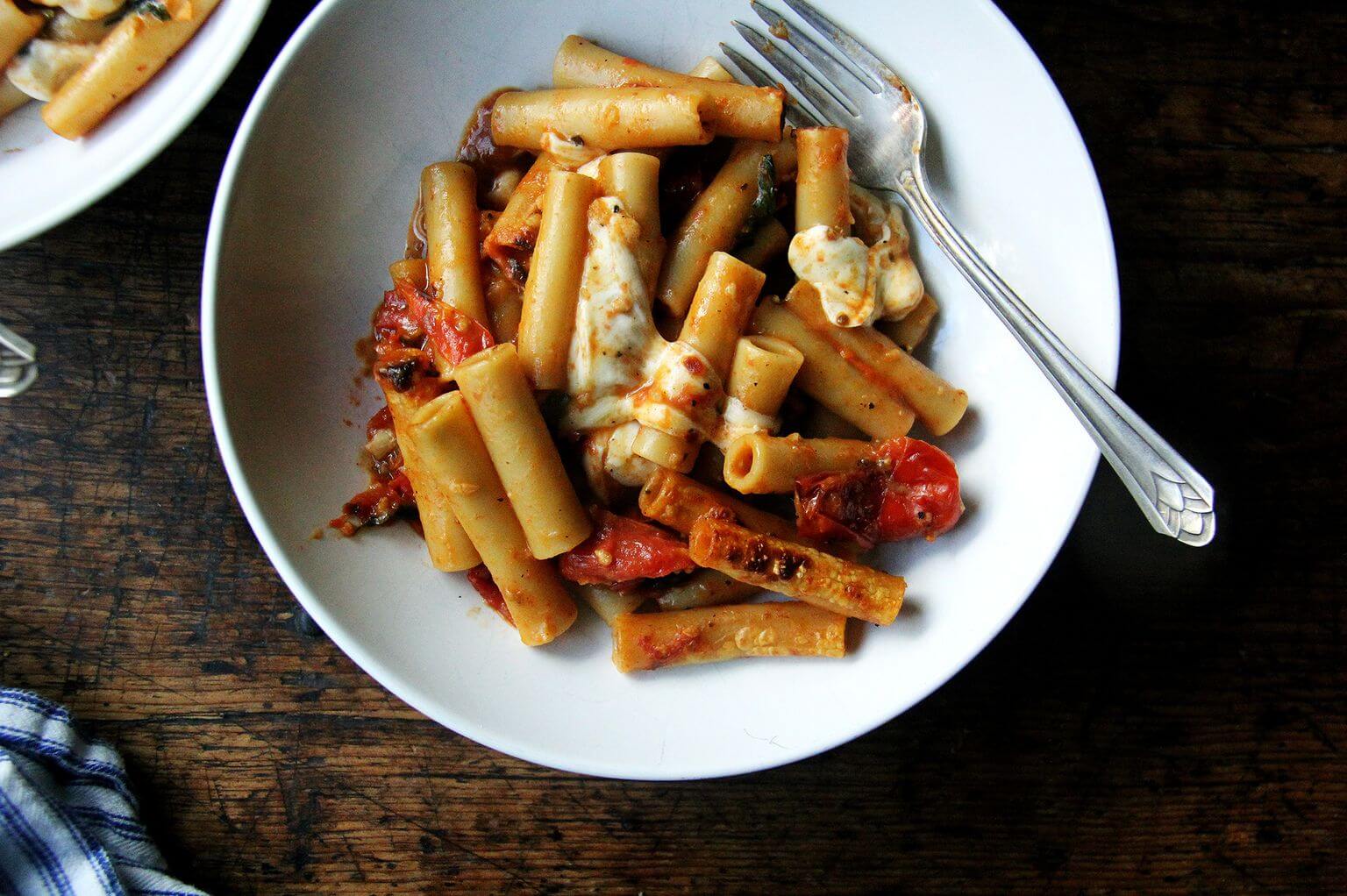
This one-pot baked ziti is quick and easy, crowd-pleasing, and a godsend on busy nights and weekends. It can be made with either fresh or canned tomatoes, and it is delicious either way.
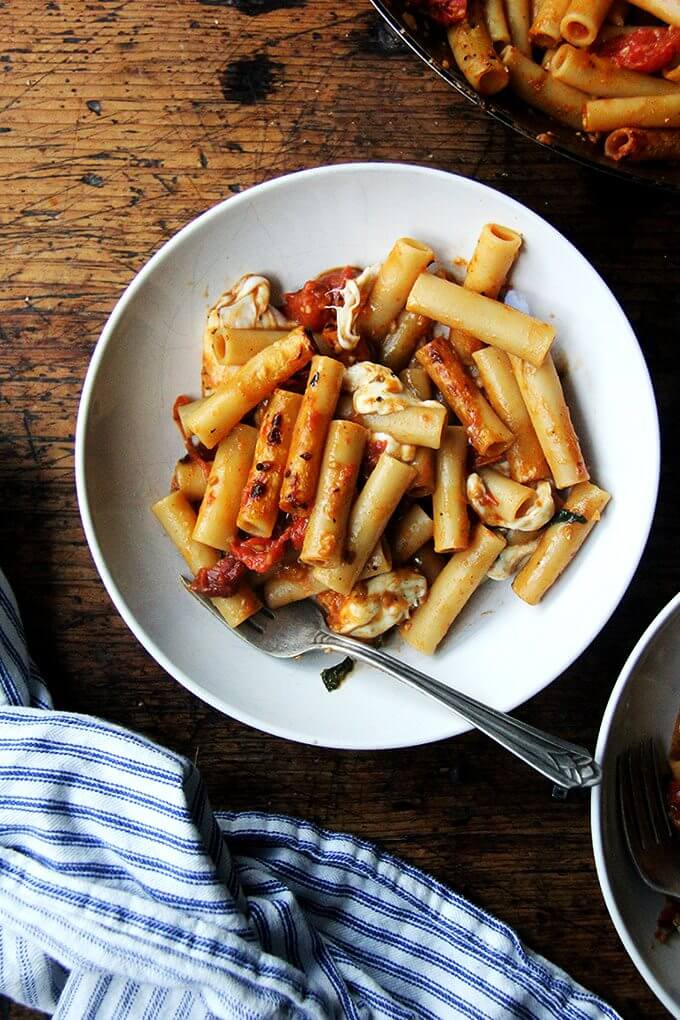
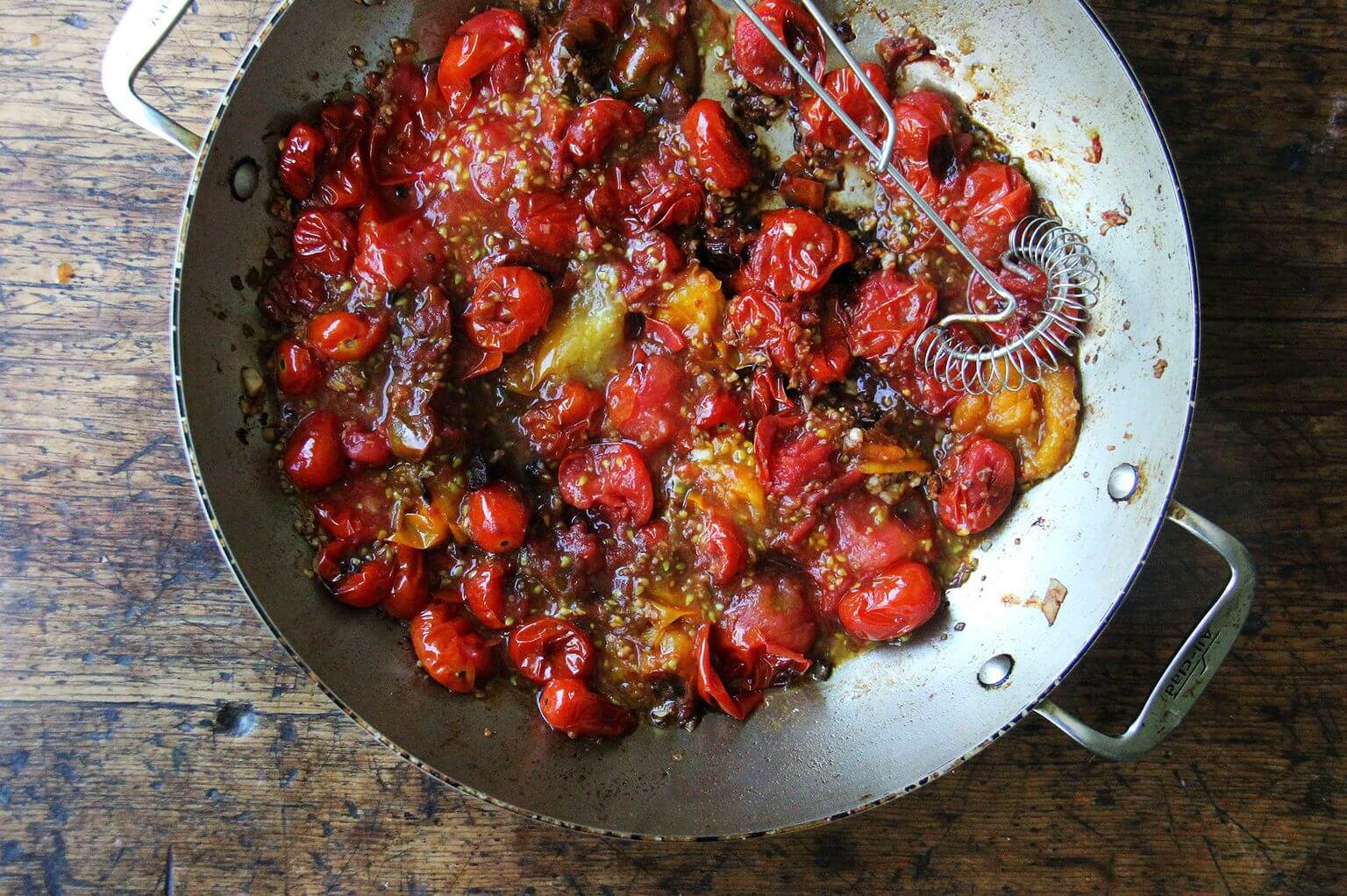
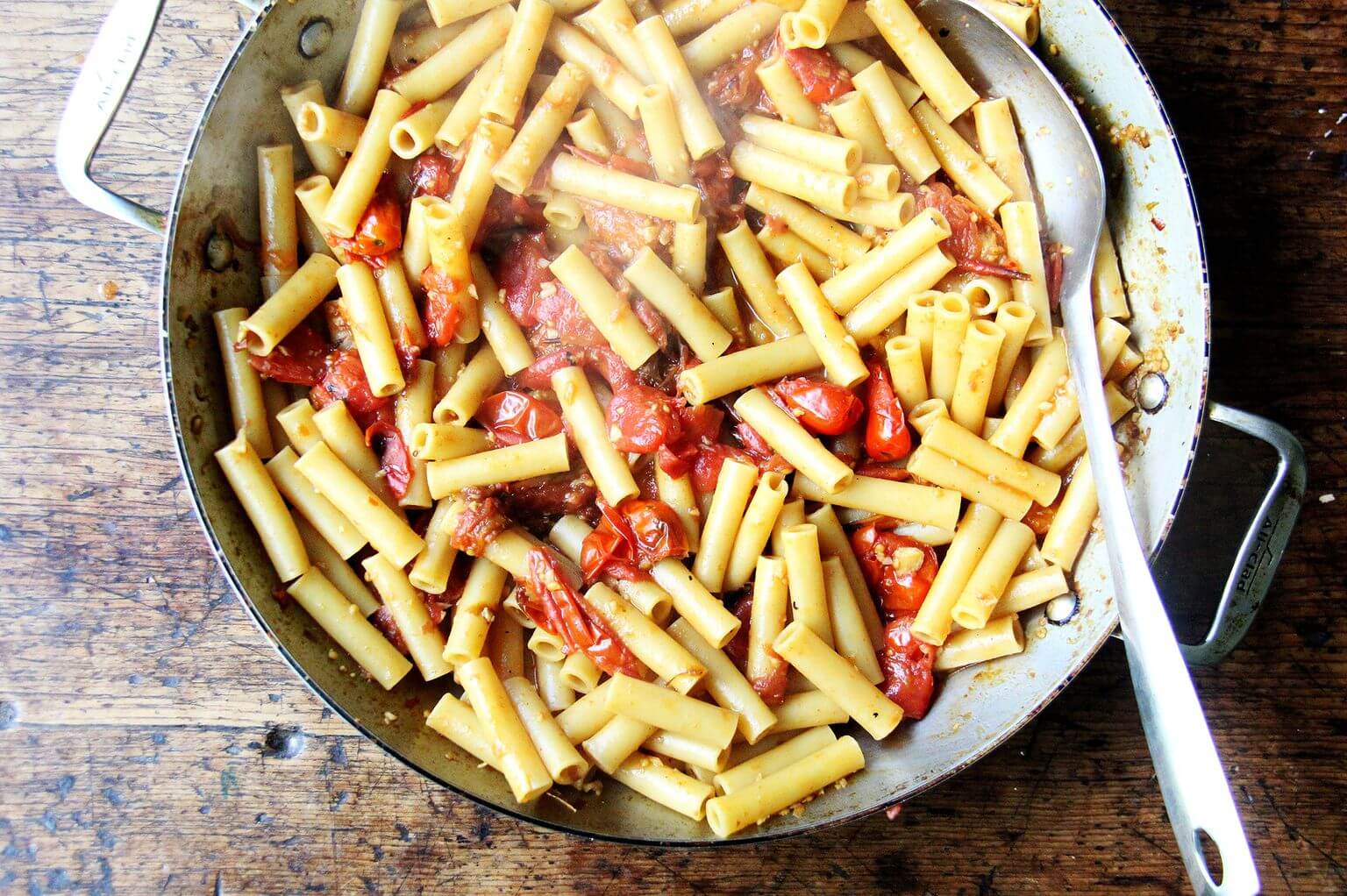
This baked ziti recipe from Cook’s Country’s Cook It In Cast Iron , has the added bonus of being a one-pot wonder: after you crush the tomatoes with a potato masher (or whisk or spoon), you add the dried pasta and water directly into the pan and simmer everything together until the pasta is cooked and the liquid has evaporated.
After a quick pass under the broiler, your one-pan, no-fuss baked ziti is done: crisp noodles, melty cheese, bubbly sauce.
One and done!
For years I followed the recipe to a T, making it only during tomato season when the cherry tomatoes are sweet and plentiful. When I discovered, however, that it tastes just as good when made with canned tomatoes, it became a year-round staple.
Description
Adapted from Cook’s Illustrated Cook It In Cast Iron
For canned tomatoes, I love the small boxes of Colavita crushed tomatoes. Each box is 13.7 ounces. I use two of them in this recipe.
Salt: If you are using Morton or fine sea salt, use half as much as the suggested quantities in the instructions.
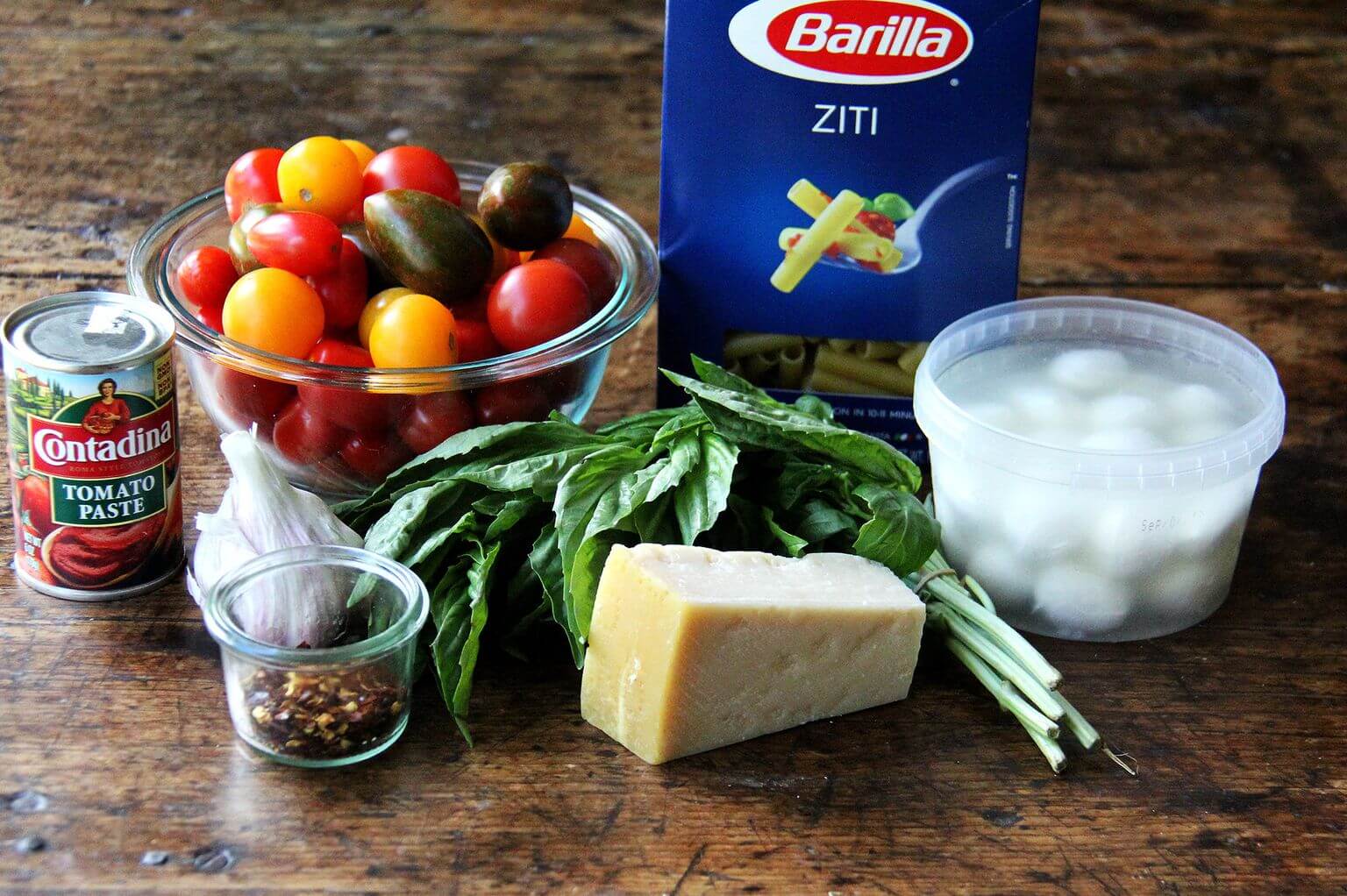
If Using Fresh Tomatoes:
- 1/4 cup extra-virgin olive oil
- 6 cloves garlic, thinly sliced
- Pinch red pepper flakes
- 1.5 pounds cherry tomatoes, halved
- kosher salt, Diamond Crystal brand, see notes above
- 12 ounces (3.75 cups) ziti
- 3 cups water, plus more as needed
- 1.5 ounces Parmesan cheese, grated (heaping 1/2 cup)
- fresh basil leaves
- 8 ounces ciligiene mozzarella balls, halved
- Fresh cracked pepper to taste
If Using Canned Tomatoes:
- 2 tablespoons extra-virgin olive oil
- 1.5 cups diced onions
- kosher salt
- 3 to 6 cloves garlic, minced
- 1 teaspoon tomato paste
- 1/4 to 1/2 teaspoon crushed red pepper flakes
- 28 oz crushed tomatoes, see notes above
- 1 lb. dried ziti
- 3 cups water, plus more as needed
- 1 ounce Parmesan cheese, grated (1/2 cup)
- 1/4 to 1/2 cup chopped fresh basil
- Freshly cracked black pepper to taste
- 4 ounces whole milk mozzarella cheese, shredded (1 cup)
If using fresh tomatoes:
- Adjust the oven rack 6 inches from the broiler element, and heat the broiler to high.
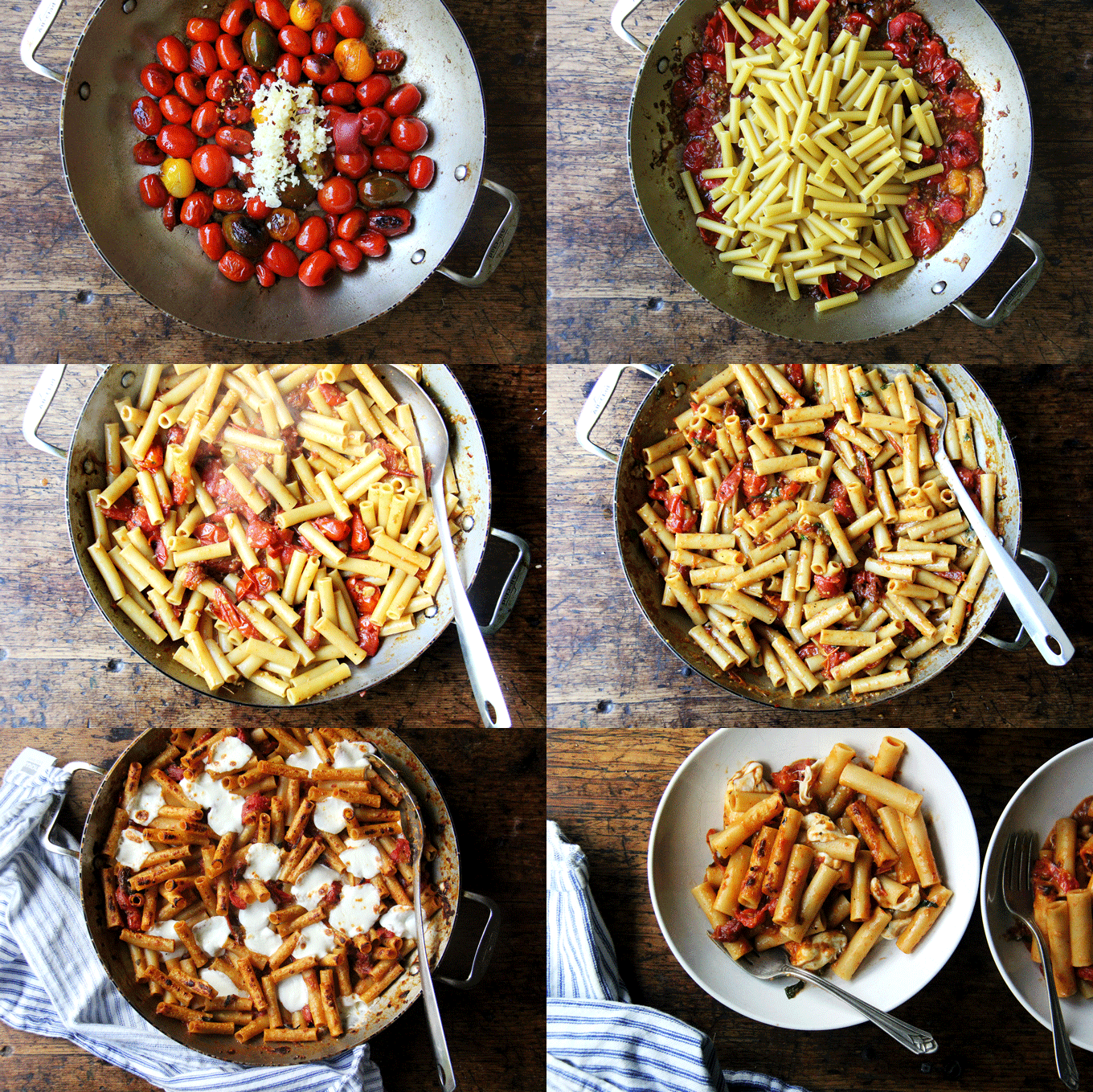
- Meanwhile, place the olive oil and garlic in a large skillet (I use a 13-inch across, 2-inch deep skillet). Turn the heat to high. As soon as you see the oil beginning to shimmer, give the garlic a stir, cover the pan, and turn the heat to low. Cook for roughly 5 minutes, or until the garlic is soft and just beginning to take on some color.
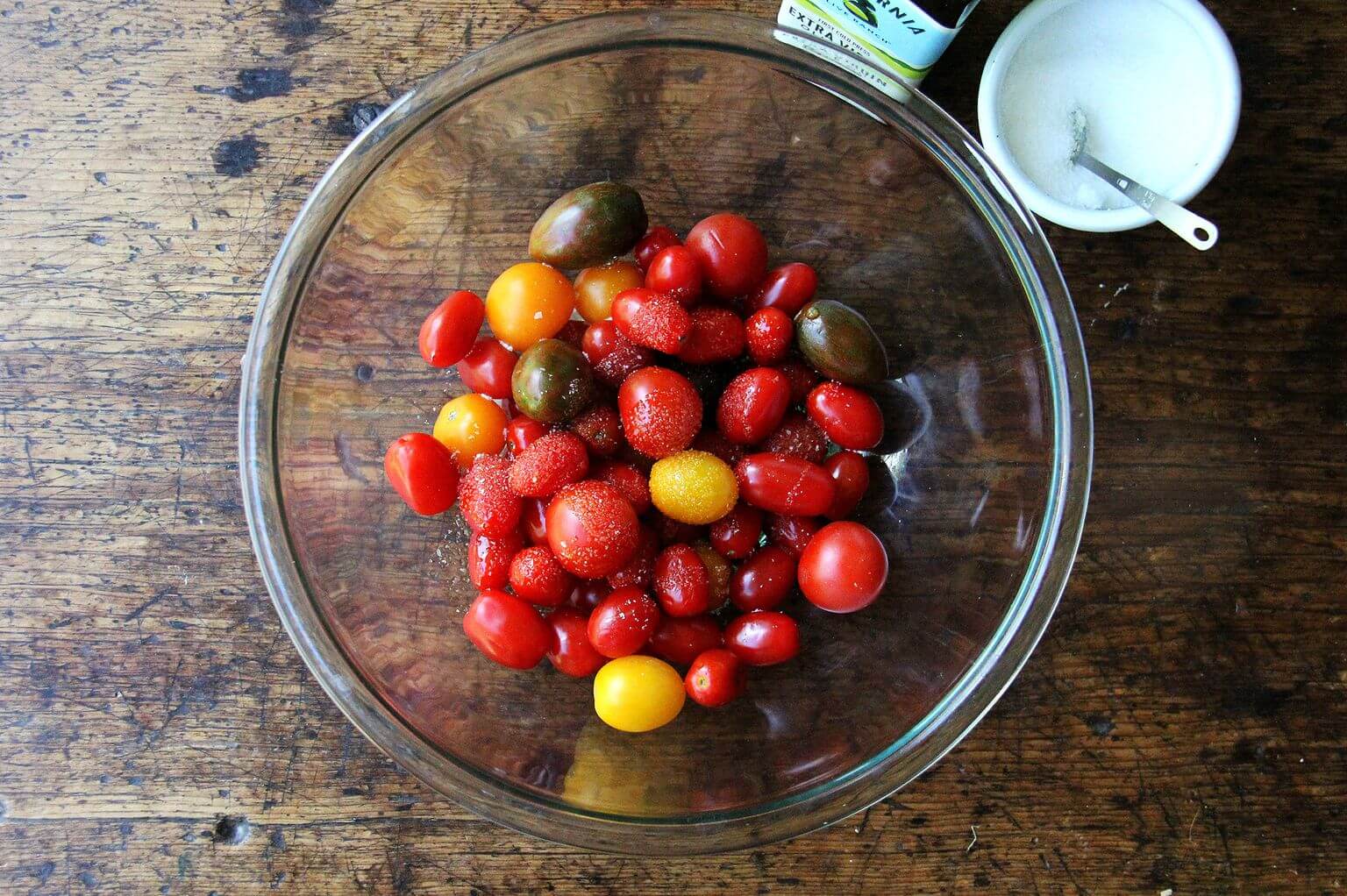
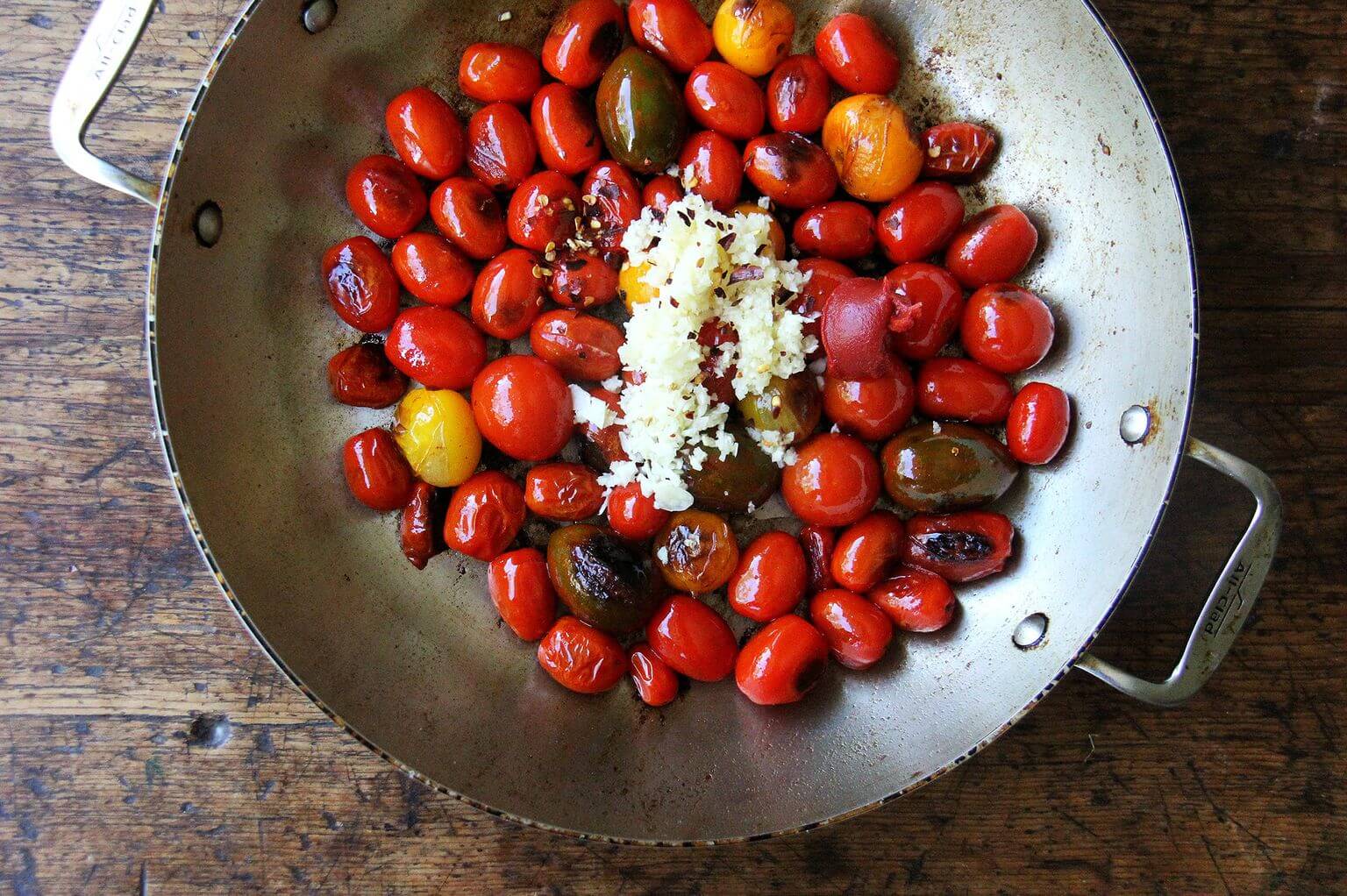
- Add a pinch of crushed red pepper flakes and cook until fragrant, about 30 seconds. Add the tomatoes and 1 teaspoon of kosher salt. Cook over medium heat, stirring occasionally and adjusting the heat as necessary to keep the tomatoes at a gentle simmer, for 5 minutes or until the tomatoes completely break down. Using a potato masher, coarsely mash the tomatoes.
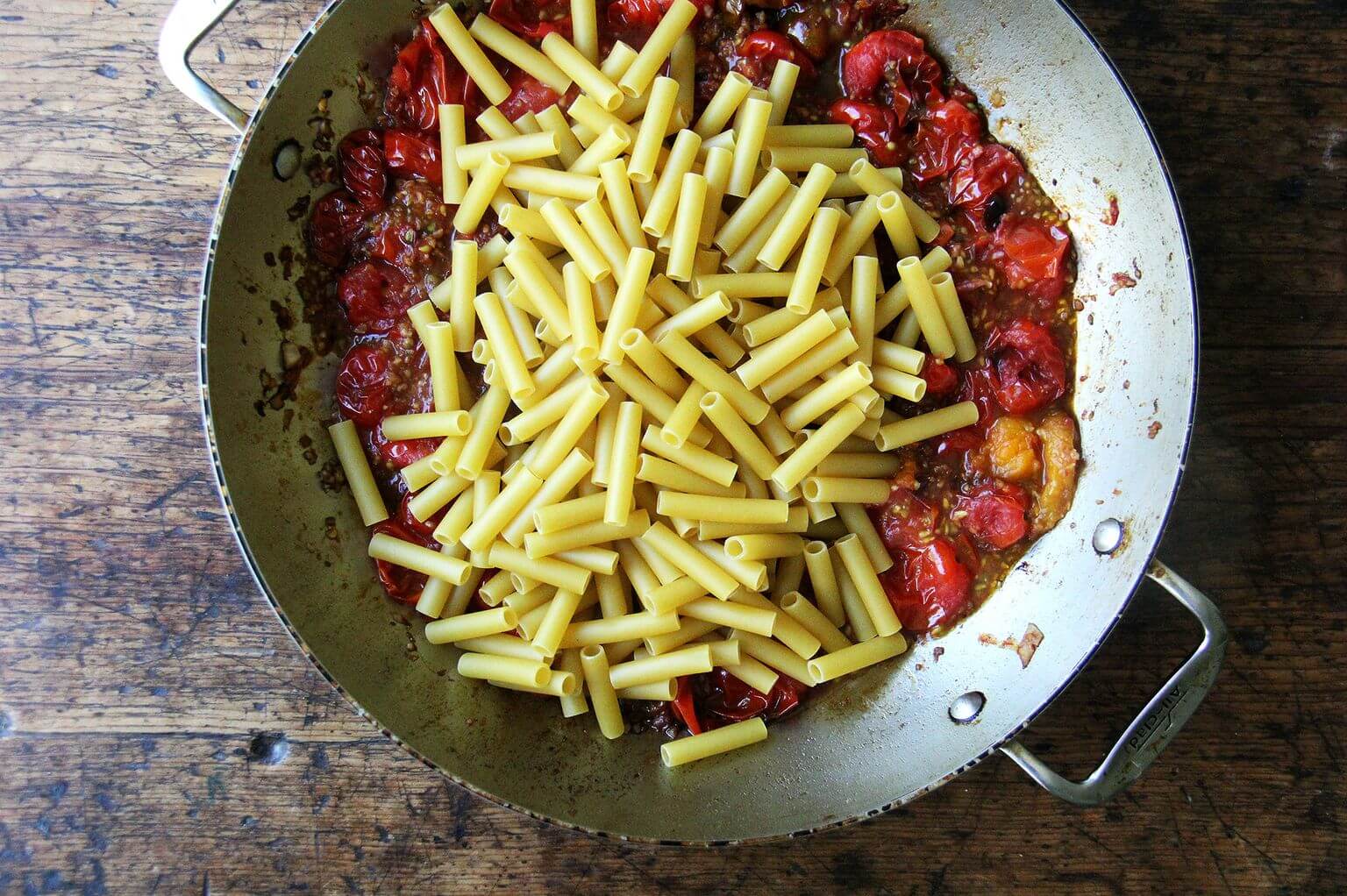
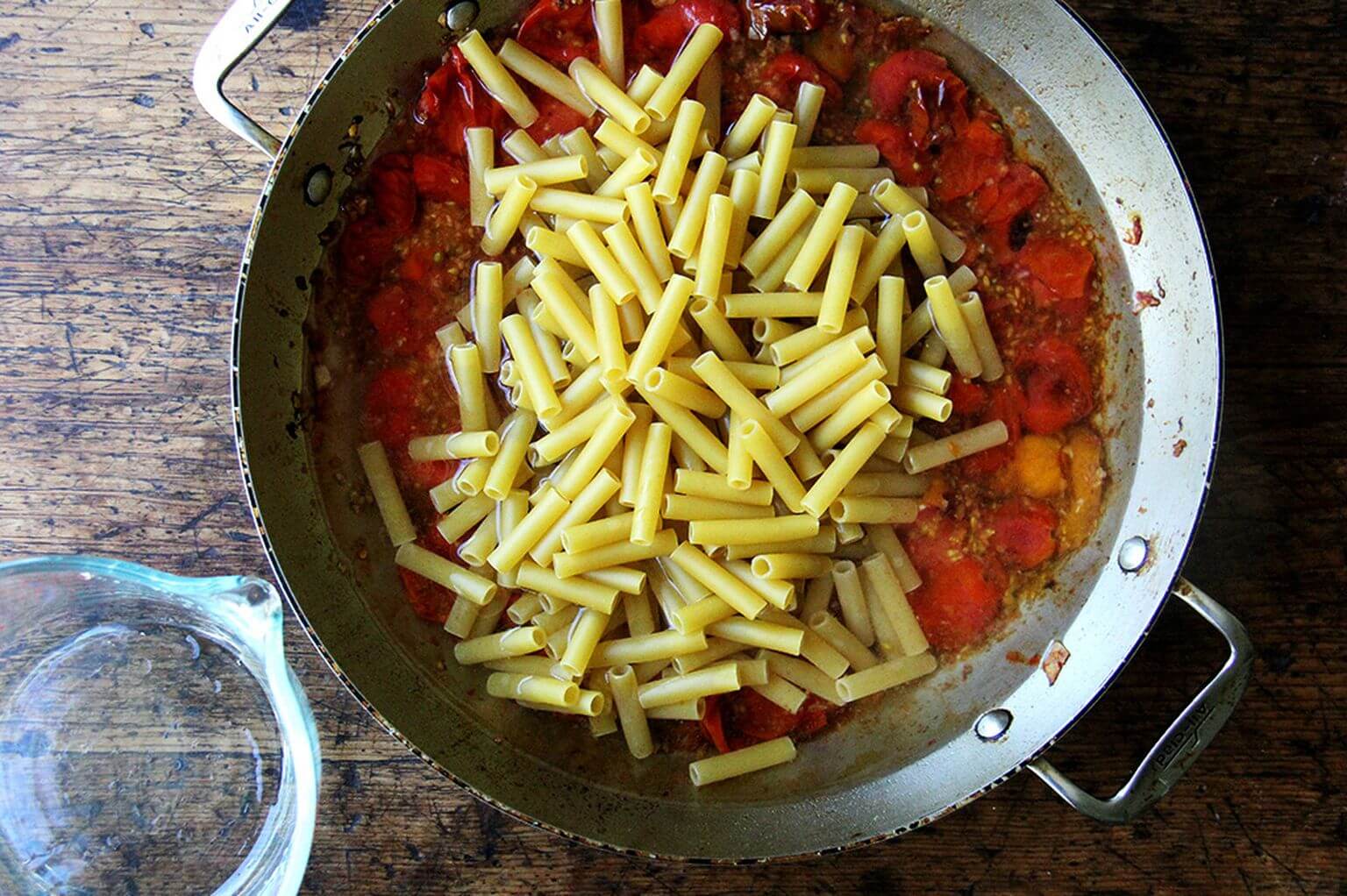
- Stir in the pasta, the water, and 1 more teaspoon kosher salt. Bring to a boil over high heat. Stir well, reduce the heat to low, cover, and cook until the pasta is tender, 15 to 18 minutes.
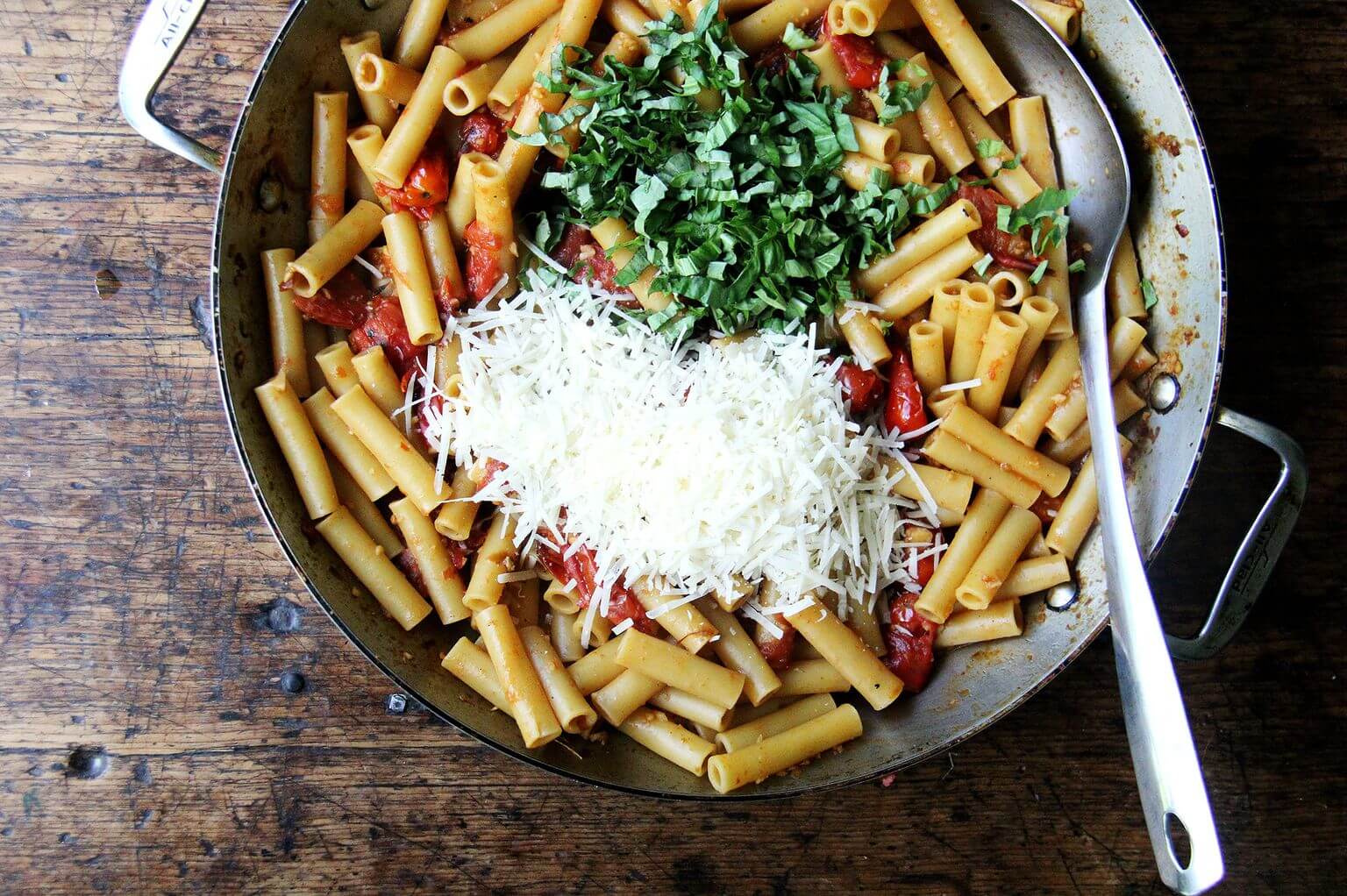
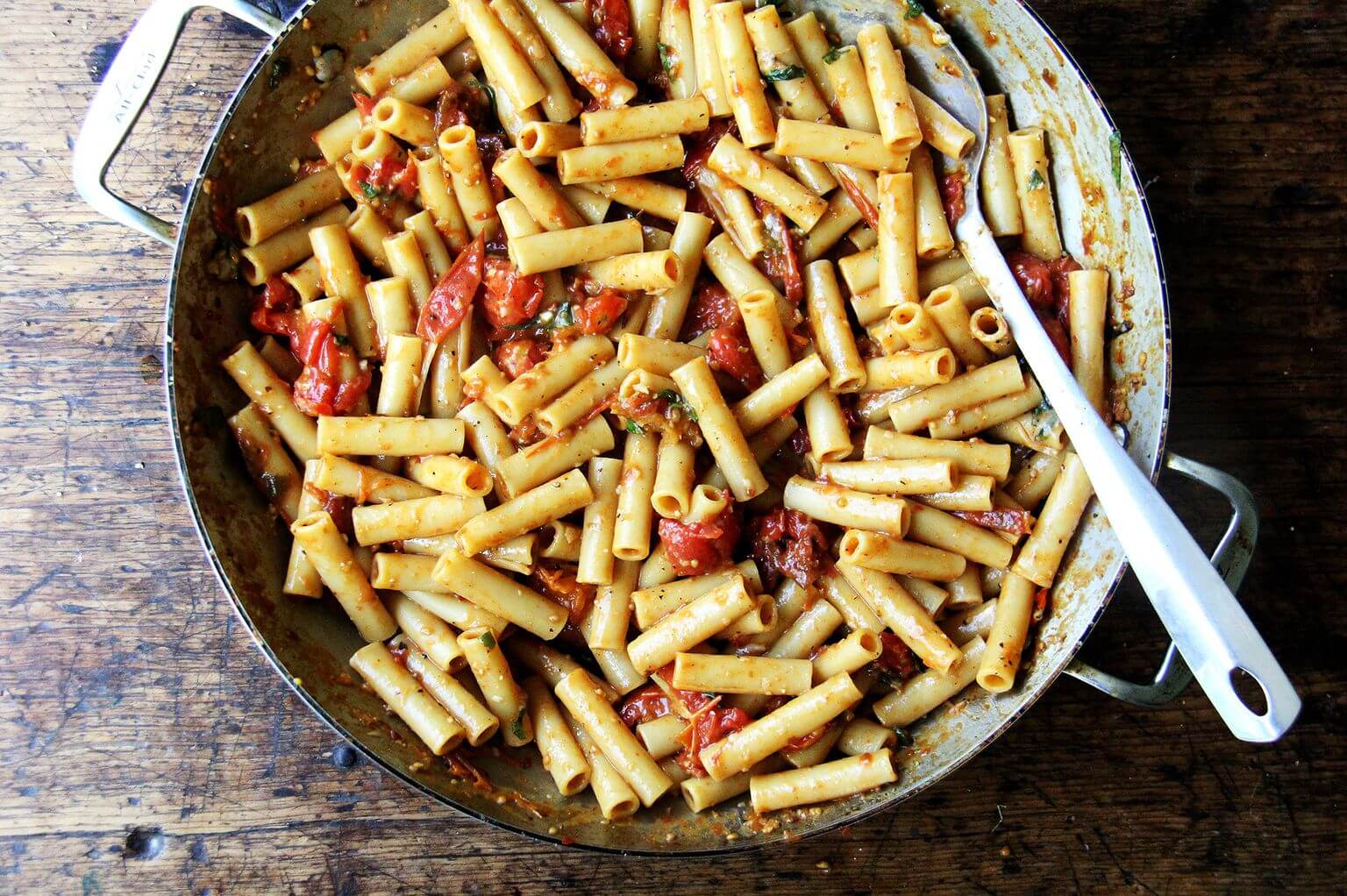
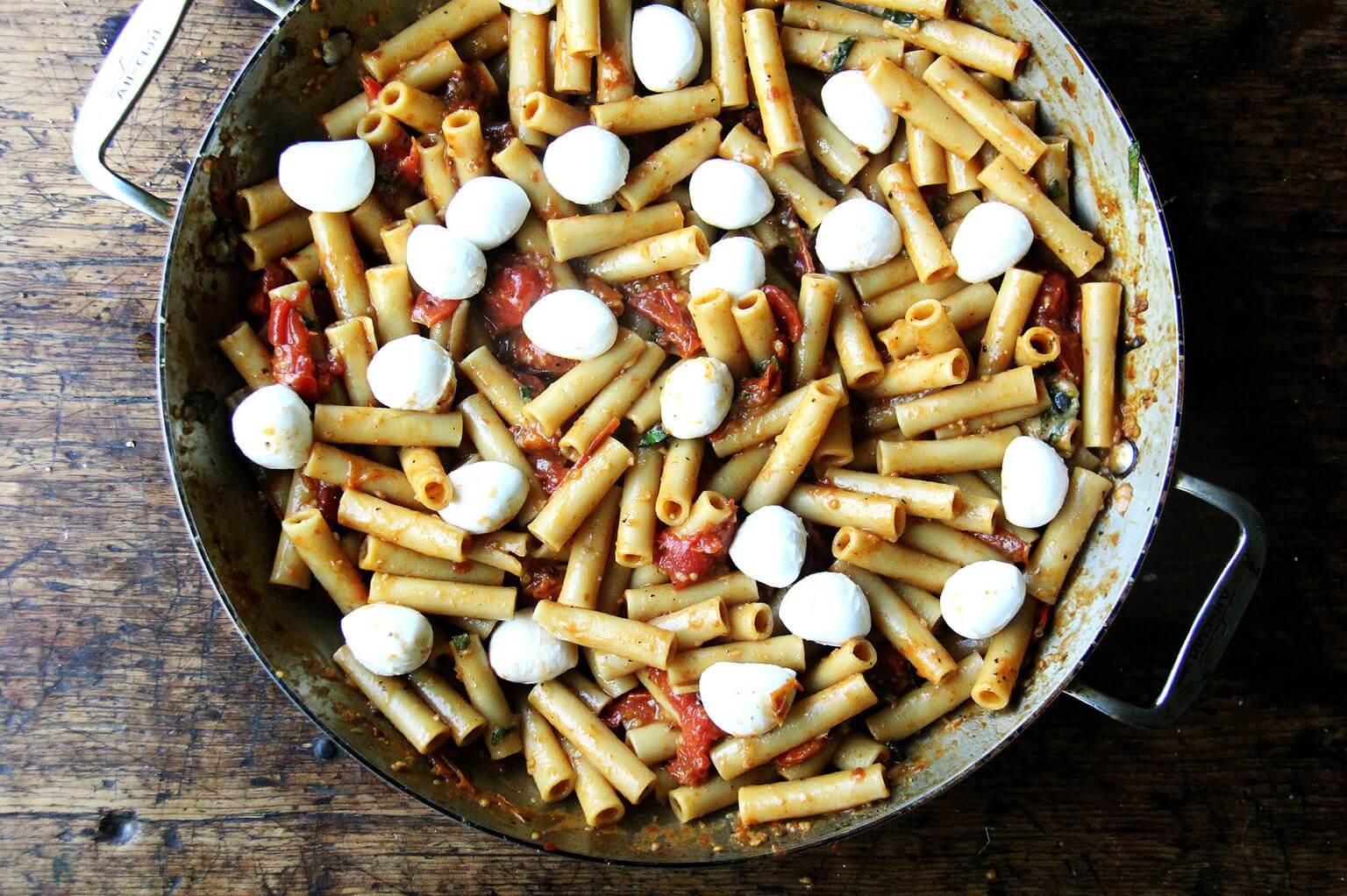
- Stir in the Parmesan and the basil. Taste—this is your chance to get the seasoning right. Add salt and pepper to taste. Sprinkle with mozzarella. Transfer skillet to oven and broil until cheese is melted and spotty brown, about 5 minutes. Serve.
If using canned tomatoes:
- Adjust oven rack 6 inches from broiler element and heat broiler.
- Heat a large oven-safe skillet over medium heat. Add the olive oil and the onions. Season with a pinch of salt. Sauté for 5 minutes or until the onions are translucent and just beginning to brown. Stir in the garlic, tomato paste, and pepper flakes and cook until fragrant, about 30 seconds.
- Stir in the crushed tomatoes, pasta, water, and 1.5 teaspoons kosher salt. Bring to a boil over medium-high heat. Reduce heat to low, stir well, cover, and cook, stirring once after 10 minutes, until pasta is tender, 12 to 15 minutes.
- Taste to ensure the noodles are cooked, then adjust sauce consistency with extra hot water as needed. Stir in the parmesan and basil. Taste—this is your chance to get the seasoning right. Add salt and pepper to taste — I always add more. Sprinkle with mozzarella. Transfer skillet to oven and broil until cheese is melted and spotty brown, about 5 minutes. Serve. Pass more parmesan and pepper alongside.
- Prep Time: 5 minutes
- Cook Time: 30 minutes
- Category: Pasta
- Method: Stovetop
- Cuisine: Italian
Description
Adapted from Cook’s Illustrated Cook It In Cast Iron
For canned tomatoes, I love the small boxes of Colavita crushed tomatoes. Each box is 13.7 ounces. I use two of them in this recipe.
Salt: If you are using Morton or fine sea salt, use half as much as the suggested quantities in the instructions.
If Using Fresh Tomatoes:
- 1/4 cup extra-virgin olive oil
- 6 cloves garlic, thinly sliced
- Pinch red pepper flakes
- 1.5 pounds cherry tomatoes, halved
- kosher salt, Diamond Crystal brand, see notes above
- 12 ounces (3.75 cups) ziti
- 3 cups water, plus more as needed
- 1.5 ounces Parmesan cheese, grated (heaping 1/2 cup)
- fresh basil leaves
- 8 ounces ciligiene mozzarella balls, halved
- Fresh cracked pepper to taste
If Using Canned Tomatoes:
- 2 tablespoons extra-virgin olive oil
- 1.5 cups diced onions
- kosher salt
- 3 to 6 cloves garlic, minced
- 1 teaspoon tomato paste
- 1/4 to 1/2 teaspoon crushed red pepper flakes
- 28 oz crushed tomatoes, see notes above
- 1 lb. dried ziti
- 3 cups water, plus more as needed
- 1 ounce Parmesan cheese, grated (1/2 cup)
- 1/4 to 1/2 cup chopped fresh basil
- Freshly cracked black pepper to taste
- 4 ounces whole milk mozzarella cheese, shredded (1 cup)
If using fresh tomatoes:
- Adjust the oven rack 6 inches from the broiler element, and heat the broiler to high.
- Meanwhile, place the olive oil and garlic in a large skillet (I use a 13-inch across, 2-inch deep skillet). Turn the heat to high. As soon as you see the oil beginning to shimmer, give the garlic a stir, cover the pan, and turn the heat to low. Cook for roughly 5 minutes, or until the garlic is soft and just beginning to take on some color.
- Add a pinch of crushed red pepper flakes and cook until fragrant, about 30 seconds. Add the tomatoes and 1 teaspoon of kosher salt. Cook over medium heat, stirring occasionally and adjusting the heat as necessary to keep the tomatoes at a gentle simmer, for 5 minutes or until the tomatoes completely break down. Using a potato masher, coarsely mash the tomatoes.
- Stir in the pasta, the water, and 1 more teaspoon kosher salt. Bring to a boil over high heat. Stir well, reduce the heat to low, cover, and cook until the pasta is tender, 15 to 18 minutes.
- Stir in the Parmesan and the basil. Taste—this is your chance to get the seasoning right. Add salt and pepper to taste. Sprinkle with mozzarella. Transfer skillet to oven and broil until cheese is melted and spotty brown, about 5 minutes. Serve.
If using canned tomatoes:
- Adjust oven rack 6 inches from broiler element and heat broiler.
- Heat a large oven-safe skillet over medium heat. Add the olive oil and the onions. Season with a pinch of salt. Sauté for 5 minutes or until the onions are translucent and just beginning to brown. Stir in the garlic, tomato paste, and pepper flakes and cook until fragrant, about 30 seconds.
- Stir in the crushed tomatoes, pasta, water, and 1.5 teaspoons kosher salt. Bring to a boil over medium-high heat. Reduce heat to low, stir well, cover, and cook, stirring once after 10 minutes, until pasta is tender, 12 to 15 minutes.
- Taste to ensure the noodles are cooked, then adjust sauce consistency with extra hot water as needed. Stir in the parmesan and basil. Taste—this is your chance to get the seasoning right. Add salt and pepper to taste — I always add more. Sprinkle with mozzarella. Transfer skillet to oven and broil until cheese is melted and spotty brown, about 5 minutes. Serve. Pass more parmesan and pepper alongside.
- Prep Time: 5 minutes
- Cook Time: 30 minutes
- Category: Pasta
- Method: Stovetop
- Cuisine: Italian
Find it online : https://alexandracooks.com/2017/08/11/one-pan-baked-ziti-miracle/
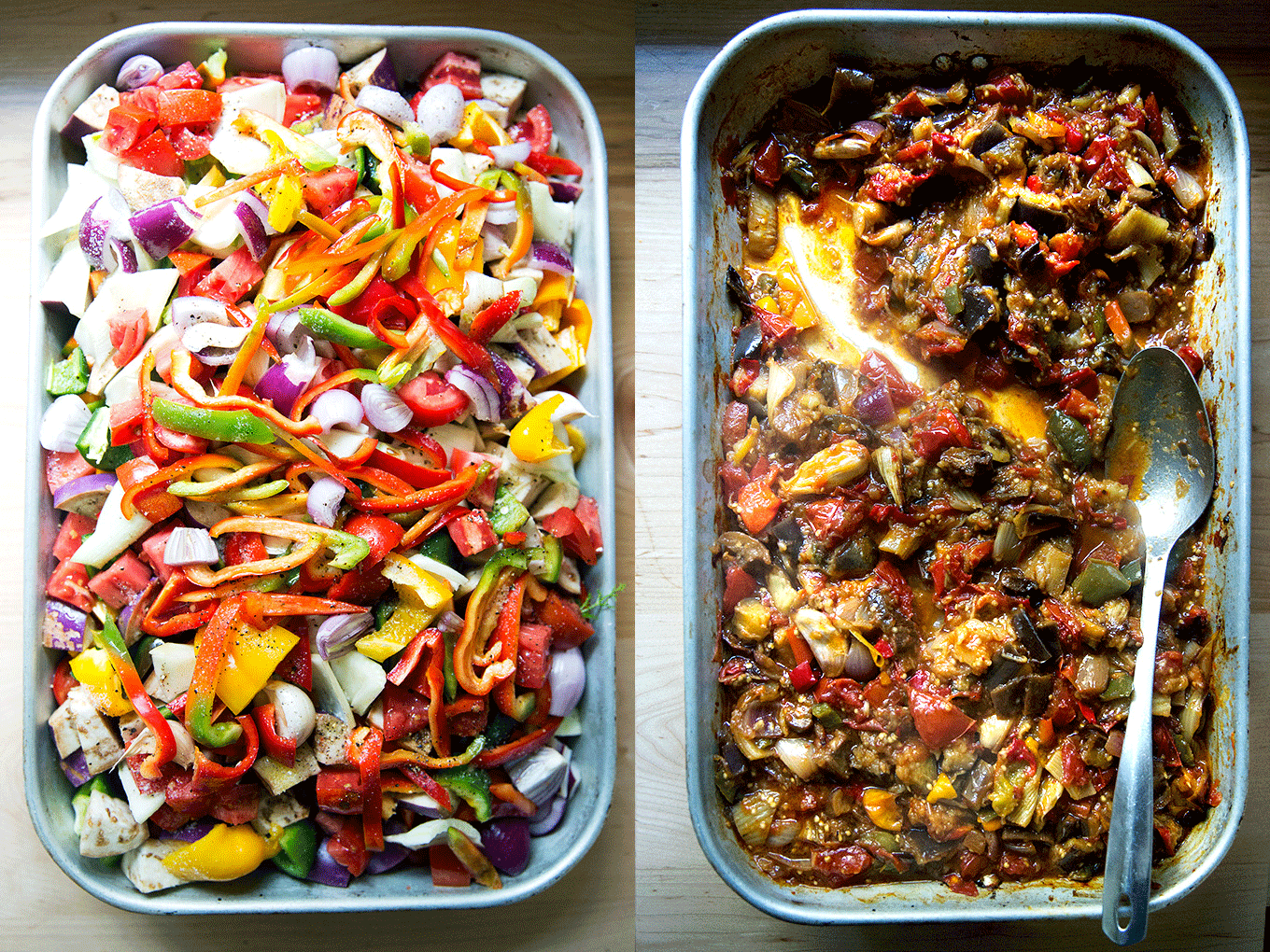
Last Friday, before heading out to see friends for a long weekend, I made the roasted ratatouille from my friend Gena Hamshaw’s Food52 Vegan . I chopped up every pepper, onion, eggplant, tomato, and zucchini I could find, threw them into my largest roasting pan, tossed them with olive oil, white balsamic vinegar, fresh thyme, and salt, and cooked them till they released their juices and melted into a stewy mix.
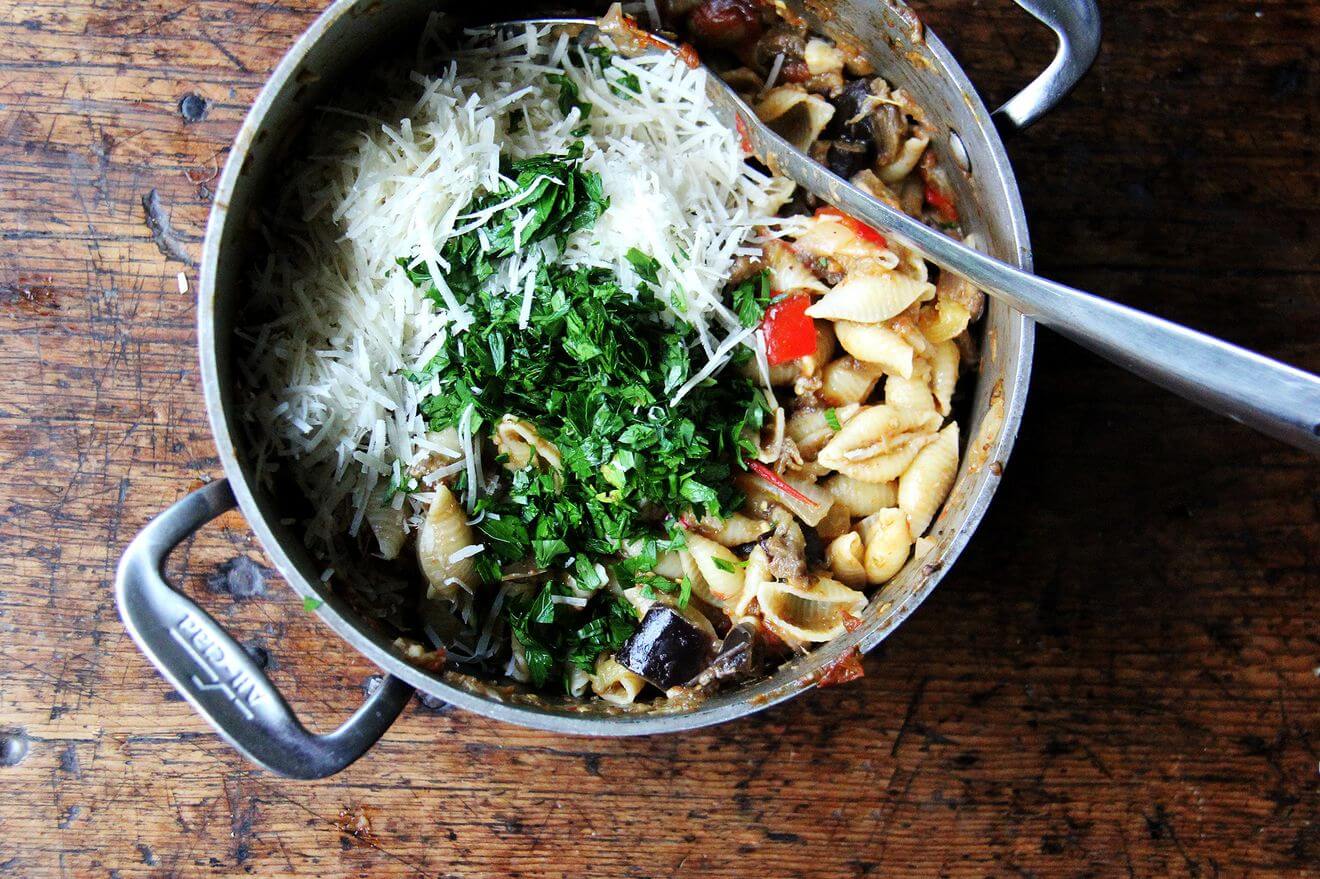
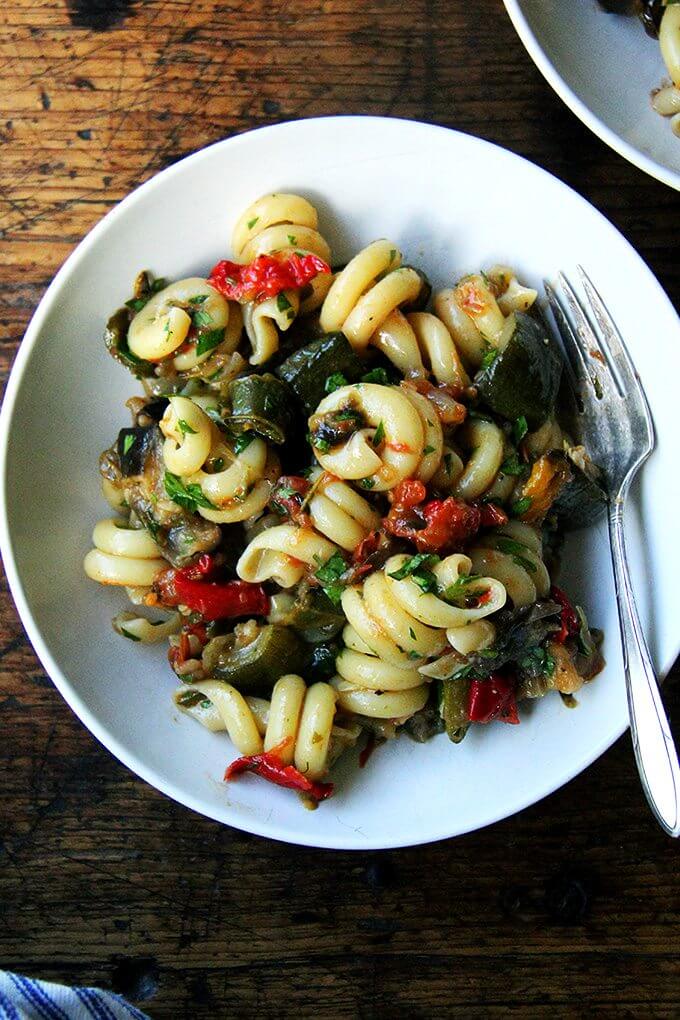
That evening, I tossed the ratatouille, as Gena suggests, with pasta, then packed up what remained for the road. My friends and I ate the ratatouille all weekend, cold straight from the fridge for lunch, spread over grilled bread before dinner.
What I love about this ratatouille’s flavor is the subtle bite lent by the balsamic vinegar, which evokes eggplant caponata though the sharpness here is more mellow. It is irresistible.
What I also love about this roasted ratatouille is how unfussy and forgiving it is. In the notes, Gena writes: “Traditional ratatouille can be a little high maintenance: It simmers on the stovetop for an hour or longer and often requires adding specific vegetables at specific times.” With roasting, on the other hand, all of the vegetables and seasonings enter the pan at once.
With the exception of a quick stir halfway through cooking, the process is hands off—there’s no sautéing, no (vigilant) monitoring, no staggering the entry of the vegetables. When the vegetables release their juices, and when those juices then reduce down into a thick, stewy mix, it’s done.
How to Make Roasted Ratatouille
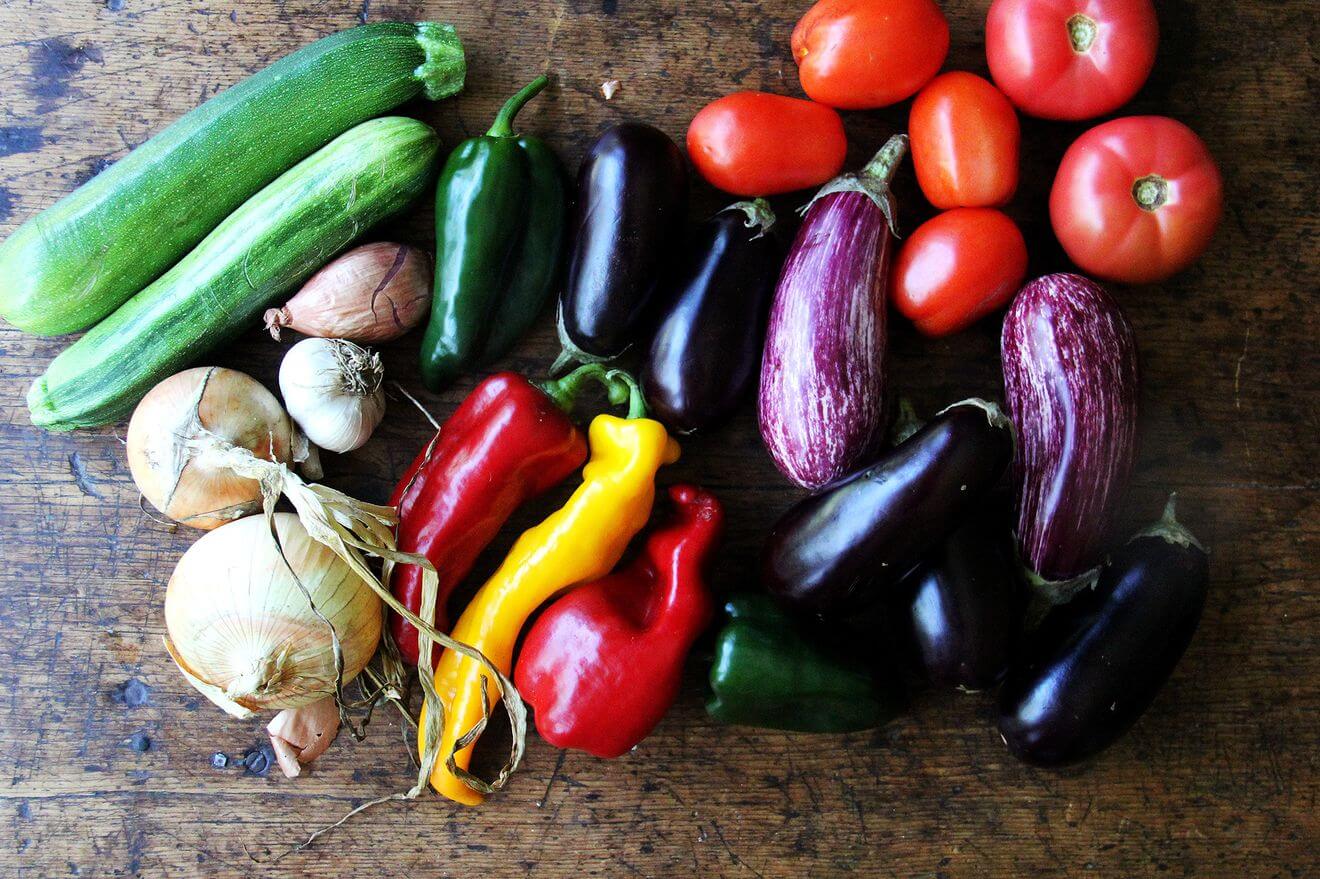
Here’s what you do: Gather all of your ratatouille vegetables: tomatoes, eggplant, peppers, onions, summer squash, and garlic.
Roughly chop everything. As you chop, pile the vegetables into your largest roasting pan, seasoning each layer of vegetables with salt.
Pour olive oil and vinegar over top. Crack pepper over top.
If your pan looks like this, don’t worry! (And don’t stir either.)
Transfer pan to the oven and roast at 400ºF for 45 minutes. At this point, when the vegetables have released some of their juices and have shrunk down considerably, you can remove the pan, and carefully give it all a stir.
Return the pan to the oven and continue to cook for 2 hours (or more or less), stirring halfway, until the vegetables become completely stewy, almost jammy in texture.
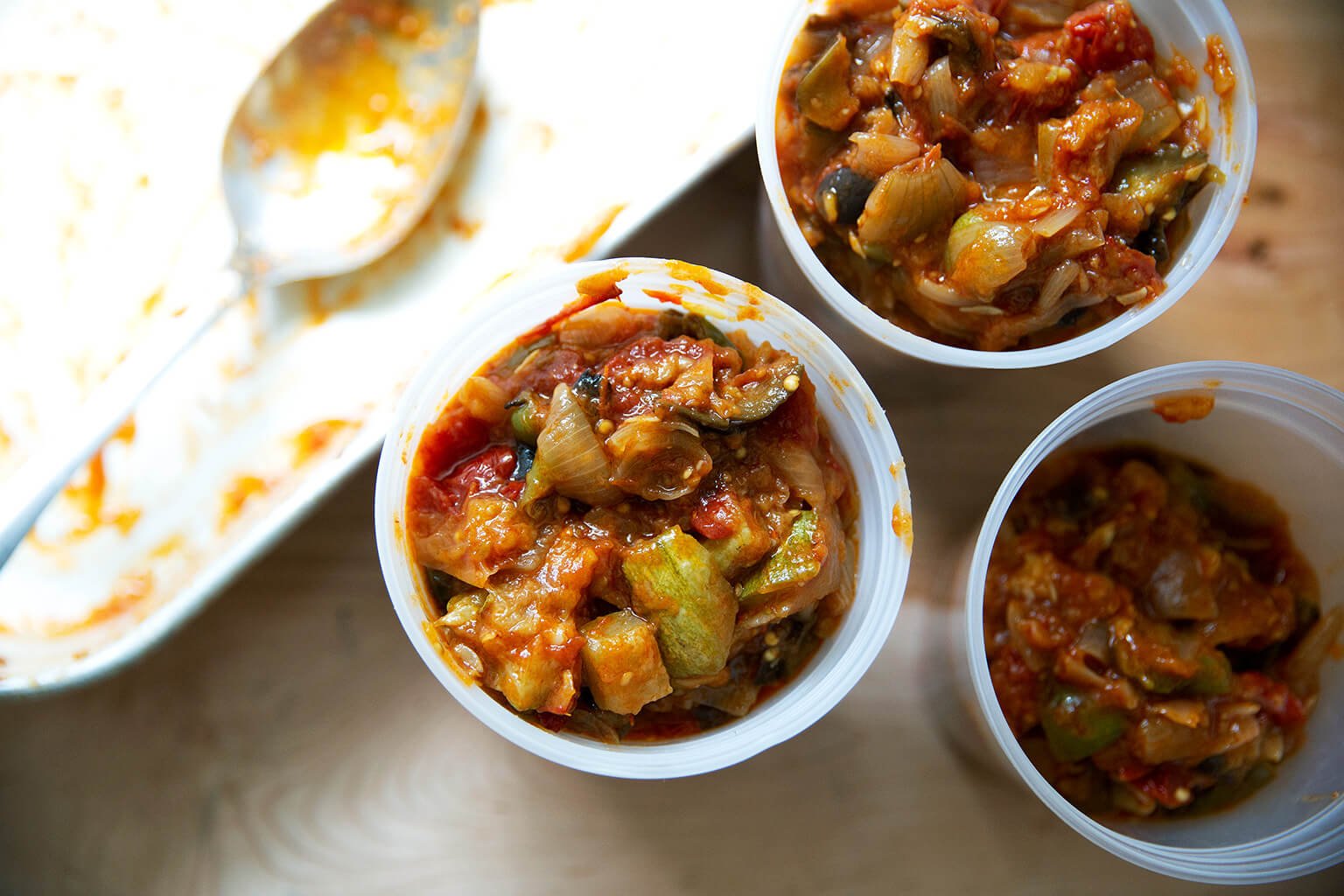
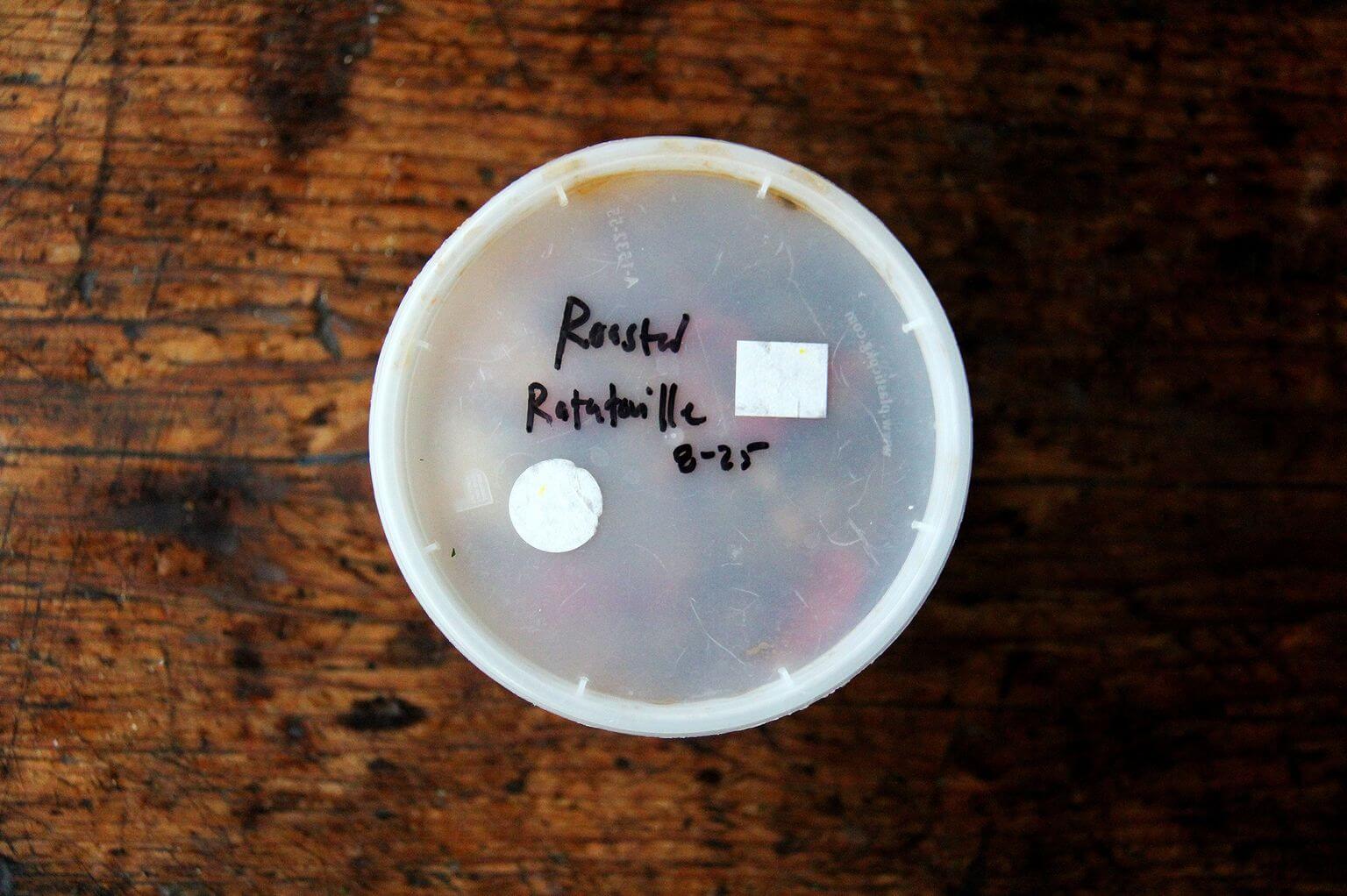
Spread your ratatouille over toast, toss with pasta, use as a layer in a summer lasagna , or simply eat with a spoon. Ratatouille freezes beautifully, too, so don’t be afraid to pack it into quart containers, and stash it away for a future use.
Description
This is adapted from Food52 Vegan by Gena Hamshaw.
Use this recipe as a guide: It’s best to use a balanced mix of vegetables, but the roasting process is forgiving. For instance, I’ve made this with and without zucchini; I’ve used a mix of vegetables that leans heavy on the eggplant at times and heavy on the tomatoes at others. I’ve used all sorts of peppers, tomatoes, eggplant, etc.
Also, I often make a quadruple (or more!) recipe, so don’t be afraid to load up your largest roasting pan. The key is to be patient with the roasting. Let the vegetables cook until the liquids reduce, and the mixture becomes thick and stewy. When I double/triple/quadruple the recipe, I scale the dressing as needed. When my roasting pan is completely loaded, I use 1 cup olive oil and 1/2 cup white balsamic vinegar (or 1/2 cup olive oil and 1/4 cup vinegar), and I cook the vegetables for 3 hours.
Also, I often omit the thyme altogether: I simply season each layer of vegetables with salt as I add them to the pan. Then once all of the vegetables are in, I pour over the olive oil and white balsamic vinegar. After 1 hour, I stir it; then I stir it again every hour after that until it has roasted for 3 hours total.
For the roasted ratatouille:
- 12 ounces eggplant, (about 1 ), chopped into 1 -inch pieces, see notes above re quantities
- 1 1/4 pounds tomatoes, chopped into 1 -inch pieces
- 12 ounces zucchini (about 2 ), chopped into 1 -inch pieces
- 2 red bell (or other) peppers, seeded and coarsely chopped
- 1 yellow or white onion, chopped
- 1 shallot, thinly sliced
- 4 cloves garlic, minced
- 1/4 to 1/2 cups olive oil, see notes above
- 2 to 4 tablespoons white balsamic vinegar
- 2 teaspoons chopped fresh thyme, optional
- 1 teaspoon kosher salt plus more to taste
- Freshly cracked pepper to taste
For the pasta:
- dried pasta
- roasted ratatouille
- freshly grated parmesan
- basil
- Preheat the oven to 400° F.
- In a large roasting pan or casserole, combine the tomatoes, eggplant, zucchini, peppers, onion, shallot, and garlic. Note: I add the vegetables to the pan as I finish chopping them, and sprinkle each layer of vegetables lightly with salt.
- In a small bowl or measuring cup, whisk together the olive oil, vinegar, thyme, and 1 teaspoon kosher salt. Pour over the vegetables. Toss to coat. Season with pepper. (Alternatively: If you’ve seasoned each layer of vegetables generously with salt, simply pour the olive oil and vinegar over the vegetables. As noted above, I omit the thyme.)
- Bake for 30 minutes, then stir well. Bake for another 30 to 45 minutes (or longer, especially if you’ve increased the quantities: if my roasting pan is really loaded, I roast the vegetables for 3 hours, stirring once every hour, until the juices really begin to reduce/thicken) until the vegetables are all very tender and the released juices are beginning to thicken. Taste and adjust seasoning with more salt and pepper as desired.
- To serve, spoon over toast or toss with cooked pasta, grated parmesan, finely chopped basil and enough of the reserved pasta cooking liquid to make a nice sauce.
- Prep Time: 20 minutes
- Cook Time: 1 to 2 hours (or more)
- Category: Vegetable
- Method: Roasted
- Cuisine: French
