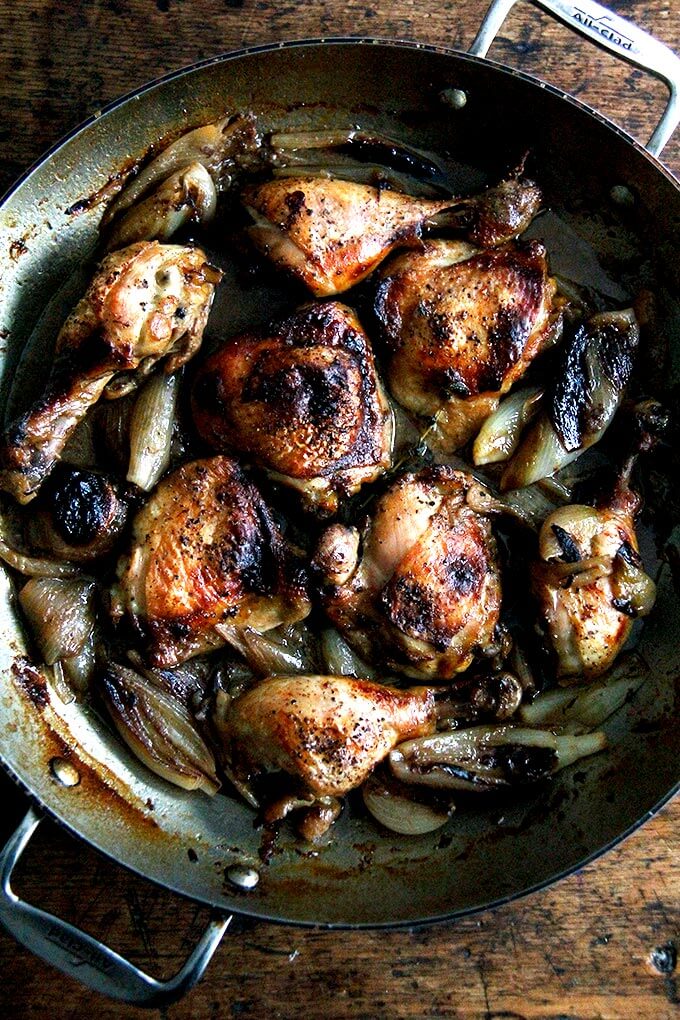
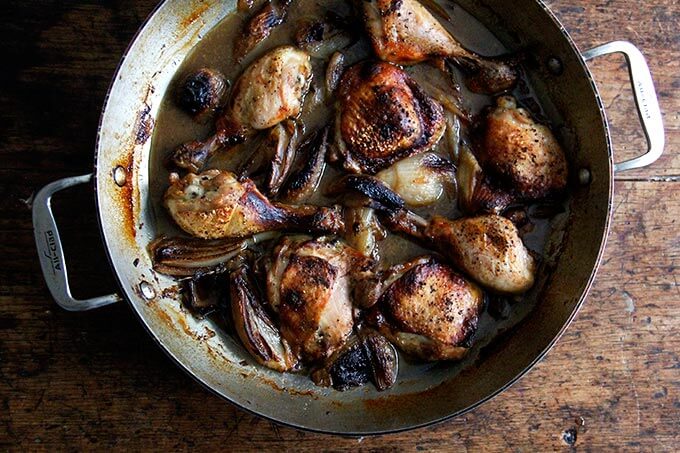
This one-pan roast chicken and shallots is completely delicious, requires no browning, and emerges from the oven with burnished skin and meat falling off the bone in just about 45 minutes. The best part? The shallots, which caramelize in the oven and melt into the sauce, infusing it with sweetness. Though the 15 shallots nearly make this a one-pan wonder, I serve it with a kale salad and, of course, bread for sopping.
Andrew’s wife, Rishia, had adapted the recipe from Martha Stewart. Sam made the recipe right away, then posted his adaptation in Cooking , where it has since received thousands of rave reviews.
Is Browning Chicken Necessary?
Rishia’s recipe calls for flouring and browning the chicken before adding shallots, mustard, and white wine. I couldn’t help but wonder if the flouring and browning was necessary. I gave it a go, skipping the flouring and browning, jumping straight to the sautéing of the shallots, then adding the mustard, thyme, and white wine.
Guess what? It worked.
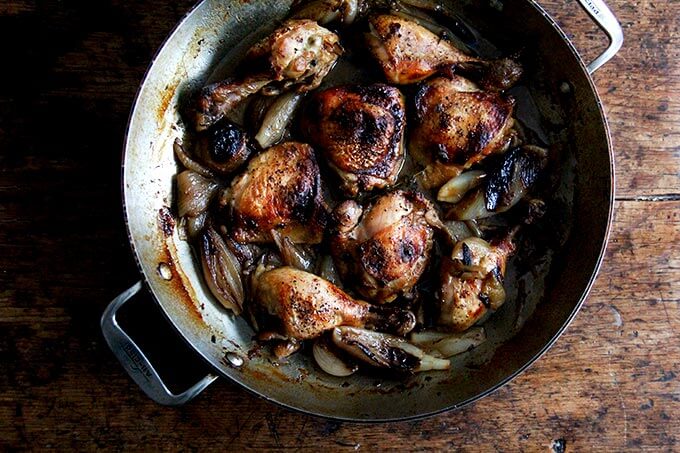
After about 45 minutes in the oven, the chicken emerged as hoped: with burnished skin and meat falling off the bone. This chicken is delicious, but my favorite part about the recipe is the shallots, which further caramelize in the oven and melt into the sauce, infusing it with sweetness. Though the 15 shallots nearly make this a one-pan wonder, I served it with a kale salad and, of course, bread for sopping.
Friends: I don’t brown chicken anymore, and I don’t think you should either 🙂
5 Favorite No-Browning Chicken Recipes
- Diana Henry’s Moroccan Chicken and Rice
- One-Pan Chicken with Sherry Vinegar Sauce
- Chicken legs with white wine, parmigiano, and olive oil
- One-Pot Thai Chicken Curry with Spinach
- Spatchcocked Chicken with Za’atar and Lemon
PS: 18 Weeknight Chicken Recipes Here .
Description
Changes I’ve made include: skip the browning. Ever since making Diana Henry’s Moroccan chicken and rice , which calls for a chuck-everything-in-the-oven-at-once technique, I don’t brown chicken anymore. Not browning yields crispy skin in said Moroccan chicken and rice recipe as well as in this Chicken with Sherry Vinegar recipe and here with this roast chicken and shallots.
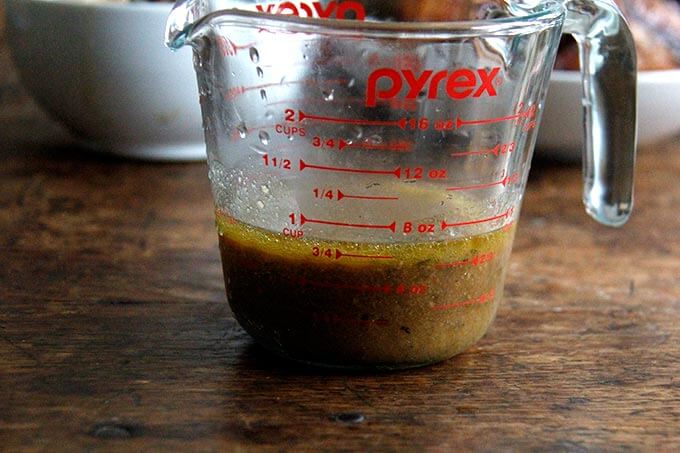
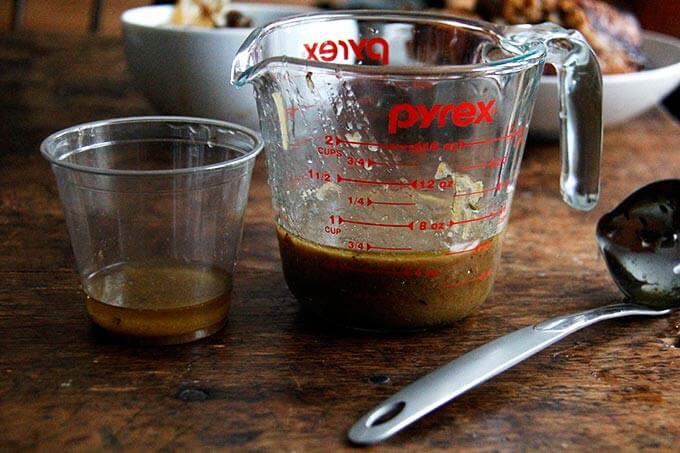
One caveat: If you use large or fattier chicken pieces, your sauce may be overwhelmed with rendered fat. I rarely have this issue, but every so often, if I taste the sauce at the end of cooking, and it tastes too fatty, I’ll remove the meat (and shallots, here), pour the sauce into a Pyrex, let the fat rise to the top, and skim it off. I find this easier than browning especially since this step isn’t always necessary.
Also, I use thyme because I can’t always find tarragon — not similar flavors, but each works well with the other flavors in this dish.
Also, given the season, I do not add tomatoes.
- 2 tablespoons unsalted butter
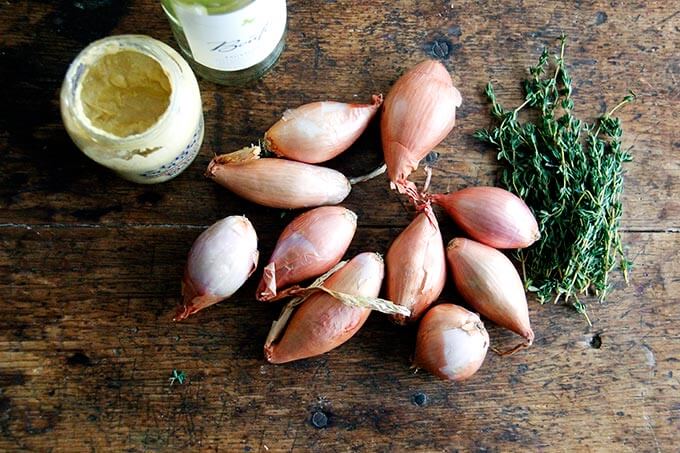
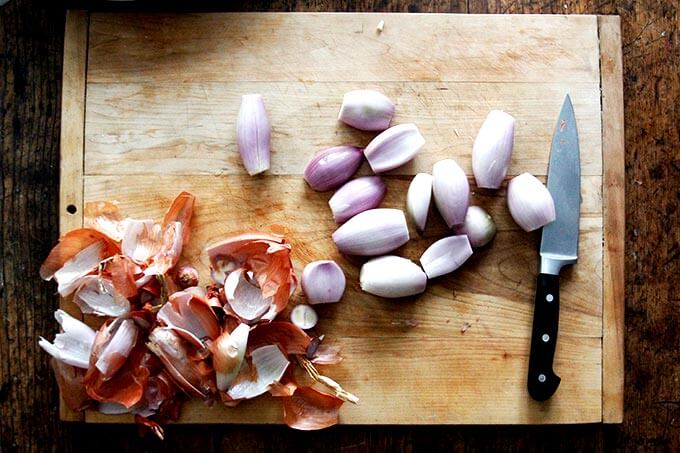
- 12 to 15 whole medium shallots, peeled, halved if large
- kosher salt to taste
- 2 tablespoons Dijon mustard
- a few sprigs tarragon or thyme
- 2 cups white wine
- fresh-cracked black pepper
- 8 bone-in skin-on chicken thighs or drummies or a combination
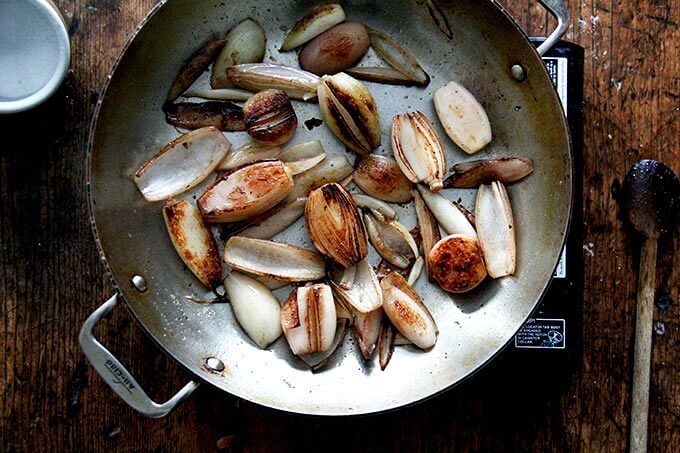
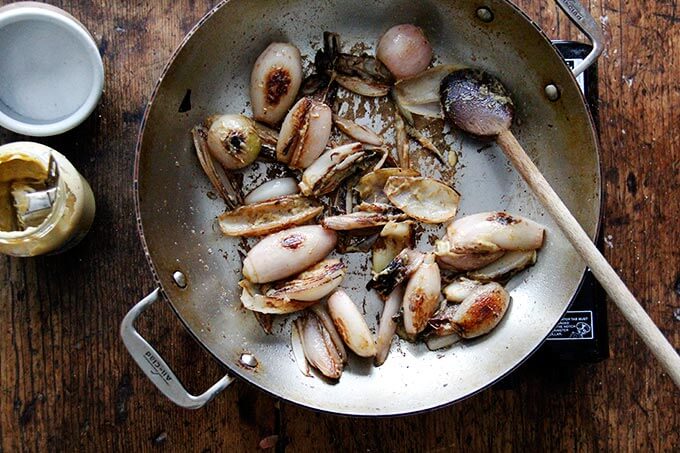
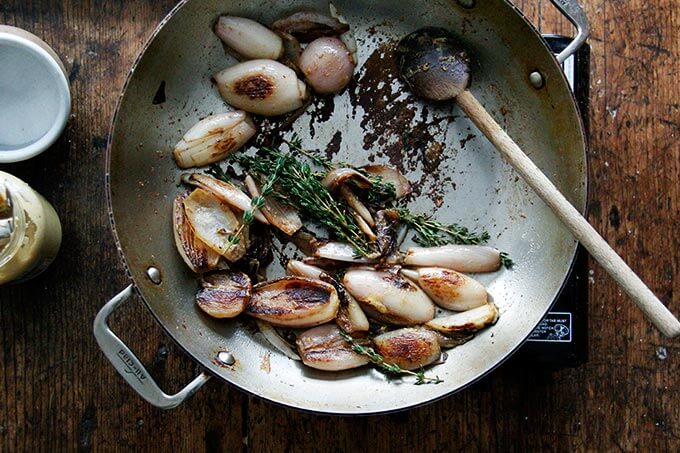
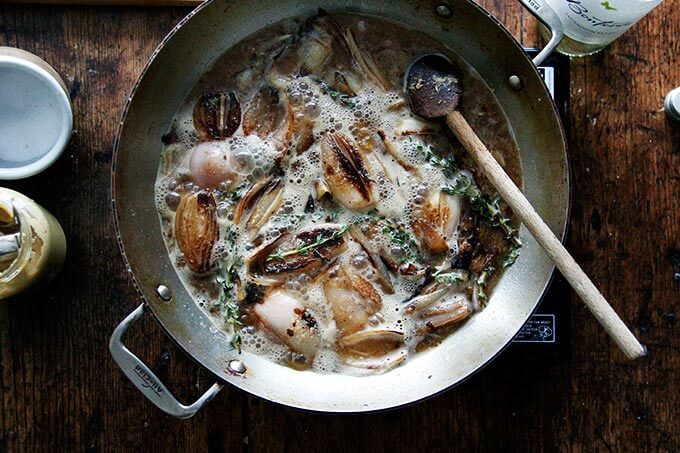
- Preheat the oven to 400ºF. Melt the butter in a large, heavy-bottomed oven-safe pot or skillet set over medium-high heat. When the butter foams, add the shallots to the pot, season with salt, and sauté them in the butter until they begin to soften and caramelize, approximately 10 to 12 minutes. Lower the heat as needed if shallots are browning too quickly. Add the mustard and thyme and stir until the mustard coats the shallots evenly and begins to brown. Add the wine and bring to a simmer, scraping the bottom of the pot with a wooden spoon to release any brown bits.
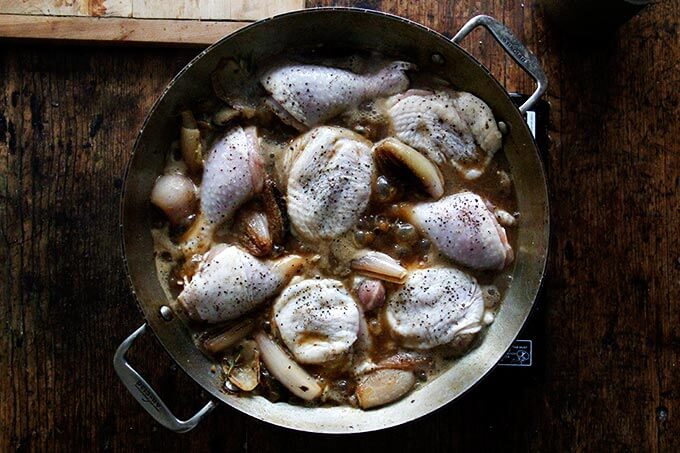
- Meanwhile, season the chicken pieces generously with salt and pepper on both sides. When the wine simmers, add the chicken pieces to the pan and transfer the pan to the oven. Cook for 40 to 50 minutes or until the skin is nicely brown and crisp. Remove pan from oven.
- Using a spoon, swirl around the sauce and take a taste. If it tastes good, serve it. If it tastes fatty, transfer the meat and shallots to a platter, pour the juices into a Pyrex and let them sit until the fat rises, about 5 minutes. Skim off the fat. Return the juices, chicken and shallots to the pan. Return to the oven or bring to a simmer stove top to reheat. If chicken isn’t as brown as you would like, you can stick it under the broiler too. Serve immediately with crusty bread and a salad.
- Prep Time: 10 minutes
- Cook Time: 1 hour
- Category: Dinner
- Method: Stovetop/Oven
- Cuisine: American
Description
Changes I’ve made include: skip the browning. Ever since making Diana Henry’s Moroccan chicken and rice , which calls for a chuck-everything-in-the-oven-at-once technique, I don’t brown chicken anymore. Not browning yields crispy skin in said Moroccan chicken and rice recipe as well as in this Chicken with Sherry Vinegar recipe and here with this roast chicken and shallots.
One caveat: If you use large or fattier chicken pieces, your sauce may be overwhelmed with rendered fat. I rarely have this issue, but every so often, if I taste the sauce at the end of cooking, and it tastes too fatty, I’ll remove the meat (and shallots, here), pour the sauce into a Pyrex, let the fat rise to the top, and skim it off. I find this easier than browning especially since this step isn’t always necessary.
Also, I use thyme because I can’t always find tarragon — not similar flavors, but each works well with the other flavors in this dish.
Also, given the season, I do not add tomatoes.
- 2 tablespoons unsalted butter
- 12 to 15 whole medium shallots, peeled, halved if large
- kosher salt to taste
- 2 tablespoons Dijon mustard
- a few sprigs tarragon or thyme
- 2 cups white wine
- fresh-cracked black pepper
- 8 bone-in skin-on chicken thighs or drummies or a combination
- Preheat the oven to 400ºF. Melt the butter in a large, heavy-bottomed oven-safe pot or skillet set over medium-high heat. When the butter foams, add the shallots to the pot, season with salt, and sauté them in the butter until they begin to soften and caramelize, approximately 10 to 12 minutes. Lower the heat as needed if shallots are browning too quickly. Add the mustard and thyme and stir until the mustard coats the shallots evenly and begins to brown. Add the wine and bring to a simmer, scraping the bottom of the pot with a wooden spoon to release any brown bits.
- Meanwhile, season the chicken pieces generously with salt and pepper on both sides. When the wine simmers, add the chicken pieces to the pan and transfer the pan to the oven. Cook for 40 to 50 minutes or until the skin is nicely brown and crisp. Remove pan from oven.
- Using a spoon, swirl around the sauce and take a taste. If it tastes good, serve it. If it tastes fatty, transfer the meat and shallots to a platter, pour the juices into a Pyrex and let them sit until the fat rises, about 5 minutes. Skim off the fat. Return the juices, chicken and shallots to the pan. Return to the oven or bring to a simmer stove top to reheat. If chicken isn’t as brown as you would like, you can stick it under the broiler too. Serve immediately with crusty bread and a salad.
- Prep Time: 10 minutes
- Cook Time: 1 hour
- Category: Dinner
- Method: Stovetop/Oven
- Cuisine: American
Find it online : https://alexandracooks.com/2018/02/01/roast-chicken-and-shallots-with-mustard-white-wine-and-thyme/
Last fall, just before beginning a French bistro cooking class at the Hillsdale General Store , a woman walked in wearing stripes and a black beret, her berry red lips matching the silk scarf tied artfully around her neck. We said hello and she introduced herself as Jamie, but we didn’t get to chat until class wound down, when I learned her love for all things French and, from her friend sitting beside her, that her book, Parisian Charm School , would be coming out in January. We stayed in touch, and last month I made a few nibbles for her book launch celebration at the Chatham Bookstore.
That evening, as Jamie chatted about the charm of her French grandmother, of a mysterious Madame M., and of many other French women she had befriended over the years, her guests sipped on sparkling wine, listening intently to her every word. I loved everything she said as well, most especially that charm has nothing to do with money or how pretty you are or how many outfits you have. She demonstrated this by pulling out a small collection of scarves, draping or wrapping or tying each one differently, matching each with a different beret, observing as she switched accessories how each changed the look and feel of her outfit.
I haven’t made it too far into PCS yet, but I loved two early paragraphs:
“French women have explained to me that part of their heritage is to “put a flower on it…” This means that even if your jacket is worn and slightly tattered—as many of the French women’s jackets were after the war—you can still put a little flower in your lapel. In fact, to wear a flower in this instance is an act of courage and a show of defiance.
Perhaps this is why a French woman believes it’s important to always dress nicely, even if she is staying at home, but especially when she leaves the home. French women know that when a woman is well groomed and wearing something thoughtful and charming she is a delight to all those around her. And most important, she delights herself.”
Note to self : brush hair; change out of yoga pants.
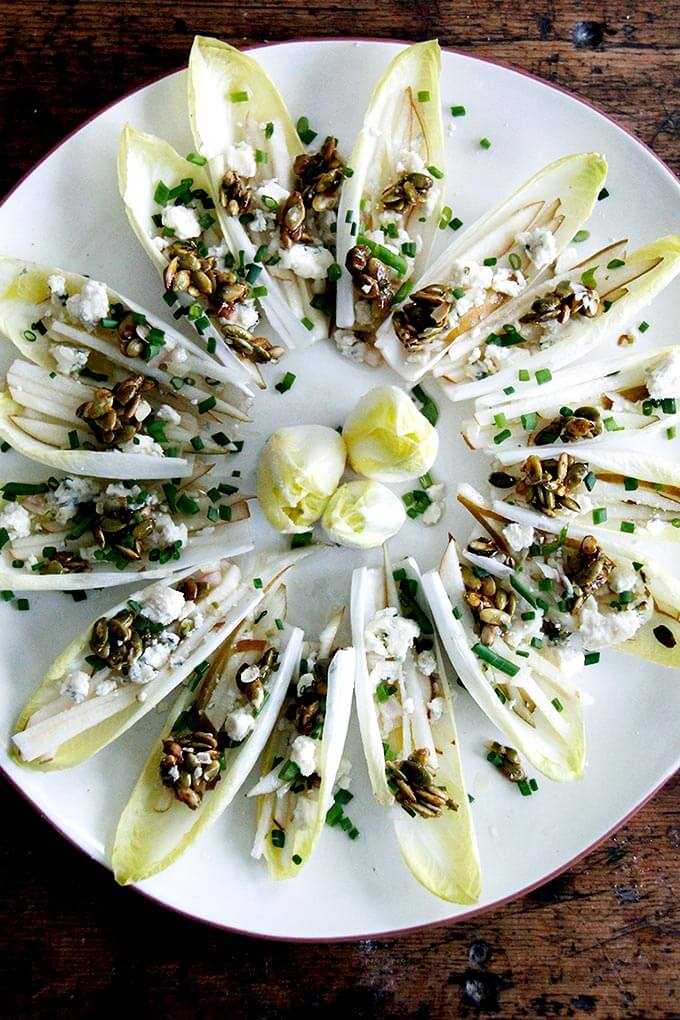
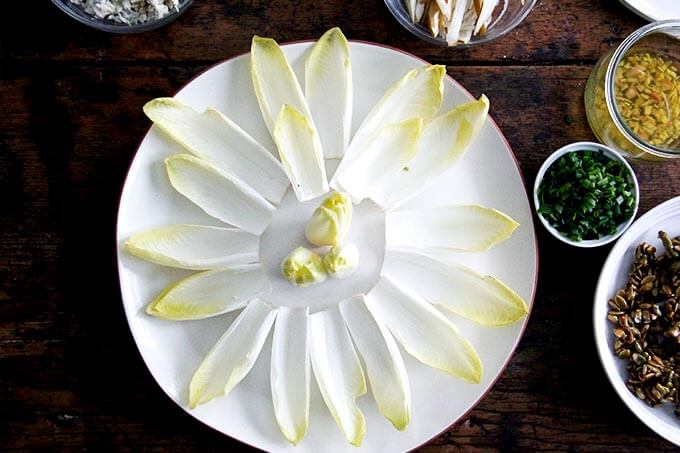
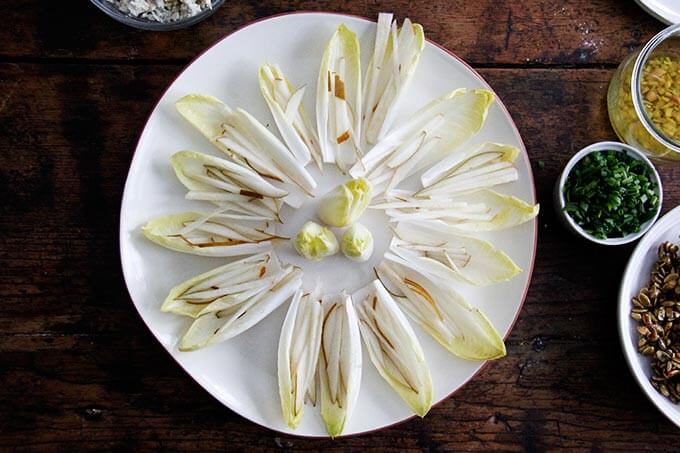
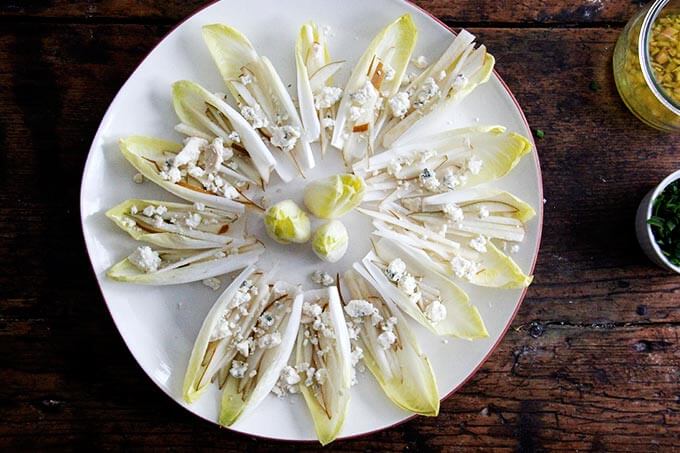
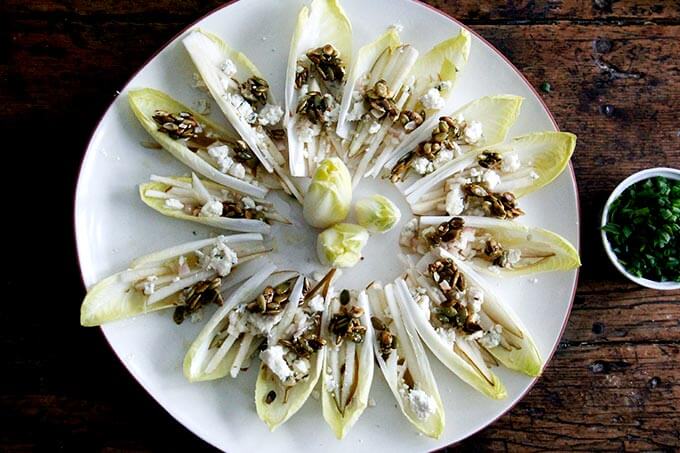
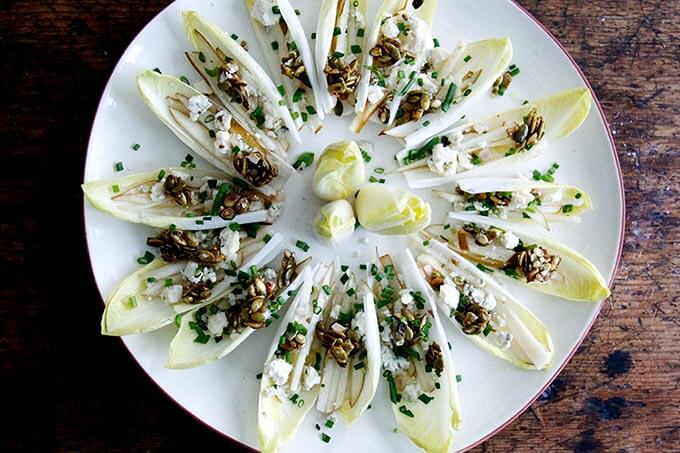
Friends, it was such a treat to hear Jamie talk and to meet her many friends and fans. In regard to the nibbles, given my lack of kitchen situation, I kept it simple, purchasing a few cheeses and olives, making bread , of course, and candied pepitas , which I’m realizing more and more are so nice to have on hand: they are a nice addition to any cheese board, lovely in salads , and, as here, delicious sprinkled over endive boats with pear and blue cheese. The filled spears get drizzled with a shallot vinaigrette and taste fresh and bright for being wintry in spirit. It’s a classic combination that would work well in salad form, too, but there is a certain, if I may, je ne sais quoi about the single-leaf presentation. Bon Appetit!
Description
This is a classic combination and tastes fresh and bright for being wintry in spirit.
When I made these for the Parisian Charm School book celebration, I used an Amish blue cheese that tastes milder than many blue cheeses — I can’t remember its name, but it’s readily available. A number of people who said they typically don’t like blue cheese, said they liked this one—in fact, they were surprised it was blue cheese. If you don’t like blue cheese, you can use goat cheese or feta or really anything you like.
The candied pepitas and dressing can be made days in advance. Store the pepitas in an air-tight container at room temperature; store the dressing in the fridge. The endive and pear should be sliced closer to serving time.
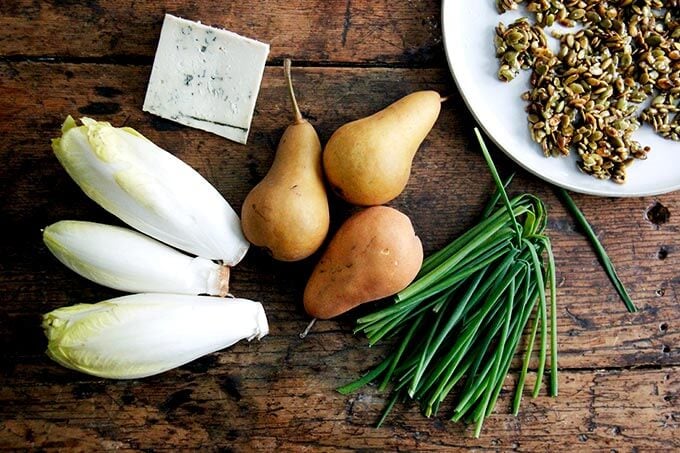
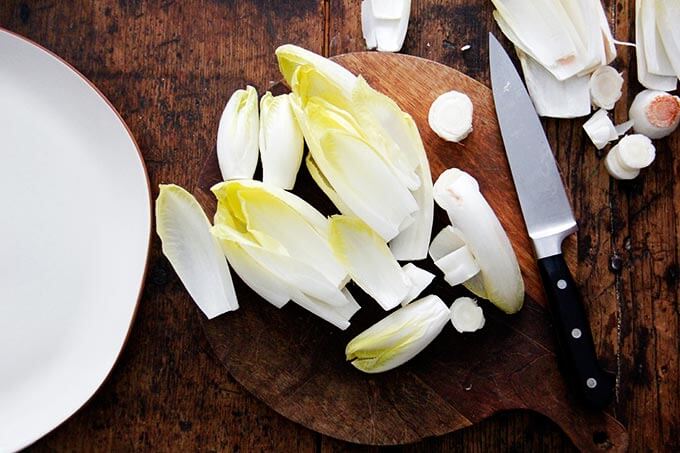
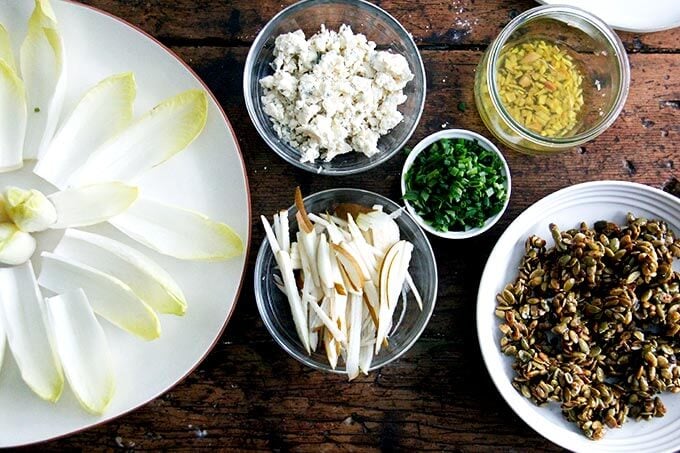
- 2 to 3 heads endive, separated into leaves
- 1 to 2 pears, thinly sliced into matchsticks
- blue cheese, see notes
- candied pepitas
- orange-shallot vinaigrette
- chives, finely minced
Arrange endive spears on a platter. Fill each one with a pinch of the thinly sliced pears. Crumble in some blue cheese. Spoon over some of the orange-shallot vinaigrette. Crumble the candied pepitas over top. Garnish with chives.
- Prep Time: 25 minutes
- Cook Time: 10 minutes
- Category: Appetizer
- Method: Arrange on Platter
- Cuisine: American
