It’s only February 2nd, and already I’m dreaming about Marcella Hazan’s tomato sauce — you know, the one and only most delicious tomato sauce in the world . Friends, I recently discovered a second Marcella Hazan tomato sauce that I think you’ll all really love.
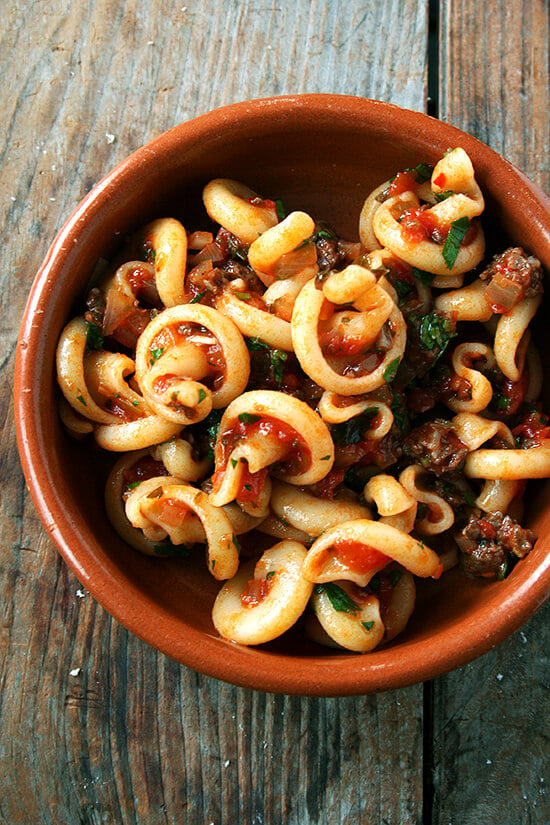
In this lesser-known Hazan sauce recipe, from Marcella Cucina , canned tomatoes are brightened by olive oil and sautéed onions, a few cloves of crushed garlic, a little white wine, some chopped fresh parsley, and a pinch of crushed red pepper flakes. After about 20 minutes of simmering, it’s done. And it’s delicious.
While making this sauce, I learned something, too, from a note in the book:
As tomatoes cook down and their watery part evaporates, the fat you have used begins to run clear. When you skim the surface of the sauce with the side of a wooden spoon, or wipe away the sauce with the spoon from the bottom of the skillet, you see clear fat following the spoon’s trail, an indication that the tomato sauce is done.
It’s hard to envision this occurrence — clear fat trailing the path of your wooden spoon — but it happens, and when it does, your sauce is done. Cool, right?
A Note About Afeltra Pasta
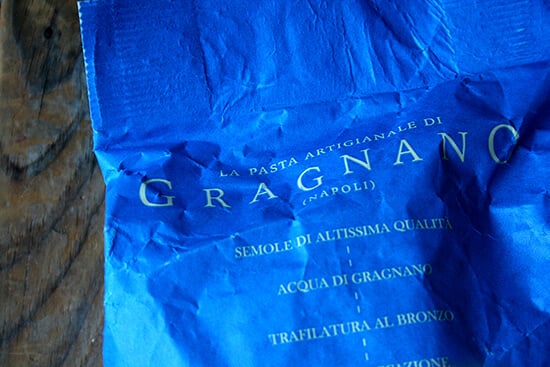
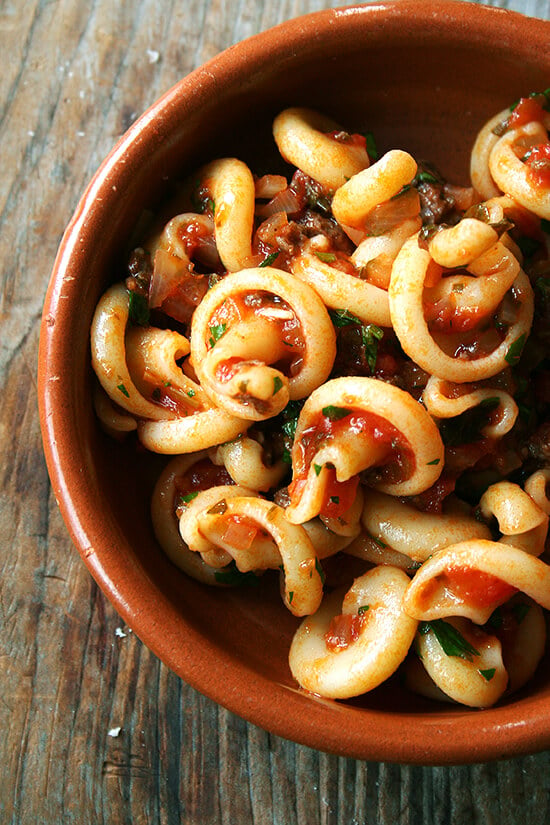
This is by far the best pasta I have ever tasted. I have a dear friend in NYC to thank for introducing it to me. It’s dry pasta from the Gragnano region of Italy, and my friend finds it at Eataly. The pasta hardly needs a sauce — it tastes delectable on its own with butter and Parmigiano Reggiano — but its shape is ideal for catching all of the goodies in any sauce, especially this one. It’s a real treat.
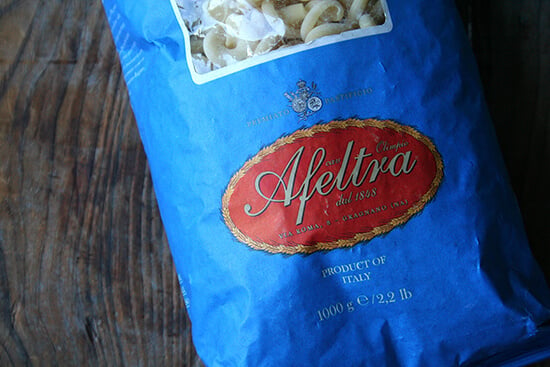
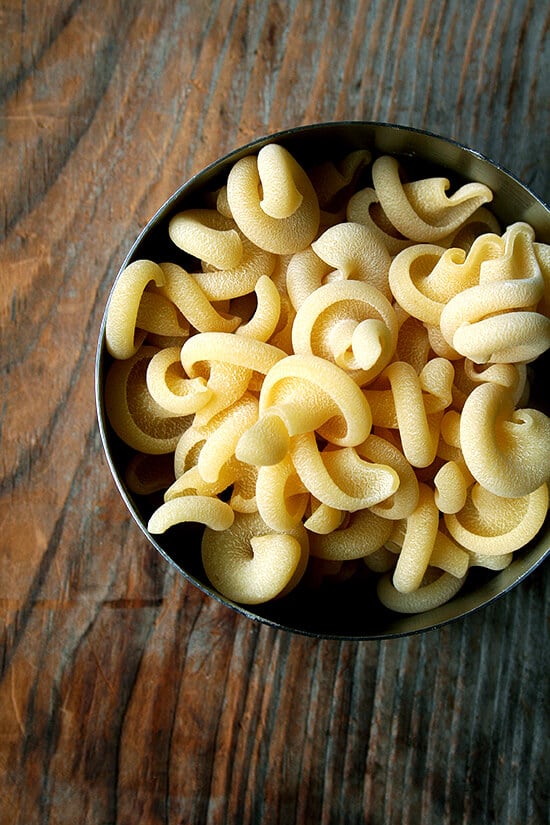
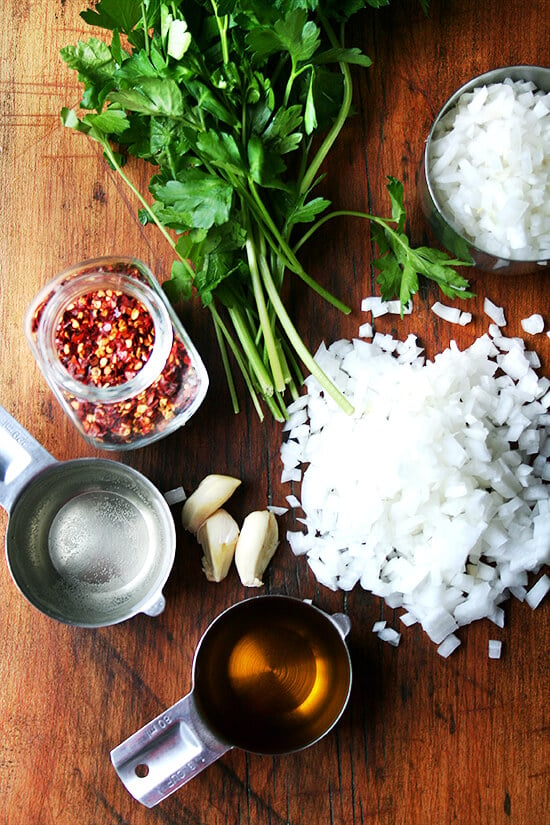
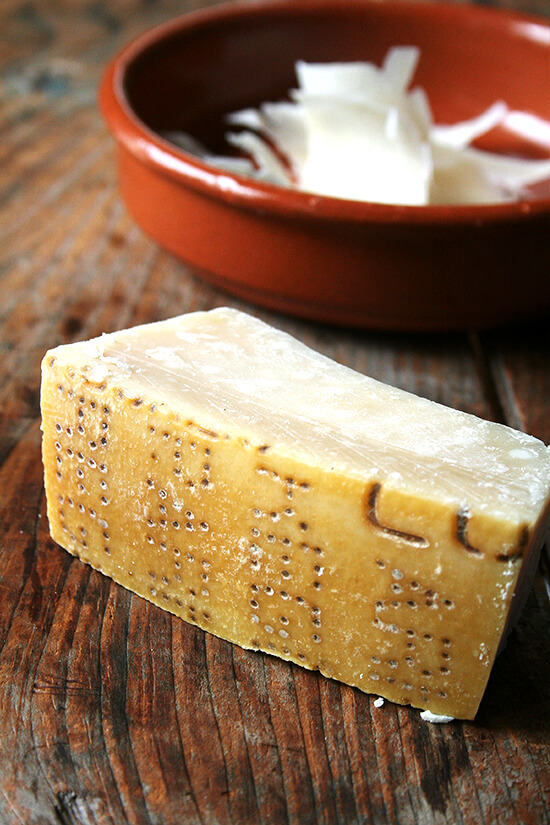
Here’s the play-by-play: Gather your ingredients:
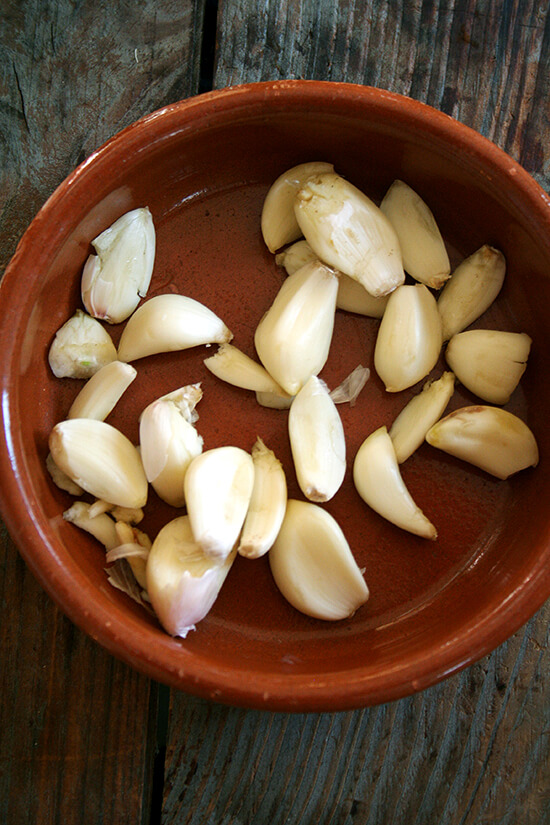
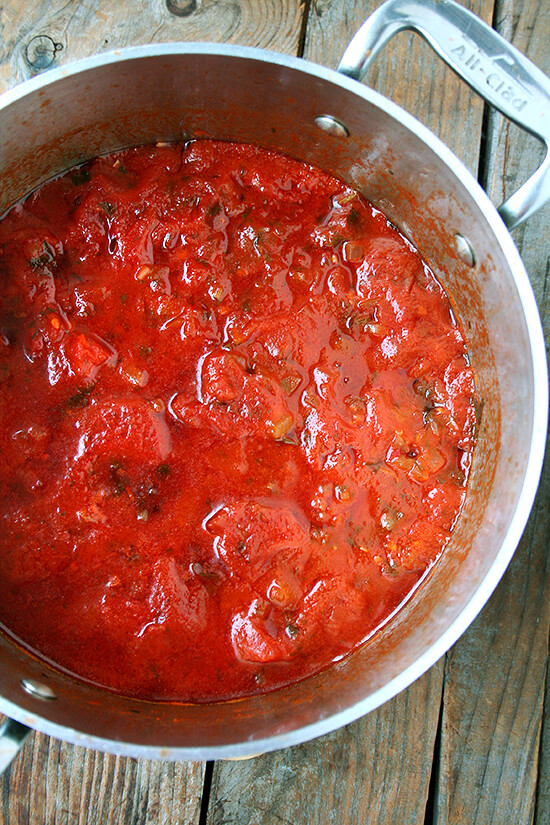

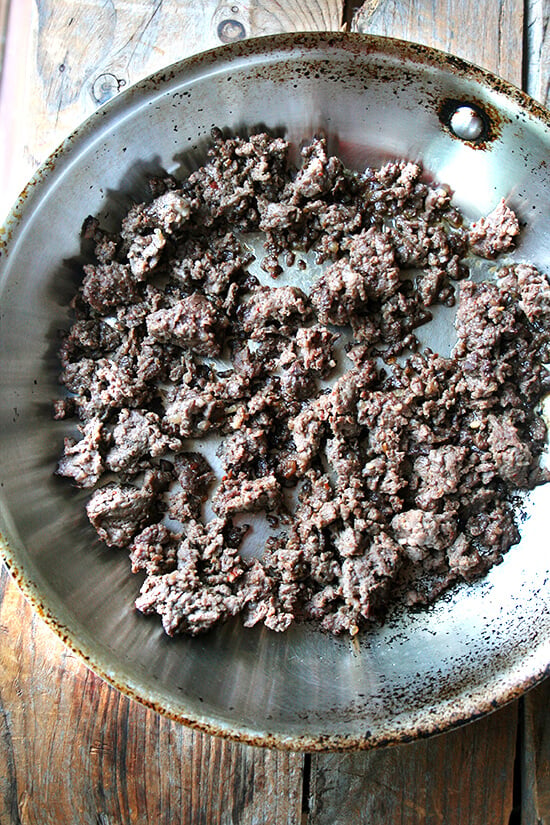
Browned hot Italian venison sausage… the husband has been hunting again:
Description
Adapted from Marcella Cucina . Eataly sells Alfetra Vesuvio pasta, which is delicious, online. When I run out of my stash of the good stuff, I’ll return to using my favorites from my local supermarket — Barilla or DeCecco gemelli or orecchiette.
For the tomato sauce:
- 1/3 cup olive oil
- 2 cups finely chopped white or yellow onion
- 3 cloves garlic, minced
- 1/3 cup finely chopped parsley
- 1/2 cup white wine
- 1 28-oz can of peeled whole San Marzano tomatoes, crushed with hands or snipped with scissors
- crushed chili flakes
- kosher salt
For the pasta:
- 1/2 lb. hot Italian sausage (or more or less to taste)
- 1/2 to 3/4 lb. short pasta
- freshly chopped parsley
- freshly grated Parmigiano Reggiano to taste
- Place the olive oil in a medium-sized saucepan with the onions and sauté on medium until pale gold — you’re not trying to brown the onions here; you just want to sweat the onions. Add the garlic and cook just a few seconds until you smell its aroma. Add the parsley, stir once or twice, and then add the wine. Let it simmer for a couple of minutes until the alcohol smell dissipates.
- Add the tomatoes, the crushed chili flakes and a generous pinch of salt, and cook at a steady simmer, until the fat begins to separate from the sauce (see note below*), about 20 minutes.
- Meanwhile, brown the sausage in a large skillet until cooked through.
- Bring a large pot of water to a boil. Cook your pasta al dente. Drain, reserving some of the pasta cooking liquid only if you’ve made the sauce in advance and are reheating it to toss with pasta.
- Place pasta in a large serving bowl. Toss with enough sauce to coat. Fold in sausage (if using). Sprinkle with some more parsley (optional). Pass cheese on the side.
Notes
Hazan’s note: As tomatoes cook down and their watery part evaporates, the fat you have used begins to run clear. When you skim the surface of the sauce with the side of a wooden spoon, or wipe away the sauce from the spoon from the bottom of the skillet, you see clear fat following the spoon’s trail, an indication that the tomato sauce is done.
My note: The sauce can be made ahead and heated as needed. It will definitely thicken up as it sits (especially in the fridge), so you might want to reserve some pasta cooking liquid to thin it out when you reheat it. It’s not necessary, but I’ve found this to be helpful.
Prep Time: 30 minutes
Cook Time: 8 minutes
Category: pasta
Method: Stovetop
Cuisine: Italian, American
Description
Adapted from Marcella Cucina . Eataly sells Alfetra Vesuvio pasta, which is delicious, online. When I run out of my stash of the good stuff, I’ll return to using my favorites from my local supermarket — Barilla or DeCecco gemelli or orecchiette.
For the tomato sauce:
- 1/3 cup olive oil
- 2 cups finely chopped white or yellow onion
- 3 cloves garlic, minced
- 1/3 cup finely chopped parsley
- 1/2 cup white wine
- 1 28-oz can of peeled whole San Marzano tomatoes, crushed with hands or snipped with scissors
- crushed chili flakes
- kosher salt
For the pasta:
- 1/2 lb. hot Italian sausage (or more or less to taste)
- 1/2 to 3/4 lb. short pasta
- freshly chopped parsley
- freshly grated Parmigiano Reggiano to taste
- Place the olive oil in a medium-sized saucepan with the onions and sauté on medium until pale gold — you’re not trying to brown the onions here; you just want to sweat the onions. Add the garlic and cook just a few seconds until you smell its aroma. Add the parsley, stir once or twice, and then add the wine. Let it simmer for a couple of minutes until the alcohol smell dissipates.
- Add the tomatoes, the crushed chili flakes and a generous pinch of salt, and cook at a steady simmer, until the fat begins to separate from the sauce (see note below*), about 20 minutes.
- Meanwhile, brown the sausage in a large skillet until cooked through.
- Bring a large pot of water to a boil. Cook your pasta al dente. Drain, reserving some of the pasta cooking liquid only if you’ve made the sauce in advance and are reheating it to toss with pasta.
- Place pasta in a large serving bowl. Toss with enough sauce to coat. Fold in sausage (if using). Sprinkle with some more parsley (optional). Pass cheese on the side.
Notes
Hazan’s note: As tomatoes cook down and their watery part evaporates, the fat you have used begins to run clear. When you skim the surface of the sauce with the side of a wooden spoon, or wipe away the sauce from the spoon from the bottom of the skillet, you see clear fat following the spoon’s trail, an indication that the tomato sauce is done.
My note: The sauce can be made ahead and heated as needed. It will definitely thicken up as it sits (especially in the fridge), so you might want to reserve some pasta cooking liquid to thin it out when you reheat it. It’s not necessary, but I’ve found this to be helpful.
Prep Time: 30 minutes
Cook Time: 8 minutes
Category: Pasta
Method: Stovetop
Cuisine: Italian, American
Find it online : https://alexandracooks.com/2012/02/02/a-second-marcella-hazan-tomato-sauce-hot-italian-sausage-gragnano-pasta-utter-deliciousness/
<img loading=“lazy” src=“https://alexandracooks.com/wp-content/uploads/2012/02/rosemarybread1.jpg" onerror=“this.onerror=null;this.src=‘https://blogger.googleusercontent.com/img/a/AVvXsEhe7F7TRXHtjiKvHb5vS7DmnxvpHiDyoYyYvm1nHB3Qp2_w3BnM6A2eq4v7FYxCC9bfZt3a9vIMtAYEKUiaDQbHMg-ViyGmRIj39MLp0bGFfgfYw1Dc9q_H-T0wiTm3l0Uq42dETrN9eC8aGJ9_IORZsxST1AcLR7np1koOfcc7tnHa4S8Mwz_xD9d0=s16000';" alt=“Olive oil makes this semolina bread super moist, but it’s the presence of semolina flour, an ingredient I am only just discovering, that gives this bread such a unique texture and flavor. The owner of Macrina Bakery, Leslie Mackie, to whom we can thank for this creation, says it best: “Semolina flour gives the bread a hearty texture but also a kind of creamy, almost corn-like flavor.” A salty, crusty exterior moreover makes the bread irresistible. // alexandracooks.com - 15”>
Last Saturday I spotted a sample table in the wine section of Wegmans and made a beeline for it. When I arrived, a nice man asked me if I’d like to try a couple of wines with a slice of chocolate bread. I couldn’t think of a more fantastic idea at 10 in the morning. Yes please, I said. One of the wines, a grenache, was quite nice, and while the bread, a cake-like quick bread, was a little bland, I liked the idea of pairing wine with chocolate bread.
The folks at Wegmans were on to something. If the bread had been less sweet and textured more like a yeast-risen bread, could it possibly be topped with a cheese — maybe a soft, honey-infused chévre — and served with wine as a festive Valentine’s Day hors d’oeuvre?
Immediately reminded of Metropolitan Bakery’s chocolate and cherry bread, I set to work scouring the internet to see if anybody had taken a stab at recreating that loaf at home, an exercise I undertake every six months or so. That recipe, I’m afraid, is still under tight lock and key. It’s conspicuously absent from the cookbook, as well. For good reason, I imagine.
Without delving into too much detail, I combined a few recipes, slapped together a nice-looking dough, threw it in a hot oven, and waited anxiously while promising smells wafted from the oven. Unfortunately, the resulting loaf, although edible, was nothing worth sharing. It was good. I found myself eating slice after slice in fact, perhaps hoping each next slice might taste better, but each did not. Chocolate bread, I’m afraid, would not make it to this year’s Valentine’s Day table.
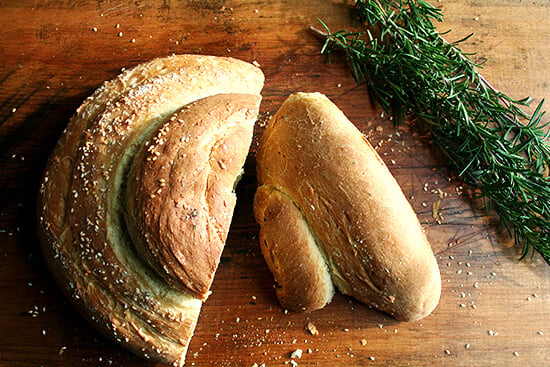
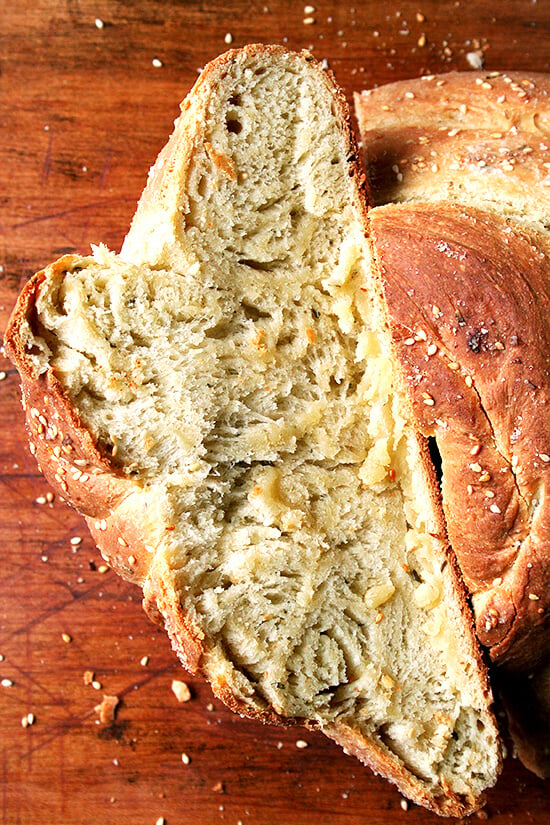
Alas, maybe forcing chocolate into a savory bread was weird anyway. It was time to get back to basics. Time to try a more natural combination of flavors. Time to break out the rosemary and sea salt and olive oil and share with you all a most delectable bread recipe, one I can say with the utmost confidence will not disappoint. I eat slice after slice of this bread not because I doubt its deliciousness but because I can’t hold myself back. Olive oil makes this bread super moist, but it’s the presence of semolina flour, an ingredient I am only just discovering, that gives this bread such a unique texture and flavor. The owner of Macrina Bakery, Leslie Mackie, to whom we can thank for this creation, says it best: “Semolina flour gives the bread a hearty texture but also a kind of creamy, almost corn-like flavor.” A salty, crusty exterior moreover makes the bread irresistible.
It’s perhaps not as dreamy as chocolate bread, but it’s far more delicious, and in the event that a romantic dinner for two materializes in my kitchen next Tuesday, it will make an appearance. Happy Almost Valentine’s Day Everyone.
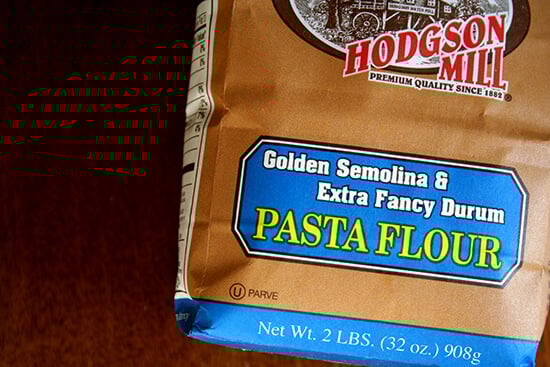
Semolina flour is sometimes labeled as “pasta flour.”
<img loading=“lazy” src=“https://alexandracooks.com/wp-content/uploads/2012/02/rosemarybread2.jpg" onerror=“this.onerror=null;this.src=‘https://blogger.googleusercontent.com/img/a/AVvXsEhe7F7TRXHtjiKvHb5vS7DmnxvpHiDyoYyYvm1nHB3Qp2_w3BnM6A2eq4v7FYxCC9bfZt3a9vIMtAYEKUiaDQbHMg-ViyGmRIj39MLp0bGFfgfYw1Dc9q_H-T0wiTm3l0Uq42dETrN9eC8aGJ9_IORZsxST1AcLR7np1koOfcc7tnHa4S8Mwz_xD9d0=s16000';" alt=“Olive oil makes this semolina bread super moist, but it’s the presence of semolina flour, an ingredient I am only just discovering, that gives this bread such a unique texture and flavor. The owner of Macrina Bakery, Leslie Mackie, to whom we can thank for this creation, says it best: “Semolina flour gives the bread a hearty texture but also a kind of creamy, almost corn-like flavor.” A salty, crusty exterior moreover makes the bread irresistible. // alexandracooks.com - 18”>
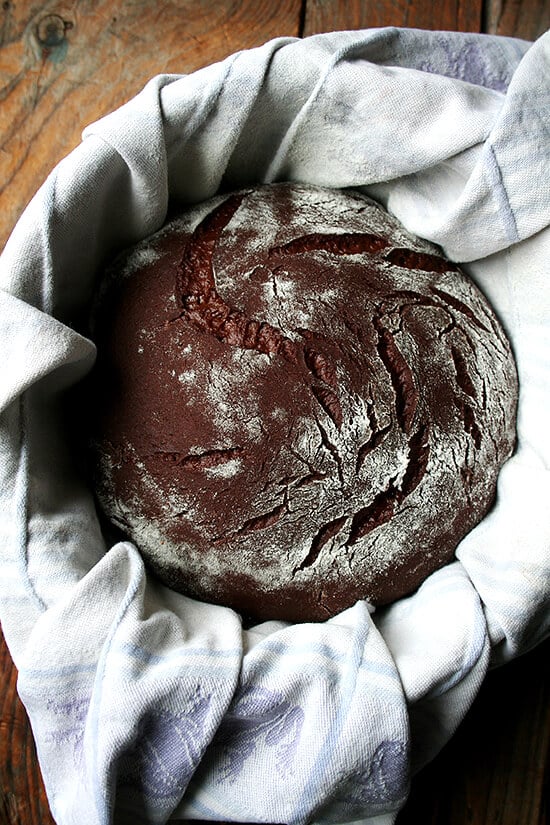
Failed chocolate bread, rising:
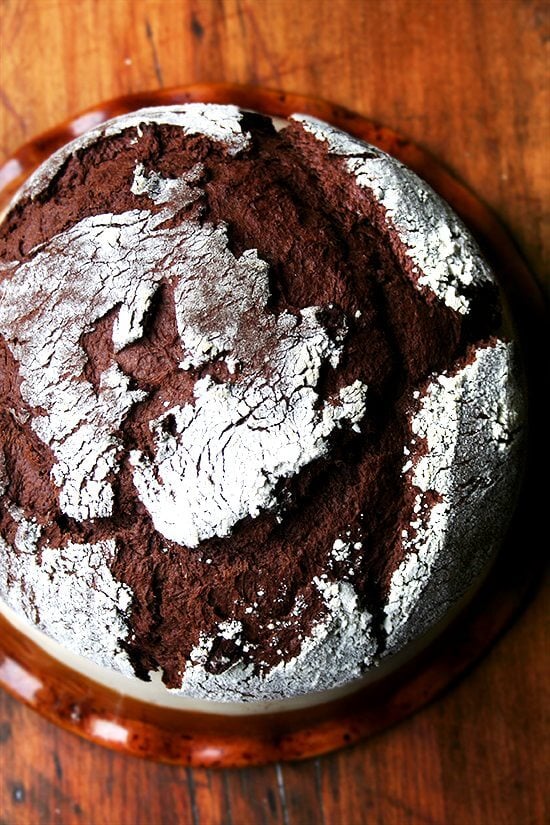
Failed chocolate bread, baked:
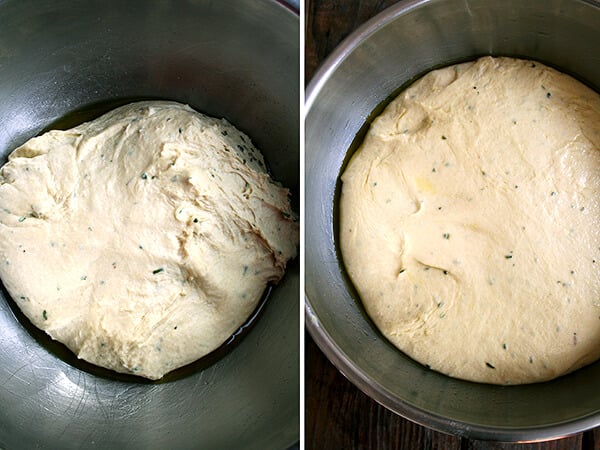
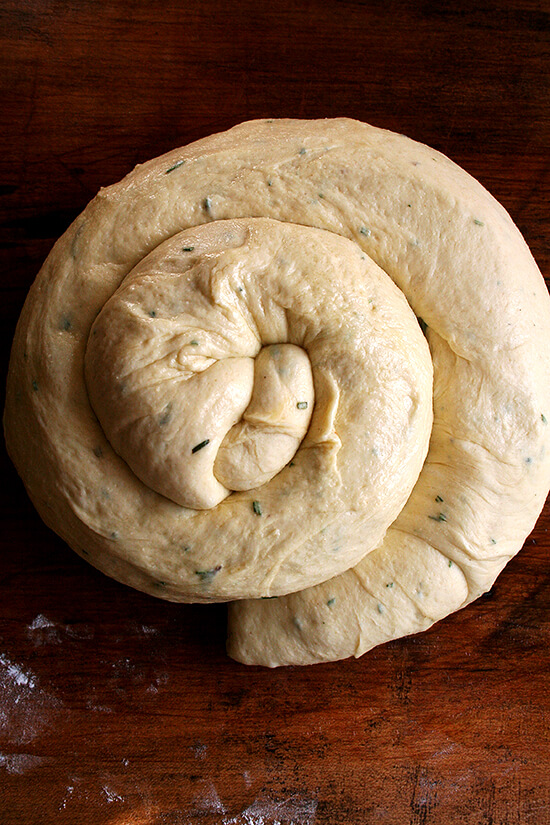
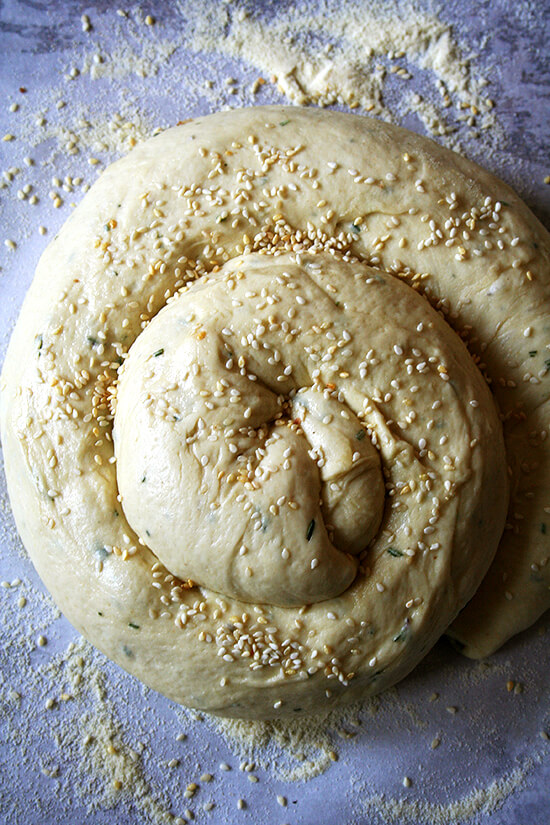
Rosemary semolina bread mixed (left) and risen (right):
<img loading=“lazy” src=“https://alexandracooks.com/wp-content/uploads/2012/02/rosemarybread3.jpg" onerror=“this.onerror=null;this.src=‘https://blogger.googleusercontent.com/img/a/AVvXsEhe7F7TRXHtjiKvHb5vS7DmnxvpHiDyoYyYvm1nHB3Qp2_w3BnM6A2eq4v7FYxCC9bfZt3a9vIMtAYEKUiaDQbHMg-ViyGmRIj39MLp0bGFfgfYw1Dc9q_H-T0wiTm3l0Uq42dETrN9eC8aGJ9_IORZsxST1AcLR7np1koOfcc7tnHa4S8Mwz_xD9d0=s16000';" alt=“Olive oil makes this semolina bread super moist, but it’s the presence of semolina flour, an ingredient I am only just discovering, that gives this bread such a unique texture and flavor. The owner of Macrina Bakery, Leslie Mackie, to whom we can thank for this creation, says it best: “Semolina flour gives the bread a hearty texture but also a kind of creamy, almost corn-like flavor.” A salty, crusty exterior moreover makes the bread irresistible. // alexandracooks.com - 27”>
Description
1 3/4 cups warm water (105°F to 115°F), divided
1 tablespoon active dry yeast (measured from 2 envelopes)
2 1/4 cups (about) unbleached all purpose flour, divided
1/2 cup extra-virgin olive oil
2 teaspoons minced fresh rosemary
2 1/2 cups semolina flour (pasta flour)*
2 teaspoons fine-grained sea salt
Additional semolina flour
1 tablespoon sesame seeds, dividedarkets.
1 teaspoon coarse-grained sea salt
*Semolina flour is available at specialty foods stores, Italian markets, and some superm
- Place 1 1/4 cups warm water in medium bowl; sprinkle yeast over and stir to blend. Let stand 5 minutes to soften. Whisk to dissolve yeast. Add 1 1/4 cups all purpose flour; whisk until smooth. Cover bowl with plastic wrap. Let stand at room temperature (about 75°F) until bubbles form and yeast mixture has more than doubled in volume, about 45 minutes.
- Whisk remaining 1/2 cup warm water, olive oil, and rosemary in large bowl to blend. Using rubber spatula, mix in semolina flour and 2 teaspoons fine-grained sea salt (dough will be very dry). Stir in yeast mixture. Work in 3/4 cup all purpose flour. Turn dough out onto lightly floured surface. Knead until smooth, adding more all purpose flour by tablespoonfuls if sticky. Let rest 5 minutes. Knead until dough springs back when pressed with thumb, about 8 minutes.
- Lightly oil large bowl. Transfer dough to bowl; turn to coat. Cover with plastic wrap. Let rise at room temperature until doubled in volume, about 1 hour. Transfer dough to lightly floured surface. Flatten dough into 18×12-inch rectangle. Starting from 1 long side, roll tightly to form 2 1/2-inch-diameter, 20-inch-long log. With seam side down, shape log into ring, inserting 1 end into second end; smooth seam. (Note: As you can see from the photos, I did not make this shape. If I had, my ring would have been massive. I opted to just coil into one mass. Next time, however, I might even divide the dough in half and bake two simple boule-shaped loaves.)
- Line baking sheet with parchment paper. Sprinkle sheet with additional semolina flour. Transfer dough ring to prepared sheet, reshaping as necessary to form smooth circle. Sprinkle with 1 1/2 teaspoons sesame seeds, pressing lightly to adhere. Cover loosely with plastic wrap. Let bread rise at room temperature until almost doubled in volume, about 45 minutes.
- Preheat oven to 400°F. Remove plastic wrap from bread. Using sharp knife, cut 1/4-inch-deep slit all the way around top of loaf. Spray bread lightly with water. (I did not do this — I don’t own a spray bottle.) Sprinkle with 1 1/2 teaspoons sesame seeds and 1 teaspoon coarse-grained salt. Transfer to oven. Bake bread 15 minutes, spraying lightly with water every 5 minutes. (I did not do this either, again because I do not own a spray bottle.) Continue to bake without spraying until bread is golden brown and sounds hollow when tapped on bottom, about 30 minutes longer. Transfer bread to rack and cool completely.
- Prep Time: 35 minutes
- Cook Time: 45 minutes