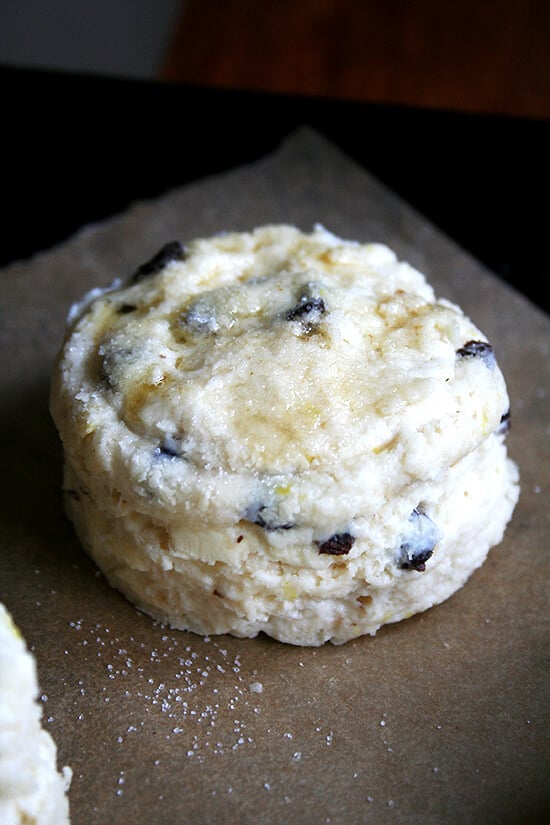
Flaky, buttery, lemony, and nicely sweet, these currant scones are perfection. If you need a reason to break out the good Irish butter, look no further!
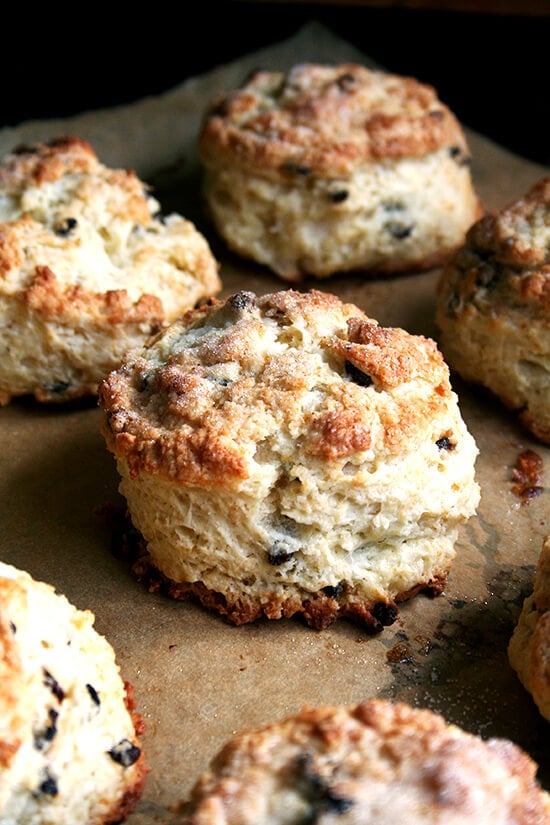
I’m preparing for Thanksgiving and for my sole visitor, my father, who loves a proper English scone.
Unfortunately, I am fairly certain these currant scones are not proper by any British standards. And I know that after one bite, my father will in fact tell me that what I have served him is not a proper British scon. And I have no doubt he’ll then proceed to devour two or three, slathering each with butter and jam, uttering mumbles of approval all along the way.
I can’t wait.
About these scones: when I find a recipe I like, I tend to stick with it. Tartine’s buttermilk scone recipe is the one I use year-round, studded with berries in the summer and currants in the winter. The dough freezes beautifully, too, so I often freeze unbaked scones for a future morning.
What to serve with currant scones?
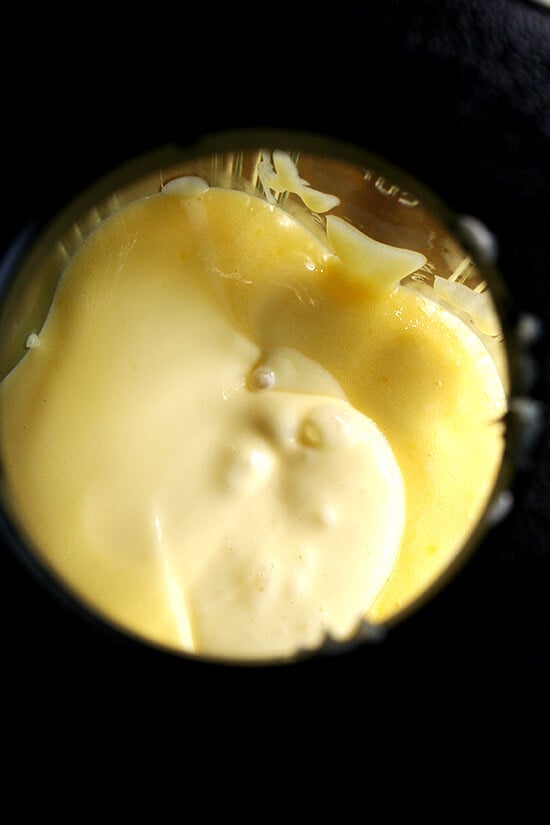
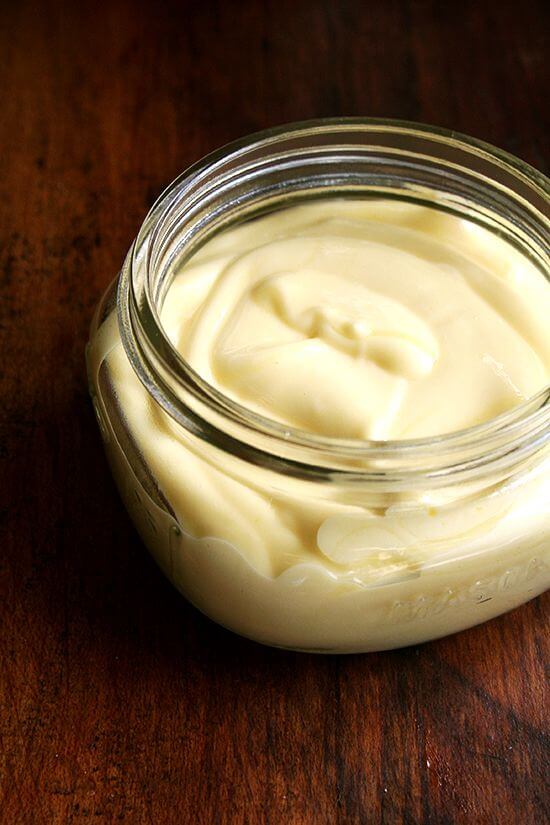
Good Irish butter is an obvious choice, but I’ve been loving them with Tartine’s lemon cream, which is luscious and bright and a perfect complement to the slightly sweet scones. The recipe is linked in the recipe box below.
Note: these scones certainly don’t need anything as spectacular as homemade lemon cream — they honestly don’t even need a dab of butter — but if you’re feeling the gilding-the-lily spirit that is the holiday season, then go for it.
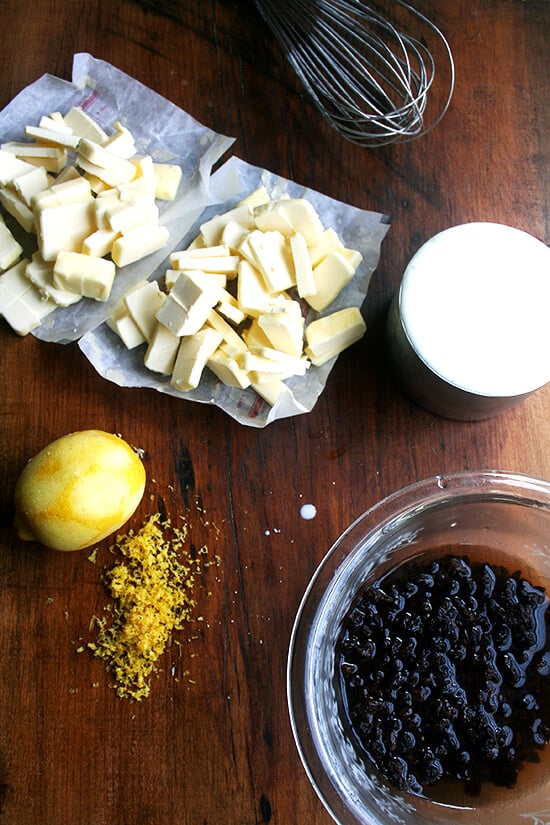


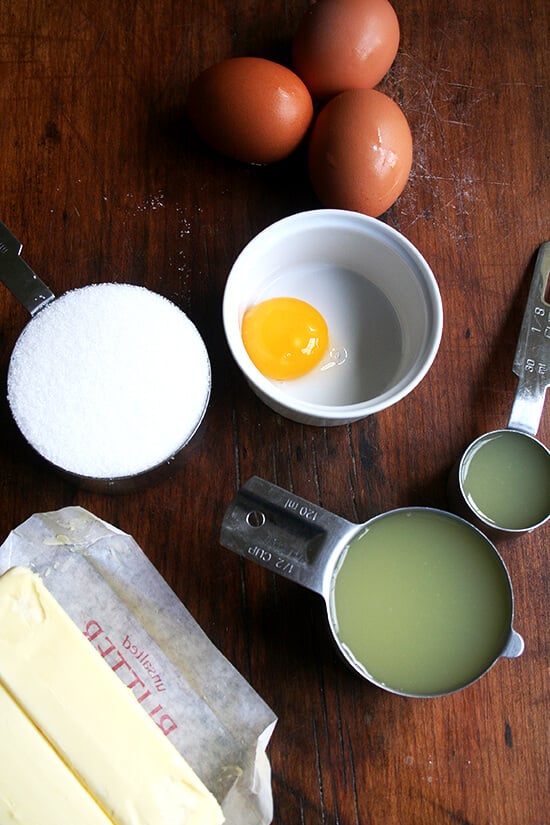
Lemon cream ingredients:
Description
Adapted from Tartine’s most delicious recipe.
Find the Lemon Cream recipe here .
UPDATE: I recently re-wrote the recipe as a half recipe, because I found myself always making the half recipe, which yields a more manageable amount (6 to 8 as opposed to 16-18).
As always, for best results, use a digital scale to measure.
Sugar: You can sprinkle the scones with granulated sugar before baking, but turbinado sugar makes for an especially tasty and pretty crust.
Salt: If you are using Morton Kosher salt or fine sea salt, use half as much by volume or the same amount by weight.
To freeze: After you place the scones on a sheet pan, transfer them to the freezer. Freeze until solid; then transfer the scones to an airtight container or bag. When you are ready to bake, there’s no need to thaw them. Bake as directed below straight from the freezer. (Brust with butter and sprinkle with sugar before baking.) The scones shouldn’t take much longer to bake from frozen, but keep an eye on them at the 20-minute mark.
To make your own buttermilk:
- Place 1 tablespoon of vinegar or lemon juice in a liquid measuring cup.
- Fill cup with milk (2% or whole is best) until it reaches the 1-cup line.
- Let stand for five minutes. Use as directed.
- 1/3 cup ( 50 g ) Zante currants
- 1/4 cup ( 55 g ) sugar
- zest of one lemon
- 2 1/3 cups ( 304 g ) all-purpose flour
- 1.5 teaspoons ( 5 g ) baking powder
- 0.5 teaspoon ( 3 g ) baking soda
- 1.5 teaspoons ( 6 g ) kosher salt, see notes above
- 1/2 cup plus 1 tablespoon ( 130 g ) cold, unsalted butter (or salted… I always use salted)
- 3/4 to 1 cup ( 180 to 240 g) buttermilk
- 1 to 1.5 tablespoons melted butter
- sugar for sprinkling: turbinado makes for an especially pretty and tasty crust, see notes above
- Preheat the oven to 400ºF. Line a rimmed baking sheet with parchment paper.
- If your currants are very dry, place them in a small bowl, cover them with warm water, and set aside for about 10 minutes until the currants are plumped. Drain well. If your currants are moist out of the container, you can skip this step — I’ve been using Sun-Maid Zante Currants, which are very moist, so I’ve been skipping this step.
- In a large bowl, place the sugar. Zest the lemon into the sugar, then use your hands to rub the zest into the sugar — this releases the oils in the zest and heightens the lemon flavor in the finished scones.
- Add the flour, baking powder, baking soda, and salt, and whisk to combine. Add the currants and whisk again.
- Grate the butter using a box grater, then scatter it over the dry ingredients. Toss gently with your hands to disperse the butter evenly throughout the dry ingredients. Alternatively, cut the butter into 1/2 slices, then use a pastry blender or the back of a fork to cut the butter into the dry ingredients.
- Add the buttermilk, starting with 3/4 cup (180 grams) and mix gently with a wooden spoon or spatula until the dough holds together. If the mixture seems dry, add more buttermilk by the tablespoon until the dough comes together (I consistently need 3/4 cup + 1-2 tablespoons of buttermilk total but I have used a full cup of buttermilk with success, too). If necessary, knead the dough gently with your hands to help it come together.
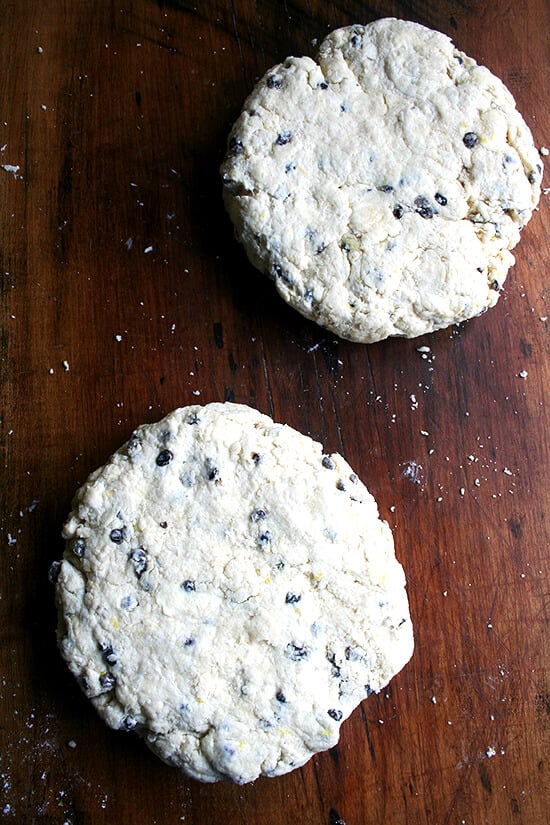
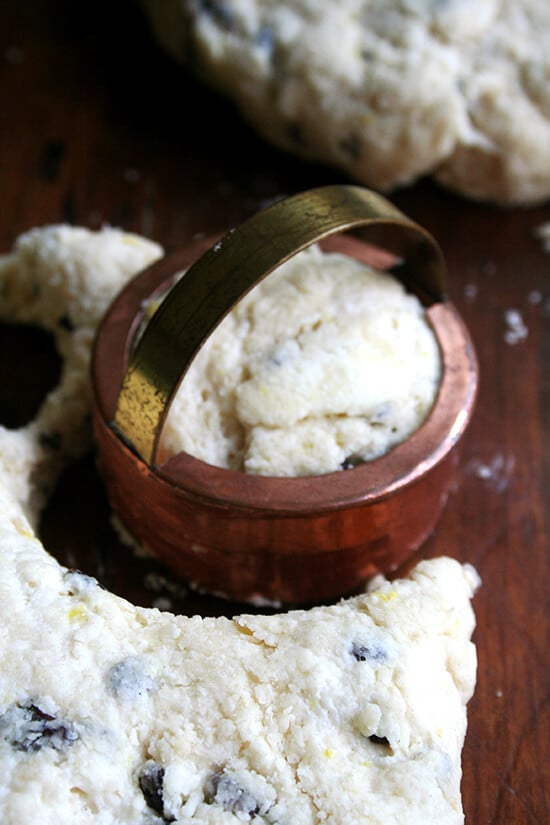
- Dust your work surface with flour and turn the dough out onto it. Using your hands, pat the dough into roughly a 7-inch circle about 1½ inches thick. (Note: At this point, you can transfer the scone dough to the fridge in an airtight bag until you are ready to bake (for as long as 24 hours)) . Brush the top with melted butter. Sprinkle with sugar. Cut the circle into 6 to 8 triangles, then transfer them to the prepared sheet pan. If time permits, chill the scones for 20 minutes. You also can freeze the scones at this point — see notes above.
- I like to place the pan on another rimmed baking sheet because often the bottom of my scones burn, but if you don’t have issues with your baking sheets, just use one sheet. Transfer to the oven and bake until the tops of the scones are lightly browned, about 20 minutes.
- Remove from the oven, let cool briefly, then serve with butter, lemon cream, clotted cream, jam or nothing at all.
- Prep Time: 25 minutes
- Cook Time: 20 minutes
- Category: Breakfast
- Method: Oven
- Cuisine: American
Flaky, buttery, lemony, and nicely sweet, these currant scones are perfection. If you need a reason to break out the good Irish butter, look no further!
I’m preparing for Thanksgiving and for my sole visitor, my father, who loves a proper English scone.
Unfortunately, I am fairly certain these currant scones are not proper by any British standards. And I know that after one bite, my father will in fact tell me that what I have served him is not a proper British scon. And I have no doubt he’ll then proceed to devour two or three, slathering each with butter and jam, uttering mumbles of approval all along the way.
I can’t wait.
About these scones: when I find a recipe I like, I tend to stick with it. Tartine’s buttermilk scone recipe is the one I use year-round, studded with berries in the summer and currants in the winter. The dough freezes beautifully, too, so I often freeze unbaked scones for a future morning.
What to serve with currant scones?
Good Irish butter is an obvious choice, but I’ve been loving them with Tartine’s lemon cream, which is luscious and bright and a perfect complement to the slightly sweet scones. The recipe is linked in the recipe box below.
Note: these scones certainly don’t need anything as spectacular as homemade lemon cream — they honestly don’t even need a dab of butter — but if you’re feeling the gilding-the-lily spirit that is the holiday season, then go for it.
Lemon cream ingredients:
Description
Adapted from Tartine’s most delicious recipe.
Find the Lemon Cream recipe here .
UPDATE: I recently re-wrote the recipe as a half recipe, because I found myself always making the half recipe, which yields a more manageable amount (6 to 8 as opposed to 16-18).
As always, for best results, use a digital scale to measure.
Sugar: You can sprinkle the scones with granulated sugar before baking, but turbinado sugar makes for an especially tasty and pretty crust.
Salt: If you are using Morton Kosher salt or fine sea salt, use half as much by volume or the same amount by weight.
To freeze: After you place the scones on a sheet pan, transfer them to the freezer. Freeze until solid; then transfer the scones to an airtight container or bag. When you are ready to bake, there’s no need to thaw them. Bake as directed below straight from the freezer. (Brust with butter and sprinkle with sugar before baking.) The scones shouldn’t take much longer to bake from frozen, but keep an eye on them at the 20-minute mark.
To make your own buttermilk:
- Place 1 tablespoon of vinegar or lemon juice in a liquid measuring cup.
- Fill cup with milk (2% or whole is best) until it reaches the 1-cup line.
- Let stand for five minutes. Use as directed.
- 1/3 cup ( 50 g ) Zante currants
- 1/4 cup ( 55 g ) sugar
- zest of one lemon
- 2 1/3 cups ( 304 g ) all-purpose flour
- 1.5 teaspoons ( 5 g ) baking powder
- 0.5 teaspoon ( 3 g ) baking soda
- 1.5 teaspoons ( 6 g ) kosher salt, see notes above
- 1/2 cup plus 1 tablespoon ( 130 g ) cold, unsalted butter (or salted… I always use salted)
- 3/4 to 1 cup ( 180 to 240 g) buttermilk
- 1 to 1.5 tablespoons melted butter
- sugar for sprinkling: turbinado makes for an especially pretty and tasty crust, see notes above
- Preheat the oven to 400ºF. Line a rimmed baking sheet with parchment paper.
- If your currants are very dry, place them in a small bowl, cover them with warm water, and set aside for about 10 minutes until the currants are plumped. Drain well. If your currants are moist out of the container, you can skip this step — I’ve been using Sun-Maid Zante Currants, which are very moist, so I’ve been skipping this step.
- In a large bowl, place the sugar. Zest the lemon into the sugar, then use your hands to rub the zest into the sugar — this releases the oils in the zest and heightens the lemon flavor in the finished scones.
- Add the flour, baking powder, baking soda, and salt, and whisk to combine. Add the currants and whisk again.
- Grate the butter using a box grater, then scatter it over the dry ingredients. Toss gently with your hands to disperse the butter evenly throughout the dry ingredients. Alternatively, cut the butter into 1/2 slices, then use a pastry blender or the back of a fork to cut the butter into the dry ingredients.
- Add the buttermilk, starting with 3/4 cup (180 grams) and mix gently with a wooden spoon or spatula until the dough holds together. If the mixture seems dry, add more buttermilk by the tablespoon until the dough comes together (I consistently need 3/4 cup + 1-2 tablespoons of buttermilk total but I have used a full cup of buttermilk with success, too). If necessary, knead the dough gently with your hands to help it come together.
- Dust your work surface with flour and turn the dough out onto it. Using your hands, pat the dough into roughly a 7-inch circle about 1½ inches thick. (Note: At this point, you can transfer the scone dough to the fridge in an airtight bag until you are ready to bake (for as long as 24 hours)) . Brush the top with melted butter. Sprinkle with sugar. Cut the circle into 6 to 8 triangles, then transfer them to the prepared sheet pan. If time permits, chill the scones for 20 minutes. You also can freeze the scones at this point — see notes above.
- I like to place the pan on another rimmed baking sheet because often the bottom of my scones burn, but if you don’t have issues with your baking sheets, just use one sheet. Transfer to the oven and bake until the tops of the scones are lightly browned, about 20 minutes.
- Remove from the oven, let cool briefly, then serve with butter, lemon cream, clotted cream, jam or nothing at all.
- Prep Time: 25 minutes
- Cook Time: 20 minutes
- Category: Breakfast
- Method: Oven
- Cuisine: American
Flaky, buttery, lemony, and nicely sweet, these currant scones are perfection. If you need a reason to break out the good Irish butter, look no further!
I’m preparing for Thanksgiving and for my sole visitor, my father, who loves a proper English scone.
Unfortunately, I am fairly certain these currant scones are not proper by any British standards. And I know that after one bite, my father will in fact tell me that what I have served him is not a proper British scon. And I have no doubt he’ll then proceed to devour two or three, slathering each with butter and jam, uttering mumbles of approval all along the way.
I can’t wait.
About these scones: when I find a recipe I like, I tend to stick with it. Tartine’s buttermilk scone recipe is the one I use year-round, studded with berries in the summer and currants in the winter. The dough freezes beautifully, too, so I often freeze unbaked scones for a future morning.
What to serve with currant scones?
Good Irish butter is an obvious choice, but I’ve been loving them with Tartine’s lemon cream, which is luscious and bright and a perfect complement to the slightly sweet scones. The recipe is linked in the recipe box below.
Note: these scones certainly don’t need anything as spectacular as homemade lemon cream — they honestly don’t even need a dab of butter — but if you’re feeling the gilding-the-lily spirit that is the holiday season, then go for it.
Lemon cream ingredients:
Description
Adapted from Tartine’s most delicious recipe.
Find the Lemon Cream recipe here .
UPDATE: I recently re-wrote the recipe as a half recipe, because I found myself always making the half recipe, which yields a more manageable amount (6 to 8 as opposed to 16-18).
As always, for best results, use a digital scale to measure.
Sugar: You can sprinkle the scones with granulated sugar before baking, but turbinado sugar makes for an especially tasty and pretty crust.
Salt: If you are using Morton Kosher salt or fine sea salt, use half as much by volume or the same amount by weight.
To freeze: After you place the scones on a sheet pan, transfer them to the freezer. Freeze until solid; then transfer the scones to an airtight container or bag. When you are ready to bake, there’s no need to thaw them. Bake as directed below straight from the freezer. (Brust with butter and sprinkle with sugar before baking.) The scones shouldn’t take much longer to bake from frozen, but keep an eye on them at the 20-minute mark.
To make your own buttermilk:
- Place 1 tablespoon of vinegar or lemon juice in a liquid measuring cup.
- Fill cup with milk (2% or whole is best) until it reaches the 1-cup line.
- Let stand for five minutes. Use as directed.
- 1/3 cup ( 50 g ) Zante currants
- 1/4 cup ( 55 g ) sugar
- zest of one lemon
- 2 1/3 cups ( 304 g ) all-purpose flour
- 1.5 teaspoons ( 5 g ) baking powder
- 0.5 teaspoon ( 3 g ) baking soda
- 1.5 teaspoons ( 6 g ) kosher salt, see notes above
- 1/2 cup plus 1 tablespoon ( 130 g ) cold, unsalted butter (or salted… I always use salted)
- 3/4 to 1 cup ( 180 to 240 g) buttermilk
- 1 to 1.5 tablespoons melted butter
- sugar for sprinkling: turbinado makes for an especially pretty and tasty crust, see notes above
- Preheat the oven to 400ºF. Line a rimmed baking sheet with parchment paper.
- If your currants are very dry, place them in a small bowl, cover them with warm water, and set aside for about 10 minutes until the currants are plumped. Drain well. If your currants are moist out of the container, you can skip this step — I’ve been using Sun-Maid Zante Currants, which are very moist, so I’ve been skipping this step.
- In a large bowl, place the sugar. Zest the lemon into the sugar, then use your hands to rub the zest into the sugar — this releases the oils in the zest and heightens the lemon flavor in the finished scones.
- Add the flour, baking powder, baking soda, and salt, and whisk to combine. Add the currants and whisk again.
- Grate the butter using a box grater, then scatter it over the dry ingredients. Toss gently with your hands to disperse the butter evenly throughout the dry ingredients. Alternatively, cut the butter into 1/2 slices, then use a pastry blender or the back of a fork to cut the butter into the dry ingredients.
- Add the buttermilk, starting with 3/4 cup (180 grams) and mix gently with a wooden spoon or spatula until the dough holds together. If the mixture seems dry, add more buttermilk by the tablespoon until the dough comes together (I consistently need 3/4 cup + 1-2 tablespoons of buttermilk total but I have used a full cup of buttermilk with success, too). If necessary, knead the dough gently with your hands to help it come together.
- Dust your work surface with flour and turn the dough out onto it. Using your hands, pat the dough into roughly a 7-inch circle about 1½ inches thick. (Note: At this point, you can transfer the scone dough to the fridge in an airtight bag until you are ready to bake (for as long as 24 hours)) . Brush the top with melted butter. Sprinkle with sugar. Cut the circle into 6 to 8 triangles, then transfer them to the prepared sheet pan. If time permits, chill the scones for 20 minutes. You also can freeze the scones at this point — see notes above.
- I like to place the pan on another rimmed baking sheet because often the bottom of my scones burn, but if you don’t have issues with your baking sheets, just use one sheet. Transfer to the oven and bake until the tops of the scones are lightly browned, about 20 minutes.
- Remove from the oven, let cool briefly, then serve with butter, lemon cream, clotted cream, jam or nothing at all.
- Prep Time: 25 minutes
- Cook Time: 20 minutes
- Category: Breakfast
- Method: Oven
- Cuisine: American
Description
Adapted from Tartine’s most delicious recipe.
Find the Lemon Cream recipe here .
UPDATE: I recently re-wrote the recipe as a half recipe, because I found myself always making the half recipe, which yields a more manageable amount (6 to 8 as opposed to 16-18).
As always, for best results, use a digital scale to measure.
Sugar: You can sprinkle the scones with granulated sugar before baking, but turbinado sugar makes for an especially tasty and pretty crust.
Salt: If you are using Morton Kosher salt or fine sea salt, use half as much by volume or the same amount by weight.
To freeze: After you place the scones on a sheet pan, transfer them to the freezer. Freeze until solid; then transfer the scones to an airtight container or bag. When you are ready to bake, there’s no need to thaw them. Bake as directed below straight from the freezer. (Brust with butter and sprinkle with sugar before baking.) The scones shouldn’t take much longer to bake from frozen, but keep an eye on them at the 20-minute mark.
To make your own buttermilk:
- Place 1 tablespoon of vinegar or lemon juice in a liquid measuring cup.
- Fill cup with milk (2% or whole is best) until it reaches the 1-cup line.
- Let stand for five minutes. Use as directed.
- 1/3 cup ( 50 g ) Zante currants
- 1/4 cup ( 55 g ) sugar
- zest of one lemon
- 2 1/3 cups ( 304 g ) all-purpose flour
- 1.5 teaspoons ( 5 g ) baking powder
- 0.5 teaspoon ( 3 g ) baking soda
- 1.5 teaspoons ( 6 g ) kosher salt, see notes above
- 1/2 cup plus 1 tablespoon ( 130 g ) cold, unsalted butter (or salted… I always use salted)
- 3/4 to 1 cup ( 180 to 240 g) buttermilk
- 1 to 1.5 tablespoons melted butter
- sugar for sprinkling: turbinado makes for an especially pretty and tasty crust, see notes above
- Preheat the oven to 400ºF. Line a rimmed baking sheet with parchment paper.
- If your currants are very dry, place them in a small bowl, cover them with warm water, and set aside for about 10 minutes until the currants are plumped. Drain well. If your currants are moist out of the container, you can skip this step — I’ve been using Sun-Maid Zante Currants, which are very moist, so I’ve been skipping this step.
- In a large bowl, place the sugar. Zest the lemon into the sugar, then use your hands to rub the zest into the sugar — this releases the oils in the zest and heightens the lemon flavor in the finished scones.
- Add the flour, baking powder, baking soda, and salt, and whisk to combine. Add the currants and whisk again.
- Grate the butter using a box grater, then scatter it over the dry ingredients. Toss gently with your hands to disperse the butter evenly throughout the dry ingredients. Alternatively, cut the butter into 1/2 slices, then use a pastry blender or the back of a fork to cut the butter into the dry ingredients.
- Add the buttermilk, starting with 3/4 cup (180 grams) and mix gently with a wooden spoon or spatula until the dough holds together. If the mixture seems dry, add more buttermilk by the tablespoon until the dough comes together (I consistently need 3/4 cup + 1-2 tablespoons of buttermilk total but I have used a full cup of buttermilk with success, too). If necessary, knead the dough gently with your hands to help it come together.
- Dust your work surface with flour and turn the dough out onto it. Using your hands, pat the dough into roughly a 7-inch circle about 1½ inches thick. (Note: At this point, you can transfer the scone dough to the fridge in an airtight bag until you are ready to bake (for as long as 24 hours)) . Brush the top with melted butter. Sprinkle with sugar. Cut the circle into 6 to 8 triangles, then transfer them to the prepared sheet pan. If time permits, chill the scones for 20 minutes. You also can freeze the scones at this point — see notes above.
- I like to place the pan on another rimmed baking sheet because often the bottom of my scones burn, but if you don’t have issues with your baking sheets, just use one sheet. Transfer to the oven and bake until the tops of the scones are lightly browned, about 20 minutes.
- Remove from the oven, let cool briefly, then serve with butter, lemon cream, clotted cream, jam or nothing at all.
- Prep Time: 25 minutes
- Cook Time: 20 minutes
- Category: Breakfast
- Method: Oven
- Cuisine: American
Find it online : https://alexandracooks.com/2012/11/13/tartines-currant-scones-lemon-cream/

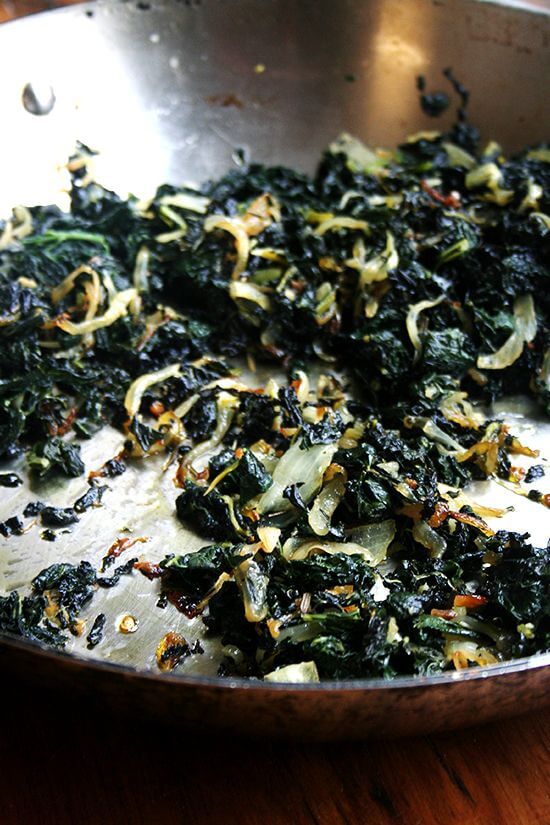
I’ve been trying to do a test run of Suzanne Goin’s stuffing with slow-cooked kale, but I can’t get beyond the cooking of the slow-cooked kale step. I’ve tried twice, but the kale keeps disappearing, and as a result, my loaves of country bread and bulbs of fennel continue to be neglected.
Cooking kale in this manner is new for me. For one, like many people, I have taken to eating it raw not only because it tastes good but also because one raw bunch can be stretched over more meals than one cooked bunch. Second, if I do sauté it, I do it very quickly over high heat with a little olive oil, garlic and crushed red pepper flakes. I’m not sure I’ll ever do that again.
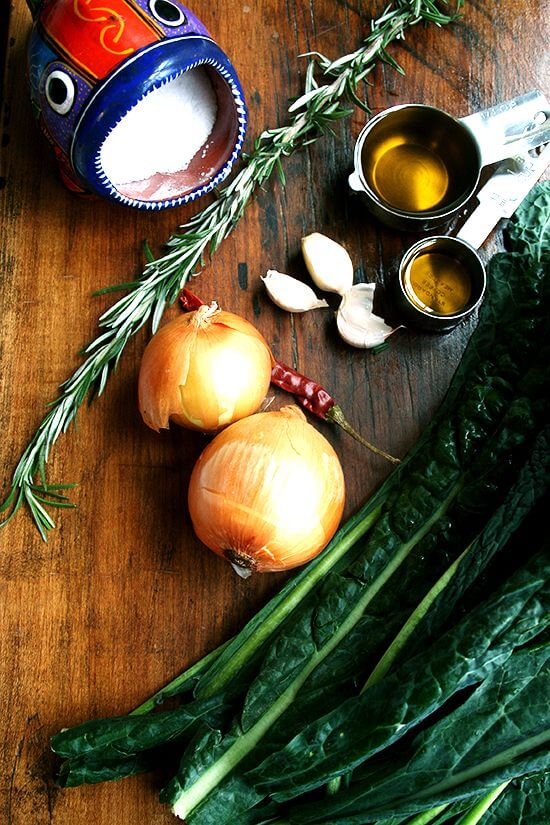
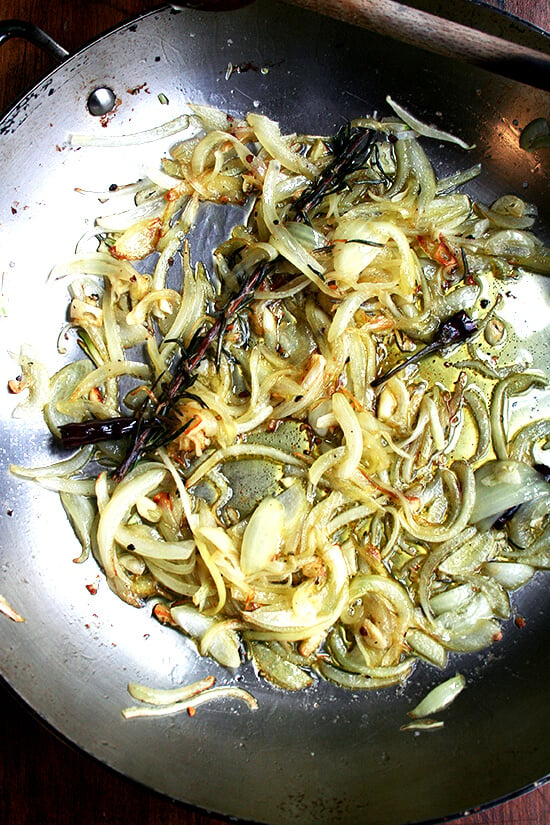
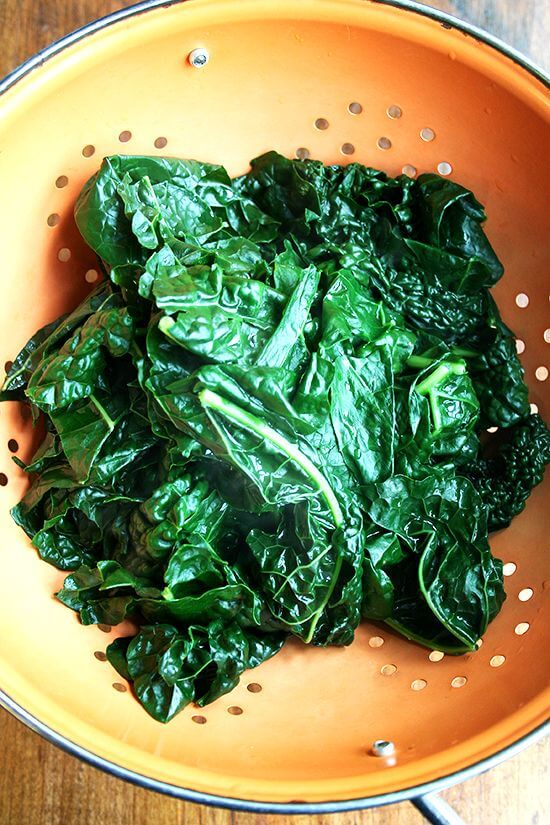
In Goin’s method, the kale is blanched first, roughly chopped and then sautéed over low heat for thirty minutes in olive oil with onions, garlic, rosemary and chile de árbol. It’s almost black and slightly crispy when finished. It is sweet and addictive. It’s dishes such as this that make me understand (almost) how people can be vegetarian. I ate the first batch in one sitting — yes, nearly one pound of kale — directly from the pan spooning bites here and there onto toasted bread only wishing I had the motivation to poach an egg. With the second batch, I did the same but saved enough to cover the surface of a giant omelet sprinkled with feta, which Ben and I devoured for dinner.

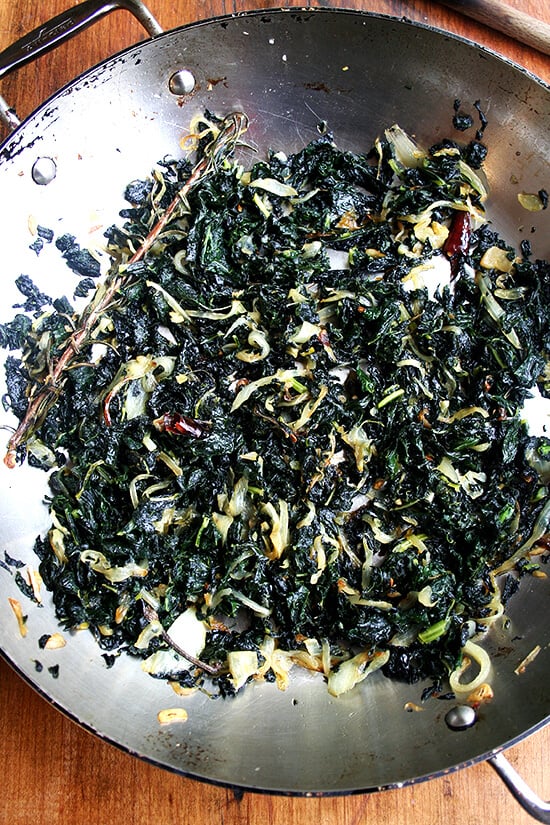
It’s unfortunate that this doesn’t look more appetizing because it is SO good:
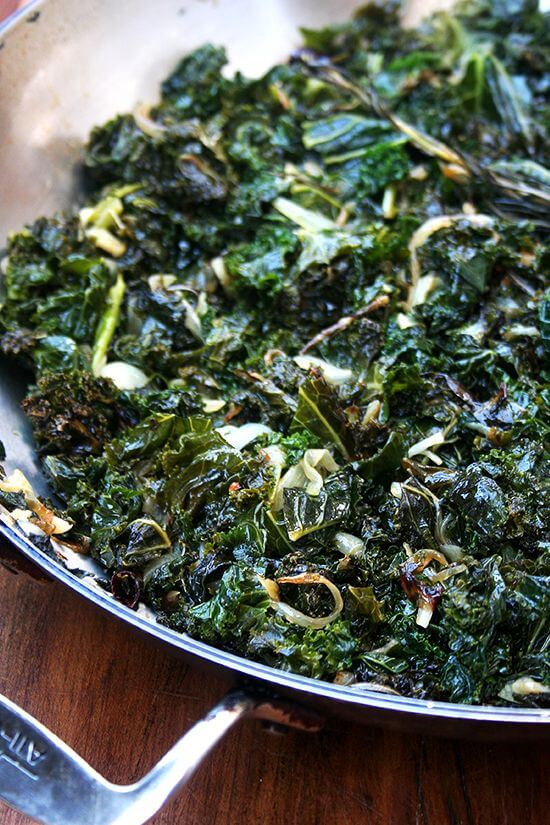
This is the batch I made with curly kale as opposed to Tuscan. It was still delicious, but as I noted above, I over crowded the pan a little bit, which prevented the pieces from getting as dark and crispy and delicious. This issue of course could have been rectified had I removed some of the kale and let the remainder crisp up on its own.
Description
Bon Appetit’s notes: Tuscan kale, also called black kale, dinosaur kale, Lacinato kale, or cavolo nero, has long, narrow, dark green bumpy leaves; find it at farmers’ markets and some supermarkets. Dried chiles de árbol are available at Latin markets, specialty foods stores, and some supermarkets.
My notes: I made one batch with Tuscan kale and another with curly kale. They were both delicious but the Tuscan kale was more so. The second time, too, I overcrowded the pan with kale and the pieces didn’t get as dark and delicious, so I would caution against trying to cram more than a generous layer of kale into whatever pan you are using. It does cook down a little bit, but not as dramatically as unblanched spinach or chard when sautéed.
- 3/4 teaspoon kosher salt, divided, plus more
- 1 pound Tuscan kale (about 2 bunches), center ribs and stems removed
- 1/4 cup plus 2 tablespoons extra-virgin olive oil
- 1/2 sprig rosemary
- 1 dried chile de árbol, broken into 4 pieces
- 1 cup sliced yellow onion
- Freshly ground black pepper
- 2 garlic cloves, thinly sliced
- Bring a large pot of heavily salted water to a rapid boil over high heat. Working in 2 batches, blanch kale for 2 minutes. Drain, let cool, and squeeze out excess water with your hands. Coarsely chop; set aside. (Note: I used a little more than one pound of kale to start (before removing the center rib and stem) and got about 3 cups of chopped kale out of it.)
- Heat a large pot over medium heat for 2 minutes. Add 1/4 cup oil, rosemary sprig, and chile. Let sizzle, shaking pan often, for about 1 minute. Reduce heat to medium-low; add onion. Season with 1/2 teaspoon salt and a pinch of pepper. Cook for 2 minutes, stirring often; stir in garlic. Cook, stirring often, until onion is soft and starting to brown, 5-7 minutes.
- Add remaining 2 tablespoons oil and kale; stir to coat. Season with 1/4 teaspoon salt, reduce heat to medium-low, and cook, stirring often, until kale turns almost black and is slightly crisp at edges, about 30 minutes. Let cool. Discard rosemary and chile.
- Prep Time: 10 minutes
- Cook Time: 45 minutes
