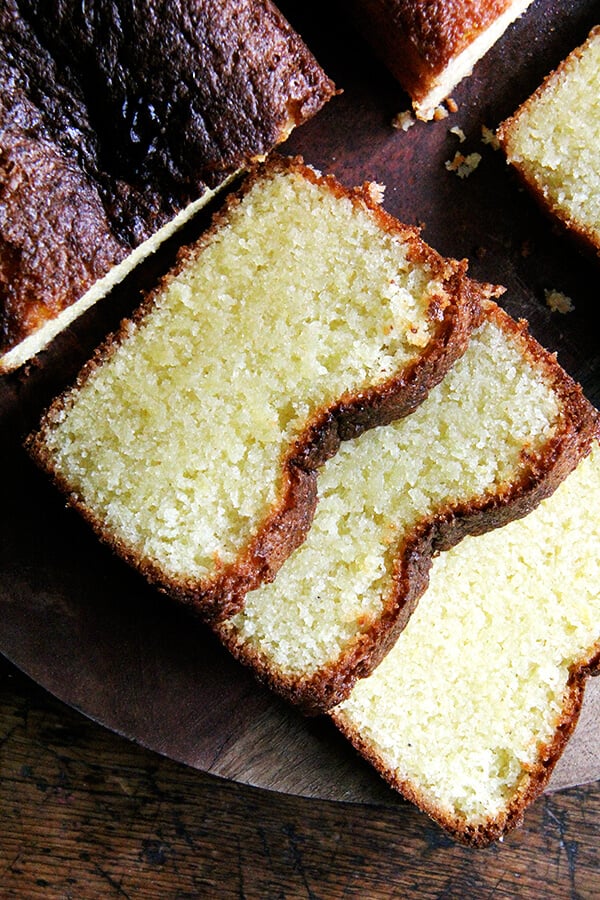
The April issue of Bon Appetit featured mini lemon-semolina syrup cakes, a recipe from Yotam Ottolenghi’s next cookbook, a dessert one, which is still in its recipe-testing phase. While I am not into mini anything right now — the less greasing/pan preparing the better — and while I don’t care for extra steps like syrup making (so lazy!), the ingredients for the cake looked so good: one half cup of semolina flour and lots of almond flour, butter, sugar, and fresh lemon juice.
I finally got around to making the cake last weekend using a loaf pan instead of a muffin tin, and, for whatever reason, replacing the butter with oil. Oh my. The cake was so incredibly moist — I know! Sorry. But there’s no other word, is there? — and delicious and perfectly sweet and lemony. For me, it doesn’t get much better than a lemon loaf cake, and this one is about as ideal as can be.
This past week I made it two more times, once with grapeseed oil and once with butter. I had no doubt I would prefer the cake made with oil — I often do — but with this one, I’m not sure. The differences are subtle. I ate and I ate and I ate hoping to discern a decisive winner until I discovered the good news: you can’t go wrong either way.
These are my observations: when the cake is made with oil, it will taste — wait for it — a little oily. When the cake is made with butter, it will taste richer and have a denser, more marzipan-like texture. Making the cake with oil allows you to whisk by hand, which is a little easier — no need to soften butter, no need to whip until light and fluffy. In a taste test with friends, more people preferred the cake made with oil, but for me, the one with butter has a slight edge.
Butter or oil? Something to ponder this weekend as you scour your cupboard for that half cup of semolina flour, because you know it’s there and what better way to use it up?
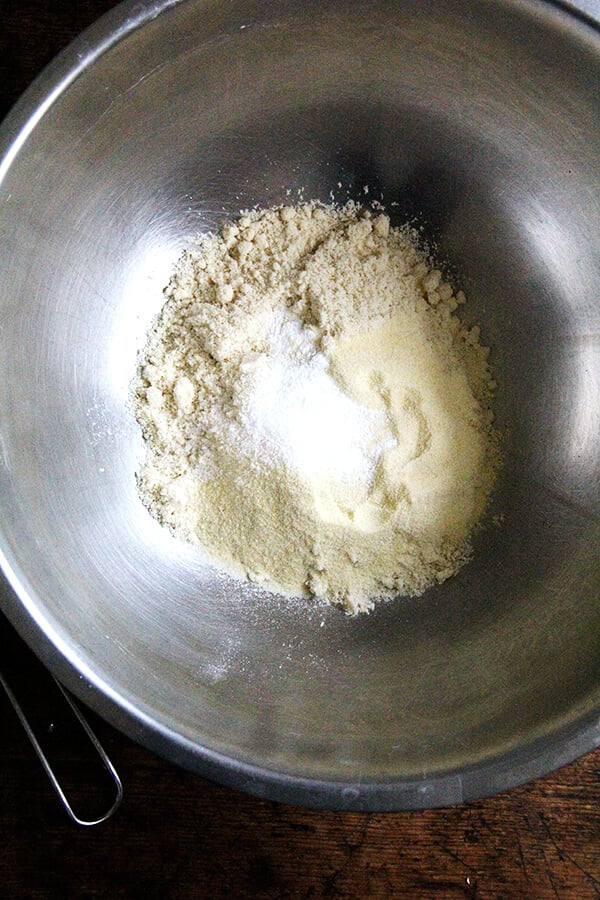
These are the dry ingredients: almond flour, semolina flour, baking powder, and salt:
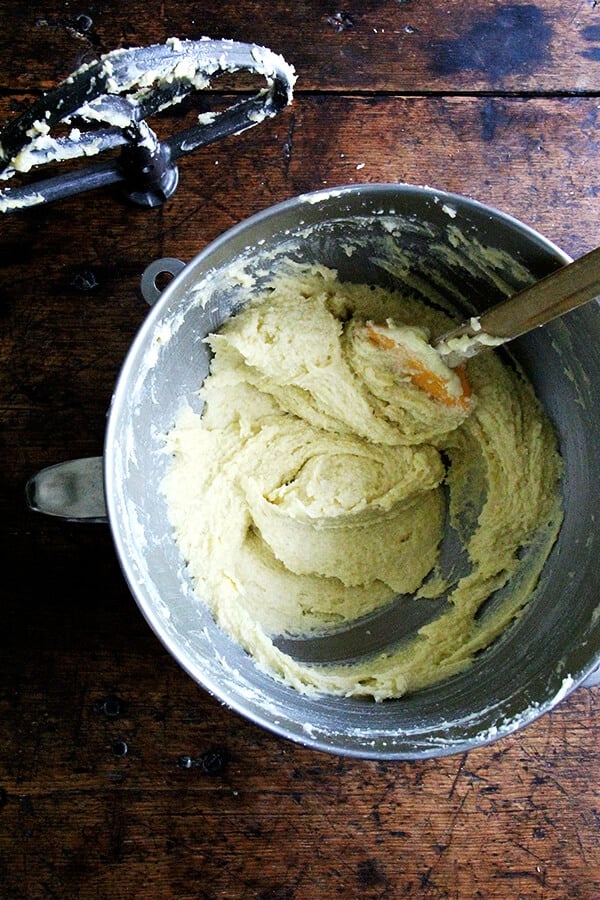
This is what the batter looks like when made with butter:
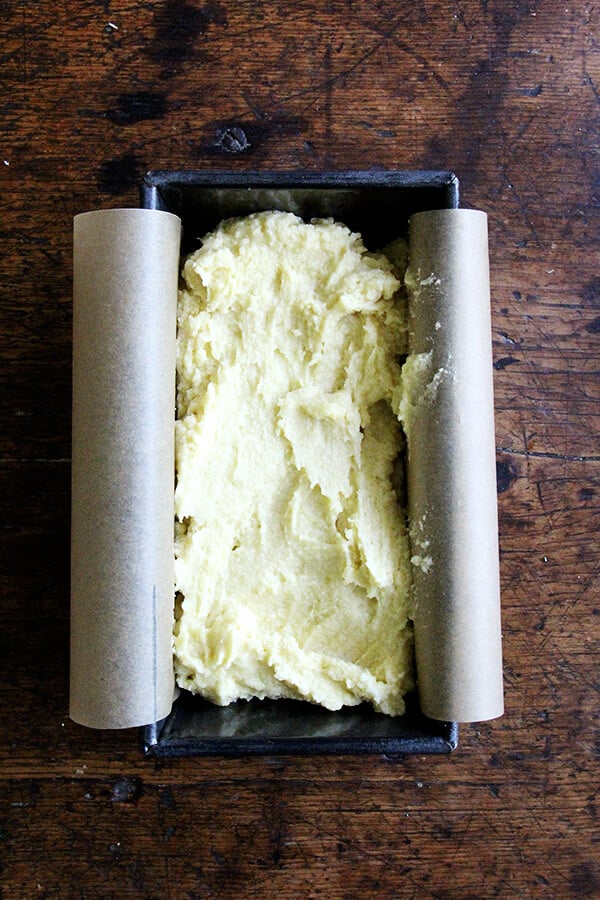
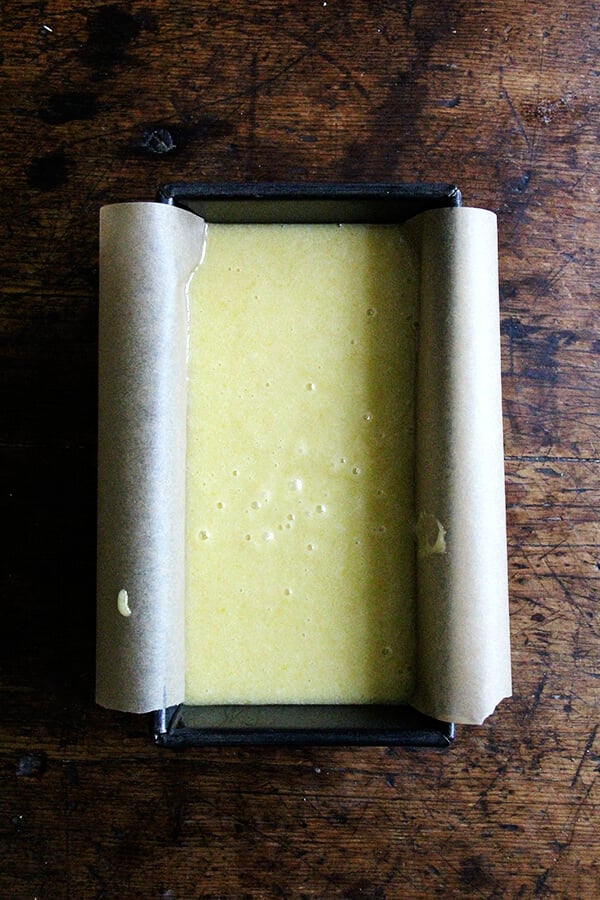
When made with oil:
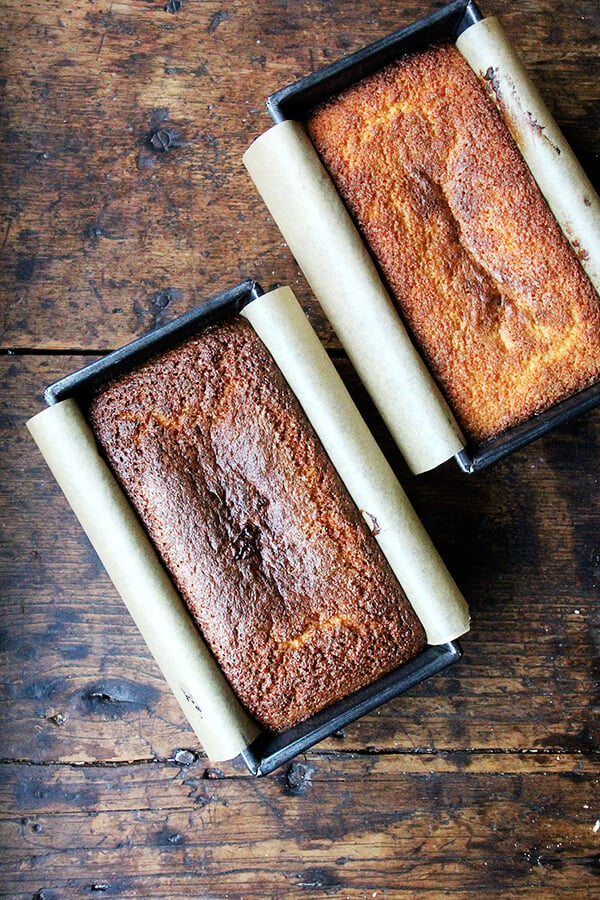
The cake with the darker crust was made with oil:
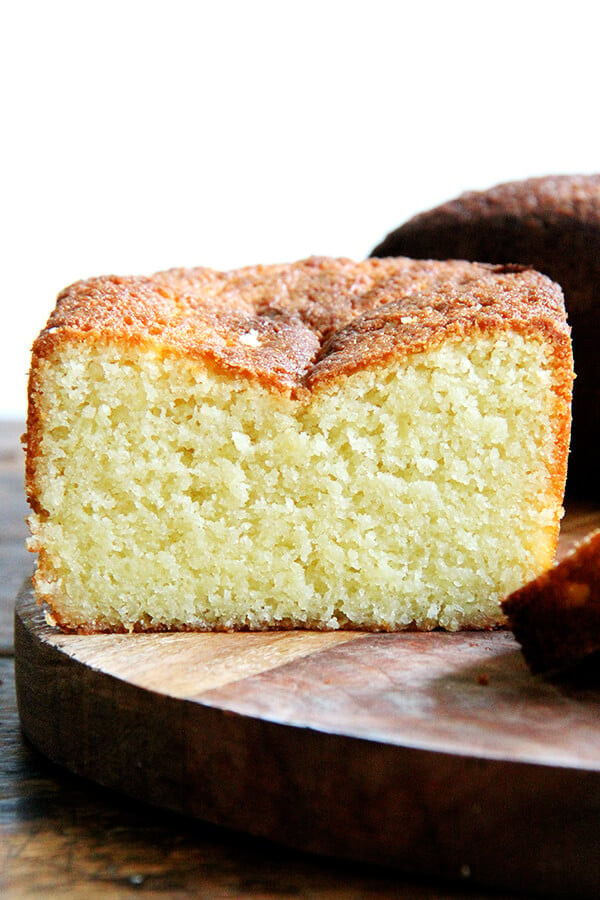
This is the cake made with butter:
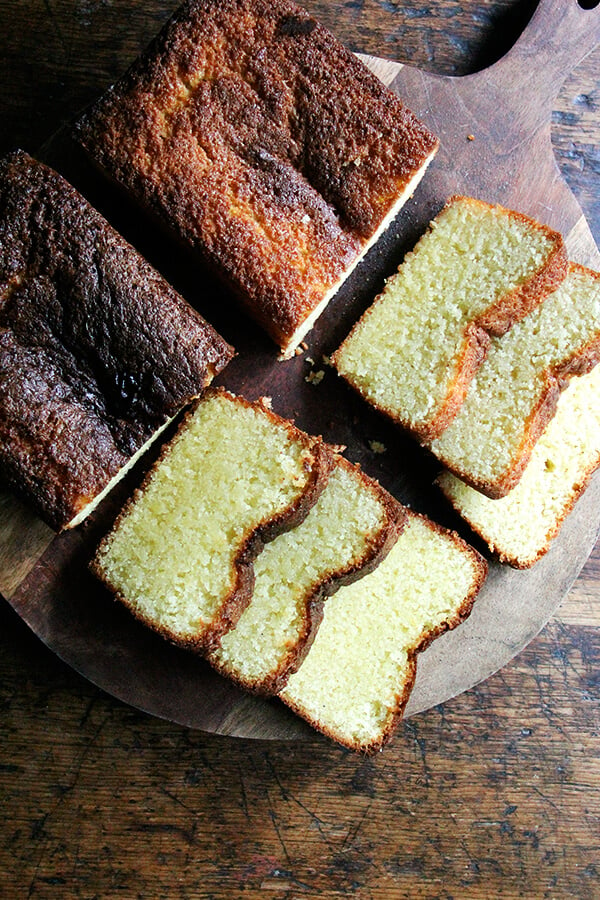
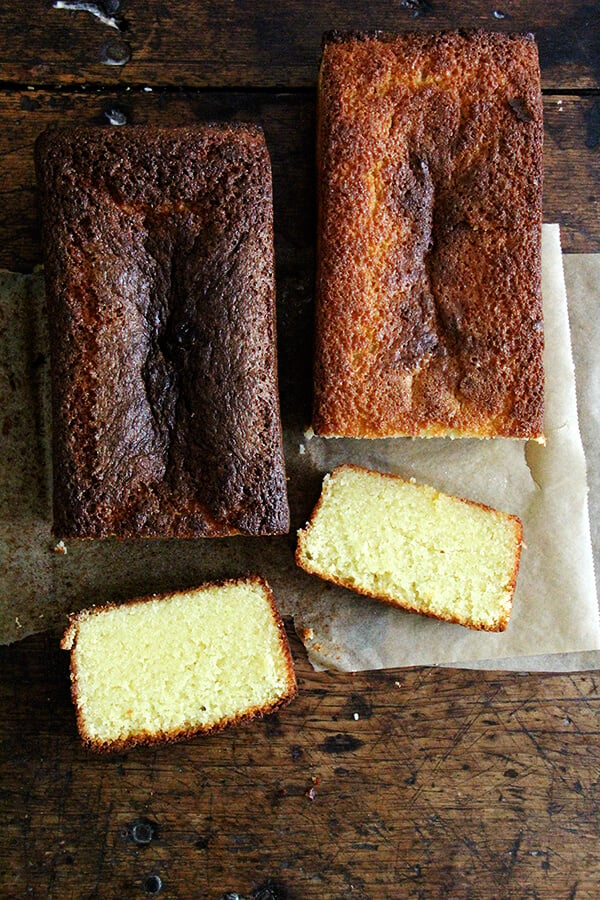
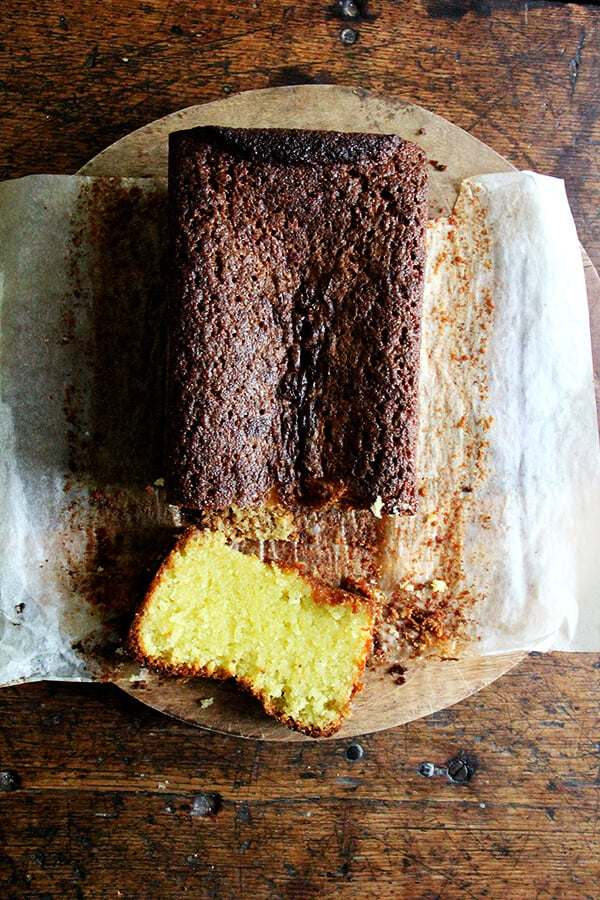
This one below is made with olive oil. Above left is made with grapeseed oil.
Description
Adapted from this Bon Appetit recipe
Check out the original recipe, which includes the addition of a syrup, but I don’t think the syrup is necessary — the cake is so delicious as is.
A few notes:
I increased the baking powder by ¼ teaspoon because I used a loaf pan. This might not be necessary if you use a muffin tin, as suggested in the original recipe. As noted in the post, I’ve made the cake three times now, once with butter, once with olive oil, and once with grapeseed oil. The difference is subtle: the oil makes the cake a little moister, the butter a little richer. Olive oil was preferable to grapeseed flavor-wise. In a tasted test with friends, the cake made with oil was preferable.
- 1½ cups ( 135 g ) almond flour or almond meal
- ½ cup ( 79 g ) semolina flour
- 1 teaspoon baking powder
- ½ teaspoon kosher salt
- ¾ cup ( 1½ sticks) unsalted butter, room temperature, or ¾ cup olive oil
- 1 cup plus 2 tablespoons ( 243 g ) sugar
- 1 teaspoon finely grated lemon zest
- 3 large eggs, beaten to blend
- 2 tablespoons fresh lemon juice
- Preheat oven to 350°F. Grease a loaf pan and line with parchment paper. Whisk together the almond flour, semolina flour, baking powder, and salt in a medium bowl to combine.
- Using an electric mixer on high speed, beat butter, sugar, and lemon zest until very light and fluffy, about 5 minutes. With motor running, gradually add eggs and beat until glossy, about 1 minute. Add dry ingredients and lemon juice and beat to combine, about 1 minute. (If you are using oil, simple whisk oil and sugar together. Add eggs one at a time, beating to incorporate, followed by dry ingredients and lemon juice.)
- Transfer batter to prepared loaf pan, and bake until golden brown, 50 to 60 minutes. Lightly press the top of the cake to test — it should feel lightly springy when done. Let cool 20 minutes or so in pan before removing and transferring to a cooling rack.
- Prep Time: 15 minutes
- Cook Time: 60 minutes
- Category: Quick Bread
- Method: Oven
- Cuisine: Middle Eastern
The April issue of Bon Appetit featured mini lemon-semolina syrup cakes, a recipe from Yotam Ottolenghi’s next cookbook, a dessert one, which is still in its recipe-testing phase. While I am not into mini anything right now — the less greasing/pan preparing the better — and while I don’t care for extra steps like syrup making (so lazy!), the ingredients for the cake looked so good: one half cup of semolina flour and lots of almond flour, butter, sugar, and fresh lemon juice.
I finally got around to making the cake last weekend using a loaf pan instead of a muffin tin, and, for whatever reason, replacing the butter with oil. Oh my. The cake was so incredibly moist — I know! Sorry. But there’s no other word, is there? — and delicious and perfectly sweet and lemony. For me, it doesn’t get much better than a lemon loaf cake, and this one is about as ideal as can be.
This past week I made it two more times, once with grapeseed oil and once with butter. I had no doubt I would prefer the cake made with oil — I often do — but with this one, I’m not sure. The differences are subtle. I ate and I ate and I ate hoping to discern a decisive winner until I discovered the good news: you can’t go wrong either way.
These are my observations: when the cake is made with oil, it will taste — wait for it — a little oily. When the cake is made with butter, it will taste richer and have a denser, more marzipan-like texture. Making the cake with oil allows you to whisk by hand, which is a little easier — no need to soften butter, no need to whip until light and fluffy. In a taste test with friends, more people preferred the cake made with oil, but for me, the one with butter has a slight edge.
Butter or oil? Something to ponder this weekend as you scour your cupboard for that half cup of semolina flour, because you know it’s there and what better way to use it up?
These are the dry ingredients: almond flour, semolina flour, baking powder, and salt:
This is what the batter looks like when made with butter:
When made with oil:
The cake with the darker crust was made with oil:
This is the cake made with butter:
This one below is made with olive oil. Above left is made with grapeseed oil.
Description
Adapted from this Bon Appetit recipe
Check out the original recipe, which includes the addition of a syrup, but I don’t think the syrup is necessary — the cake is so delicious as is.
A few notes:
I increased the baking powder by ¼ teaspoon because I used a loaf pan. This might not be necessary if you use a muffin tin, as suggested in the original recipe. As noted in the post, I’ve made the cake three times now, once with butter, once with olive oil, and once with grapeseed oil. The difference is subtle: the oil makes the cake a little moister, the butter a little richer. Olive oil was preferable to grapeseed flavor-wise. In a tasted test with friends, the cake made with oil was preferable.
- 1½ cups ( 135 g ) almond flour or almond meal
- ½ cup ( 79 g ) semolina flour
- 1 teaspoon baking powder
- ½ teaspoon kosher salt
- ¾ cup ( 1½ sticks) unsalted butter, room temperature, or ¾ cup olive oil
- 1 cup plus 2 tablespoons ( 243 g ) sugar
- 1 teaspoon finely grated lemon zest
- 3 large eggs, beaten to blend
- 2 tablespoons fresh lemon juice
- Preheat oven to 350°F. Grease a loaf pan and line with parchment paper. Whisk together the almond flour, semolina flour, baking powder, and salt in a medium bowl to combine.
- Using an electric mixer on high speed, beat butter, sugar, and lemon zest until very light and fluffy, about 5 minutes. With motor running, gradually add eggs and beat until glossy, about 1 minute. Add dry ingredients and lemon juice and beat to combine, about 1 minute. (If you are using oil, simple whisk oil and sugar together. Add eggs one at a time, beating to incorporate, followed by dry ingredients and lemon juice.)
- Transfer batter to prepared loaf pan, and bake until golden brown, 50 to 60 minutes. Lightly press the top of the cake to test — it should feel lightly springy when done. Let cool 20 minutes or so in pan before removing and transferring to a cooling rack.
- Prep Time: 15 minutes
- Cook Time: 60 minutes
- Category: Quick Bread
- Method: Oven
- Cuisine: Middle Eastern
The April issue of Bon Appetit featured mini lemon-semolina syrup cakes, a recipe from Yotam Ottolenghi’s next cookbook, a dessert one, which is still in its recipe-testing phase. While I am not into mini anything right now — the less greasing/pan preparing the better — and while I don’t care for extra steps like syrup making (so lazy!), the ingredients for the cake looked so good: one half cup of semolina flour and lots of almond flour, butter, sugar, and fresh lemon juice.
I finally got around to making the cake last weekend using a loaf pan instead of a muffin tin, and, for whatever reason, replacing the butter with oil. Oh my. The cake was so incredibly moist — I know! Sorry. But there’s no other word, is there? — and delicious and perfectly sweet and lemony. For me, it doesn’t get much better than a lemon loaf cake, and this one is about as ideal as can be.
This past week I made it two more times, once with grapeseed oil and once with butter. I had no doubt I would prefer the cake made with oil — I often do — but with this one, I’m not sure. The differences are subtle. I ate and I ate and I ate hoping to discern a decisive winner until I discovered the good news: you can’t go wrong either way.
These are my observations: when the cake is made with oil, it will taste — wait for it — a little oily. When the cake is made with butter, it will taste richer and have a denser, more marzipan-like texture. Making the cake with oil allows you to whisk by hand, which is a little easier — no need to soften butter, no need to whip until light and fluffy. In a taste test with friends, more people preferred the cake made with oil, but for me, the one with butter has a slight edge.
Butter or oil? Something to ponder this weekend as you scour your cupboard for that half cup of semolina flour, because you know it’s there and what better way to use it up?
These are the dry ingredients: almond flour, semolina flour, baking powder, and salt:
This is what the batter looks like when made with butter:
When made with oil:
The cake with the darker crust was made with oil:
This is the cake made with butter:
This one below is made with olive oil. Above left is made with grapeseed oil.
Description
Adapted from this Bon Appetit recipe
Check out the original recipe, which includes the addition of a syrup, but I don’t think the syrup is necessary — the cake is so delicious as is.
A few notes:
I increased the baking powder by ¼ teaspoon because I used a loaf pan. This might not be necessary if you use a muffin tin, as suggested in the original recipe. As noted in the post, I’ve made the cake three times now, once with butter, once with olive oil, and once with grapeseed oil. The difference is subtle: the oil makes the cake a little moister, the butter a little richer. Olive oil was preferable to grapeseed flavor-wise. In a tasted test with friends, the cake made with oil was preferable.
- 1½ cups ( 135 g ) almond flour or almond meal
- ½ cup ( 79 g ) semolina flour
- 1 teaspoon baking powder
- ½ teaspoon kosher salt
- ¾ cup ( 1½ sticks) unsalted butter, room temperature, or ¾ cup olive oil
- 1 cup plus 2 tablespoons ( 243 g ) sugar
- 1 teaspoon finely grated lemon zest
- 3 large eggs, beaten to blend
- 2 tablespoons fresh lemon juice
- Preheat oven to 350°F. Grease a loaf pan and line with parchment paper. Whisk together the almond flour, semolina flour, baking powder, and salt in a medium bowl to combine.
- Using an electric mixer on high speed, beat butter, sugar, and lemon zest until very light and fluffy, about 5 minutes. With motor running, gradually add eggs and beat until glossy, about 1 minute. Add dry ingredients and lemon juice and beat to combine, about 1 minute. (If you are using oil, simple whisk oil and sugar together. Add eggs one at a time, beating to incorporate, followed by dry ingredients and lemon juice.)
- Transfer batter to prepared loaf pan, and bake until golden brown, 50 to 60 minutes. Lightly press the top of the cake to test — it should feel lightly springy when done. Let cool 20 minutes or so in pan before removing and transferring to a cooling rack.
- Prep Time: 15 minutes
- Cook Time: 60 minutes
- Category: Quick Bread
- Method: Oven
- Cuisine: Middle Eastern
Description
Adapted from this Bon Appetit recipe
Check out the original recipe, which includes the addition of a syrup, but I don’t think the syrup is necessary — the cake is so delicious as is.
A few notes:
I increased the baking powder by ¼ teaspoon because I used a loaf pan. This might not be necessary if you use a muffin tin, as suggested in the original recipe. As noted in the post, I’ve made the cake three times now, once with butter, once with olive oil, and once with grapeseed oil. The difference is subtle: the oil makes the cake a little moister, the butter a little richer. Olive oil was preferable to grapeseed flavor-wise. In a tasted test with friends, the cake made with oil was preferable.
- 1½ cups ( 135 g ) almond flour or almond meal
- ½ cup ( 79 g ) semolina flour
- 1 teaspoon baking powder
- ½ teaspoon kosher salt
- ¾ cup ( 1½ sticks) unsalted butter, room temperature, or ¾ cup olive oil
- 1 cup plus 2 tablespoons ( 243 g ) sugar
- 1 teaspoon finely grated lemon zest
- 3 large eggs, beaten to blend
- 2 tablespoons fresh lemon juice
- Preheat oven to 350°F. Grease a loaf pan and line with parchment paper. Whisk together the almond flour, semolina flour, baking powder, and salt in a medium bowl to combine.
- Using an electric mixer on high speed, beat butter, sugar, and lemon zest until very light and fluffy, about 5 minutes. With motor running, gradually add eggs and beat until glossy, about 1 minute. Add dry ingredients and lemon juice and beat to combine, about 1 minute. (If you are using oil, simple whisk oil and sugar together. Add eggs one at a time, beating to incorporate, followed by dry ingredients and lemon juice.)
- Transfer batter to prepared loaf pan, and bake until golden brown, 50 to 60 minutes. Lightly press the top of the cake to test — it should feel lightly springy when done. Let cool 20 minutes or so in pan before removing and transferring to a cooling rack.
- Prep Time: 15 minutes
- Cook Time: 60 minutes
- Category: Quick Bread
- Method: Oven
- Cuisine: Middle Eastern
Find it online : https://alexandracooks.com/2016/05/20/ottolenghis-lemon-semolina-cake/
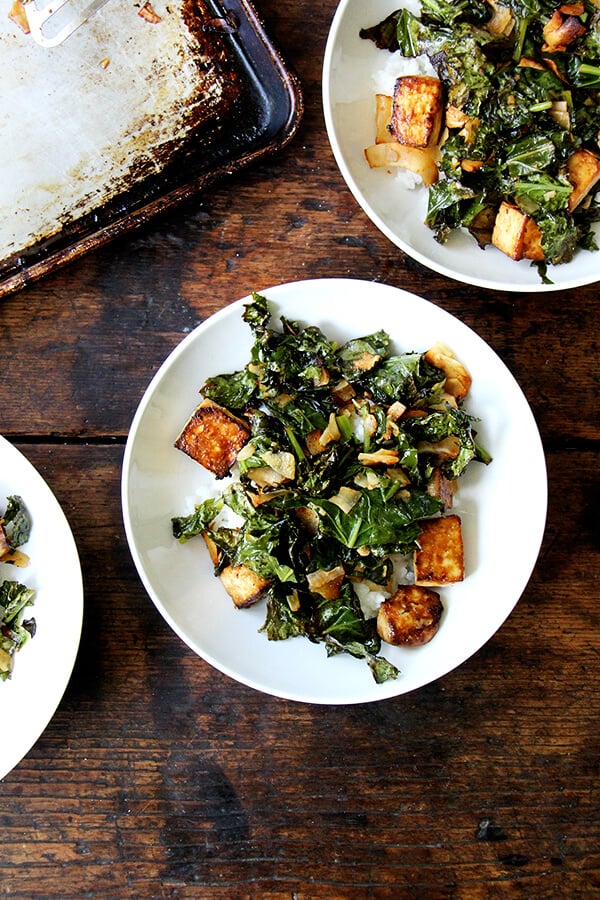
Very recently I discovered the joys of baking tofu — no pressing, no marinating, no sticking — and now my tofu repertoire has expanded to a grand total of three recipes, all of which I love.
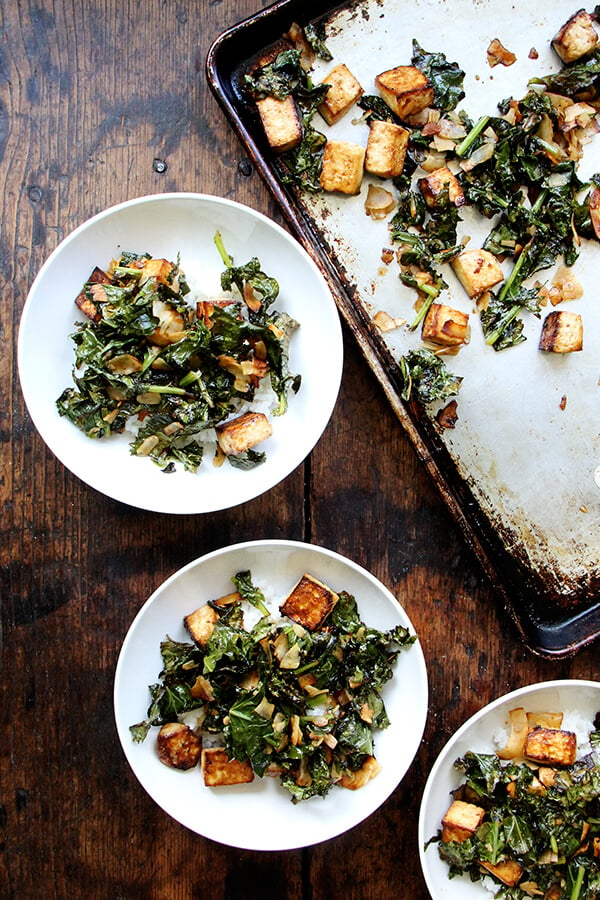
For the baked tofu, I’ve been using a recipe from Moosewood’s Simple Suppers . When combined with a favorite recipe for roasted kale and coconut, it becomes a sheetpan supper — easy peasy (though I do like to make coconut rice to go along with it).
Two more tofu recipes are below.
Warm Tofu with Spicy Dipping Sauce
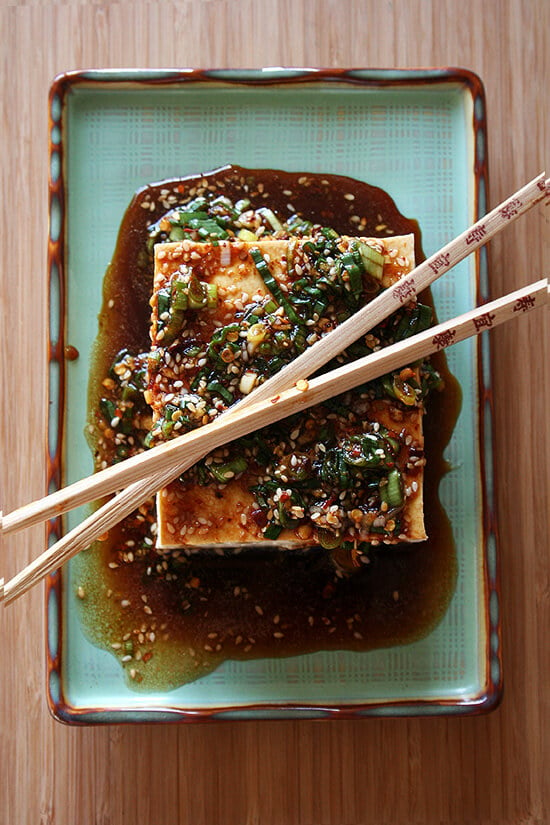
In an old Gourmet , Ruth Reichl described this tofu as “a beautiful dish, which takes ten minutes, costs very little, and is so utterly delicious.” It calls for simmering tofu in water — sounds odd, I know — then pouring a delicious sauce over top. Love it.
Sesame Crusted Tofu with Nuoc Cham
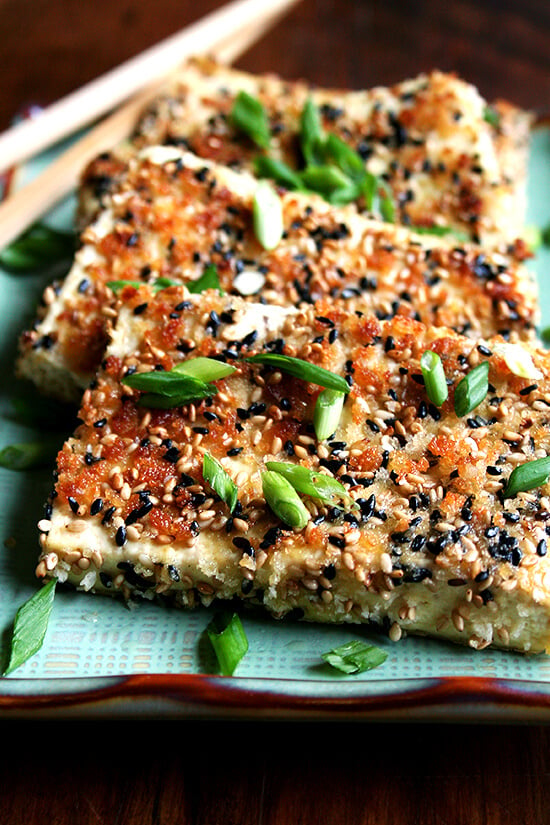
Many years ago, when I worked at Fork (and High Street on Market was a place called Fork: etc;), we made this tofu for the prepared-foods case, and it always went flying out the door. It’s still a favorite of mine, and I especially love it with nuoc cham.
Description
For the coconut rice : 1 cup jasmine rice (rinsed), 3/4 cup coconut milk, 1/4 cup water, and 1/4 teaspoon salt. Bring to a simmer, cover, turn to low, cook 15 minutes, let stand 10 minutes before fluffing with a fork and serving.
- 1 tablespoon grapeseed oil (or other neutral oil)
- 1 tablespoon sesame oil
- 3 tablespoons soy sauce
- 1 tablespoon Sriracha
- 16 ounces firm tofu
- 3 tablespoons melted coconut oil
- 8 ounces Tuscan (lacinato) kale
- 1 cup unsweetened coconut flakes
- Coconut rice for serving, see notes above
- Preheat the oven to 400° F. In a large bowl, whisk together the grapeseed and sesame oil, soy sauce, and Sriracha. Cut the tofu into 1-inch cubes, and place them in the bowl. Gently toss the cubes to coat them in the dressing. Let sit until oven finishes preheating.
- Lightly oil a rimmed sheetpan with about a teaspoon of neutral oil. Arrange cubes of tofu on sheetpan, leaving excess dressing in bowl. Bake for 20 minutes. Meanwhile, whisk the 3 tablespoons of melted coconut oil into the reserved dressing. Coarsely chop the kale, discarding the tough ends. Add the kale to the bowl of dressing along with the coconut and toss to coat.
- Remove the sheetpan of tofu from the oven. Gently, push the cubes with a spatula to loosen. Nestle the kale and coconut around the tofu cubes. Return pan to the oven and bake for 12 to 15 minutes or until the kale has wilted considerably and is beginning to crisp and the coconut is golden brown. Remove pan from oven. Use a spatula to gently toss everything together. Serve over rice.
- Prep Time: 15 minutes
- Cook Time: 30 minutes
- Category: Dinner
- Method: Oven
- Cuisine: American
