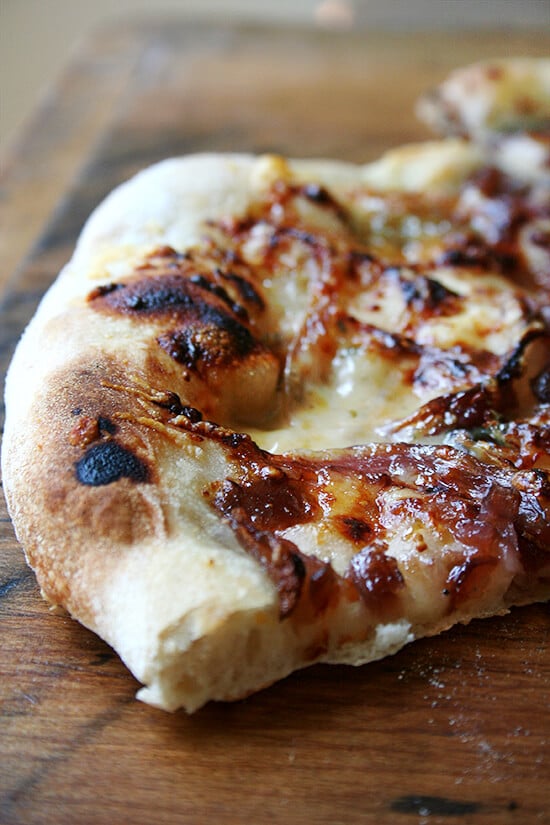
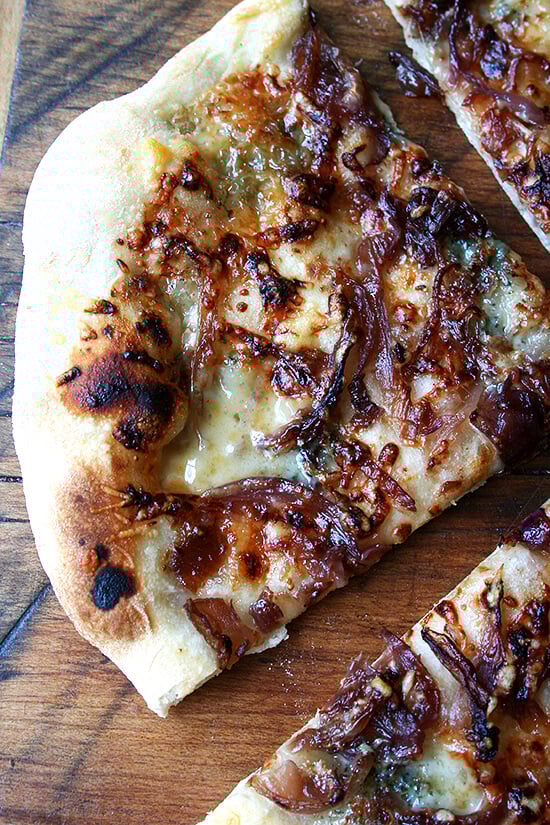
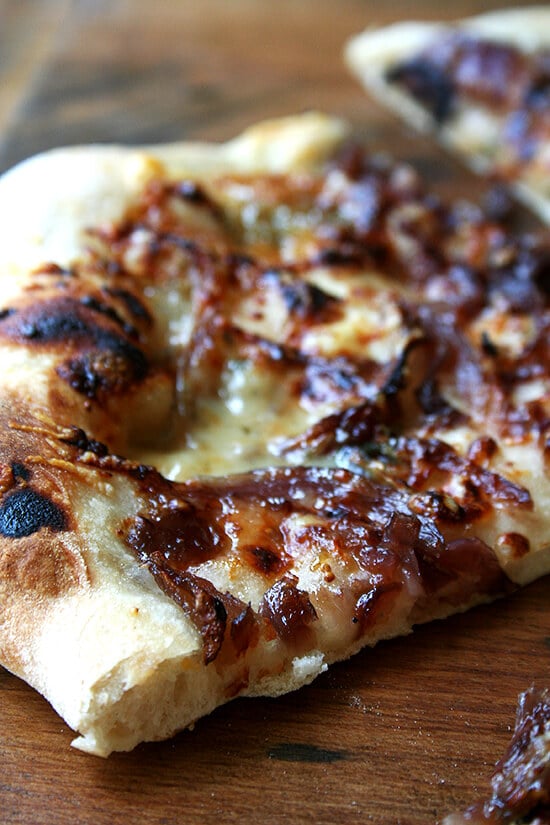
A series of fortuitous events in the past few months have led to a number of wonderful discoveries: an ingredient — Tipo 00 flour; a technique — minimal handling of dough; and a reward — the best pizza I have ever made at home.
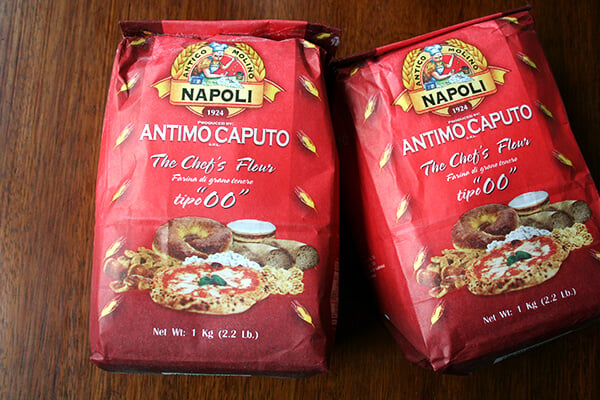
Let’s start from the beginning. Five trips in three weeks to 2Amys Pizzeria in NW Washington DC (over an hour drive from my house) convinced me it was finally time to get my hands on some Tipo 00 flour, a soft-grain flour requisite in the production of D.O.C. Neapolitan pizza, an ingredient I’ve been thinking about for five years now.
I hate to admit it and in retrospect it pains me, but a $7.25 shipping charge has been the sole barrier between me and Tipo 00 flour for about a year now. Am I wrong to expect everything to ship for free and arrive the next day? (I know, so bratty! Sorry.) Anyway, to soften the blow, I ordered 10 bags , which made the total price per bag $4.22, a nominal fee especially when each bag yields six pizzas.
I had to come to my friend’s rescue. She had requested video guidance, which I was certain was out there and which I was determined to find for her. My quest for her, however, may have proven to help me equally as well. A video and a note published on Serious Eats made me realize that for all these years that I have been making homemade pizza, I have been majorly overhandling my dough, at least for the sort of pizza I strive to make.
The note from Lahey read as follows:
“As soon as I began really paying attention to how I shaped my pizza rounds by taking care to use a gentle hand, I noticed a difference in the finished product. The air pockets pervading the unbaked round really affect the texture of the baked pizza.”
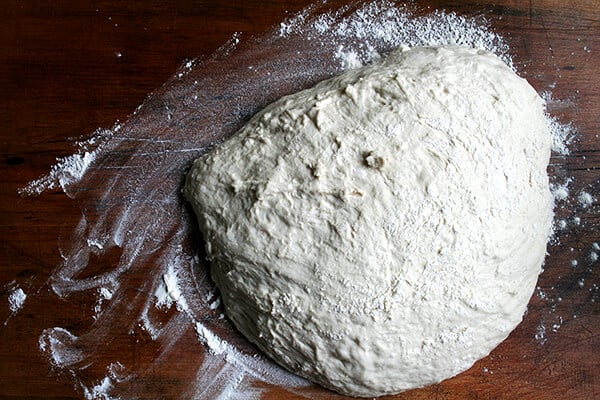
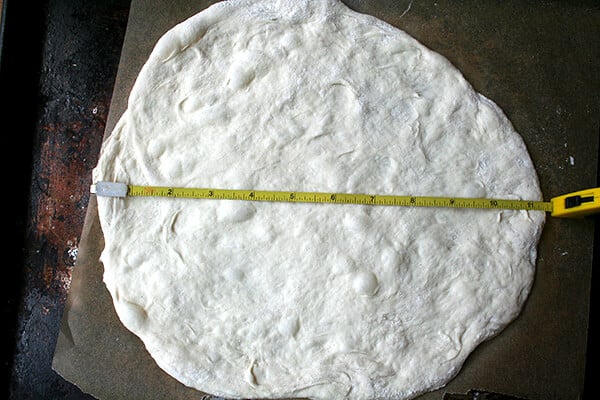
Having just spent $42 on 10 bags of flour, I sort of wished Lahey felt more strongly about the type of flour he used, but ultimately I agree that the handling of the dough is more important than the type of flour used. As soon as I began really paying attention to how I shaped my pizza rounds — gently/minimally — I noticed a difference in the finished product. The air pockets pervading the unbaked round (video/photo below) really affect the flavor and texture of the baked pizza.
I’ve made the Lahey dough many times now, and it is always delicious, regardless if I use bread flour or Tipo 00 flour. I do feel strongly, however, that the Tipo 00 flour produces a superior product, especially in texture. The unbaked dough is softer, more delicate and easier to shape — it doesn’t resist the shaping as much as the dough made with bread flour. The crust of the baked pizza, too, is a bit more tender, and the outer edge has a bit more chew.
Again, regardless of the flour, with the Lahey method, I’ve finally been able to achieve that quintessensial Neopolitan ballooned and blistered outer edge. I think I’m ready for my wood-burning oven. Santa, I hope you’re reading.
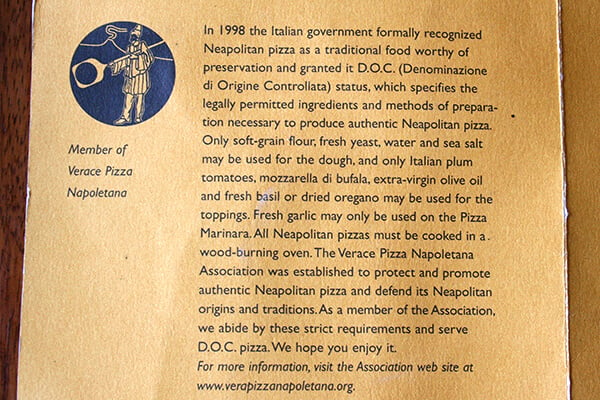
2Amys Pizzeria serves D.O.C. Neapolitan pizza, which means they follow the strict requirements outlined by the Italian government for producing authentic Neapolitan pizza. The guidelines cover all the bases: the oven (wood-burning); the shaping (by hand); the final size (no larger than 11 inches); the ingredients (dough must be made with tipo 00 flour, fresh yeast, water and salt and the toppings extend to Italian plum tomatoes, mozzarella di bufala, extra-virgin olive oil, fresh basil and dried oregano).
If you’re looking for more information on Tipo 00 flour, this link on Forno Bravo is helpful.
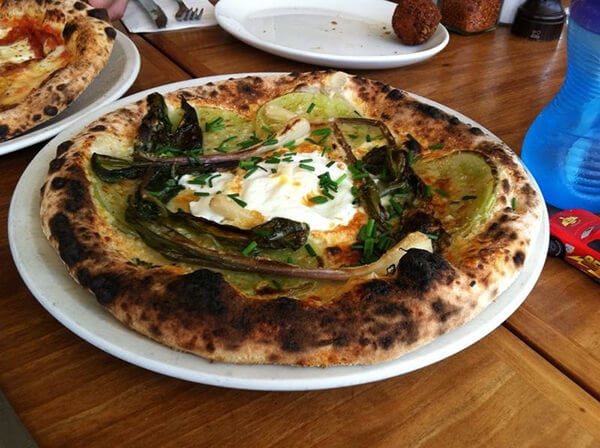
Shots from our lunch at 2Amys a few weeks ago: Green tomato, ramp, Grana & egg pizza:
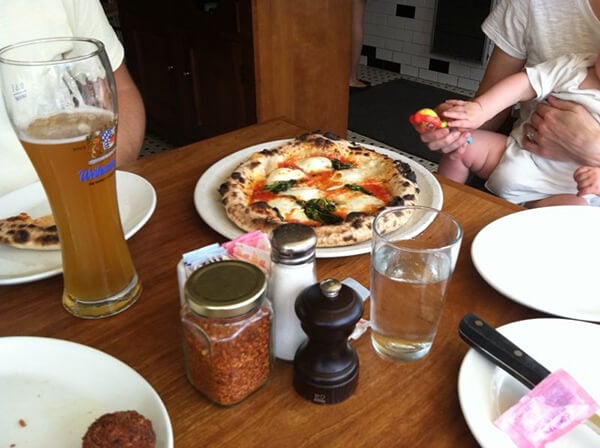
The margherita pizza at 2Amys is just about the ideal — pizza, food, meal, everything. It is so unbelievably delicious.
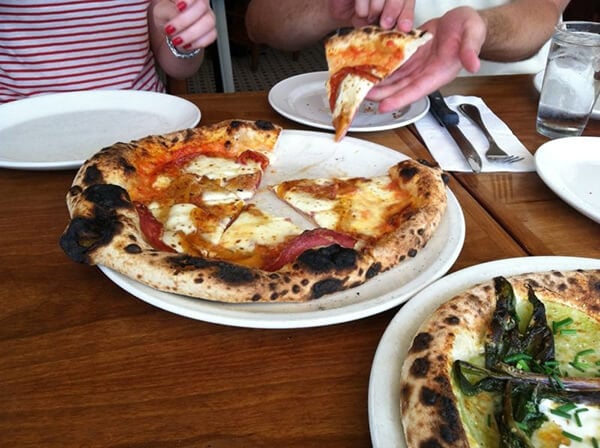
Norcia pizza:
Description
Adapted from Jim Lahey’s My Pizza
Note: If you buy Tipo 00 flour this recipe comes together in seconds — each bag conveniently weighs 1000g, which is what the recipe calls for.
For the dough:
- 7 1/2 cups all-purpose flour ( 1000 grams ) plus more for shaping dough
- 4 teaspoons fine sea salt
- 1/2 teaspoon active dry yeast
For this pizza you’ll need:
- caramelized onions
- fig jam, thinned out with a little bit of water for easy spreading
- blue cheese, any type you like
- Parmigiano Reggiano, grated
- 1 round pizza dough
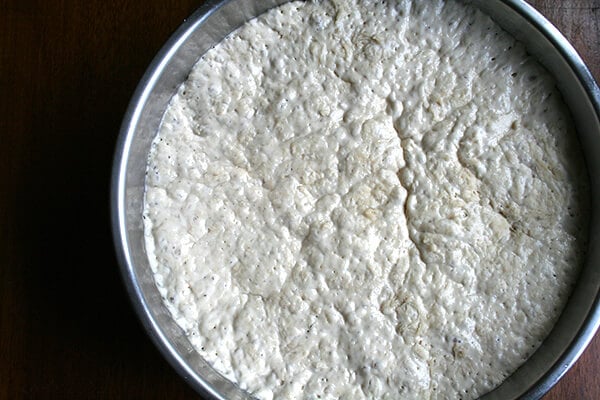
- Whisk flour, salt, and yeast in a medium bowl. While stirring with a wooden spoon, gradually add 3 cups water; stir until well incorporated. Mix dough gently with your hands to bring it together and form into a rough ball. Transfer to a large clean bowl. Cover with plastic wrap and let dough rise at room temperature (about 72°) in a draft-free area until surface is covered with tiny bubbles and dough has more than doubled in size, about 18 hours (time will vary depending on the temperature in the room).
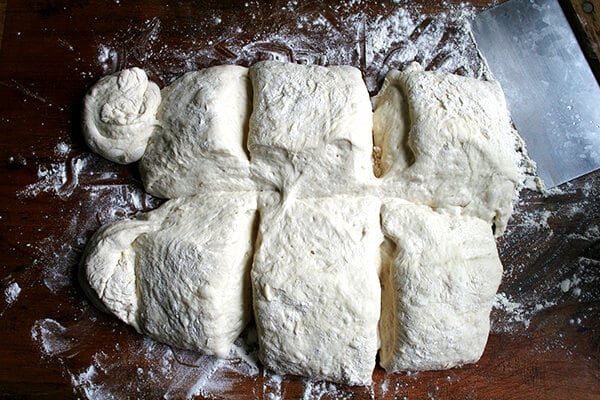
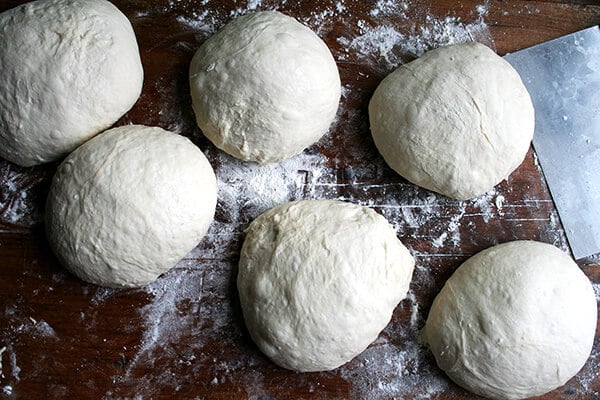
- Transfer dough to a floured work surface. Gently shape into a rough rectangle. Divide into 6 equal portions. Working with 1 portion at a time, gather 4 corners to center to create 4 folds. Turn seam side down and mold gently into a ball. Dust dough with flour; set aside on work surface or a floured baking sheet. Repeat with remaining portions.
- If you are going to make a pizza immediately, let dough rest on a floured work surface, covered with plastic wrap or a damp kitchen towel, until soft and pliable, about 1 hour. Otherwise, transfer each dough ball to a quart (or other) container and store in the fridge for up to 3 days. Let dough rest at room temperature on a lightly floured work surface, covered with plastic wrap, for about an hour or two before shaping/baking.
- To Make the Pizzas: During the last hour of dough’s resting, preheat oven to its hottest setting, 500°–550°. If you have a Baking Steel, stick that in the top third of the oven.
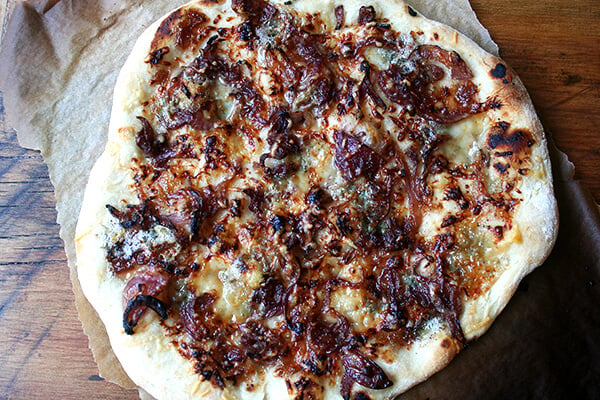
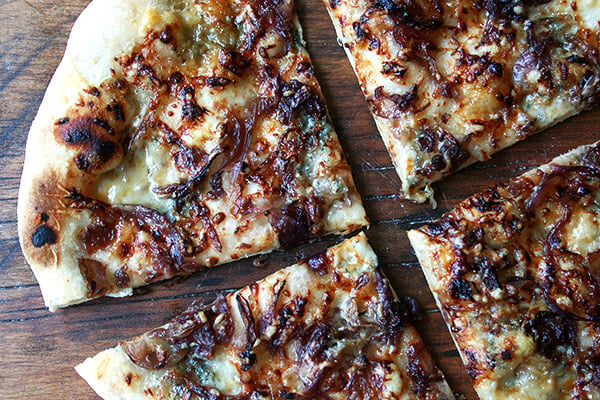
- Working with 1 dough ball at a time, dust dough with flour and place on a floured work surface. Gently shape dough into a 10″–12″ disk handling it as minimally as possible. Arrange dough disk on a parchment-lined pizza peel (if using a Baking Steel) or a baking sheet; top minimally with desired toppings: to make this pizza, first spoon some of the thinned out fig jam over top, then top with caramelized onions, the blue cheese, and finally the Parmigiano Reggiano. Bake pizza until bottom of crust is crisp and top is blistered, 5 to 7 minutes. Transfer to a work surface to slice. Repeat with remaining pizzas.
- Prep Time: 18 hours
- Cook Time: 5 minutes
- Category: Pizza
- Method: Oven
- Cuisine: American
A series of fortuitous events in the past few months have led to a number of wonderful discoveries: an ingredient — Tipo 00 flour; a technique — minimal handling of dough; and a reward — the best pizza I have ever made at home.
Let’s start from the beginning. Five trips in three weeks to 2Amys Pizzeria in NW Washington DC (over an hour drive from my house) convinced me it was finally time to get my hands on some Tipo 00 flour, a soft-grain flour requisite in the production of D.O.C. Neapolitan pizza, an ingredient I’ve been thinking about for five years now.
I hate to admit it and in retrospect it pains me, but a $7.25 shipping charge has been the sole barrier between me and Tipo 00 flour for about a year now. Am I wrong to expect everything to ship for free and arrive the next day? (I know, so bratty! Sorry.) Anyway, to soften the blow, I ordered 10 bags , which made the total price per bag $4.22, a nominal fee especially when each bag yields six pizzas.
I had to come to my friend’s rescue. She had requested video guidance, which I was certain was out there and which I was determined to find for her. My quest for her, however, may have proven to help me equally as well. A video and a note published on Serious Eats made me realize that for all these years that I have been making homemade pizza, I have been majorly overhandling my dough, at least for the sort of pizza I strive to make.
The note from Lahey read as follows:
“As soon as I began really paying attention to how I shaped my pizza rounds by taking care to use a gentle hand, I noticed a difference in the finished product. The air pockets pervading the unbaked round really affect the texture of the baked pizza.”
Having just spent $42 on 10 bags of flour, I sort of wished Lahey felt more strongly about the type of flour he used, but ultimately I agree that the handling of the dough is more important than the type of flour used. As soon as I began really paying attention to how I shaped my pizza rounds — gently/minimally — I noticed a difference in the finished product. The air pockets pervading the unbaked round (video/photo below) really affect the flavor and texture of the baked pizza.
I’ve made the Lahey dough many times now, and it is always delicious, regardless if I use bread flour or Tipo 00 flour. I do feel strongly, however, that the Tipo 00 flour produces a superior product, especially in texture. The unbaked dough is softer, more delicate and easier to shape — it doesn’t resist the shaping as much as the dough made with bread flour. The crust of the baked pizza, too, is a bit more tender, and the outer edge has a bit more chew.
Again, regardless of the flour, with the Lahey method, I’ve finally been able to achieve that quintessensial Neopolitan ballooned and blistered outer edge. I think I’m ready for my wood-burning oven. Santa, I hope you’re reading.
2Amys Pizzeria serves D.O.C. Neapolitan pizza, which means they follow the strict requirements outlined by the Italian government for producing authentic Neapolitan pizza. The guidelines cover all the bases: the oven (wood-burning); the shaping (by hand); the final size (no larger than 11 inches); the ingredients (dough must be made with tipo 00 flour, fresh yeast, water and salt and the toppings extend to Italian plum tomatoes, mozzarella di bufala, extra-virgin olive oil, fresh basil and dried oregano).
If you’re looking for more information on Tipo 00 flour, this link on Forno Bravo is helpful.
Shots from our lunch at 2Amys a few weeks ago: Green tomato, ramp, Grana & egg pizza:
The margherita pizza at 2Amys is just about the ideal — pizza, food, meal, everything. It is so unbelievably delicious.
Norcia pizza:
Description
Adapted from Jim Lahey’s My Pizza
Note: If you buy Tipo 00 flour this recipe comes together in seconds — each bag conveniently weighs 1000g, which is what the recipe calls for.
For the dough:
- 7 1/2 cups all-purpose flour ( 1000 grams ) plus more for shaping dough
- 4 teaspoons fine sea salt
- 1/2 teaspoon active dry yeast
For this pizza you’ll need:
- caramelized onions
- fig jam, thinned out with a little bit of water for easy spreading
- blue cheese, any type you like
- Parmigiano Reggiano, grated
- 1 round pizza dough
- Whisk flour, salt, and yeast in a medium bowl. While stirring with a wooden spoon, gradually add 3 cups water; stir until well incorporated. Mix dough gently with your hands to bring it together and form into a rough ball. Transfer to a large clean bowl. Cover with plastic wrap and let dough rise at room temperature (about 72°) in a draft-free area until surface is covered with tiny bubbles and dough has more than doubled in size, about 18 hours (time will vary depending on the temperature in the room).
- Transfer dough to a floured work surface. Gently shape into a rough rectangle. Divide into 6 equal portions. Working with 1 portion at a time, gather 4 corners to center to create 4 folds. Turn seam side down and mold gently into a ball. Dust dough with flour; set aside on work surface or a floured baking sheet. Repeat with remaining portions.
- If you are going to make a pizza immediately, let dough rest on a floured work surface, covered with plastic wrap or a damp kitchen towel, until soft and pliable, about 1 hour. Otherwise, transfer each dough ball to a quart (or other) container and store in the fridge for up to 3 days. Let dough rest at room temperature on a lightly floured work surface, covered with plastic wrap, for about an hour or two before shaping/baking.
- To Make the Pizzas: During the last hour of dough’s resting, preheat oven to its hottest setting, 500°–550°. If you have a Baking Steel, stick that in the top third of the oven.
- Working with 1 dough ball at a time, dust dough with flour and place on a floured work surface. Gently shape dough into a 10″–12″ disk handling it as minimally as possible. Arrange dough disk on a parchment-lined pizza peel (if using a Baking Steel) or a baking sheet; top minimally with desired toppings: to make this pizza, first spoon some of the thinned out fig jam over top, then top with caramelized onions, the blue cheese, and finally the Parmigiano Reggiano. Bake pizza until bottom of crust is crisp and top is blistered, 5 to 7 minutes. Transfer to a work surface to slice. Repeat with remaining pizzas.
- Prep Time: 18 hours
- Cook Time: 5 minutes
- Category: Pizza
- Method: Oven
- Cuisine: American
A series of fortuitous events in the past few months have led to a number of wonderful discoveries: an ingredient — Tipo 00 flour; a technique — minimal handling of dough; and a reward — the best pizza I have ever made at home.
Let’s start from the beginning. Five trips in three weeks to 2Amys Pizzeria in NW Washington DC (over an hour drive from my house) convinced me it was finally time to get my hands on some Tipo 00 flour, a soft-grain flour requisite in the production of D.O.C. Neapolitan pizza, an ingredient I’ve been thinking about for five years now.
I hate to admit it and in retrospect it pains me, but a $7.25 shipping charge has been the sole barrier between me and Tipo 00 flour for about a year now. Am I wrong to expect everything to ship for free and arrive the next day? (I know, so bratty! Sorry.) Anyway, to soften the blow, I ordered 10 bags , which made the total price per bag $4.22, a nominal fee especially when each bag yields six pizzas.
I had to come to my friend’s rescue. She had requested video guidance, which I was certain was out there and which I was determined to find for her. My quest for her, however, may have proven to help me equally as well. A video and a note published on Serious Eats made me realize that for all these years that I have been making homemade pizza, I have been majorly overhandling my dough, at least for the sort of pizza I strive to make.
The note from Lahey read as follows:
“As soon as I began really paying attention to how I shaped my pizza rounds by taking care to use a gentle hand, I noticed a difference in the finished product. The air pockets pervading the unbaked round really affect the texture of the baked pizza.”
Having just spent $42 on 10 bags of flour, I sort of wished Lahey felt more strongly about the type of flour he used, but ultimately I agree that the handling of the dough is more important than the type of flour used. As soon as I began really paying attention to how I shaped my pizza rounds — gently/minimally — I noticed a difference in the finished product. The air pockets pervading the unbaked round (video/photo below) really affect the flavor and texture of the baked pizza.
I’ve made the Lahey dough many times now, and it is always delicious, regardless if I use bread flour or Tipo 00 flour. I do feel strongly, however, that the Tipo 00 flour produces a superior product, especially in texture. The unbaked dough is softer, more delicate and easier to shape — it doesn’t resist the shaping as much as the dough made with bread flour. The crust of the baked pizza, too, is a bit more tender, and the outer edge has a bit more chew.
Again, regardless of the flour, with the Lahey method, I’ve finally been able to achieve that quintessensial Neopolitan ballooned and blistered outer edge. I think I’m ready for my wood-burning oven. Santa, I hope you’re reading.
2Amys Pizzeria serves D.O.C. Neapolitan pizza, which means they follow the strict requirements outlined by the Italian government for producing authentic Neapolitan pizza. The guidelines cover all the bases: the oven (wood-burning); the shaping (by hand); the final size (no larger than 11 inches); the ingredients (dough must be made with tipo 00 flour, fresh yeast, water and salt and the toppings extend to Italian plum tomatoes, mozzarella di bufala, extra-virgin olive oil, fresh basil and dried oregano).
If you’re looking for more information on Tipo 00 flour, this link on Forno Bravo is helpful.
Shots from our lunch at 2Amys a few weeks ago: Green tomato, ramp, Grana & egg pizza:
The margherita pizza at 2Amys is just about the ideal — pizza, food, meal, everything. It is so unbelievably delicious.
Norcia pizza:
Description
Adapted from Jim Lahey’s My Pizza
Note: If you buy Tipo 00 flour this recipe comes together in seconds — each bag conveniently weighs 1000g, which is what the recipe calls for.
For the dough:
- 7 1/2 cups all-purpose flour ( 1000 grams ) plus more for shaping dough
- 4 teaspoons fine sea salt
- 1/2 teaspoon active dry yeast
For this pizza you’ll need:
- caramelized onions
- fig jam, thinned out with a little bit of water for easy spreading
- blue cheese, any type you like
- Parmigiano Reggiano, grated
- 1 round pizza dough
- Whisk flour, salt, and yeast in a medium bowl. While stirring with a wooden spoon, gradually add 3 cups water; stir until well incorporated. Mix dough gently with your hands to bring it together and form into a rough ball. Transfer to a large clean bowl. Cover with plastic wrap and let dough rise at room temperature (about 72°) in a draft-free area until surface is covered with tiny bubbles and dough has more than doubled in size, about 18 hours (time will vary depending on the temperature in the room).
- Transfer dough to a floured work surface. Gently shape into a rough rectangle. Divide into 6 equal portions. Working with 1 portion at a time, gather 4 corners to center to create 4 folds. Turn seam side down and mold gently into a ball. Dust dough with flour; set aside on work surface or a floured baking sheet. Repeat with remaining portions.
- If you are going to make a pizza immediately, let dough rest on a floured work surface, covered with plastic wrap or a damp kitchen towel, until soft and pliable, about 1 hour. Otherwise, transfer each dough ball to a quart (or other) container and store in the fridge for up to 3 days. Let dough rest at room temperature on a lightly floured work surface, covered with plastic wrap, for about an hour or two before shaping/baking.
- To Make the Pizzas: During the last hour of dough’s resting, preheat oven to its hottest setting, 500°–550°. If you have a Baking Steel, stick that in the top third of the oven.
- Working with 1 dough ball at a time, dust dough with flour and place on a floured work surface. Gently shape dough into a 10″–12″ disk handling it as minimally as possible. Arrange dough disk on a parchment-lined pizza peel (if using a Baking Steel) or a baking sheet; top minimally with desired toppings: to make this pizza, first spoon some of the thinned out fig jam over top, then top with caramelized onions, the blue cheese, and finally the Parmigiano Reggiano. Bake pizza until bottom of crust is crisp and top is blistered, 5 to 7 minutes. Transfer to a work surface to slice. Repeat with remaining pizzas.
- Prep Time: 18 hours
- Cook Time: 5 minutes
- Category: Pizza
- Method: Oven
- Cuisine: American
A series of fortuitous events in the past few months have led to a number of wonderful discoveries: an ingredient — Tipo 00 flour; a technique — minimal handling of dough; and a reward — the best pizza I have ever made at home.
Let’s start from the beginning. Five trips in three weeks to 2Amys Pizzeria in NW Washington DC (over an hour drive from my house) convinced me it was finally time to get my hands on some Tipo 00 flour, a soft-grain flour requisite in the production of D.O.C. Neapolitan pizza, an ingredient I’ve been thinking about for five years now.
I hate to admit it and in retrospect it pains me, but a $7.25 shipping charge has been the sole barrier between me and Tipo 00 flour for about a year now. Am I wrong to expect everything to ship for free and arrive the next day? (I know, so bratty! Sorry.) Anyway, to soften the blow, I ordered 10 bags , which made the total price per bag $4.22, a nominal fee especially when each bag yields six pizzas.
I had to come to my friend’s rescue. She had requested video guidance, which I was certain was out there and which I was determined to find for her. My quest for her, however, may have proven to help me equally as well. A video and a note published on Serious Eats made me realize that for all these years that I have been making homemade pizza, I have been majorly overhandling my dough, at least for the sort of pizza I strive to make.
The note from Lahey read as follows:
“As soon as I began really paying attention to how I shaped my pizza rounds by taking care to use a gentle hand, I noticed a difference in the finished product. The air pockets pervading the unbaked round really affect the texture of the baked pizza.”
Having just spent $42 on 10 bags of flour, I sort of wished Lahey felt more strongly about the type of flour he used, but ultimately I agree that the handling of the dough is more important than the type of flour used. As soon as I began really paying attention to how I shaped my pizza rounds — gently/minimally — I noticed a difference in the finished product. The air pockets pervading the unbaked round (video/photo below) really affect the flavor and texture of the baked pizza.
I’ve made the Lahey dough many times now, and it is always delicious, regardless if I use bread flour or Tipo 00 flour. I do feel strongly, however, that the Tipo 00 flour produces a superior product, especially in texture. The unbaked dough is softer, more delicate and easier to shape — it doesn’t resist the shaping as much as the dough made with bread flour. The crust of the baked pizza, too, is a bit more tender, and the outer edge has a bit more chew.
Again, regardless of the flour, with the Lahey method, I’ve finally been able to achieve that quintessensial Neopolitan ballooned and blistered outer edge. I think I’m ready for my wood-burning oven. Santa, I hope you’re reading.
2Amys Pizzeria serves D.O.C. Neapolitan pizza, which means they follow the strict requirements outlined by the Italian government for producing authentic Neapolitan pizza. The guidelines cover all the bases: the oven (wood-burning); the shaping (by hand); the final size (no larger than 11 inches); the ingredients (dough must be made with tipo 00 flour, fresh yeast, water and salt and the toppings extend to Italian plum tomatoes, mozzarella di bufala, extra-virgin olive oil, fresh basil and dried oregano).
If you’re looking for more information on Tipo 00 flour, this link on Forno Bravo is helpful.
Shots from our lunch at 2Amys a few weeks ago: Green tomato, ramp, Grana & egg pizza:
The margherita pizza at 2Amys is just about the ideal — pizza, food, meal, everything. It is so unbelievably delicious.
Norcia pizza:
Description
Adapted from Jim Lahey’s My Pizza
Note: If you buy Tipo 00 flour this recipe comes together in seconds — each bag conveniently weighs 1000g, which is what the recipe calls for.
For the dough:
- 7 1/2 cups all-purpose flour ( 1000 grams ) plus more for shaping dough
- 4 teaspoons fine sea salt
- 1/2 teaspoon active dry yeast
For this pizza you’ll need:
- caramelized onions
- fig jam, thinned out with a little bit of water for easy spreading
- blue cheese, any type you like
- Parmigiano Reggiano, grated
- 1 round pizza dough
- Whisk flour, salt, and yeast in a medium bowl. While stirring with a wooden spoon, gradually add 3 cups water; stir until well incorporated. Mix dough gently with your hands to bring it together and form into a rough ball. Transfer to a large clean bowl. Cover with plastic wrap and let dough rise at room temperature (about 72°) in a draft-free area until surface is covered with tiny bubbles and dough has more than doubled in size, about 18 hours (time will vary depending on the temperature in the room).
- Transfer dough to a floured work surface. Gently shape into a rough rectangle. Divide into 6 equal portions. Working with 1 portion at a time, gather 4 corners to center to create 4 folds. Turn seam side down and mold gently into a ball. Dust dough with flour; set aside on work surface or a floured baking sheet. Repeat with remaining portions.
- If you are going to make a pizza immediately, let dough rest on a floured work surface, covered with plastic wrap or a damp kitchen towel, until soft and pliable, about 1 hour. Otherwise, transfer each dough ball to a quart (or other) container and store in the fridge for up to 3 days. Let dough rest at room temperature on a lightly floured work surface, covered with plastic wrap, for about an hour or two before shaping/baking.
- To Make the Pizzas: During the last hour of dough’s resting, preheat oven to its hottest setting, 500°–550°. If you have a Baking Steel, stick that in the top third of the oven.
- Working with 1 dough ball at a time, dust dough with flour and place on a floured work surface. Gently shape dough into a 10″–12″ disk handling it as minimally as possible. Arrange dough disk on a parchment-lined pizza peel (if using a Baking Steel) or a baking sheet; top minimally with desired toppings: to make this pizza, first spoon some of the thinned out fig jam over top, then top with caramelized onions, the blue cheese, and finally the Parmigiano Reggiano. Bake pizza until bottom of crust is crisp and top is blistered, 5 to 7 minutes. Transfer to a work surface to slice. Repeat with remaining pizzas.
- Prep Time: 18 hours
- Cook Time: 5 minutes
- Category: Pizza
- Method: Oven
- Cuisine: American
Description
Adapted from Jim Lahey’s My Pizza
Note: If you buy Tipo 00 flour this recipe comes together in seconds — each bag conveniently weighs 1000g, which is what the recipe calls for.
For the dough:
- 7 1/2 cups all-purpose flour ( 1000 grams ) plus more for shaping dough
- 4 teaspoons fine sea salt
- 1/2 teaspoon active dry yeast
For this pizza you’ll need:
- caramelized onions
- fig jam, thinned out with a little bit of water for easy spreading
- blue cheese, any type you like
- Parmigiano Reggiano, grated
- 1 round pizza dough
- Whisk flour, salt, and yeast in a medium bowl. While stirring with a wooden spoon, gradually add 3 cups water; stir until well incorporated. Mix dough gently with your hands to bring it together and form into a rough ball. Transfer to a large clean bowl. Cover with plastic wrap and let dough rise at room temperature (about 72°) in a draft-free area until surface is covered with tiny bubbles and dough has more than doubled in size, about 18 hours (time will vary depending on the temperature in the room).
- Transfer dough to a floured work surface. Gently shape into a rough rectangle. Divide into 6 equal portions. Working with 1 portion at a time, gather 4 corners to center to create 4 folds. Turn seam side down and mold gently into a ball. Dust dough with flour; set aside on work surface or a floured baking sheet. Repeat with remaining portions.
- If you are going to make a pizza immediately, let dough rest on a floured work surface, covered with plastic wrap or a damp kitchen towel, until soft and pliable, about 1 hour. Otherwise, transfer each dough ball to a quart (or other) container and store in the fridge for up to 3 days. Let dough rest at room temperature on a lightly floured work surface, covered with plastic wrap, for about an hour or two before shaping/baking.
- To Make the Pizzas: During the last hour of dough’s resting, preheat oven to its hottest setting, 500°–550°. If you have a Baking Steel, stick that in the top third of the oven.
- Working with 1 dough ball at a time, dust dough with flour and place on a floured work surface. Gently shape dough into a 10″–12″ disk handling it as minimally as possible. Arrange dough disk on a parchment-lined pizza peel (if using a Baking Steel) or a baking sheet; top minimally with desired toppings: to make this pizza, first spoon some of the thinned out fig jam over top, then top with caramelized onions, the blue cheese, and finally the Parmigiano Reggiano. Bake pizza until bottom of crust is crisp and top is blistered, 5 to 7 minutes. Transfer to a work surface to slice. Repeat with remaining pizzas.
- Prep Time: 18 hours
- Cook Time: 5 minutes
- Category: Pizza
- Method: Oven
- Cuisine: American
Find it online : https://alexandracooks.com/2012/05/31/tipo-00-flour-worth-paying-for-shipping/


Skip to Recipe
This is what happened. My husband, who dislikes butterscotch, went out of town. I took the opportunity to make butterscotch budino, a dessert I discovered at Pizzeria Mozza several years ago, one that (along with the pizza) inspired many a 70-mile drive up to LA despite the inevitable, incessant, insane traffic.
I made the New York Times recipe (adapted from Pizzeria Mozza), which I discovered (too far along in the process to turn back) yields enough budino for a small village. My husband was only out of town for one night. I’m not sure what I was thinking.
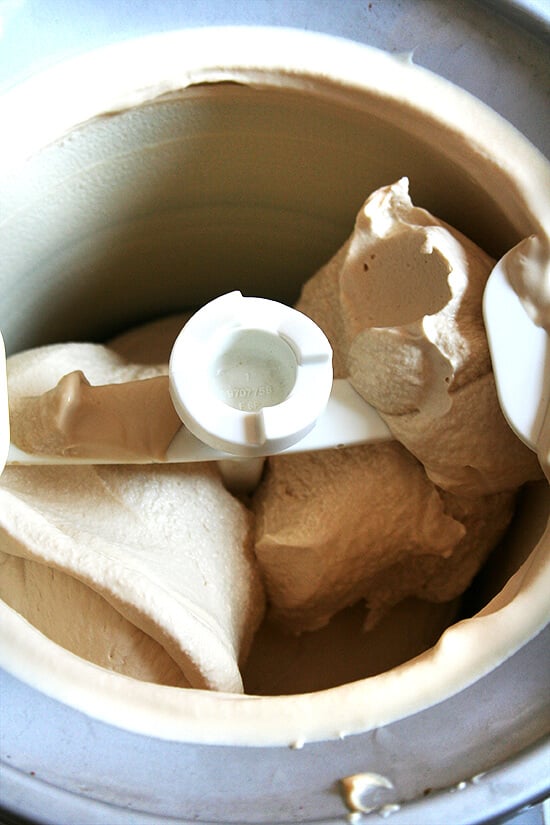
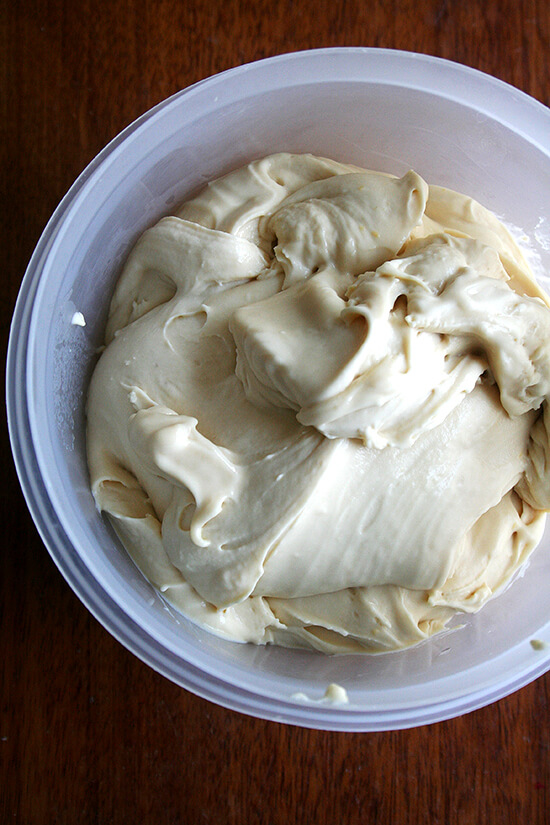
After four too many budinos, I needed to take action. I couldn’t toss such a delicious creation, but eating it at the rate that I was seemed excessive. To prevent myself from assuming the role of small village, I dumped the remaining budino into my Kitchen Aid ice cream attachment and let it churn.
Never has such an intervention been more rewarding. I’ve never tasted salted caramel ice cream, but I’m pretty sure this is exactly how it would taste. And it is absurdly delicious. Budino, in its new frozen carnation, prevented me from becoming a small village, but only for one day. The ice cream disappeared from my freezer as quickly as the budino had from my fridge. And the recipe was revisited shortly thereafter, the new batch made with a few adjustments, namely without butter — I mean, butter in ice cream, as delicious as it was, is kind of gross.
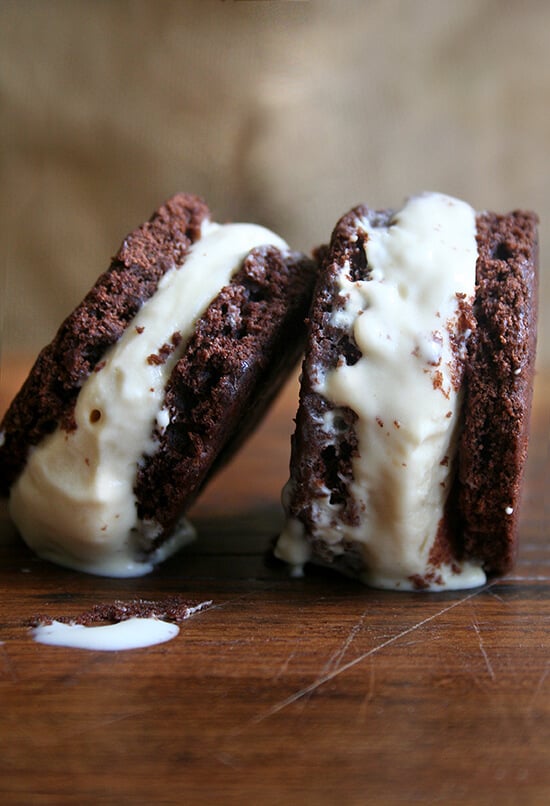
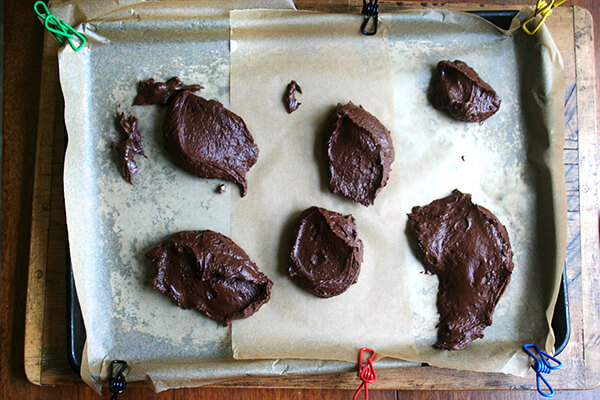
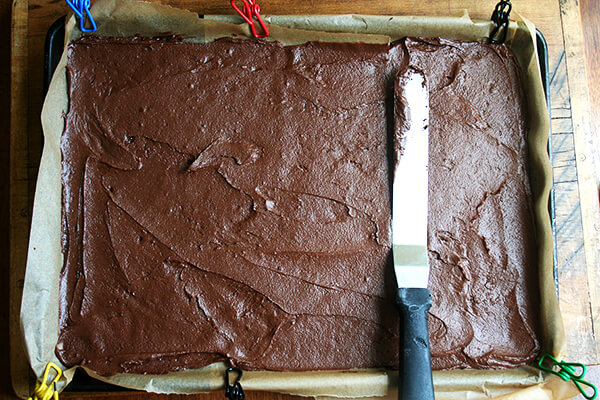
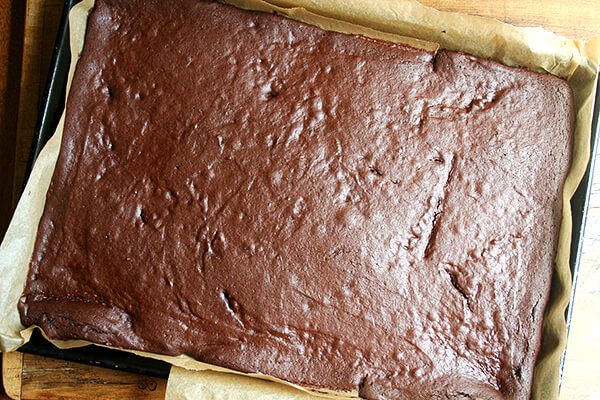
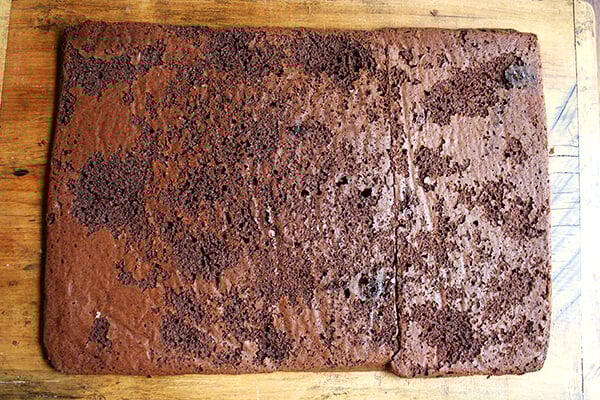
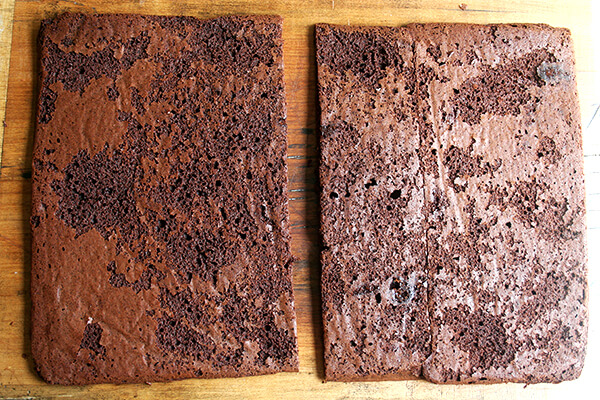
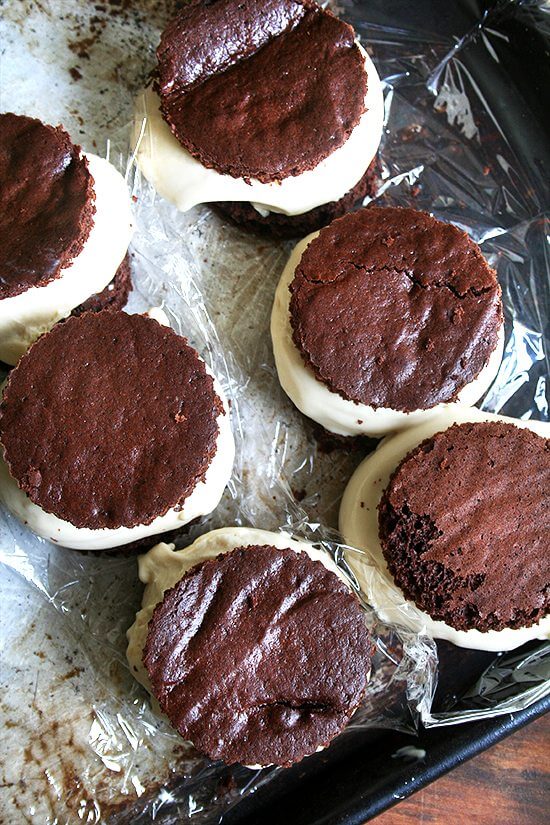
The new butterless batch was just as, if not more so, delicious. I don’t know if it’s the relatively high amount of cornstarch or the presence of rum, but there’s something about this custard that produces the nicest textured ice cream. I made a third batch, too, and decided, just for kicks, to make ice cream sandwiches with about half of the batch. The cookies, made from a Fine Cooking recipe, taste just like the soft chocolate cookies flanking classic ice cream sandwiches. I have a feeling I’ll be making them all summer long.
Finally, Commenters, five of you — Trish, Kamilla, Elisa, Judy, and Dorothea — will receive a bag of Tipo 00 flour. With the exception of my friend Bates, who foremost deserves a bag, I used a random generator. I have emailed you. Wish I could send you each a bag.
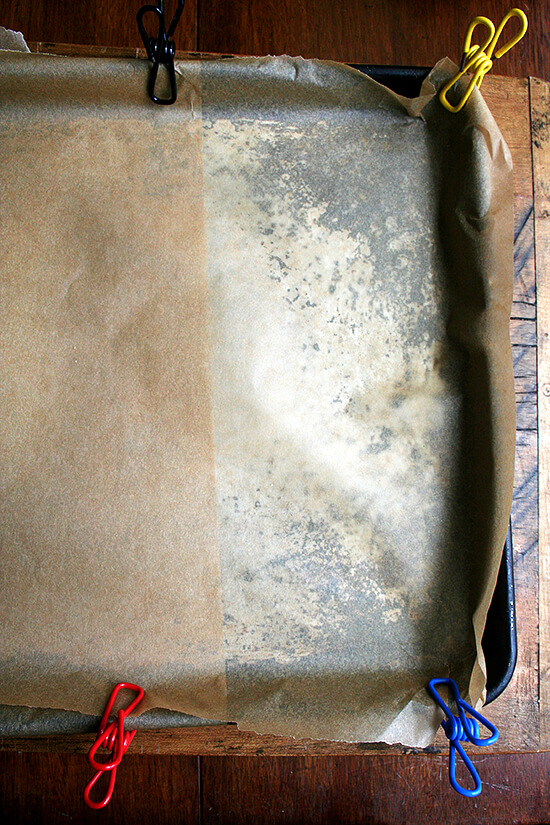
My aunt sent me these Everything Clips in the mail a few weeks ago. They are awesome for everything, but especially for securing parchment paper to pans:
Description
Adapted from the butterscotch budino recipe served at Pizzeria Mozza
If you just want to make butterscotch budino (versus the ice cream) follow this recipe .
for the custard:
- 1 1/2 cups heavy cream
- 3/4 cup milk (I used whole)
- 2 egg yolks
- 2 1/2 tablespoons cornstarch
- 1/2 cup + 1 tablespoon light brown sugar
- 3/4 teaspoon kosher salt
- 1 tablespoon rum
- Combine cream and milk in bowl or pitcher, set aside. Whisk egg yolks and cornstarch (read note in next sentence first) in medium bowl, set aside. Note: There has to be a better way to whisk egg yolks and cornstarch than what I have been doing, which causes the yolks to clump all around the whisk. This is what I’ll do next time: Crack yolks into bowl. Spoon a little bit of the cornstarch into the yolks. Stir with a spoon until incorporated, then add more cornstarch and continue this process until all of the cornstarch has been added.
- Combine brown sugar, kosher salt and 1/4 cup water in pot. Place over medium-high heat and let sit until edges start to brown. Tilt pot as needed to even the browning until caramelized, nutty and deep brown, about 10 minutes. Notes: The mixture should be bubbling (not crazily, however) the whole time, so adjust heat as necessary. Do set a timer. It’s hard to tell visually when the mixture is ready, but every time that I’ve made this, 10 minutes seemed to be the magic number.
- Immediately whisk in cream mixture, mixture will steam and caramel will seize. Bring to a boil, then reduce heat to medium. Whisk a cup at a time into egg mixture until half is incorporated. Remove from heat, and immediately whisk egg mixture back into pot until custard is very thick, about 2 minutes.
- Whisk in rum. Pass through a fine mesh strainer. Transfer to a storage container (preferably glass or pyrex). Cover with plastic wrap, allow to cool, and refrigerate until completely chilled, the longer the better.
- Transfer mixture to ice cream maker and freeze according to your machine’s instructions. Freeze until ready to serve.
for the ice cream sandwich cookies:
I followed the recipe on Fine Cooking for the cookie recipe.
Notes
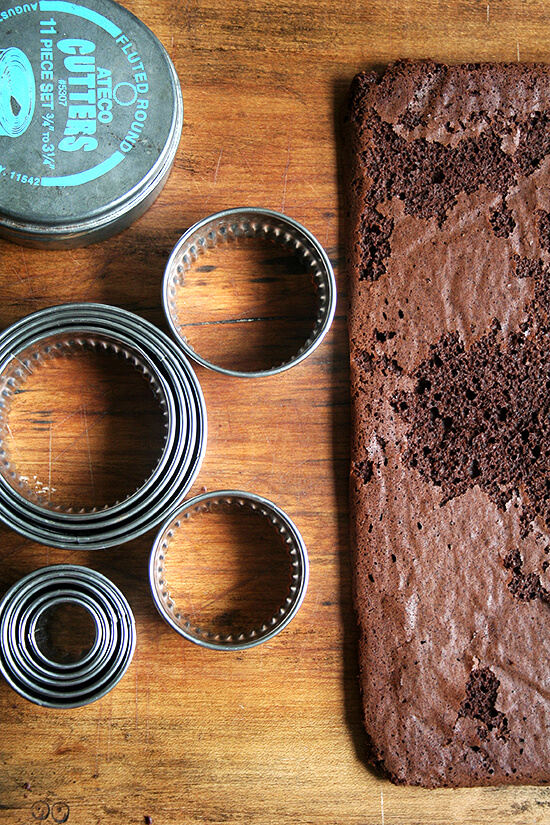
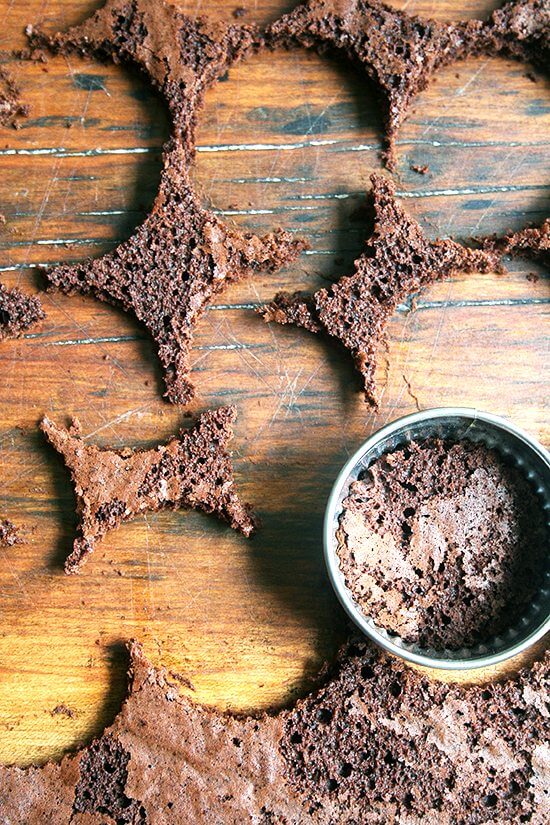
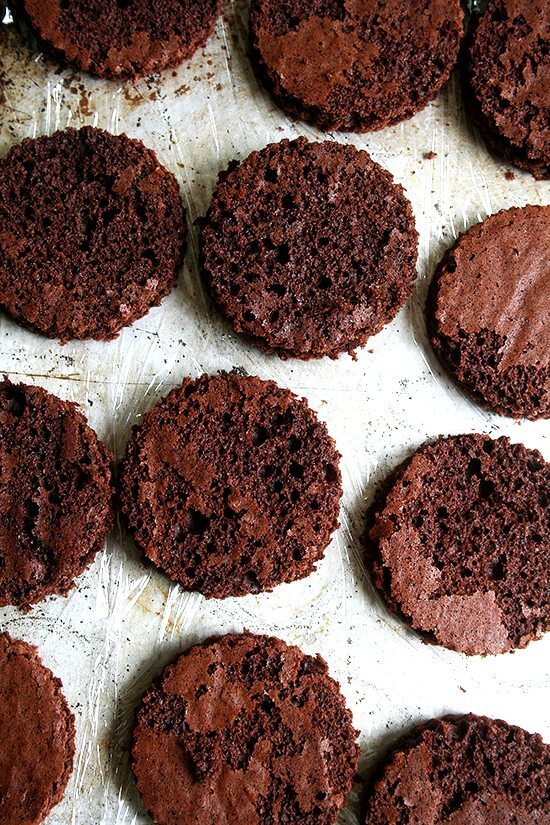
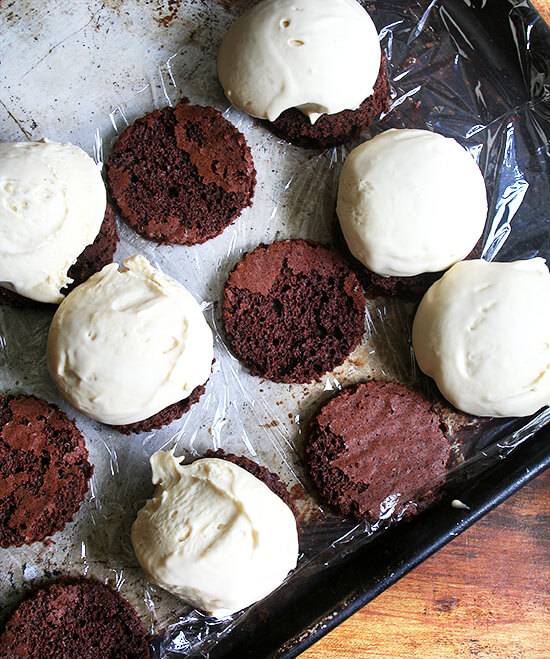
I used my 2.5-inch round fluted cutter to make individual sandwiches, which is fun, but also wasteful. If you go this route, you’ll get about 12 sandwiches per batch of cookie recipe. What is nice about this method is that the ice cream doesn’t have to be too soft — mine was a little too soft, in fact — in order to start the assembly process. If your ice cream is scoopable, you are good to go. Also, I froze my scraps from the cutting process. These could be crumbled up and sprinkled onto the sides of a cake or toasted and crumbled onto ice cream or … I’m sure you have some good ideas? Again, what isn’t nice about this method is the waste as well as the extra steps cutting/scooping/etc. Next time, I think I’ll stick to the traditional method. Also, the flavor of the butterscotch budino ice cream I found got a little masked by the cookie. Next time, too, I would choose a different flavor ice cream, probably vanilla, to use for the sandwiches. I’m thinking the best vessel for the butterscotch budino ice cream might be a thin chocolate wafer cookie bowl or something of the like? Will report back if I discover something.
- Prep Time: 45 minutes
- Cook Time: 15 minutes
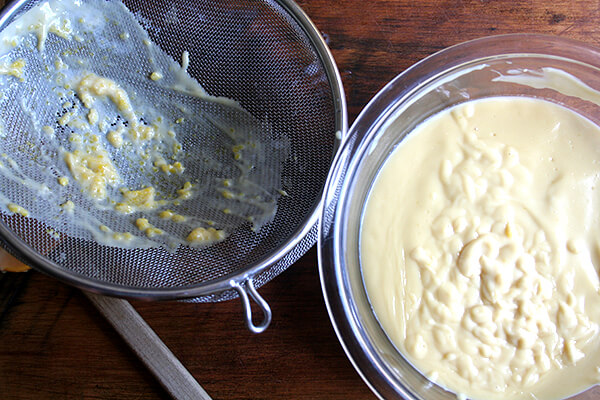
Straining the custard after it thickens is important — it removes all of those curdled little bits.
