The batter for these 5-ingredient buckwheat crepes comes together in one minute in a blender and does not require resting before use. Lacy-textured and nutty in flavor, these gluten-free buckwheat crepes are so tasty and surprisingly easy to make, too!
I have been wanting to learn how to make buckwheat crepes since returning from Paris nearly 7 years ago. But having only had partial success with traditional crepes over the years, I felt intimidated by the idea of making them with buckwheat flour, which is gluten-free, and which I worried might require even more finesse to get right.
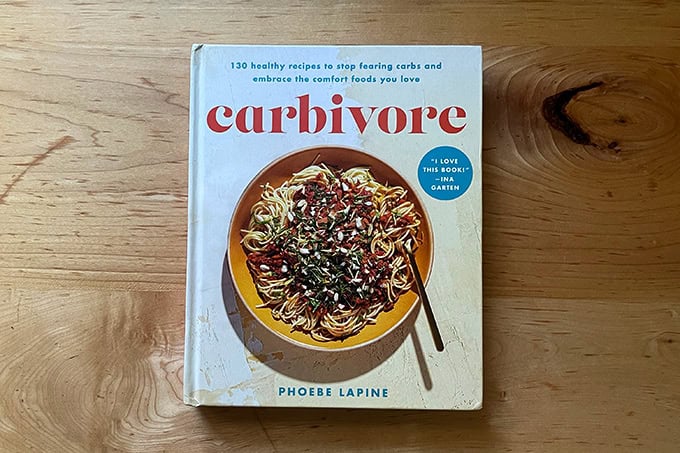
So when I came upon a recipe for buckwheat crepes in Phoebe Lapine’s new book, Carbivore , in which the process was described as something that “sounds intimidating” but is “actually quite easy,” I felt encouraged. Phoebe’s recipe calls for a mix of buckwheat flour and rice flour, and the batter, unlike that for many crepe recipes, does not require any resting before use.
I gave the recipe a go immediately and was shocked by how quickly the batter, which is essentially 5 ingredients, came together and how well the crepes turned out. I mangled a few initially, but once I found my rhythm — once I found the right amount of batter to use given the size of my skillet, once I learned the visual cues signaling doneness, and once I dialed the heat in properly — the process was easy.
Lacy and light in texture, these crepes taste nutty and earthy — buckwheaty! —and upon being reheated and filled with whatever your heart desires, they crisp up, too, and darken in hue. I find them irresistible, and I hope you will, too.
Buckwheat Crepes: Tips for Success
The crepe-making process takes a little bit of practice to get right, and you will likely make one or two bad ones before you find your rhythm. Here are my tips for success:
- Use a digital scale to measure: It is the only way to ensure you are measuring accurately.
- Use a nonstick skillet . I love this one .
- Be patient. One place the process can go wrong is flipping the crepe too quickly. If the batter isn’t set and you try to flip it, you’ll be left with a mangled mess of partially cooked batter. Be patient, set a timer for 2 minutes, and look for the crepe edges pulling away from the sides before you flip.
- Find the right amount of batter given the skillet you are using . If you use too much batter, the crepes will be too thick; if you don’t use enough batter; they’ll be too fragile. I find a heaping 1/3 cup to be perfect for my 12-inch skillet but you may need to use slightly more or less.
- Find the right balance of heat. You may need to adjust your burner throughout the process to find the right amount of heat. If it’s too hot, the crepes will get too crispy; if it’s not hot enough, you won’t get that appealing lacy-looking texture, which doesn’t matter from a taste perspective only a visual one.
Carbivore
As noted, this recipe comes from my friend Phoebe Lapine’s new book, Carbivore , which is loaded with good information about carbs and why they’ve become so vilified and misunderstood over the years. In Carbivore , Phoebe teaches us that “carbs don’t have to be the enemy of [our] blood sugar or hormone health, nor are they the secret agents of inflammation.” All the dishes are completely gluten-free but easily adaptable to whatever pasta, bread or other carbs you have on hand. As a carb lover, this book speaks to my heart.
Buckwheat Crepes, Step by Step
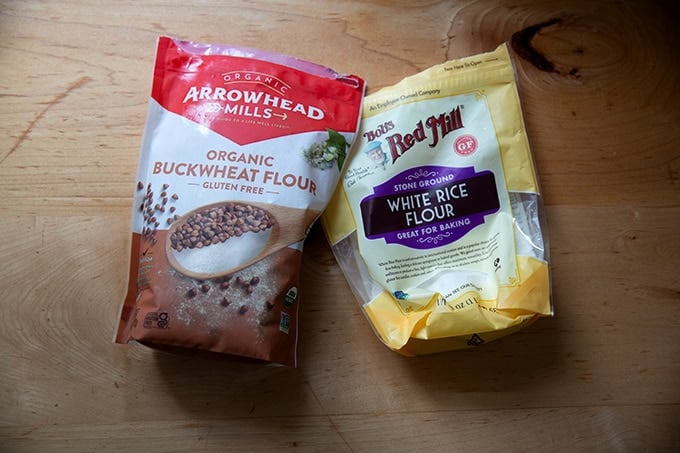
For this recipe, you’ll need both buckwheat flour and white rice flour.
Additionally, you’ll need an egg, salt, water, and milk.
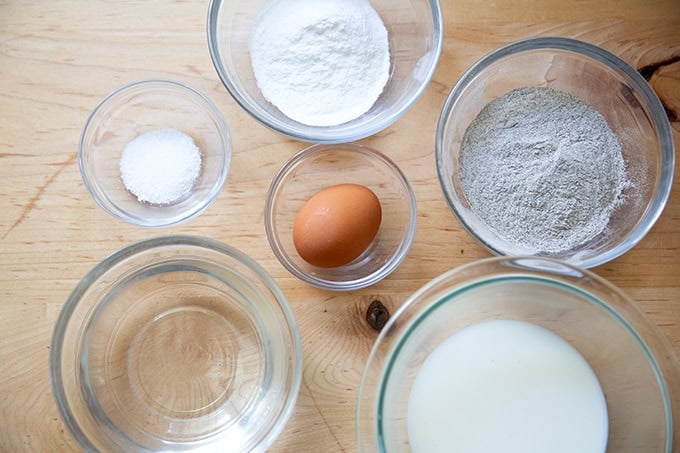
Combine all ingredients in a blender.
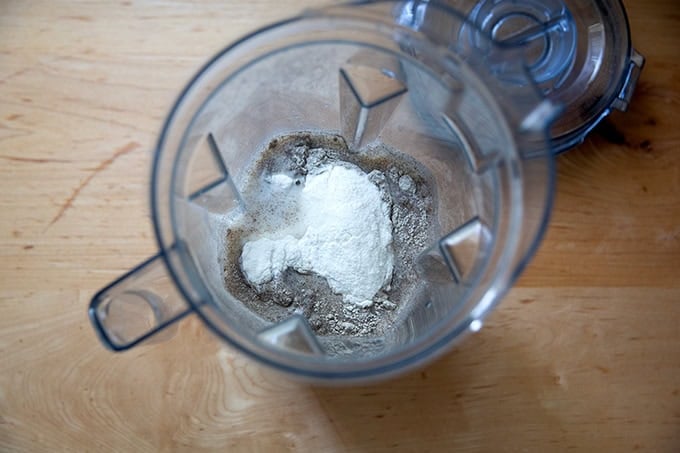
Blend until frothy and combined.
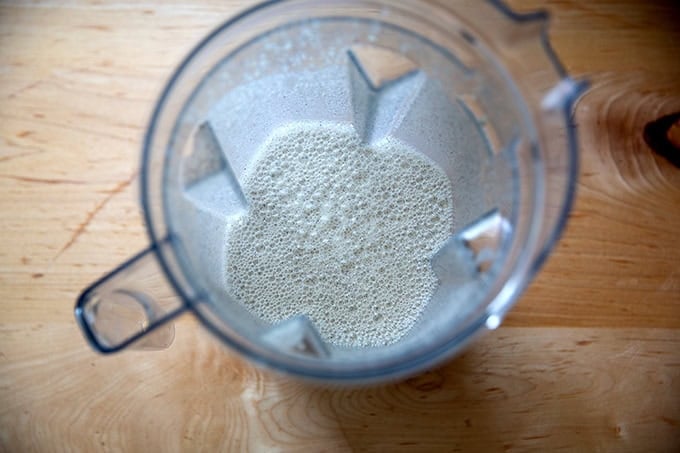
Transfer to a smaller pourer — I like to use my 2-cup measure here:
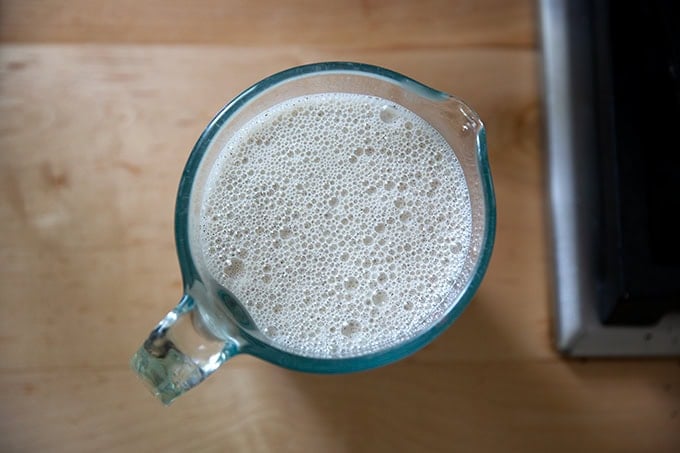
Melt a teaspoon of butter over medium heat in a 12-inch nonstick skillet. I’m using this Le Creuset crepe pan .
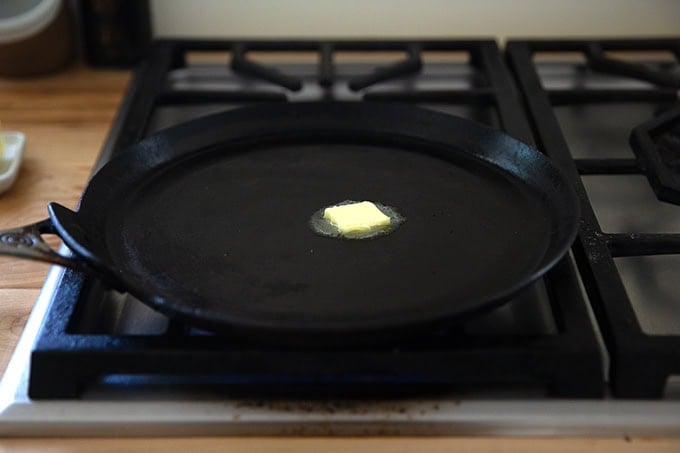
Add roughly 1/3 cup of the crepe batter — I find I need a heaping 1/3 cup to fill the skillet in a thin layer. Cook for about 2 minutes or until the edges separate from the sides of the pan; then…
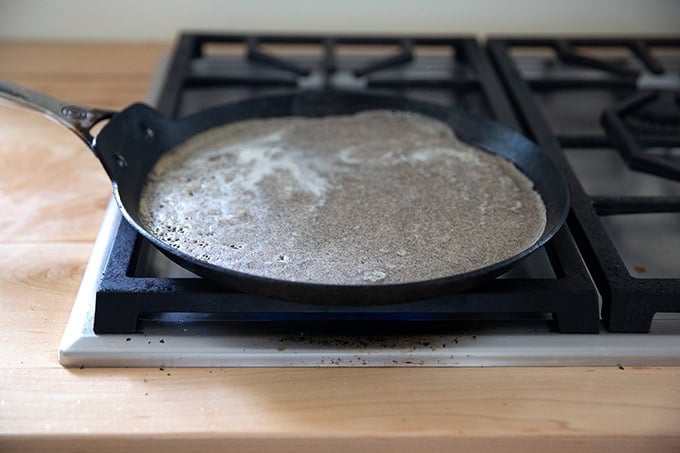
… flip it. I find my hands to be the best utensil here… be careful/don’t burn yourself. Cook for another minute more.
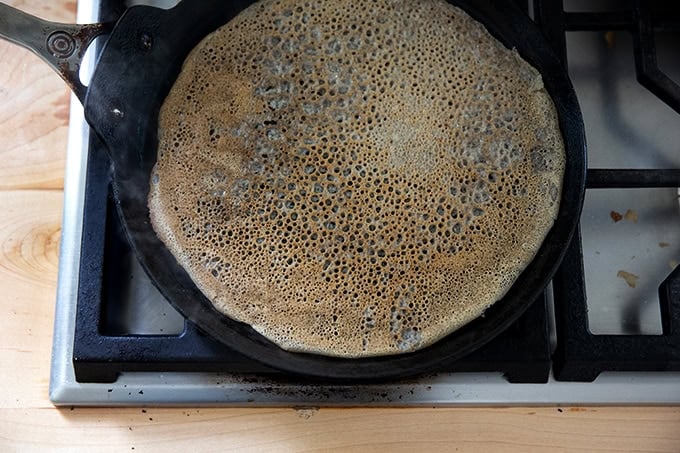
Repeat with the remaining batter until…
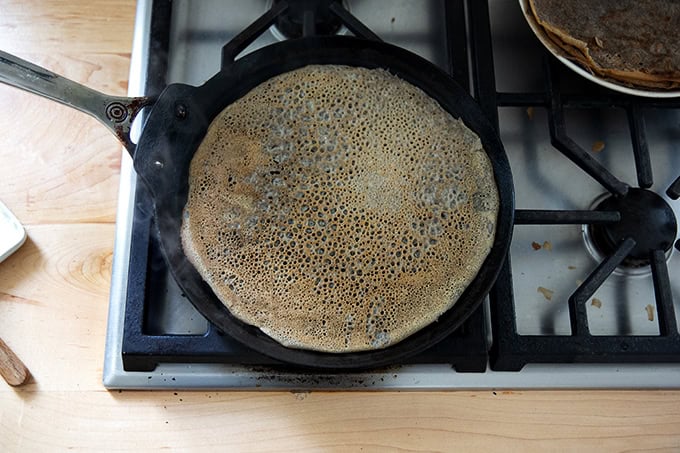
You have a stack of crepes on your hands.
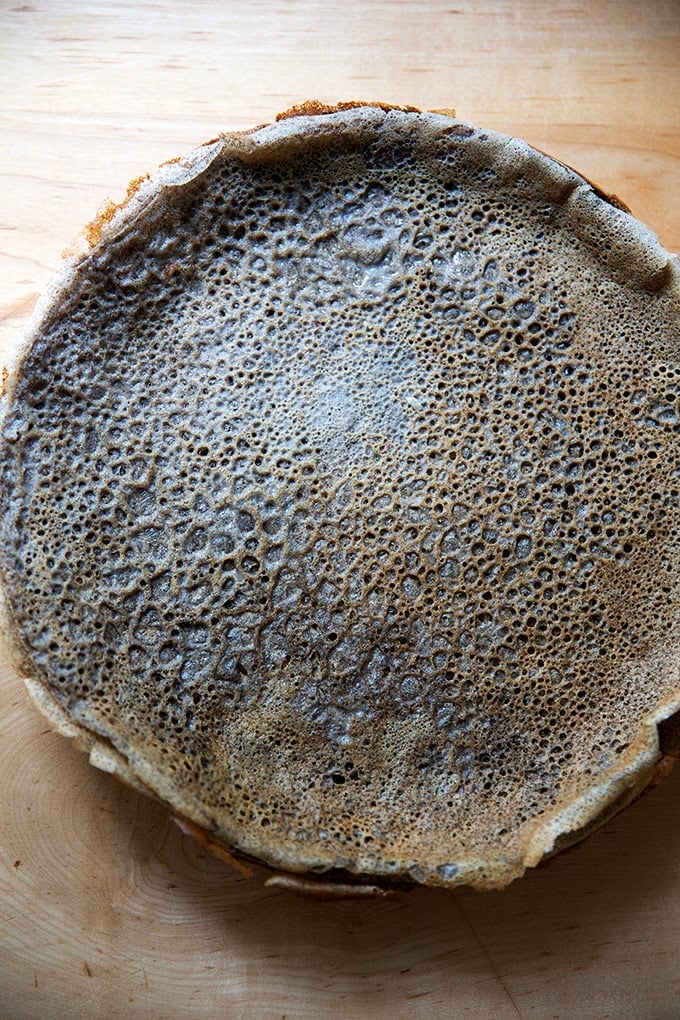
This recipe yields 5 large crepes (plus a small one) but you can scale it up as needed.
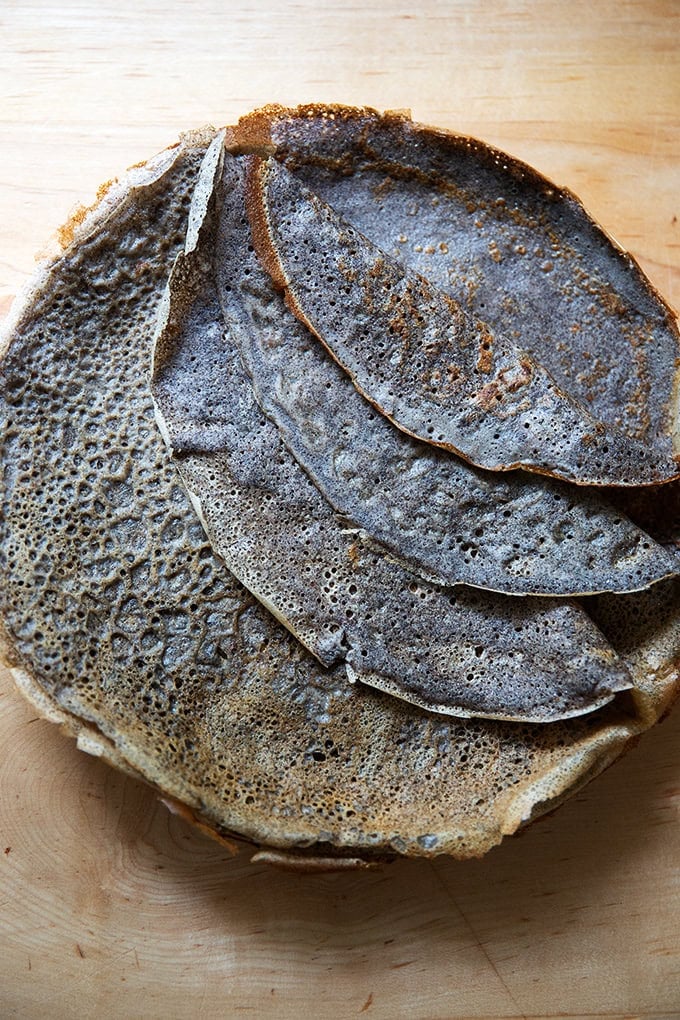
They will be paper thin.
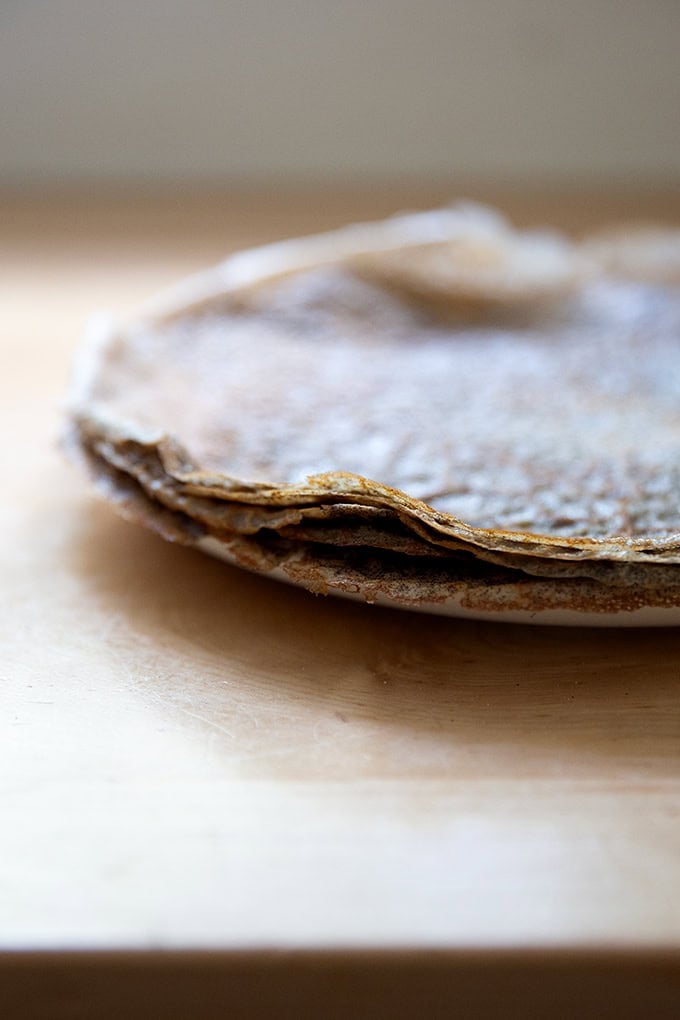
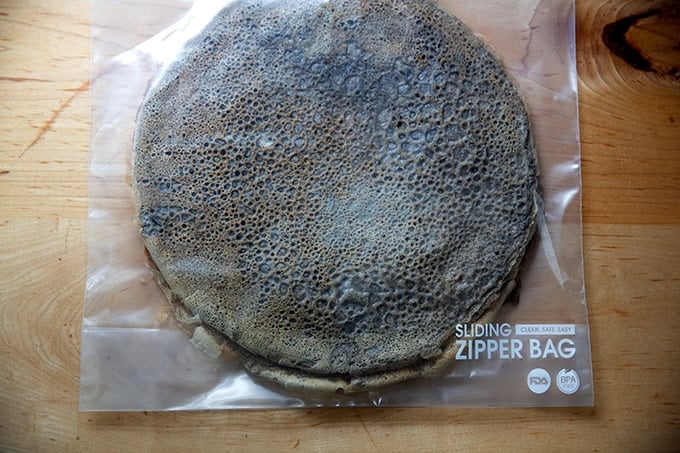
Transfer to an airtight bag and freeze for up to 3 months or use immediately as in the egg-and-cheese “galettes” below.
Egg & Cheese Crepe (AKA Galette Complete)
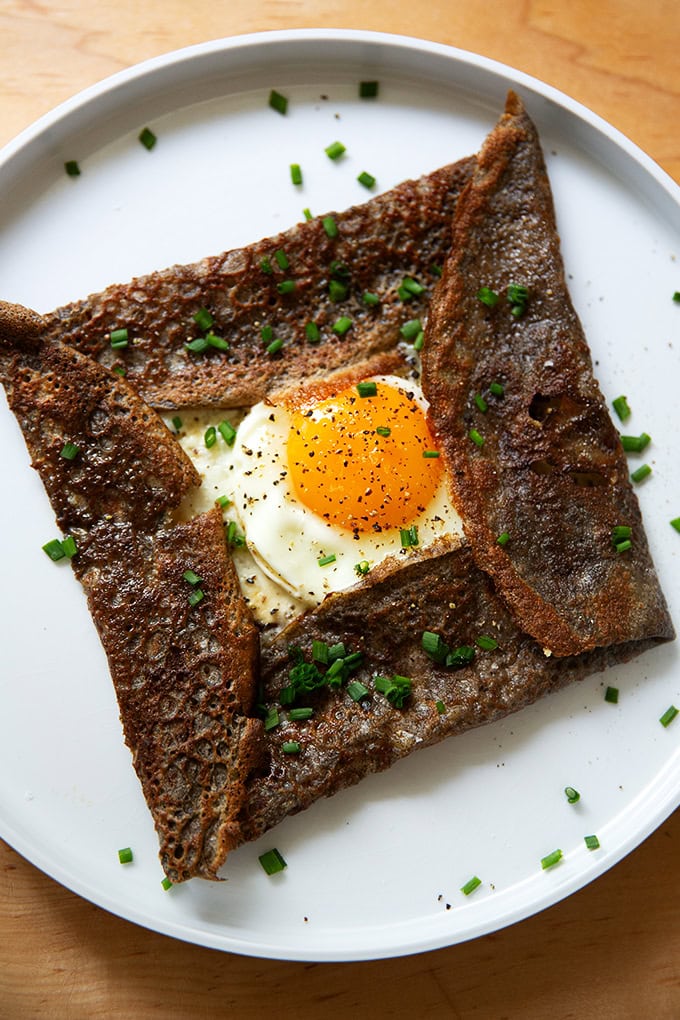
In the States, if you order buckwheat crepes for breakfast, you’ll get something like the below-pictured ensemble. In France, they’re referred to as “galettes completes” or “galettes Bretonnes”.
Gather your ingredients: I’m using Gruyère, chives, and an egg.
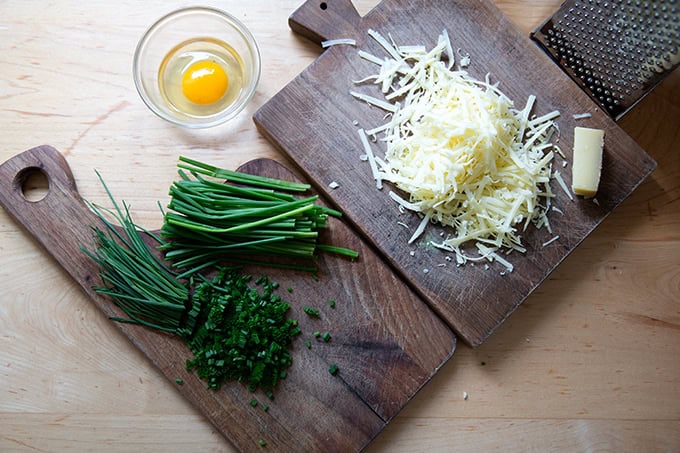
To make one, return a buckwheat crepe to the skillet you used to make the crepes and set it over medium heat. Top it with some grated Gruyère cheese. Fry an egg in another skillet:
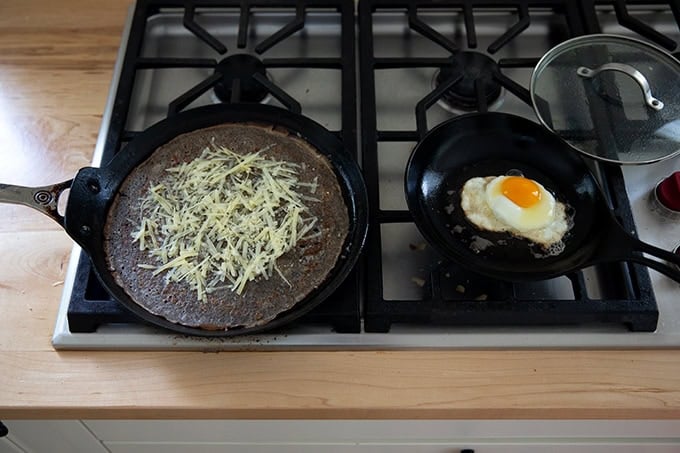
Slide the egg onto the crepe:
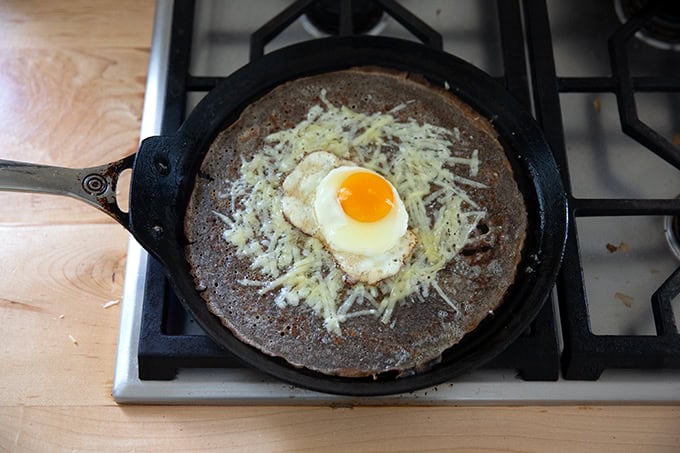
Fold the sides in:
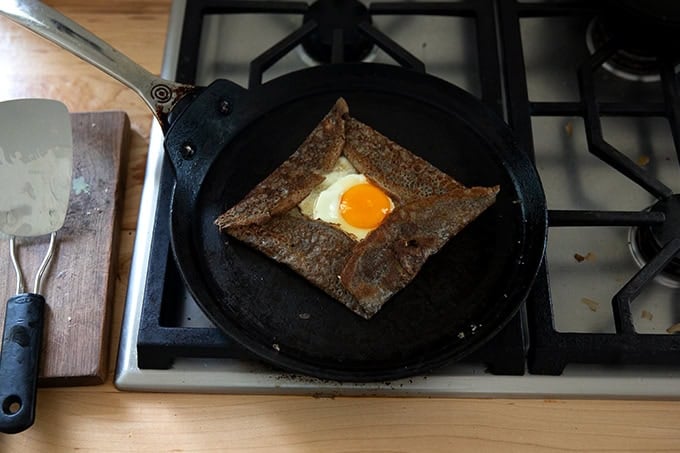
Transfer to a plate and shower with chives or herb of choice:
Friends! These are fun. I’d love for you to try them.
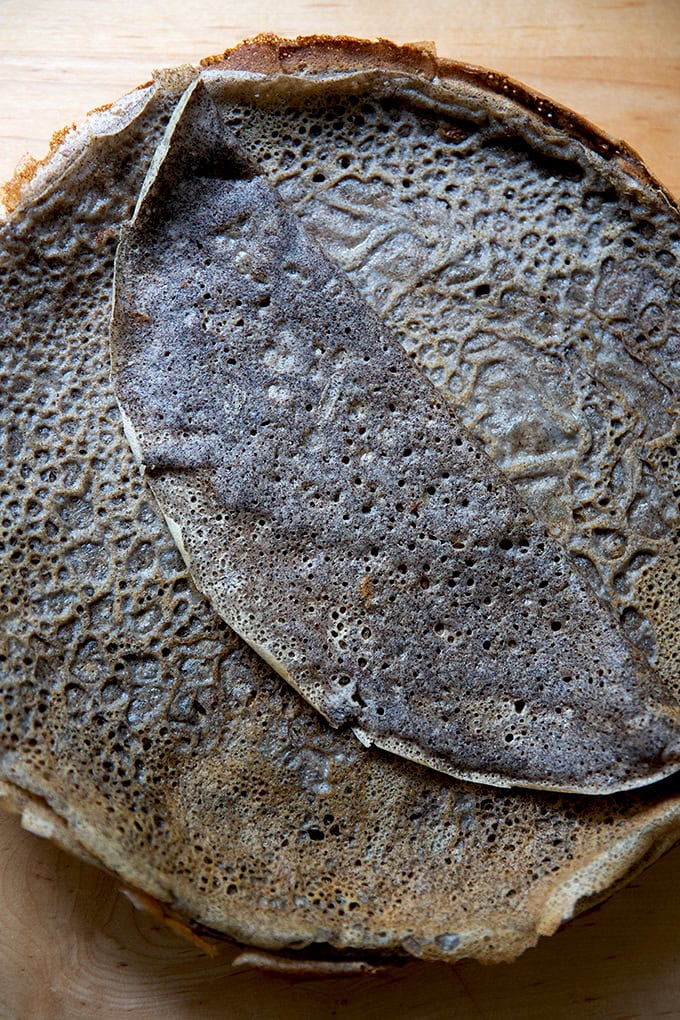
Description
Adapted from Phoebe Lapine’s Carbivore.
Ingredient Notes:
- For best results, use a scale to measure.
- I am using this 12-inch nonstick crepe pan , which I love.
- Salt: If you are using Morton kosher salt or sea salt use half as much by volume or the same amount by weight. Also: the original recipe calls for 1/4 teaspoon of salt, but I love salt and so am using a little bit more. Feel free to adjust the salt amount to taste.
- Milk: I use 2%; Phoebe says you can use whole milk or nondairy milk.
Process Notes:
This crepe-making process takes some practice and you will likely make one or two bad ones before you find your rhythm.
- Where the process can go wrong: flipping too quickly . If the batter isn’t set and you try to flip it, you’ll be left with a mangled mess of partially cooked batter. Be patient, set a timer, and look for the crepe edges pulling away from the sides before you flip.
- Tip for success: Find the right amount of batter given the size of the skillet you are using . If you use too much batter, the crepes will be too thick; if you don’t use enough batter; they’ll be too fragile. I find a heaping 1/3 cup to be perfect for my skillet but you may need more or less.
- Final tip: Find the right balance of heat. You may need to adjust your burner throughout the process to find the right amount of heat. If it’s too hot, the crepes will get too crispy; if it’s not hot enough, you won’t get that appealing lacy-looking texture, which doesn’t matter from a taste perspective only a visual one.
For the buckwheat crepes:
- 1 egg
- 68 grams ( 1/2 cup ) buckwheat flour
- 48 grams ( 1/3 cup ) white rice flour
- 3 grams ( 3/4 teaspoon ) Diamond Crystal kosher salt, see notes above
- 227 grams ( 1 cup ) water
- 124 grams ( 1/2 cup ) milk, see notes above
- butter as needed
For each “Galette Complete”:
- butter
- 1 egg
- 1 buckwheat crepe
- 1/2 to 3/4 cup grated Gruyère
- salt and pepper to taste
- finely chopped chives
- Make the crepe batter: Place all of the crepe ingredients in a blender. Blend on medium speed until frothy and well combined, about 1 minute. The batter will be very thin. Transfer to a smaller vessel — I like to use my 2-cup measure here or transfer to a storage vessel and place in the fridge for up to 1 week.
- Prepare the skillet: Heat a large (ideally 12 inches) nonstick crepe pan over medium heat to medium-high heat. Add 1 teaspoon of butter, let it melt, then swirl the pan to distribute it.
- Cook the crepes: (Read notes above before proceeding.) Pour 1/3 cup of the crepe batter into the skillet and quickly turn the pan to coat the entire bottom in a thin layer. If there are any holes, carefully pour a splash more of the crepe batter into the skillet to fill them. Cook the crepe until set, firm, and slightly pulling away from the sides, about 2 minutes. Run a large offset spatula along the perimeter of the crepe, then flip it in one swift motion — I find it easier to use my hands here to flip the crepes: carefully grab one edge of the crepe; then flip it in one swift motion. Cook the second side for another minute or until set, then transfer to a plate. Repeat with the remaining batter.
For the “Galete Complete”:
- In a small skillet, melt 2 teaspoons of butter over medium-high heat. Crack in an egg and cook until the white is set and the yolk is nearly cooked — I find covering my skillet helps the process move along.
- Set the same skillet you used to make the crepes over medium heat. Add a small amount of butter (less than a teaspoon) and swirl to coat. Set a crepe in the skillet and cover the center with the cheese, leaving roughly a 1.5-inch border. When the cheese has melted and the crepe is just beginning to crisp, slide in the egg. Season with salt and pepper to taste. Use a spatula to carefully fold in the sides of the crepe to form a square.
- Transfer the galette to a plate and season with chives to taste.
- Prep Time: 15 minutes
- Cook Time: 20 minutes
- Category: Breakfast
- Method: Stovetop
- Cuisine: French, American
Description
Adapted from Phoebe Lapine’s Carbivore.
Ingredient Notes:
- For best results, use a scale to measure.
- I am using this 12-inch nonstick crepe pan , which I love.
- Salt: If you are using Morton kosher salt or sea salt use half as much by volume or the same amount by weight. Also: the original recipe calls for 1/4 teaspoon of salt, but I love salt and so am using a little bit more. Feel free to adjust the salt amount to taste.
- Milk: I use 2%; Phoebe says you can use whole milk or nondairy milk.
Process Notes:
This crepe-making process takes some practice and you will likely make one or two bad ones before you find your rhythm.
- Where the process can go wrong: flipping too quickly . If the batter isn’t set and you try to flip it, you’ll be left with a mangled mess of partially cooked batter. Be patient, set a timer, and look for the crepe edges pulling away from the sides before you flip.
- Tip for success: Find the right amount of batter given the size of the skillet you are using . If you use too much batter, the crepes will be too thick; if you don’t use enough batter; they’ll be too fragile. I find a heaping 1/3 cup to be perfect for my skillet but you may need more or less.
- Final tip: Find the right balance of heat. You may need to adjust your burner throughout the process to find the right amount of heat. If it’s too hot, the crepes will get too crispy; if it’s not hot enough, you won’t get that appealing lacy-looking texture, which doesn’t matter from a taste perspective only a visual one.
For the buckwheat crepes:
- 1 egg
- 68 grams ( 1/2 cup ) buckwheat flour
- 48 grams ( 1/3 cup ) white rice flour
- 3 grams ( 3/4 teaspoon ) Diamond Crystal kosher salt, see notes above
- 227 grams ( 1 cup ) water
- 124 grams ( 1/2 cup ) milk, see notes above
- butter as needed
For each “Galette Complete”:
- butter
- 1 egg
- 1 buckwheat crepe
- 1/2 to 3/4 cup grated Gruyère
- salt and pepper to taste
- finely chopped chives
- Make the crepe batter: Place all of the crepe ingredients in a blender. Blend on medium speed until frothy and well combined, about 1 minute. The batter will be very thin. Transfer to a smaller vessel — I like to use my 2-cup measure here or transfer to a storage vessel and place in the fridge for up to 1 week.
- Prepare the skillet: Heat a large (ideally 12 inches) nonstick crepe pan over medium heat to medium-high heat. Add 1 teaspoon of butter, let it melt, then swirl the pan to distribute it.
- Cook the crepes: (Read notes above before proceeding.) Pour 1/3 cup of the crepe batter into the skillet and quickly turn the pan to coat the entire bottom in a thin layer. If there are any holes, carefully pour a splash more of the crepe batter into the skillet to fill them. Cook the crepe until set, firm, and slightly pulling away from the sides, about 2 minutes. Run a large offset spatula along the perimeter of the crepe, then flip it in one swift motion — I find it easier to use my hands here to flip the crepes: carefully grab one edge of the crepe; then flip it in one swift motion. Cook the second side for another minute or until set, then transfer to a plate. Repeat with the remaining batter.
For the “Galete Complete”:
- In a small skillet, melt 2 teaspoons of butter over medium-high heat. Crack in an egg and cook until the white is set and the yolk is nearly cooked — I find covering my skillet helps the process move along.
- Set the same skillet you used to make the crepes over medium heat. Add a small amount of butter (less than a teaspoon) and swirl to coat. Set a crepe in the skillet and cover the center with the cheese, leaving roughly a 1.5-inch border. When the cheese has melted and the crepe is just beginning to crisp, slide in the egg. Season with salt and pepper to taste. Use a spatula to carefully fold in the sides of the crepe to form a square.
- Transfer the galette to a plate and season with chives to taste.
- Prep Time: 15 minutes
- Cook Time: 20 minutes
- Category: Breakfast
- Method: Stovetop
- Cuisine: American, French
Find it online : https://alexandracooks.com/2024/05/05/lacy-buckwheat-crepes-gluten-free/
This might be the simplest, most delicious, and most crowd-pleasing appetizer you make. It takes no time to whip together, and the result is outstanding: a salty, sweet, tangy spread for all of your entertaining needs.
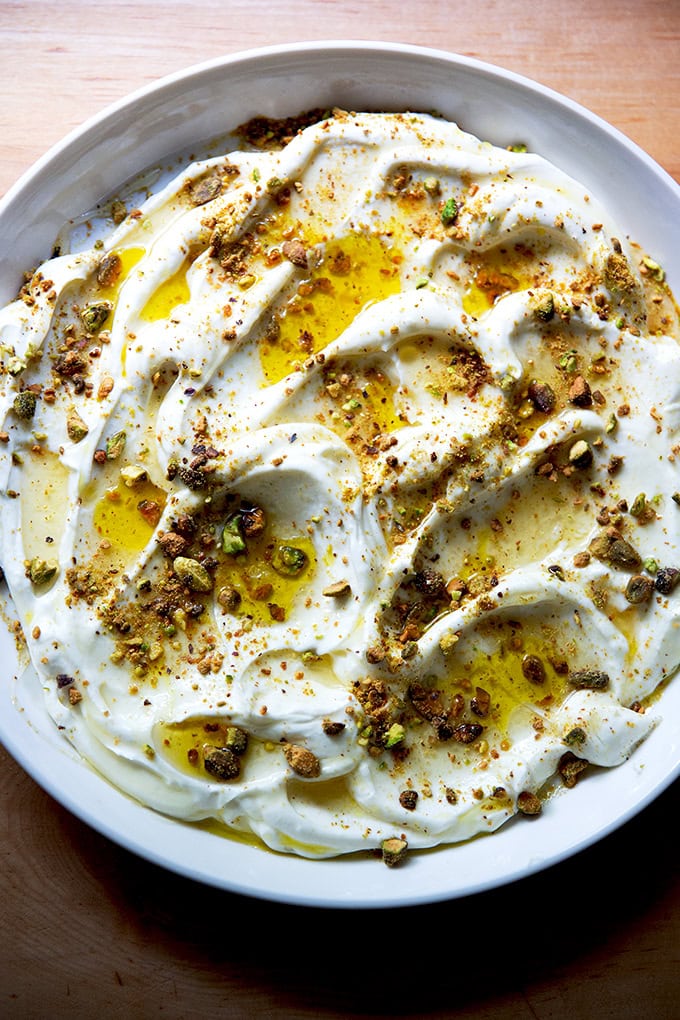
Ricotta: A Love Story . Where to begin?
I spent much of my life thinking I disliked ricotta, thanks no doubt to my introduction to it: dining hall lasagna and stuffed shells, whose fillings left me considering it nothing more than a grainy, watery, flavorless paste.
Ina Garten and her recipe for homemade ricotta showed me the light, revealing how creamy and fluffy the good stuff can be. And Missy Robbins showed me that whipping ricotta — blending it in a food processor until smooth — can transform it into an entirely different product altogether: a pipable purée, light and smooth, not unlike a creamy, savory frosting.
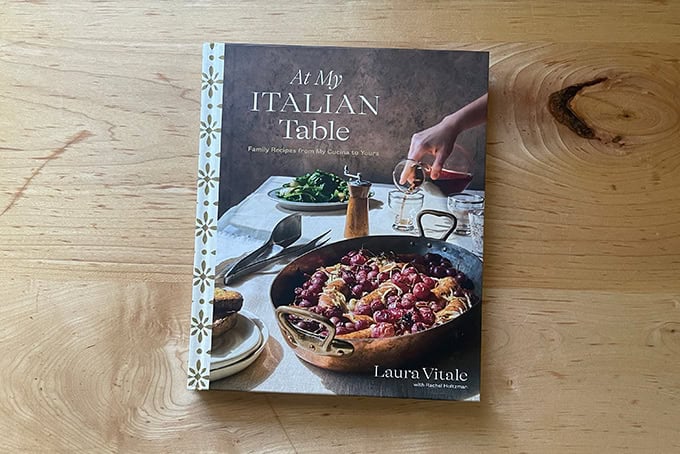
In recent weeks, Laura Vitale, with her recipe for whipped ricotta with honey and pistachios, has made me more smitten with the cheese than I ever imagined. The recipe comes from her latest book, At My Italian Table , and when I first made it, I spooned it onto a platter, then set it on the table while I went out back to grill some bread. When I returned, I found my son sitting in front of it with a spoon. When the bread arrived, the whole family went to town, and before long, it was gone.
In the recipe’s intro, Laura writes: “If you don’t feel like making dinner, whip up a batch of this instead and sit on your back porch with some mortadella, charred bread, a bowl of ruffled potato chips, and an ice-cold glass of wine or an Aperol spritz.”
Last night, I did nearly this, pairing the ricotta with Laura’s herby roasted tomatoes (see below) and a few olive oil-and-sea salt-topped pizzas. We opened a few tins of sardines and called dinner done. It was a dream, and the whole ensemble made me excited for the warmer months ahead, for arranging vegetables on platters, assembling giant salads, turning the oven off and the grill on, opening tins of fish and jars of olives… and, well, with a platter of creamy cheese by our sides, the possibilities feel endless!
PS: I think these 4-Ingredient Balsamic-Roasted Mini Peppers and this no-knead focaccia would be a perfect match for the creamy, dreamy whipped ricotta.
Whipped Ricotta, Step by Step
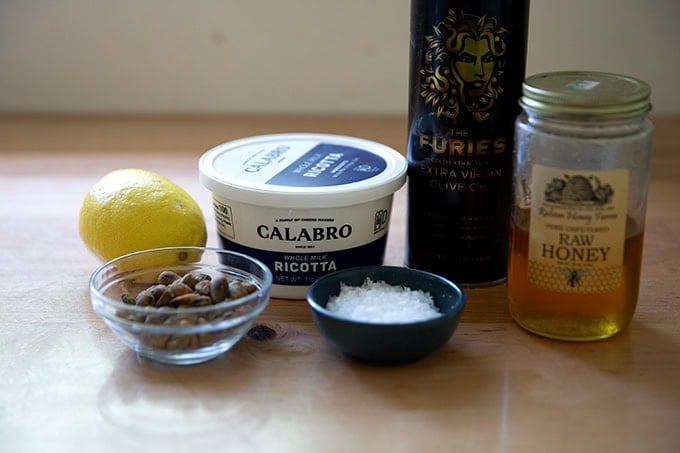
Gather your ingredients:
Crush the pistachios first…
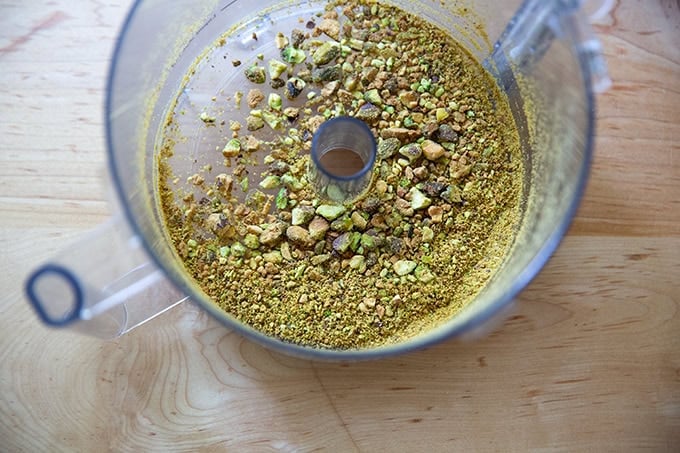
… then transfer them to a bowl and without rinsing the food processor, add the ricotta, lemon zest, olive oil, and salt:
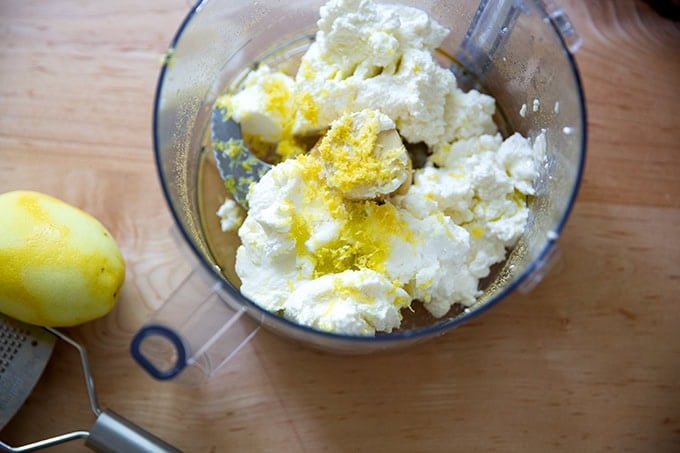
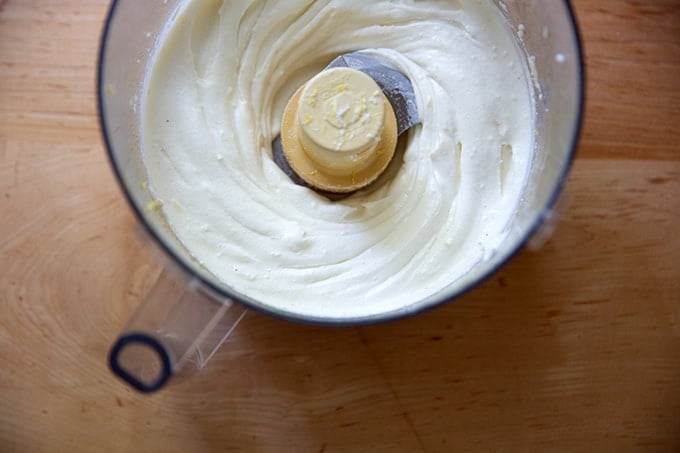
Purée until smooth:
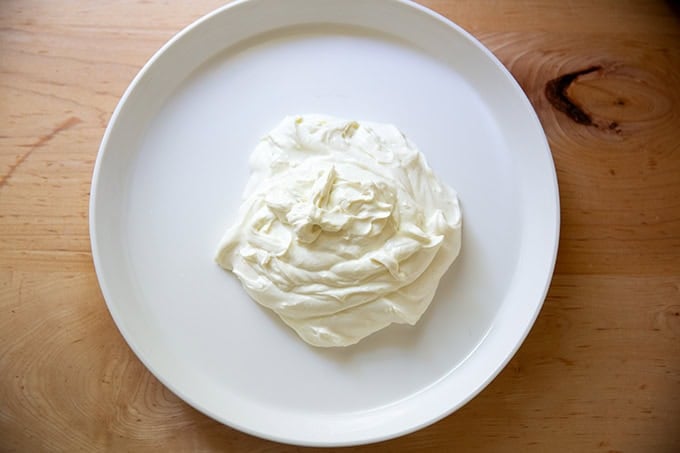
Plop the whipped ricotta into the center of a platter:
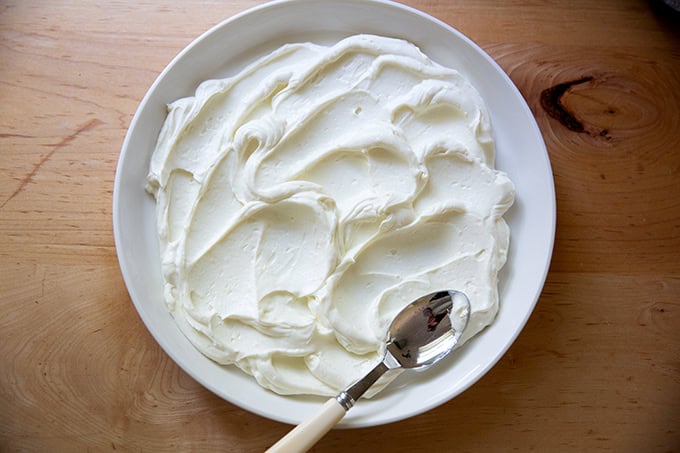
Then use the back of a spoon to spread it, creating peaks and valleys to catch what will follow:
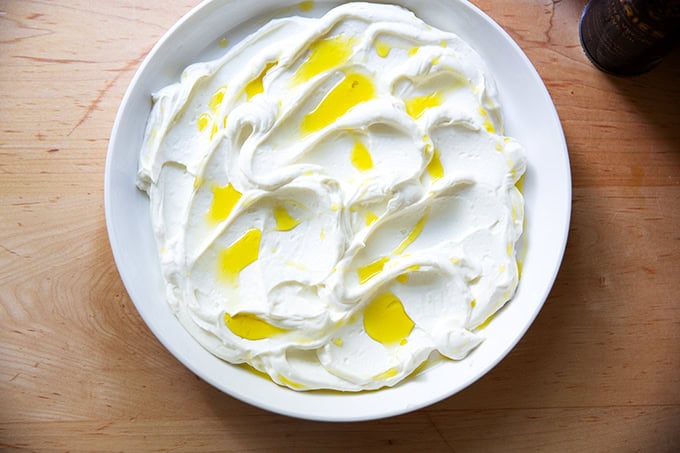
Drizzle with olive oil:
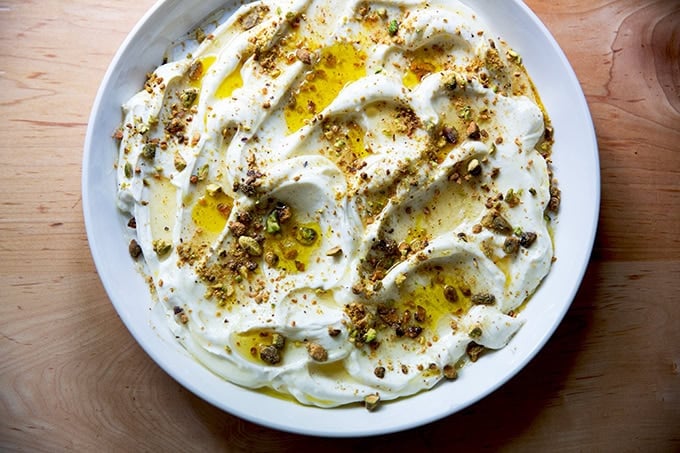
Then finish with honey and the chopped pistachios:
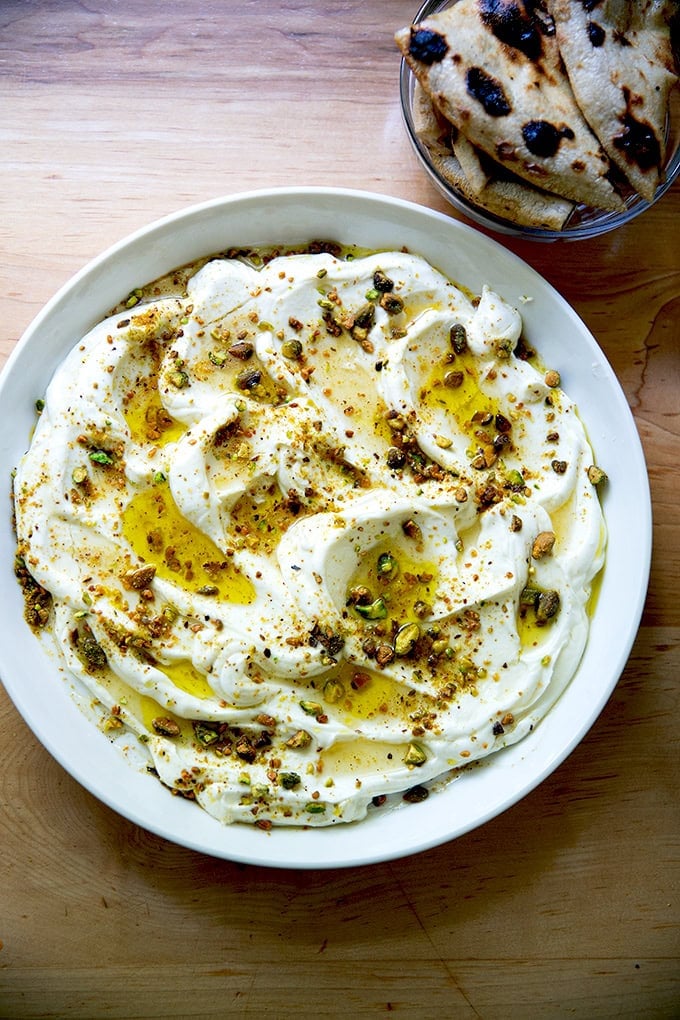
Serve it aside grilled bread or dipper of choice:
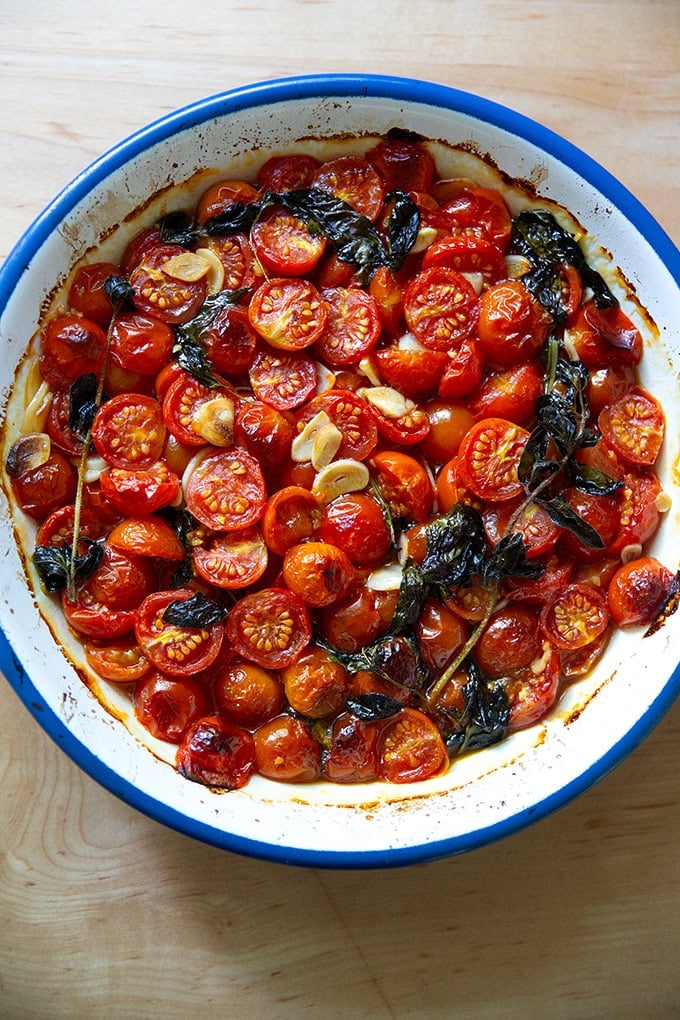
Incidentally, I’ve also been making the herby, roasted tomatoes from At My Italian Table …
… and I’ve been loving serving the two together:
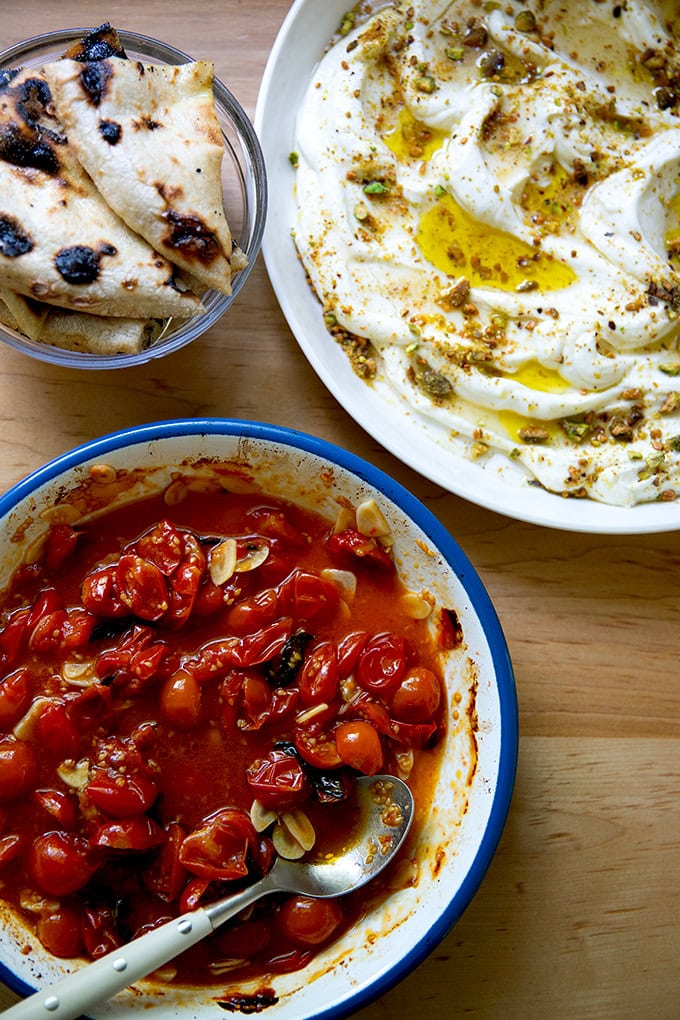
Both recipes come from Laura Vitale’s new book At My Italian Table :
Description
From Laura Vitale’s new book At My Italian Table :
I’ve made a few tiny changes: I didn’t have thyme the first time I made it, and we all loved it, so I’ve never made it with the thyme. I’m sure it would be a delicious addition here if you want to add it. I also have not made it with the garlic — the original recipe calls for such a small amount (1/2 of a small clove) and because I’ve been serving this aside the herby, roasted tomatoes from the same book, the recipe for which calls for a lot of garlic, I’ve left it out here.
- 1/4 cup shelled, salted, roasted pistachios
- 16 ounces whole milk ricotta (Calabro is my favorite brand)
- 2 tablespoons extra-virgin olive oil
- kosher salt (I use Diamond Crystal brand)
- 1 lemon
- 2 sprigs fresh thyme, leaves picked, optional (I haven’t been adding the thyme, see notes above.)
- 2 tablespoons honey
- bread for serving — grilled, charred, olive-oil toasted, etc.
- In a food processor, pulse the pistachios until finely chopped. Transfer to a bowl and set aside.
- Without washing the food processor, add the ricotta, 1 tablespoon of the olive oil, and 1/2 teaspoon kosher salt. Zest the lemon into the food processor. Process until thick and creamy, about 1 minute. Taste. Add more salt to taste. (I have been adding 1/4 to 1/2 teaspoon more salt, but do taste and adjust the seasoning to taste.)
- Transfer the mixture to the center of a shallow serving platter. Use the back of a spoon to spread it out, creating peaks and valleys for the toppers to fall into.
- Drizzle the ricotta with the remaining 1 tablespoon of olive oil and the honey. (Note: It will feel like a lot of honey. If you are worried about it being too sweet, you can start with 1 tablespoon; then add the remaining tablespoon if desired. I was worried about it being too sweet, but I have used the entire 2 tablespoons of honey both times, and I find it to be perfect.)
- Sprinkle with the pistachios — you may not need all of the pistachios initially, but keep them in a serving bowl nearby so you can re-garnish the ricotta as needed.
- Prep Time: 10 minutes
- Category: Appetizer
- Method: Food processor
- Cuisine: American, Italian
