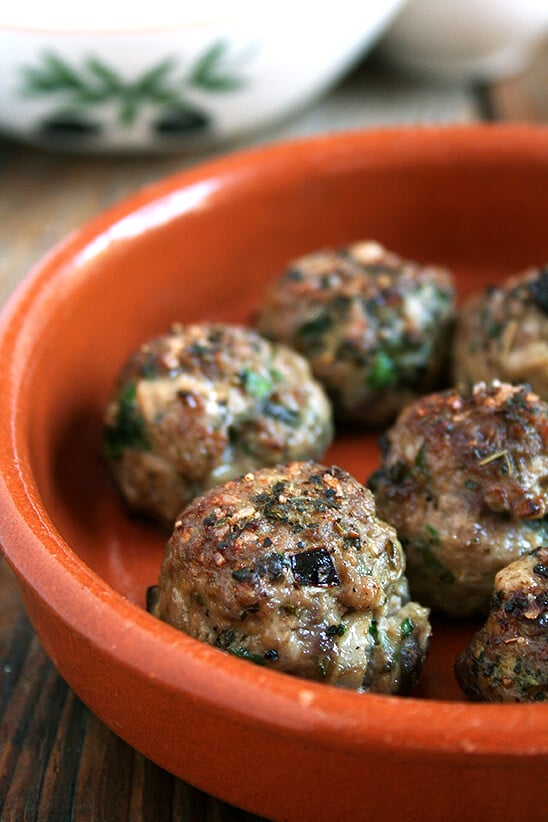
These broiled lamb meatballs, seasoned with parsley, mint, and red wine-soaked bread, are irresistible. Make them ahead of time, chill until you are ready to serve, then broil on demand. I love sprinkling them with a bit of vinegar right out of the oven — so good!
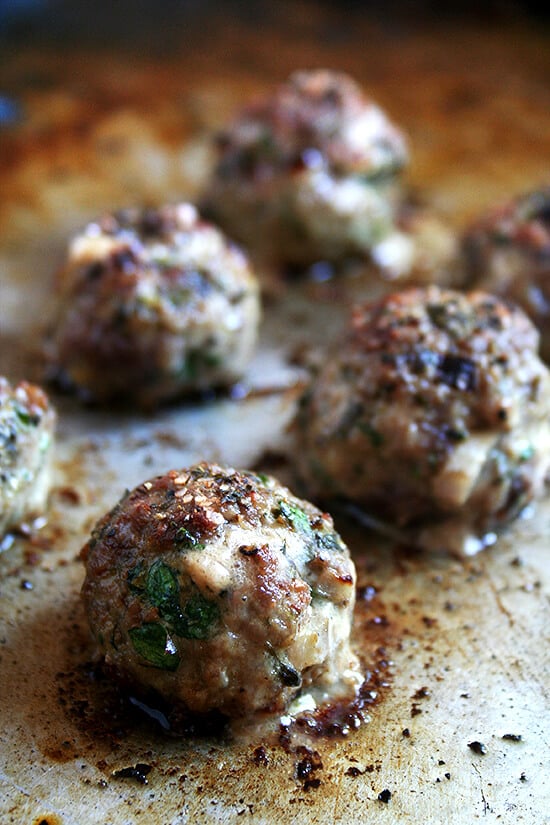
It had been a successful week in the kitchen. Lamb meatballs, loaded with mint and parsley, broiled and sprinkled with vinegar, tasted as yummy as ever; olive bread, a two-day labor of love, proved as it always does, a worthwhile effort; and tiropitas (cheese-stuffed fillo triangles), irresistibly delicious, burned my tongue far too many times.
My Easter menu was all but finalized. I was feeling really good. And then I called my mother.
We chatted about meatballs, a wheat berry cake she’s been eyeing, and some other Easter menu ideas, and then she asked: “Are you planning on making a salad?”
“No,” I replied, “I’ve discovered roasted cabbage. It is so delicious and so easy. We have been devouring heads of it in single sittings.”
“Mmm hmm,” my mother responded.
Now, let me explain something. “Mmm hmm,” in my family is code for, “I don’t like what I’m hearing.”
What?! I wanted to scream, but before I could, my mother explained: “Well, you never make cabbage for company. Your whole house will smell of it.”
I did not know this. Did you?
I protested. I insisted there could be no possible way a few roasted cabbage wedges could overpower the smells of olive bread baking and of layers of fillo crisping and of lamb meatballs broiling. I affirmed, cabbage it would be.
“Sounds wonderful,” she replied. We said our goodbyes.
Of course I crossed cabbage off my grocery list upon hanging up the phone. Even if my suspicions are correct — that if the smells of bread and pita and lamb do in fact mask the cabbage — how could I possibly make it? Why add another worry to the list? Why tempt my guests to whisper on their ways home, “Great party, but boy, what was she simmering on that stove? Cat food?” I couldn’t take the risk.
A Greek salad it would be. Oh, mothers. Mother! I love you.
- 1 lb. ground lamb*
- 1 teaspoon kosher salt and freshly ground pepper to taste
- 1 teaspoon oregano plus more for sprinkling
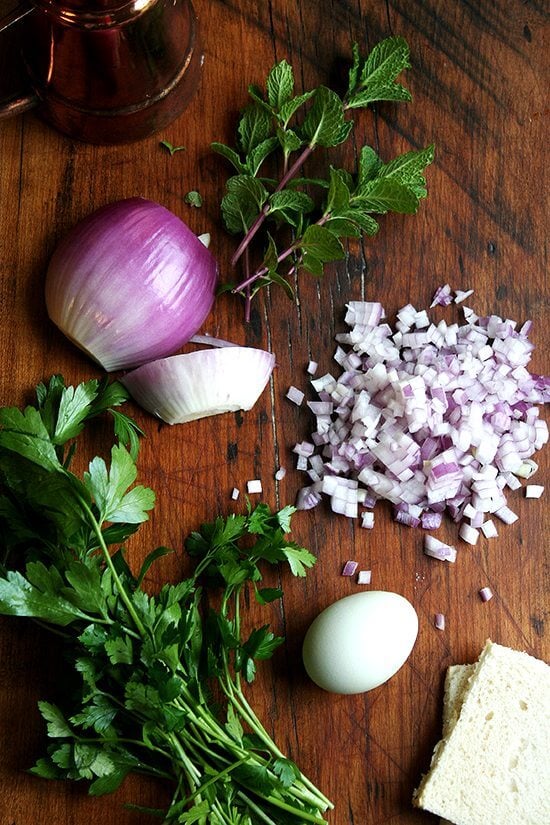
- 1 small red onion, finely minced (about 1/3 cup or more to taste)
- 2 heaping tablespoons mint, chopped
- 2 tablespoon chopped fresh parsley
- 1 tablespoons olive oil
- 2 slices of white bread**, crusts removed
- 2 tablespoons red wine
- 1 eggs, lightly beaten
- red wine vinegar for sprinkling (optional)
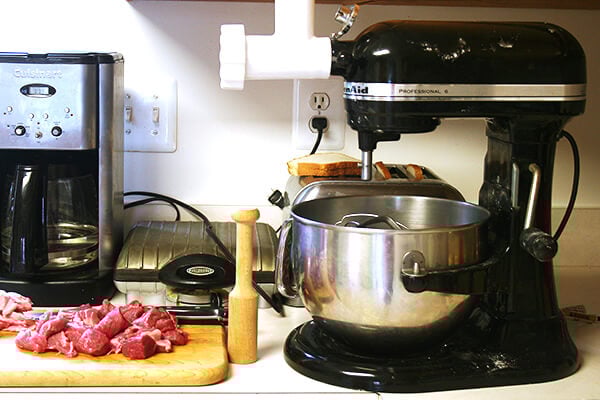
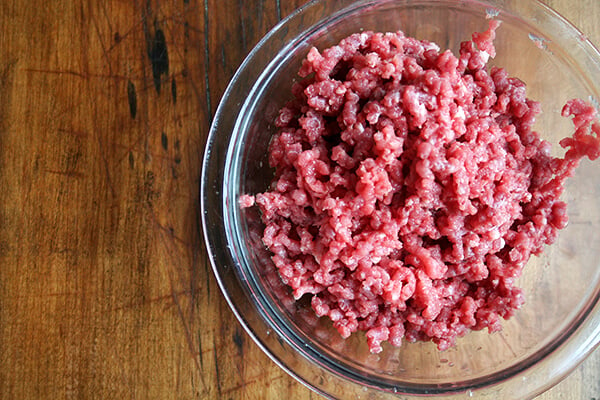
- If you can’t find ground lamb, buy a piece of lamb (shoulder is nice) and grind it yourself or have the butcher grind it for you at the market.
** I always use white sandwich bread (not Wonderbread) but you probably could use a bakery-style loaf of white bread, too.
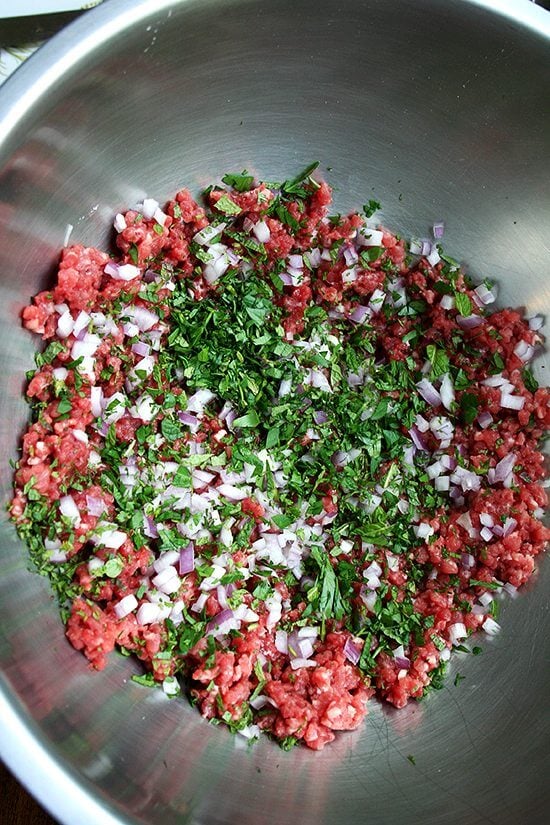
- Put the ground lamb in a large bowl and spread out to create a thin layer. Season all over with the salt and pepper to taste. Sprinkle the onion over the meat. Top with the herbs and the olive oil.
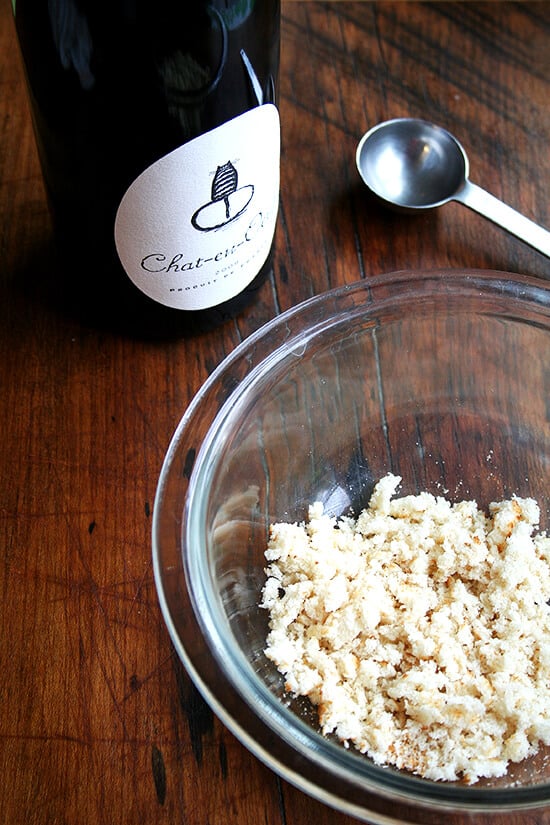
- Meanwhile, toast the bread so it’s just dried out — not browned. (If you plan ahead, you can leave a few slices of bread out for a few hours. You also could dry out the bread in a 300ºF oven for 10 to 15 minutes.) Crumble bread slices into a separate bowl. Moisten with the wine, then add to the meat bowl.
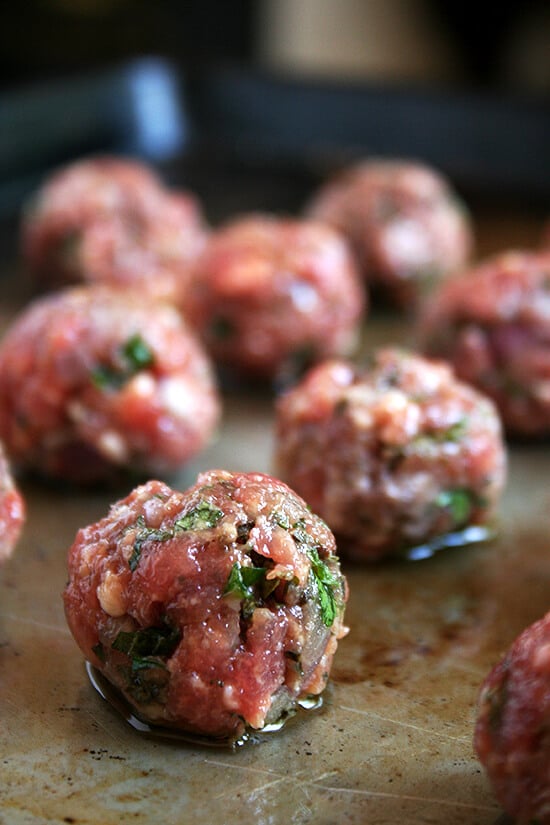
- Add the egg to the meat bowl and then gently mix all of the ingredients together being careful not to over mix.OK, it’s time to test your mixture. Preheat the broiler. Using a tablespoon (a measuring tablespoon), scoop out a level spoonful and roll it into a ball with your hands. If it holds together, you’re good to go. If it doesn’t hold together, toast another slice of bread, crumble it up, soak it in a tablespoon more of wine, and add it to the mixture. When the consistency is such that a ball holds together, place it on a sheetpan. Season with a pinch more salt, pepper and oregano. Broil 4 minutes. Remove from oven, let cool, then taste it. Adjust meat mixture accordingly with more salt, pepper, oregano, onion or herbs. Broil another one, taste it, etc. — repeat process until you’re happy with the flavors. Chill your meatball mixture for at least an hour. This mixture can be made up to a day in advance, too.
- Preheat the broiler. Coat a sheetpan very lightly in olive oil. Shape your meatballs again using a tablespoon as a measure and place them on the prepared sheetpan as you go. Season with a pinch more salt, pepper and oregano. Broil 4 minutes or until done. (Note: You can make the meatballs any size you wish. Just adjust the time accordingly. My mother makes larger meatballs and broils them for 4 minutes a side.)
- This might be a Greek tradition, but we sprinkle the just-broiled meatballs with a little bit of vinegar. Try it. You might like it, too.
- Prep Time: 25 minutes
- Cook Time: 18 minutes
- Category: Meatball
- Method: Broiler
- Cuisine: Greek
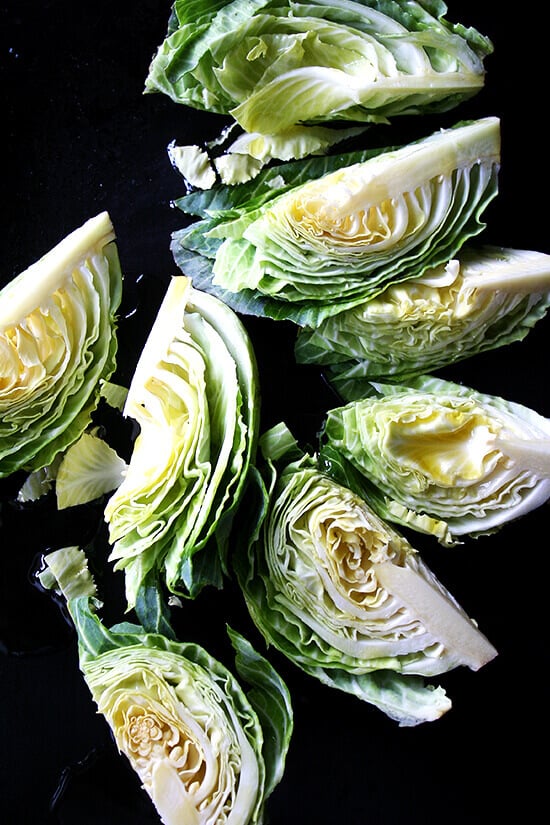
Roasted Cabbage
Preheat oven to 400ºF. Toss cabbage wedges with olive oil and kosher salt on a sheetpan. Roast for 20 to 30 minutes. Test with a knife — they should be tender.
These broiled lamb meatballs, seasoned with parsley, mint, and red wine-soaked bread, are irresistible. Make them ahead of time, chill until you are ready to serve, then broil on demand. I love sprinkling them with a bit of vinegar right out of the oven — so good!
It had been a successful week in the kitchen. Lamb meatballs, loaded with mint and parsley, broiled and sprinkled with vinegar, tasted as yummy as ever; olive bread, a two-day labor of love, proved as it always does, a worthwhile effort; and tiropitas (cheese-stuffed fillo triangles), irresistibly delicious, burned my tongue far too many times.
My Easter menu was all but finalized. I was feeling really good. And then I called my mother.
We chatted about meatballs, a wheat berry cake she’s been eyeing, and some other Easter menu ideas, and then she asked: “Are you planning on making a salad?”
“No,” I replied, “I’ve discovered roasted cabbage. It is so delicious and so easy. We have been devouring heads of it in single sittings.”
“Mmm hmm,” my mother responded.
Now, let me explain something. “Mmm hmm,” in my family is code for, “I don’t like what I’m hearing.”
What?! I wanted to scream, but before I could, my mother explained: “Well, you never make cabbage for company. Your whole house will smell of it.”
I did not know this. Did you?
I protested. I insisted there could be no possible way a few roasted cabbage wedges could overpower the smells of olive bread baking and of layers of fillo crisping and of lamb meatballs broiling. I affirmed, cabbage it would be.
“Sounds wonderful,” she replied. We said our goodbyes.
Of course I crossed cabbage off my grocery list upon hanging up the phone. Even if my suspicions are correct — that if the smells of bread and pita and lamb do in fact mask the cabbage — how could I possibly make it? Why add another worry to the list? Why tempt my guests to whisper on their ways home, “Great party, but boy, what was she simmering on that stove? Cat food?” I couldn’t take the risk.
A Greek salad it would be. Oh, mothers. Mother! I love you.
- 1 lb. ground lamb*
- 1 teaspoon kosher salt and freshly ground pepper to taste
- 1 teaspoon oregano plus more for sprinkling
- 1 small red onion, finely minced (about 1/3 cup or more to taste)
- 2 heaping tablespoons mint, chopped
- 2 tablespoon chopped fresh parsley
- 1 tablespoons olive oil
- 2 slices of white bread**, crusts removed
- 2 tablespoons red wine
- 1 eggs, lightly beaten
- red wine vinegar for sprinkling (optional)
- If you can’t find ground lamb, buy a piece of lamb (shoulder is nice) and grind it yourself or have the butcher grind it for you at the market.
** I always use white sandwich bread (not Wonderbread) but you probably could use a bakery-style loaf of white bread, too.
- Put the ground lamb in a large bowl and spread out to create a thin layer. Season all over with the salt and pepper to taste. Sprinkle the onion over the meat. Top with the herbs and the olive oil.
- Meanwhile, toast the bread so it’s just dried out — not browned. (If you plan ahead, you can leave a few slices of bread out for a few hours. You also could dry out the bread in a 300ºF oven for 10 to 15 minutes.) Crumble bread slices into a separate bowl. Moisten with the wine, then add to the meat bowl.
- Add the egg to the meat bowl and then gently mix all of the ingredients together being careful not to over mix.OK, it’s time to test your mixture. Preheat the broiler. Using a tablespoon (a measuring tablespoon), scoop out a level spoonful and roll it into a ball with your hands. If it holds together, you’re good to go. If it doesn’t hold together, toast another slice of bread, crumble it up, soak it in a tablespoon more of wine, and add it to the mixture. When the consistency is such that a ball holds together, place it on a sheetpan. Season with a pinch more salt, pepper and oregano. Broil 4 minutes. Remove from oven, let cool, then taste it. Adjust meat mixture accordingly with more salt, pepper, oregano, onion or herbs. Broil another one, taste it, etc. — repeat process until you’re happy with the flavors. Chill your meatball mixture for at least an hour. This mixture can be made up to a day in advance, too.
- Preheat the broiler. Coat a sheetpan very lightly in olive oil. Shape your meatballs again using a tablespoon as a measure and place them on the prepared sheetpan as you go. Season with a pinch more salt, pepper and oregano. Broil 4 minutes or until done. (Note: You can make the meatballs any size you wish. Just adjust the time accordingly. My mother makes larger meatballs and broils them for 4 minutes a side.)
- This might be a Greek tradition, but we sprinkle the just-broiled meatballs with a little bit of vinegar. Try it. You might like it, too.
- Prep Time: 25 minutes
- Cook Time: 18 minutes
- Category: Meatball
- Method: Broiler
- Cuisine: Greek
Roasted Cabbage
Preheat oven to 400ºF. Toss cabbage wedges with olive oil and kosher salt on a sheetpan. Roast for 20 to 30 minutes. Test with a knife — they should be tender.
- 1 lb. ground lamb*
- 1 teaspoon kosher salt and freshly ground pepper to taste
- 1 teaspoon oregano plus more for sprinkling
- 1 small red onion, finely minced (about 1/3 cup or more to taste)
- 2 heaping tablespoons mint, chopped
- 2 tablespoon chopped fresh parsley
- 1 tablespoons olive oil
- 2 slices of white bread**, crusts removed
- 2 tablespoons red wine
- 1 eggs, lightly beaten
- red wine vinegar for sprinkling (optional)
- If you can’t find ground lamb, buy a piece of lamb (shoulder is nice) and grind it yourself or have the butcher grind it for you at the market.
** I always use white sandwich bread (not Wonderbread) but you probably could use a bakery-style loaf of white bread, too.
- Put the ground lamb in a large bowl and spread out to create a thin layer. Season all over with the salt and pepper to taste. Sprinkle the onion over the meat. Top with the herbs and the olive oil.
- Meanwhile, toast the bread so it’s just dried out — not browned. (If you plan ahead, you can leave a few slices of bread out for a few hours. You also could dry out the bread in a 300ºF oven for 10 to 15 minutes.) Crumble bread slices into a separate bowl. Moisten with the wine, then add to the meat bowl.
- Add the egg to the meat bowl and then gently mix all of the ingredients together being careful not to over mix.OK, it’s time to test your mixture. Preheat the broiler. Using a tablespoon (a measuring tablespoon), scoop out a level spoonful and roll it into a ball with your hands. If it holds together, you’re good to go. If it doesn’t hold together, toast another slice of bread, crumble it up, soak it in a tablespoon more of wine, and add it to the mixture. When the consistency is such that a ball holds together, place it on a sheetpan. Season with a pinch more salt, pepper and oregano. Broil 4 minutes. Remove from oven, let cool, then taste it. Adjust meat mixture accordingly with more salt, pepper, oregano, onion or herbs. Broil another one, taste it, etc. — repeat process until you’re happy with the flavors. Chill your meatball mixture for at least an hour. This mixture can be made up to a day in advance, too.
- Preheat the broiler. Coat a sheetpan very lightly in olive oil. Shape your meatballs again using a tablespoon as a measure and place them on the prepared sheetpan as you go. Season with a pinch more salt, pepper and oregano. Broil 4 minutes or until done. (Note: You can make the meatballs any size you wish. Just adjust the time accordingly. My mother makes larger meatballs and broils them for 4 minutes a side.)
- This might be a Greek tradition, but we sprinkle the just-broiled meatballs with a little bit of vinegar. Try it. You might like it, too.
- Prep Time: 25 minutes
- Cook Time: 18 minutes
- Category: Meatball
- Method: Broiler
- Cuisine: Greek
Find it online : https://alexandracooks.com/2012/03/30/keftedes-lamb-meatballs-roasted-cabbage/

Someone once described it to me as the “gateway drug.” I can’t think of a more perfect description. It certainly leads to all sorts of addictive behavior. Those of you who have read Michael Pollan’s The Omnivore’s Dilemma likely can relate.
If you haven’t yet read it, be warned: You might find yourself tearing around obsessively seeking out vendors selling grass-fed beef, questioning the meaning of the “free-range, organic” label on grocery-store chicken, eyeing the pristine January produce more skeptically, and accepting (within reason) the higher price of anything sold at farmers’ markets.
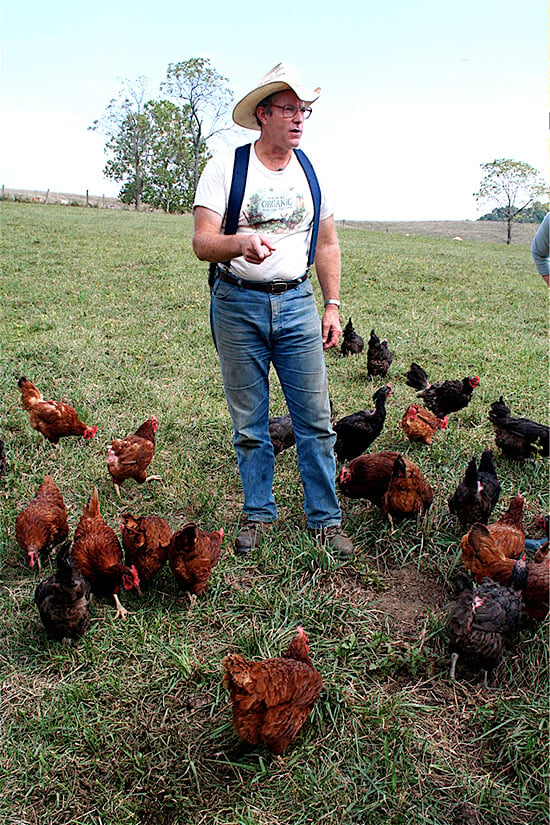
You might even be inspired to visit Polyface Farm in Swoope, Virginia, where Pollan spent a week learning about grass farming from the legendary Joel Salatin. This is what happened to me.
So in the fall of 2007, my husband and I trekked out to the Shenandoah Valley intending to wander around Polyface Farm for a few hours, an activity Salatin invites everyone to do — transparency is one of the farm’s underlying tenets: anyone can visit the farm to observe Salatin’s farming methods and to see how his animals live. But when our arrival coincided with a group from Washington DC, who had scheduled a guided visit of Polyface, Salatin kindly invited us to tag along. Never have I felt the stars aligned more for me. It was a memorable day to say the least. Salatin (pictured above with his chickens) is as engaging, funny, and knowledgeable as Pollan describes.
The Omnivore’s Dilemma was the gateway drug for me. Within a week of reading it, I had joined a CSA and had become a regular at several Philadelphia farmers’ markets. Reading Terminal Market and the Fair Food Farmstand, in particular, became my go-to sources for humanely-raised meat and dairy products. I began cooking more seasonally and began enjoying vegetables in their most pure state often with nothing more than a drizzling of olive oil and a pinch of salt.
With an incredible farm-to-city network in place, Philadelphia made it it easy to eat locally. We haven’t been as lucky in the places we have lived since. Today, the closest farmers’ market for us happens once a week 20 miles away, and shops selling humanely raised meat and dairy products are nonexistent. It took some time adjusting to our new shopping options, but by tapping into some non-traditional food suppliers, we have been able to find sources for local fruits and vegetables as well as humanely raised meat.
For those of you finding yourself with limited options for local foods, know that eating locally can be done, but it might take some effort. I’ve listed some tips/resources below.
- Join a CSA. If you don’t have access to a regular farmers’ market, a CSA is a nice way to add incredibly tasty, fresh, often organic veggies to your diet. CSA stands for Community Supported Agriculture. The term CSA describes a relationship between a farm and the local people who consume the farm’s food. Modeled after a producer-consumer alliance practiced in Switzerland, the first CSA was created in 1986 in Massachusetts. Today over 4000 farms throughout the country participate in this mutually beneficial partnership.
By participating in a CSA, a community member essentially buys a share of a farm’s harvest before the season begins, understanding that unpredictable conditions such as weather and labor supply can effect the harvest. The security of a contract eliminates the need for farmers to invest time marketing their produce during the busy growing season, enabling them to concentrate solely on producing food. In exchange, participating families receive the highest quality produce, often organically grown, and always picked at the peak of its ripeness.
I have now participated in CSAs in eastern Pennsylvania, southern California and northern Virginia and cannot say enough about them. When we have CSA produce on hand, I find myself reaching into the fridge, pulling out giant mustard greens, and munching on them raw. The greens, in my opinion, are the highlight of the CSA.
Joining a CSA, moreover, is more cost effective in my experience than shopping at farmers’ markets. Prices vary but CSA prices often are on par with grocery store prices. Local Harvest is a great source for finding a CSA near you.
Also note that it’s definitely an adjustment joining a CSA. You have to be willing to try new vegetables, and you have to strategize, too — some veggies wither away faster than others, and nearly all CSA produce withers faster than grocery store produce. It makes you wonder, right? And don’t despair, you won’t be the first to allow the odd radish or kohlrabi bulb to desiccate in your fridge.
These two books have been invaluable to me as far as knowing what to do with some of my CSA vegetables:
Alice Waters’ Chez Panisse Vegetables Sally Schneider’s A New Way To Cook
- Buy a free-standing freezer, then buy a cow. Or a pig. Or a goat. Or whatever you like or have access to. When Ben and I discovered we had no market nearby selling grass-fed beef, we decided to join a “cowpool” and purchased from a local farm a half cow (a steer, actually), which we then split with four families. The price per pound of our meat came out to be $3.30, which is very low for grass-fed meat.
These two sources might help you find a “cowpooling” service near you:
Eat Well Guide Eat Wild
But before you buy the cow, buy the freezer. We bought this one .
Befriend a hunter. Or marry one. Or start hunting yourself. Ben started hunting this past winter, and as a result, we enjoyed venison and duck all winter long. It was such a treat having incredibly tasty, grass-fed meat on hand. Moreover, with the exception of the butchering cost, the meat was free. I hope one day in the not too distant future, I find myself hunting, too. I have been particularly inspired by Georgia Pelligrini, also known as, Girl Hunter .
Start composting; then plant a garden. I have no idea what I’m doing when it comes to composting. But I do compost. Throughout the day I collect my banana peels, egg shells, coffee grounds, vegetable trimmings — any non-meat waste product — into a bowl, and every evening I dump it in our “back porch compostumbler.” (See photo below.) I definitely do not provide the tumbler with the proper ratio of carbonous to nitrogenous materials, but somehow, every month or so, my waste — 90% egg shells and coffee grounds as far as I can tell — turns into a substance resembling compost. (Again, see photo below). Please don’t take my advice when it comes to composting, however. I know there are better systems out there. This is just what we do, and it works for us. The compost tumbler does not attract animals and does not take up too much space, which we appreciate at the moment. Moreover, when we are composting, we use up fewer trash bags, which always feels good.
Composting is especially practical if you garden. I do not have a green thumb but I have had small successes with cinderblock gardening:
How to Build a Cinderblock Garden Garden Update I Garden Update II
- A few helpful resources:
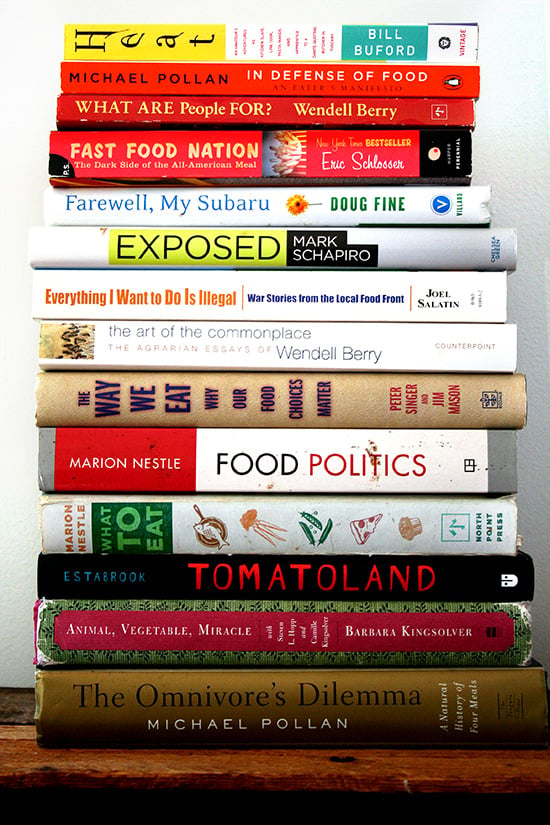
Books: Michael Pollan’s The Omnivore’s Dilemma Michael Pollan’s In Defense of Food Barbara Kingsolver’s Animal Vegetable Miracle Marion Nestle’s What to Eat Marion Nestle’s Food Politics Eric Schlosser’s Fast Food Nation
Cookbooks: Alice Waters’ Chez Panisse Vegetables Amelia Saltsman’s The Santa Monica Farmers’ Market Cookbook Christopher Hirsheimer’s The San Francisco Ferry Plaza Farmers’ Market Cookbook
Organizations: Local Harvest American Grassfed Association Eat Well Guide Eat Wild Farm Sanctuary Food Routes Food and Water Watch Polyface Farm Seafood Watch Slow Food
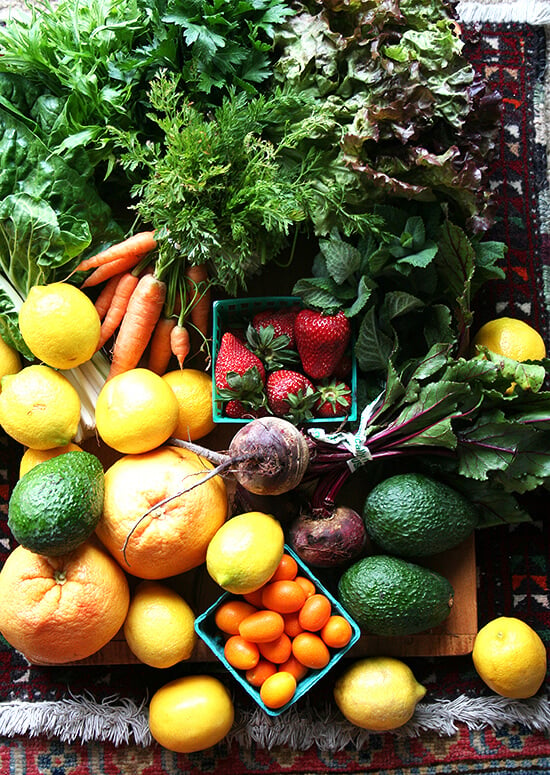
Produce from our California CSA:
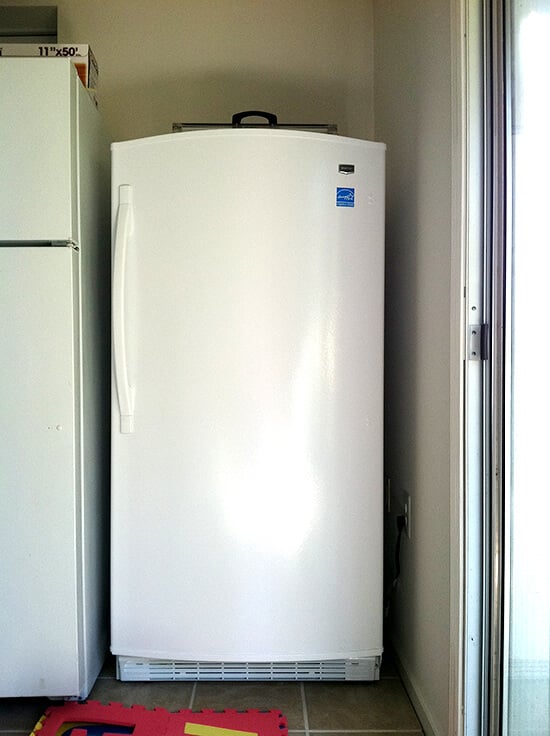
A free-standing freezer is sort of essential if you plan on buying meat by the half or quarter cow. We bought this one.
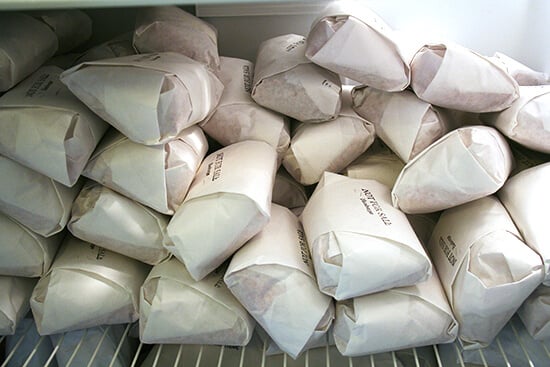
Meat in the freezer from a quarter cow:
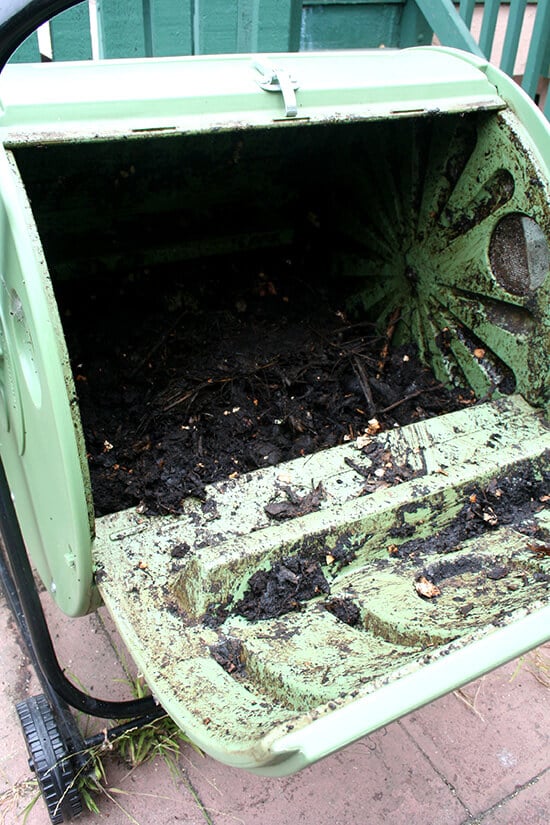
Our back porch compostumbler:
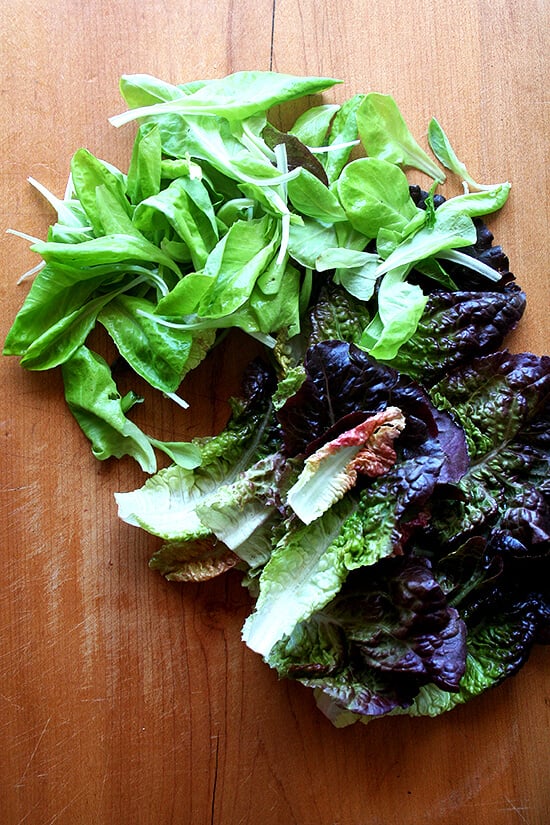
Lettuce from our Morning Song Farm CSA in California:
Produce from our current CSA — Olin Fox Farms in Reedville, VA:
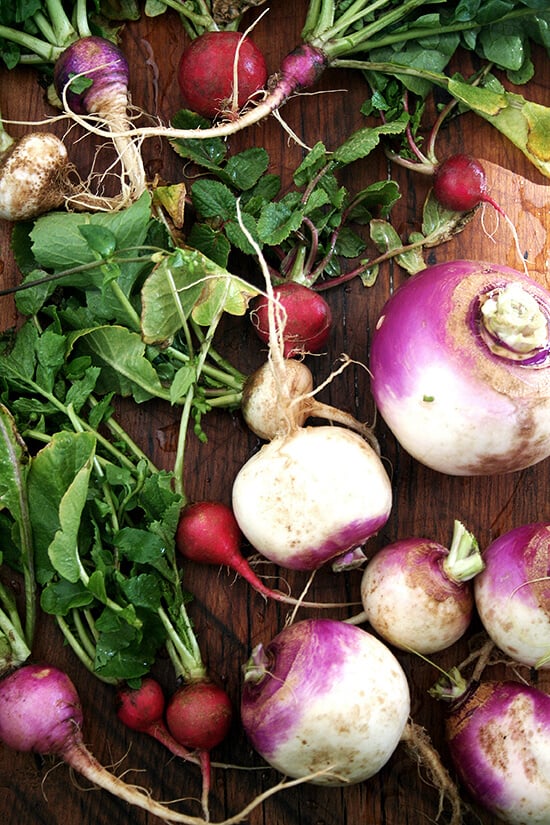
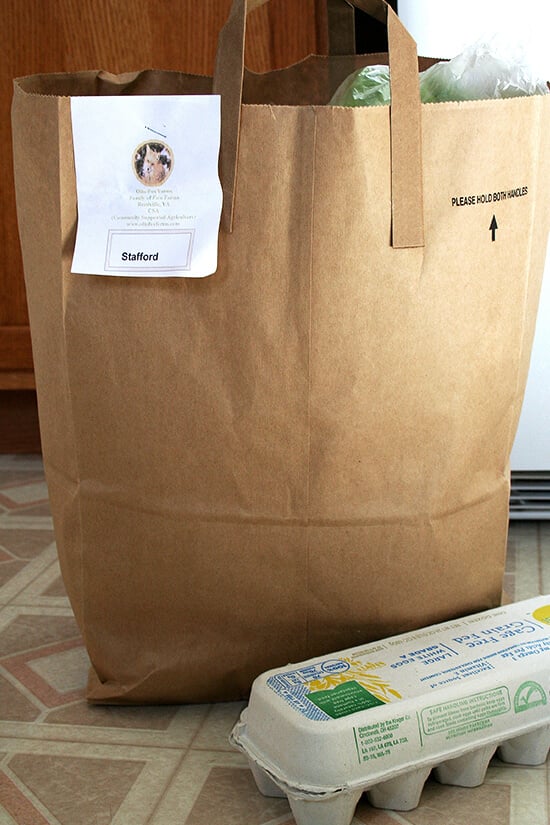
Nothing makes me happier than picking up my produce share every other Thursday. The eggs. Oh the eggs! So yummy. Friday morning breakfast is always a treat.
