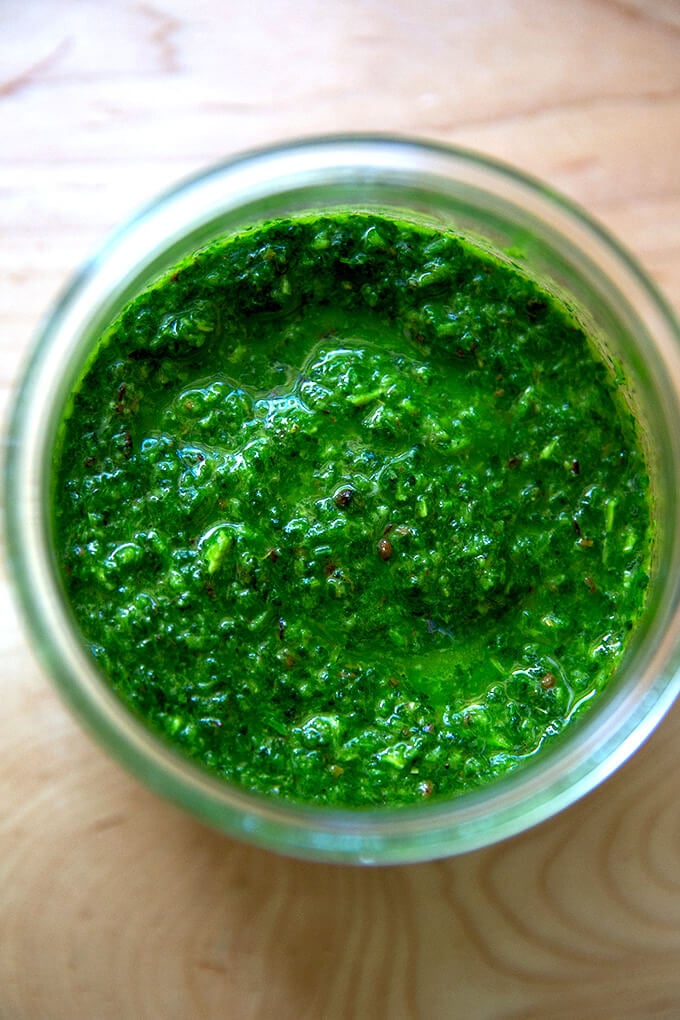
Schug (pronounced skoog, sometimes spelled zhug or skug or zhoug) is a spiced green sauce originating from Yemen but used throughout the Middle East. It’s a blend of herbs, chilies, and toasted spices.
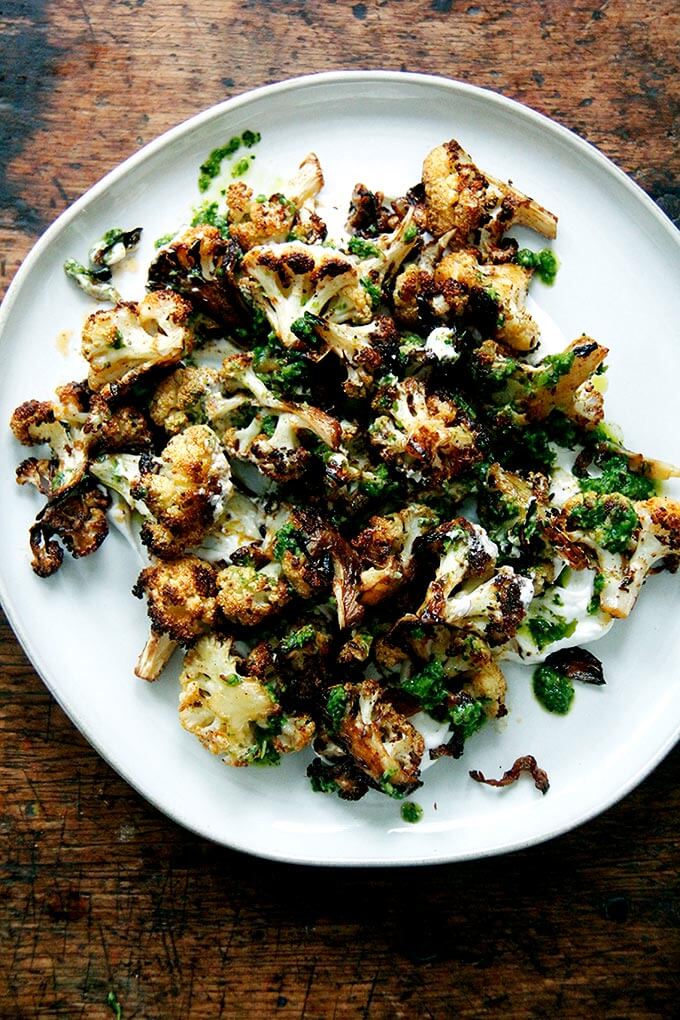
I first wrote about it several years ago after discovering it in Joshua McFadden’s Six Seasons , which inspired me to drizzle it over anything from roasted vegetables to grilled meat. This is maybe my favorite way to use it: roasted cauliflower (or delicata squash) with lemony yogurt sauce . The combination of the charred vegetables, with the creamy yogurt sauce and the spiced, herby schug is irresistible.
Of all the green sauces I have made — from pesto to salsa verde to green goddess — schug is most similar to a green harissa , but it’s even more spiced: there’s cumin and coriander as well as hot chilies. Because the chilies are seeded, the sauce is not impossibly spicy—it’s, in fact, bright with lemon, as these sauces often are, and it has a bit of texture thanks to the mass of chilies, garlic, and herbs.
How to Use Schug (Zhug)
Maybe the better question is how not to use schug? I want to drizzle it over everything:
- roasted vegetables
- eggs
- grilled chicken
- veggie burgers
- falafel burgers
- bread, from pita to focaccia
How to Make Schug: A Step by Step Guide:
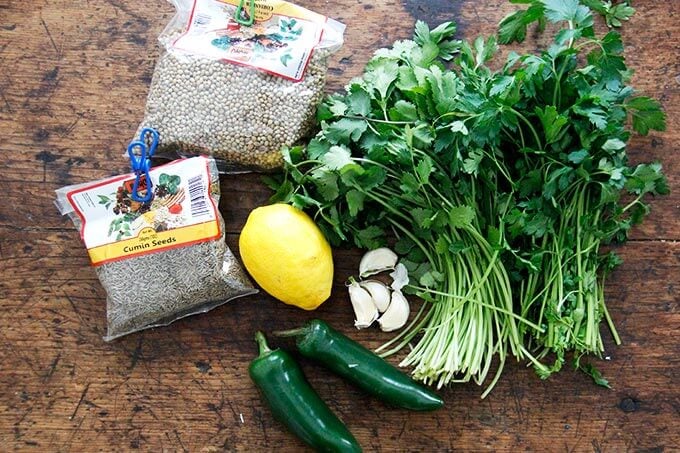
Here’s the play-by-play: Gather your ingredients.
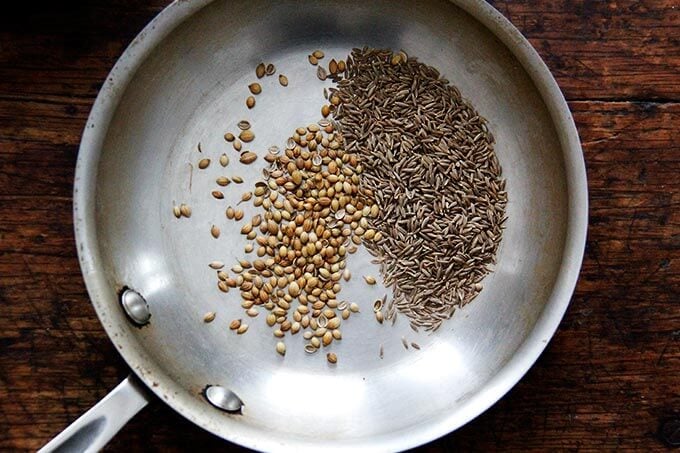
Toast whole cumin and coriander seeds:
Grind the spices in a mortar and pestle:


Remove the ribs and seeds from a few hot chili peppers:

Zest and juice a lemon.

Transfer chilies and garlic to a food processor and pulse.
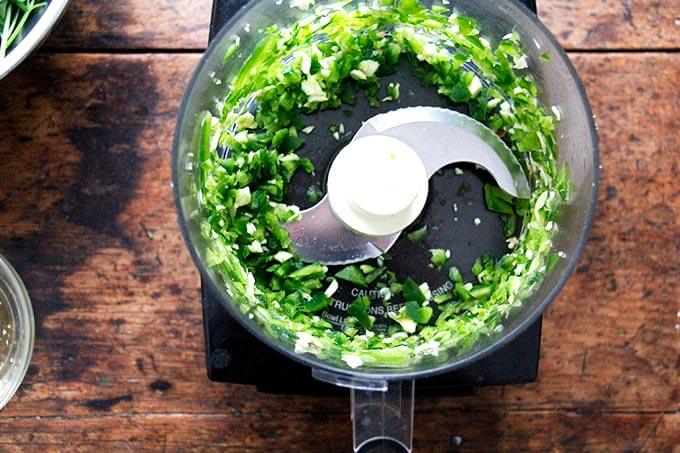
Add cilantro, parsley, ground cumin and coriander, lemon zest and juice, and salt.
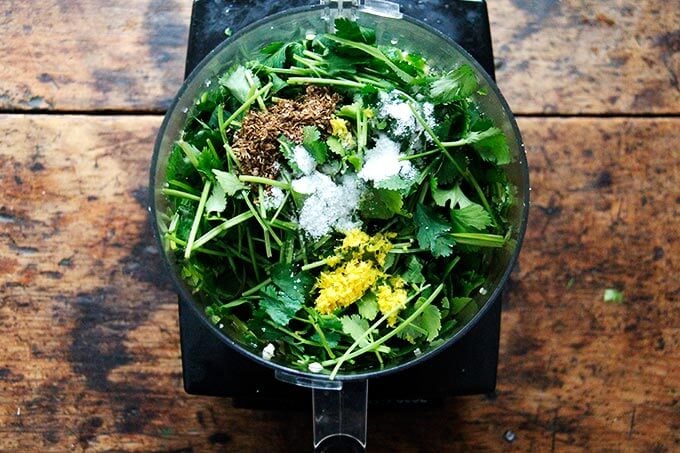
Process till fine:
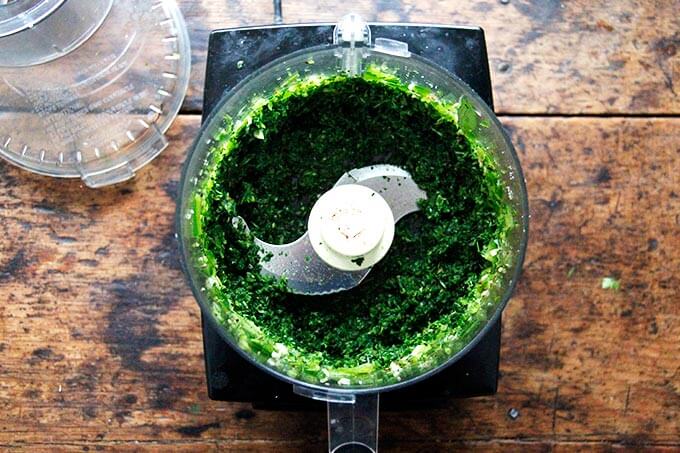
Add olive oil, and process more:
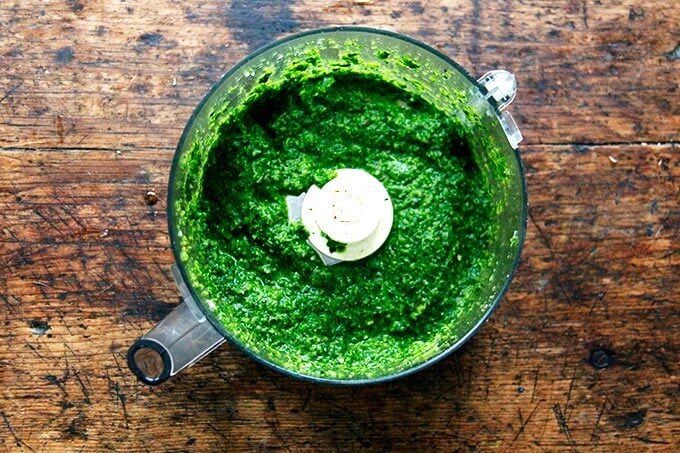
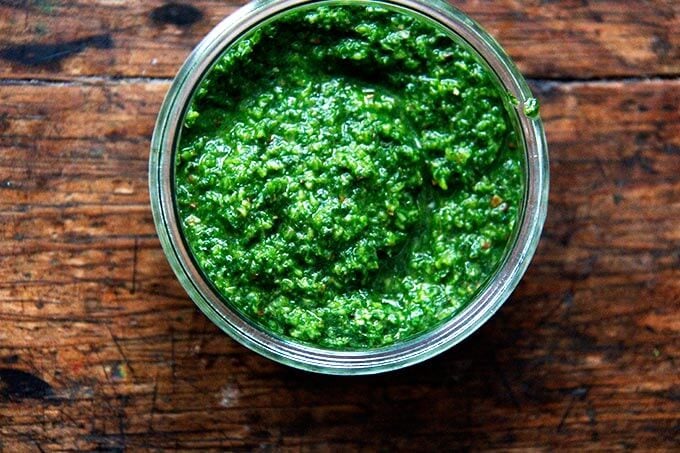
Ta da! Schug: you’ll want to put this on everything.
Here’s the roasted delicata squash with the schug and yogurt sauce:

This is a favorite recipe: Roasted Cauliflower with Schug and Lemony Yogurt Sauce
Description
Adapted from Joshua McFadden’s Six Seasons
Schug (pronounced skoog, sometimes spelled Skug, Zhug, Zhoug) is a Middle Eastern (often used in Yemeni/Israeli cooking) blend of herbs, chilies, and toasted spices: there’s cumin and coriander as well as hot chilies. Because the chilies are seeded, the sauce is not impossibly spicy—it’s, in fact, bright with lemon, and it has a bit of texture thanks to the mass of chilies, garlic, and herbs. Once you make schug once, you will want to put it on everything.
Note: You’ll see in the video I only used 1 chili — it was all I had on hand that day! — and I didn’t add lemon zest…I forgot. All of this is to say the recipe is very forgiving. As long as you include some toasted spices and something that provides a little heat, and as long as you get the balance of lemon to olive oil right, you’ll be good to go.
- 1 teaspoon coriander seeds
- 1 teaspoon cumin seeds
- 1/2 cup (or less! see notes above) seeded and roughly chopped fresh hot green chilies, such as serrano ( 2 to 4)
- 2 to 3 garlic cloves, smashed and peeled
- 2 cups lightly packed cilantro leaves and stems
- 2 cups lightly packed flat-leaf parsley leaves and stems (rough stems removed)
- zest from one lemon
- juice from one lemon, about 3 tablespoons
- salt and freshly cracked black pepper
- 1/2 cup extra-virgin olive oil
- In a small skillet, toast the cumin and coriander seeds until they smell fragrant and have turned a shade darker in color. Transfer to a spice grinder or crush with a mortar and pestle.
- Put the chilies and garlic in a food processor and pulse a few times until they are fairly fine. Add the cilantro, parsley, lemon zest, reserved toasted spiced, 1 tablespoon of lemon juice, 1/2 teaspoon kosher salt, and a few twists of black pepper. Pulse until all is finely chopped into a rough purée. With the motor running, drizzle in the olive oil. Stop the processor before the sauce is completely blended and smooth—you want some texture. Taste the sauce and adjust the seasoning with another 1/2 teaspoon salt (I always do), and pepper and lemon to taste.
- Prep Time: 10 minutes
- Category: Condiment
- Method: Food Processor
- Cuisine: Middle Eastern
Description
Adapted from Joshua McFadden’s Six Seasons
Schug (pronounced skoog, sometimes spelled Skug, Zhug, Zhoug) is a Middle Eastern (often used in Yemeni/Israeli cooking) blend of herbs, chilies, and toasted spices: there’s cumin and coriander as well as hot chilies. Because the chilies are seeded, the sauce is not impossibly spicy—it’s, in fact, bright with lemon, and it has a bit of texture thanks to the mass of chilies, garlic, and herbs. Once you make schug once, you will want to put it on everything.
Note: You’ll see in the video I only used 1 chili — it was all I had on hand that day! — and I didn’t add lemon zest…I forgot. All of this is to say the recipe is very forgiving. As long as you include some toasted spices and something that provides a little heat, and as long as you get the balance of lemon to olive oil right, you’ll be good to go.
- 1 teaspoon coriander seeds
- 1 teaspoon cumin seeds
- 1/2 cup (or less! see notes above) seeded and roughly chopped fresh hot green chilies, such as serrano ( 2 to 4)
- 2 to 3 garlic cloves, smashed and peeled
- 2 cups lightly packed cilantro leaves and stems
- 2 cups lightly packed flat-leaf parsley leaves and stems (rough stems removed)
- zest from one lemon
- juice from one lemon, about 3 tablespoons
- salt and freshly cracked black pepper
- 1/2 cup extra-virgin olive oil
- In a small skillet, toast the cumin and coriander seeds until they smell fragrant and have turned a shade darker in color. Transfer to a spice grinder or crush with a mortar and pestle.
- Put the chilies and garlic in a food processor and pulse a few times until they are fairly fine. Add the cilantro, parsley, lemon zest, reserved toasted spiced, 1 tablespoon of lemon juice, 1/2 teaspoon kosher salt, and a few twists of black pepper. Pulse until all is finely chopped into a rough purée. With the motor running, drizzle in the olive oil. Stop the processor before the sauce is completely blended and smooth—you want some texture. Taste the sauce and adjust the seasoning with another 1/2 teaspoon salt (I always do), and pepper and lemon to taste.
- Prep Time: 10 minutes
- Category: Condiment
- Method: Food Processor
- Cuisine: Middle Eastern
Find it online : https://alexandracooks.com/2020/06/16/schug-zhug-sauce/
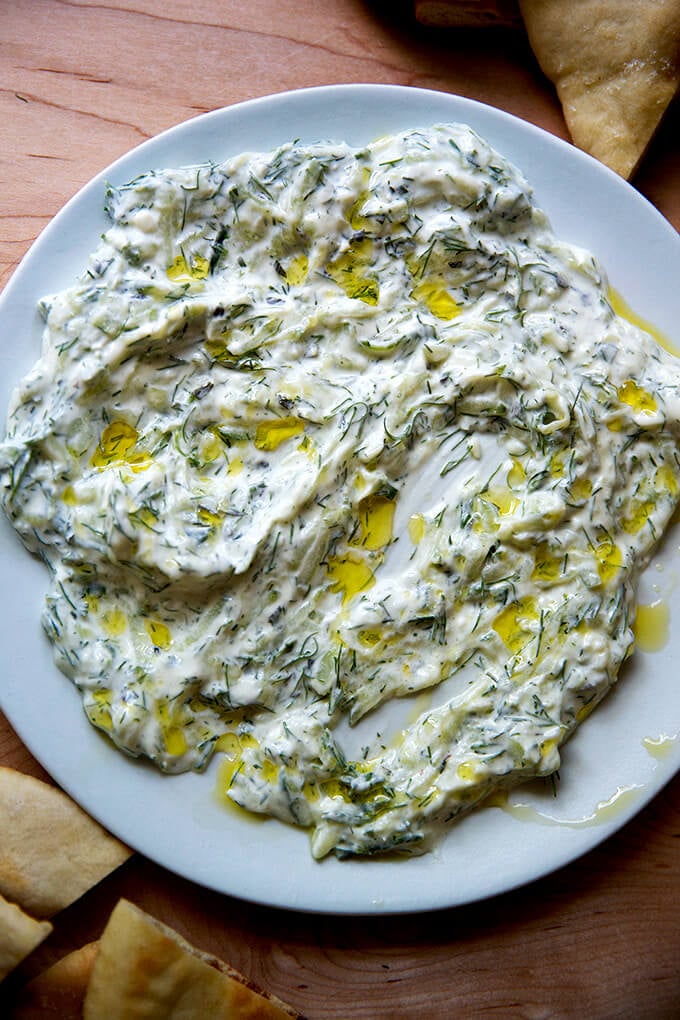
Tzatziki is a Greek yogurt- and cucumber-based condiment, typically seasoned with herbs such as mint and dill, garlic, and lemon. I grew up eating it with this chicken souvlaki , but I find it to be a nice match for both meat and vegetarian dishes alike:
- Roasted Eggplant Salad (a favorite summer meal!)
- Mushroom and Sweet Potato Veggie Burgers (an old favorite!)
- Falafel Burgers (a new favorite!)
- Smoky Grilled Chicken with Schug (perfect for summer entertaining)
- Spiced Tomato and Chickpea Salad (a meal in itself)
- Cauliflower Steaks with Walnut-Caper Salsa (so pretty, so tasty)
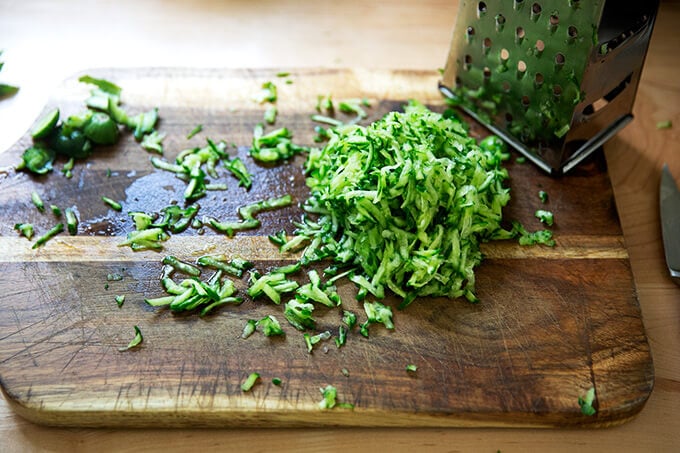
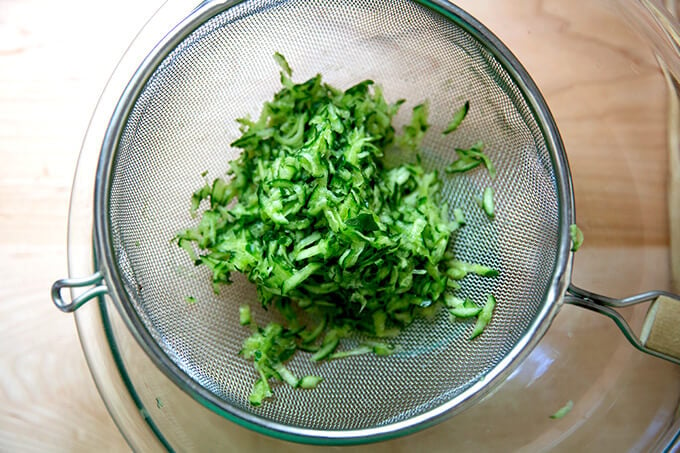
The process of making tzatziki is simple: grate cucumbers, drain them in a sieve (if you wish), then mix them into Greek yogurt along with a minced clove of garlic, minced herbs, fresh lemon juice, and salt.
Until recently, I never drained the cucumbers, but taking the time to do so has a twofold benefit:
- It prevents the tzatziki from becoming too liquidy. If you like a tzatziki with a thick consistency, draining the cucumbers is important. If you don’t mind a thinner tzatziki, skip this step.
- Draining the cucumbers gives you a few tablespoons of fresh cucumber juice , which you can use to flavor water along with some mint, honey, and lemon OR which you can use in a cocktail (such as a cucumber-gin gimlet … more very soon!)
Here’s the play-by-play: Gather your ingredients:
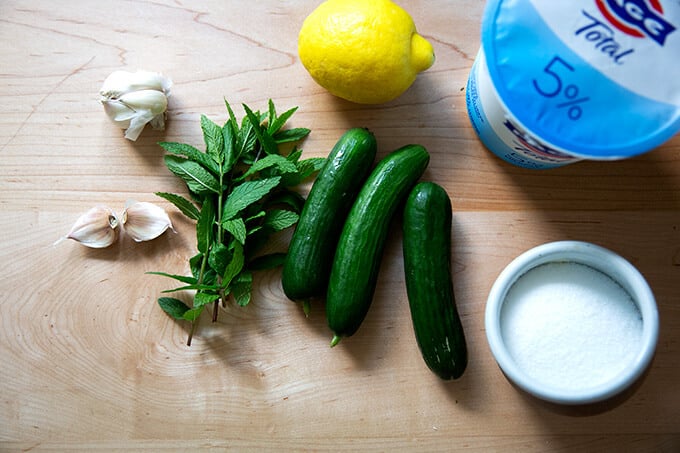
Grate the cucumbers coarsely using a box grater.
Set the cucumbers in a sieve to drain.
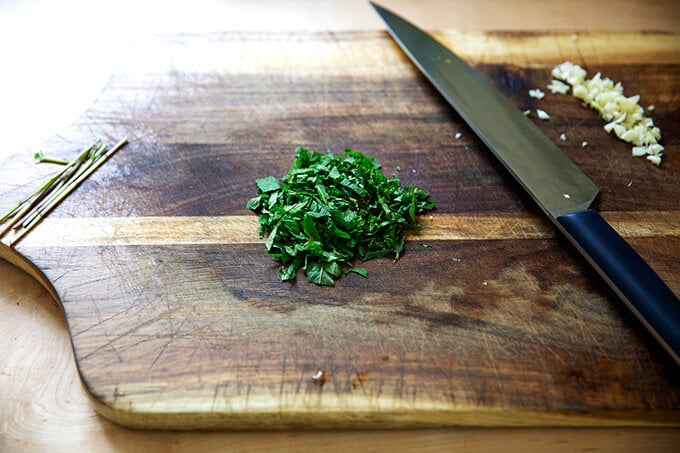
Meanwhile, chop up some herbs and a clove of garlic.
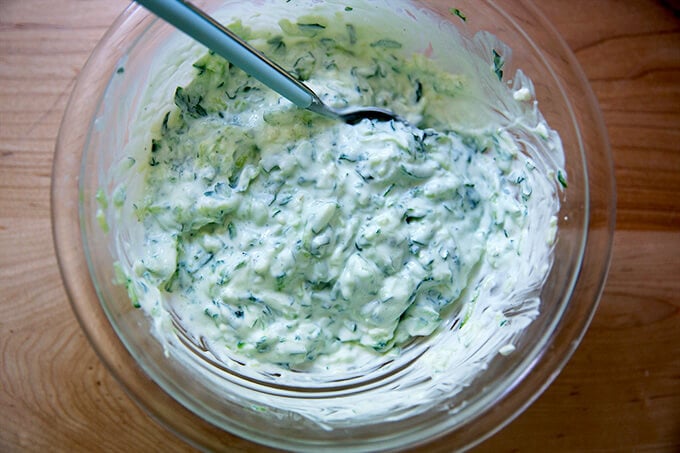
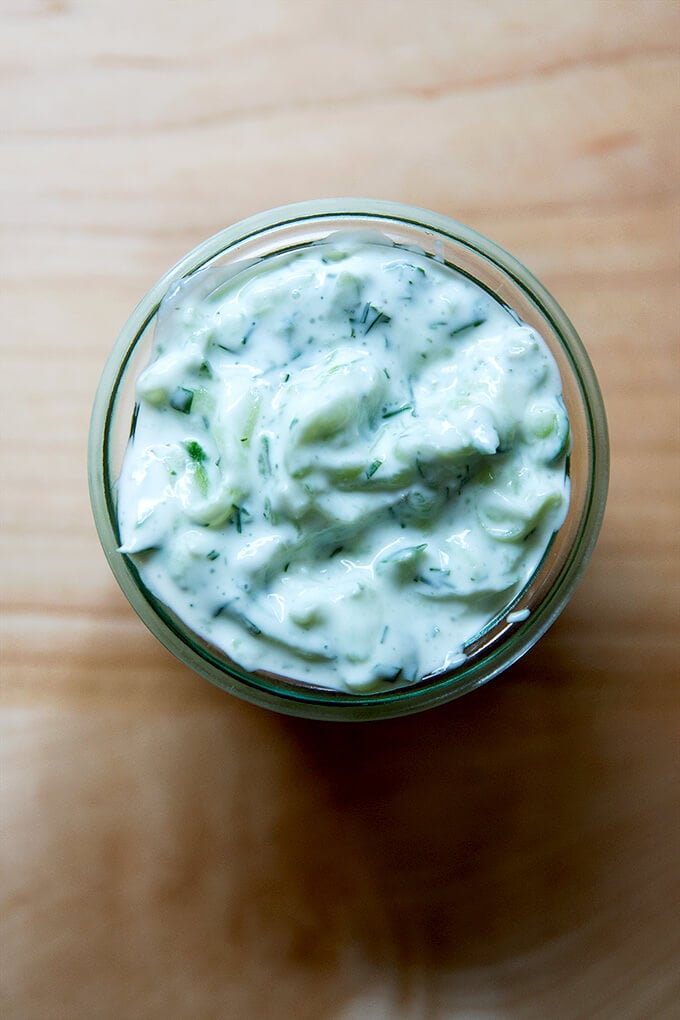
Combine Greek yogurt with the drained cucumbers, herbs, garlic, fresh lemon and salt.
Tzatziki is best served shortly after making it, but it will keep in the refrigerator for a day or two.
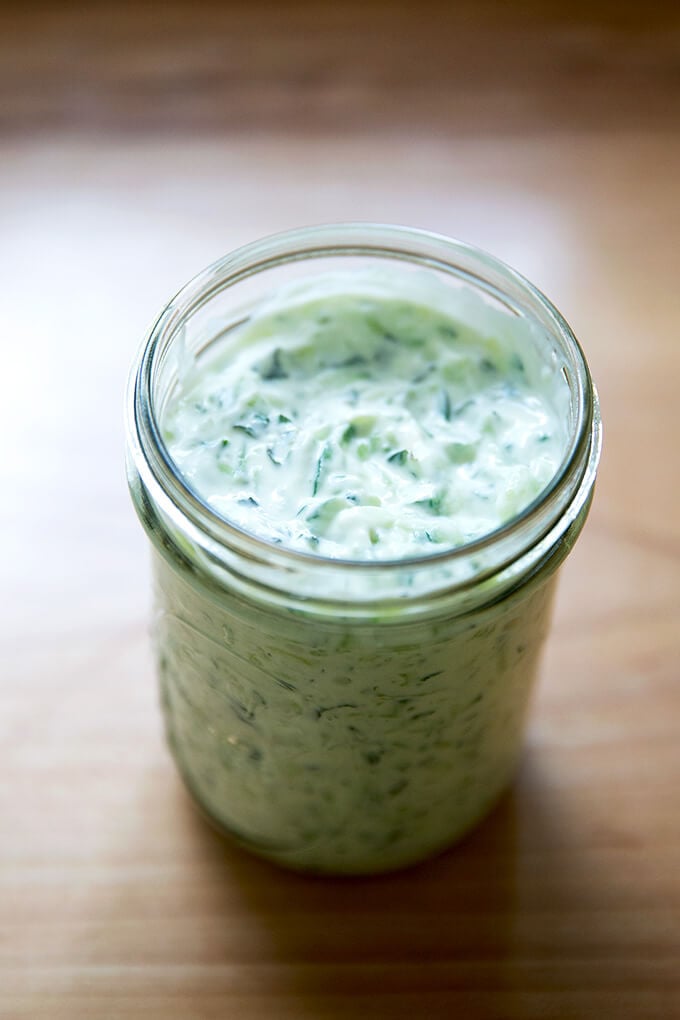
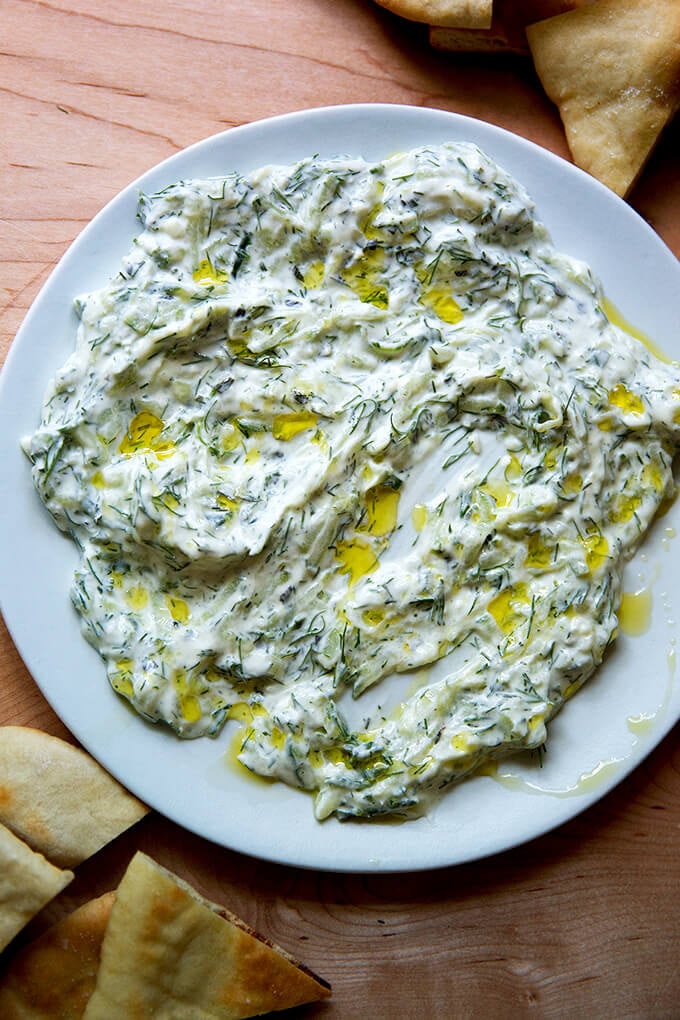
I typically serve tzatziki with grilled meat, such as this chicken souvlaki or this smoky grilled chicken , or roasted vegetables, such as this roasted eggplant salad (a favorite!), but it’s good on its own, too. Smear it over a platter, drizzle some olive oil over top, and serve it with pita chips. Yum.
Description
Tzatziki is a Greek yogurt- and cucumber-based condiment, typically seasoned with herbs such as mint and dill, garlic, and lemon. I grew up eating it with this chicken souvlaki , but I find it to be such a nice match for roasted vegetables, such as this eggplant salad , and vegetable burgers, such as these mushroom and sweet potato veggie burgers or these falafel burgers .
- 1 large or 3 small c ucumbers (about 8 – 10 oz)
- 1 cup plain Greek yogurt, I like the Fage 5%
- 1 clove garlic, minced
- 2 – 3 tablespoons minced herbs, such as mint and/or dill
- 1.5 tablespoons fresh-squeeze lemon juice (from about 1/2 a lemon)
- 1/2 teaspoon kosher salt
- Grate the cucumber coarsely on a box grater. Transfer to a sieve and set over a bowl to drain. Squeeze the cucumber a little bit to encourage the moisture to drain out. Let drain for at least 5 minutes.
- In a medium bowl, stir the cucumber into the yogurt, along with the garlic, herbs, lemon, and salt. Taste. Adjust with more salt and lemon to taste.
- Prep Time: 10 minutes
- Category: Condiment
- Method: Stir
- Cuisine: Greek
