Made with a mixture of bread and rye flours, a small amount of honey, and a few teaspoons of caraway seeds, this simple no-knead rye bread tastes beautifully tangy with a hearty, chewy texture perfect for sandwiches or toast. It comes together in no time and bakes in a single loaf pan, but the recipe can be doubled, and the baked bread freezes very well.
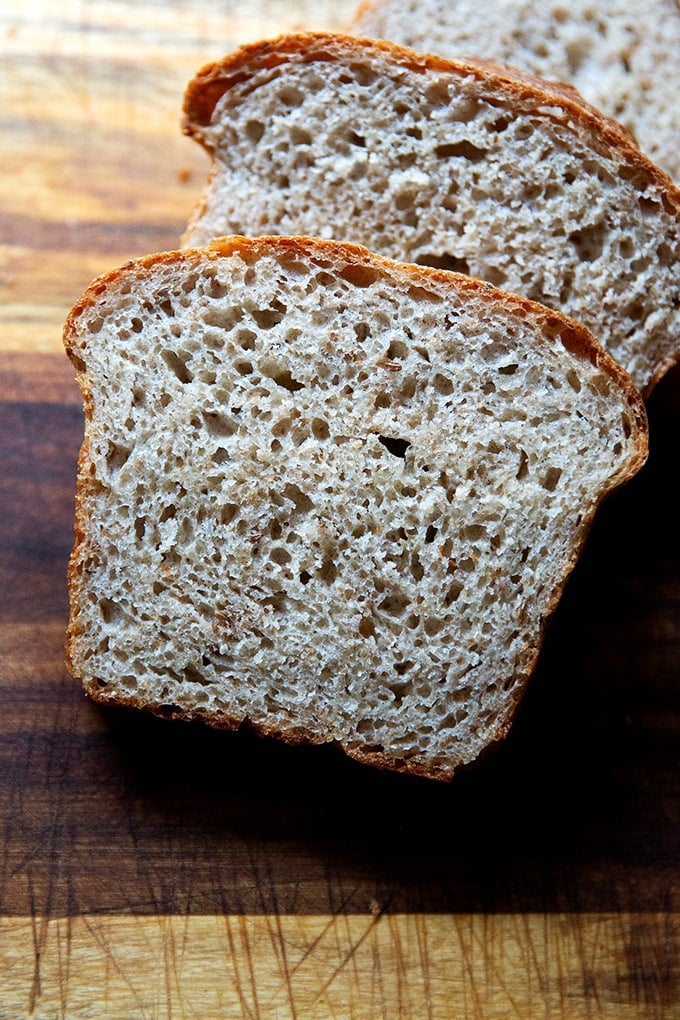
Rye bread has a reputation of being dense and heavy as well as aggressively sour in flavor. While some people love these qualities, others do not. I love a rye bread with a subtle tang and a hearty but not leaden texture.
This no-knead rye bread is just that: made with a mixture of bread and rye flours, the texture of the finished loaf is light enough for a sandwich but makes excellent toast as well. A small amount of honey balances out the sourness and lends a nice chew, while caraway seeds, which can be left out, impart subtle notes of citrus and anise.
This recipe calls for 1 cup of rye flour and 3 cups of bread flour, and while you could play around with increasing the proportion of rye in this recipe (which is roughly 20% by weight), keep in mind that the more rye flour you use, the denser your bread will be. Why? Read on.
How Rye Flour is Different Than Other Wheat Flours
- Higher in Bran and Minerals: Flour with a high amount of bran and minerals will produce bread that is lower in volume because the sharp shape of the bran cuts the gluten network.
- Different Proteins + High in Pentosans: Wheat flour contains two gluten-forming proteins: glutenin (which promotes elasticity) and gliadin (which promotes extensibility). When these proteins mix with water, gluten begins forming. Rye flour on the other hand contains gliadin and a protein called glutelin (similar to glutenin). It also is high in pentosans (a polysaccharide composed of carbon sugars). The pentosans absorb water and compete with the gliadin and glutelin for moisture, which inhibits the development of gluten in rye breads.
Homemade Rye Bread, Step by Step
This recipe calls for a mix of rye flour and bread or all-purpose flour.
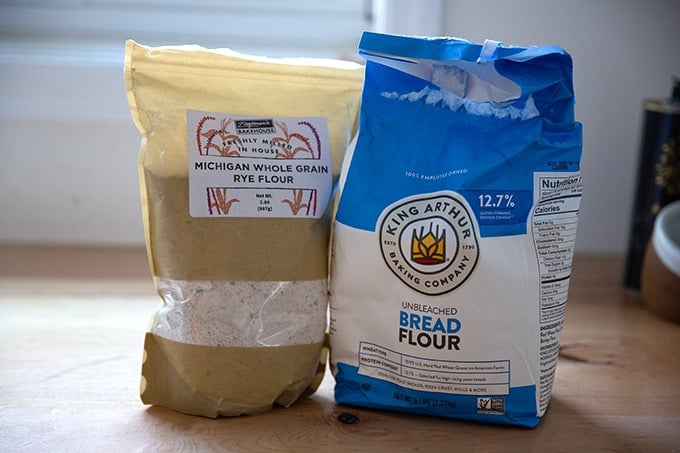
Please use a scale to measure! It is the only to ensure you are measuring accurately.
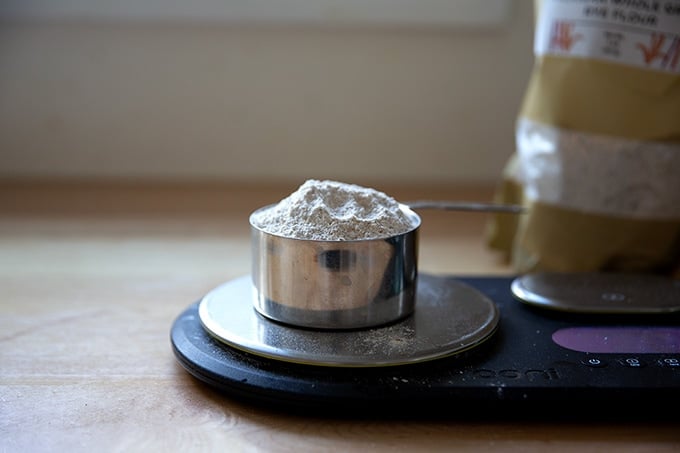
Once you have your ingredients measured accurately…
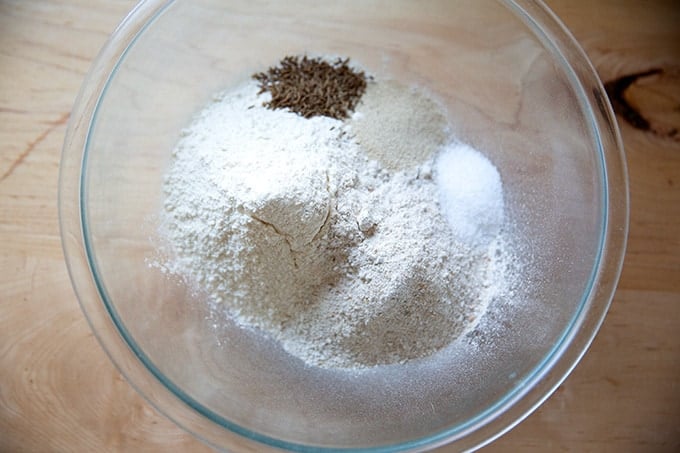
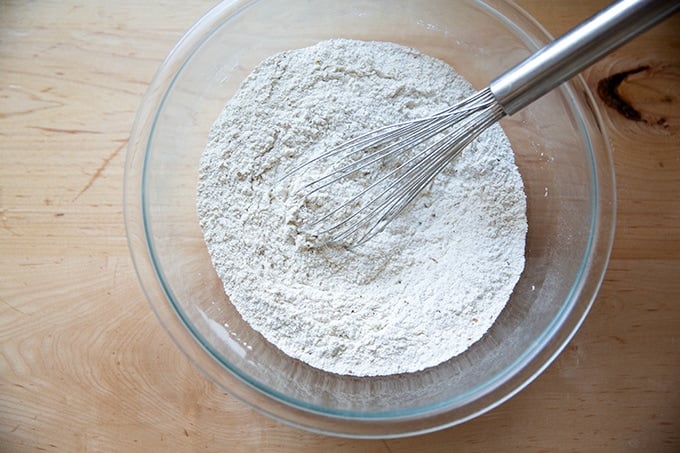
whisk together the flours, salt, instant yeast, and caraway seeds, if using.
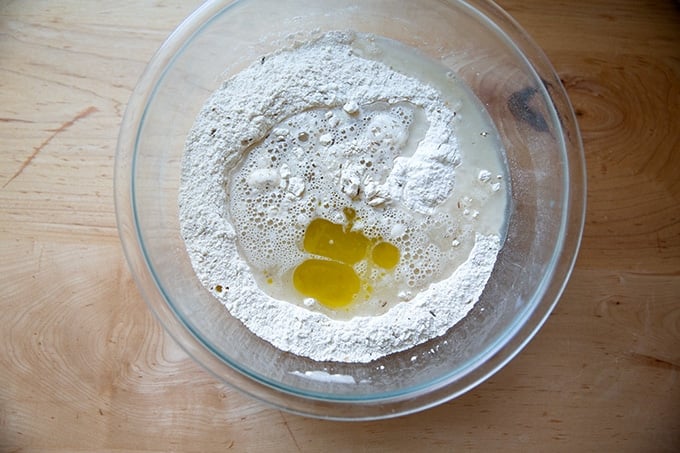
Whisk together the water and honey until the honey dissolves, then add the mixture to the bowl, followed by the oil.
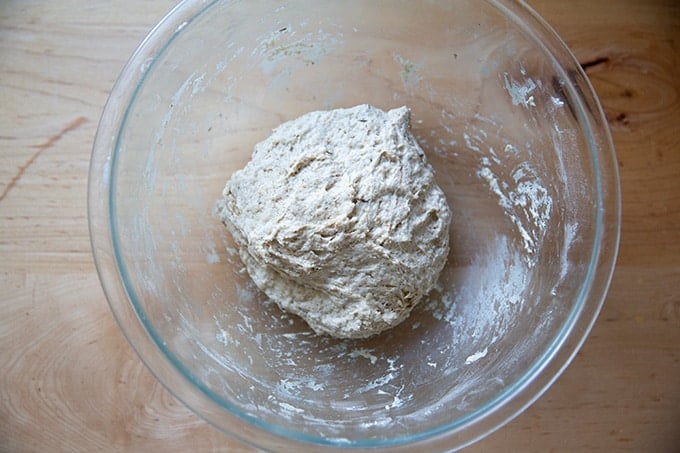
Stir with a spatula until you have a sticky dough ball.
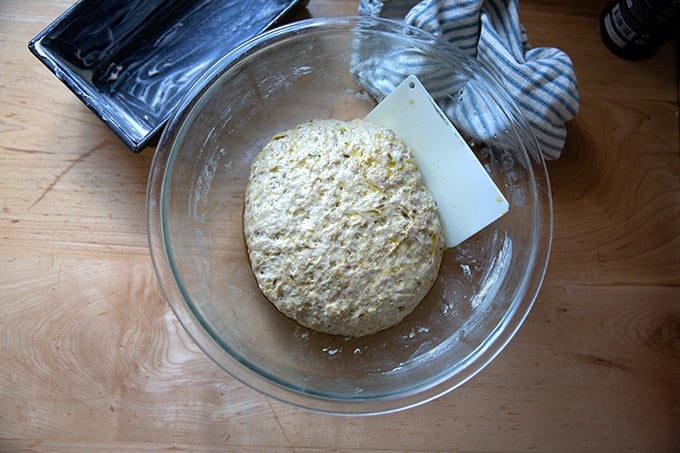
Cover the bowl and let rise until doubled, 2 to 3 hours.
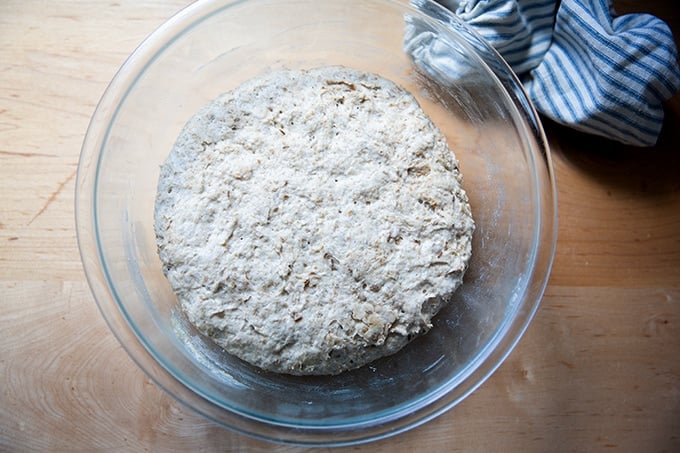
Rub the surface of the dough with a tablespoon of oil, then deflate the dough.
Turn the loaf over, then roll into a loaf shape.
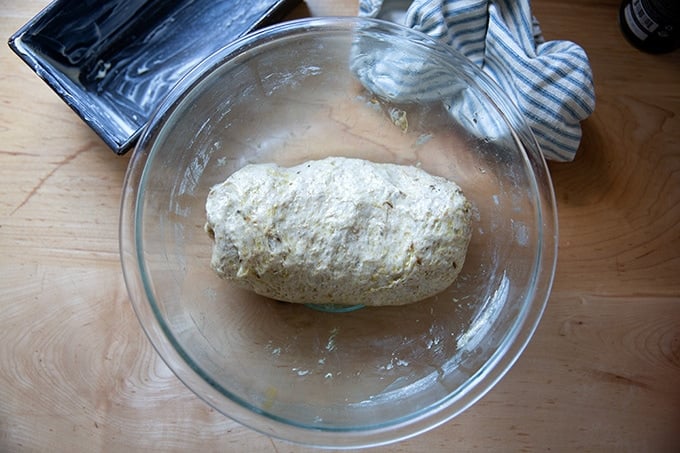
This video may help:
Transfer to a buttered 8.5×4.5-inch or 9×5-inch loaf pan.
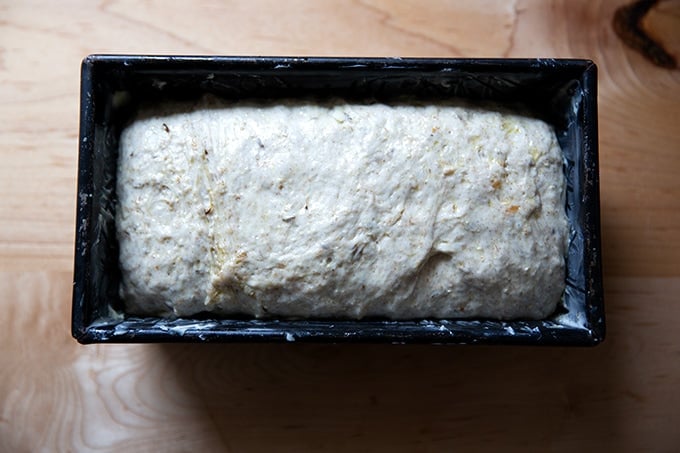
Let rise until the dough crowns the rim of the pan by about an inch.
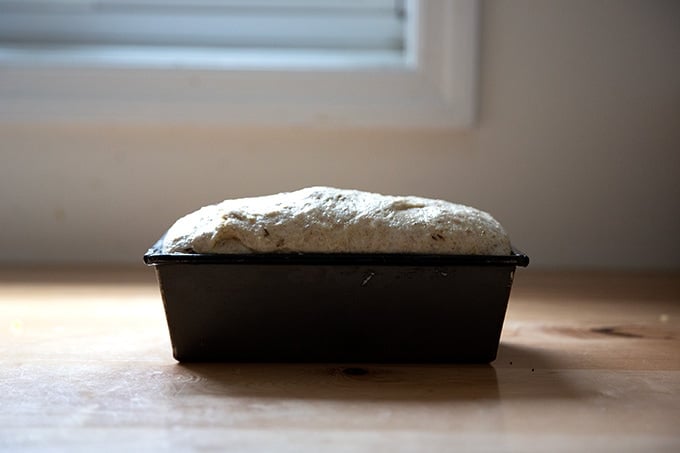
Bake for 45 minutes at 375ºF.
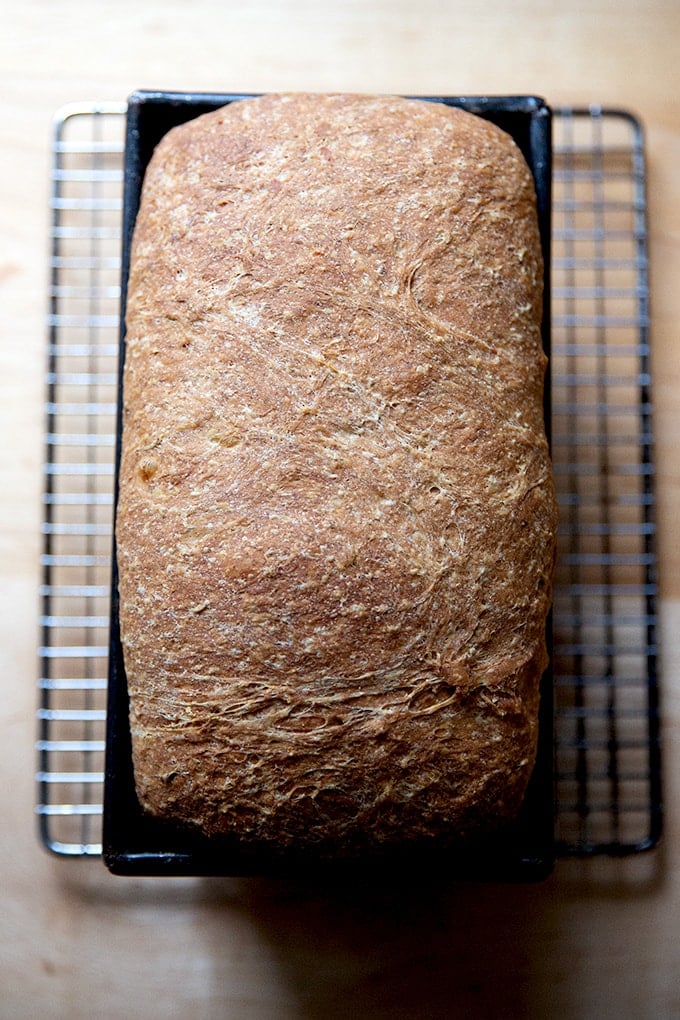
Let cool for at least 30 minutes before slicing. I like to slice it, then freeze it in bundles of 3 to 4 slices.
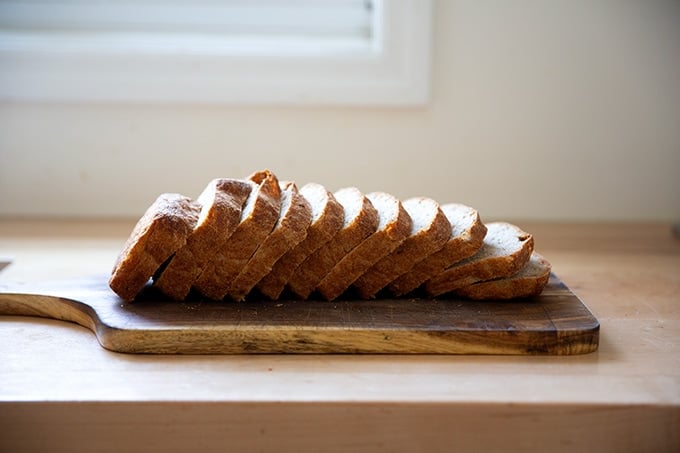
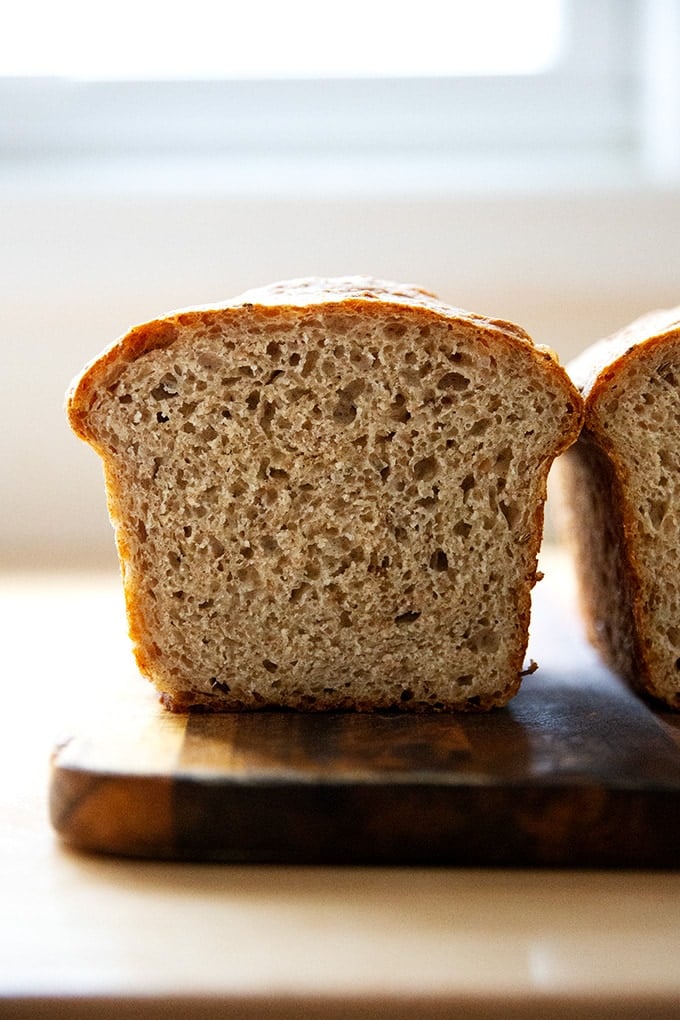
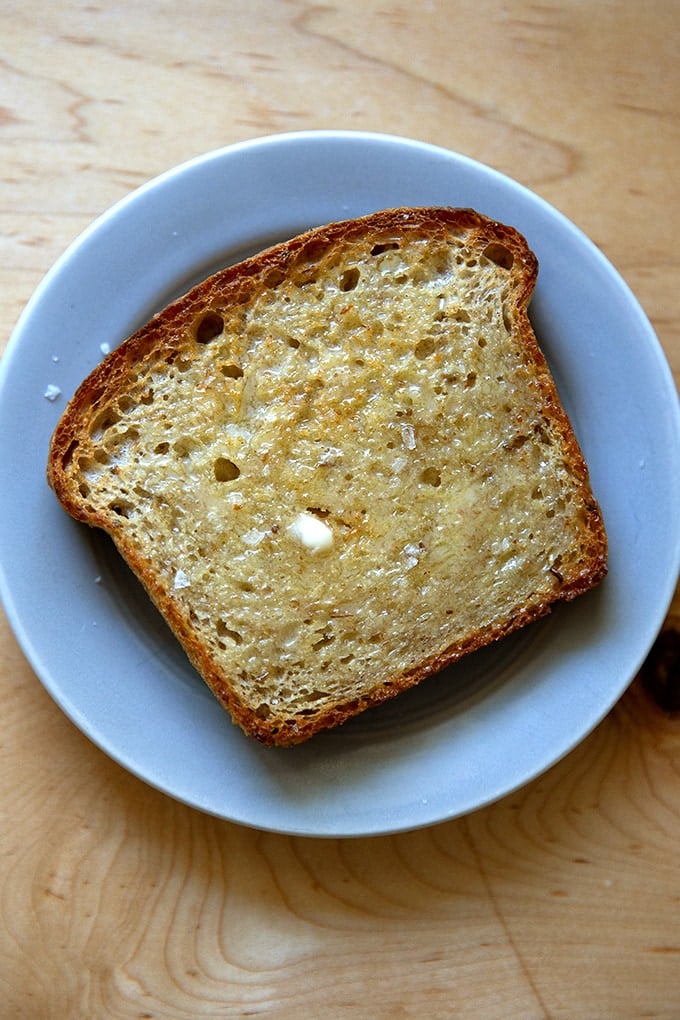
Like the maple-oat bread and the three-seed bread , this one makes great toast:
Description
Adapted from my cookbook, Bread Toast Crumbs.
Notes:
Flour: Y ou could play around with increasing the proportion of rye flour in this recipe (which is roughly 20% by weight), but keep in mind that the more rye flour you use, the denser your bread will be. This is because rye flour is high in bran, the sharp shape of which cuts the gluten network, inhibiting its ability to trap air and produce a lofty loaf of bread.
Salt: I always use Diamond Crystal kosher salt. If you are using Morton’s kosher salt or fine sea salt use half the amount by volume or the same amount by weight.
Yeast: If using active dry yeast, sprinkle the yeast over the lukewarm water-honey mixture and let stand for 10 minutes; then proceed with the recipe.
Caraway: If you don’t like the flavor of caraway, simply omit the seeds or use less: 1 to 2 teaspoons or to taste.
- 3 cups ( 384 g ) bread or all-purpose flour
- 1 cup ( 96 g ) rye flour, see note
- 2 teaspoons ( 10 g ) kosher salt, see note
- 2 teaspoons ( 10 g ) instant yeast , see note
- 1 tablespoon ( 9 g ) caraway seeds, see note
- 1.75 cups ( 395 g ) lukewarm water
- 2 tablespoons ( 42 g ) honey or maple syrup
- 2 tablespoons ( 28 g ) extra-virgin olive oil, divided
- Softened unsalted butter, for greasing
- In a large bowl, whisk together the flours, salt, instant yeast, and caraway seeds, if using. In a medium bowl, whisk together the water and the honey until the honey is dissolved. Add to the flour, followed by 1 tablespoon of the oil. Using a rubber spatula, mix until the liquid is absorbed and the ingredients form a sticky dough ball.
- Cover the bowl with a damp tea towel or a cloth bowl cover or plastic wrap and set aside in a warm spot to rise for 2 to 3 hours, until the dough has doubled in volume.
- Preheat the oven to 375ºF. Grease an 8.5×4.5-inch (or 9×5-inch) loaf pan generously with softened butter.
- When the dough has doubled, drizzle the remaining tablespoon of olive oil over the top and use your hand to rub the oil over the surface to coat. Use your hand again to release the dough from the sides of the bowl, then flip the ball over so that the oil side is down. Roll the dough into a coil or into a loaf shape, then transfer to your prepared pan seam side down. Watch this video for guidance .
- Let the dough rise on the countertop (preferably in a warm, draft-free spot) for 45 minutes to an hour or until the dough has risen significantly in the pan — it should be doming above the rim of the pan by about one inch. See photos for reference.
- Transfer the pan to the oven and bake for 45 minutes, or until the top is evenly browned. Remove the pan from the oven and turn the loaf out onto a cooling rack. Let the loaf cool for at least 30 minutes before slicing.
- Prep Time: 5 hours
- Cook Time: 45 minutes
- Category: Bread
- Method: Oven
- Cuisine: American
Made with a mixture of bread and rye flours, a small amount of honey, and a few teaspoons of caraway seeds, this simple no-knead rye bread tastes beautifully tangy with a hearty, chewy texture perfect for sandwiches or toast. It comes together in no time and bakes in a single loaf pan, but the recipe can be doubled, and the baked bread freezes very well.
Rye bread has a reputation of being dense and heavy as well as aggressively sour in flavor. While some people love these qualities, others do not. I love a rye bread with a subtle tang and a hearty but not leaden texture.
This no-knead rye bread is just that: made with a mixture of bread and rye flours, the texture of the finished loaf is light enough for a sandwich but makes excellent toast as well. A small amount of honey balances out the sourness and lends a nice chew, while caraway seeds, which can be left out, impart subtle notes of citrus and anise.
This recipe calls for 1 cup of rye flour and 3 cups of bread flour, and while you could play around with increasing the proportion of rye in this recipe (which is roughly 20% by weight), keep in mind that the more rye flour you use, the denser your bread will be. Why? Read on.
How Rye Flour is Different Than Other Wheat Flours
- Higher in Bran and Minerals: Flour with a high amount of bran and minerals will produce bread that is lower in volume because the sharp shape of the bran cuts the gluten network.
- Different Proteins + High in Pentosans: Wheat flour contains two gluten-forming proteins: glutenin (which promotes elasticity) and gliadin (which promotes extensibility). When these proteins mix with water, gluten begins forming. Rye flour on the other hand contains gliadin and a protein called glutelin (similar to glutenin). It also is high in pentosans (a polysaccharide composed of carbon sugars). The pentosans absorb water and compete with the gliadin and glutelin for moisture, which inhibits the development of gluten in rye breads.
Homemade Rye Bread, Step by Step
This recipe calls for a mix of rye flour and bread or all-purpose flour.
Please use a scale to measure! It is the only to ensure you are measuring accurately.
Once you have your ingredients measured accurately…
whisk together the flours, salt, instant yeast, and caraway seeds, if using.
Whisk together the water and honey until the honey dissolves, then add the mixture to the bowl, followed by the oil.
Stir with a spatula until you have a sticky dough ball.
Cover the bowl and let rise until doubled, 2 to 3 hours.
Rub the surface of the dough with a tablespoon of oil, then deflate the dough.
Turn the loaf over, then roll into a loaf shape.
This video may help:
Transfer to a buttered 8.5×4.5-inch or 9×5-inch loaf pan.
Let rise until the dough crowns the rim of the pan by about an inch.
Bake for 45 minutes at 375ºF.
Let cool for at least 30 minutes before slicing. I like to slice it, then freeze it in bundles of 3 to 4 slices.
Like the maple-oat bread and the three-seed bread , this one makes great toast:
Description
Adapted from my cookbook, Bread Toast Crumbs.
Notes:
Flour: Y ou could play around with increasing the proportion of rye flour in this recipe (which is roughly 20% by weight), but keep in mind that the more rye flour you use, the denser your bread will be. This is because rye flour is high in bran, the sharp shape of which cuts the gluten network, inhibiting its ability to trap air and produce a lofty loaf of bread.
Salt: I always use Diamond Crystal kosher salt. If you are using Morton’s kosher salt or fine sea salt use half the amount by volume or the same amount by weight.
Yeast: If using active dry yeast, sprinkle the yeast over the lukewarm water-honey mixture and let stand for 10 minutes; then proceed with the recipe.
Caraway: If you don’t like the flavor of caraway, simply omit the seeds or use less: 1 to 2 teaspoons or to taste.
- 3 cups ( 384 g ) bread or all-purpose flour
- 1 cup ( 96 g ) rye flour, see note
- 2 teaspoons ( 10 g ) kosher salt, see note
- 2 teaspoons ( 10 g ) instant yeast , see note
- 1 tablespoon ( 9 g ) caraway seeds, see note
- 1.75 cups ( 395 g ) lukewarm water
- 2 tablespoons ( 42 g ) honey or maple syrup
- 2 tablespoons ( 28 g ) extra-virgin olive oil, divided
- Softened unsalted butter, for greasing
- In a large bowl, whisk together the flours, salt, instant yeast, and caraway seeds, if using. In a medium bowl, whisk together the water and the honey until the honey is dissolved. Add to the flour, followed by 1 tablespoon of the oil. Using a rubber spatula, mix until the liquid is absorbed and the ingredients form a sticky dough ball.
- Cover the bowl with a damp tea towel or a cloth bowl cover or plastic wrap and set aside in a warm spot to rise for 2 to 3 hours, until the dough has doubled in volume.
- Preheat the oven to 375ºF. Grease an 8.5×4.5-inch (or 9×5-inch) loaf pan generously with softened butter.
- When the dough has doubled, drizzle the remaining tablespoon of olive oil over the top and use your hand to rub the oil over the surface to coat. Use your hand again to release the dough from the sides of the bowl, then flip the ball over so that the oil side is down. Roll the dough into a coil or into a loaf shape, then transfer to your prepared pan seam side down. Watch this video for guidance .
- Let the dough rise on the countertop (preferably in a warm, draft-free spot) for 45 minutes to an hour or until the dough has risen significantly in the pan — it should be doming above the rim of the pan by about one inch. See photos for reference.
- Transfer the pan to the oven and bake for 45 minutes, or until the top is evenly browned. Remove the pan from the oven and turn the loaf out onto a cooling rack. Let the loaf cool for at least 30 minutes before slicing.
- Prep Time: 5 hours
- Cook Time: 45 minutes
- Category: Bread
- Method: Oven
- Cuisine: American
Made with a mixture of bread and rye flours, a small amount of honey, and a few teaspoons of caraway seeds, this simple no-knead rye bread tastes beautifully tangy with a hearty, chewy texture perfect for sandwiches or toast. It comes together in no time and bakes in a single loaf pan, but the recipe can be doubled, and the baked bread freezes very well.
Rye bread has a reputation of being dense and heavy as well as aggressively sour in flavor. While some people love these qualities, others do not. I love a rye bread with a subtle tang and a hearty but not leaden texture.
This no-knead rye bread is just that: made with a mixture of bread and rye flours, the texture of the finished loaf is light enough for a sandwich but makes excellent toast as well. A small amount of honey balances out the sourness and lends a nice chew, while caraway seeds, which can be left out, impart subtle notes of citrus and anise.
This recipe calls for 1 cup of rye flour and 3 cups of bread flour, and while you could play around with increasing the proportion of rye in this recipe (which is roughly 20% by weight), keep in mind that the more rye flour you use, the denser your bread will be. Why? Read on.
How Rye Flour is Different Than Other Wheat Flours
- Higher in Bran and Minerals: Flour with a high amount of bran and minerals will produce bread that is lower in volume because the sharp shape of the bran cuts the gluten network.
- Different Proteins + High in Pentosans: Wheat flour contains two gluten-forming proteins: glutenin (which promotes elasticity) and gliadin (which promotes extensibility). When these proteins mix with water, gluten begins forming. Rye flour on the other hand contains gliadin and a protein called glutelin (similar to glutenin). It also is high in pentosans (a polysaccharide composed of carbon sugars). The pentosans absorb water and compete with the gliadin and glutelin for moisture, which inhibits the development of gluten in rye breads.
Homemade Rye Bread, Step by Step
This recipe calls for a mix of rye flour and bread or all-purpose flour.
Please use a scale to measure! It is the only to ensure you are measuring accurately.
Once you have your ingredients measured accurately…
whisk together the flours, salt, instant yeast, and caraway seeds, if using.
Whisk together the water and honey until the honey dissolves, then add the mixture to the bowl, followed by the oil.
Stir with a spatula until you have a sticky dough ball.
Cover the bowl and let rise until doubled, 2 to 3 hours.
Rub the surface of the dough with a tablespoon of oil, then deflate the dough.
Turn the loaf over, then roll into a loaf shape.
This video may help:
Transfer to a buttered 8.5×4.5-inch or 9×5-inch loaf pan.
Let rise until the dough crowns the rim of the pan by about an inch.
Bake for 45 minutes at 375ºF.
Let cool for at least 30 minutes before slicing. I like to slice it, then freeze it in bundles of 3 to 4 slices.
Like the maple-oat bread and the three-seed bread , this one makes great toast:
Description
Adapted from my cookbook, Bread Toast Crumbs.
Notes:
Flour: Y ou could play around with increasing the proportion of rye flour in this recipe (which is roughly 20% by weight), but keep in mind that the more rye flour you use, the denser your bread will be. This is because rye flour is high in bran, the sharp shape of which cuts the gluten network, inhibiting its ability to trap air and produce a lofty loaf of bread.
Salt: I always use Diamond Crystal kosher salt. If you are using Morton’s kosher salt or fine sea salt use half the amount by volume or the same amount by weight.
Yeast: If using active dry yeast, sprinkle the yeast over the lukewarm water-honey mixture and let stand for 10 minutes; then proceed with the recipe.
Caraway: If you don’t like the flavor of caraway, simply omit the seeds or use less: 1 to 2 teaspoons or to taste.
- 3 cups ( 384 g ) bread or all-purpose flour
- 1 cup ( 96 g ) rye flour, see note
- 2 teaspoons ( 10 g ) kosher salt, see note
- 2 teaspoons ( 10 g ) instant yeast , see note
- 1 tablespoon ( 9 g ) caraway seeds, see note
- 1.75 cups ( 395 g ) lukewarm water
- 2 tablespoons ( 42 g ) honey or maple syrup
- 2 tablespoons ( 28 g ) extra-virgin olive oil, divided
- Softened unsalted butter, for greasing
- In a large bowl, whisk together the flours, salt, instant yeast, and caraway seeds, if using. In a medium bowl, whisk together the water and the honey until the honey is dissolved. Add to the flour, followed by 1 tablespoon of the oil. Using a rubber spatula, mix until the liquid is absorbed and the ingredients form a sticky dough ball.
- Cover the bowl with a damp tea towel or a cloth bowl cover or plastic wrap and set aside in a warm spot to rise for 2 to 3 hours, until the dough has doubled in volume.
- Preheat the oven to 375ºF. Grease an 8.5×4.5-inch (or 9×5-inch) loaf pan generously with softened butter.
- When the dough has doubled, drizzle the remaining tablespoon of olive oil over the top and use your hand to rub the oil over the surface to coat. Use your hand again to release the dough from the sides of the bowl, then flip the ball over so that the oil side is down. Roll the dough into a coil or into a loaf shape, then transfer to your prepared pan seam side down. Watch this video for guidance .
- Let the dough rise on the countertop (preferably in a warm, draft-free spot) for 45 minutes to an hour or until the dough has risen significantly in the pan — it should be doming above the rim of the pan by about one inch. See photos for reference.
- Transfer the pan to the oven and bake for 45 minutes, or until the top is evenly browned. Remove the pan from the oven and turn the loaf out onto a cooling rack. Let the loaf cool for at least 30 minutes before slicing.
- Prep Time: 5 hours
- Cook Time: 45 minutes
- Category: Bread
- Method: Oven
- Cuisine: American
Made with a mixture of bread and rye flours, a small amount of honey, and a few teaspoons of caraway seeds, this simple no-knead rye bread tastes beautifully tangy with a hearty, chewy texture perfect for sandwiches or toast. It comes together in no time and bakes in a single loaf pan, but the recipe can be doubled, and the baked bread freezes very well.
Rye bread has a reputation of being dense and heavy as well as aggressively sour in flavor. While some people love these qualities, others do not. I love a rye bread with a subtle tang and a hearty but not leaden texture.
This no-knead rye bread is just that: made with a mixture of bread and rye flours, the texture of the finished loaf is light enough for a sandwich but makes excellent toast as well. A small amount of honey balances out the sourness and lends a nice chew, while caraway seeds, which can be left out, impart subtle notes of citrus and anise.
This recipe calls for 1 cup of rye flour and 3 cups of bread flour, and while you could play around with increasing the proportion of rye in this recipe (which is roughly 20% by weight), keep in mind that the more rye flour you use, the denser your bread will be. Why? Read on.
How Rye Flour is Different Than Other Wheat Flours
- Higher in Bran and Minerals: Flour with a high amount of bran and minerals will produce bread that is lower in volume because the sharp shape of the bran cuts the gluten network.
- Different Proteins + High in Pentosans: Wheat flour contains two gluten-forming proteins: glutenin (which promotes elasticity) and gliadin (which promotes extensibility). When these proteins mix with water, gluten begins forming. Rye flour on the other hand contains gliadin and a protein called glutelin (similar to glutenin). It also is high in pentosans (a polysaccharide composed of carbon sugars). The pentosans absorb water and compete with the gliadin and glutelin for moisture, which inhibits the development of gluten in rye breads.
Homemade Rye Bread, Step by Step
This recipe calls for a mix of rye flour and bread or all-purpose flour.
Please use a scale to measure! It is the only to ensure you are measuring accurately.
Once you have your ingredients measured accurately…
whisk together the flours, salt, instant yeast, and caraway seeds, if using.
Whisk together the water and honey until the honey dissolves, then add the mixture to the bowl, followed by the oil.
Stir with a spatula until you have a sticky dough ball.
Cover the bowl and let rise until doubled, 2 to 3 hours.
Rub the surface of the dough with a tablespoon of oil, then deflate the dough.
Turn the loaf over, then roll into a loaf shape.
This video may help:
Transfer to a buttered 8.5×4.5-inch or 9×5-inch loaf pan.
Let rise until the dough crowns the rim of the pan by about an inch.
Bake for 45 minutes at 375ºF.
Let cool for at least 30 minutes before slicing. I like to slice it, then freeze it in bundles of 3 to 4 slices.
Like the maple-oat bread and the three-seed bread , this one makes great toast:
Description
Adapted from my cookbook, Bread Toast Crumbs.
Notes:
Flour: Y ou could play around with increasing the proportion of rye flour in this recipe (which is roughly 20% by weight), but keep in mind that the more rye flour you use, the denser your bread will be. This is because rye flour is high in bran, the sharp shape of which cuts the gluten network, inhibiting its ability to trap air and produce a lofty loaf of bread.
Salt: I always use Diamond Crystal kosher salt. If you are using Morton’s kosher salt or fine sea salt use half the amount by volume or the same amount by weight.
Yeast: If using active dry yeast, sprinkle the yeast over the lukewarm water-honey mixture and let stand for 10 minutes; then proceed with the recipe.
Caraway: If you don’t like the flavor of caraway, simply omit the seeds or use less: 1 to 2 teaspoons or to taste.
- 3 cups ( 384 g ) bread or all-purpose flour
- 1 cup ( 96 g ) rye flour, see note
- 2 teaspoons ( 10 g ) kosher salt, see note
- 2 teaspoons ( 10 g ) instant yeast , see note
- 1 tablespoon ( 9 g ) caraway seeds, see note
- 1.75 cups ( 395 g ) lukewarm water
- 2 tablespoons ( 42 g ) honey or maple syrup
- 2 tablespoons ( 28 g ) extra-virgin olive oil, divided
- Softened unsalted butter, for greasing
- In a large bowl, whisk together the flours, salt, instant yeast, and caraway seeds, if using. In a medium bowl, whisk together the water and the honey until the honey is dissolved. Add to the flour, followed by 1 tablespoon of the oil. Using a rubber spatula, mix until the liquid is absorbed and the ingredients form a sticky dough ball.
- Cover the bowl with a damp tea towel or a cloth bowl cover or plastic wrap and set aside in a warm spot to rise for 2 to 3 hours, until the dough has doubled in volume.
- Preheat the oven to 375ºF. Grease an 8.5×4.5-inch (or 9×5-inch) loaf pan generously with softened butter.
- When the dough has doubled, drizzle the remaining tablespoon of olive oil over the top and use your hand to rub the oil over the surface to coat. Use your hand again to release the dough from the sides of the bowl, then flip the ball over so that the oil side is down. Roll the dough into a coil or into a loaf shape, then transfer to your prepared pan seam side down. Watch this video for guidance .
- Let the dough rise on the countertop (preferably in a warm, draft-free spot) for 45 minutes to an hour or until the dough has risen significantly in the pan — it should be doming above the rim of the pan by about one inch. See photos for reference.
- Transfer the pan to the oven and bake for 45 minutes, or until the top is evenly browned. Remove the pan from the oven and turn the loaf out onto a cooling rack. Let the loaf cool for at least 30 minutes before slicing.
- Prep Time: 5 hours
- Cook Time: 45 minutes
- Category: Bread
- Method: Oven
- Cuisine: American
Description
Adapted from my cookbook, Bread Toast Crumbs.
Notes:
Flour: Y ou could play around with increasing the proportion of rye flour in this recipe (which is roughly 20% by weight), but keep in mind that the more rye flour you use, the denser your bread will be. This is because rye flour is high in bran, the sharp shape of which cuts the gluten network, inhibiting its ability to trap air and produce a lofty loaf of bread.
Salt: I always use Diamond Crystal kosher salt. If you are using Morton’s kosher salt or fine sea salt use half the amount by volume or the same amount by weight.
Yeast: If using active dry yeast, sprinkle the yeast over the lukewarm water-honey mixture and let stand for 10 minutes; then proceed with the recipe.
Caraway: If you don’t like the flavor of caraway, simply omit the seeds or use less: 1 to 2 teaspoons or to taste.
- 3 cups ( 384 g ) bread or all-purpose flour
- 1 cup ( 96 g ) rye flour, see note
- 2 teaspoons ( 10 g ) kosher salt, see note
- 2 teaspoons ( 10 g ) instant yeast , see note
- 1 tablespoon ( 9 g ) caraway seeds, see note
- 1.75 cups ( 395 g ) lukewarm water
- 2 tablespoons ( 42 g ) honey or maple syrup
- 2 tablespoons ( 28 g ) extra-virgin olive oil, divided
- Softened unsalted butter, for greasing
- In a large bowl, whisk together the flours, salt, instant yeast, and caraway seeds, if using. In a medium bowl, whisk together the water and the honey until the honey is dissolved. Add to the flour, followed by 1 tablespoon of the oil. Using a rubber spatula, mix until the liquid is absorbed and the ingredients form a sticky dough ball.
- Cover the bowl with a damp tea towel or a cloth bowl cover or plastic wrap and set aside in a warm spot to rise for 2 to 3 hours, until the dough has doubled in volume.
- Preheat the oven to 375ºF. Grease an 8.5×4.5-inch (or 9×5-inch) loaf pan generously with softened butter.
- When the dough has doubled, drizzle the remaining tablespoon of olive oil over the top and use your hand to rub the oil over the surface to coat. Use your hand again to release the dough from the sides of the bowl, then flip the ball over so that the oil side is down. Roll the dough into a coil or into a loaf shape, then transfer to your prepared pan seam side down. Watch this video for guidance .
- Let the dough rise on the countertop (preferably in a warm, draft-free spot) for 45 minutes to an hour or until the dough has risen significantly in the pan — it should be doming above the rim of the pan by about one inch. See photos for reference.
- Transfer the pan to the oven and bake for 45 minutes, or until the top is evenly browned. Remove the pan from the oven and turn the loaf out onto a cooling rack. Let the loaf cool for at least 30 minutes before slicing.
- Prep Time: 5 hours
- Cook Time: 45 minutes
- Category: Bread
- Method: Oven
- Cuisine: American
Find it online : https://alexandracooks.com/2023/04/15/simple-no-knead-rye-bread/
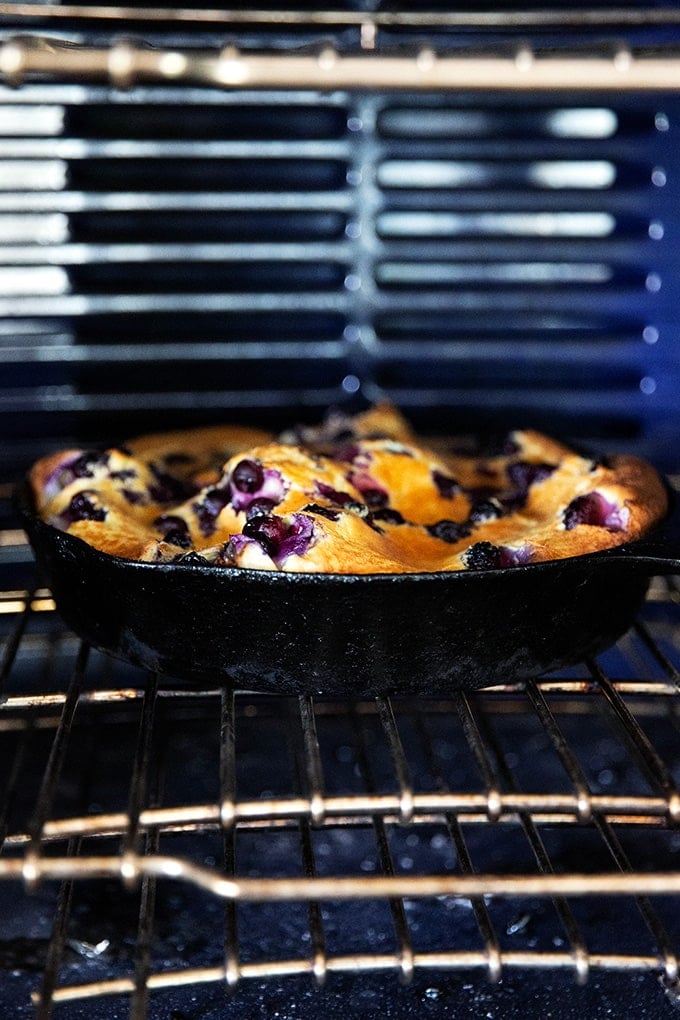
This recipe is a lemon-blueberry variation of my favorite apple Dutch baby recipe , a low-lift, high-return breakfast treat I’ve been loving: it feeds four comfortably and takes no time to whip together.
A Dutch baby, if you are unfamiliar, is like a cross between a popover and a pancake: it rises dramatically in the oven, then collapses upon removal. It’s custardy in texture, not fluffy like traditional pancakes , a consistency created not only by the high ratio of eggs in the batter, but also by the absence of any leavening agent — the water in the eggs, milk, and butter in combination with the hot skillet cause the batter to rise in the oven.
If you’ve never made a Dutch baby, I think it’s time to try. Every time I make one, I feel extreme joy when I open the oven door to find the pancake towering above the rim of the cast-iron skillet. I know it’s science, but it still feels magical.
While you can make Dutch babies without any fruit, I love the sweet-tart flavors they impart, and lemon + blueberry is never a bad idea. Peaches and other stone fruit work beautifully, too.
And if you love the lemon-blueberry combo, you must try these lemon-blueberry muffins and these lemon-blueberry scones and this lemon-blueberry quick bread .
How to Make a Lemon-Blueberry Dutch Baby, Step by Step
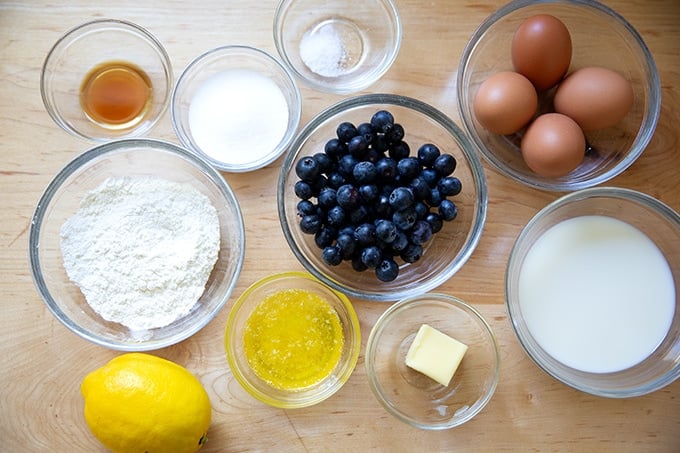
Gather your ingredients: flour, milk, salt, sugar, eggs, vanilla, lemon zest, butter, and blueberries.
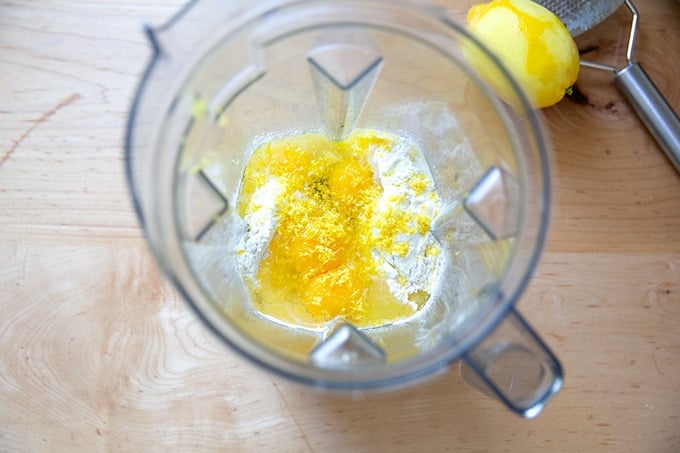
Place all of the ingredients, with the exception of the blueberries and 2 tablespoons of the butter, in a blender.
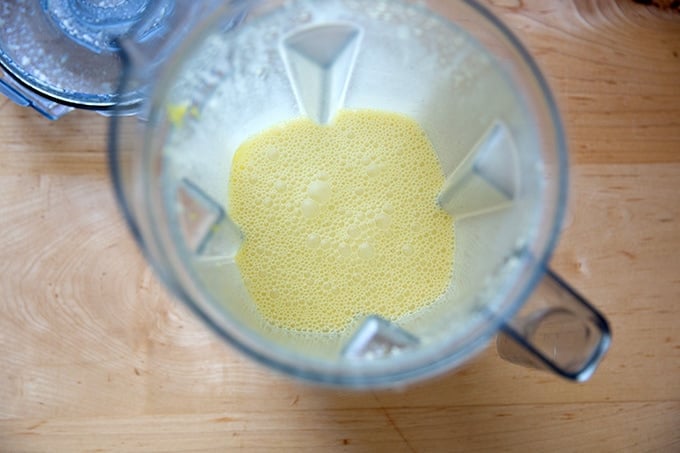
Blend until smooth.
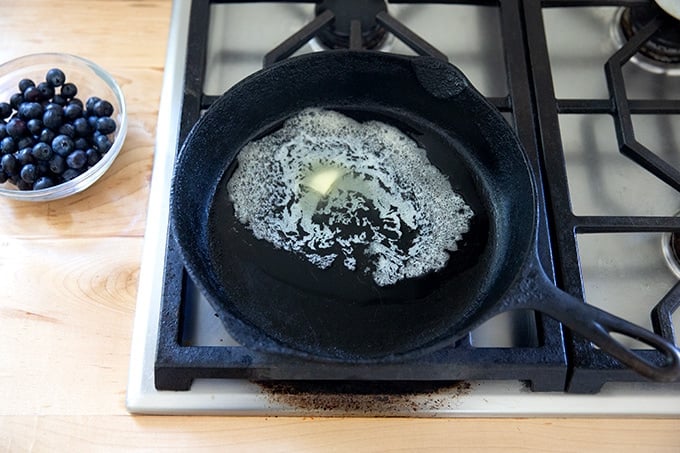
Melt 2 tablespoons of butter in a cast iron skillet over medium-high heat.
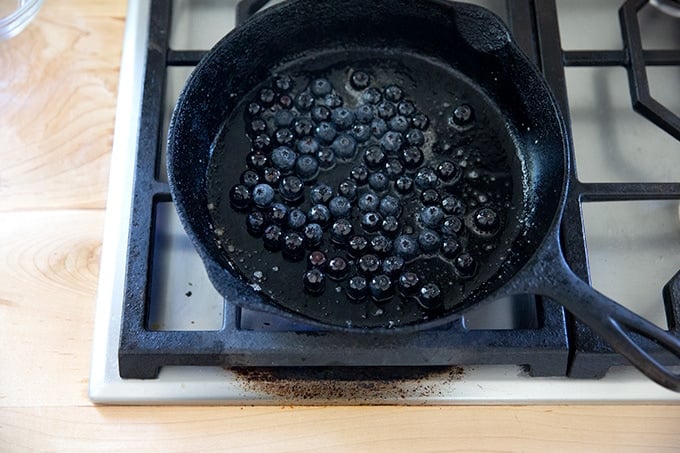
Add the blueberries, give them a shake, then…
… immediately pour in the batter and…
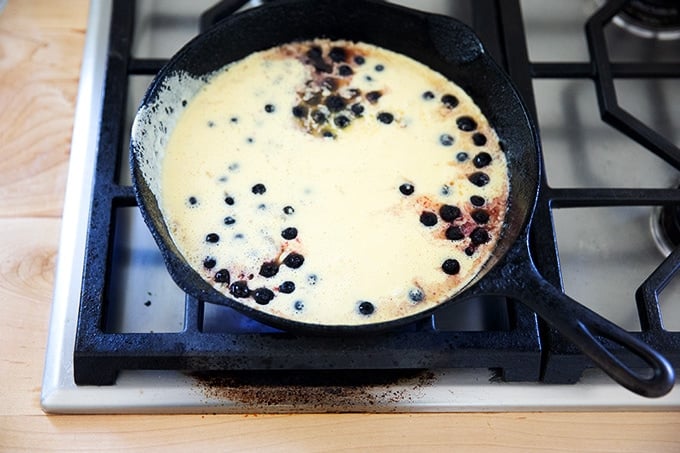
… transfer to the oven. Bake for 15 minutes.
Remove from the oven and …
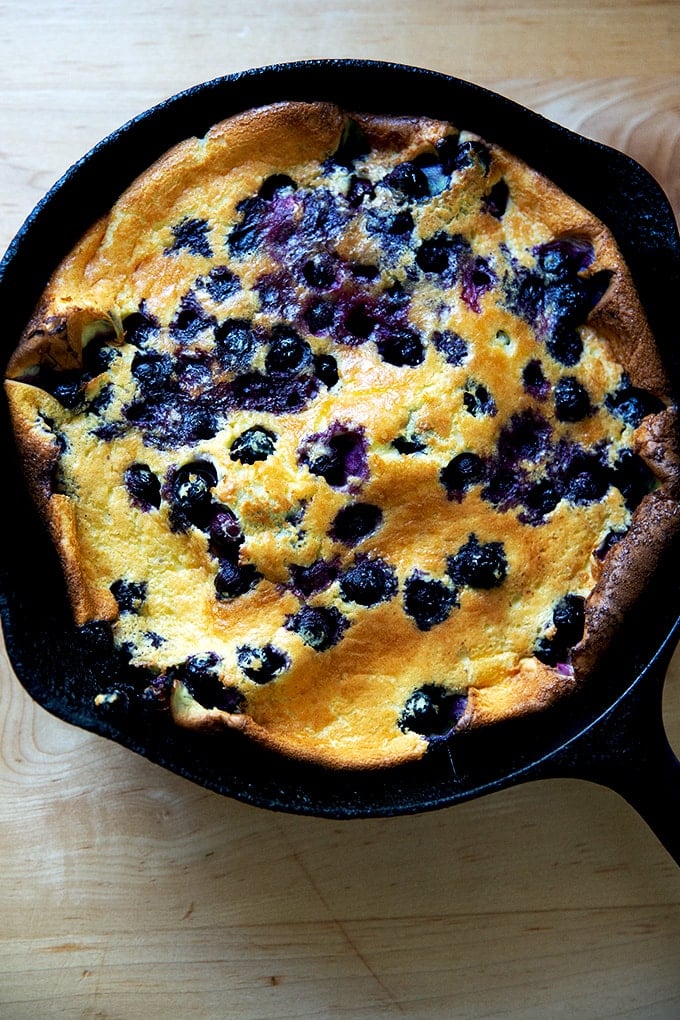
… dust with powdered sugar if you wish.
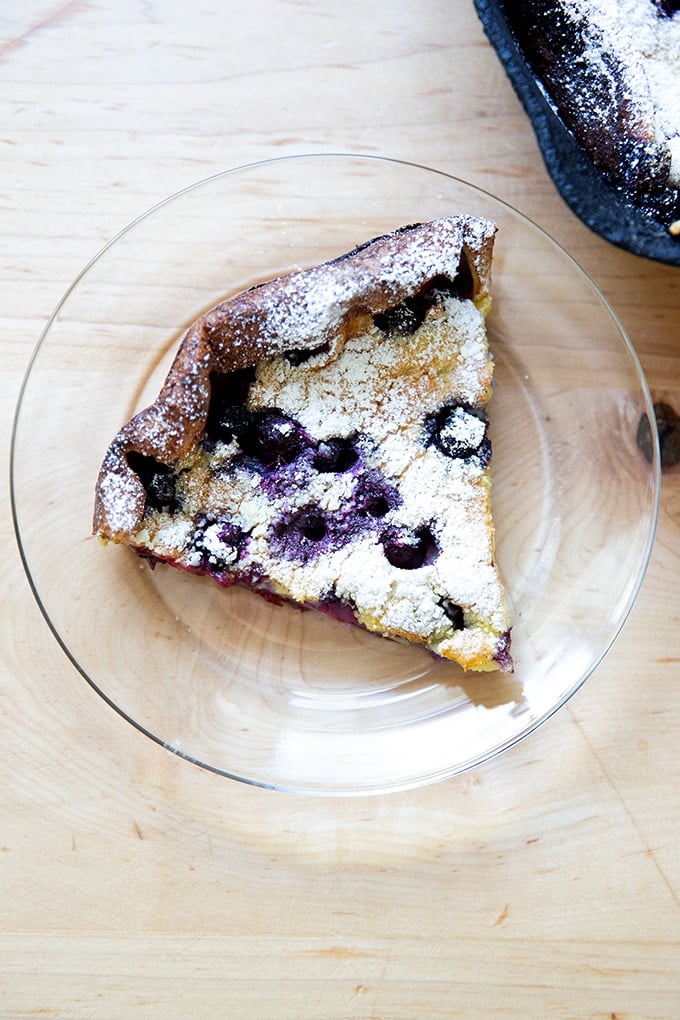
Cut and serve…
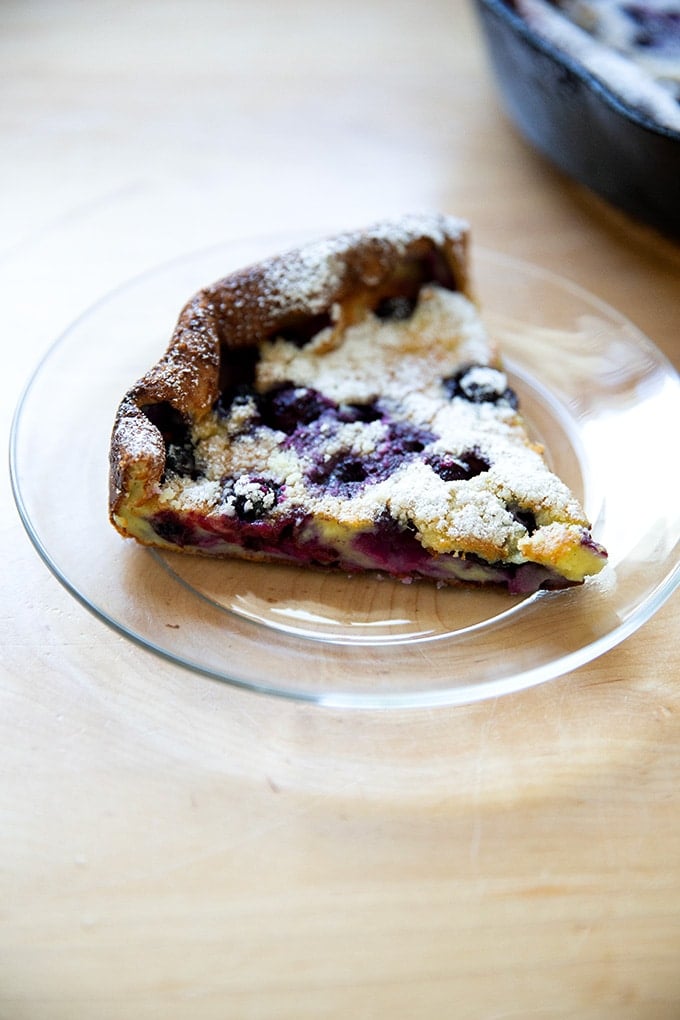
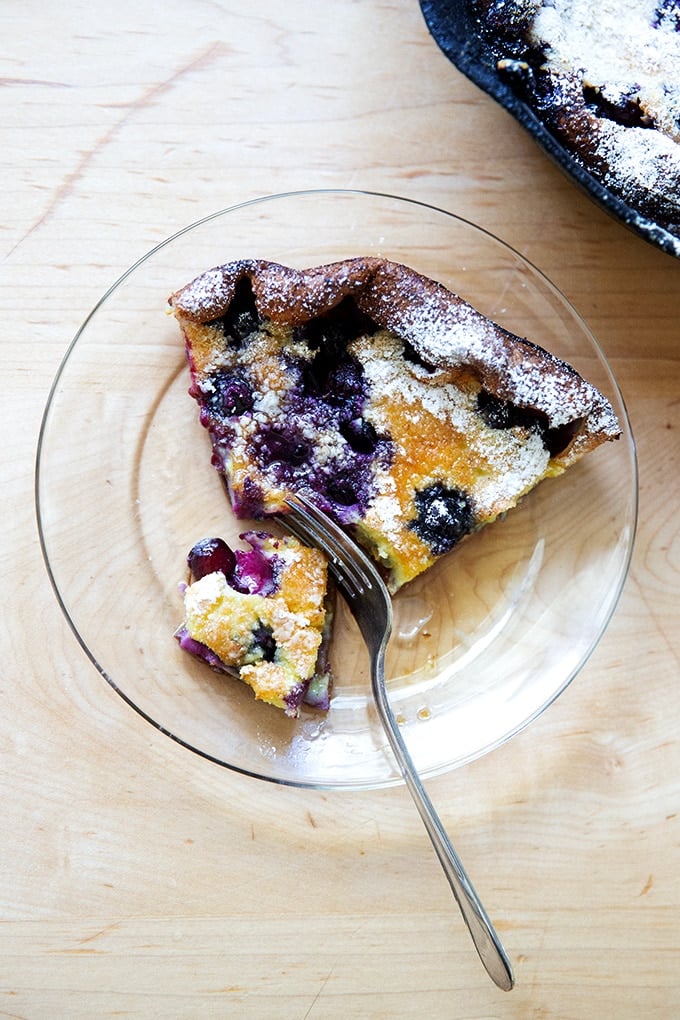
… with maple syrup if you wish.
Description
Adapted from an apple version of a recipe that appeared in Gourmet many years ago now.
Cranberry Variation: Use 1.5 cups cranberries in place of the blueberries and use the zest of one orange in place of the lemon zest.
Troubleshooting : If you have trouble with your Dutch baby getting lofty in the oven, you may have better luck if you bring your milk and eggs to room temperature. Frozen berries will also adversely affect the rise, so if you use frozen berries, consider thawing them first.
- 4 tablespoons butter, divided
- 1/2 cup ( 125 g ) whole or 2% milk
- 1/2 cup ( 64 grams ) all-purpose flour
- 4 large eggs
- 3 tablespoons ( 43 g ) granulated sugar
- 1 teaspoon vanilla
- 1/4 teaspoon salt
- the zest of one lemon
- 1 cup ( 154 g ) blueberries
- Confectioners sugar for dusting
- Place an oven rack in the middle position and preheat the oven to 450°F. Place a 9- or 10-inch cast iron skillet over low heat on your stovetop. Keep it over low heat while you prepare the batter.
- Melt two tablespoons of the butter in a small skillet, then transfer to a blender. Add the milk, flour, eggs, granulated sugar, vanilla, salt, and lemon zest, and blend until smooth. (Do not skip this step — the batter will be lumpy if you do.)
- Place the remaining 2 tablespoons of butter into the cast iron skillet. Turn the heat up to medium-high. Let the butter melt, add the blueberries, and give the skillet a shake. Immediately pour the batter over the blueberries and transfer the skillet to the oven. Bake until the pancake is puffed and golden, about 15 minutes.
- Remove pan from the oven, and dust with confectioners sugar, if you wish. Cut and serve immediately with maple syrup.
- Prep Time: 10 minutes
- Cook Time: 15 minutes
- Category: Breakfast
- Method: Stovetop, Oven
- Cuisine: American
