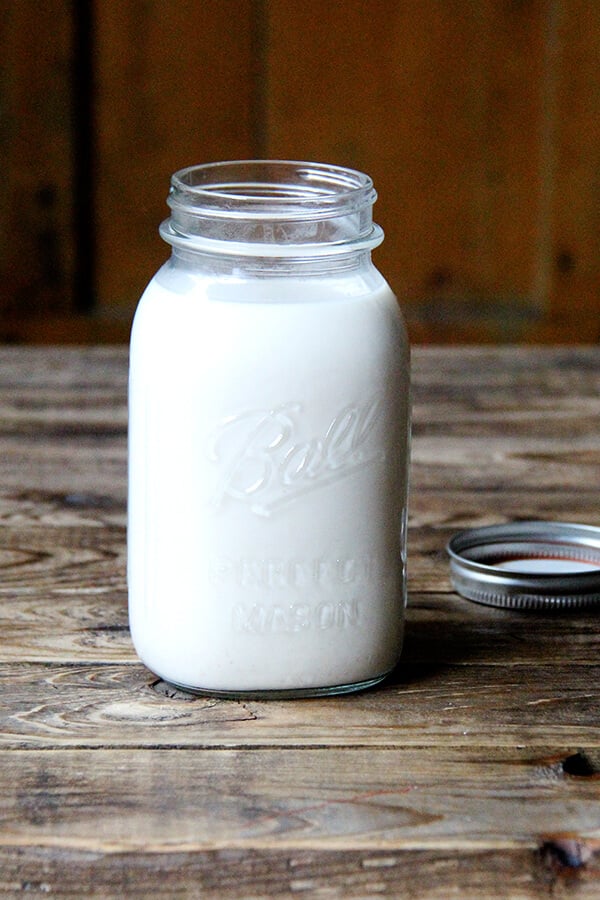
Cowspiracy , the latest documentary revealing the devastating impact of animal agriculture on our environment, left me wondering: Can anything today be eaten in good conscience?
If you haven’t seen Cowspiracy, you’re probably thinking you’ve heard this message countless times. Didn’t Food, Inc. tell us back in 2008 that our food system is in peril?
Yes, but Cowspiracy is different (and also hilarious). In addition to shedding light on the issues surrounding factory farming — that it’s responsible for more greenhouse gases than the transportation industry and is the leading cause of deforestation, water consumption, pollution, etc. — it asks the question: Why aren’t the leading environmental groups addressing the issue?
I don’t want to ruin the film, so stop reading if you hate spoilers, but the film makes several eye-opening declarations about two foods I’ve considered acceptable choices: sustainable fish and grass-fed beef. According to Cowspiracy, all fish, even those species labeled “sustainable,” are in fact unsustainable. And grass-fed beef is out because there isn’t enough land worldwide to support this type of farming. Kip Anderson, the filmaker, concludes the film declaring veganism as the only sustainable diet on a global scale.
As these ideas surfaced throughout the film, all I could think about was my morning muesli . Of course I would miss that first summmer burger, but what would I do without my daily oats, soaked and softened in milk, the bowl I fix every morning before even thinking about coffee. Of course I would miss that block of cheese at lunch and the bacon and crème fraîche on my pizza and the occasional scoop of ice cream after dinner but could I survive with my morning ritual so disrupted?
Coincidentally, I watched Cowspiracy the night before Food52 Vegan arrived at my door. I opened the book to find muesli made with nut milk as the first recipe. The stars had aligned to give homemade nut milk a go.
I scooped a cup of cashews into a bowl and covered them with water. The following morning, I drained the plumped, swollen nuts, then puréed them with water, maple syrup and vanilla. The process was easy — cashew milk, unlike other nut milks, requires no straining — and it tasted surprisingly good, which assured me I could, at the very least, stomach vegan muesli. I poured the milk into Mason jars, stuck them in the fridge, and went about my day. But as the day progressed, something happened: every time I passed the fridge, I snuck — chugged — a glass of cashew milk. It tasted rich, creamy, and so refreshing. I drank the quart within a day, then immediately soaked another cup of cashews. I have made a batch of nut milk every morning since.
News to me: nut milk, if anything, is an indulgence. My morning muesli has never been happier. I’ve never felt so hydrated.
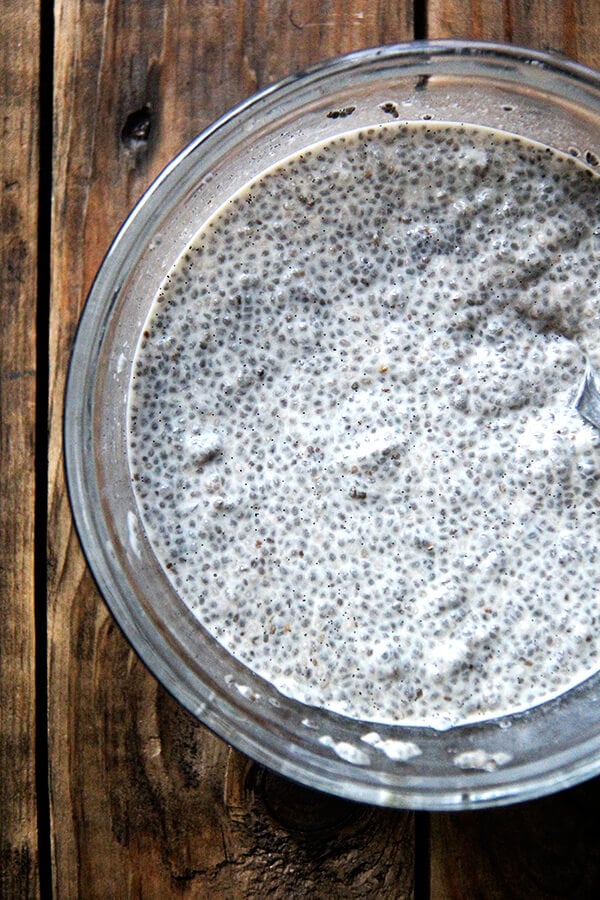
Friends, I am not going vegan but I feel inspired to explore a way of eating I have always considered a step too far, a diet of nuts, berries and odd ingredients found only at health food markets, an austere way of living that would leave me hungry all day long. Thus far, this has not been my experience. I have made vegan chia pudding that tastes as delicious as when made with whole milk. I made a freekeh salad two nights in a row that I cannot wait to share with you. Cashew milk will forever be a staple in my fridge.
I have yet to explore the world of tempeh, nutritional yeast and tofu feta, and I am not ready to give up eating something as miraculous as the egg nor am I ready to stop eating meat, but I know my reliance on animal products, dairy in particular, could use some scrutiny. I’ll keep you posted.
Have you watched Cowspiracy? Thoughts?
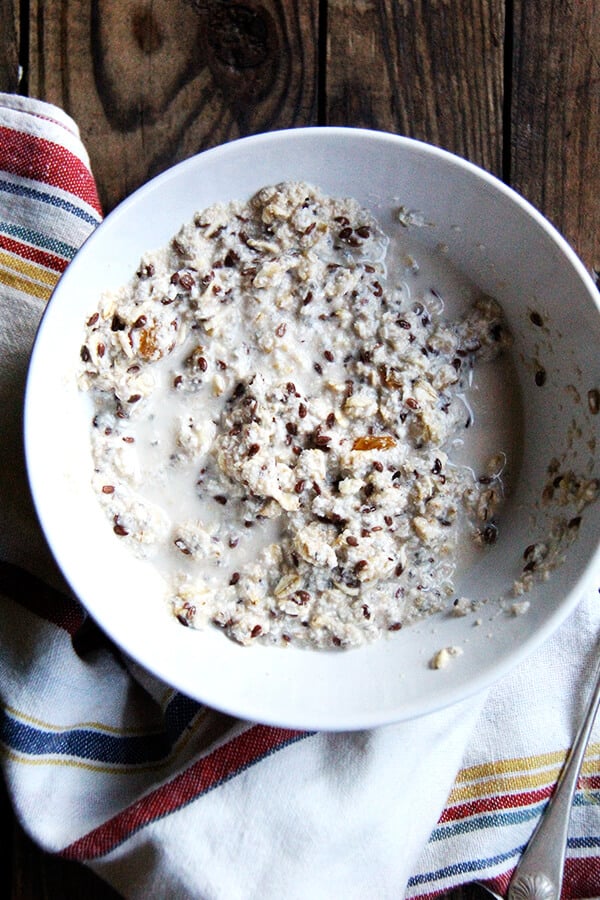
Muesli with cashew milk:
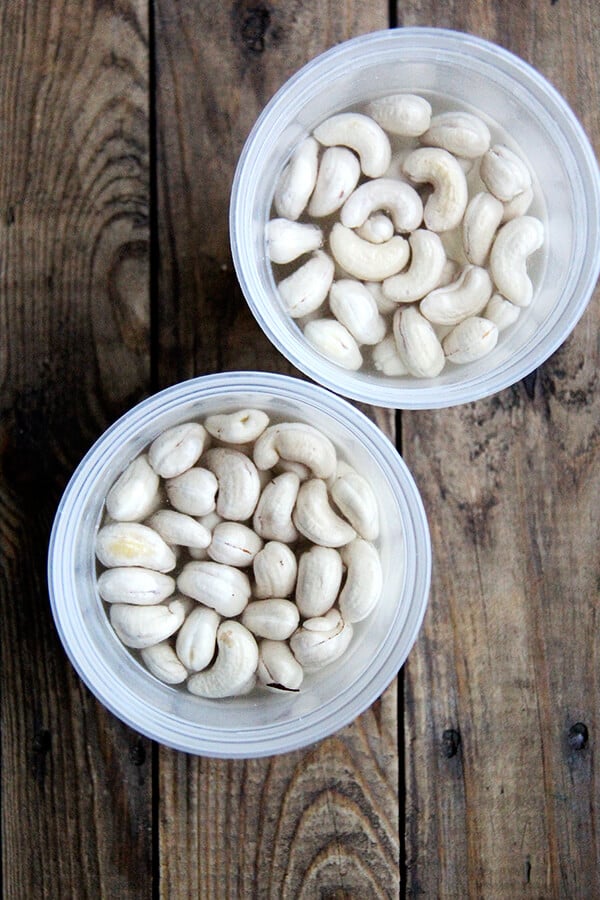
Cashews after 12 hours of soaking:
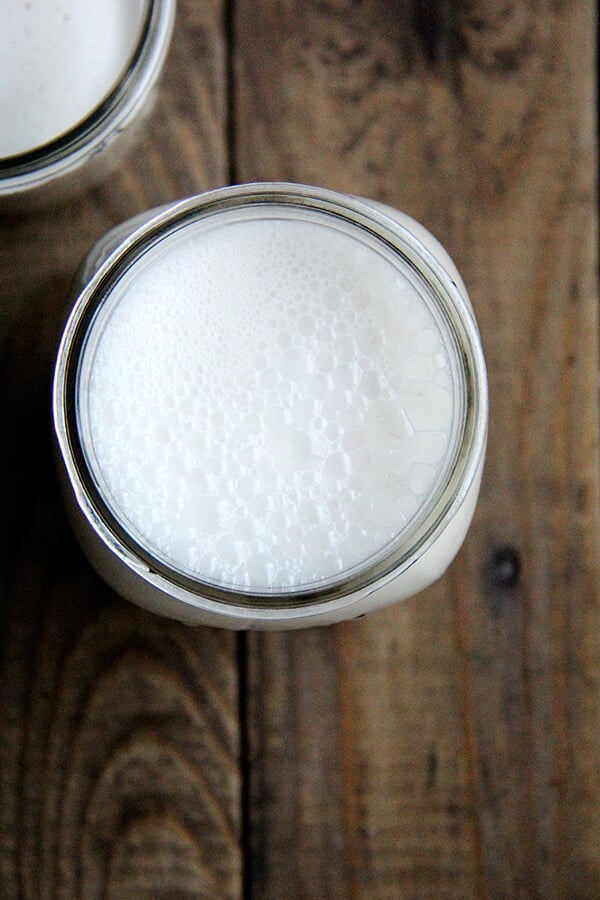
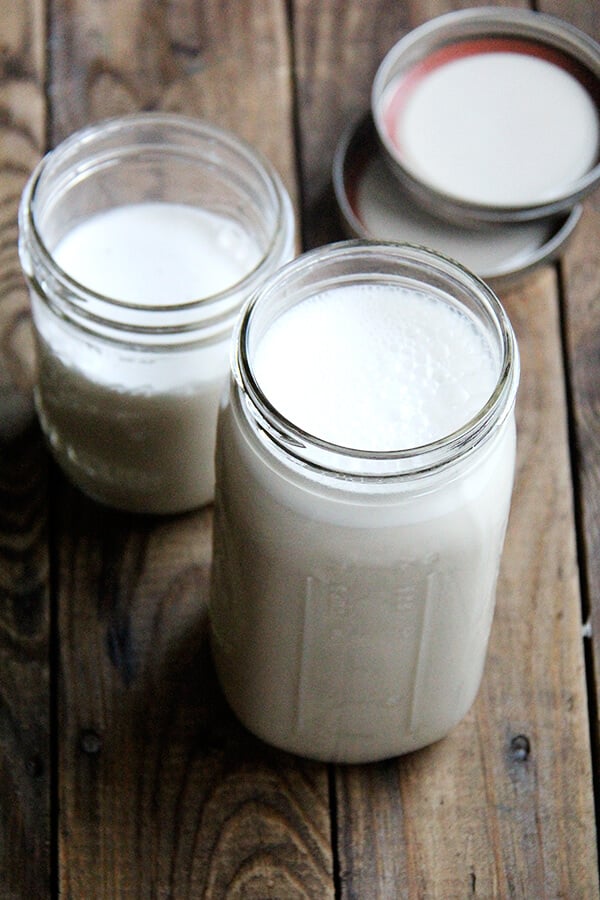
One cup of cashews yields about 5 cups of milk:
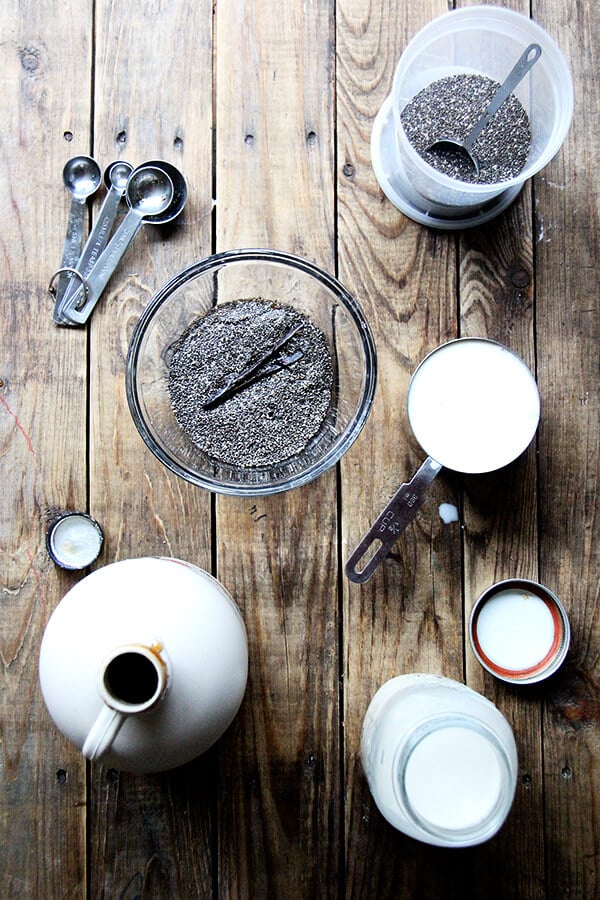
Description
for the cashew milk:
- 1 cup ( 5 oz | 120 g ) cashews, soaked in water for 8 to 12 hours and drained
- ¼ cup ( 60 ml) maple syrup or 4 pitted medjool dates
- 1 teaspoon vanilla extract
- small pinch salt
- 4 cups ( 950 ml) water
for the chia puddings:
- 1½ cups homemade cashew milk
- 1½ tablespoons maple syrup, plus more to taste
- 1 teaspoon vanilla
- pinch salt
- 6 tablespoons chia seeds
- Put cashews in blender or food processor and purée until fine, scraping down the sides. Add the syrup, vanilla and water and purée until smooth, scraping down the sides again if necessary.
- Transfer to storage jars and chill. Use within 2 or 3 days. Shake before using.
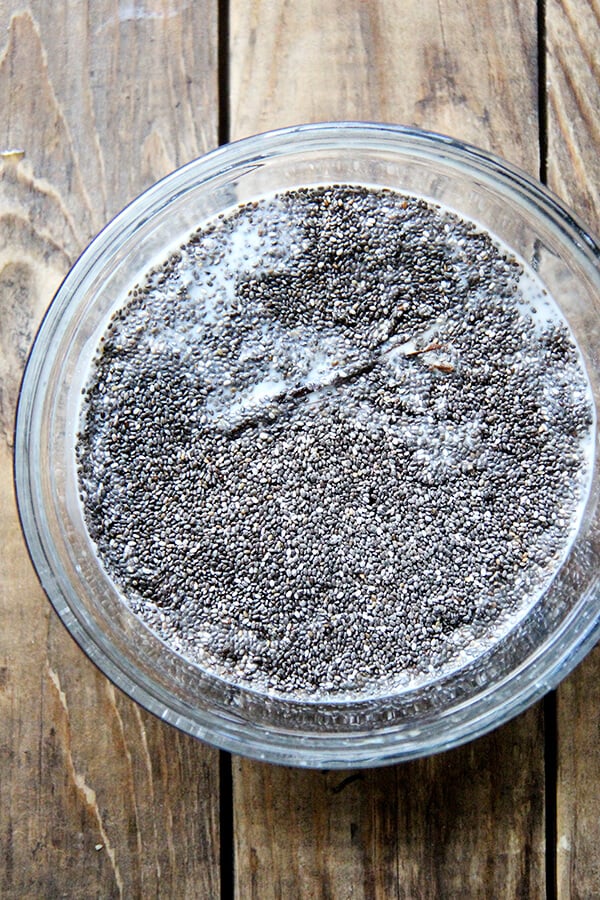
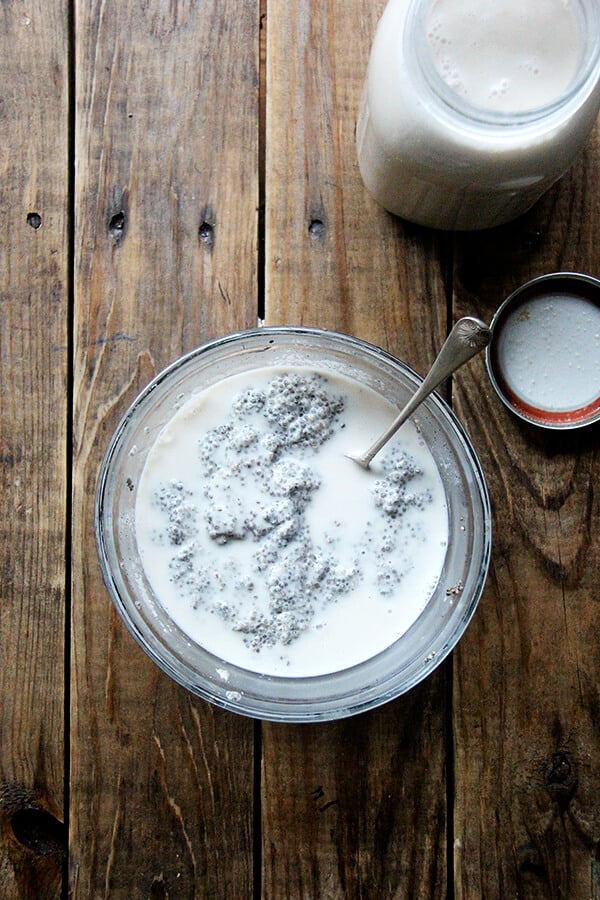
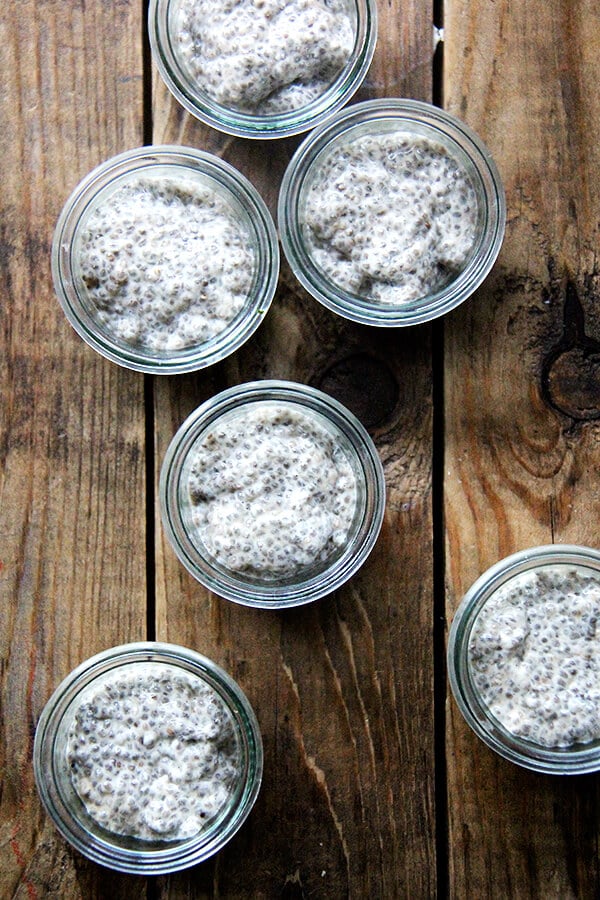
- To make the puddings: Put the chia seeds in a medium bowl. Pour the cashew milk, maple syrup, and vanilla overtop. Add a pinch of salt. Let sit for 5 minutes. Give it a stir. Let sit for 10 minutes. Give it another stir. At this point, the chia seeds should be getting plump and the mixture should start to resemble a loose tapioca pudding.
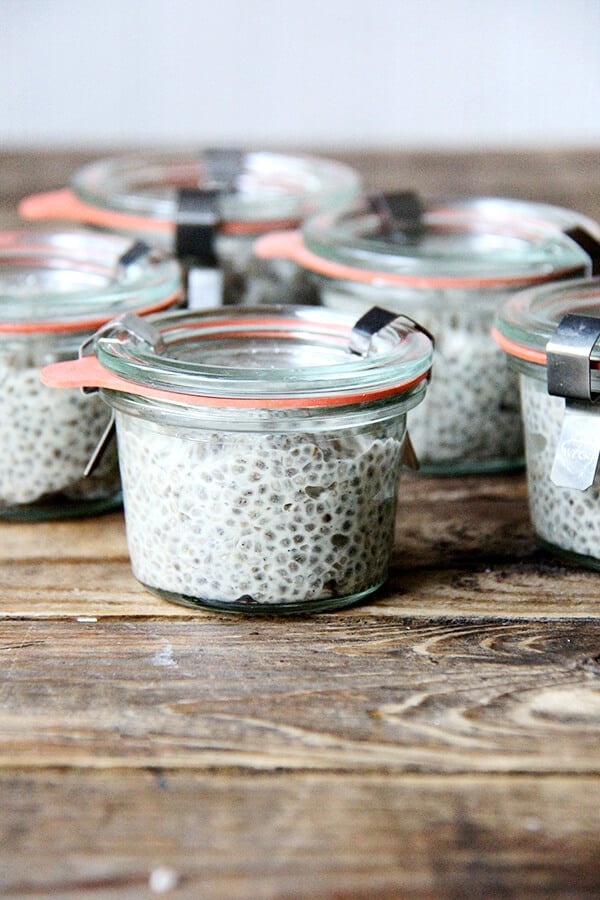
- Cover and refrigerate for 8 hours. Before serving, check the consistency. Add more milk to achieve the desired consistency. Taste. Add more maple syrup if necessary.
- Prep Time: 10 minutes
Description
for the cashew milk:
- 1 cup ( 5 oz | 120 g ) cashews, soaked in water for 8 to 12 hours and drained
- ¼ cup ( 60 ml) maple syrup or 4 pitted medjool dates
- 1 teaspoon vanilla extract
- small pinch salt
- 4 cups ( 950 ml) water
for the chia puddings:
- 1½ cups homemade cashew milk
- 1½ tablespoons maple syrup, plus more to taste
- 1 teaspoon vanilla
- pinch salt
- 6 tablespoons chia seeds
- Put cashews in blender or food processor and purée until fine, scraping down the sides. Add the syrup, vanilla and water and purée until smooth, scraping down the sides again if necessary.
- Transfer to storage jars and chill. Use within 2 or 3 days. Shake before using.
- To make the puddings: Put the chia seeds in a medium bowl. Pour the cashew milk, maple syrup, and vanilla overtop. Add a pinch of salt. Let sit for 5 minutes. Give it a stir. Let sit for 10 minutes. Give it another stir. At this point, the chia seeds should be getting plump and the mixture should start to resemble a loose tapioca pudding.
- Cover and refrigerate for 8 hours. Before serving, check the consistency. Add more milk to achieve the desired consistency. Taste. Add more maple syrup if necessary.
- Prep Time: 10 minutes
Find it online : https://alexandracooks.com/2015/10/14/homemade-cashew-milk-cashew-milk-chia-pudding/
Skip to Recipe
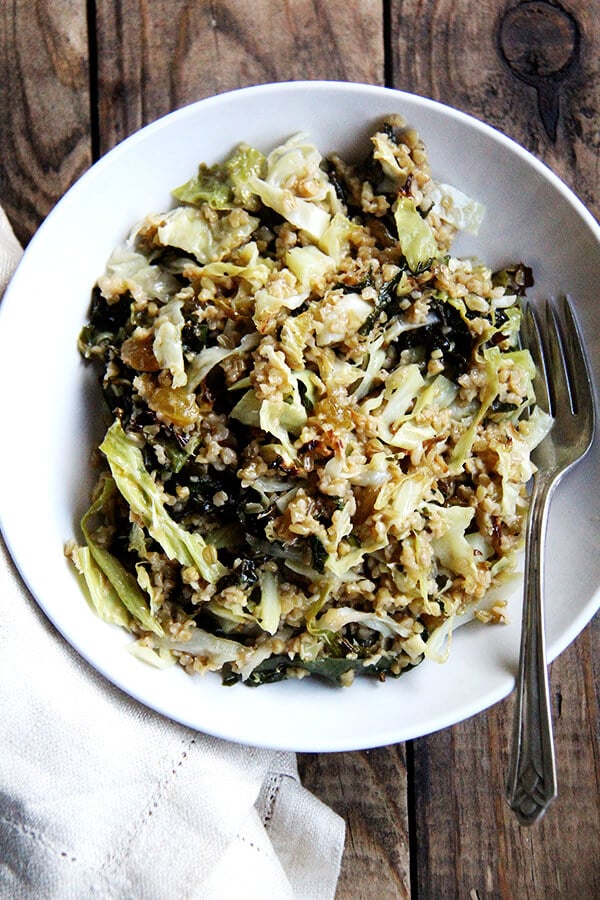
Here’s a simple formula for you to use all fall/winter: roasted vegetables + cooked grains + mustard vinaigrette. I’ve made some variation of it three nights in a row, and I don’t see the streak breaking anytime soon.
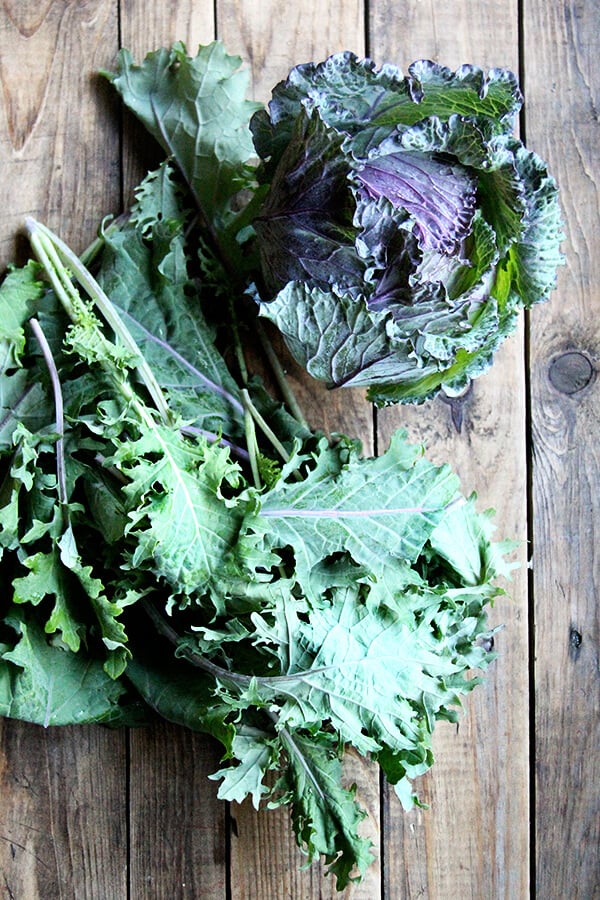
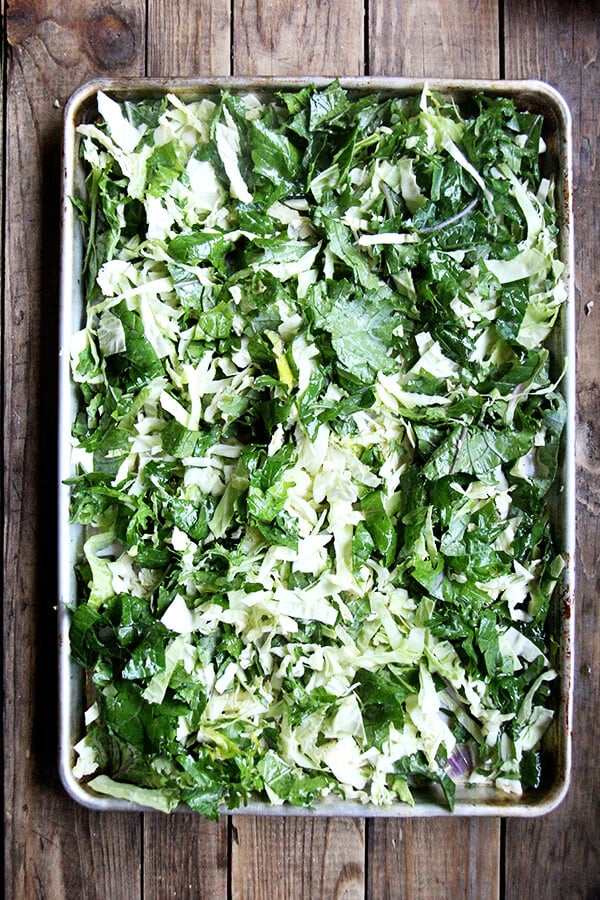
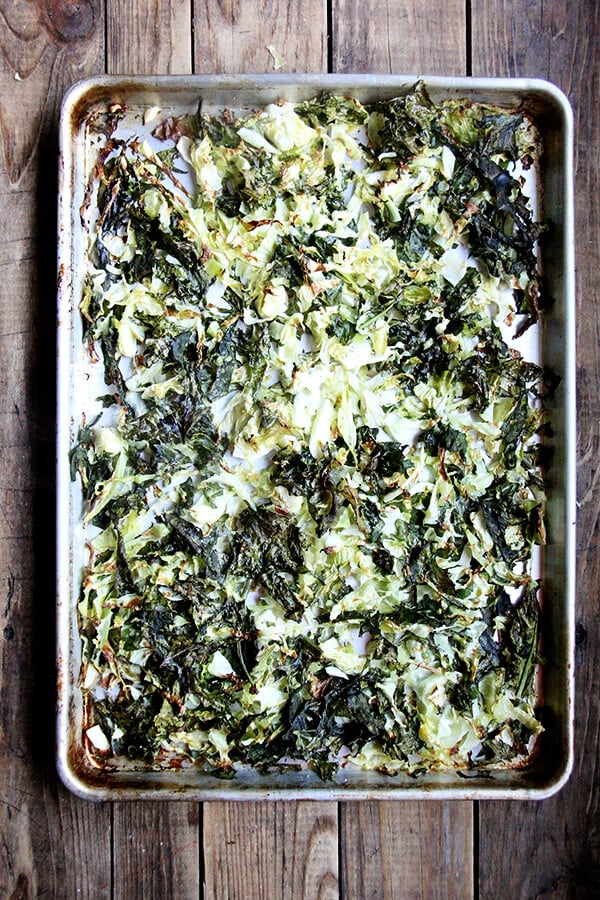
In Food52 Vegan it’s roasted cauliflower and freekeh; here I’ve used cabbage and kale, because that’s what I had on hand, but so many vegetables could work: broccoli, Brussels sprouts, carrots, parsnips, squash — what couldn’t work is maybe a better question?
As with so many grain salads , this one is endlessly adaptable: Make the dressing with vinegar if you don’t have lemons. Use golden raisins in place of the currants, parsley for the mint. Don’t use any herbs at all.
This is my favorite kind of recipe, one whose assembly is fluid — as the vegetables roast in the oven, the freekeh cooks stovetop, and you make the dressing — and whose payoff is big: minimal mess and a meal that’s at once light and comforting.
It’s the recipe to turn to when you think you have nothing to serve for dinner, and a good reminder that with a little effort — a poke around the cupboard, a nose through the vegetable bin — a delicious surprise may just lie ahead.
Description
Adapted from: Food52 Vegan by Gena Hamshaw
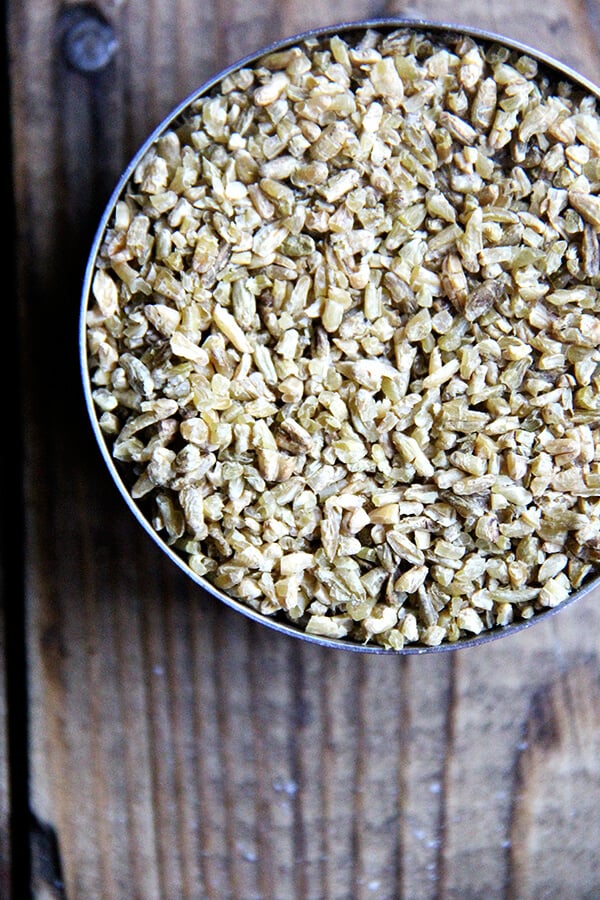
So many vegetables could work here: cabbage, kale, cauliflower, broccoli, parsnips, carrots, squash, etc. If you are using kale and cabbage, slice the leaves relatively finely or at least try to make the vegetables you are roasting together be uniform in size so that they cook evenly. Freekeh is not something I’ve cooked with many times, but I happened to have a bag of it on hand, and I think I’ll be buying it more often. It cooks quickly and has a nice, chewy texture — it reminds me of bulgur. Freekeh is harvested when it’s young or “green” then roasted, which gives it a slightly smoky, nutty flavor. Use any grain in place of the freekeh: farro, wheat berry, quinoa, bulgur, etc. I’ve used both currants and golden raisins, but chopped dates would be nice, too — anything to add a touch of sweetness. Nuts would be a nice addition here.
- 1 lb. (450 g) vegetables, such as kale, cauliflower, cabbage — see notes above
- 6 to 7 tablespoons olive oil, divided
- salt and pepper to taste
- 1½ cups ( 355 ml) vegetable broth or water
- ¾ cup ( 170 g ) freekeh or other grain, see notes
- 2 tablespoons freshly squeezed lemon juice or vinegar
- 1 teaspoon Dijon mustard
- ½ cup dried currants or golden raisins
- 1 tablespoon finely grated zest, optional
- 3 tablespoons finely chopped mint or other herb, optional
- Preheat oven to 425ºF (220ºC).
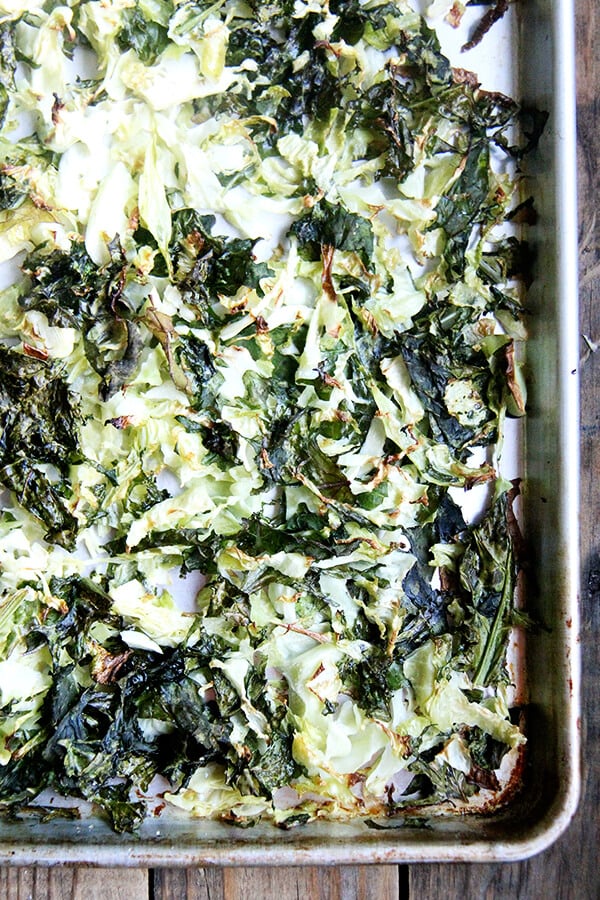
- On a rimmed baking sheet, toss the vegetables with 2 to 3 tablespoons of olive oil and season generously with salt and pepper. Roast for 20 minutes or until browned and crispy. Set aside.
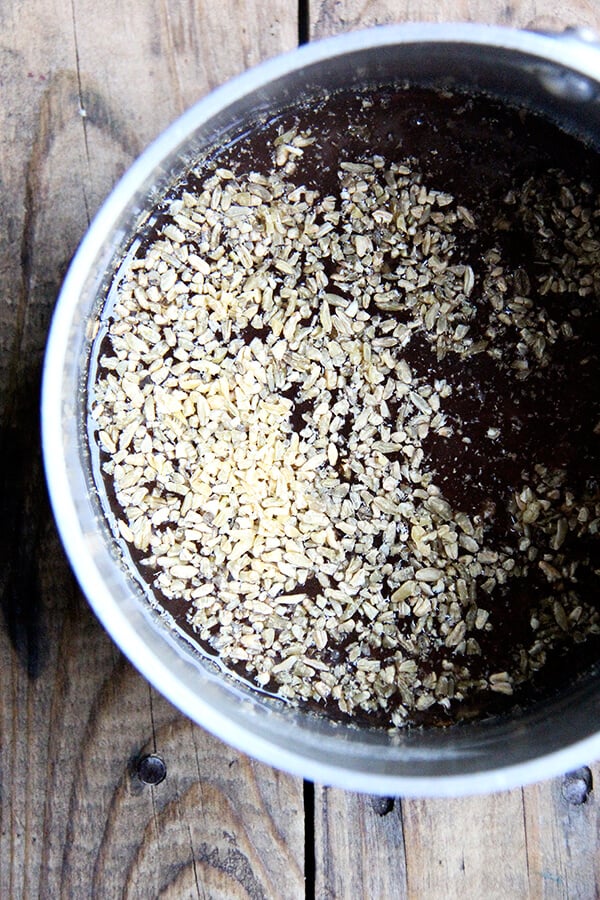
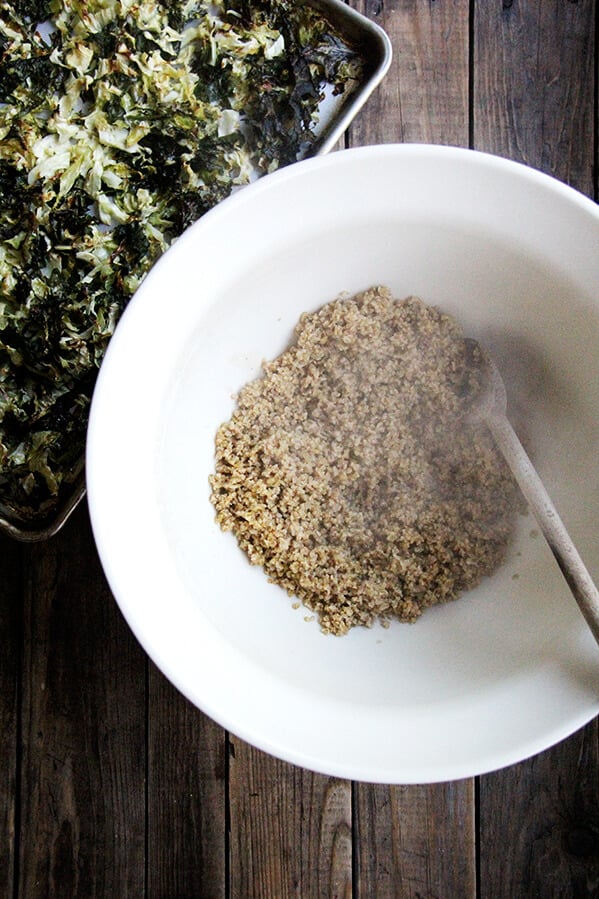
- Meanwhile, combine the broth and freekeh in a medium saucepan and bring to a boil over medium-high heat. Decrease the heat to maintain a simmer, cover, and cook for 20 minutes, until the freekeh is tender and has absorbed most of the broth. Fluff with a fork, then let it cool a bit.
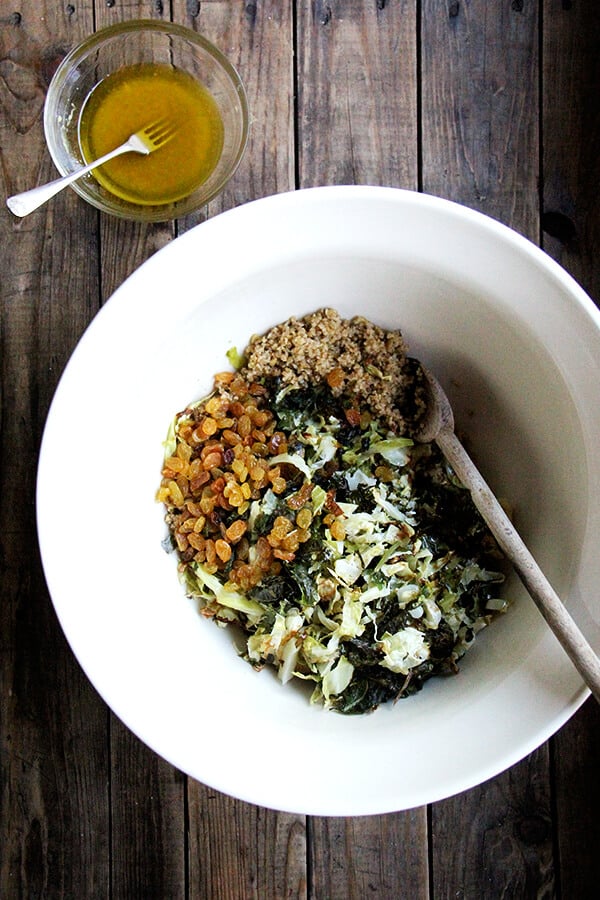
- Put the remaining 4 tablespoons olive oil in a small bowl or measuring cup. Add the lemon juice, mustard, and salt and pepper to taste. Whisk until well blended.
- In a large bowl, toss together the vegetables, freekeh, currants, and zest. Drizzle with most of the dressing and toss to coat. Taste. Add more dressing if necessary and adjust seasoning as necessary. Just before serving, stir in the herbs. Save any remaining dressing for tomorrow, when you make the salad again.
- Prep Time: 15 minutes
- Cook Time: 20 minutes
