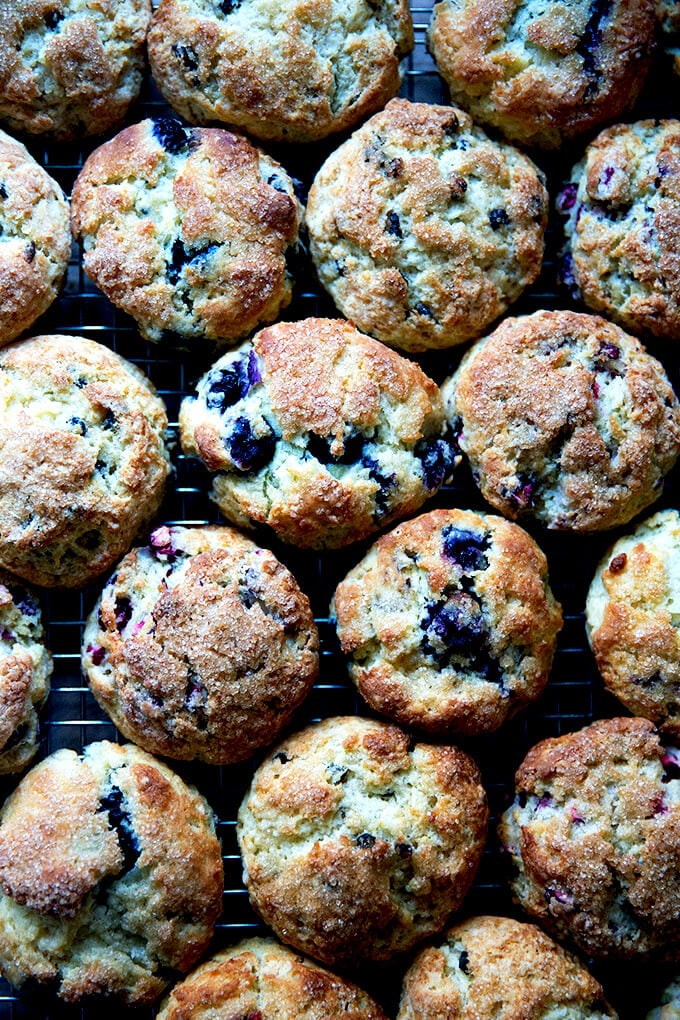
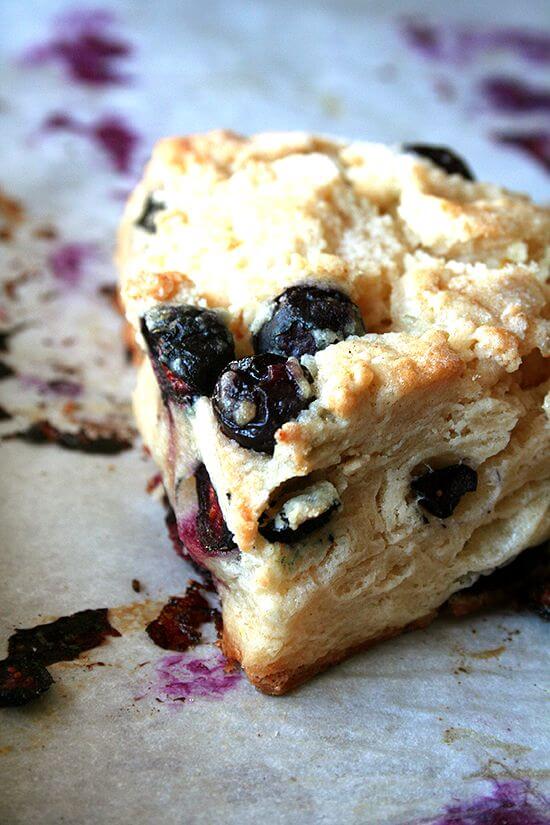
This lemon-blueberry scone recipe yields a flaky, buttery, sugar-crusted, and berry-loaded scone. Buttermilk makes the crumb especially tender, and a hint of fresh lemon zest so nicely complements the berries, adding a touch of brightness, too.
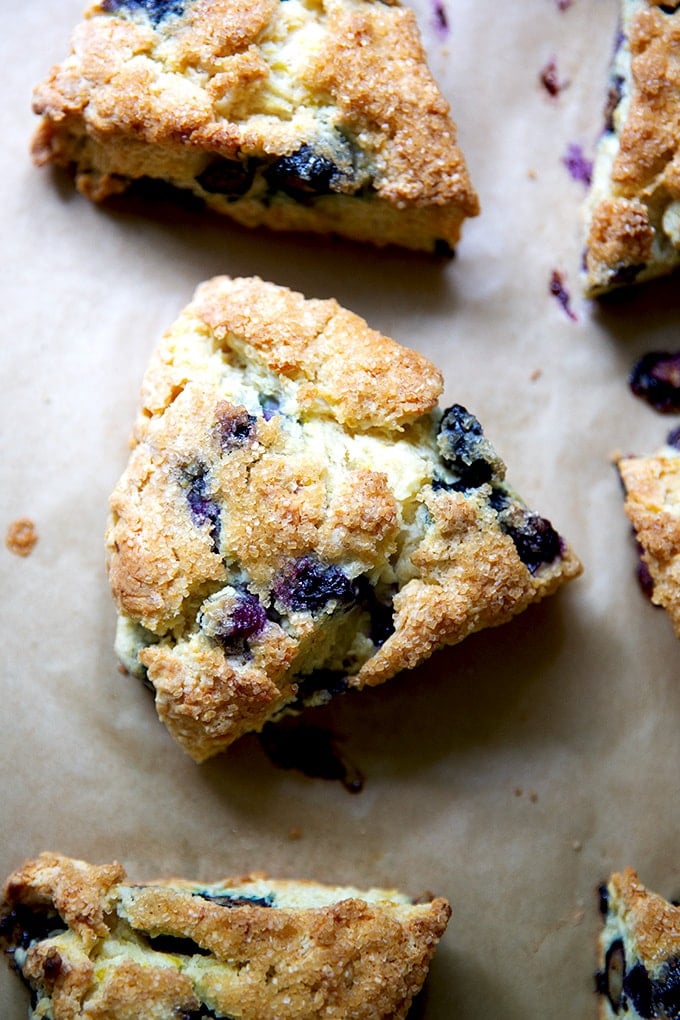
You might recall my obsession with Tartine ? When you live hundreds of miles from this magical bakery, it’s good to have a few of their tricks up your sleeve. This lemon-blueberry scone recipe is a great place to start.
The key to making a good scone is similar to making a good pie crust or a good biscuit :
- Use cold butter.
- Handle the dough minimally.
Keeping the butter cold creates a flakiness in the finished pastry. Handling the dough with a light touch ensures the crumb will be tender.
There are a few ways to “cut” cold butter into dry ingredients:
- A pastry cutter : This hand-held, u-shaped tool works well if you have a sturdy one with solid (as opposed to wire) “blades”. I find pastry cutters to be a little tricky initially — they slip and slide — but once you make a few cuts, they beautifully “cut” the butter into the dry ingredients.
- The back of a fork: The back of a fork works similarly to a pastry cutter, but will require a little more elbow grease.
- Food processor: Ten 1-second pulses in the food processor will quickly cut butter into dry ingredients, as in this pie dough recipe . Finish the scone dough by hand, however: once the butter is cut into the dry ingredients, transfer it to a bowl and add the buttermilk and blueberries; combine using a wooden spoon or spatula.
- Box grater: If you freeze the butter before using it, you can run it down a box grater to create fine shreds, which will incorporate easily into your dry ingredients.

Three More Tips for Excellent Scones
- Use buttermilk: Buttermilk tenderizes gluten, which promotes a tenderness in the final product. It also offers a nice tang.
- Add citrus zest: Fresh lemon or orange zest makes all the difference in a pastry, offering a touch of brightness as well as a nice complement to the sweet fruit.
- Use the tea towel trick to shape: To prevent overworking the dough, mix it with a spatula until you have a shaggy dough; then transfer to a large tea towel and twist it into a beggar’s purse to bring it together.
PS: I use this same base recipe to make Buttermilk Currant Scones and Cranberry-Orange “Snow” Scones .
More Lemon-Blueberry Recipes
- Lemon-Blueberry Dutch Baby
- Lemon-Blueberry Muffins
- Buttermilk Blueberry Breakfast Cake
- Lemon-Blueberry Quick Bread
How to Make Blueberry Scones
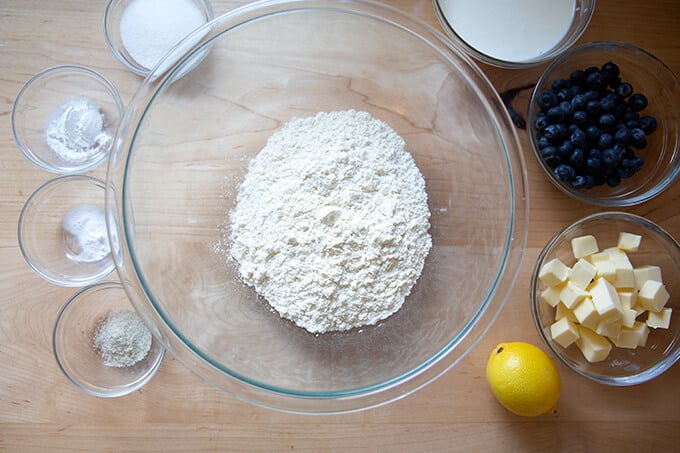
First, gather your ingredients: flour, salt, baking powder, baking soda, sugar, butter, berries, buttermilk, and a lemon.
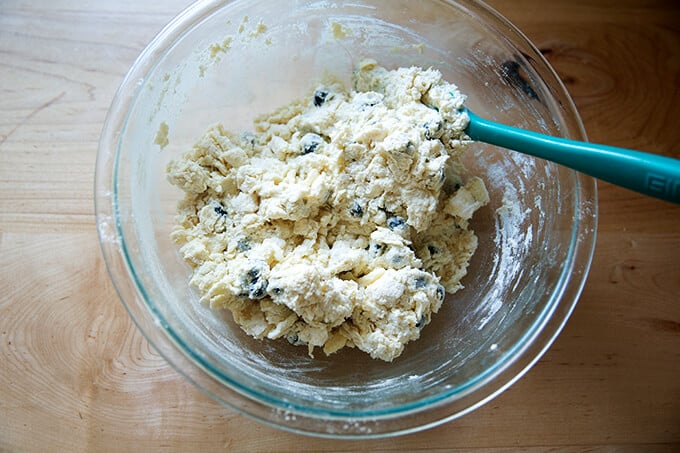
Next, mix the dough just until it comes together (video guidance above and in recipe card):
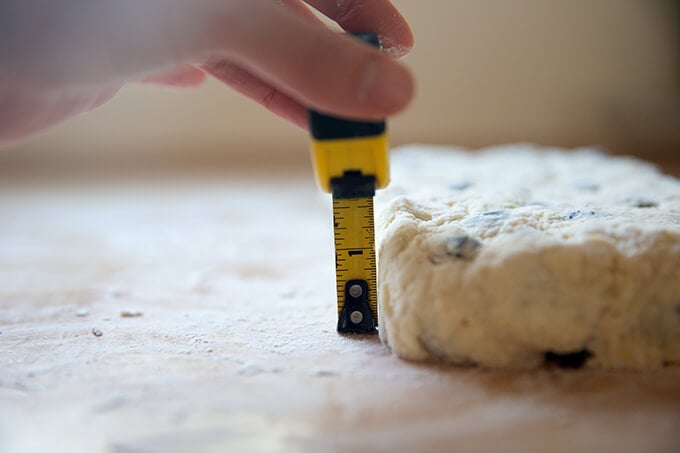
Turn it out onto a floured work surface and shape into a rectangle or square about 1.5 inches thick:
Cut as you wish: rectangles, squares, triangles or rounds, using a biscuit cutter:

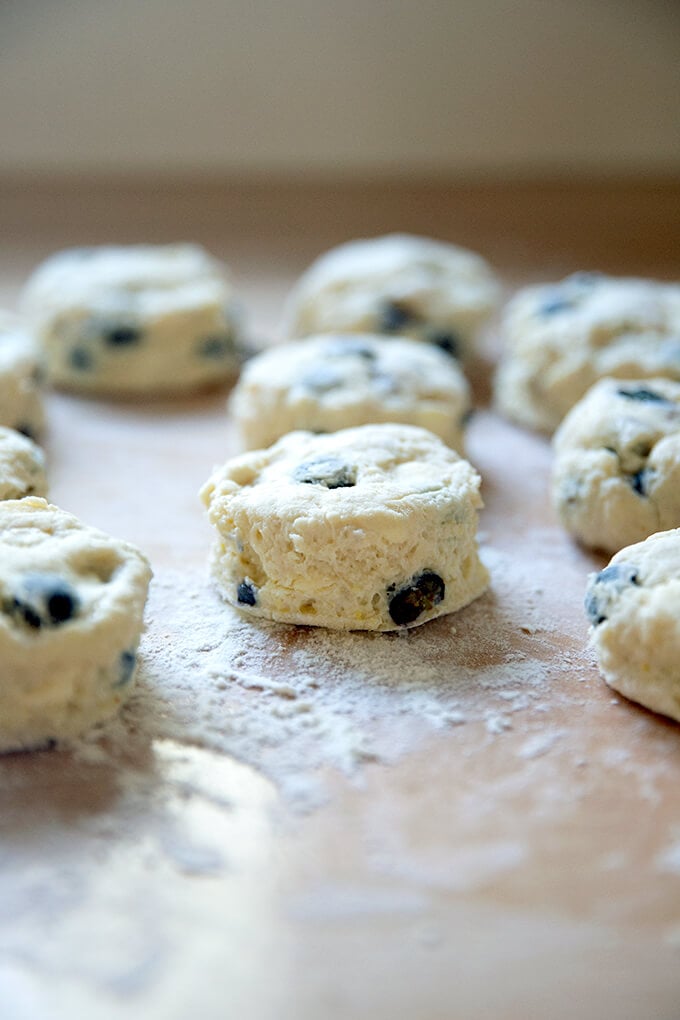
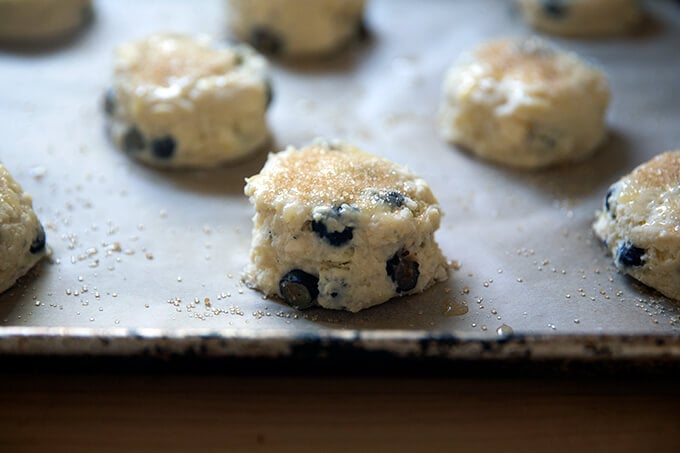
Transfer to a parchment lined sheet pan, and brush with butter and sprinkle with turbinado (or other sugar).
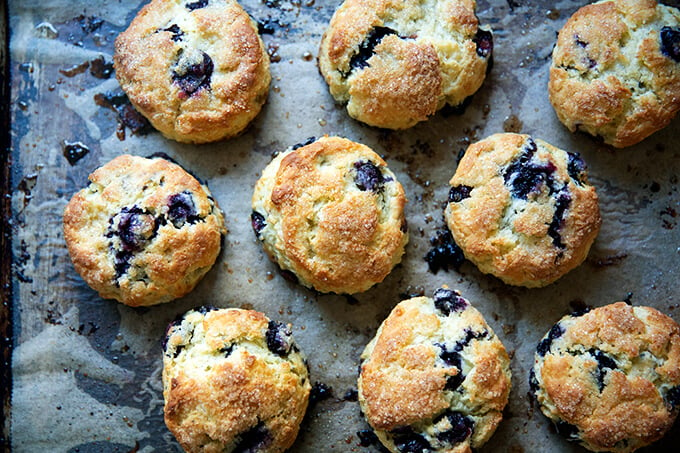
Bake at 425ºF for 20 minutes or until evenly golden:
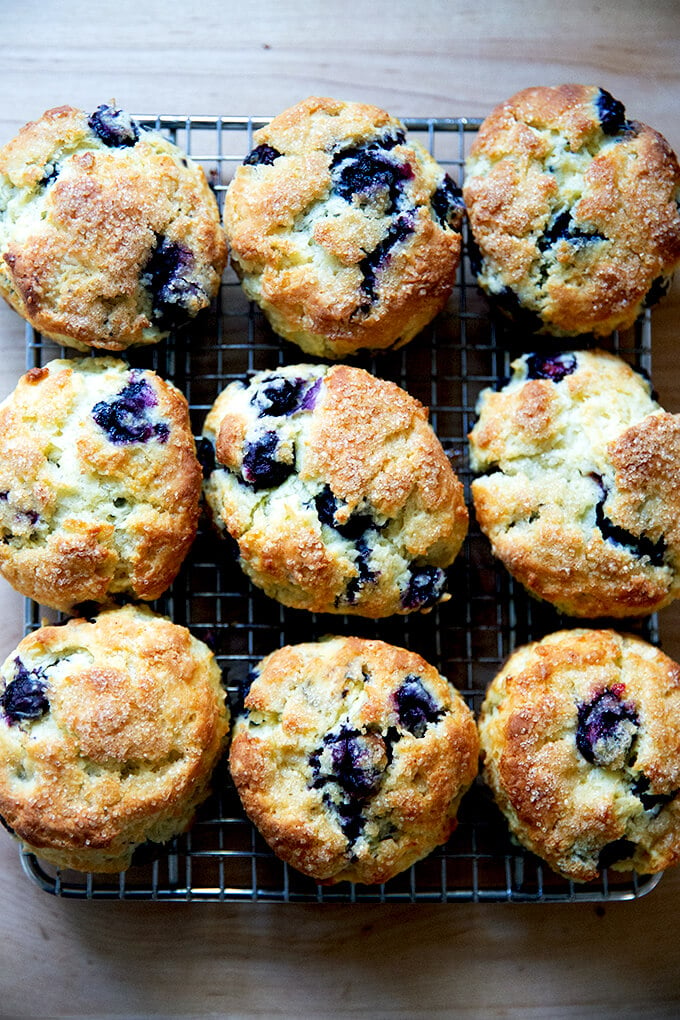
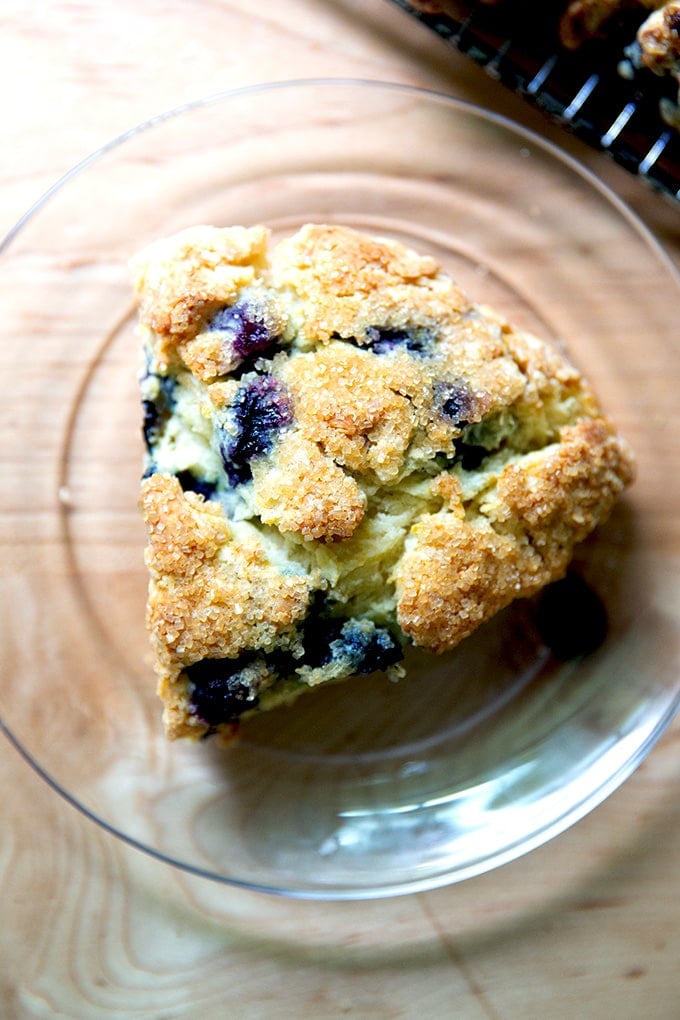
Transfer to a cooling rack for 5 minutes before serving with butter or jam on the side.
Use this recipe as a guide. These currant scones and cranberry scones are favorites as well:
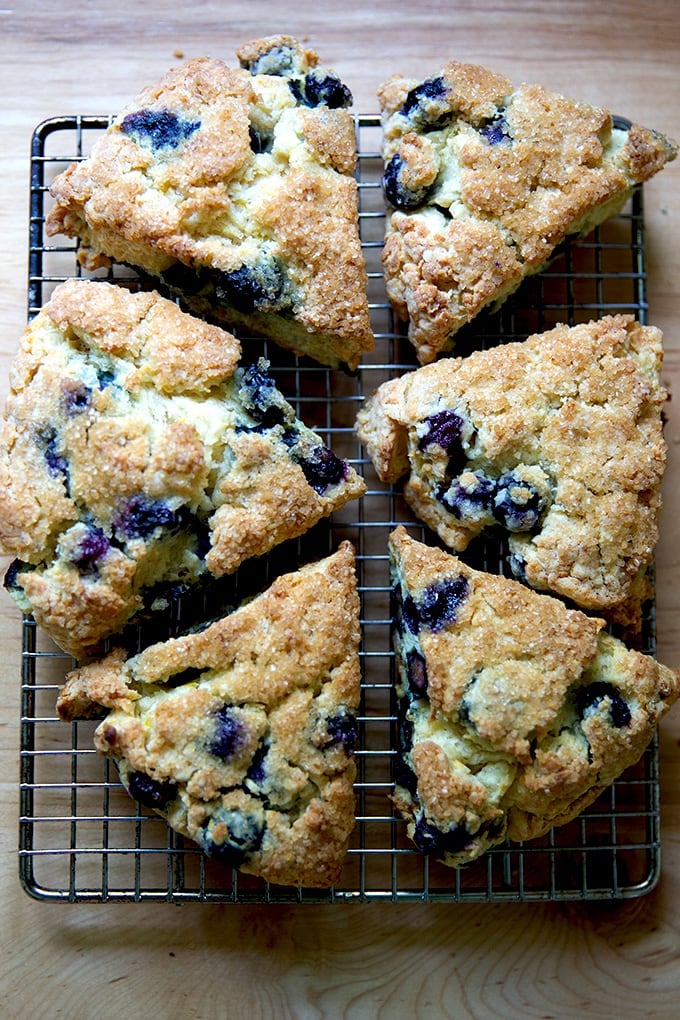
If you don’t feel like dealing with scraps and re-rolling the dough, simply cut it into triangles:
Description
Adapted from Tartine’s recipe for currant scones .
UPDATE 5/12/2023: I recently updated my method, which is highlighted in bold in the recipe below. If you prefer the old method, see the notes below the recipe. In sum I now:
- Grate the butter using a box grater.
- Use 1/4 cup more blueberries.
- Use the same tea towel method I use for my pie dough to bring the dough together.
- Cut the dough into 6 large triangles as opposed to smaller circles.
As always, for best results, use a digital scale to measure.
To freeze: After you place the scones on a sheet pan, transfer them to the freezer. Freeze until solid; then transfer the scones to an airtight container or bag. When you are ready to bake, there’s no need to thaw them. Bake as directed below straight from the freezer. The scones shouldn’t take much longer to bake from frozen, but keep an eye on them at the 20-minute mark.
To make your own buttermilk:
- Place 1 tablespoon of vinegar or lemon juice in a liquid measuring cup.
- Fill cup with milk (2% or whole is best) until it reaches the 1-cup line.
- Let stand for five minutes. Use as directed.
- 2 1/3 cups ( 300 g ) all-purpose flour
- 1.5 teaspoons ( 5 g ) baking powder
- 0.5 teaspoon ( 3 g ) baking soda
- 1/4 cup ( 50 g ) sugar
- 1.25 teaspoons ( 6 g ) salt
- zest of 1 lemon
- 1/2 cup ( 113 g ) cold, unsalted or salted butter (I use salted)
- 1 to 1.25 cups ( 150 g to 195 g ) fresh blueberries (I use 1.25 cups )
- 3/4 cup ( 190 g ) buttermilk, plus more as needed
For finishing:
- 1.5 tablespoons melted butter
- sugar for sprinkling: turbinado is especially pretty but granulated is fine, too
- Preheat the oven to 425ºF. Line a rimmed baking sheet with parchment paper.
- Whisk together the flour, baking powder, baking soda, sugar, salt, and lemon zest. Grate the stick of butter using a box grater, then scatter the shreds over the dry ingredients.
- Toss the butter with the dry ingredients and, using your hands, squeeze it gently to disperse it throughout the flour.
- Add the buttermilk and the blueberries, and mix gently with a spatula until you don’t see any dry patches in the dough — be patient here. The dough will still be shaggy and will not be a cohesive mass but when pinched, it should hold together. If the mixture seems dry, add a tablespoon more buttermilk (or more as needed). At this point, I now do what I do when I make pie dough: turn the crumbly dough out into the center of a large tea towel, grab the sides and twist the mass into a beggar’s purse, squeezing gently to help it form a disk. Open the tea towel and gently pat the dough as needed to help it come together.
- Dust your work surface with flour and turn the dough out onto it. Pat the dough into a 7-inch round circle. Brush the top with melted butter. Sprinkle with sugar. Use a bench scraper to cut the scones into 6 or 8 triangles (I prefer the larger size of the 6 scones, but they are on the large side, so do 8 if you prefer smaller scones.) Transfer the scones to the prepared sheet pan.
- Bake until the tops of the scones are lightly browned, 20 to 25 minutes. Remove from the oven, let cool briefly, then serve with butter on the side.
Notes
Old Method: Step 4 on
Add the buttermilk and the blueberries, and mix gently with a spatula until the dough holds together. If the mixture seems dry, add a tablespoon more buttermilk (or more as needed). Knead gently if necessary.
Using your hands, pat the dough into a rectangle about 1½ inches thick. Using a 2.5-inch biscuit cutter or any round cutter, cut each disk into about 8 circles. Gather the scraps together and repeat.
Transfer scones to prepared sheet pan. (I like to chill my scones for 20 minutes at this point before baking them; you also can freeze the scones at this point — see notes above.) Brush the top with melted butter. Sprinkle with sugar. Note: You also can simply cut these into triangles or rectangles, which is easier.
Previously I would place another sheet pan beneath the sheet pan holding the scones because often the bottom of my scones would burn, but I have since updated my sheet pans, and I am not having those issues. Something to keep in mind if you find your scones to be too brown on the bottom.
Prep Time: 20 minutes
Cook Time: 25 minutes
Category: Breakfast
Method: Oven
Cuisine: American
This lemon-blueberry scone recipe yields a flaky, buttery, sugar-crusted, and berry-loaded scone. Buttermilk makes the crumb especially tender, and a hint of fresh lemon zest so nicely complements the berries, adding a touch of brightness, too.
You might recall my obsession with Tartine ? When you live hundreds of miles from this magical bakery, it’s good to have a few of their tricks up your sleeve. This lemon-blueberry scone recipe is a great place to start.
The key to making a good scone is similar to making a good pie crust or a good biscuit :
- Use cold butter.
- Handle the dough minimally.
Keeping the butter cold creates a flakiness in the finished pastry. Handling the dough with a light touch ensures the crumb will be tender.
There are a few ways to “cut” cold butter into dry ingredients:
- A pastry cutter : This hand-held, u-shaped tool works well if you have a sturdy one with solid (as opposed to wire) “blades”. I find pastry cutters to be a little tricky initially — they slip and slide — but once you make a few cuts, they beautifully “cut” the butter into the dry ingredients.
- The back of a fork: The back of a fork works similarly to a pastry cutter, but will require a little more elbow grease.
- Food processor: Ten 1-second pulses in the food processor will quickly cut butter into dry ingredients, as in this pie dough recipe . Finish the scone dough by hand, however: once the butter is cut into the dry ingredients, transfer it to a bowl and add the buttermilk and blueberries; combine using a wooden spoon or spatula.
- Box grater: If you freeze the butter before using it, you can run it down a box grater to create fine shreds, which will incorporate easily into your dry ingredients.
Three More Tips for Excellent Scones
- Use buttermilk: Buttermilk tenderizes gluten, which promotes a tenderness in the final product. It also offers a nice tang.
- Add citrus zest: Fresh lemon or orange zest makes all the difference in a pastry, offering a touch of brightness as well as a nice complement to the sweet fruit.
- Use the tea towel trick to shape: To prevent overworking the dough, mix it with a spatula until you have a shaggy dough; then transfer to a large tea towel and twist it into a beggar’s purse to bring it together.
PS: I use this same base recipe to make Buttermilk Currant Scones and Cranberry-Orange “Snow” Scones .
More Lemon-Blueberry Recipes
- Lemon-Blueberry Dutch Baby
- Lemon-Blueberry Muffins
- Buttermilk Blueberry Breakfast Cake
- Lemon-Blueberry Quick Bread
How to Make Blueberry Scones
First, gather your ingredients: flour, salt, baking powder, baking soda, sugar, butter, berries, buttermilk, and a lemon.
Next, mix the dough just until it comes together (video guidance above and in recipe card):
Turn it out onto a floured work surface and shape into a rectangle or square about 1.5 inches thick:
Cut as you wish: rectangles, squares, triangles or rounds, using a biscuit cutter:
Transfer to a parchment lined sheet pan, and brush with butter and sprinkle with turbinado (or other sugar).
Bake at 425ºF for 20 minutes or until evenly golden:
Transfer to a cooling rack for 5 minutes before serving with butter or jam on the side.
Use this recipe as a guide. These currant scones and cranberry scones are favorites as well:
If you don’t feel like dealing with scraps and re-rolling the dough, simply cut it into triangles:
Description
Adapted from Tartine’s recipe for currant scones .
UPDATE 5/12/2023: I recently updated my method, which is highlighted in bold in the recipe below. If you prefer the old method, see the notes below the recipe. In sum I now:
- Grate the butter using a box grater.
- Use 1/4 cup more blueberries.
- Use the same tea towel method I use for my pie dough to bring the dough together.
- Cut the dough into 6 large triangles as opposed to smaller circles.
As always, for best results, use a digital scale to measure.
To freeze: After you place the scones on a sheet pan, transfer them to the freezer. Freeze until solid; then transfer the scones to an airtight container or bag. When you are ready to bake, there’s no need to thaw them. Bake as directed below straight from the freezer. The scones shouldn’t take much longer to bake from frozen, but keep an eye on them at the 20-minute mark.
To make your own buttermilk:
- Place 1 tablespoon of vinegar or lemon juice in a liquid measuring cup.
- Fill cup with milk (2% or whole is best) until it reaches the 1-cup line.
- Let stand for five minutes. Use as directed.
- 2 1/3 cups ( 300 g ) all-purpose flour
- 1.5 teaspoons ( 5 g ) baking powder
- 0.5 teaspoon ( 3 g ) baking soda
- 1/4 cup ( 50 g ) sugar
- 1.25 teaspoons ( 6 g ) salt
- zest of 1 lemon
- 1/2 cup ( 113 g ) cold, unsalted or salted butter (I use salted)
- 1 to 1.25 cups ( 150 g to 195 g ) fresh blueberries (I use 1.25 cups )
- 3/4 cup ( 190 g ) buttermilk, plus more as needed
For finishing:
- 1.5 tablespoons melted butter
- sugar for sprinkling: turbinado is especially pretty but granulated is fine, too
- Preheat the oven to 425ºF. Line a rimmed baking sheet with parchment paper.
- Whisk together the flour, baking powder, baking soda, sugar, salt, and lemon zest. Grate the stick of butter using a box grater, then scatter the shreds over the dry ingredients.
- Toss the butter with the dry ingredients and, using your hands, squeeze it gently to disperse it throughout the flour.
- Add the buttermilk and the blueberries, and mix gently with a spatula until you don’t see any dry patches in the dough — be patient here. The dough will still be shaggy and will not be a cohesive mass but when pinched, it should hold together. If the mixture seems dry, add a tablespoon more buttermilk (or more as needed). At this point, I now do what I do when I make pie dough: turn the crumbly dough out into the center of a large tea towel, grab the sides and twist the mass into a beggar’s purse, squeezing gently to help it form a disk. Open the tea towel and gently pat the dough as needed to help it come together.
- Dust your work surface with flour and turn the dough out onto it. Pat the dough into a 7-inch round circle. Brush the top with melted butter. Sprinkle with sugar. Use a bench scraper to cut the scones into 6 or 8 triangles (I prefer the larger size of the 6 scones, but they are on the large side, so do 8 if you prefer smaller scones.) Transfer the scones to the prepared sheet pan.
- Bake until the tops of the scones are lightly browned, 20 to 25 minutes. Remove from the oven, let cool briefly, then serve with butter on the side.
Notes
Old Method: Step 4 on
Add the buttermilk and the blueberries, and mix gently with a spatula until the dough holds together. If the mixture seems dry, add a tablespoon more buttermilk (or more as needed). Knead gently if necessary.
Using your hands, pat the dough into a rectangle about 1½ inches thick. Using a 2.5-inch biscuit cutter or any round cutter, cut each disk into about 8 circles. Gather the scraps together and repeat.
Transfer scones to prepared sheet pan. (I like to chill my scones for 20 minutes at this point before baking them; you also can freeze the scones at this point — see notes above.) Brush the top with melted butter. Sprinkle with sugar. Note: You also can simply cut these into triangles or rectangles, which is easier.
Previously I would place another sheet pan beneath the sheet pan holding the scones because often the bottom of my scones would burn, but I have since updated my sheet pans, and I am not having those issues. Something to keep in mind if you find your scones to be too brown on the bottom.
Prep Time: 20 minutes
Cook Time: 25 minutes
Category: Breakfast
Method: Oven
Cuisine: American
This lemon-blueberry scone recipe yields a flaky, buttery, sugar-crusted, and berry-loaded scone. Buttermilk makes the crumb especially tender, and a hint of fresh lemon zest so nicely complements the berries, adding a touch of brightness, too.
You might recall my obsession with Tartine ? When you live hundreds of miles from this magical bakery, it’s good to have a few of their tricks up your sleeve. This lemon-blueberry scone recipe is a great place to start.
The key to making a good scone is similar to making a good pie crust or a good biscuit :
- Use cold butter.
- Handle the dough minimally.
Keeping the butter cold creates a flakiness in the finished pastry. Handling the dough with a light touch ensures the crumb will be tender.
There are a few ways to “cut” cold butter into dry ingredients:
- A pastry cutter : This hand-held, u-shaped tool works well if you have a sturdy one with solid (as opposed to wire) “blades”. I find pastry cutters to be a little tricky initially — they slip and slide — but once you make a few cuts, they beautifully “cut” the butter into the dry ingredients.
- The back of a fork: The back of a fork works similarly to a pastry cutter, but will require a little more elbow grease.
- Food processor: Ten 1-second pulses in the food processor will quickly cut butter into dry ingredients, as in this pie dough recipe . Finish the scone dough by hand, however: once the butter is cut into the dry ingredients, transfer it to a bowl and add the buttermilk and blueberries; combine using a wooden spoon or spatula.
- Box grater: If you freeze the butter before using it, you can run it down a box grater to create fine shreds, which will incorporate easily into your dry ingredients.
Three More Tips for Excellent Scones
- Use buttermilk: Buttermilk tenderizes gluten, which promotes a tenderness in the final product. It also offers a nice tang.
- Add citrus zest: Fresh lemon or orange zest makes all the difference in a pastry, offering a touch of brightness as well as a nice complement to the sweet fruit.
- Use the tea towel trick to shape: To prevent overworking the dough, mix it with a spatula until you have a shaggy dough; then transfer to a large tea towel and twist it into a beggar’s purse to bring it together.
PS: I use this same base recipe to make Buttermilk Currant Scones and Cranberry-Orange “Snow” Scones .
More Lemon-Blueberry Recipes
- Lemon-Blueberry Dutch Baby
- Lemon-Blueberry Muffins
- Buttermilk Blueberry Breakfast Cake
- Lemon-Blueberry Quick Bread
How to Make Blueberry Scones
First, gather your ingredients: flour, salt, baking powder, baking soda, sugar, butter, berries, buttermilk, and a lemon.
Next, mix the dough just until it comes together (video guidance above and in recipe card):
Turn it out onto a floured work surface and shape into a rectangle or square about 1.5 inches thick:
Cut as you wish: rectangles, squares, triangles or rounds, using a biscuit cutter:
Transfer to a parchment lined sheet pan, and brush with butter and sprinkle with turbinado (or other sugar).
Bake at 425ºF for 20 minutes or until evenly golden:
Transfer to a cooling rack for 5 minutes before serving with butter or jam on the side.
Use this recipe as a guide. These currant scones and cranberry scones are favorites as well:
If you don’t feel like dealing with scraps and re-rolling the dough, simply cut it into triangles:
Description
Adapted from Tartine’s recipe for currant scones .
UPDATE 5/12/2023: I recently updated my method, which is highlighted in bold in the recipe below. If you prefer the old method, see the notes below the recipe. In sum I now:
- Grate the butter using a box grater.
- Use 1/4 cup more blueberries.
- Use the same tea towel method I use for my pie dough to bring the dough together.
- Cut the dough into 6 large triangles as opposed to smaller circles.
As always, for best results, use a digital scale to measure.
To freeze: After you place the scones on a sheet pan, transfer them to the freezer. Freeze until solid; then transfer the scones to an airtight container or bag. When you are ready to bake, there’s no need to thaw them. Bake as directed below straight from the freezer. The scones shouldn’t take much longer to bake from frozen, but keep an eye on them at the 20-minute mark.
To make your own buttermilk:
- Place 1 tablespoon of vinegar or lemon juice in a liquid measuring cup.
- Fill cup with milk (2% or whole is best) until it reaches the 1-cup line.
- Let stand for five minutes. Use as directed.
- 2 1/3 cups ( 300 g ) all-purpose flour
- 1.5 teaspoons ( 5 g ) baking powder
- 0.5 teaspoon ( 3 g ) baking soda
- 1/4 cup ( 50 g ) sugar
- 1.25 teaspoons ( 6 g ) salt
- zest of 1 lemon
- 1/2 cup ( 113 g ) cold, unsalted or salted butter (I use salted)
- 1 to 1.25 cups ( 150 g to 195 g ) fresh blueberries (I use 1.25 cups )
- 3/4 cup ( 190 g ) buttermilk, plus more as needed
For finishing:
- 1.5 tablespoons melted butter
- sugar for sprinkling: turbinado is especially pretty but granulated is fine, too
- Preheat the oven to 425ºF. Line a rimmed baking sheet with parchment paper.
- Whisk together the flour, baking powder, baking soda, sugar, salt, and lemon zest. Grate the stick of butter using a box grater, then scatter the shreds over the dry ingredients.
- Toss the butter with the dry ingredients and, using your hands, squeeze it gently to disperse it throughout the flour.
- Add the buttermilk and the blueberries, and mix gently with a spatula until you don’t see any dry patches in the dough — be patient here. The dough will still be shaggy and will not be a cohesive mass but when pinched, it should hold together. If the mixture seems dry, add a tablespoon more buttermilk (or more as needed). At this point, I now do what I do when I make pie dough: turn the crumbly dough out into the center of a large tea towel, grab the sides and twist the mass into a beggar’s purse, squeezing gently to help it form a disk. Open the tea towel and gently pat the dough as needed to help it come together.
- Dust your work surface with flour and turn the dough out onto it. Pat the dough into a 7-inch round circle. Brush the top with melted butter. Sprinkle with sugar. Use a bench scraper to cut the scones into 6 or 8 triangles (I prefer the larger size of the 6 scones, but they are on the large side, so do 8 if you prefer smaller scones.) Transfer the scones to the prepared sheet pan.
- Bake until the tops of the scones are lightly browned, 20 to 25 minutes. Remove from the oven, let cool briefly, then serve with butter on the side.
Notes
Old Method: Step 4 on
Add the buttermilk and the blueberries, and mix gently with a spatula until the dough holds together. If the mixture seems dry, add a tablespoon more buttermilk (or more as needed). Knead gently if necessary.
Using your hands, pat the dough into a rectangle about 1½ inches thick. Using a 2.5-inch biscuit cutter or any round cutter, cut each disk into about 8 circles. Gather the scraps together and repeat.
Transfer scones to prepared sheet pan. (I like to chill my scones for 20 minutes at this point before baking them; you also can freeze the scones at this point — see notes above.) Brush the top with melted butter. Sprinkle with sugar. Note: You also can simply cut these into triangles or rectangles, which is easier.
Previously I would place another sheet pan beneath the sheet pan holding the scones because often the bottom of my scones would burn, but I have since updated my sheet pans, and I am not having those issues. Something to keep in mind if you find your scones to be too brown on the bottom.
Prep Time: 20 minutes
Cook Time: 25 minutes
Category: Breakfast
Method: Oven
Cuisine: American
This lemon-blueberry scone recipe yields a flaky, buttery, sugar-crusted, and berry-loaded scone. Buttermilk makes the crumb especially tender, and a hint of fresh lemon zest so nicely complements the berries, adding a touch of brightness, too.
You might recall my obsession with Tartine ? When you live hundreds of miles from this magical bakery, it’s good to have a few of their tricks up your sleeve. This lemon-blueberry scone recipe is a great place to start.
The key to making a good scone is similar to making a good pie crust or a good biscuit :
- Use cold butter.
- Handle the dough minimally.
Keeping the butter cold creates a flakiness in the finished pastry. Handling the dough with a light touch ensures the crumb will be tender.
There are a few ways to “cut” cold butter into dry ingredients:
- A pastry cutter : This hand-held, u-shaped tool works well if you have a sturdy one with solid (as opposed to wire) “blades”. I find pastry cutters to be a little tricky initially — they slip and slide — but once you make a few cuts, they beautifully “cut” the butter into the dry ingredients.
- The back of a fork: The back of a fork works similarly to a pastry cutter, but will require a little more elbow grease.
- Food processor: Ten 1-second pulses in the food processor will quickly cut butter into dry ingredients, as in this pie dough recipe . Finish the scone dough by hand, however: once the butter is cut into the dry ingredients, transfer it to a bowl and add the buttermilk and blueberries; combine using a wooden spoon or spatula.
- Box grater: If you freeze the butter before using it, you can run it down a box grater to create fine shreds, which will incorporate easily into your dry ingredients.
Three More Tips for Excellent Scones
- Use buttermilk: Buttermilk tenderizes gluten, which promotes a tenderness in the final product. It also offers a nice tang.
- Add citrus zest: Fresh lemon or orange zest makes all the difference in a pastry, offering a touch of brightness as well as a nice complement to the sweet fruit.
- Use the tea towel trick to shape: To prevent overworking the dough, mix it with a spatula until you have a shaggy dough; then transfer to a large tea towel and twist it into a beggar’s purse to bring it together.
PS: I use this same base recipe to make Buttermilk Currant Scones and Cranberry-Orange “Snow” Scones .
More Lemon-Blueberry Recipes
- Lemon-Blueberry Dutch Baby
- Lemon-Blueberry Muffins
- Buttermilk Blueberry Breakfast Cake
- Lemon-Blueberry Quick Bread
How to Make Blueberry Scones
First, gather your ingredients: flour, salt, baking powder, baking soda, sugar, butter, berries, buttermilk, and a lemon.
Next, mix the dough just until it comes together (video guidance above and in recipe card):
Turn it out onto a floured work surface and shape into a rectangle or square about 1.5 inches thick:
Cut as you wish: rectangles, squares, triangles or rounds, using a biscuit cutter:
Transfer to a parchment lined sheet pan, and brush with butter and sprinkle with turbinado (or other sugar).
Bake at 425ºF for 20 minutes or until evenly golden:
Transfer to a cooling rack for 5 minutes before serving with butter or jam on the side.
Use this recipe as a guide. These currant scones and cranberry scones are favorites as well:
If you don’t feel like dealing with scraps and re-rolling the dough, simply cut it into triangles:
Description
Adapted from Tartine’s recipe for currant scones .
UPDATE 5/12/2023: I recently updated my method, which is highlighted in bold in the recipe below. If you prefer the old method, see the notes below the recipe. In sum I now:
- Grate the butter using a box grater.
- Use 1/4 cup more blueberries.
- Use the same tea towel method I use for my pie dough to bring the dough together.
- Cut the dough into 6 large triangles as opposed to smaller circles.
As always, for best results, use a digital scale to measure.
To freeze: After you place the scones on a sheet pan, transfer them to the freezer. Freeze until solid; then transfer the scones to an airtight container or bag. When you are ready to bake, there’s no need to thaw them. Bake as directed below straight from the freezer. The scones shouldn’t take much longer to bake from frozen, but keep an eye on them at the 20-minute mark.
To make your own buttermilk:
- Place 1 tablespoon of vinegar or lemon juice in a liquid measuring cup.
- Fill cup with milk (2% or whole is best) until it reaches the 1-cup line.
- Let stand for five minutes. Use as directed.
- 2 1/3 cups ( 300 g ) all-purpose flour
- 1.5 teaspoons ( 5 g ) baking powder
- 0.5 teaspoon ( 3 g ) baking soda
- 1/4 cup ( 50 g ) sugar
- 1.25 teaspoons ( 6 g ) salt
- zest of 1 lemon
- 1/2 cup ( 113 g ) cold, unsalted or salted butter (I use salted)
- 1 to 1.25 cups ( 150 g to 195 g ) fresh blueberries (I use 1.25 cups )
- 3/4 cup ( 190 g ) buttermilk, plus more as needed
For finishing:
- 1.5 tablespoons melted butter
- sugar for sprinkling: turbinado is especially pretty but granulated is fine, too
- Preheat the oven to 425ºF. Line a rimmed baking sheet with parchment paper.
- Whisk together the flour, baking powder, baking soda, sugar, salt, and lemon zest. Grate the stick of butter using a box grater, then scatter the shreds over the dry ingredients.
- Toss the butter with the dry ingredients and, using your hands, squeeze it gently to disperse it throughout the flour.
- Add the buttermilk and the blueberries, and mix gently with a spatula until you don’t see any dry patches in the dough — be patient here. The dough will still be shaggy and will not be a cohesive mass but when pinched, it should hold together. If the mixture seems dry, add a tablespoon more buttermilk (or more as needed). At this point, I now do what I do when I make pie dough: turn the crumbly dough out into the center of a large tea towel, grab the sides and twist the mass into a beggar’s purse, squeezing gently to help it form a disk. Open the tea towel and gently pat the dough as needed to help it come together.
- Dust your work surface with flour and turn the dough out onto it. Pat the dough into a 7-inch round circle. Brush the top with melted butter. Sprinkle with sugar. Use a bench scraper to cut the scones into 6 or 8 triangles (I prefer the larger size of the 6 scones, but they are on the large side, so do 8 if you prefer smaller scones.) Transfer the scones to the prepared sheet pan.
- Bake until the tops of the scones are lightly browned, 20 to 25 minutes. Remove from the oven, let cool briefly, then serve with butter on the side.
Notes
Old Method: Step 4 on
Add the buttermilk and the blueberries, and mix gently with a spatula until the dough holds together. If the mixture seems dry, add a tablespoon more buttermilk (or more as needed). Knead gently if necessary.
Using your hands, pat the dough into a rectangle about 1½ inches thick. Using a 2.5-inch biscuit cutter or any round cutter, cut each disk into about 8 circles. Gather the scraps together and repeat.
Transfer scones to prepared sheet pan. (I like to chill my scones for 20 minutes at this point before baking them; you also can freeze the scones at this point — see notes above.) Brush the top with melted butter. Sprinkle with sugar. Note: You also can simply cut these into triangles or rectangles, which is easier.
Previously I would place another sheet pan beneath the sheet pan holding the scones because often the bottom of my scones would burn, but I have since updated my sheet pans, and I am not having those issues. Something to keep in mind if you find your scones to be too brown on the bottom.
Prep Time: 20 minutes
Cook Time: 25 minutes
Category: Breakfast
Method: Oven
Cuisine: American
Description
Adapted from Tartine’s recipe for currant scones .
UPDATE 5/12/2023: I recently updated my method, which is highlighted in bold in the recipe below. If you prefer the old method, see the notes below the recipe. In sum I now:
- Grate the butter using a box grater.
- Use 1/4 cup more blueberries.
- Use the same tea towel method I use for my pie dough to bring the dough together.
- Cut the dough into 6 large triangles as opposed to smaller circles.
As always, for best results, use a digital scale to measure.
To freeze: After you place the scones on a sheet pan, transfer them to the freezer. Freeze until solid; then transfer the scones to an airtight container or bag. When you are ready to bake, there’s no need to thaw them. Bake as directed below straight from the freezer. The scones shouldn’t take much longer to bake from frozen, but keep an eye on them at the 20-minute mark.
To make your own buttermilk:
- Place 1 tablespoon of vinegar or lemon juice in a liquid measuring cup.
- Fill cup with milk (2% or whole is best) until it reaches the 1-cup line.
- Let stand for five minutes. Use as directed.
- 2 1/3 cups ( 300 g ) all-purpose flour
- 1.5 teaspoons ( 5 g ) baking powder
- 0.5 teaspoon ( 3 g ) baking soda
- 1/4 cup ( 50 g ) sugar
- 1.25 teaspoons ( 6 g ) salt
- zest of 1 lemon
- 1/2 cup ( 113 g ) cold, unsalted or salted butter (I use salted)
- 1 to 1.25 cups ( 150 g to 195 g ) fresh blueberries (I use 1.25 cups )
- 3/4 cup ( 190 g ) buttermilk, plus more as needed
For finishing:
- 1.5 tablespoons melted butter
- sugar for sprinkling: turbinado is especially pretty but granulated is fine, too
- Preheat the oven to 425ºF. Line a rimmed baking sheet with parchment paper.
- Whisk together the flour, baking powder, baking soda, sugar, salt, and lemon zest. Grate the stick of butter using a box grater, then scatter the shreds over the dry ingredients.
- Toss the butter with the dry ingredients and, using your hands, squeeze it gently to disperse it throughout the flour.
- Add the buttermilk and the blueberries, and mix gently with a spatula until you don’t see any dry patches in the dough — be patient here. The dough will still be shaggy and will not be a cohesive mass but when pinched, it should hold together. If the mixture seems dry, add a tablespoon more buttermilk (or more as needed). At this point, I now do what I do when I make pie dough: turn the crumbly dough out into the center of a large tea towel, grab the sides and twist the mass into a beggar’s purse, squeezing gently to help it form a disk. Open the tea towel and gently pat the dough as needed to help it come together.
- Dust your work surface with flour and turn the dough out onto it. Pat the dough into a 7-inch round circle. Brush the top with melted butter. Sprinkle with sugar. Use a bench scraper to cut the scones into 6 or 8 triangles (I prefer the larger size of the 6 scones, but they are on the large side, so do 8 if you prefer smaller scones.) Transfer the scones to the prepared sheet pan.
- Bake until the tops of the scones are lightly browned, 20 to 25 minutes. Remove from the oven, let cool briefly, then serve with butter on the side.
Notes
Old Method: Step 4 on
Add the buttermilk and the blueberries, and mix gently with a spatula until the dough holds together. If the mixture seems dry, add a tablespoon more buttermilk (or more as needed). Knead gently if necessary.
Using your hands, pat the dough into a rectangle about 1½ inches thick. Using a 2.5-inch biscuit cutter or any round cutter, cut each disk into about 8 circles. Gather the scraps together and repeat.
Transfer scones to prepared sheet pan. (I like to chill my scones for 20 minutes at this point before baking them; you also can freeze the scones at this point — see notes above.) Brush the top with melted butter. Sprinkle with sugar. Note: You also can simply cut these into triangles or rectangles, which is easier.
Previously I would place another sheet pan beneath the sheet pan holding the scones because often the bottom of my scones would burn, but I have since updated my sheet pans, and I am not having those issues. Something to keep in mind if you find your scones to be too brown on the bottom.
Prep Time: 20 minutes
Cook Time: 25 minutes
Category: Breakfast
Method: Oven
Cuisine: American
Find it online : https://alexandracooks.com/2011/03/31/buttermilk-scones-tartine-has-done-it-again/











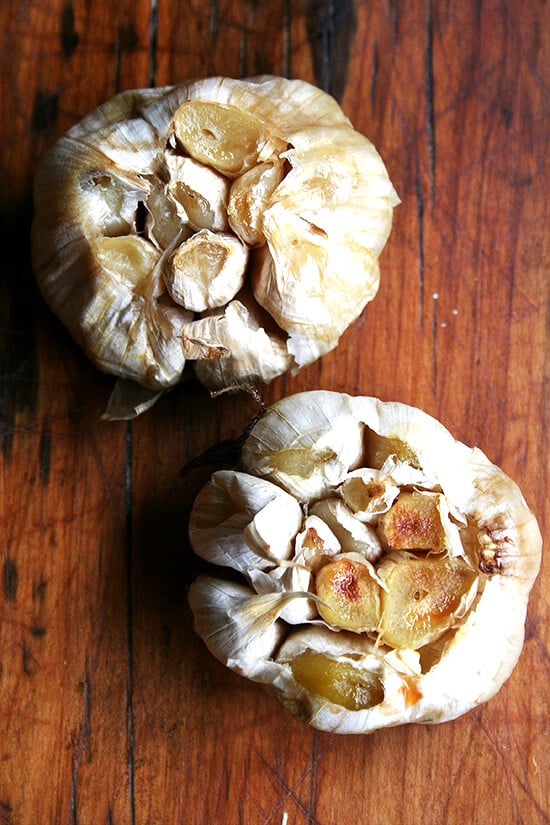
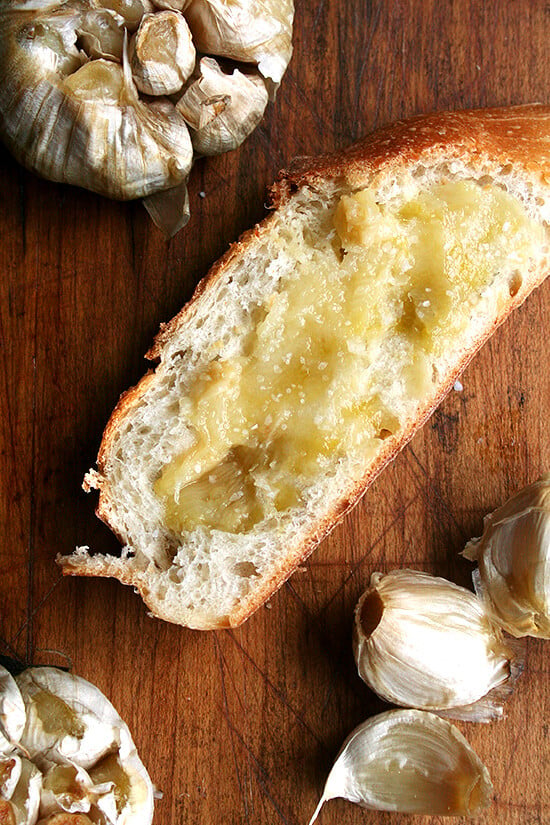
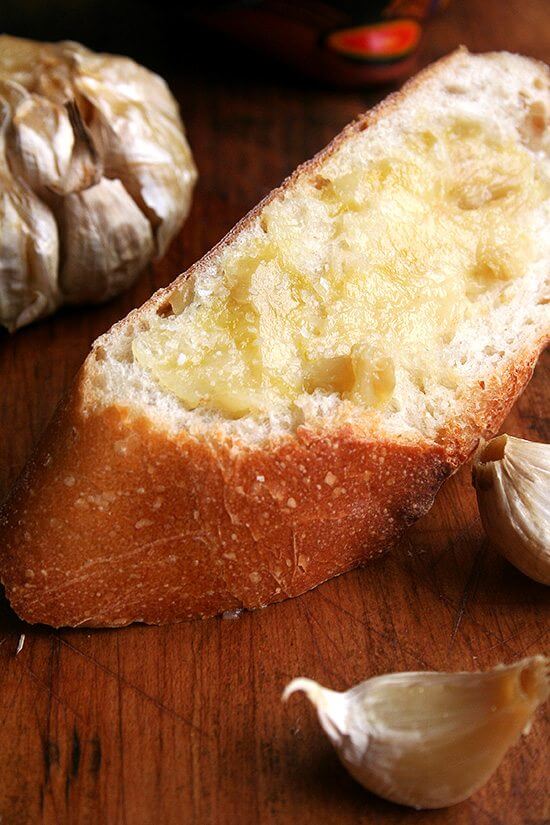
Have you ever roasted a whole head of garlic? And then squeezed the sweet, soft cloves over warm French bread? And then sprinkled the spread with a bit of sea salt? It is so delectable.
Never did I imagine eating a head of garlic in one sitting. Nor did I imagine serving a head of garlic to each guest at a dinner party. It sounds ferocious.
But roasting garlic whole in foil pouches with a few fresh herbs tames its bite, mellowing and sweetening its flavor, transforming it into a butter-like purée not unlike salted bone barrow, a perfect smear for toasty bread.
Whole roasted garlic is a wonderful topping for warm bread but there are other uses as well: puréed and stirred into mashed potatoes; spread onto pizza; whisked into salad dressing.
Description
Note: I make one foil pouch per head of garlic, but you probably could throw a couple of heads together in one pouch and have fine results.
- 1 head garlic
- few sprigs of thyme (I used oregano here because I had no thyme on hand, but thyme is preferable)
- olive oil
- kosher salt
For serving:
- French bread
- nice salt
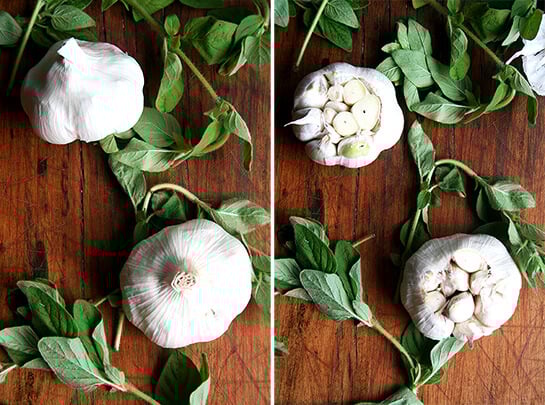
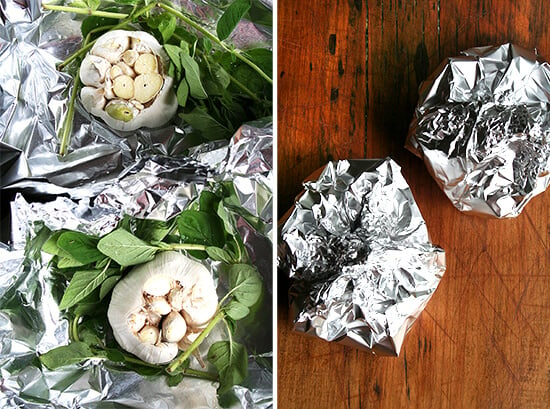
- Preheat the oven to 400ºF. Cut off the very top portion of the head of garlic to reveal a few cloves. Place garlic on a sheet of aluminum foil (large enough to wrap around the garlic in a little pouch). Nestle the herbs around the garlic. Drizzle garlic with a touch of olive oil. Sprinkle with a pinch of salt. Pour 2 T. of water around the head of garlic — you might want to curl up the sides of foil before doing so. Wrap the foil up into a beggar’s purse or pouch making sure the foil is sealed.
- Place in the oven (directly on the rack or on a baking sheet) and roast for 1 hour. Remove pouches from oven and let cool briefly or tuck right in, taking care while opening the packages as steam might come pouring out.
- Spread the garlic on warm bread; top with a pinch of salt.
- Prep Time: 5 minutes
- Cook Time: 1 hours
- Category: Condiment
- Method: Oven
- Cuisine: Italian
