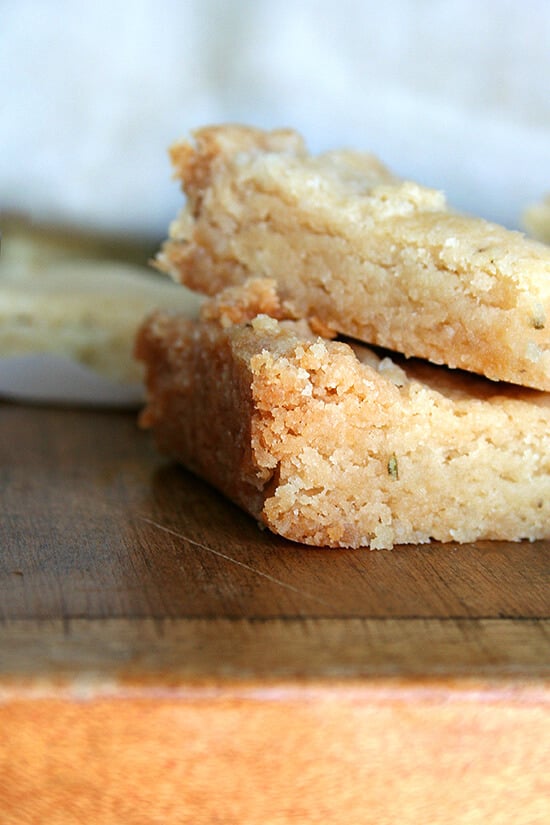
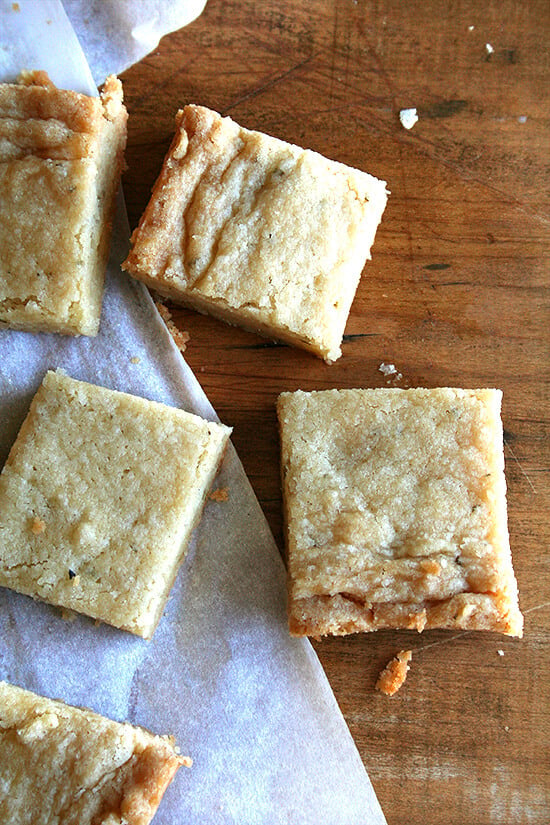
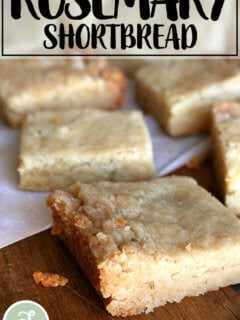
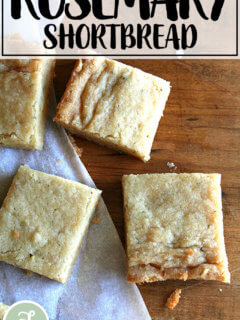
A food processor makes this rosemary shortbread recipe effortless. It literally takes five minutes to prepare.
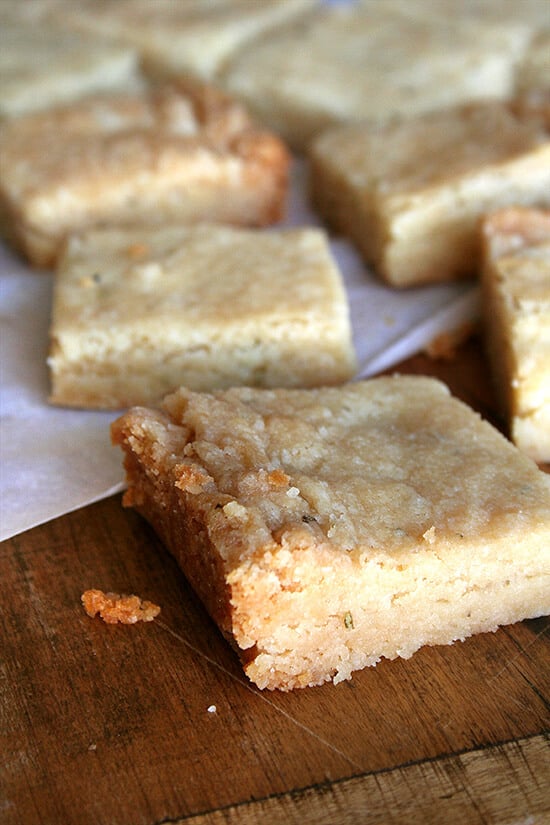
But careful: these are addictive. They’ve got that sweet-salty dynamic, but also a hint of rosemary, a savory touch that might lead you to eat ten of them, as you would a cracker. Try not to do that.
If you’re like me, you won’t want to share these with anyone, but they do make a wonderful gift. According to Melissa Clark’s NY Times article in December 2005, these shortbread cookies are her all-occasion go-to gift:
“A friend’s birthday? A box of shortbread cookies wrapped in colored tissue. A colleague’s dinner party? A hostess gift of a vintage tin filled with shortbreads. The holidays? Many, many bright-hued bags filled with shortbread and tied with ribbons.”
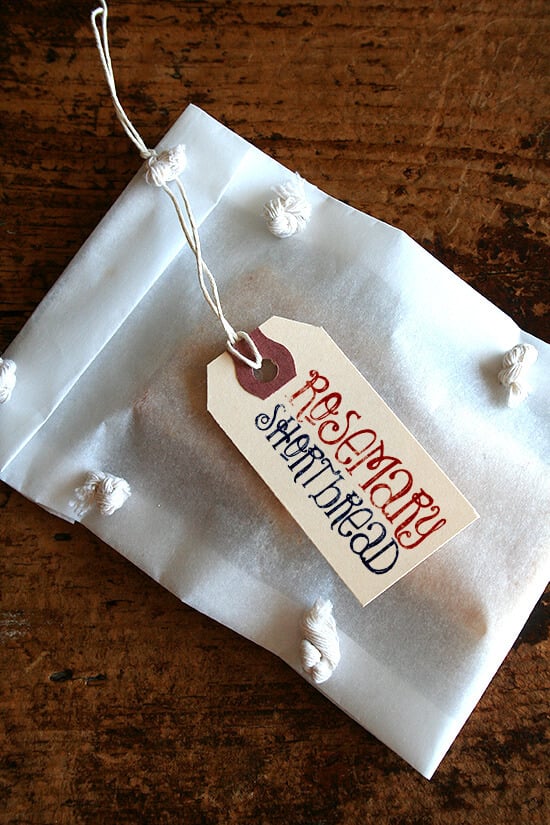
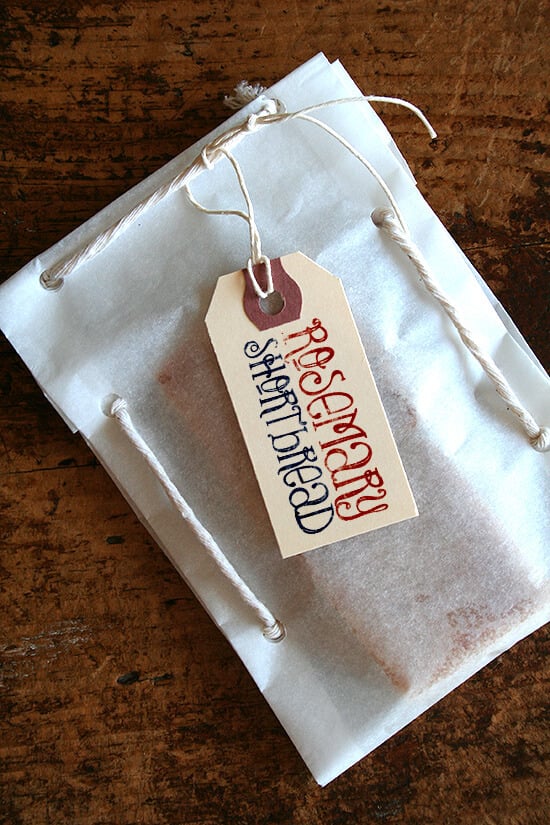
Yesterday, feeling inspired, I fashioned a little package out of parchment paper and cooking twine. Then I tucked two squares inside, made a cute little tag, and wrapped it all up. Later that day, I opened the package and ate the treats. As I said, I didn’t want to share these with anyone.
This shortbread is perfect with a cup of tea in the afternoon, but is delightful any time of the day really. What’s more, it stay fresh for days (though it’ll likely be gone before showing any signs of age).
Holiday season is rapidly approaching — practice making this shortbread now, and you’ll be golden come December.
I love parchment paper. Have you ever tried to tape it, however? Nothing sticks to it. To make this package, I improvised with a hole punch and some cooking twine. Just fold up a piece of parchment paper to the size of your liking, punch holes in the sides, thread any sort of ribbon or string through the holes and make knots on one side. Ta-da! With some cute ribbon, these packages could be really darling.
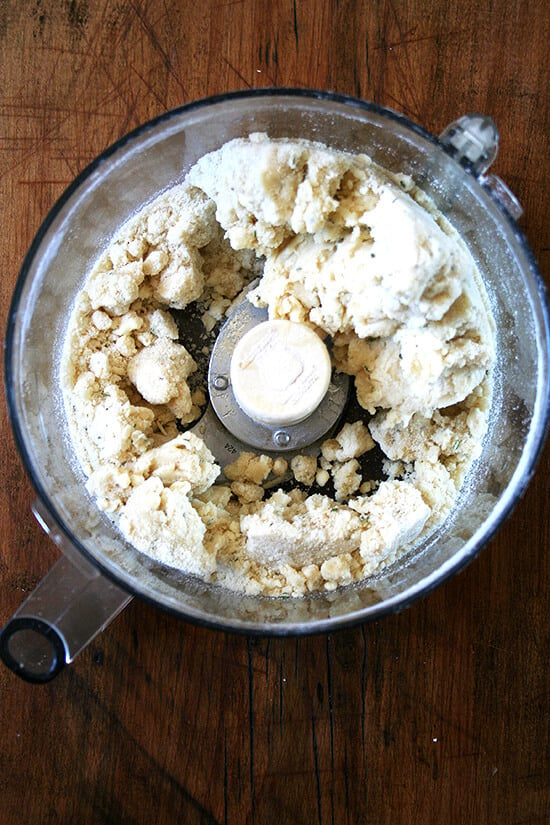
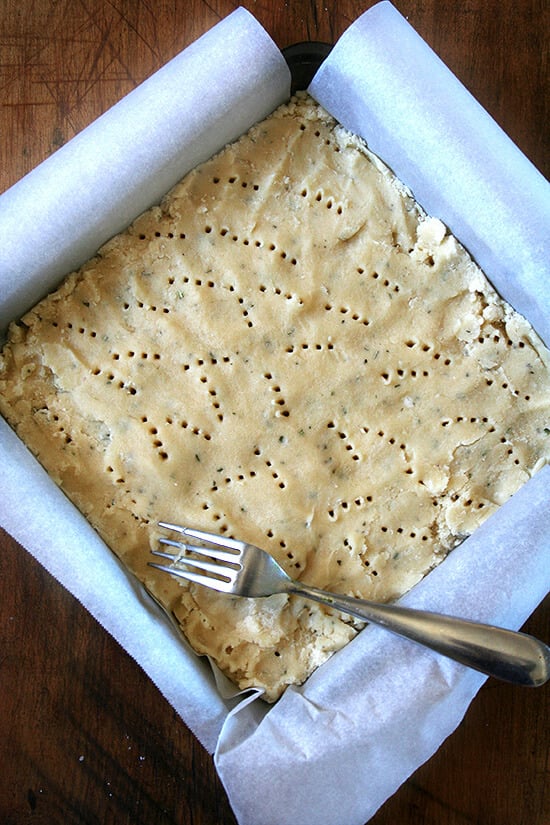
With this recipe, you just have to be careful not to over pulse the dough. This is about what it should look like:
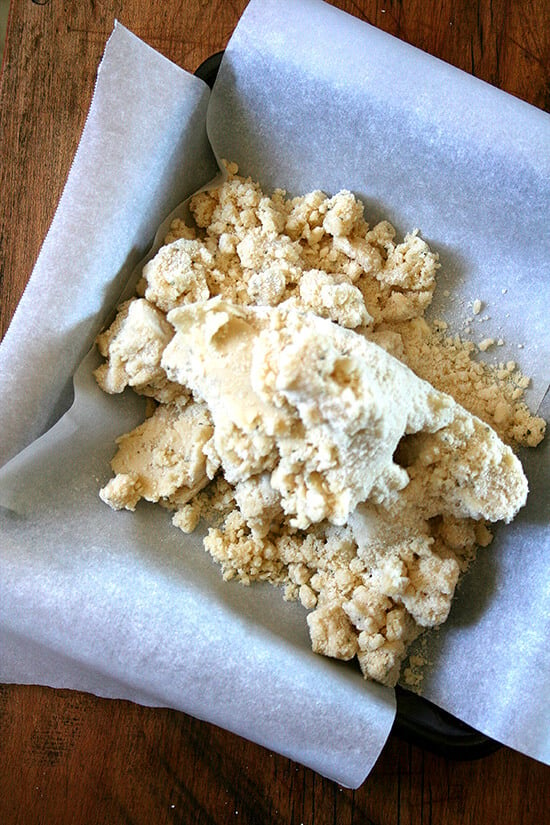
The dough is still very crumbly when you pat it into the pan.
Description
- 2 cups ( 256 g ) all-purpose flour
- 2/3 cup ( 134 g ) granulated sugar
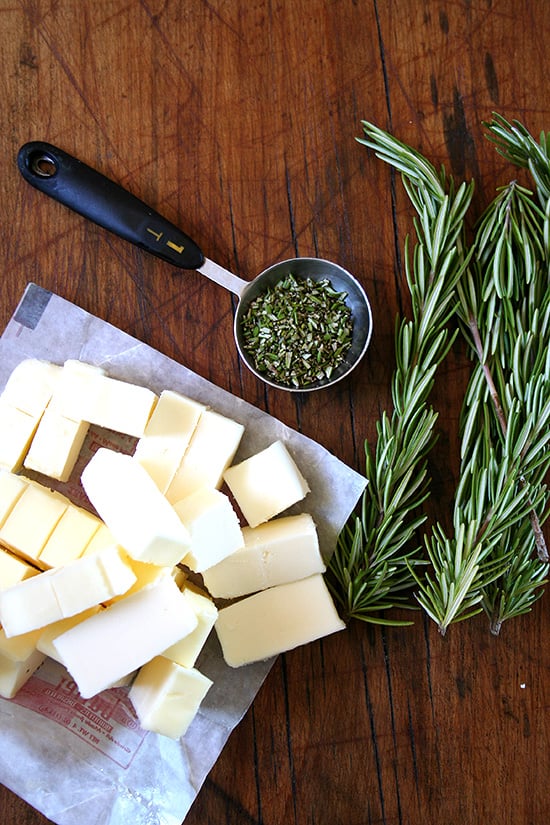
- 1 scant tablespoon of finely chopped fresh rosemary (see photo above)
- 1 teaspoon plus 1 pinch kosher salt
- 1 cup ( 227 g ) unsalted cold butter, cut into 1-inch chunks
- 1 1/2 tsp . honey
- Heat oven to 325ºF. In a food processor, pulse together flour, sugar, rosemary and salt. Add butter and honey, and pulse to fine crumbs. Pulse a few more times until some crumbs start to come together, but don’t overprocess. Dough should not be smooth.
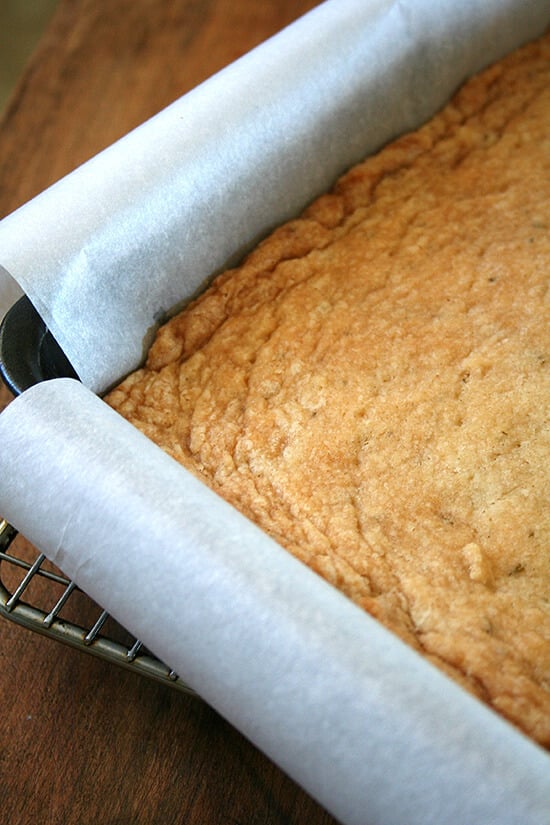
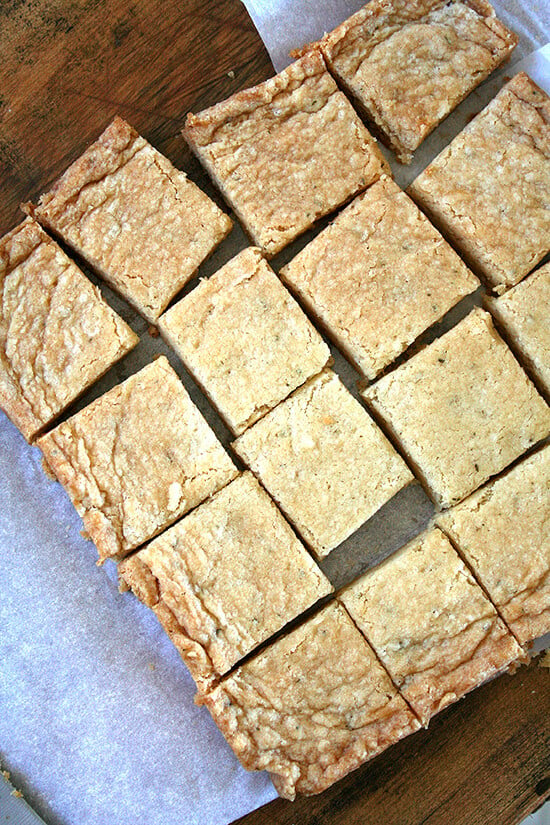
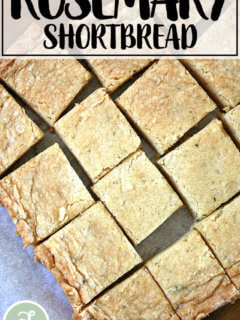
- Press dough into an ungreased (or parchment paper-lined for easy removal) 8- or 9-inch-square baking pan. Prick dough all over with a fork. Bake until golden brown, 35 to 40 minutes for 9-inch pan, 45 to 50 minutes for 8-inch. Transfer to a wire rack to cool. Cut into squares, bars or wedges while still warm.
- Prep Time: 10 minutes
- Cook Time: 45 minutes
- Category: Dessert
- Method: Oven
- Cuisine: American
A food processor makes this rosemary shortbread recipe effortless. It literally takes five minutes to prepare.
But careful: these are addictive. They’ve got that sweet-salty dynamic, but also a hint of rosemary, a savory touch that might lead you to eat ten of them, as you would a cracker. Try not to do that.
If you’re like me, you won’t want to share these with anyone, but they do make a wonderful gift. According to Melissa Clark’s NY Times article in December 2005, these shortbread cookies are her all-occasion go-to gift:
“A friend’s birthday? A box of shortbread cookies wrapped in colored tissue. A colleague’s dinner party? A hostess gift of a vintage tin filled with shortbreads. The holidays? Many, many bright-hued bags filled with shortbread and tied with ribbons.”
Yesterday, feeling inspired, I fashioned a little package out of parchment paper and cooking twine. Then I tucked two squares inside, made a cute little tag, and wrapped it all up. Later that day, I opened the package and ate the treats. As I said, I didn’t want to share these with anyone.
This shortbread is perfect with a cup of tea in the afternoon, but is delightful any time of the day really. What’s more, it stay fresh for days (though it’ll likely be gone before showing any signs of age).
Holiday season is rapidly approaching — practice making this shortbread now, and you’ll be golden come December.
I love parchment paper. Have you ever tried to tape it, however? Nothing sticks to it. To make this package, I improvised with a hole punch and some cooking twine. Just fold up a piece of parchment paper to the size of your liking, punch holes in the sides, thread any sort of ribbon or string through the holes and make knots on one side. Ta-da! With some cute ribbon, these packages could be really darling.
With this recipe, you just have to be careful not to over pulse the dough. This is about what it should look like:
The dough is still very crumbly when you pat it into the pan.
Description
- 2 cups ( 256 g ) all-purpose flour
- 2/3 cup ( 134 g ) granulated sugar
- 1 scant tablespoon of finely chopped fresh rosemary (see photo above)
- 1 teaspoon plus 1 pinch kosher salt
- 1 cup ( 227 g ) unsalted cold butter, cut into 1-inch chunks
- 1 1/2 tsp . honey
- Heat oven to 325ºF. In a food processor, pulse together flour, sugar, rosemary and salt. Add butter and honey, and pulse to fine crumbs. Pulse a few more times until some crumbs start to come together, but don’t overprocess. Dough should not be smooth.
- Press dough into an ungreased (or parchment paper-lined for easy removal) 8- or 9-inch-square baking pan. Prick dough all over with a fork. Bake until golden brown, 35 to 40 minutes for 9-inch pan, 45 to 50 minutes for 8-inch. Transfer to a wire rack to cool. Cut into squares, bars or wedges while still warm.
- Prep Time: 10 minutes
- Cook Time: 45 minutes
- Category: Dessert
- Method: Oven
- Cuisine: American
Description
- 2 cups ( 256 g ) all-purpose flour
- 2/3 cup ( 134 g ) granulated sugar
- 1 scant tablespoon of finely chopped fresh rosemary (see photo above)
- 1 teaspoon plus 1 pinch kosher salt
- 1 cup ( 227 g ) unsalted cold butter, cut into 1-inch chunks
- 1 1/2 tsp . honey
- Heat oven to 325ºF. In a food processor, pulse together flour, sugar, rosemary and salt. Add butter and honey, and pulse to fine crumbs. Pulse a few more times until some crumbs start to come together, but don’t overprocess. Dough should not be smooth.
- Press dough into an ungreased (or parchment paper-lined for easy removal) 8- or 9-inch-square baking pan. Prick dough all over with a fork. Bake until golden brown, 35 to 40 minutes for 9-inch pan, 45 to 50 minutes for 8-inch. Transfer to a wire rack to cool. Cut into squares, bars or wedges while still warm.
- Prep Time: 10 minutes
- Cook Time: 45 minutes
- Category: Dessert
- Method: Oven
- Cuisine: American
Find it online : https://alexandracooks.com/2010/09/29/rosemary-shortbread-cute-parchment-paper-packages/
Skip to Recipe
I’m spoiled. Really spoiled. I live in a place where even tomatoes still taste good this time of year. I’m not trying to rub it in, just expressing my gratitude.
I do realize, however, we are approaching mid-October and already the idea of cool, raw, crisp veggies in a salad might not sound so appealing. But even so, sometimes there’s nothing more satisfying for dinner than a big salad and some warm bread. If you find yourself craving this sort of meal in these colder months, here’s what I suggest adding: sautéed corn.
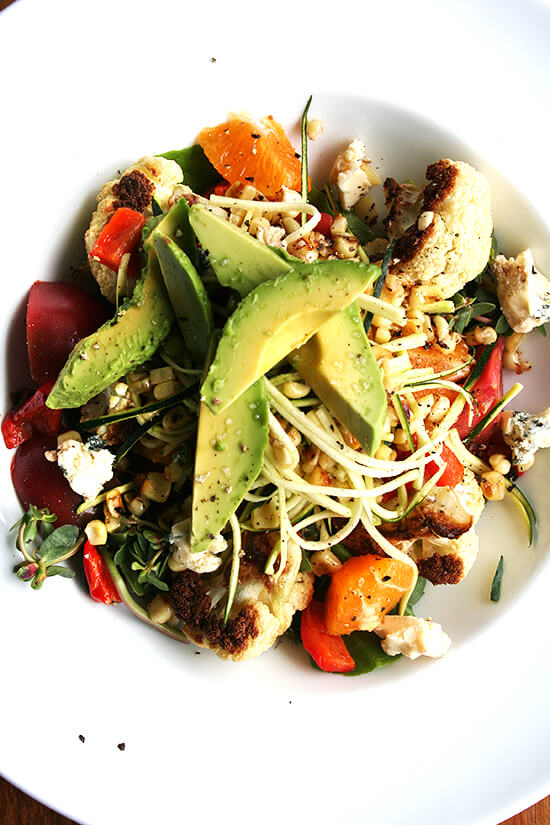
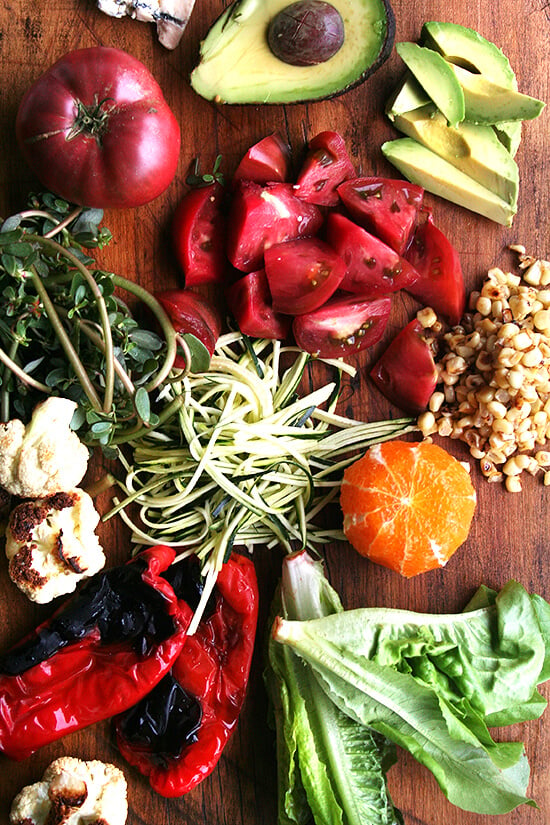
At least twice a week these days, I top a big salad — usually some sort of combination of roasted red peppers , boiled fingerlings , diced orange, shaved zucchini, sliced avocado, a little lettuce and some goat or blue cheese — with an ear’s worth of sautéed corn. The warm corn ever so slightly melts the cheese and wilts the lettuce, making a lovely combination on its own even more delectable. It is so delicious. Top it all off with a poached egg or some broiled sliced chicken and you have a nice meal on your hands.
And I know you all know how to make salad dressing but this is what I’ve been doing recently based on a long-time favorite recipe in Alice Waters’ Chez Panisse Vegetables , which calls for macerating shallots before whisking in the oil:
Finely chop a shallot and place it in a bowl. Squeeze two oranges over the shallot. Sprinkle the mixture with a little salt, a pinch of sugar and a splash of vinegar. Crack some pepper over top and let sit for 20 minutes. After the 20 minutes, slowly drizzle in olive oil whisking constantly while doing so. Taste every so often to gauge how much more olive oil to add. I like a ratio of about 2 parts oil to one part juice or vinegar. Pour it all into a jar and you have dressing on your hands for the week. Nice.
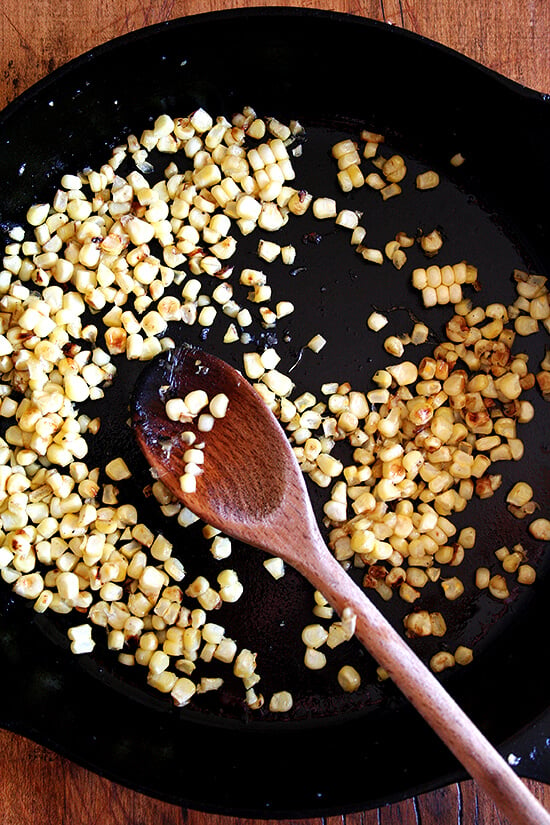
- 1 ear of corn, kernels removed
- extra virgin olive oil
- kosher salt
- Heat a skillet over high heat. Add olive oil. When it begins swirling in the pan, add the corn and season it to taste with kosher salt. Don’t stir the corn until it begins to pop — about 45 seconds to a minute after it has been added to the pan. When it begins popping, give it a good stir and remove from the heat. That’s it. It’s done — 1 to 2 minutes total.
- Prep Time: 5 minutes
- Cook Time: 2 minutes
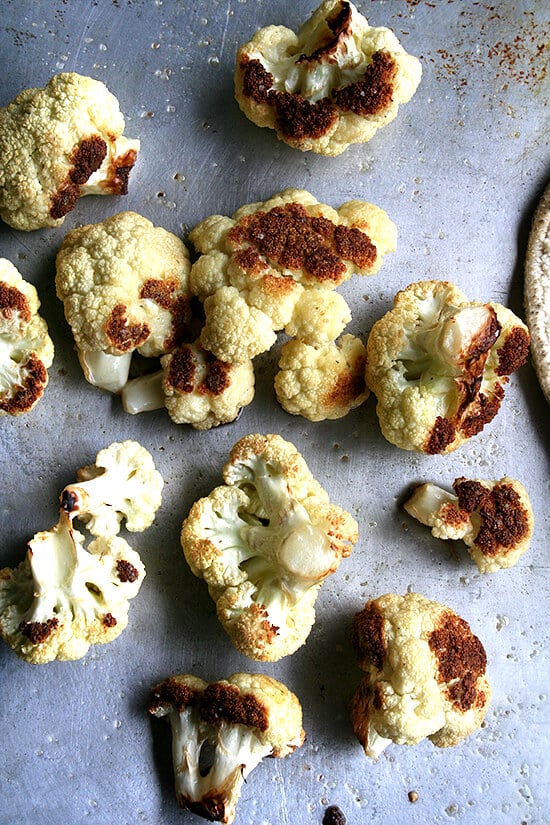
After sautéed corn, roasted cauliflower is my most current obsession. It’s delicious right out of the oven. The crispy salty charred bits are as yummy as french fries. Leftover cauliflower dipped in hummus makes a nice snack.
- 1 head cauliflower, florets removed from stem
- extra-virgin olive oil
- kosher salt
- Preheat the oven to 450ºF. Spread the florets of cauliflower on a rimmed baking sheet. Toss with olive oil and season with salt (I tend to be liberal with the salt on these guys). Place sheet in the oven for 15 minutes. After the 15 minutes, check on the cauliflower, giving it a stir or flipping the florets over if desired. Cook for 5 minutes longer.
- Prep Time: 5 minutes
- Cook Time: 20 minutes
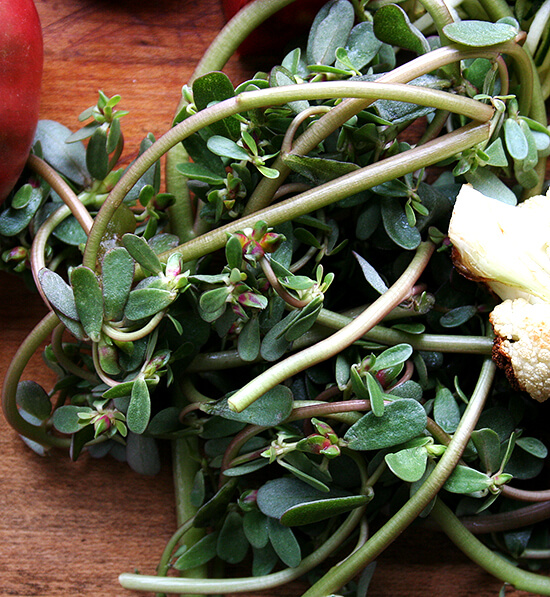
Have you ever tried purslane? It’s just about the healthiest thing on the planet. Here’s a little rundown:
In the 1980s, Artemis Simopoulos, author of The Omega Diet , discovered that purslane, a wild green, contained high amounts of omega-3 fatty acids, leading her to suspect that animals feasting on these greens might also be a rich source of this essential fatty acid. To test her theory, Dr. Simopoulos hard-boiled a few eggs laid by free-ranging chickens living on her family farm in Greece and brought them back to the National Institute of Health for analysis. The free-ranging eggs, she discovered, contained 20 times more omega-3 fatty acids than supermarket eggs. Simopoulos’ findings, printed in several high-profile journals, inspired egg producers across the country, most notably George Bass of The Country Hen, to feed their chickens fish oil and flax seed, two foods loaded with omega-3 fatty acids.