These biscuits are heaven: buttery and flaky, perfectly sweet and salty, with crisp edges and tender centers. Find two keys to success below as well as video and step-by-step photo guidance.
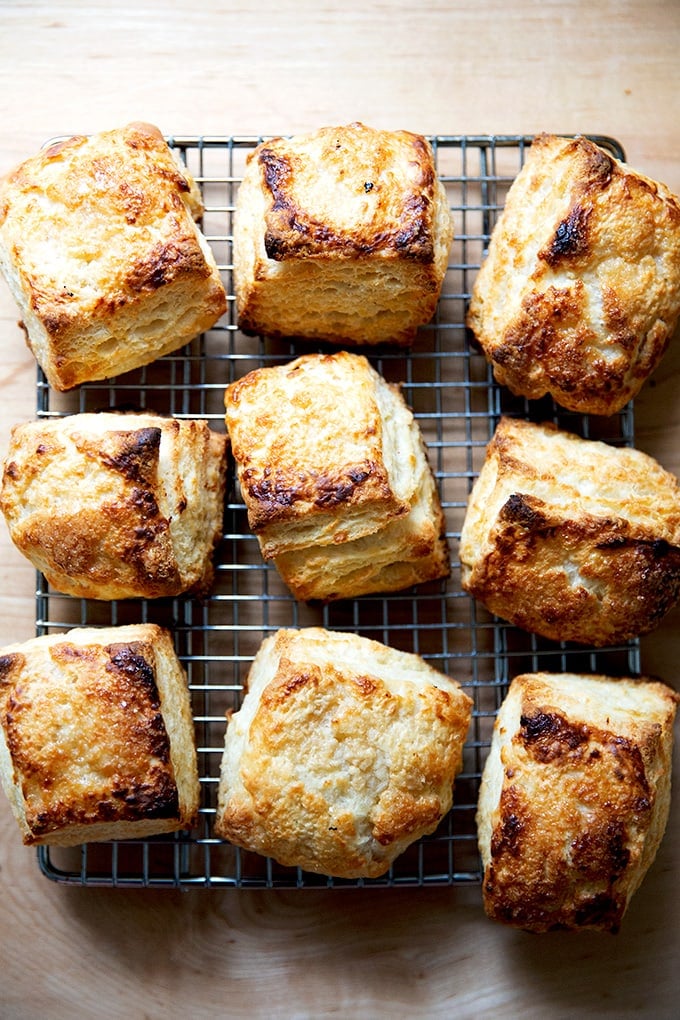
In her book A Good Bake , Melissa Weller describes these buttermilk biscuits as “soft and flaky, rich with butter, and with a lot of layers you can see from the sides.”
This description is spot on. When broken apart from end to end, they open accordion-style, each pleat flaking into the next. The exterior is crisp and caramelized, and the tops are a little sweet thanks to a sprinkling of turbinado sugar. They are truly perfection, heavenly on their own, but even better with a pat more of salted butter. What isn’t?
The key to success here is twofold:
- Use cold butter and buttermilk. Making biscuits is not unlike making pie dough . Using cold ingredients, working quickly, and not overworking the dough is important. You can use a pastry cutter to quickly cut the butter into the dry ingredients or you can use the food processor (see recipe box for details).
- Roll and fold the dough . After the dough is mixed, you’ll roll it into a rectangle, fold it envelope style, turn it 90 degrees; then repeat this process twice more. This folding and rolling technique creates those desirable visible and flaky layers. Find video guidance above and below.
How to Make Buttermilk Biscuits, Step by Step
Gather your ingredients: only six! Flour, butter, buttermilk, salt, sugar, baking powder.
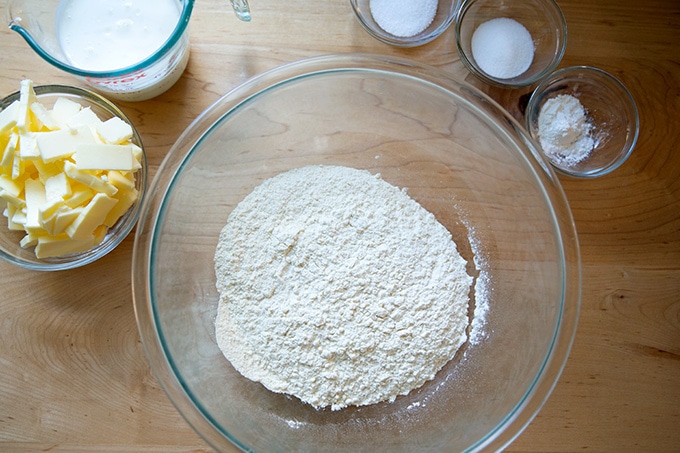
Whisk together the dry ingredients.

Add the cold, cubed butter.
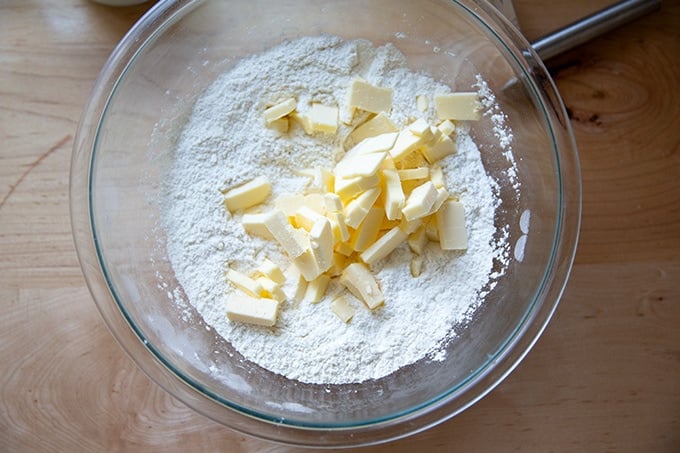
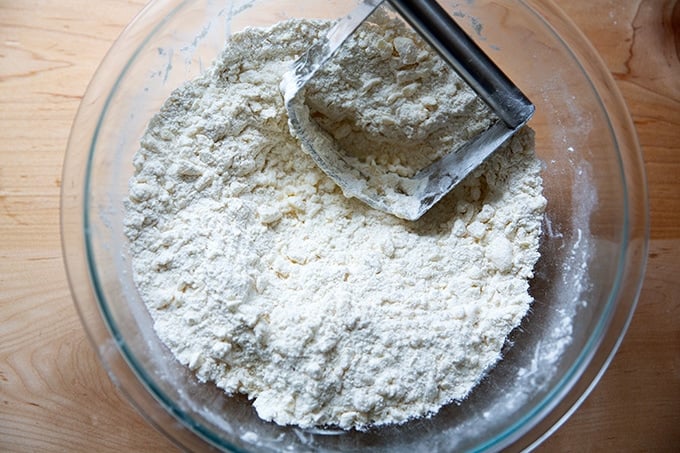
Cut the butter in using a pastry cutter or the back of a fork. You also could do this in the food processor.
Add the buttermilk …
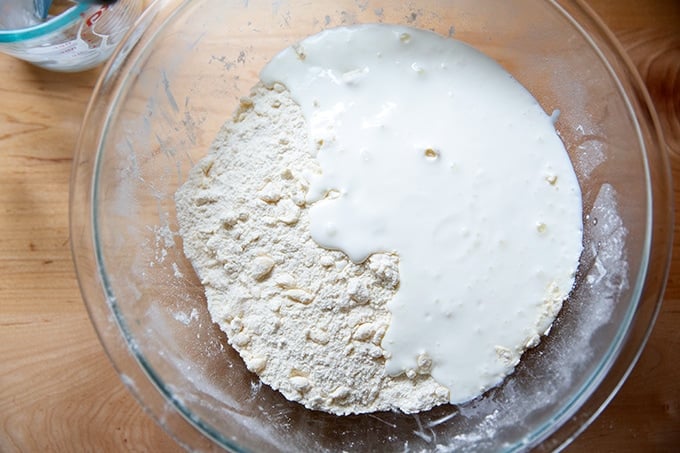
… and stir to combine.
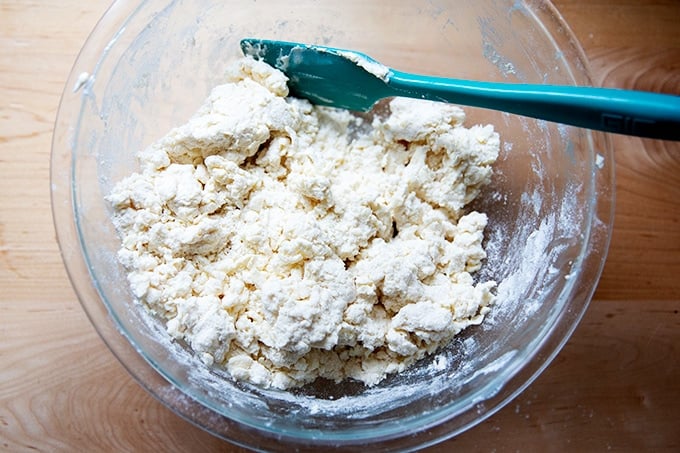
You may need to knead the dough briefly with your hands to get it into a cohesive ball.
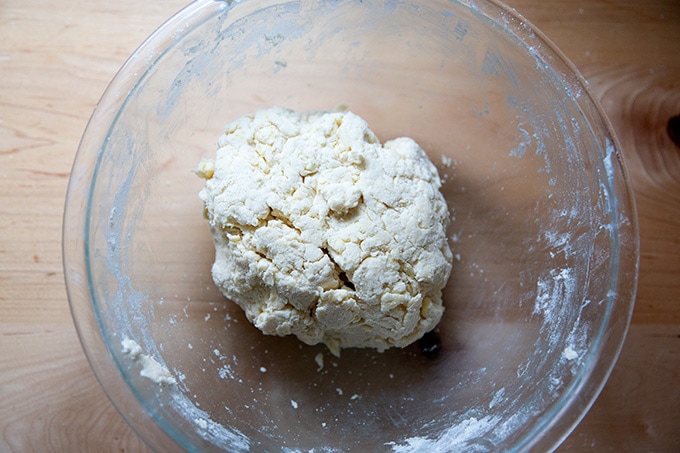
Turn the dough out onto a work surface and pat into a square.

Roll out into a 14-inch long rectangle.
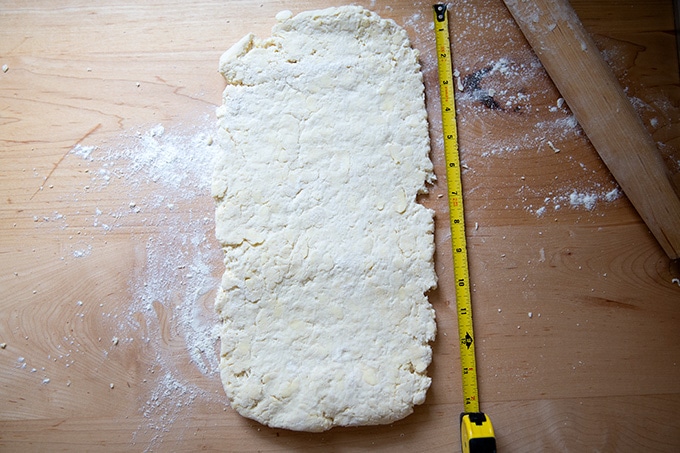
Fold the top third down.
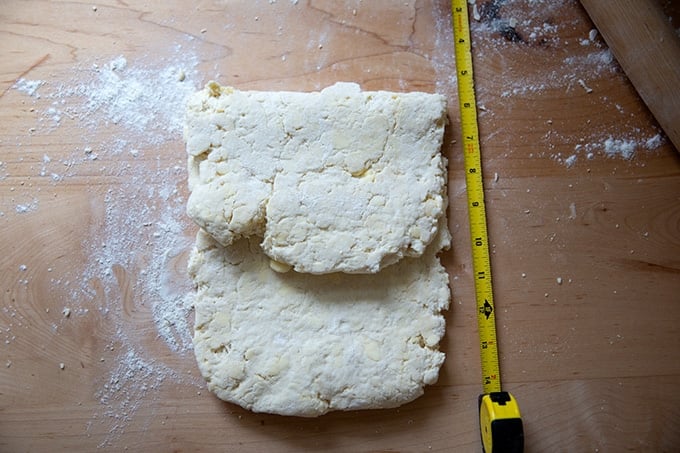
Fold the bottom third up.
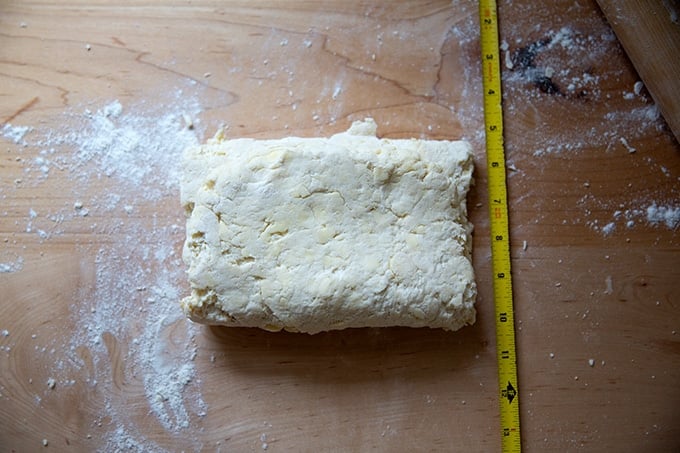
Turn the block 90 degrees.
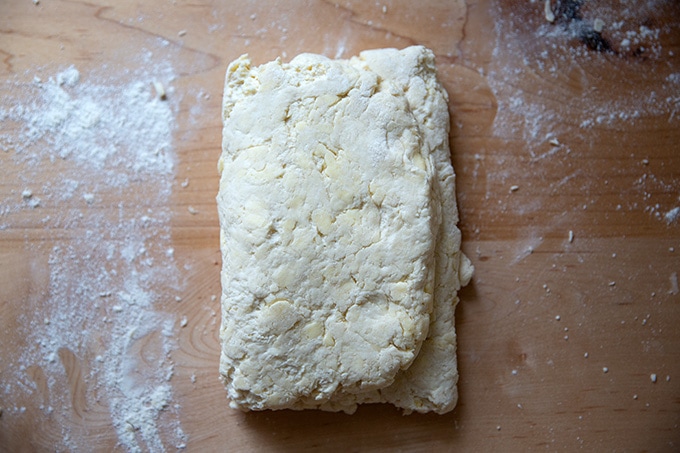
You’ll repeat this rolling-and-folding proces twice more.
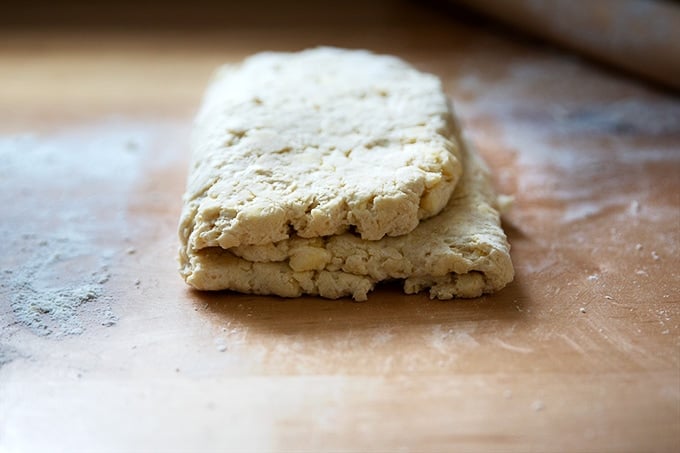
After the third set of fold, pat the dough into a square.
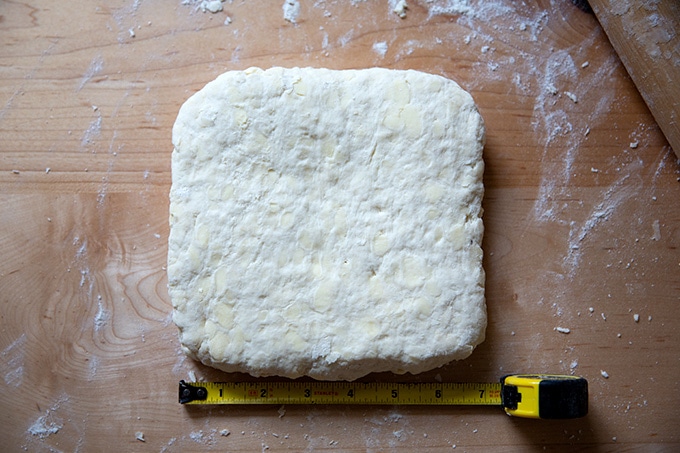
Cut the square into 9 equal pieces.
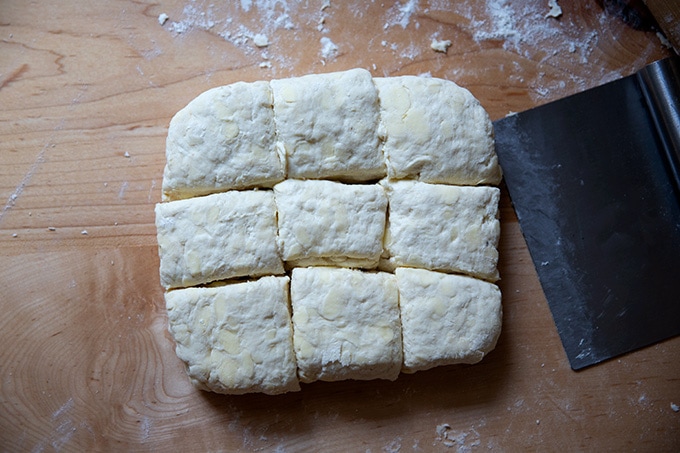
Transfer the squares to a sheet pan and chill for 30 minutes.
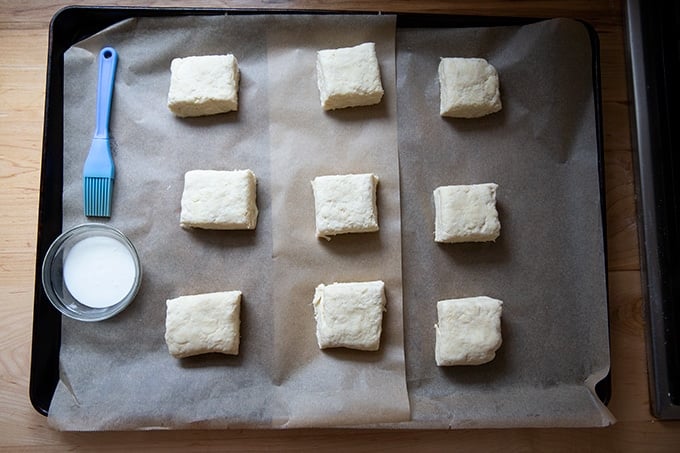
Then brush with a little more buttermilk and sprinkle with turbinado sugar if you wish.
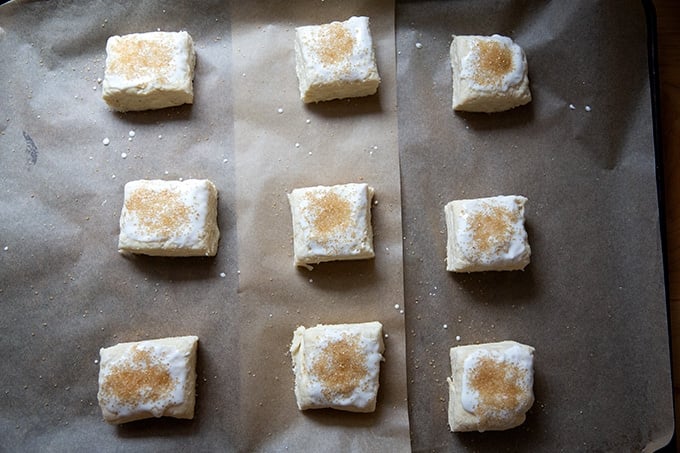
transfer to the oven and bake until golden, 25-30 minutes.
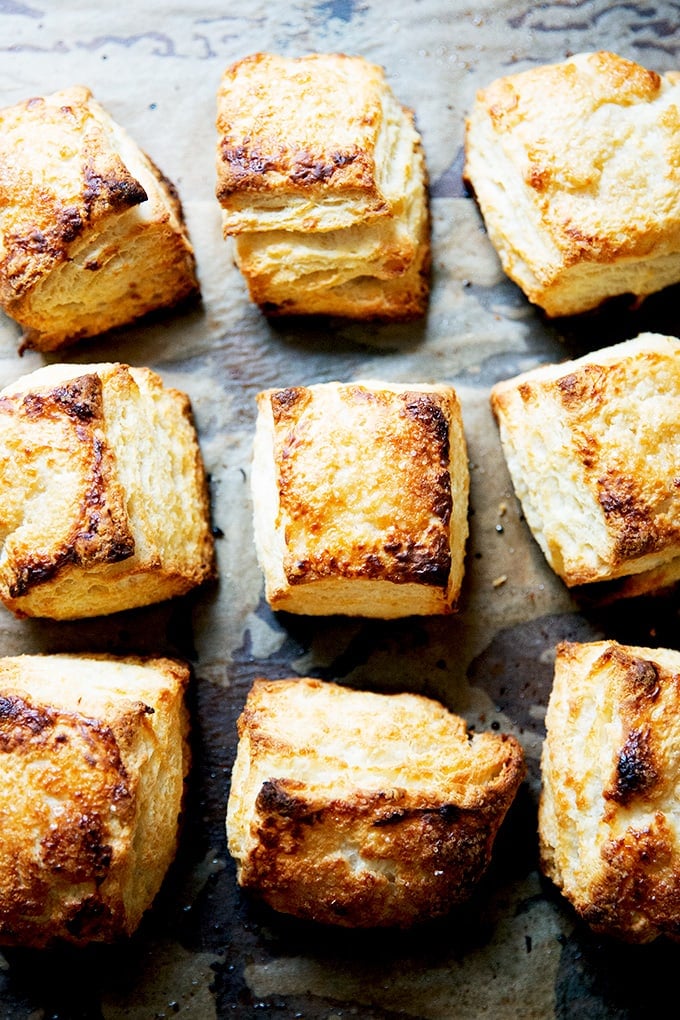
Look at those layers…
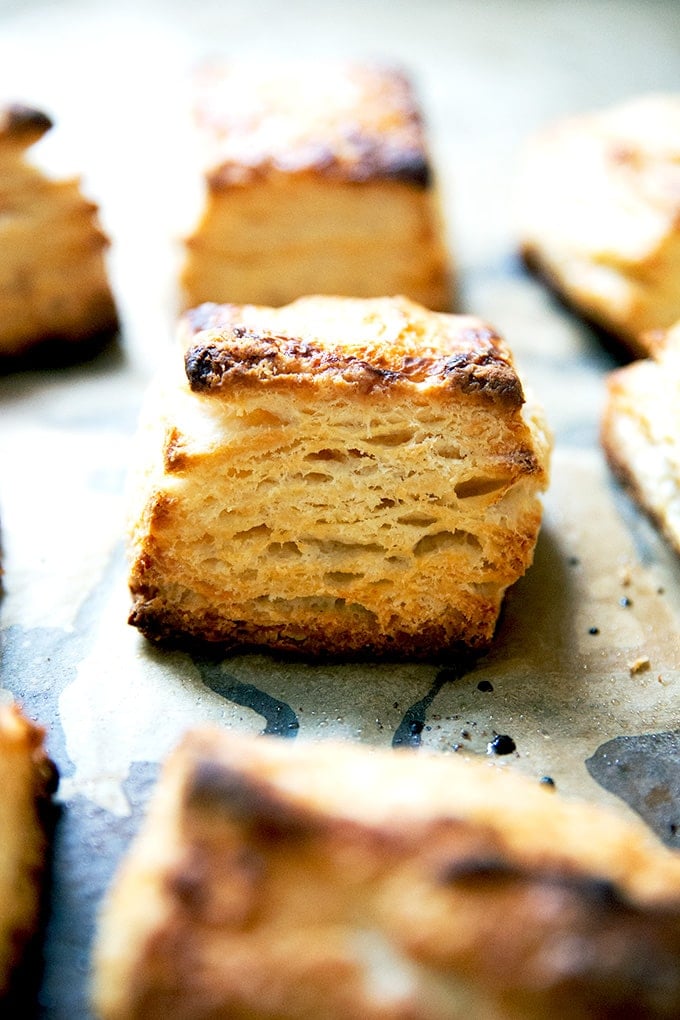
… irresistible.
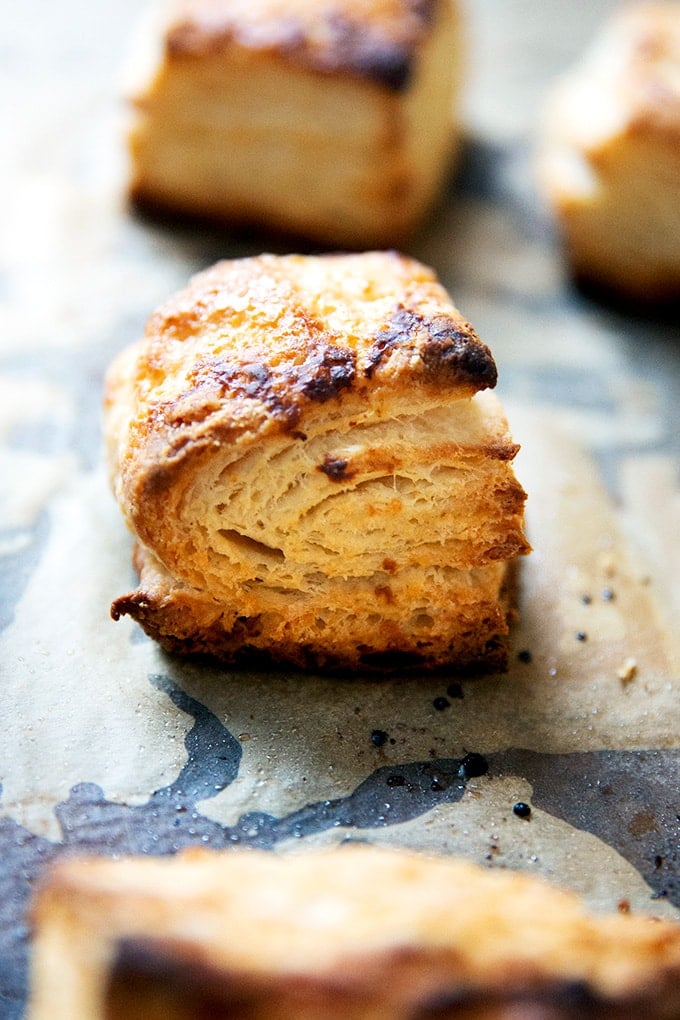
Description
These biscuits are heaven: buttery and flaky, perfectly sweet and salty, with crisp edges and tender centers. When broken apart from end to end, they open accordion-style, each pleat flaking into the next.
Adapted from Melissa Weller’s A Good Bake
Notes:
As always, for best results, use a scale to measure.
I have made a few small changes to Melissa’s recipe:
- I’m using a teensy bit more salt and baking powder.
- I’m using all-purpose flour exclusively as opposed to a mix of all-purpose and whole wheat pastry flour.
- I sprinkle the tops with turbinado sugar, because I love that salty-sweet dynamic.
- When I use something like Kate’s buttermilk, which is on the thin side, I use 1 cup of buttermilk. When I use thicker buttermilk (like Argyle Cheese Farmer, if you are local), I use about 1/4 cup (60 grams) more buttermilk. So, depending on the thickness of the buttermilk, you may need more or less. I suggest starting with 1 cup and if when you are incorporating the buttermilk into the butter-flour mixture the mixture feels dry, add more buttermilk by the tablespoon until the dough comes together.
- To make homemade buttermilk : Fill a measuring cup with 300 grams (1.25 cups) of milk 2% or whole preferably, add 1.5 tablespoons vinegar or fresh lemon juice. Let stand for 5 to 10 minutes. Give it a stir; then use.
- If you find the bottoms of your biscuits are browning too quickly, you can place another sheet pan beneath the one the biscuits are on — this will provide extra insulation and prevent overbrowning.
For the biscuits:
- 2.75 cups ( 355 g ) all-purpose flour
- 2 teaspoons ( 9 g ) baking powder
- 2 teaspoons ( 9 g ) sugar
- 1.5 teaspoons sea salt or 2 teaspoons kosher salt ( 10 g )
- 16 tablespoons ( 226 g ) cold cubed butter, salted or unsalted
- 1 to 1.25 cups buttermilk ( 240 to 300 g), see notes above
For finishing:
- 2 tablespoons ( 32 g ) buttermilk
- 1 tablespoon ( 16 g ) turbinado sugar, optional
- In a large bowl, whisk together the flour, salt, sugar, and baking powder. Add the butter and use the back of a fork or a pastry cutter to “cut” the butter into the dry ingredients. The butter should be the size of peas in the end. You can also do this in the food processor: pulse ten times at 1-second intervals.
- Add the buttermilk, starting with 1 cup (240 grams) and adding more as necessary, and stir with a spatula to combine. You may need to knead the dough briefly with your hands to help the dough form a cohesive ball, but go light — you do not want to overmix here.
- Turn the dough out onto a lightly floured work surface and pat into a 6-inch square (roughly). Dust a rolling pin with flour, and roll the square into a 14-inch long rectangle. Fold the top third down. Fold the bottom third up. Rotate the dough 90 degrees. Repeat this rolling and folding process twice more. After the final set of folds, pat the dough into a 6-8 inch square. Use a bench scraper or knife to cut the dough into 9 equal portions.
- Place a rack in the upper third of the oven, and heat it to 400ºF. Line a sheet pan with parchment paper. Transfer the portioned biscuit dough to the sheet pan and transfer it to the fridge for 30 minutes. Brush the tops of the biscuits with buttermilk and, if you wish, sprinkle with turbinado sugar.
- Transfer the pan to the oven and bake for 25 to 30 minutes. Remove the pan from the oven and transfer the biscuits to a cooling rack immediately.
Notes
3 Ways to Make These Biscuits Ahead of Time (Fridge/Freezer)
- You can freeze the baked and completely cooled biscuits in an airtight container for up to 3 months. Thaw them overnight at room temperature. Reheat them at 350ºF for 15 minutes before serving.
- You can transfer the unbaked portioned biscuits (or the square of biscuit dough) to the fridge for as long as 2 days.
- You can freeze the unbaked portioned biscuits. Freeze the cut biscuits (without the buttermilk wash or sugar topping) on a sheet pan. Once frozen, transfer to an airtight bag or vessel and freeze for up to 3 months. Bake them directly from the freezer — apply the buttermilk wash and sugar to the frozen biscuits — then transfer to the oven. The biscuits will need a few more minutes so rely on visual cues: golden tops and bottoms.
- Prep Time: 60 minutes
- Cook Time: 25 minutes
- Category: Bread
- Method: Oven
- Cuisine: American
Description
These biscuits are heaven: buttery and flaky, perfectly sweet and salty, with crisp edges and tender centers. When broken apart from end to end, they open accordion-style, each pleat flaking into the next.
Adapted from Melissa Weller’s A Good Bake
Notes:
As always, for best results, use a scale to measure.
I have made a few small changes to Melissa’s recipe:
- I’m using a teensy bit more salt and baking powder.
- I’m using all-purpose flour exclusively as opposed to a mix of all-purpose and whole wheat pastry flour.
- I sprinkle the tops with turbinado sugar, because I love that salty-sweet dynamic.
- When I use something like Kate’s buttermilk, which is on the thin side, I use 1 cup of buttermilk. When I use thicker buttermilk (like Argyle Cheese Farmer, if you are local), I use about 1/4 cup (60 grams) more buttermilk. So, depending on the thickness of the buttermilk, you may need more or less. I suggest starting with 1 cup and if when you are incorporating the buttermilk into the butter-flour mixture the mixture feels dry, add more buttermilk by the tablespoon until the dough comes together.
- To make homemade buttermilk : Fill a measuring cup with 300 grams (1.25 cups) of milk 2% or whole preferably, add 1.5 tablespoons vinegar or fresh lemon juice. Let stand for 5 to 10 minutes. Give it a stir; then use.
- If you find the bottoms of your biscuits are browning too quickly, you can place another sheet pan beneath the one the biscuits are on — this will provide extra insulation and prevent overbrowning.
For the biscuits:
- 2.75 cups ( 355 g ) all-purpose flour
- 2 teaspoons ( 9 g ) baking powder
- 2 teaspoons ( 9 g ) sugar
- 1.5 teaspoons sea salt or 2 teaspoons kosher salt ( 10 g )
- 16 tablespoons ( 226 g ) cold cubed butter, salted or unsalted
- 1 to 1.25 cups buttermilk ( 240 to 300 g), see notes above
For finishing:
- 2 tablespoons ( 32 g ) buttermilk
- 1 tablespoon ( 16 g ) turbinado sugar, optional
- In a large bowl, whisk together the flour, salt, sugar, and baking powder. Add the butter and use the back of a fork or a pastry cutter to “cut” the butter into the dry ingredients. The butter should be the size of peas in the end. You can also do this in the food processor: pulse ten times at 1-second intervals.
- Add the buttermilk, starting with 1 cup (240 grams) and adding more as necessary, and stir with a spatula to combine. You may need to knead the dough briefly with your hands to help the dough form a cohesive ball, but go light — you do not want to overmix here.
- Turn the dough out onto a lightly floured work surface and pat into a 6-inch square (roughly). Dust a rolling pin with flour, and roll the square into a 14-inch long rectangle. Fold the top third down. Fold the bottom third up. Rotate the dough 90 degrees. Repeat this rolling and folding process twice more. After the final set of folds, pat the dough into a 6-8 inch square. Use a bench scraper or knife to cut the dough into 9 equal portions.
- Place a rack in the upper third of the oven, and heat it to 400ºF. Line a sheet pan with parchment paper. Transfer the portioned biscuit dough to the sheet pan and transfer it to the fridge for 30 minutes. Brush the tops of the biscuits with buttermilk and, if you wish, sprinkle with turbinado sugar.
- Transfer the pan to the oven and bake for 25 to 30 minutes. Remove the pan from the oven and transfer the biscuits to a cooling rack immediately.
Notes
3 Ways to Make These Biscuits Ahead of Time (Fridge/Freezer)
- You can freeze the baked and completely cooled biscuits in an airtight container for up to 3 months. Thaw them overnight at room temperature. Reheat them at 350ºF for 15 minutes before serving.
- You can transfer the unbaked portioned biscuits (or the square of biscuit dough) to the fridge for as long as 2 days.
- You can freeze the unbaked portioned biscuits. Freeze the cut biscuits (without the buttermilk wash or sugar topping) on a sheet pan. Once frozen, transfer to an airtight bag or vessel and freeze for up to 3 months. Bake them directly from the freezer — apply the buttermilk wash and sugar to the frozen biscuits — then transfer to the oven. The biscuits will need a few more minutes so rely on visual cues: golden tops and bottoms.
- Prep Time: 60 minutes
- Cook Time: 25 minutes
- Category: Bread
- Method: Oven
- Cuisine: American
Find it online : https://alexandracooks.com/2021/11/19/flaky-buttermilk-biscuits/
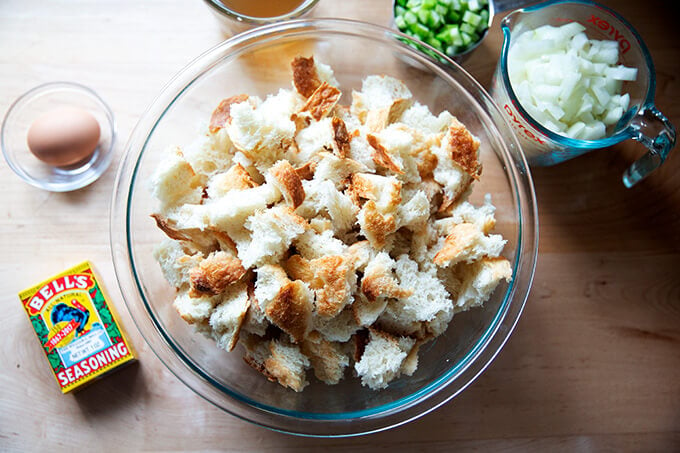
If you’re like me, Thanksgiving is ALL about the sides: crispy, custardy stuffing rubbing elbows with creamy, thyme-scented, Gruyère-crusted scalloped potatoes, the happiest union under a blanket of gravy, punctuated by tart dollops of cranberry sauce.
Below you will find a recipe for a very classic bread stuffing from my cookbook, Bread Toast Crumbs . It’s seasoned with Bell’s Seasoning, which, if you are unfamiliar, is a finely ground mix of rosemary, oregano, sage, ginger, marjoram, thyme, and pepper. Just pulling out the box every year makes me happy, filling me with nostalgia for Thanksgivings past, occasions attended without fail by all of my favorite people.
The below selection of Thanksgiving side dishes is organized as follows:
- Vegetable Side Dishes
- Sweet Potato Casserole
- Soups
- Salads
- Biscuits & Bread
- Stuffing Two Ways
PS: Thanksgiving Menu 2021
Vegetable Side Dishes
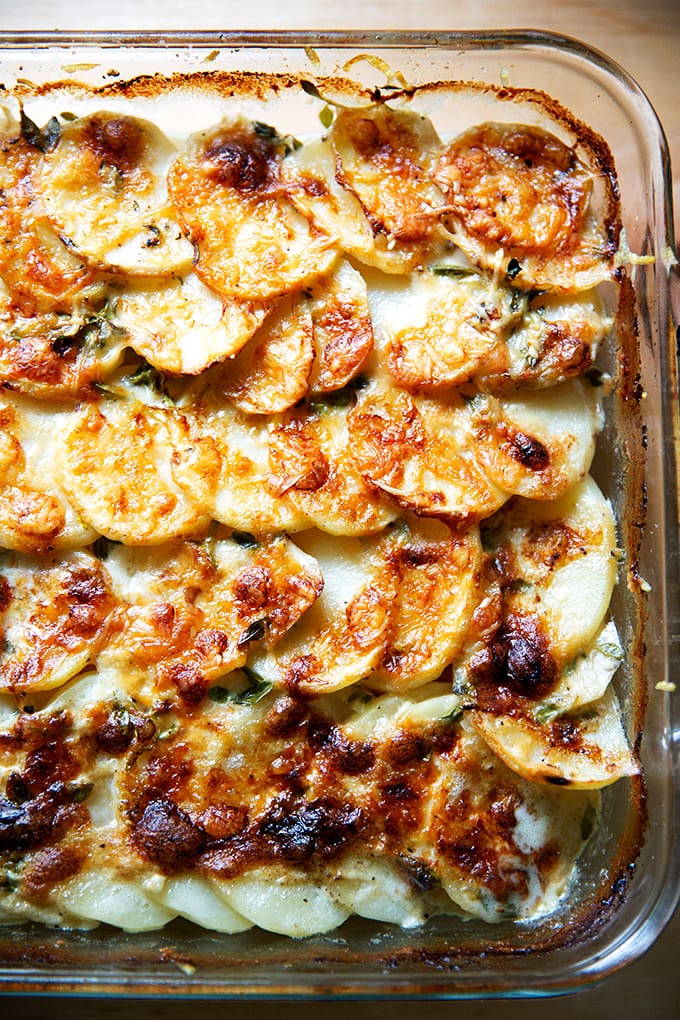
Alice Waters’s Potato Gratin
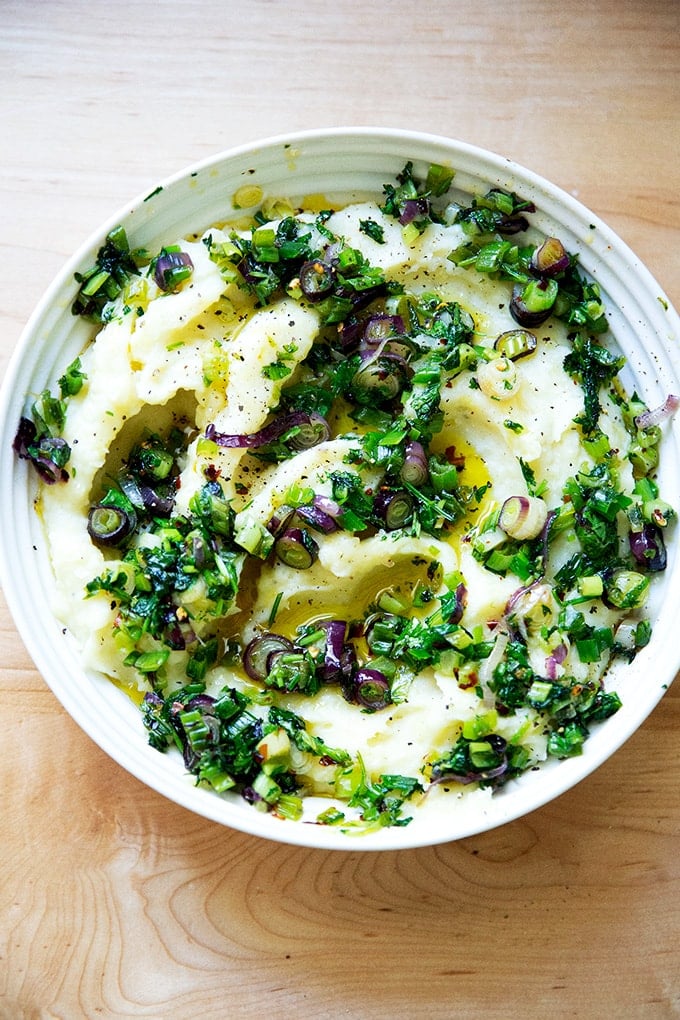
Creamy (No-Cream) Buttermilk Mashed Potatoes
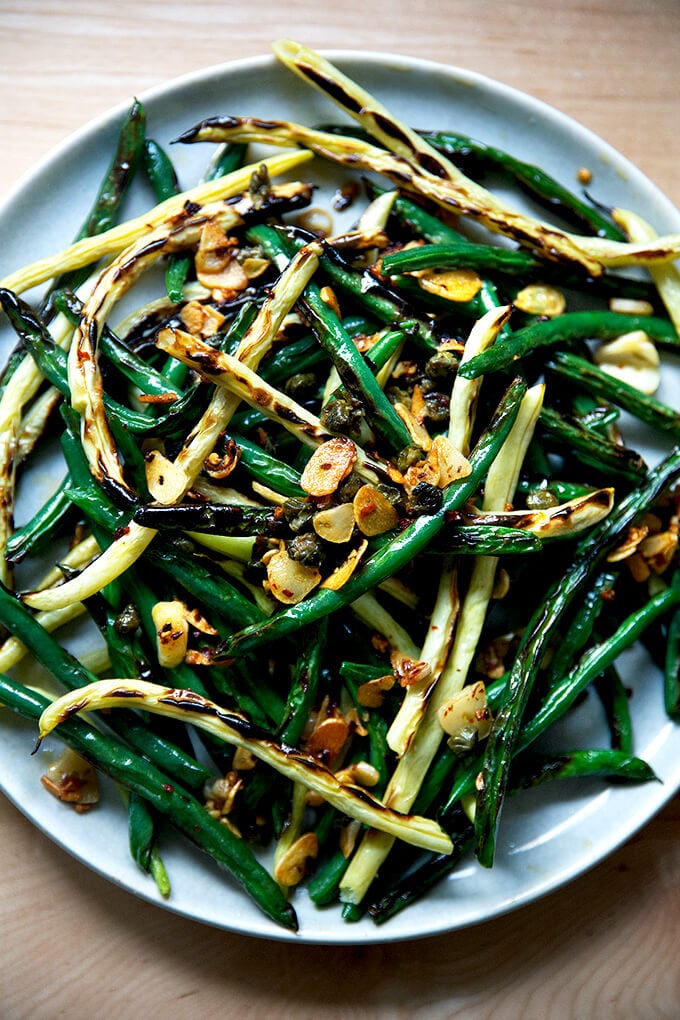
Blistered Green Beans
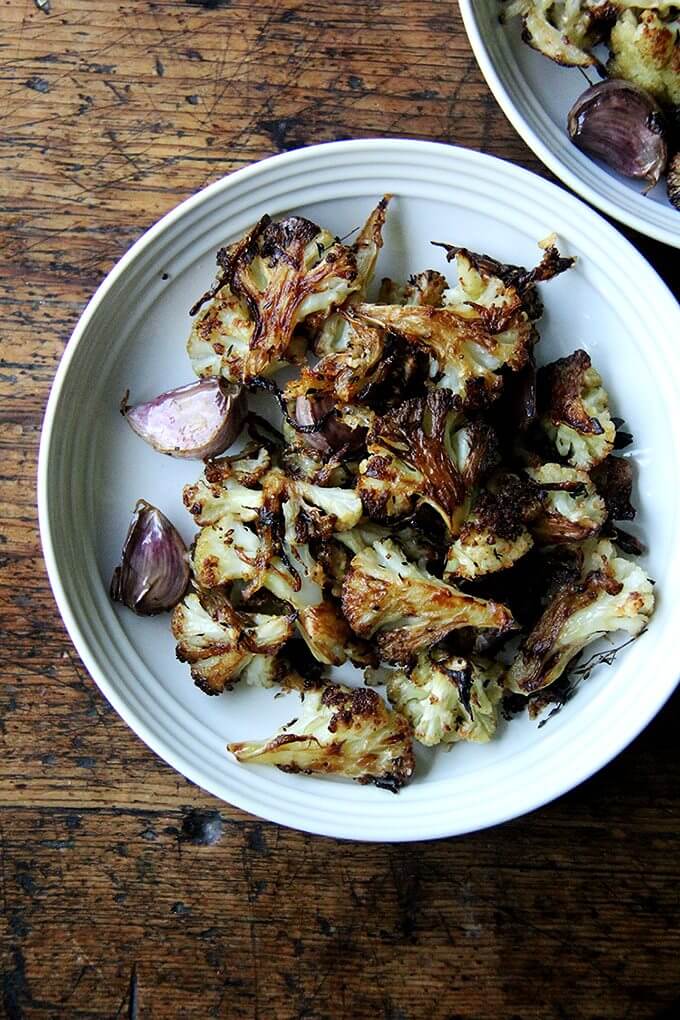
Easy Parmesan-Roasted Cauliflower Florets Recipe
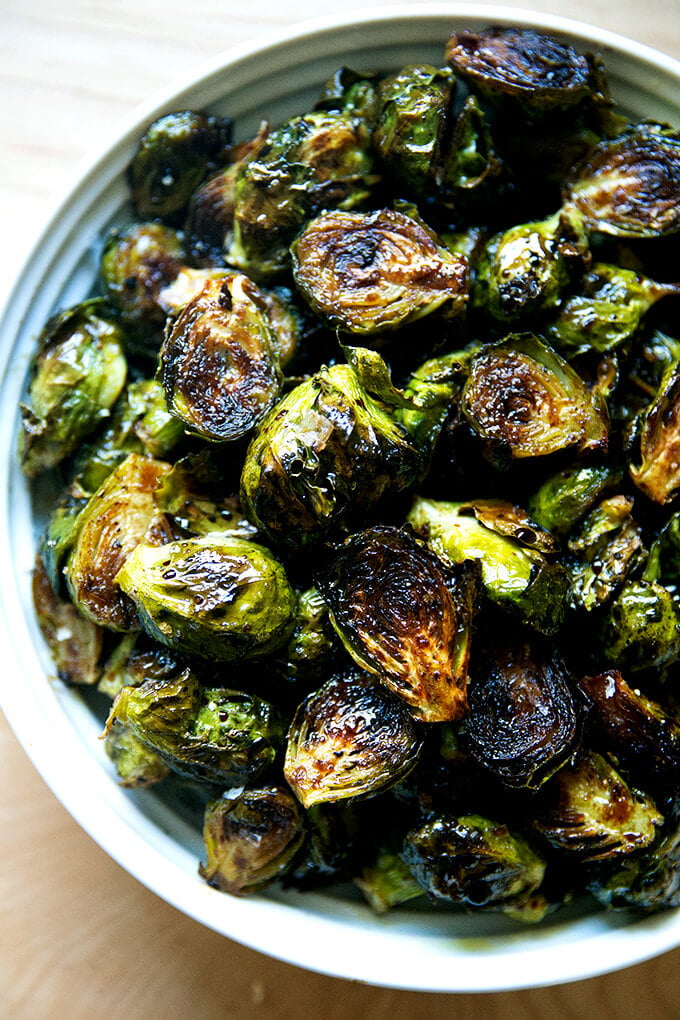
Ina Garten’s Roasted Balsamic Brussels Sprouts
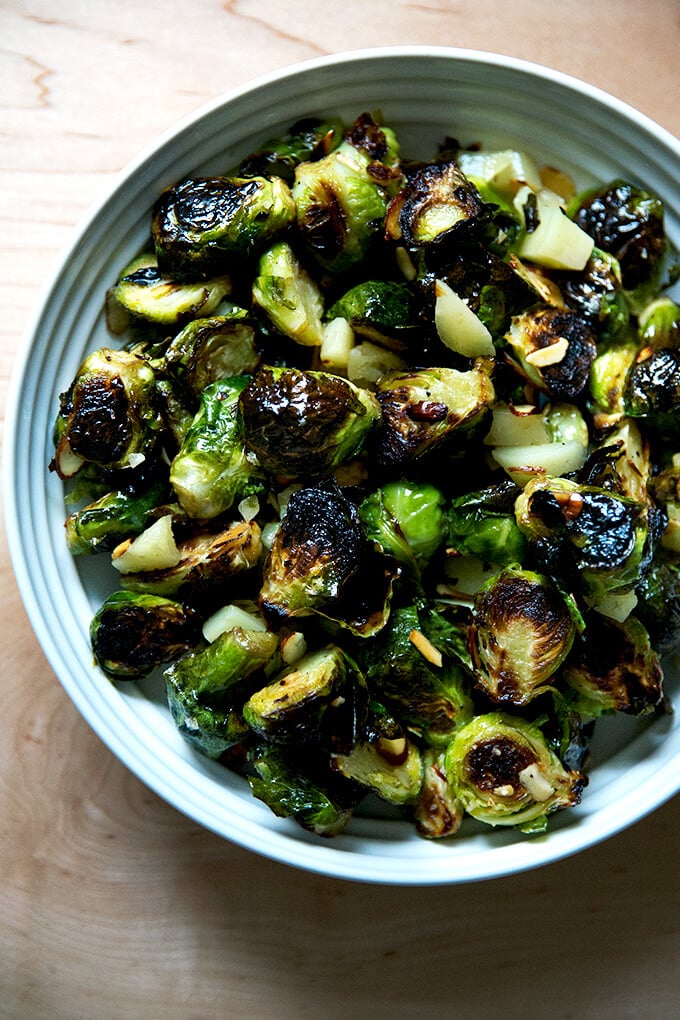
Roasted Brussels Sprouts with Manchego and Almonds
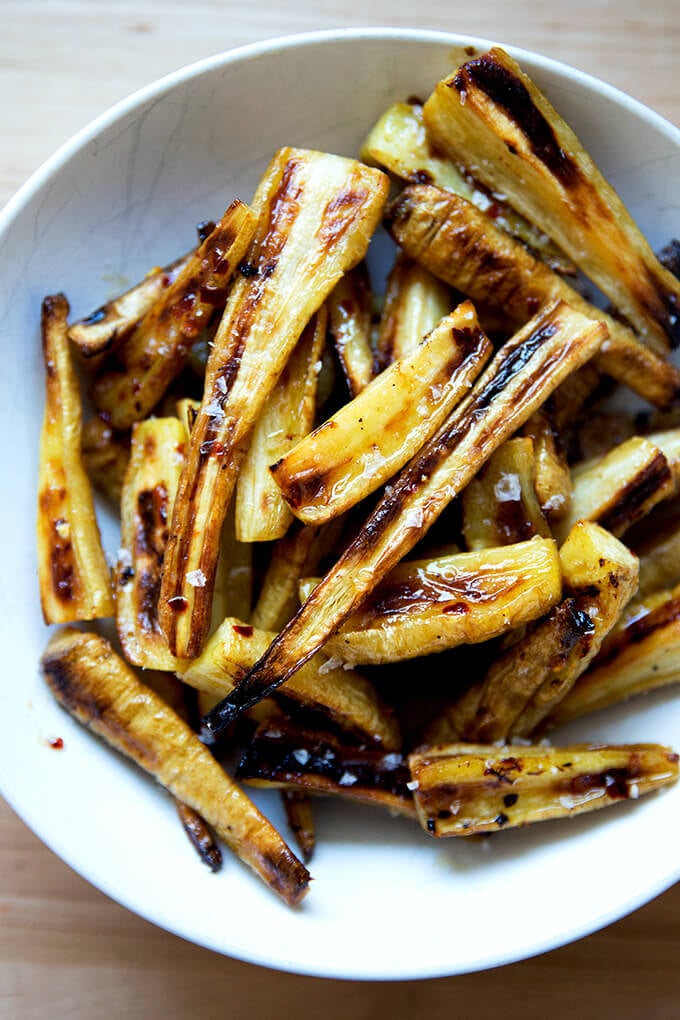
Roasted Parsnips with Chili-Honey Butter
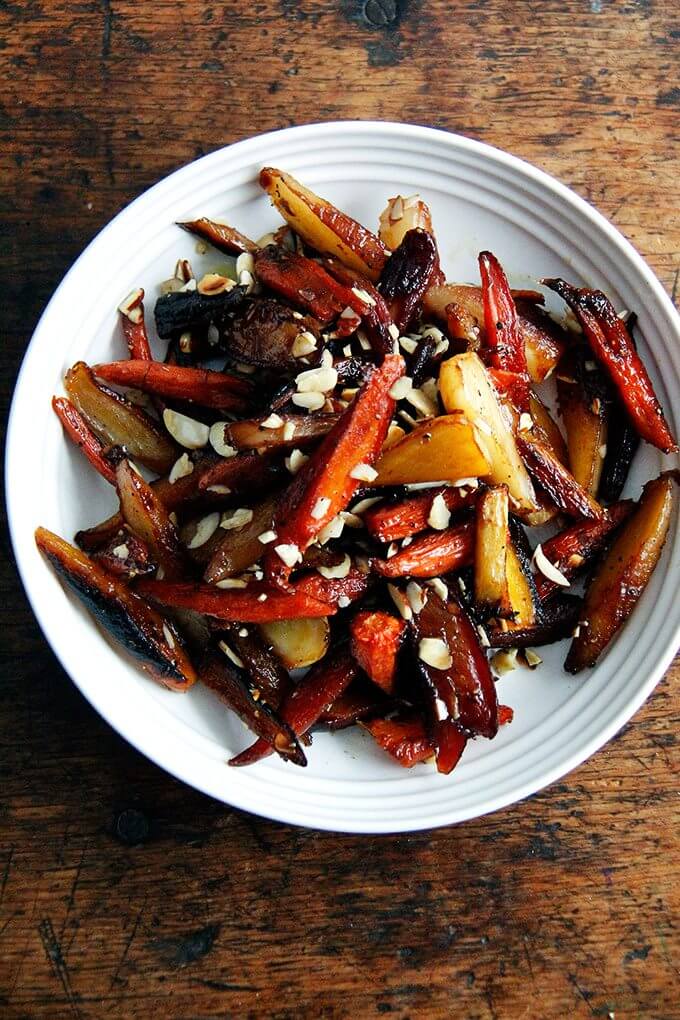
Twice-Roasted Carrots with Honey and Almonds
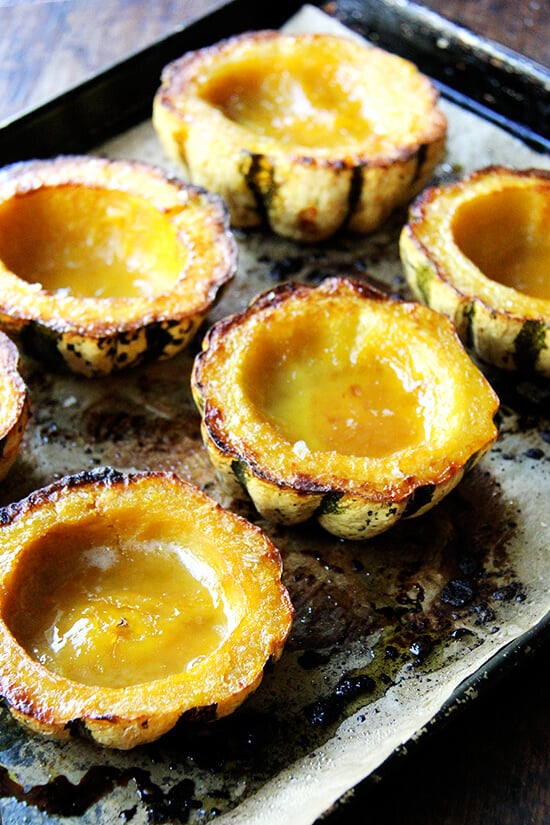
Roasted Acorn Squash with Maple Butter
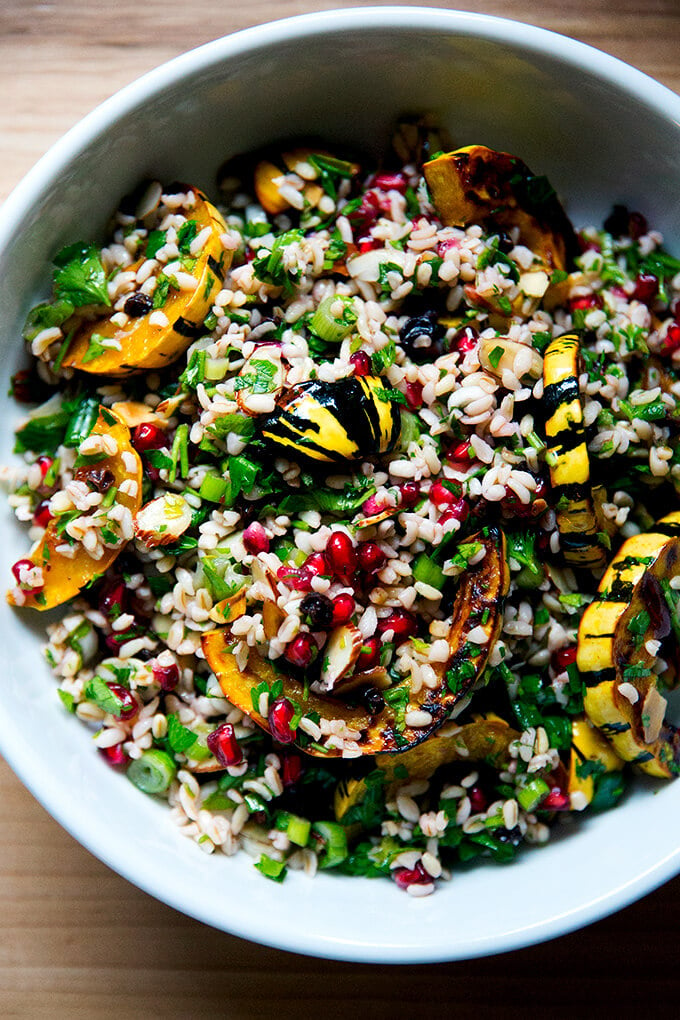
Winter Tabbouleh with Roasted Delicata Squash
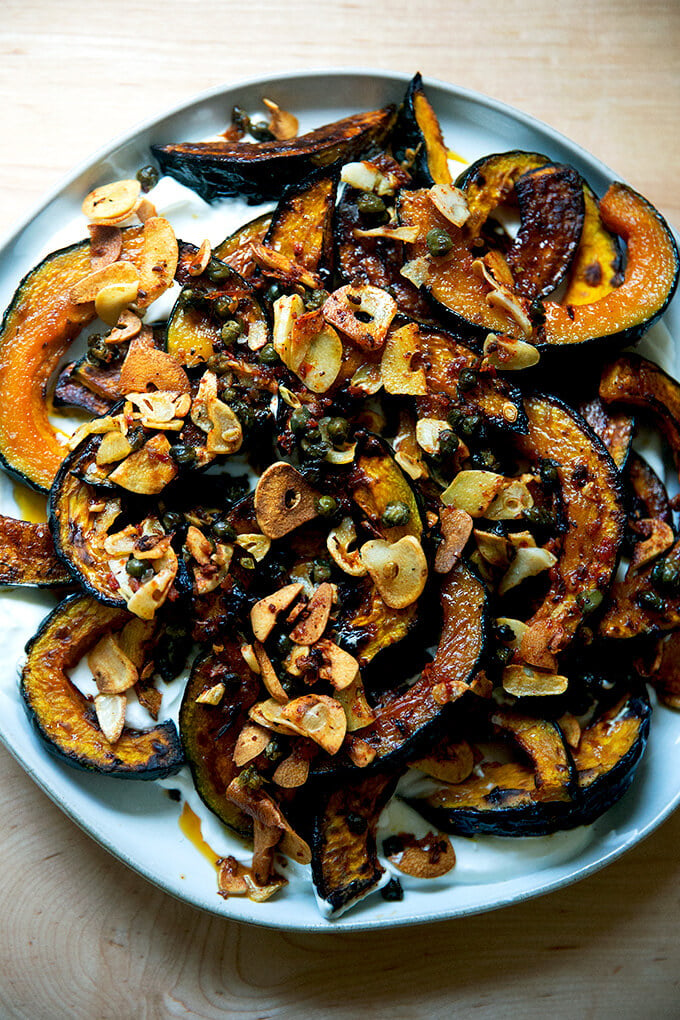
Roasted Kabocha Squash with Garlic, Capers & Chilies
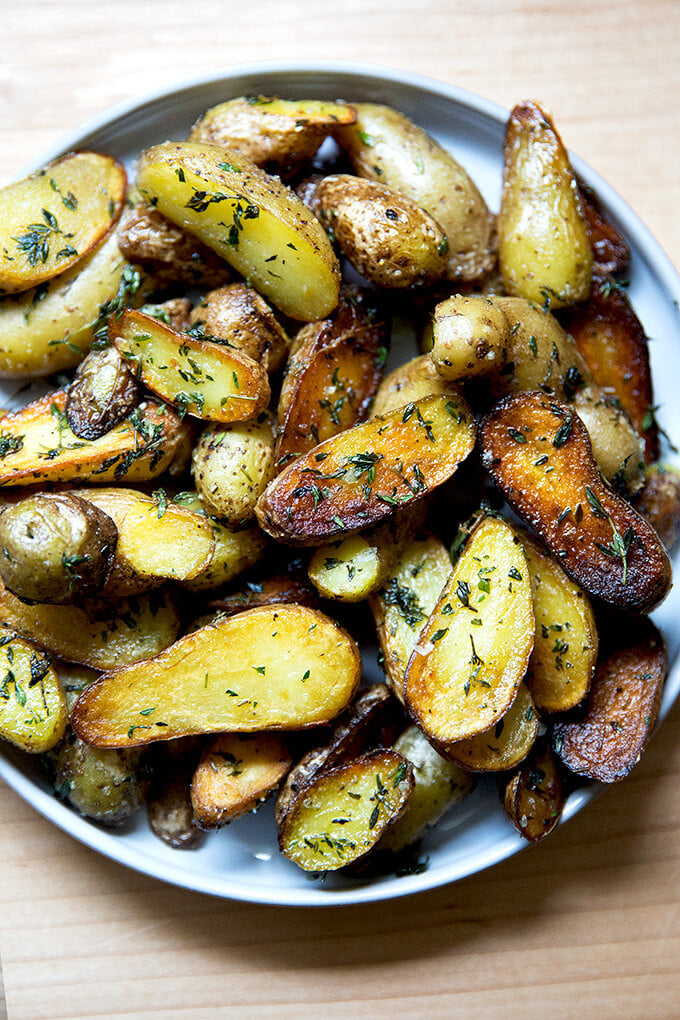
Crispy Pan-Seared Fingerling Potatoes
Sweet Potato Casserole
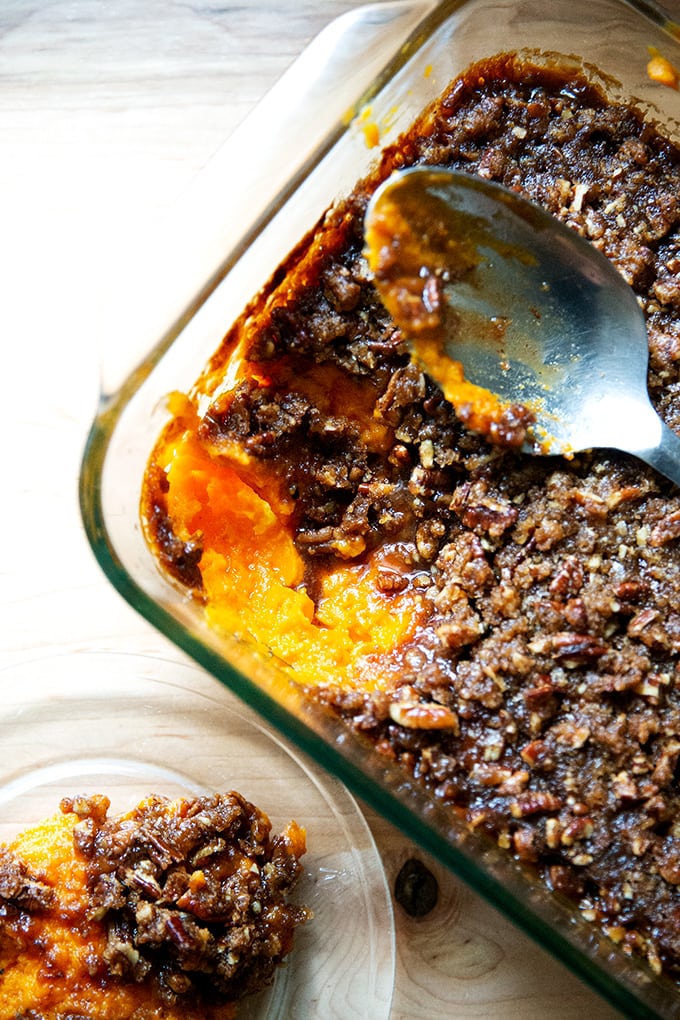
In my Thanksgiving Menu 2021 post , I mentioned I might bring back my Great Aunt Phyllis’s candied yams. Here they are in all their glory, creamy, orange-scented, brandy-spiked sweet potatoes buried under a blanket of brown sugar, butter, and cinnamon-spiced pecans. This is a very classic recipe, unapologetic in its use of butter and sugar, and I have not altered the recipe a hair, but for adding salt to the purée.
Soups
There was a stretch of years during which my mother commenced each of her Thanksgiving dinners with butternut squash soup. Just before serving, she drizzled over top a cranberry coulis and a little crème fraîche. The contrast of colors made for a beautiful presentation, but those festive swirls tasted good, too, offering complementary pops of sweetness and tang. I should really get the recipe… stay tuned.
I love starting Thanksgiving with a small bowl of soup. Any of the below four would be nice.

Slow-Cooker Butternut Squash and Apple Soup

Butternut Squash and Apple Cider Soup
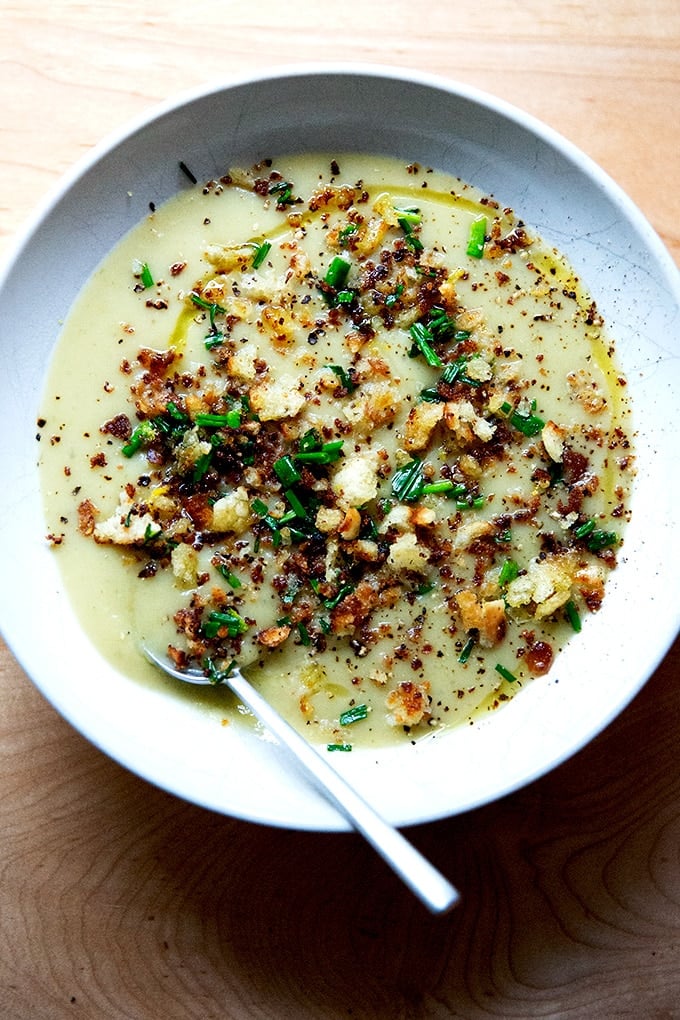
Simple Homemade Potato Leek Soup
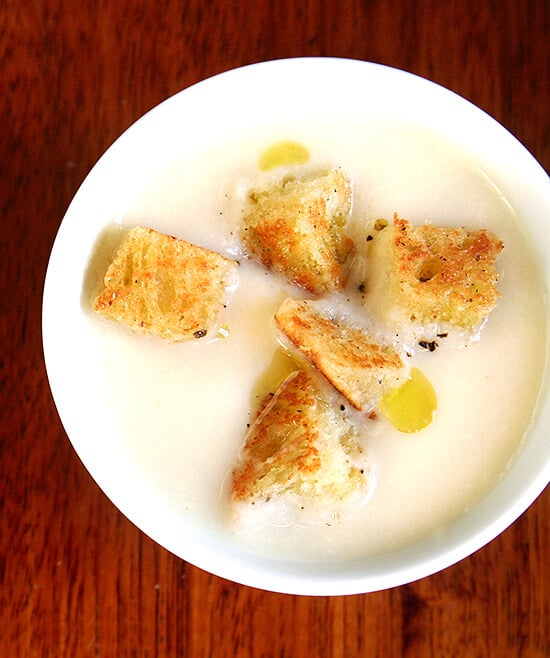
Cauliflower and Apple Soup with Olive Oil-Fried Bread
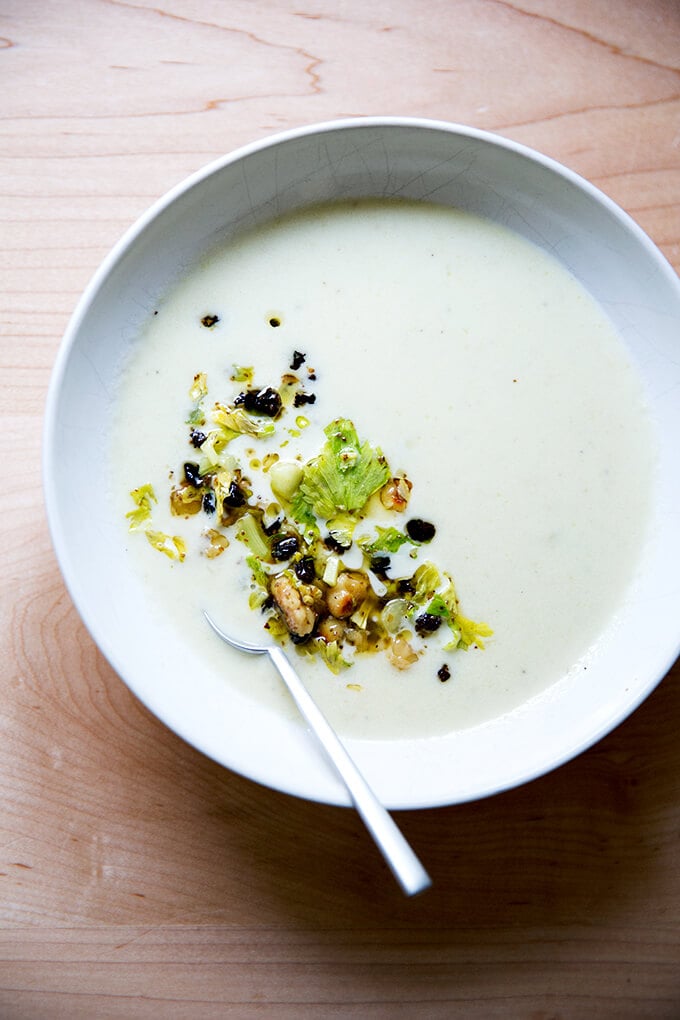
Cream of Celery Soup with Walnut-Currant Salsa
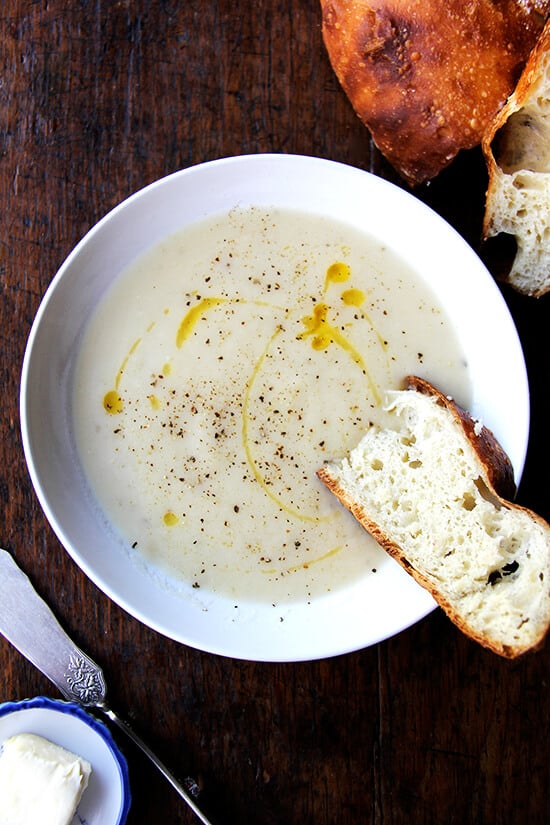
Creamy Parsnip and Pear Soup
Salads
Do yourself a favor and, as soon as you can, make a large batch of shallot vinaigrette. This recipe yields a quart, plenty for dressing many a salad in the weeks ahead. Incidentally, I find this dressing actually turns out better in the large-batch form because the shallots get more finely chopped in the food processor (as opposed to when chopped by hand) and, in turn, their flavor better permeates the dressing.
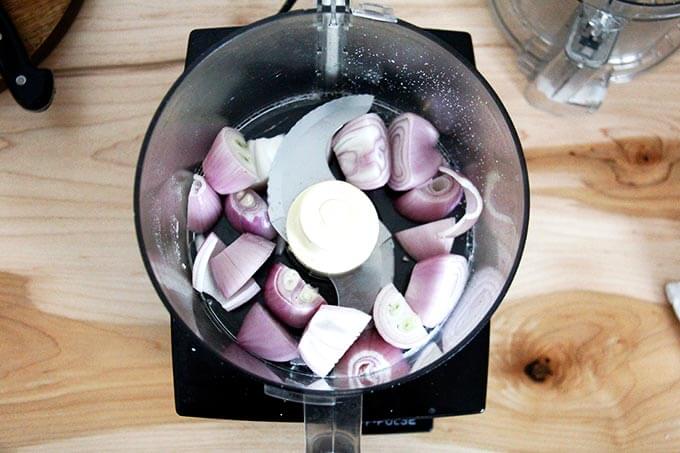
If you are unfamiliar with this dressing, after you purée the shallots, you let them soak in white balsamic vinegar (or other) for at least 15 minutes. This step draws out their sweetness and tempers their bite.
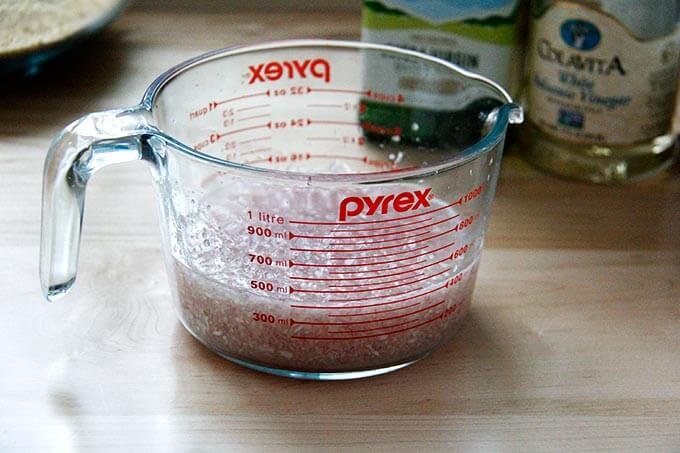
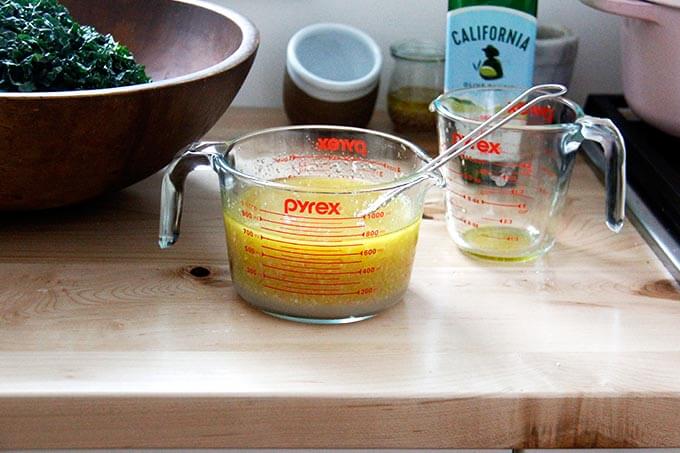
After the 15 minutes, you whisk in the olive oil. I store the dressing in these quart containers and stash it in the fridge for weeks. Be sure to give it ample time to come to room temperature before using it.
On holidays such as Thanksgiving, when there is such a variety of dishes on the table, I am inclined to simply toss some good greens with the shallot vinaigrette and call the salad done. But I do love the two salads below, both of which are substantial and festive. If your gathering is shaping up to be a small one, and you’re thinking about paring down your menu, a heartier salad in the mix might be a nice option.
Biscuits & Bread
As I mentioned in my Thanksgiving Menu 2021 post , there is something really nice about a roll on the Thanksgiving table. That said …
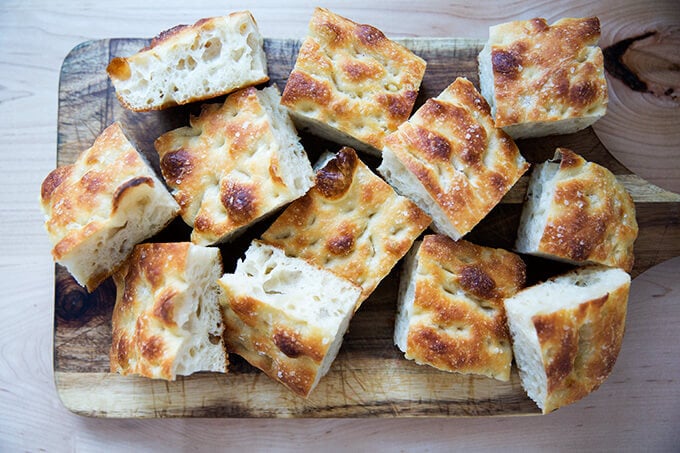
… if you don’t feel like messing around with portioning and shaping dough, or you find yourself more pressed for time, you could always make focaccia ( this one or this one ):
Or my mother’s peasant bread . No one will be disappointed.
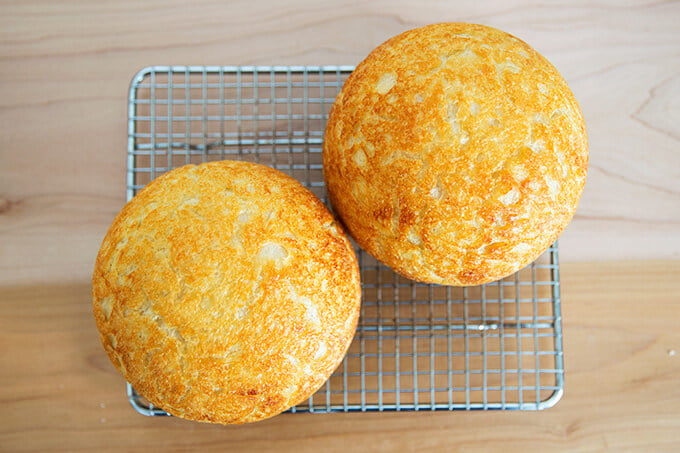
And if you are altogether yeast averse, biscuits are a great alternative, wonderful to have on hand for leftovers as well. Here are two favorites:
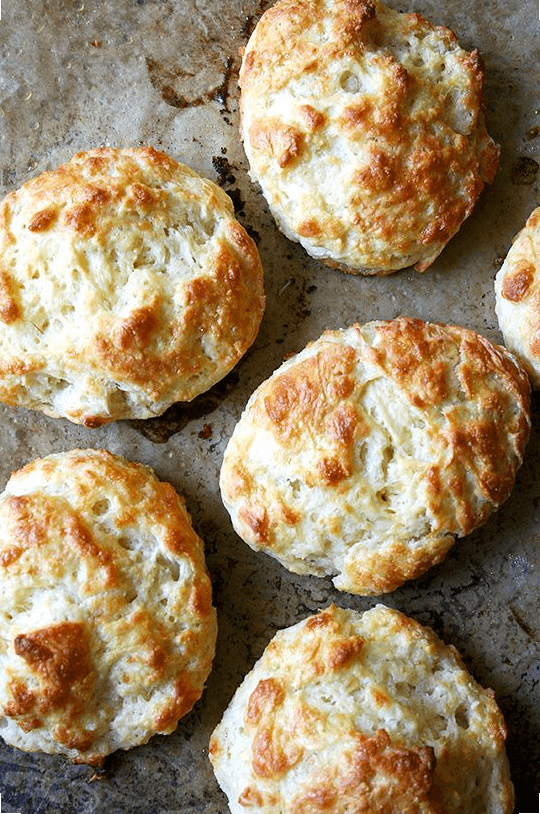
Cheddar Biscuits
Stuffing Two Ways
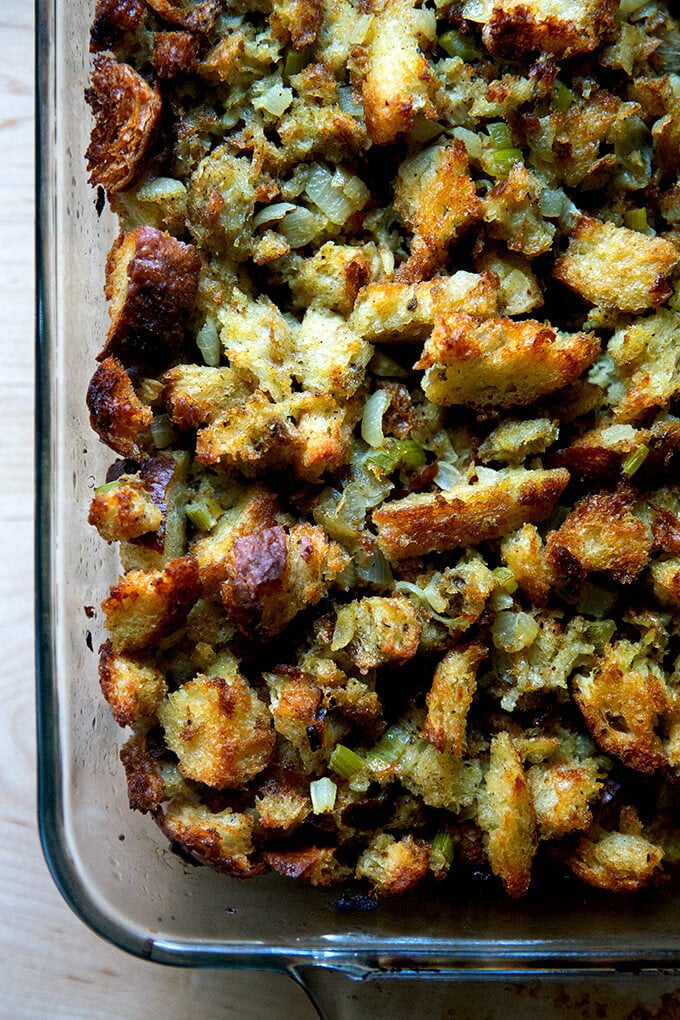
Below you will find a recipe for a no-frills stuffing: olive oil-toasted bread tossed with sautéed onions and celery, Bell’s seasonings, and copious amounts of butter. It, along with the kale version , hands down every year is my favorite part of the Thanksgiving meal.
Know you can customize the seasonings and add-ins of this recipe to your liking. Also: you can make it ahead and freeze it. See instructions in the post for how to freeze it .
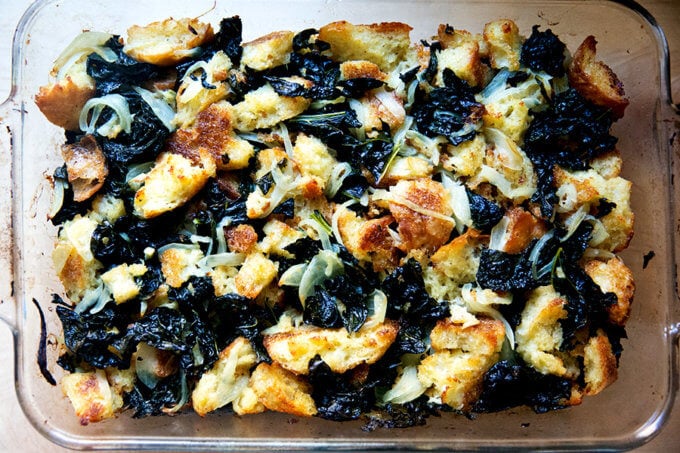
Freezable Stuffing with Kale and Caramelized Onions
Description
Below you will find a recipe for a no-frills stuffing: olive oil-toasted bread tossed with sautéed onions and celery, Bell’s seasonings, and copious amounts of butter. Hands down, it is my favorite part of the Thanksgiving meal every year.
Notes:
If you’re using my mother’s peasant bread for the stuffing, you don’t need to remove the crust. And 1.5 lbs of bread is roughly 1.5 loaves of peasant bread. If you are using crusty bread, remove the crust.
Making Ahead/Freezing/Baking Instructions: You can make this recipe through the covering-the-pan-with-foil step in step 4; then transfer to the fridge for 24 hours. To Freeze: After you transfer the stuffing to the 9×13-inch pan, cover it with foil, then transfer to the freezer for up to 3 months. To bake: Preheat the oven to 350°F. Bake stuffing covered directly from the freezer for 1 hour. Increase the temperature to 400°F and bake uncovered for 15 to 20 minutes.
Bell’s Seasoning is readily available at most grocery stores. It’s a mix of finely ground rosemary, oregano, sage, ginger, marjoram, thyme, and pepper. If you can’t find it, I would imagine using some combination of the noted dried herbs would work. A smaller amount of chopped fresh thyme, rosemary, sage, and oregano would also be nice.
1½ pounds peasant bread or other French/Italian bread, torn into 1 – to 2-inch pieces (about 12 cups ), see notes above
½ cup extra-virgin olive oil, divided
Kosher salt and freshly cracked black pepper
4 tablespoons ( ½ stick) unsalted butter
2 cups finely diced onions ( 1 to 2 onions)
1 cup finely diced celery
1 tablespoon Bell’s Seasoning , see notes above
1½ cups homemade chicken stock or vegetable stock
1 egg
Softened unsalted butter, for greasing
- Preheat the oven to 400°F. In a large bowl, toss the bread with ¼ cup oil; it will feel saturated. Season the bread with salt and pepper to taste. Spread it onto a sheet pan in a single layer, reserving the bowl. Transfer the pan to the oven and toast the bread for 15 to 20 minutes, or until golden. Set it aside to cool briefly.
- Meanwhile, in a large sauté pan, melt the butter with the remaining ¼ cup oil over medium heat. Add the onions and celery, season with a pinch of salt, and cook for 5 to 10 minutes, stirring, until soft and beginning to color.
- Return the toasted bread to the reserved bowl. When the onions and celery have finished cooking, scrape them into the bowl over the bread. Sprinkle with the Bell’s. Add 1 cup stock, ½ teaspoon salt, and pepper to taste. Toss. Taste and adjust the seasoning, adding salt and pepper as needed — this is your chance to get the seasoning right before you add the egg. In a small bowl, whisk the remaining ½ cup stock with the egg and add it to the bowl. Toss them to combine.
- Grease a 9 × 13-inch baking pan with the softened butter and spread the mixture into it. Cover the pan with foil (see notes above for making in advance and freezing), transfer it to the center rack of the oven, and bake the stuffing for 30 minutes. Uncover the pan and bake the stuffing for 10 to 15 minutes more, until the bread is golden. Remove the stuffing and let it stand for 10 minutes before serving it.
- Prep Time: 20 minutes
- Cook Time: 1 hour
- Category: Side Dish
- Method: Stovetop, Oven
- Cuisine: American
