This is the cauliflower recipe I make on repeat all winter. The cauliflower emerges tender and golden, shrouded with caramelized onions and salty, crisp parmesan. The best part? The whole unpeeled cloves of roasted garlic, which can be spread across bread like butter — heaven.
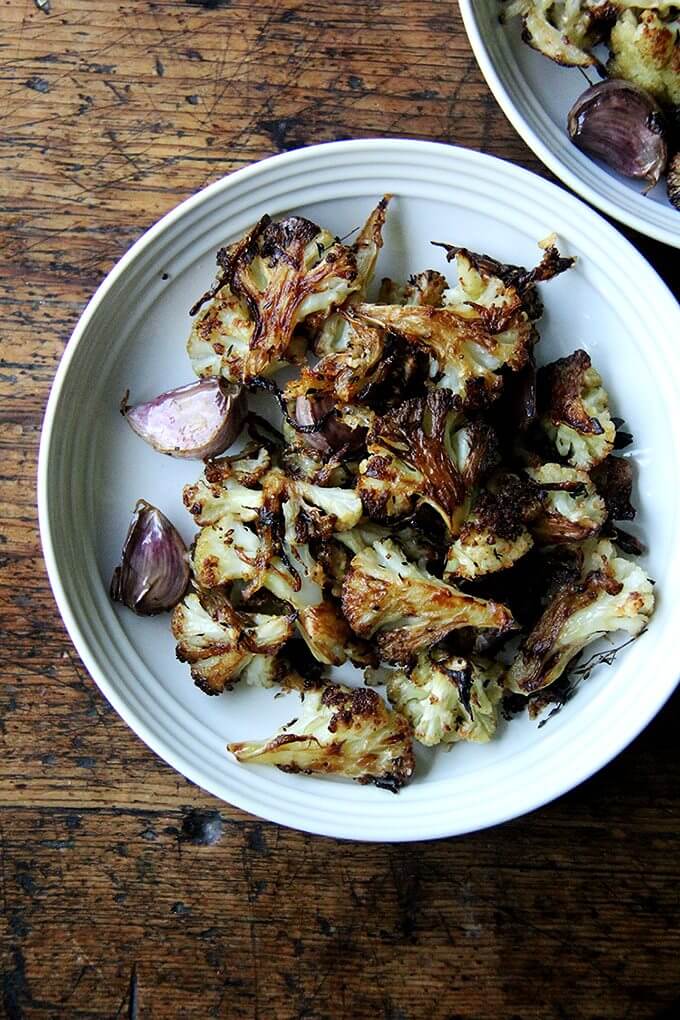
This recipe takes five minutes (maybe less) to prep: cut a head of cauliflower into florets, toss with a sliced onion, a few sprigs of thyme, whole unpeeled garlic cloves, olive oil, salt, and pepper. Transfer it to the oven, and after 30 minutes or so, when the onions begin to caramelize and the cauliflower edges begin to brown, sprinkle with parmesan cheese, and bake for 10 more minutes. That’s it.
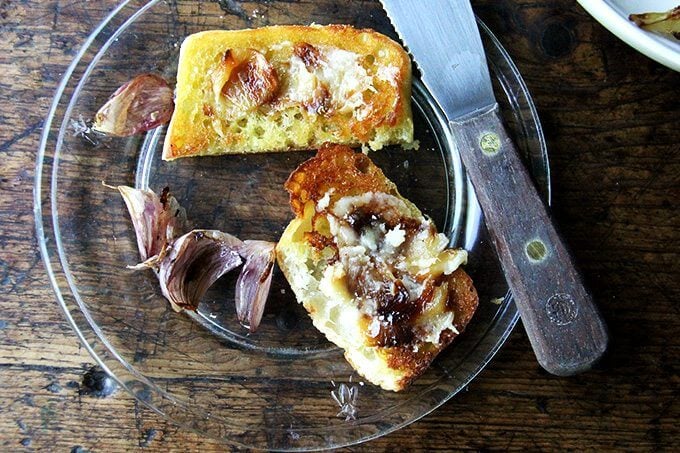
The cauliflower emerges tender and golden, tangled in a web of sweet, near-burnt onions and salty crisp parmesan. It’s irresistible. The best part? The whole unpeeled cloves of roasted garlic , which can be spread across bread like butter or squeezed directly into your mouth as you would with steamed edamame. No judgment here.
Every year, this time of year, when the cauliflower begins arriving in my CSA, I start making this dish, and I never tire of it. Give it a go—I hope you find it enters your weekly rotation as well.
Parmesan-Roasted Cauliflower, Step by Step
Spread cauliflower, onions, garlic, and thyme on a sheet pan. Season with salt and pepper.
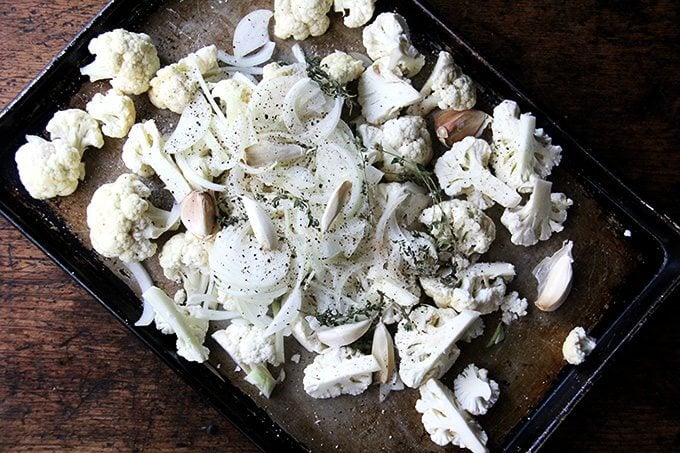
Add olive oil and toss to coat.
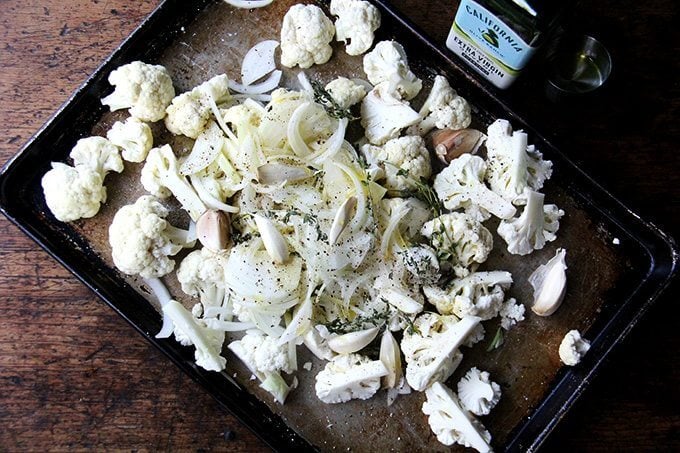
Spread into a single layer:
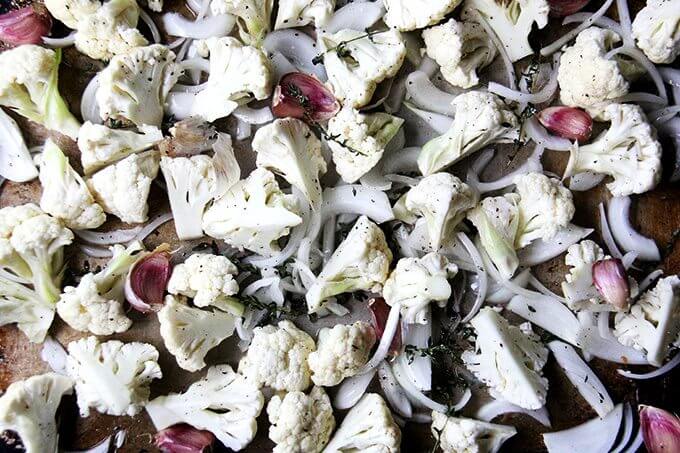
Roast for about 30 minutes:
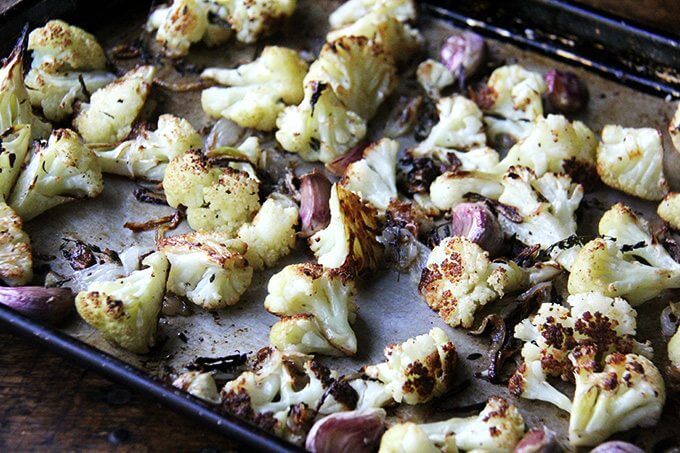
Add parmesan:
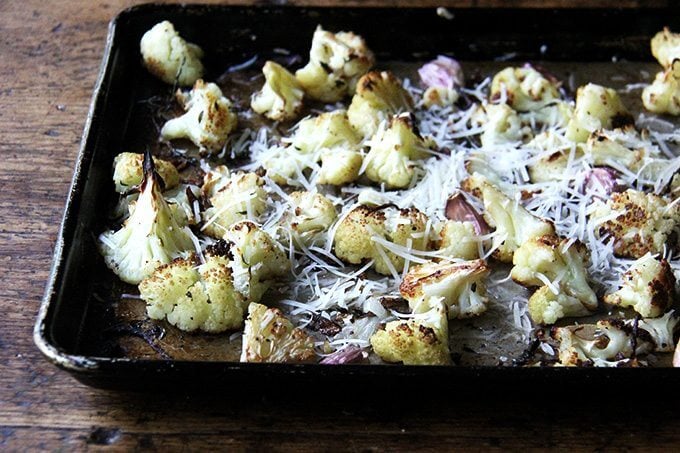
Roast 10 minutes more:
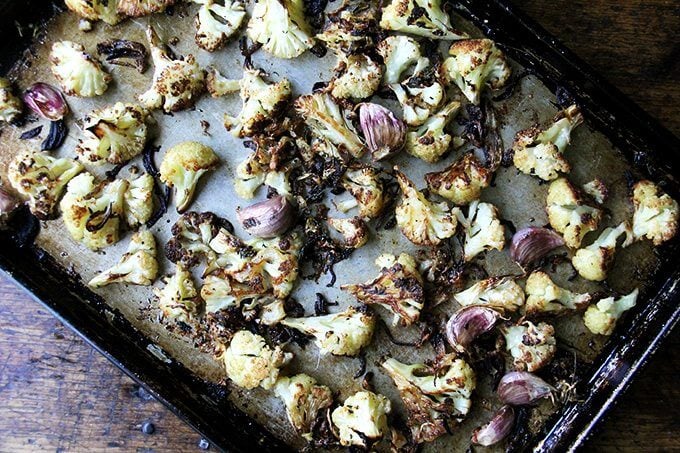
Serve immediately…
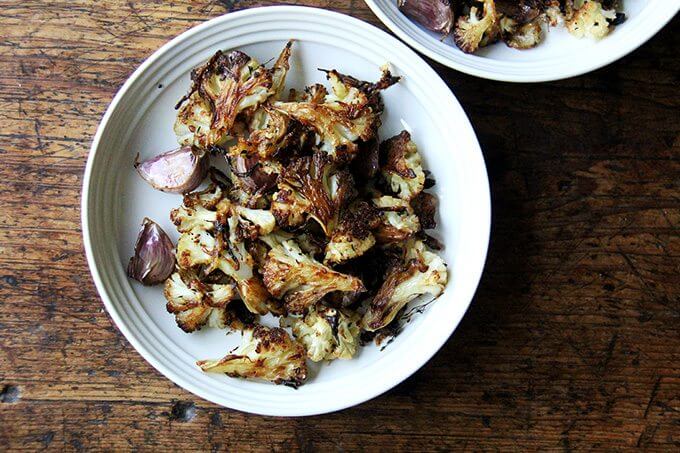
With good bread on the side…
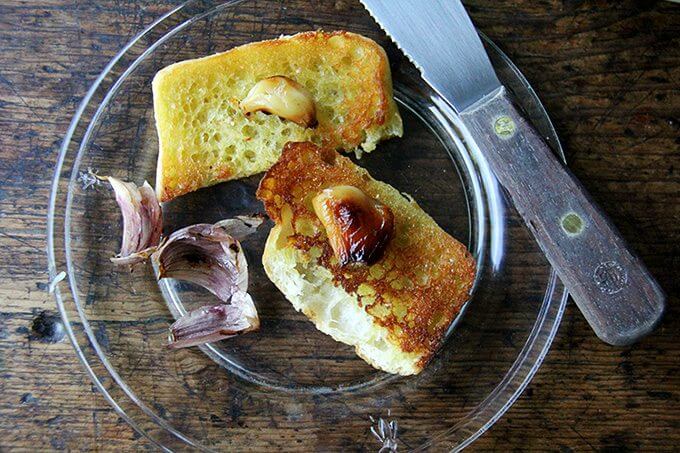
to welcome those spreadable, roasted cloves of garlic.
Description
This is the cauliflower recipe I make on repeat all winter. The cauliflower emerges tender and golden, shrouded with caramelized onions and salty, crisp parmesan. The best part? The whole unpeeled cloves of roasted garlic, which can be spread across bread like butter — heaven.
Notes:
Note: This may take a bit of trial and error to get just right — I find 30 minutes for the first bake and 10 minutes once the parm has been added to be about right, but even with this shorter cooking time, the onions emerge near-burnt—some, in fact, are burnt. I love this flavor, but I know it’s not everyone’s thing. I suggest trying this as written once, then making adjustments for next time. You may have better luck reducing the oven temperature to 400ºF or so.
- 1 head cauliflower, cut into florets
- 1 medium onion, sliced
- 4 sprigs thyme
- 4 garlic cloves, unpeeled (I use 8 — however many you use, try to use fat ones, to ensure, soft spreadable roasted garlic butter in the end)
- 3 to 4 tablespoons olive oil or grapeseed oil (I use 4)
- Kosher salt and freshly ground black pepper
- ½ cup grated Parmigiano Reggiano
- Preheat oven to 425°F. Toss cauliflower florets on a large rimmed baking sheet with onion, thyme, garlic, and oil; season with salt and pepper. Roast, tossing occasionally, until almost tender, 35-40 minutes—check after 30 minutes. Note: See notes above. I find 30 minutes to be consistently right for me, but every oven is different, so start checking at the 30 minute mark.
- Sprinkle with Parmesan, toss to combine, and roast until cauliflower is tender and golden, about 10 minutes.
- Prep Time: 10 minutes
- Cook Time: 40 minutes
- Category: Side Dish
- Method: Oven
- Cuisine: American
Description
This is the cauliflower recipe I make on repeat all winter. The cauliflower emerges tender and golden, shrouded with caramelized onions and salty, crisp parmesan. The best part? The whole unpeeled cloves of roasted garlic, which can be spread across bread like butter — heaven.
Notes:
Note: This may take a bit of trial and error to get just right — I find 30 minutes for the first bake and 10 minutes once the parm has been added to be about right, but even with this shorter cooking time, the onions emerge near-burnt—some, in fact, are burnt. I love this flavor, but I know it’s not everyone’s thing. I suggest trying this as written once, then making adjustments for next time. You may have better luck reducing the oven temperature to 400ºF or so.
- 1 head cauliflower, cut into florets
- 1 medium onion, sliced
- 4 sprigs thyme
- 4 garlic cloves, unpeeled (I use 8 — however many you use, try to use fat ones, to ensure, soft spreadable roasted garlic butter in the end)
- 3 to 4 tablespoons olive oil or grapeseed oil (I use 4)
- Kosher salt and freshly ground black pepper
- ½ cup grated Parmigiano Reggiano
- Preheat oven to 425°F. Toss cauliflower florets on a large rimmed baking sheet with onion, thyme, garlic, and oil; season with salt and pepper. Roast, tossing occasionally, until almost tender, 35-40 minutes—check after 30 minutes. Note: See notes above. I find 30 minutes to be consistently right for me, but every oven is different, so start checking at the 30 minute mark.
- Sprinkle with Parmesan, toss to combine, and roast until cauliflower is tender and golden, about 10 minutes.
- Prep Time: 10 minutes
- Cook Time: 40 minutes
- Category: Side Dish
- Method: Oven
- Cuisine: American
Find it online : https://alexandracooks.com/2017/09/26/parmesan-roasted-cauliflower-garlic-thyme/
A few weeks ago at nearby Spoon and Whisk , I spent the evening watching Chef Ben churn out calzones, stromboli, Chicago-style deep-dish pies, and, my favorite, ballooned and blistered Neapolitan pizzas.
Of all the delicious bites I tasted that evening, the very last may have been my favorite, a thin-crust pizza topped with tomato sauce, mozzarella, and sausage. This may sound underwhelming on its own, and it may have been had Chef Ben not sprinkled the blazing hot pizza with finely shaved pickled vegetables, a sharp mix that instantly brightened an otherwise ordinary combination. Magic.
When asked for the recipe, Chef Ben said: “Sorry, trade secret.”
Not to worry. The following day, I gathered all the vegetables languishing in my fridge and took a stab at the pickle using a recipe that has yet to fail me: equal parts water and vinegar plus a little sugar and salt. It comes from David Lebovitz’s blog , and I’ve used it successfully with beets, turnips, carrots, and radishes.
It takes no time: heat water and vinegar until sugar and salt dissolve, then pour over vegetables. That’s it. It doubles, triples, and halves well, so you can adjust the recipe easily to whatever amount of vegetables you have on hand.
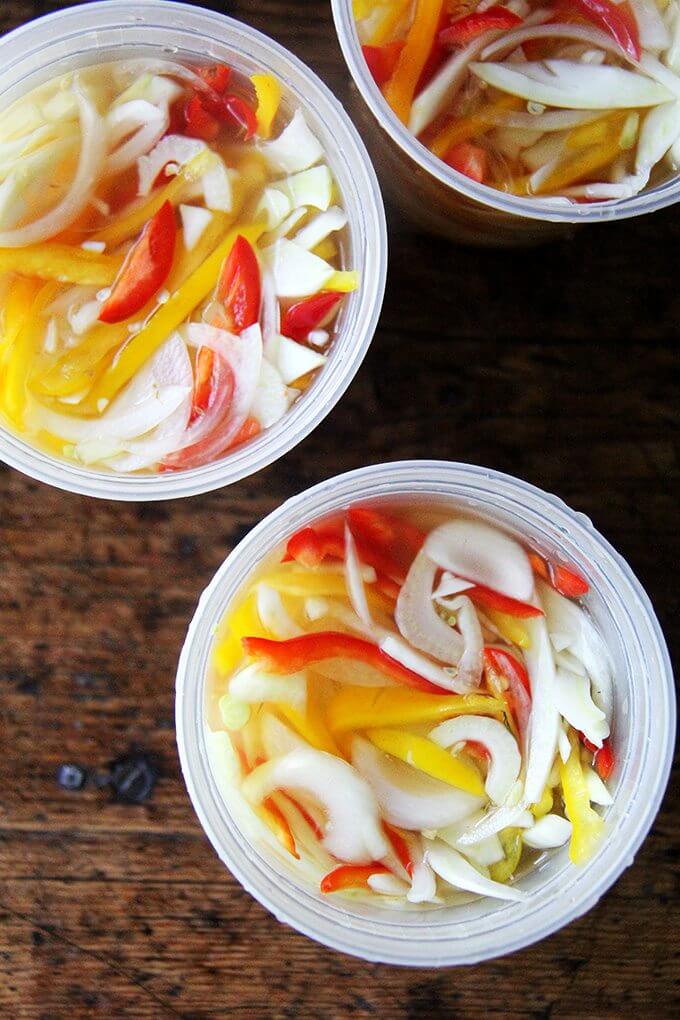
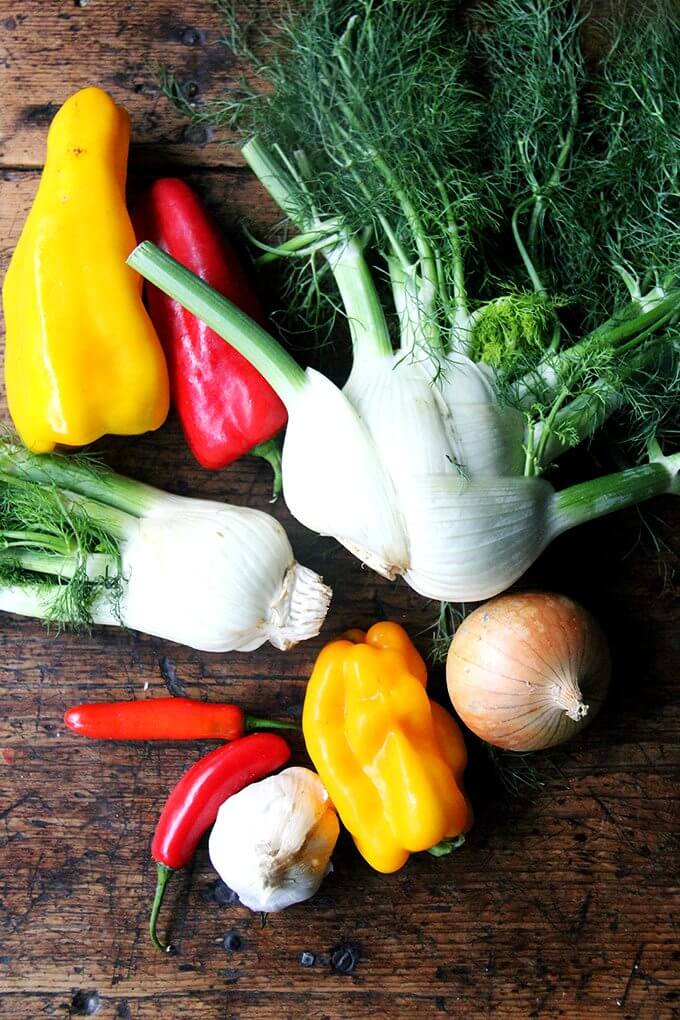
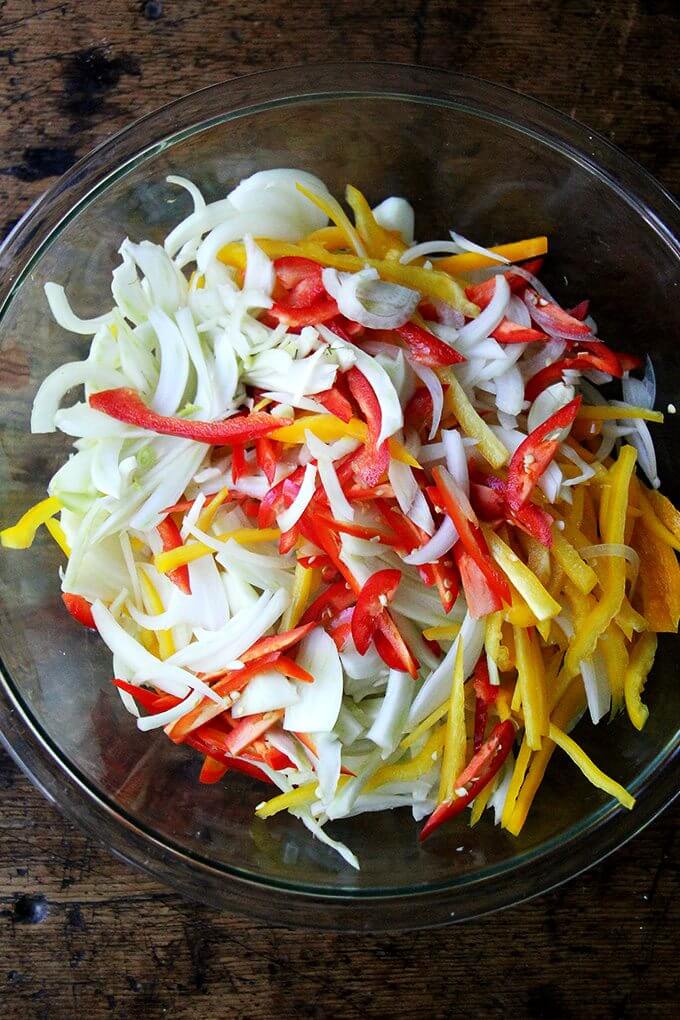
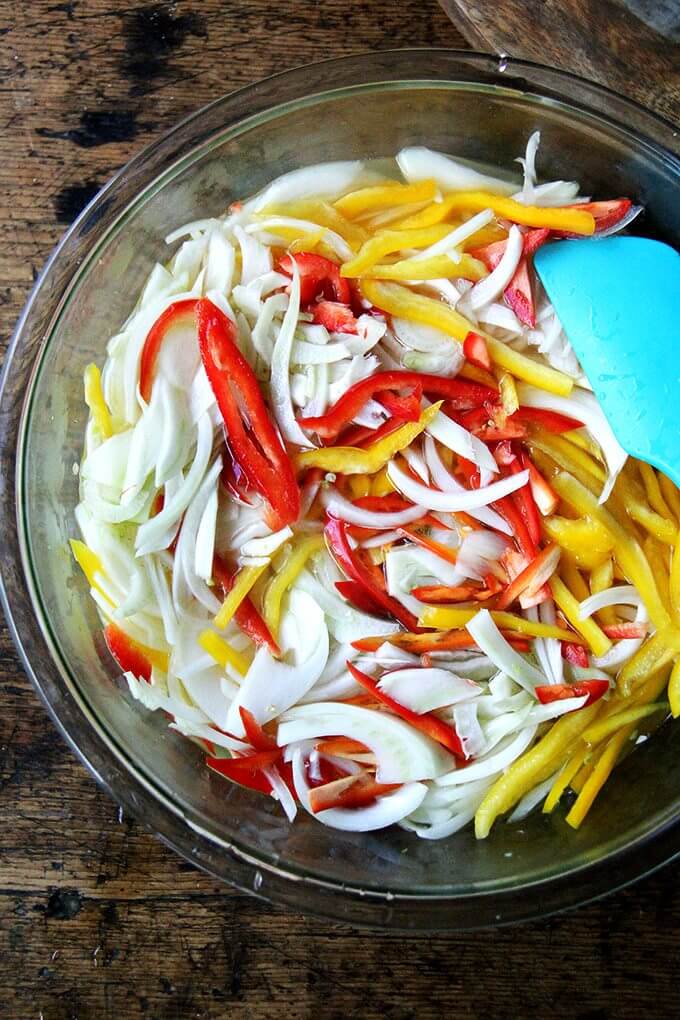
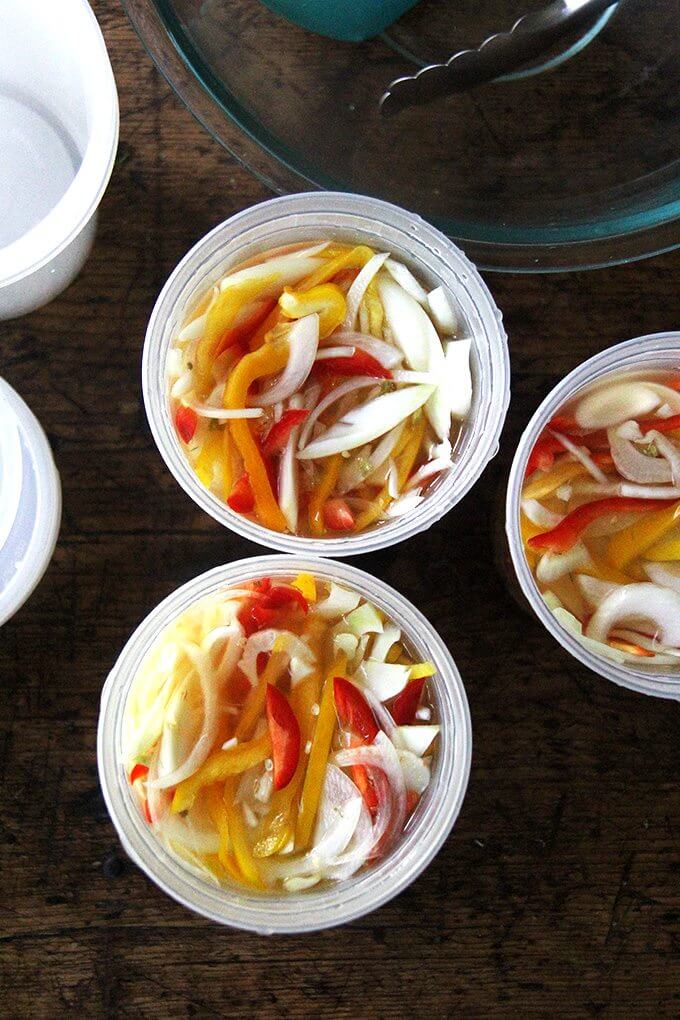
Here I’ve pickled thinly sliced peppers, onions, and fennel, and I’ve been tucking the mix into sandwiches, spreading it atop melty cheese toasts, and, as intended, sprinkling it over just-baked pizza. I imagine it would be fabulous with grilled bratwurst or in a Philly cheesesteak-style sandwich.
Description
This is a very simple recipe and use it as a guide: you can use more or less fennel, peppers, onion, etc. I have used the pickling liquid recipe, which I adapted from this pickled radish recipe from David Lebovitz , for a number of vegetables including carrots, turnips, and beets. It’s simple and good. I never process the jars, but the vegetables seem to keep indefinitely in the fridge.
- 2 cups water
- 2 cups cider vinegar
- 1 tablespoon + 1 teaspoon sugar
- 1 tablespoon + 1 teaspoon kosher salt
- 2 to 3 red, orange, or yellow bell peppers, seeded and thinly sliced
- 1 to 2 bulbs fennel, thinly sliced
- 1 onion, peeled and thinly sliced
- 2 cloves garlic, peeled and thinly sliced
- 1 hot chili pepper, thinly sliced on the bias, optional
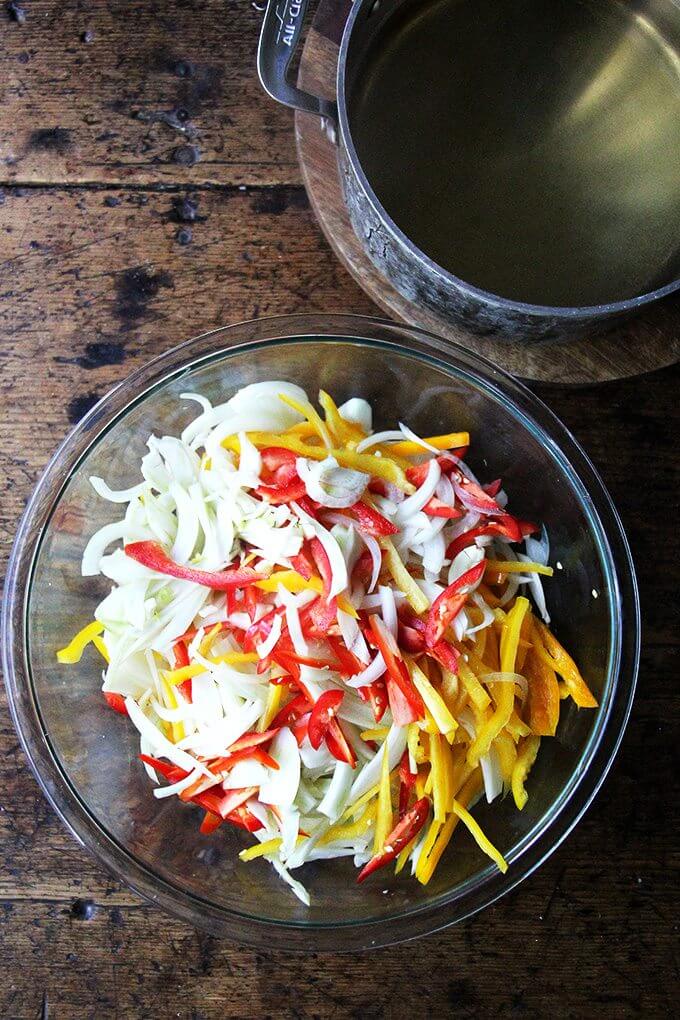
- In a large non-reactive saucepan, bring the water, vinegar, salt, and sugar to a boil, until the sugar and salt are dissolved.
- Meanwhile, place the sliced peppers, fennel, onion, garlic, and chili peppers in a large bowl. Pour the pickling liquid over top. Press with a spatula to submerge.
- Transfer the vegetables and liquid to storage containers. I love these deli containers, but glass canning jars are nice, too. Let cool to room temperature, then refrigerate. Store for weeks if not longer.
