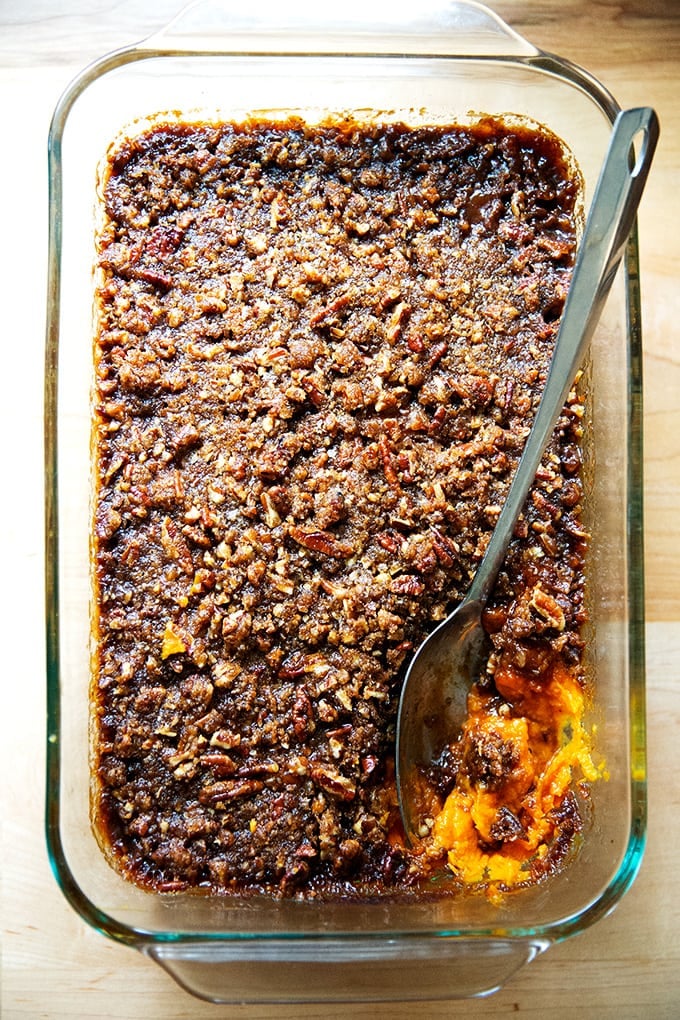
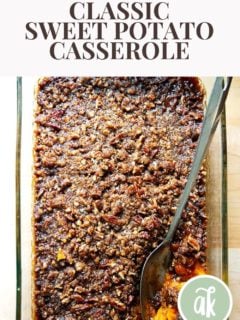
Last week, in my Thanksgiving Menu 2021 post , I mentioned I might bring back my Great Aunt Phyllis’s candied yams. Here they are in all their glory, creamy, orange-scented, brandy-spiked sweet potatoes buried under a blanket of brown sugar, butter, and cinnamon-spiced pecans.
This is a very classic recipe, unapologetic in its use of butter and sugar, and I did not alter the recipe a hair, but for adding salt to the purée. Had I spoken with my mother prior to making them, I might have halved the brown sugar in the topping, which would have left it plenty sweet, and I might have omitted the small amount of brown sugar in the filling, too.
Friends, if you’ve been reading for awhile, you know this is not the sort of recipe that typically makes my heart sing, and in previous years I might be inclined to revisit it, to “healthify” it, to update it with less rich, more nuanced seasonings.
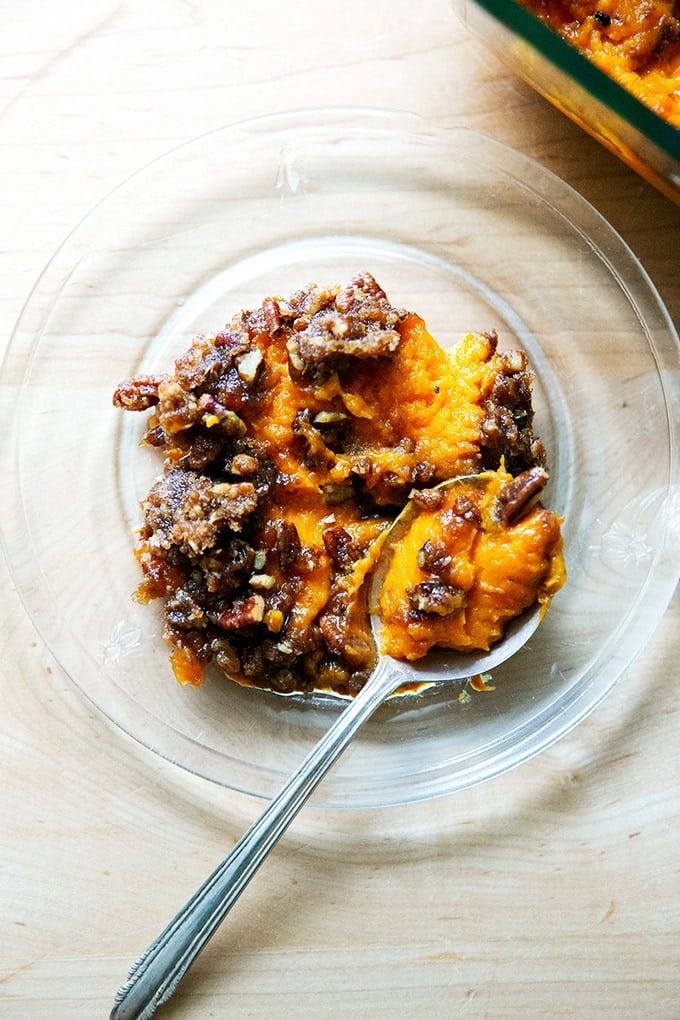
But not this year. If there is a time and a place for this sort of festive, nostalgic ensemble, it’s on the 2021 holiday table. One bite of the silky smooth, brilliant hued purée brought me back to Thanksgivings of yore, surrounded by siblings and grandparents, aunts and uncles, and dear family friends. I cannot wait to bust this classic out one week — eek! — from today.
I hope all of your holiday preparations are going well.
PS: Thanksgiving Menu 2021
PPS: 25 Thanksgiving Side Dishes
Note: I’ve changed the title here to sweet potato casserole, because I have not used yams here, and it’s likely Great Aunt Phyllis didn’t either. The words yam and sweet potato are often used interchangeably, but they actually are different vegetables:
- Yams are starchy, not sweet root vegetables and have a rough, brown tree bark-like exterior.
- Sweet potatoes are — wait for it — sweet root vegetables and have a reddish skin and a creamier, darker interior.
- Most American supermarkets are selling sweet potatoes, not yams.
How to Make Sweet Potato Casserole, Step by Step
Gather 4 pounds of sweet potatoes. Give them a wash if they are dirty.
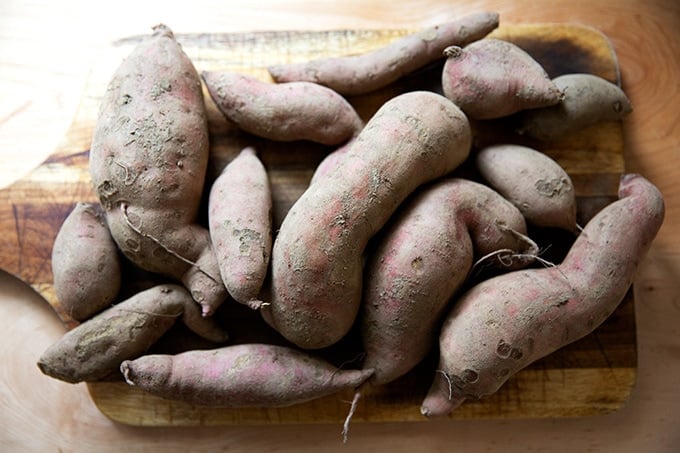
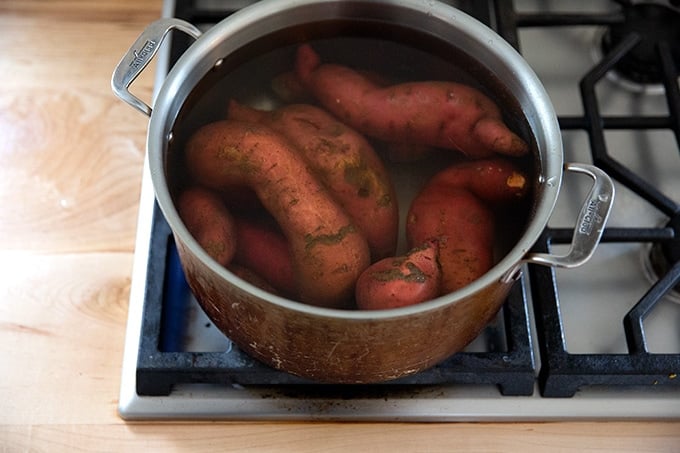
Transfer to a large pot, cover with water, and bring to a simmer.
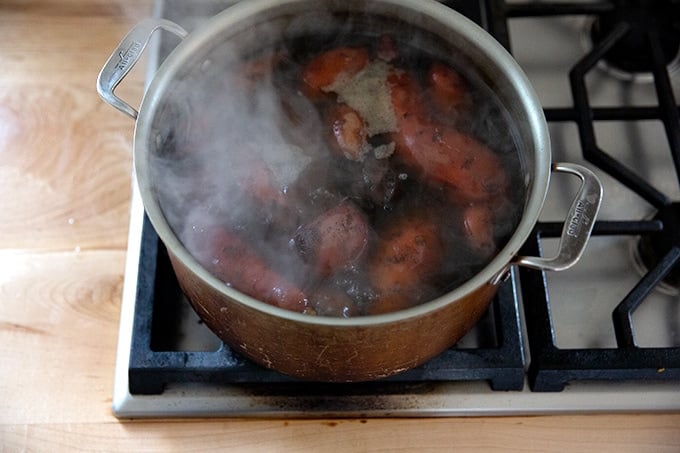
Boil for 40 minutes or until the sweet potatoes are completely soft.
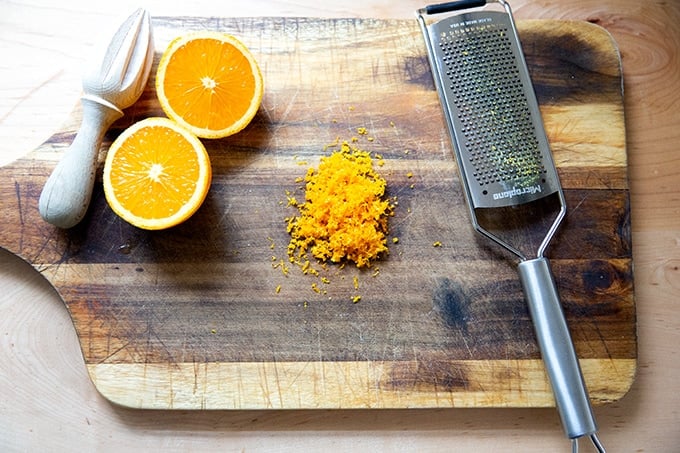
Meanwhile, zest an orange; then juice it. You’ll need 2/3 cup of orange juice.
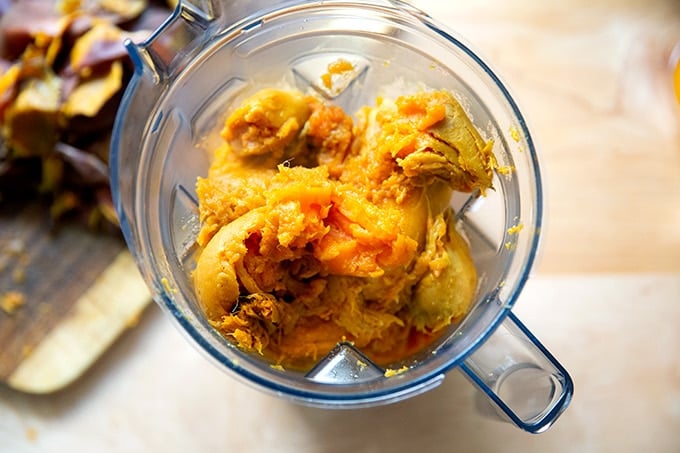
Once the sweet potatoes are cool enough to handle, purée them in a food processor or blender.
Transfer the purée to a large bowl.
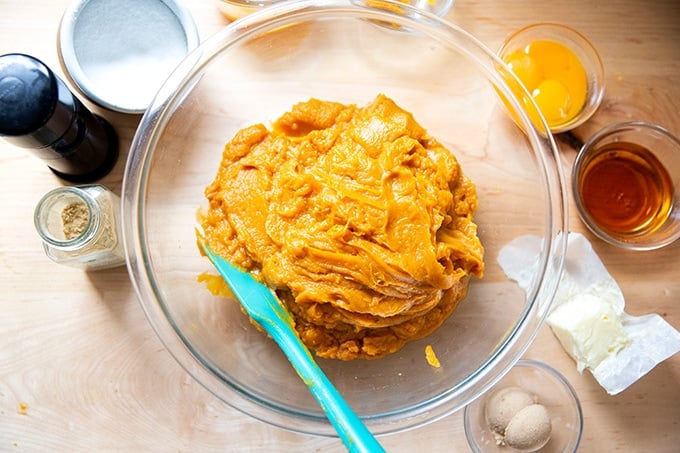
Add the filling ingredients: orange zest and juice, butter, brown sugar, ginger, and egg yolks.
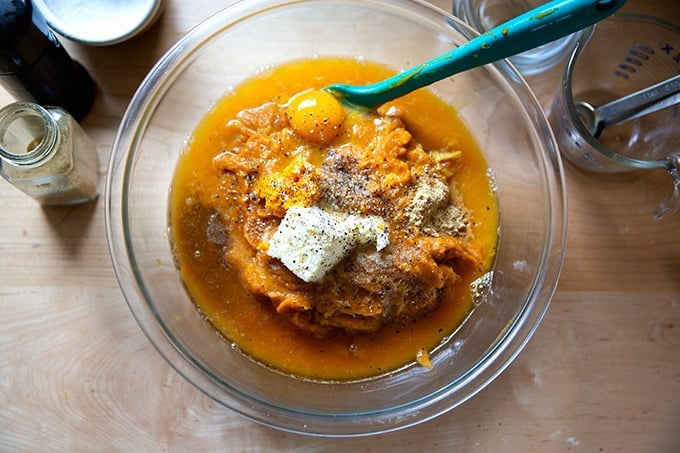
Whisk to combine.
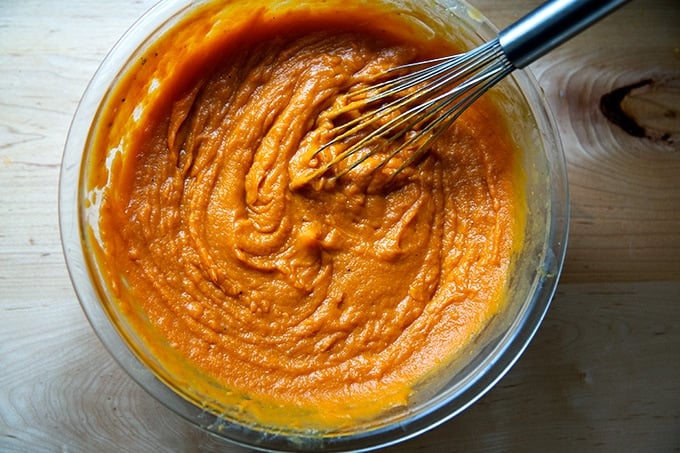
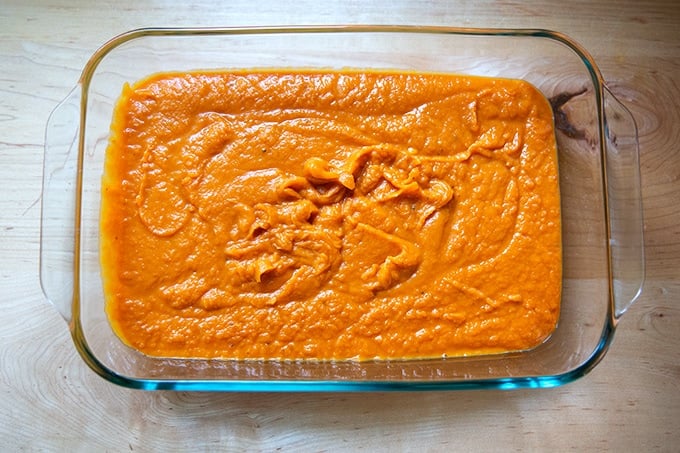
Transfer to a 9×13-inch baking dish.
To make the topping, gather the ingredients: brown sugar, melted butter, cinnamon, and pecans.
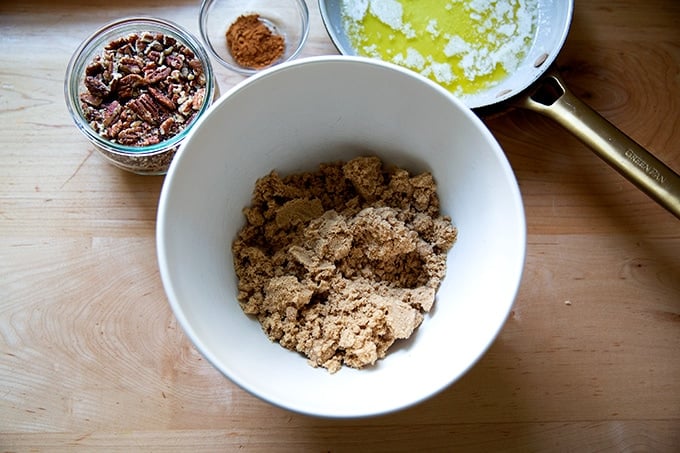
Stir them together.
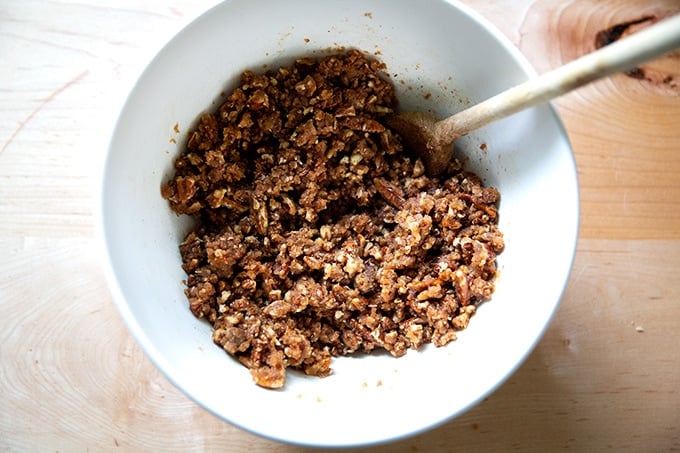
Then spread them over the sweet potatoes and transfer the pan to the oven for about 45 minutes…
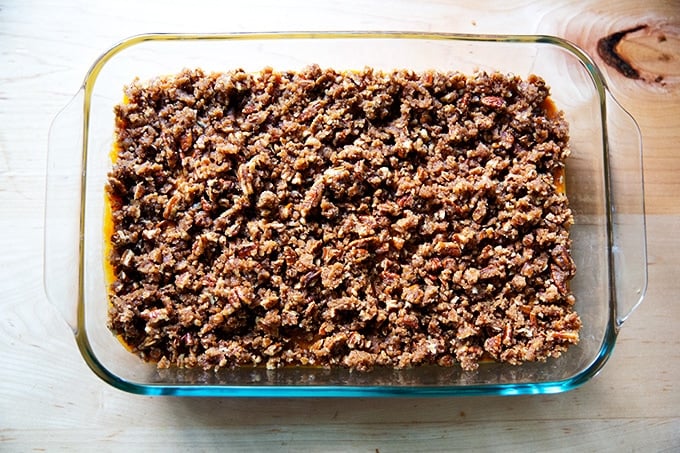
… or until the top is beginning to caramelize at the edges.
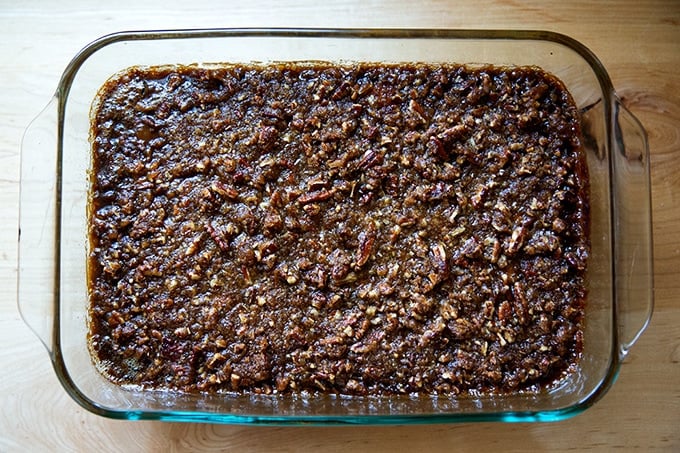
Let sit 10 to 15 minutes before serving.
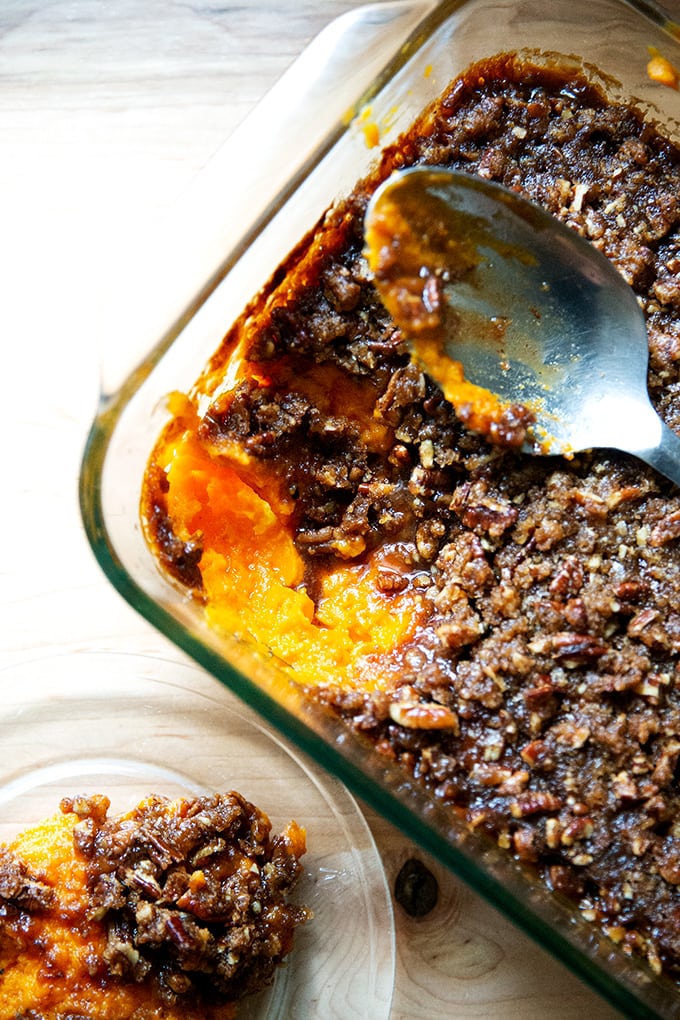
Enjoy!
Description
This is my Great Aunt Phyllis’s classic sweet potato casserole, previously known as candied yams in my family. As noted in the post above, it is unlikely Phyllis used yams in this recipe, which are hard to come by in most American super markets, and much more likely she used sweet potatoes, which is what I’ve used here.
After speaking with my mother, I learned she has reduced the brown sugar in the topping to 2/3 cup sugar as opposed to 1 1/3 cup sugar, which I would recommend doing, and she also omits the brown sugar in the filling. The filling itself does not taste too sweet to me, but it is not wanting for flavor either.
For the sweet potato filling:
- 4 lbs. sweet potatoes, washed if very dirty
- zest of 1 orange
- 2/3 cup orange juice, freshly squeezed if you are up for it
- 5 tablespoons brandy
- 2 tablespoons brown sugar, optional, see notes above
- 4 tablespoons butter, salted or unsalted, room temperature
- 3 egg yolks
- 1 teaspoon ground ginger
- kosher salt and pepper to taste
For the topping:
- 8 tablespoons butter, salted or unsalted
- 1 1/3 cup brown sugar, or less, see notes above
- 2 cups chopped pecans
- 2 teaspoons cinnamon
- Boil the sweet potatoes for 40 minutes. They should be very soft when pierced with a knife. Drain them and let them cool until easy enough to handle. Peel them and transfer them to a food processor or blender and purée until smooth.
- Heat oven to 350ºF. Butter a 9×13-inch baking dish.
- In a large bowl, combine the sweet potatoes, orange zest, orange juice, brandy, brown sugar, butter, yolks, and ginger. Season with salt and pepper to taste. I find these need at least a teaspoon of kosher salt — I add 2 teaspoons — but season to your liking. If tasting the raw egg yolks makes you nervous, you can leave them out until you get the seasoning right; then add the yolks. Whisk the mixture until smooth; then spread into the prepared baking dish.
- Melt the butter in a small skillet. In a large bowl combine the butter, brown sugar, pecans, and cinnamon. Spread the mixture over the sweet potatoes. At this point the dish can be covered and transferred to the fridge for 24 hours or longer. Or, transfer to the oven immediately and bake uncovered for 40-45 minutes.
- Prep Time: 20 minutes
- Cook Time: 90 minutes
- Category: Side Dish
- Method: Stovetop, Oven
- Cuisine: American
Description
This is my Great Aunt Phyllis’s classic sweet potato casserole, previously known as candied yams in my family. As noted in the post above, it is unlikely Phyllis used yams in this recipe, which are hard to come by in most American super markets, and much more likely she used sweet potatoes, which is what I’ve used here.
After speaking with my mother, I learned she has reduced the brown sugar in the topping to 2/3 cup sugar as opposed to 1 1/3 cup sugar, which I would recommend doing, and she also omits the brown sugar in the filling. The filling itself does not taste too sweet to me, but it is not wanting for flavor either.
For the sweet potato filling:
- 4 lbs. sweet potatoes, washed if very dirty
- zest of 1 orange
- 2/3 cup orange juice, freshly squeezed if you are up for it
- 5 tablespoons brandy
- 2 tablespoons brown sugar, optional, see notes above
- 4 tablespoons butter, salted or unsalted, room temperature
- 3 egg yolks
- 1 teaspoon ground ginger
- kosher salt and pepper to taste
For the topping:
- 8 tablespoons butter, salted or unsalted
- 1 1/3 cup brown sugar, or less, see notes above
- 2 cups chopped pecans
- 2 teaspoons cinnamon
- Boil the sweet potatoes for 40 minutes. They should be very soft when pierced with a knife. Drain them and let them cool until easy enough to handle. Peel them and transfer them to a food processor or blender and purée until smooth.
- Heat oven to 350ºF. Butter a 9×13-inch baking dish.
- In a large bowl, combine the sweet potatoes, orange zest, orange juice, brandy, brown sugar, butter, yolks, and ginger. Season with salt and pepper to taste. I find these need at least a teaspoon of kosher salt — I add 2 teaspoons — but season to your liking. If tasting the raw egg yolks makes you nervous, you can leave them out until you get the seasoning right; then add the yolks. Whisk the mixture until smooth; then spread into the prepared baking dish.
- Melt the butter in a small skillet. In a large bowl combine the butter, brown sugar, pecans, and cinnamon. Spread the mixture over the sweet potatoes. At this point the dish can be covered and transferred to the fridge for 24 hours or longer. Or, transfer to the oven immediately and bake uncovered for 40-45 minutes.
- Prep Time: 20 minutes
- Cook Time: 90 minutes
- Category: Side Dish
- Method: Stovetop, Oven
- Cuisine: American
Find it online : https://alexandracooks.com/2021/11/17/classic-sweet-potato-casserole/
These biscuits are heaven: buttery and flaky, perfectly sweet and salty, with crisp edges and tender centers. Find two keys to success below as well as video and step-by-step photo guidance.
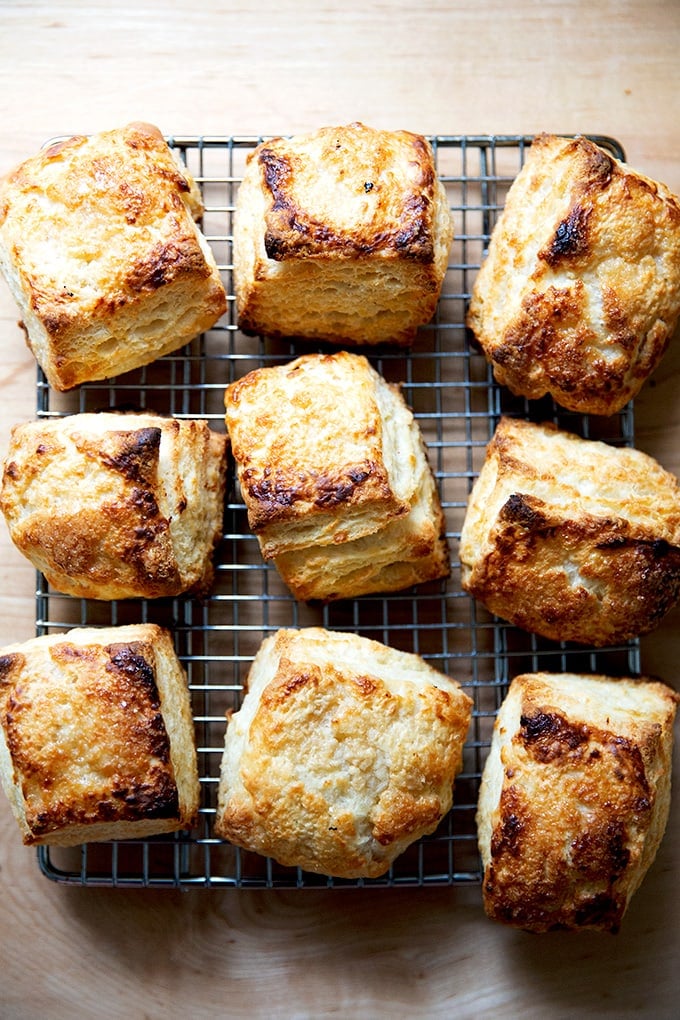
In her book A Good Bake , Melissa Weller describes these buttermilk biscuits as “soft and flaky, rich with butter, and with a lot of layers you can see from the sides.”
This description is spot on. When broken apart from end to end, they open accordion-style, each pleat flaking into the next. The exterior is crisp and caramelized, and the tops are a little sweet thanks to a sprinkling of turbinado sugar. They are truly perfection, heavenly on their own, but even better with a pat more of salted butter. What isn’t?
The key to success here is twofold:
- Use cold butter and buttermilk. Making biscuits is not unlike making pie dough . Using cold ingredients, working quickly, and not overworking the dough is important. You can use a pastry cutter to quickly cut the butter into the dry ingredients or you can use the food processor (see recipe box for details).
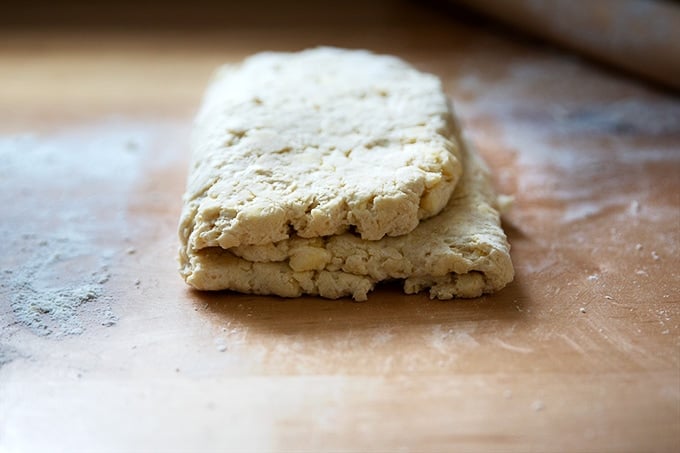
- Roll and fold the dough . After the dough is mixed, you’ll roll it into a rectangle, fold it envelope style, turn it 90 degrees; then repeat this process twice more. This folding and rolling technique creates those desirable visible and flaky layers. Find video guidance above and below.
How to Make Buttermilk Biscuits, Step by Step
Gather your ingredients: only six! Flour, butter, buttermilk, salt, sugar, baking powder.
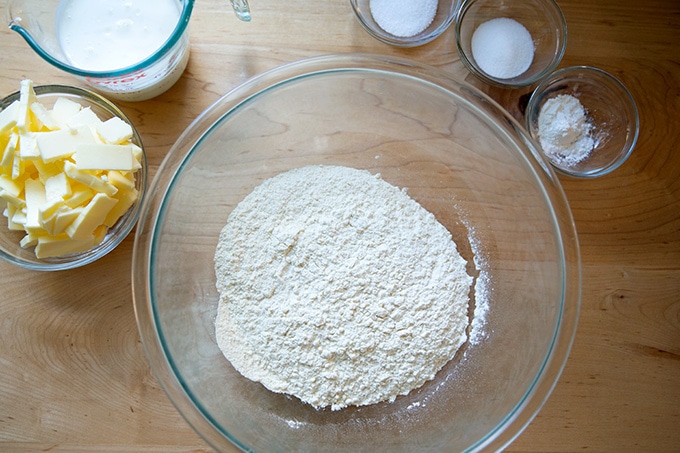
Whisk together the dry ingredients.

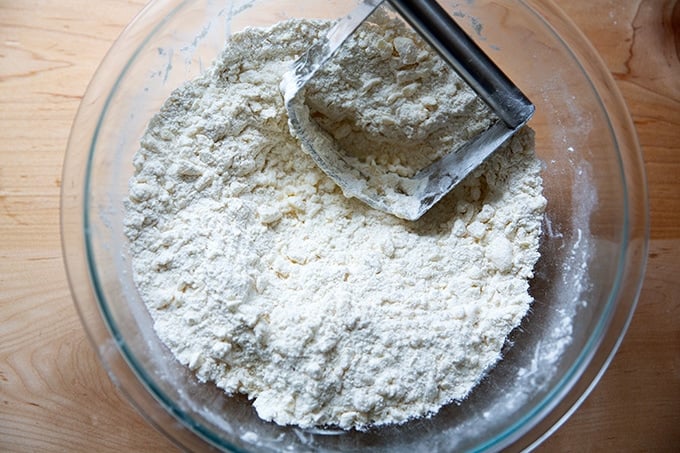
Add the cold, cubed butter.
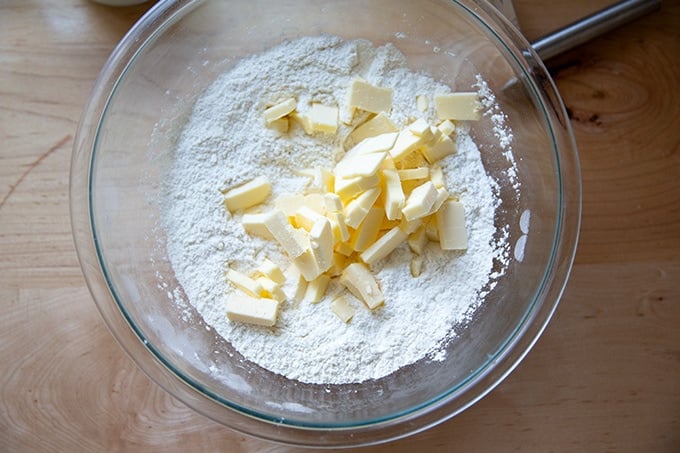
Cut the butter in using a pastry cutter or the back of a fork. You also could do this in the food processor.
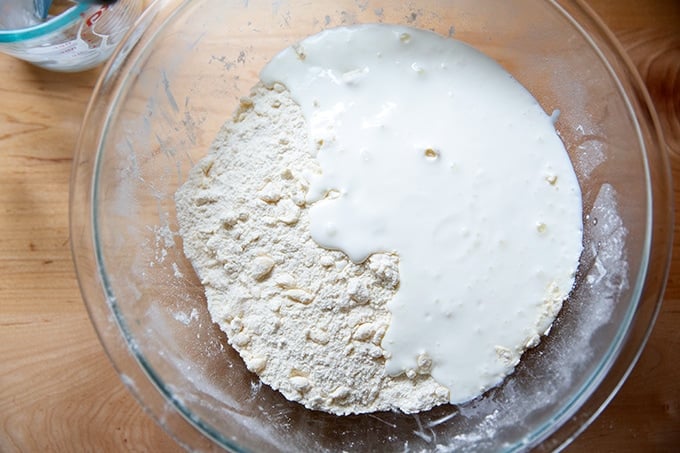
Add the buttermilk …
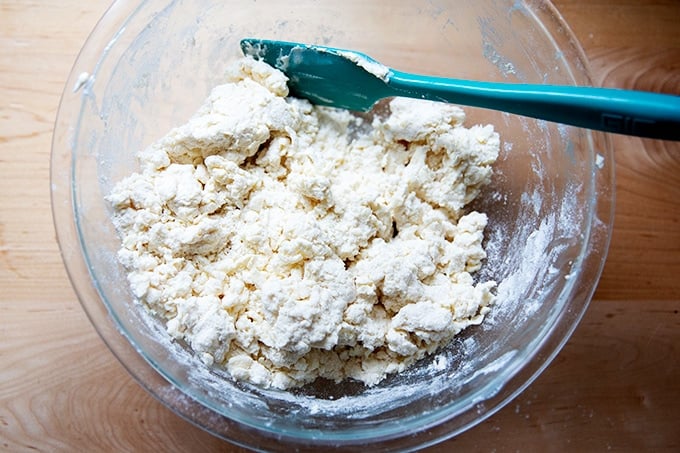
… and stir to combine.
You may need to knead the dough briefly with your hands to get it into a cohesive ball.
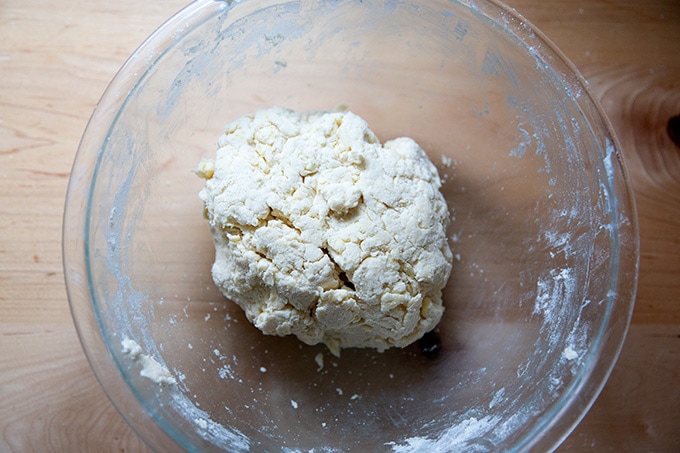
Turn the dough out onto a work surface and pat into a square.

Roll out into a 14-inch long rectangle.
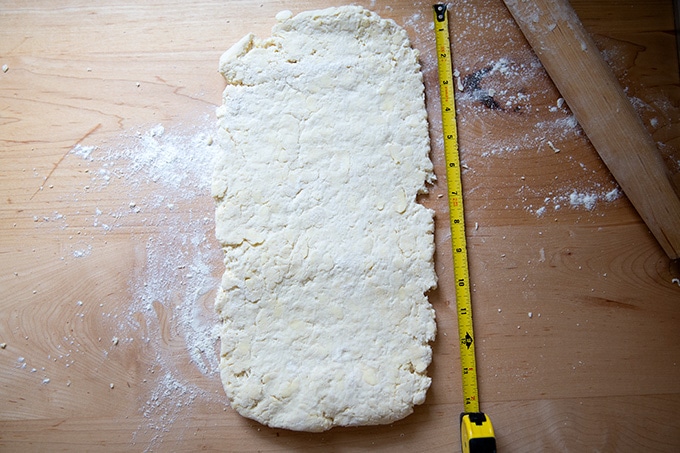
Fold the top third down.
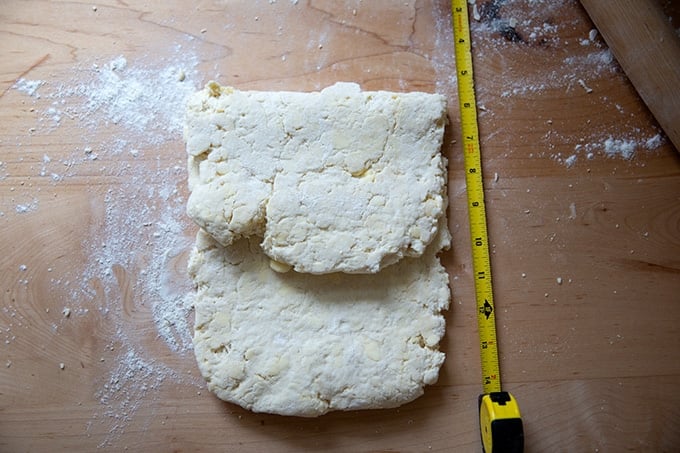
Fold the bottom third up.
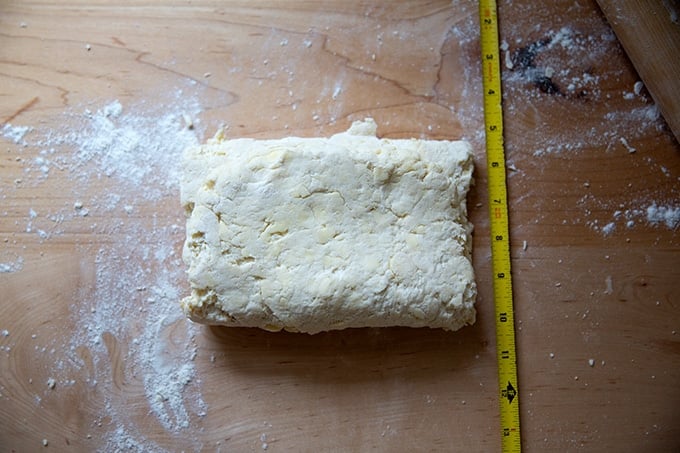
Turn the block 90 degrees.
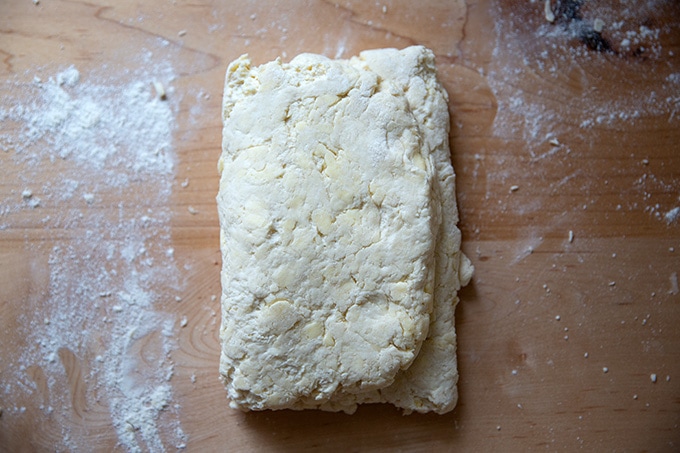
You’ll repeat this rolling-and-folding proces twice more.
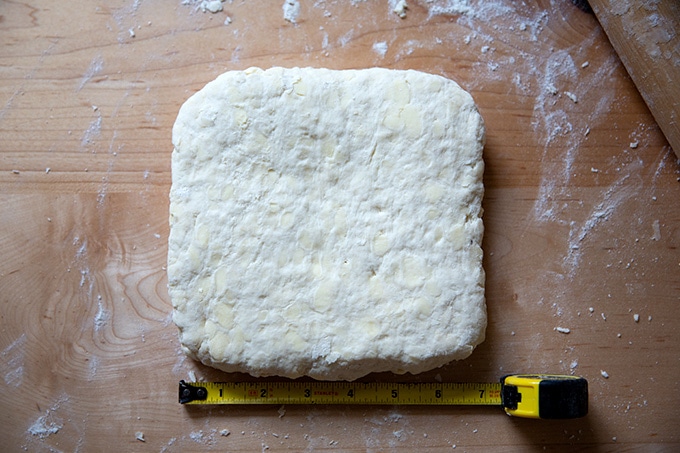
After the third set of fold, pat the dough into a square.
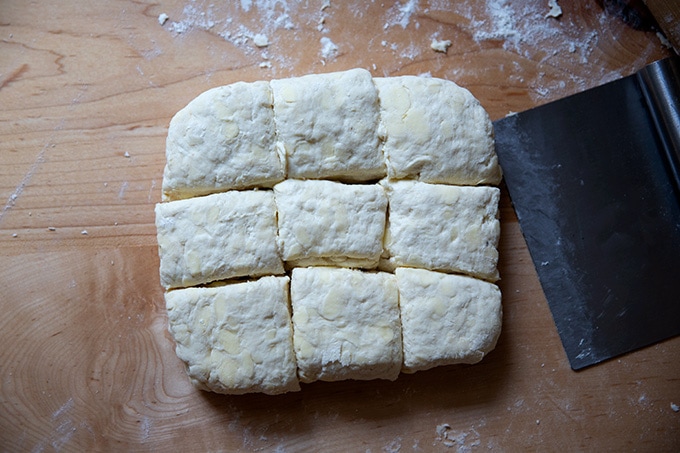
Cut the square into 9 equal pieces.
Transfer the squares to a sheet pan and chill for 30 minutes.
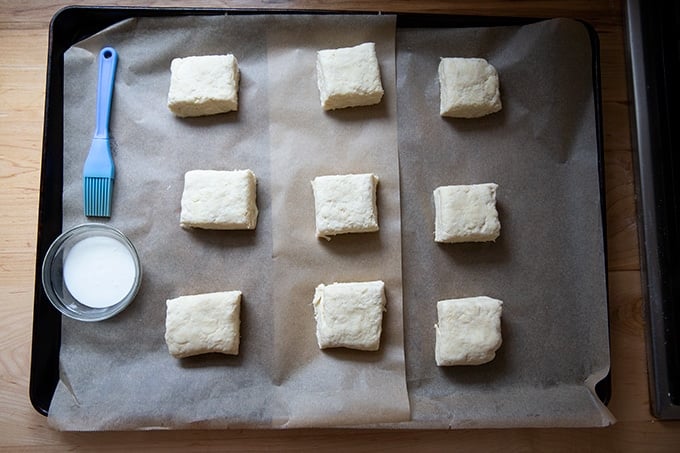
Then brush with a little more buttermilk and sprinkle with turbinado sugar if you wish.
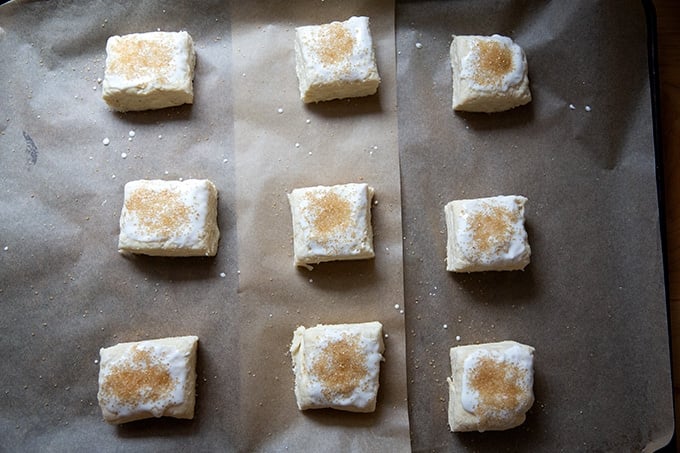
transfer to the oven and bake until golden, 25-30 minutes.
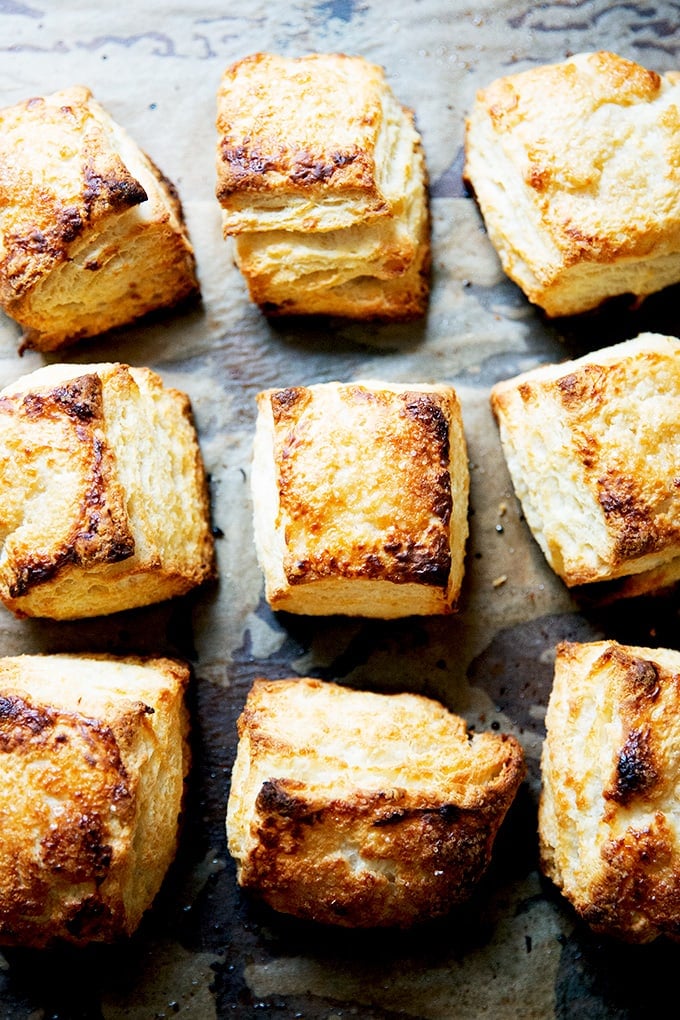
Look at those layers…
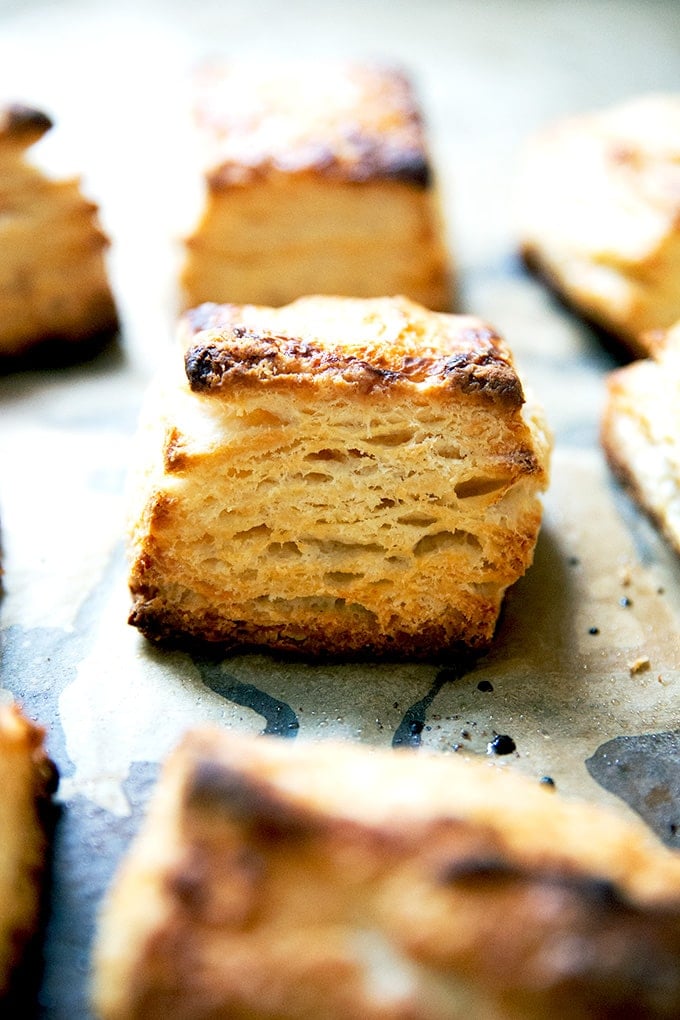
… irresistible.
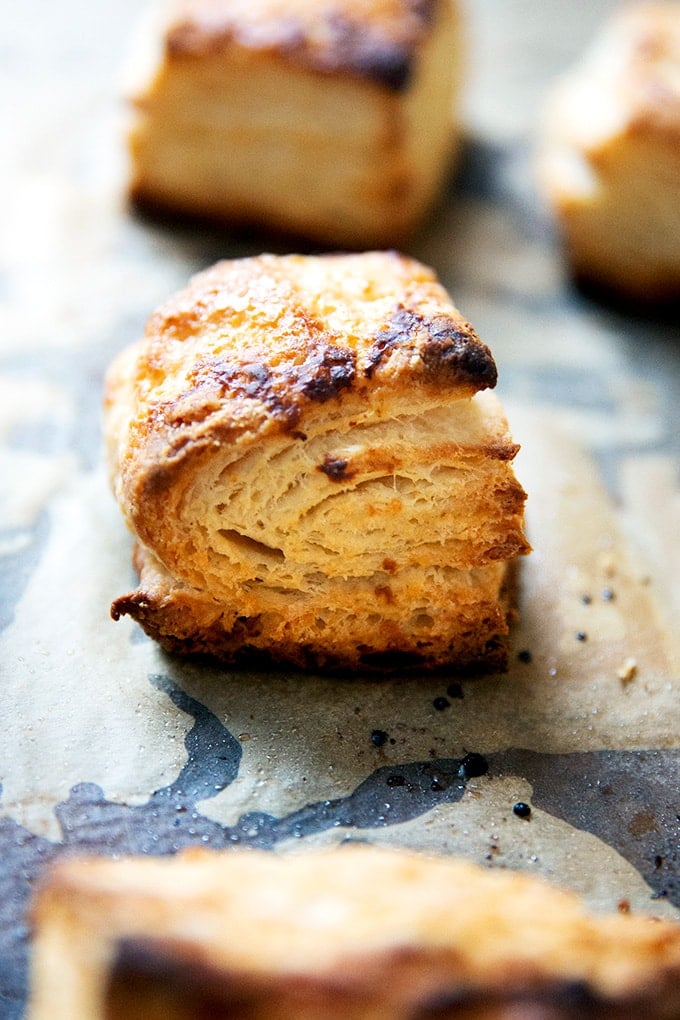
Description
These biscuits are heaven: buttery and flaky, perfectly sweet and salty, with crisp edges and tender centers. When broken apart from end to end, they open accordion-style, each pleat flaking into the next.
Adapted from Melissa Weller’s A Good Bake
Notes:
As always, for best results, use a scale to measure.
I have made a few small changes to Melissa’s recipe:
- I’m using a teensy bit more salt and baking powder.
- I’m using all-purpose flour exclusively as opposed to a mix of all-purpose and whole wheat pastry flour.
- I sprinkle the tops with turbinado sugar, because I love that salty-sweet dynamic.
- When I use something like Kate’s buttermilk, which is on the thin side, I use 1 cup of buttermilk. When I use thicker buttermilk (like Argyle Cheese Farmer, if you are local), I use about 1/4 cup (60 grams) more buttermilk. So, depending on the thickness of the buttermilk, you may need more or less. I suggest starting with 1 cup and if when you are incorporating the buttermilk into the butter-flour mixture the mixture feels dry, add more buttermilk by the tablespoon until the dough comes together.
- To make homemade buttermilk : Fill a measuring cup with 300 grams (1.25 cups) of milk 2% or whole preferably, add 1.5 tablespoons vinegar or fresh lemon juice. Let stand for 5 to 10 minutes. Give it a stir; then use.
- If you find the bottoms of your biscuits are browning too quickly, you can place another sheet pan beneath the one the biscuits are on — this will provide extra insulation and prevent overbrowning.
For the biscuits:
- 2.75 cups ( 355 g ) all-purpose flour
- 2 teaspoons ( 9 g ) baking powder
- 2 teaspoons ( 9 g ) sugar
- 1.5 teaspoons sea salt or 2 teaspoons kosher salt ( 10 g )
- 16 tablespoons ( 226 g ) cold cubed butter, salted or unsalted
- 1 to 1.25 cups buttermilk ( 240 to 300 g), see notes above
For finishing:
- 2 tablespoons ( 32 g ) buttermilk
- 1 tablespoon ( 16 g ) turbinado sugar, optional
- In a large bowl, whisk together the flour, salt, sugar, and baking powder. Add the butter and use the back of a fork or a pastry cutter to “cut” the butter into the dry ingredients. The butter should be the size of peas in the end. You can also do this in the food processor: pulse ten times at 1-second intervals.
- Add the buttermilk, starting with 1 cup (240 grams) and adding more as necessary, and stir with a spatula to combine. You may need to knead the dough briefly with your hands to help the dough form a cohesive ball, but go light — you do not want to overmix here.
- Turn the dough out onto a lightly floured work surface and pat into a 6-inch square (roughly). Dust a rolling pin with flour, and roll the square into a 14-inch long rectangle. Fold the top third down. Fold the bottom third up. Rotate the dough 90 degrees. Repeat this rolling and folding process twice more. After the final set of folds, pat the dough into a 6-8 inch square. Use a bench scraper or knife to cut the dough into 9 equal portions.
- Place a rack in the upper third of the oven, and heat it to 400ºF. Line a sheet pan with parchment paper. Transfer the portioned biscuit dough to the sheet pan and transfer it to the fridge for 30 minutes. Brush the tops of the biscuits with buttermilk and, if you wish, sprinkle with turbinado sugar.
- Transfer the pan to the oven and bake for 25 to 30 minutes. Remove the pan from the oven and transfer the biscuits to a cooling rack immediately.
Notes
3 Ways to Make These Biscuits Ahead of Time (Fridge/Freezer)
- You can freeze the baked and completely cooled biscuits in an airtight container for up to 3 months. Thaw them overnight at room temperature. Reheat them at 350ºF for 15 minutes before serving.
- You can transfer the unbaked portioned biscuits (or the square of biscuit dough) to the fridge for as long as 2 days.
- You can freeze the unbaked portioned biscuits. Freeze the cut biscuits (without the buttermilk wash or sugar topping) on a sheet pan. Once frozen, transfer to an airtight bag or vessel and freeze for up to 3 months. Bake them directly from the freezer — apply the buttermilk wash and sugar to the frozen biscuits — then transfer to the oven. The biscuits will need a few more minutes so rely on visual cues: golden tops and bottoms.
- Prep Time: 60 minutes
- Cook Time: 25 minutes
- Category: Bread
- Method: Oven
- Cuisine: American
