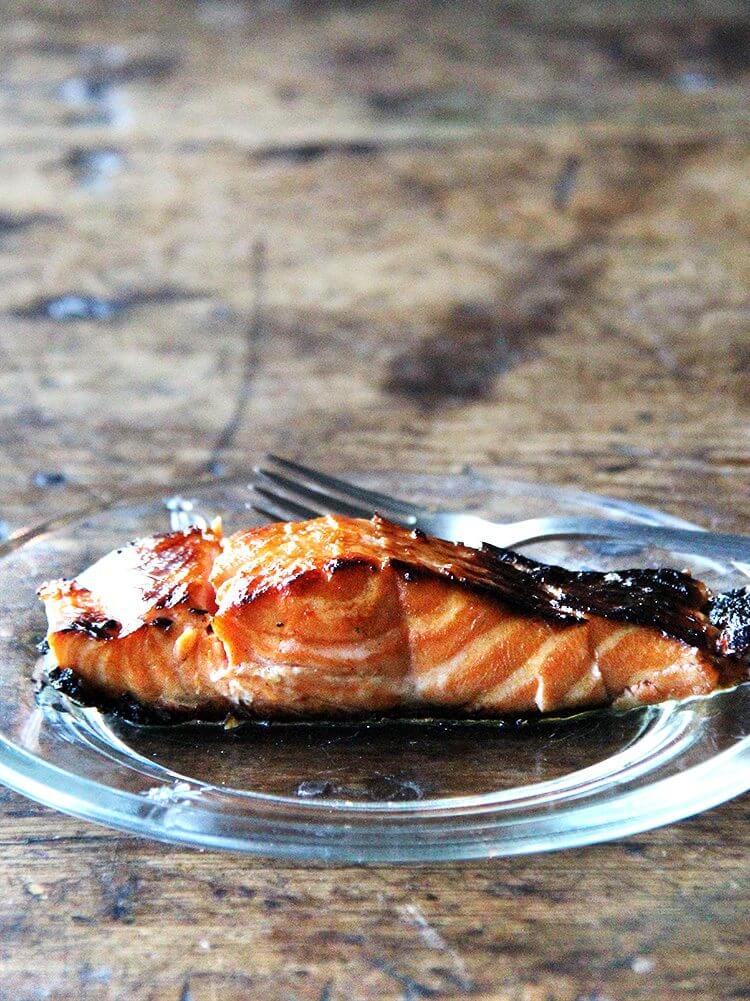
If you had asked me a year ago if I would ever consider buying farmed salmon, I would have politely said no while thinking: ABSOLUTELY NOT! I’ve seen too much of the disturbing footage, read too much about the detrimental effects on the environment, etc.
But in the past few months, I’ve been buying farmed salmon from a local seafood market, Hooked , which I love for two reasons: the fish is always fresh, and they only source from sustainable fisheries. Hooked gets their salmon from the Faroe Islands, and from the teensy bit of research I did online , it’s hard to imagine a more pristine and idyllic environment to farm-raise fish.
But I’m not here today to tell you to start buying farm-raised salmon. I, for one, am so skeptical these days of anything I read. There are organizations like Seafood Watch dedicated to cataloging which fisheries are sustainable and which are not, and there are organizations whose mission is to stop people from eating fish altogether, to spread the word that NO fish is sustainable, and to warn people that our seas are depleted.
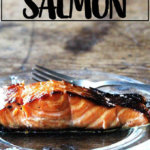
Who to trust? Everything in moderation? Alas, all I know is that I do love fish, and I do love this recipe, which comes from the first SkinnyTaste cookbook. Over the years I’ve made it many times, and while I’ve always kept the marinade exactly the same, I’ve experimented with various cooking methods to avoid having to flip the fish, and I’ve finally found a method I really like.
Unlike the pan-broiled method I posted about recently, which starts the fish in a hot skillet and finishes it under the broiler, here I start under the broiler and finish in a hot skillet. This requires two pans—I know, what a pain!—but it serves two purposes: 1. Starting under the broiler makes for a less smoky experience, dramatically reducing the chances of my smoke alarm from sounding off. 2. Broiling first keeps the fish from sticking.
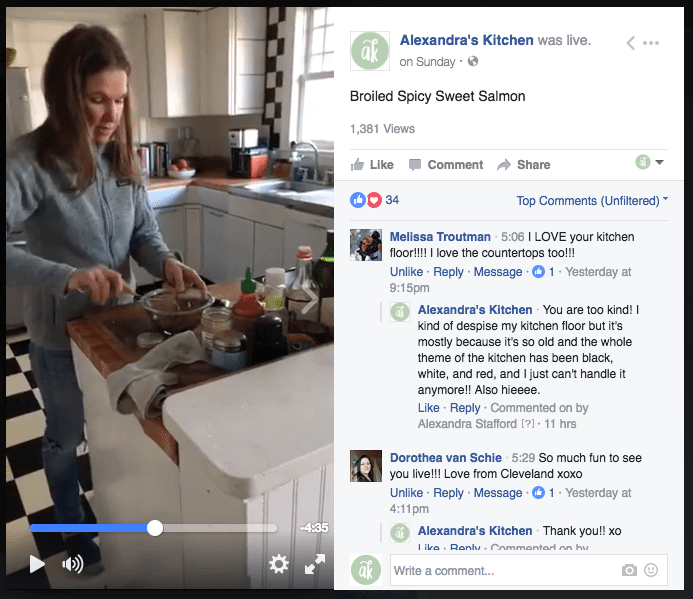
Anyway, this method works for me, but feel free to employ your own. Over the weekend I made it live on Facebook , too, where I also revealed my recent kitchen upgrade: butcher block countertops. Spoiler: they’re fake. I contact papered my entire kitchen. It was a very productive weekend. I hope yours was, too.
Description
A long-time favorite recipe from the first SkinnyTaste cookbook.
- 1/4 cup soy sauce
- 2 tablespoons honey
- 1 tablespoon rice vinegar
- 1 tablespoon Sriracha
- 1 tablespoon minced garlic
- 1 tablespoon minced ginger
- 6 -oz skin-on salmon fillets (this marinade is good for as many as 6)
- neutral oil, such as grapeseed
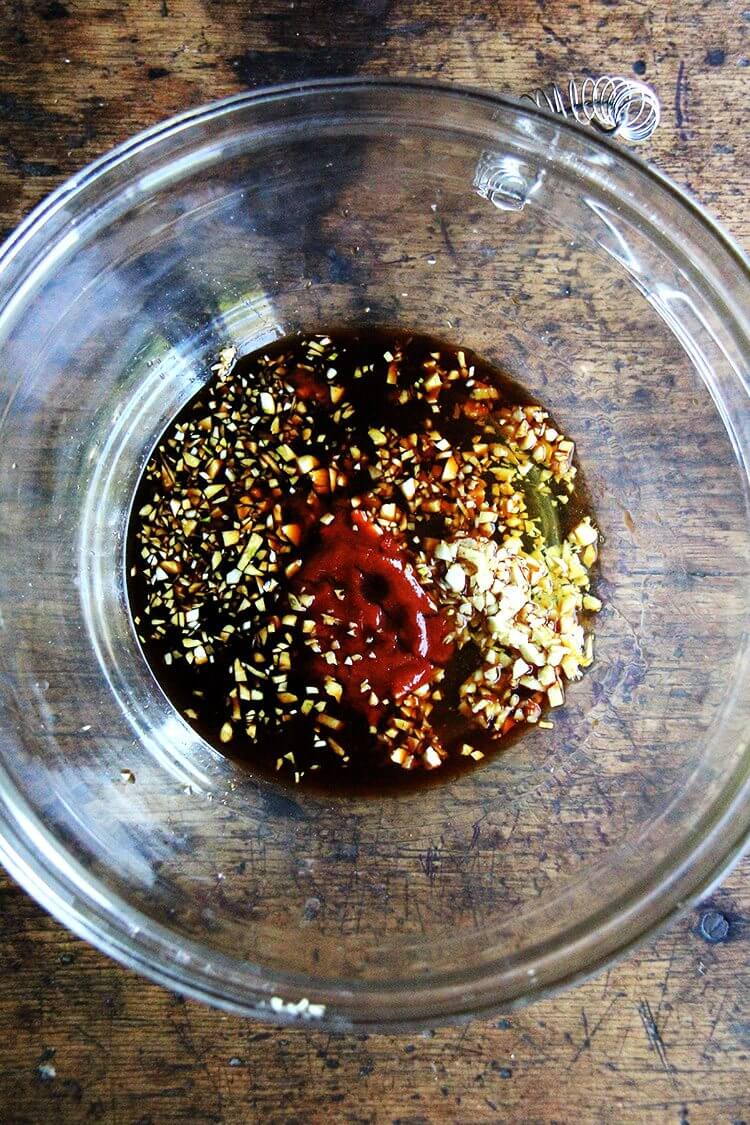
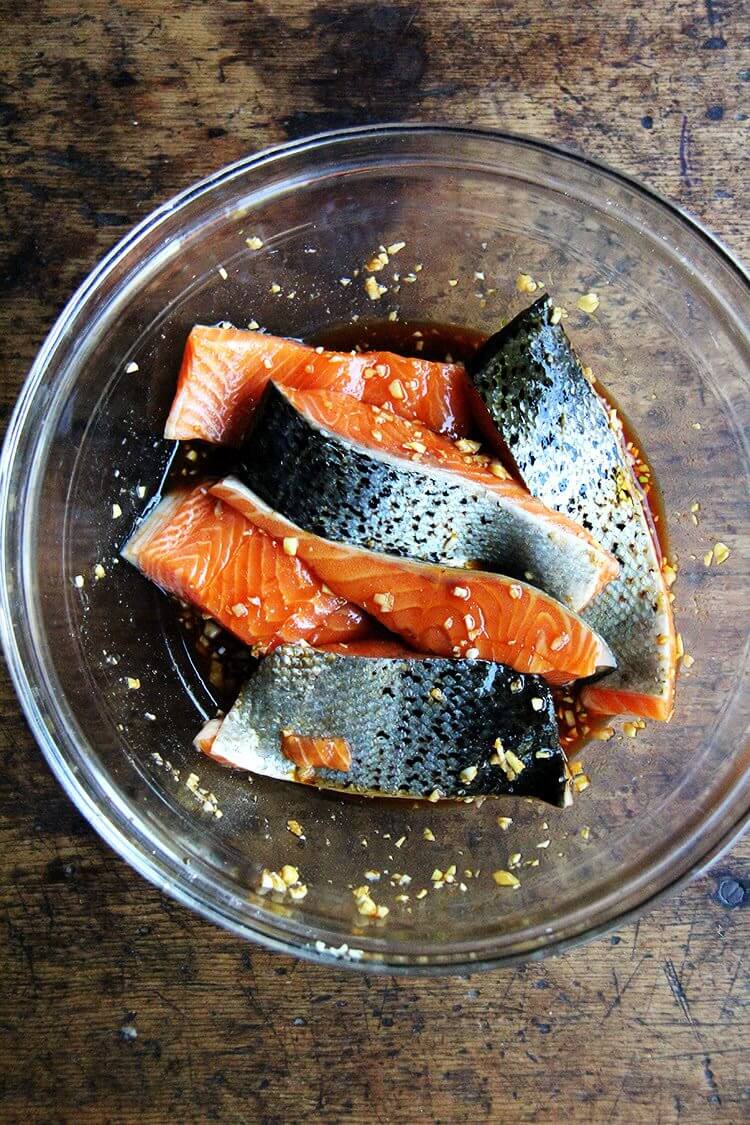
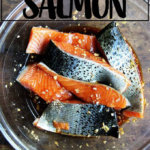
- Mix together the soy sauce, honey, vinegar, and Sriracha in a large bowl. Add the garlic and ginger and stir to combine. Add the salmon fillets and turn to coat. Refrigerate for at least 30 minutes and up to 2 hours (longer might be OK, but I’ve never tried.)
- Preheat the broiler to high for at least 10 minutes. Remove salmon from marinade, and pat skin dry using paper towels or a dish towel. Rub an oven-safe pan—I like these sizzle pans —with a small amount of oil. Place salmon fillets on pan skin-side down. Place under the broiler for 5 minutes.
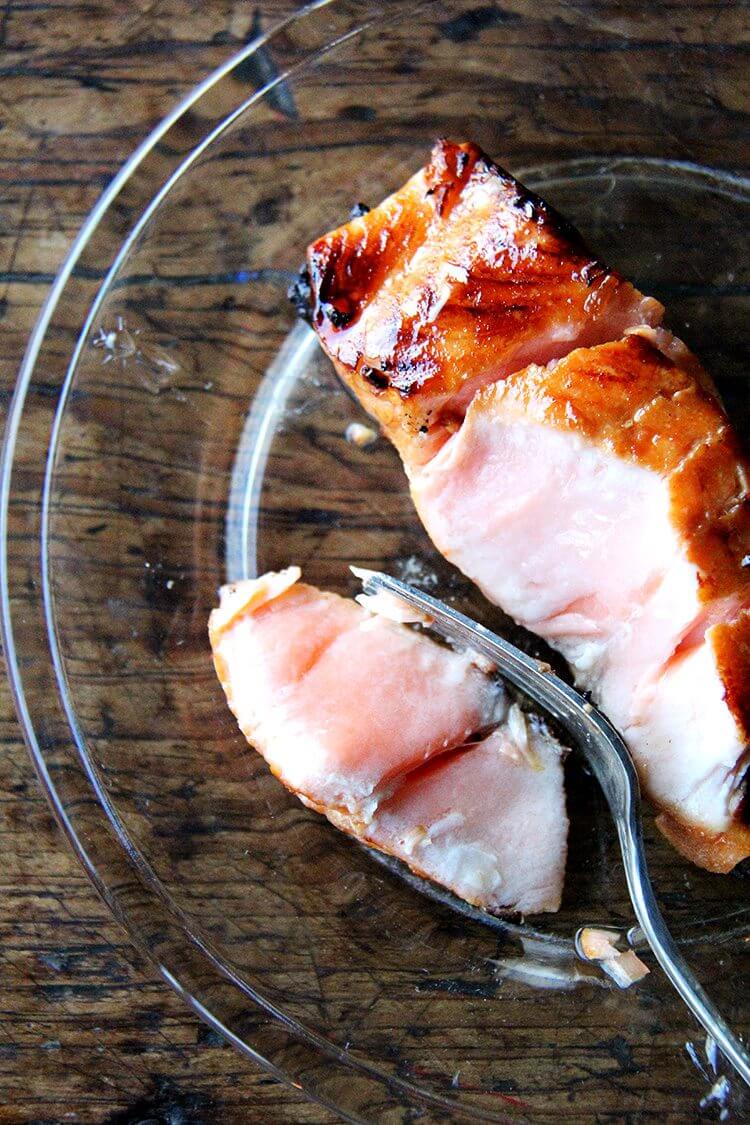
- Meanwhile, heat a large skillet over medium heat. (If you are cooking as many as 6 fillets, you’ll want to heat 2 skillets.) After the 5 minutes under the broiler—or when the fish is looking nicely caramelized on top—turn the heat under the skillet to high, add a small amount of oil to coat the bottom of the pan, carefully transfer the fillets from the sizzle pan to the skillet, lower the heat to medium, and cook for about 1 minute or until the skin is crisp. Transfer fillets to a plate to rest for 1 minute before serving.
- Prep Time: 30 minutes
- Cook Time: 8 minutes
- Category: Dinner
- Method: Broiler, Stovetop
- Cuisine: Asian
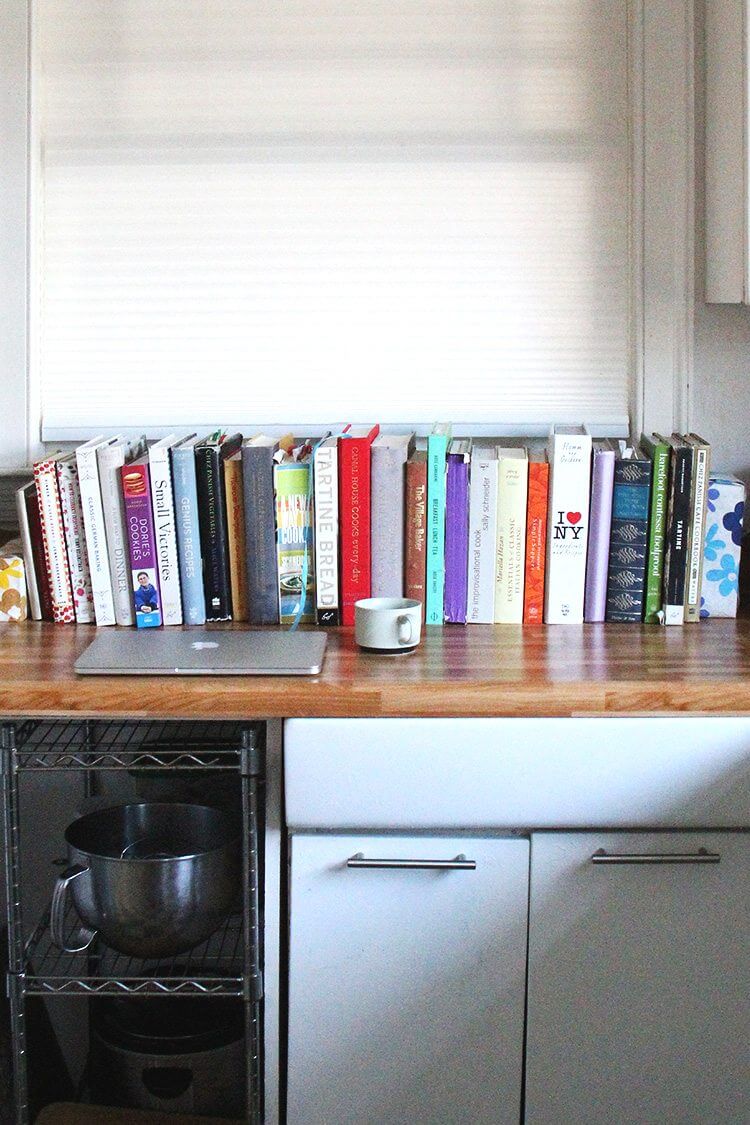
Contact-paper countertops:
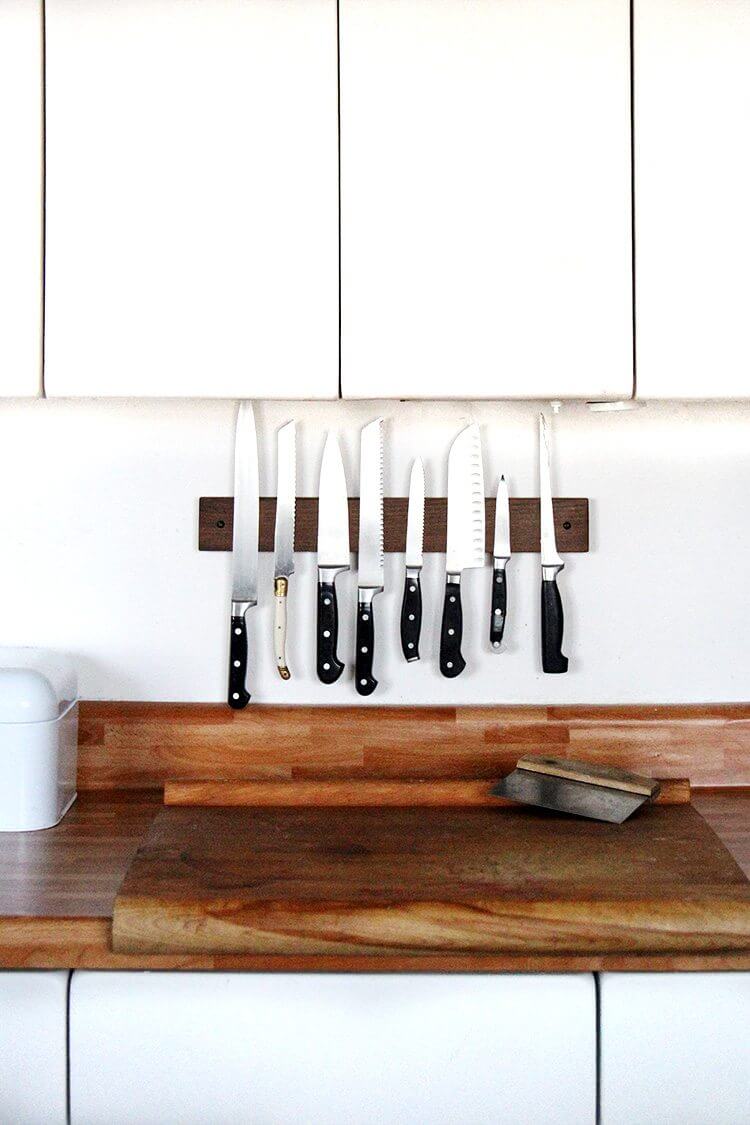
View of the backsplash and my knife grabber , which I love:
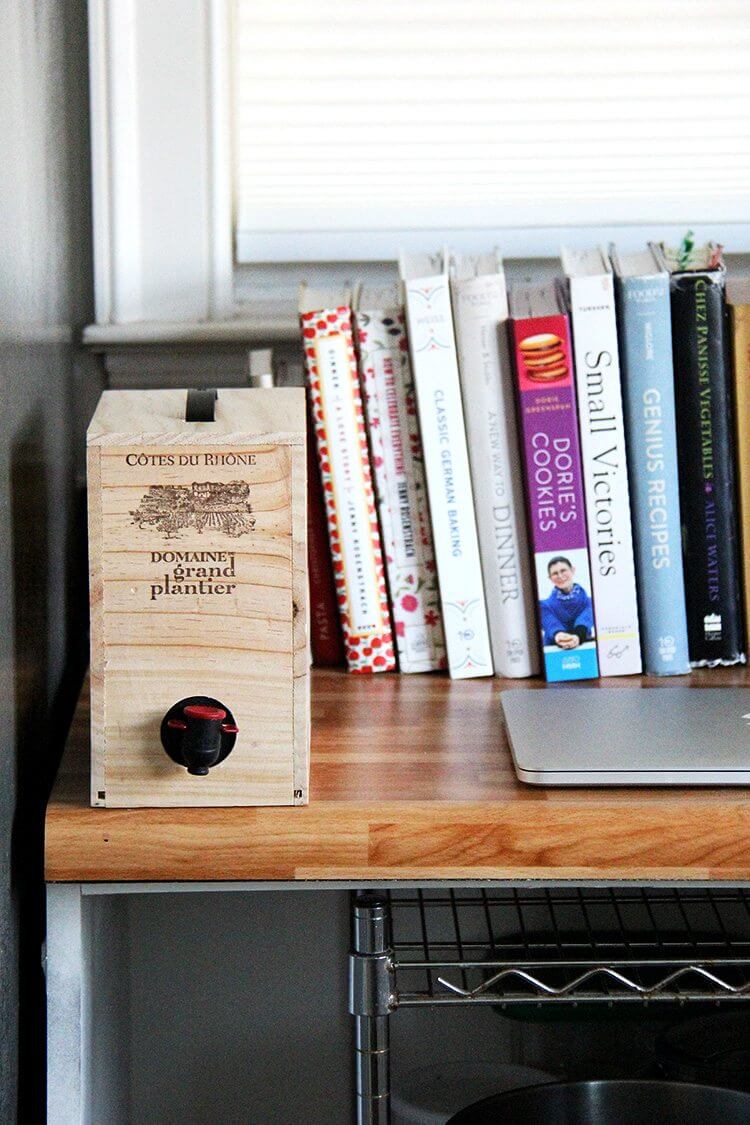
Wine-in-a-box looks so much classier on contact-paper countertops:
Description
A long-time favorite recipe from the first SkinnyTaste cookbook.
- 1/4 cup soy sauce
- 2 tablespoons honey
- 1 tablespoon rice vinegar
- 1 tablespoon Sriracha
- 1 tablespoon minced garlic
- 1 tablespoon minced ginger
- 6 -oz skin-on salmon fillets (this marinade is good for as many as 6)
- neutral oil, such as grapeseed
- Mix together the soy sauce, honey, vinegar, and Sriracha in a large bowl. Add the garlic and ginger and stir to combine. Add the salmon fillets and turn to coat. Refrigerate for at least 30 minutes and up to 2 hours (longer might be OK, but I’ve never tried.)
- Preheat the broiler to high for at least 10 minutes. Remove salmon from marinade, and pat skin dry using paper towels or a dish towel. Rub an oven-safe pan—I like these sizzle pans —with a small amount of oil. Place salmon fillets on pan skin-side down. Place under the broiler for 5 minutes.
- Meanwhile, heat a large skillet over medium heat. (If you are cooking as many as 6 fillets, you’ll want to heat 2 skillets.) After the 5 minutes under the broiler—or when the fish is looking nicely caramelized on top—turn the heat under the skillet to high, add a small amount of oil to coat the bottom of the pan, carefully transfer the fillets from the sizzle pan to the skillet, lower the heat to medium, and cook for about 1 minute or until the skin is crisp. Transfer fillets to a plate to rest for 1 minute before serving.
- Prep Time: 30 minutes
- Cook Time: 8 minutes
- Category: Dinner
- Method: Stovetop, Broiler
- Cuisine: Asian
Find it online : https://alexandracooks.com/2016/12/06/broiled-ginger-soy-salmon/
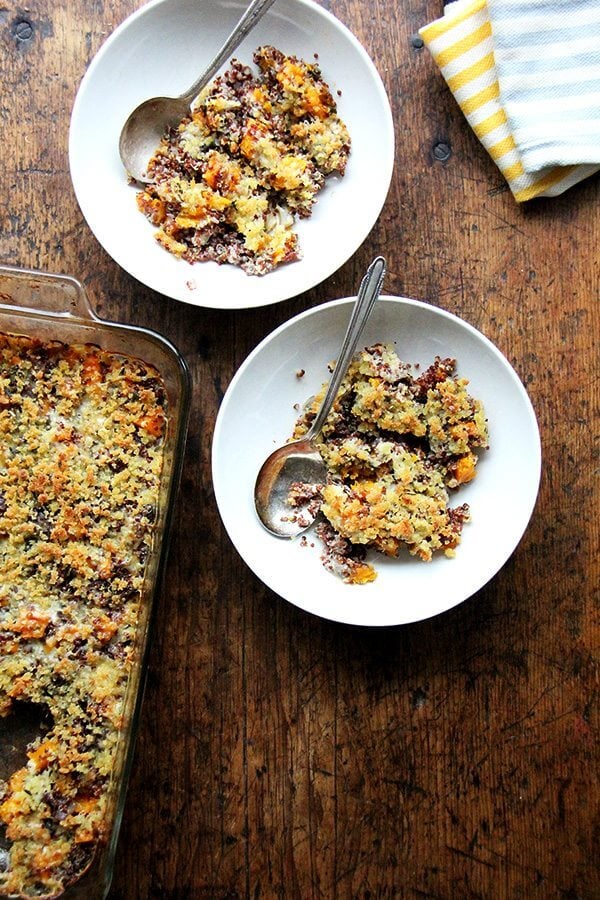
If you are unfamiliar, quinoa bakes, in essence, are casseroles made with quinoa. As you can imagine (and confirm with a quick Pinterest search), the variations are limited only by your imagination. From feta to gouda, ground turkey to chorizo, boiled broccoli to roasted onions, cumin to oregano, the ingredients, seasonings, and combinations can all be tailored to your liking.
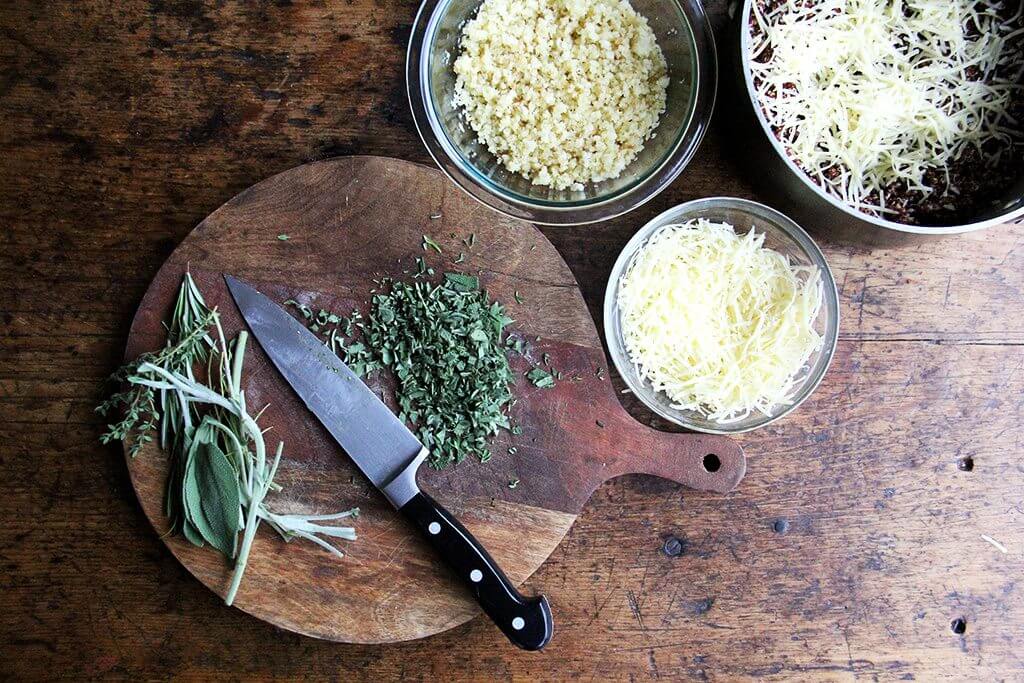
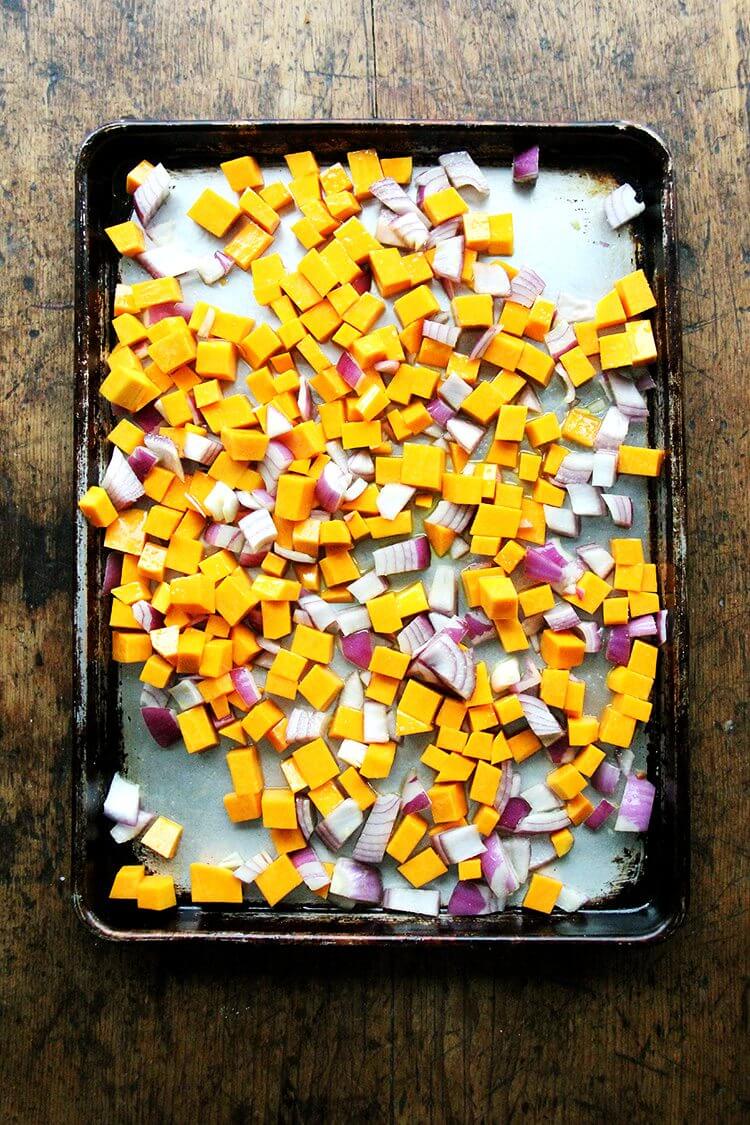
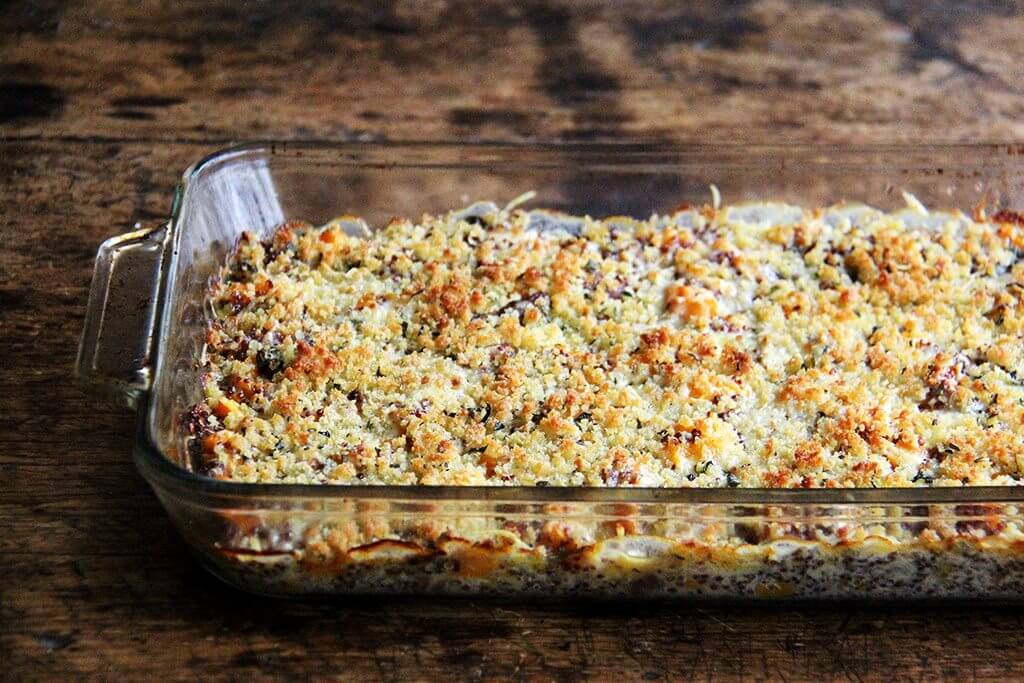
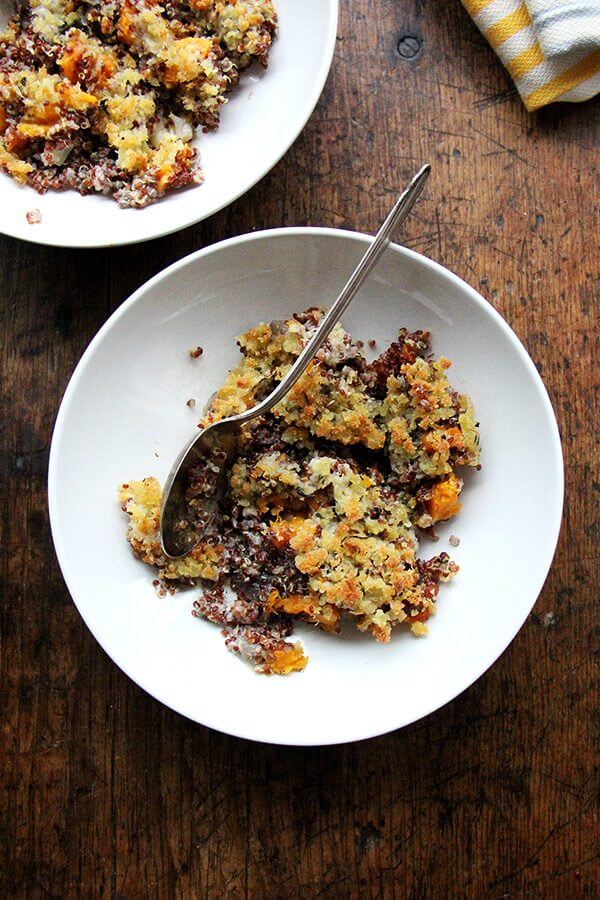
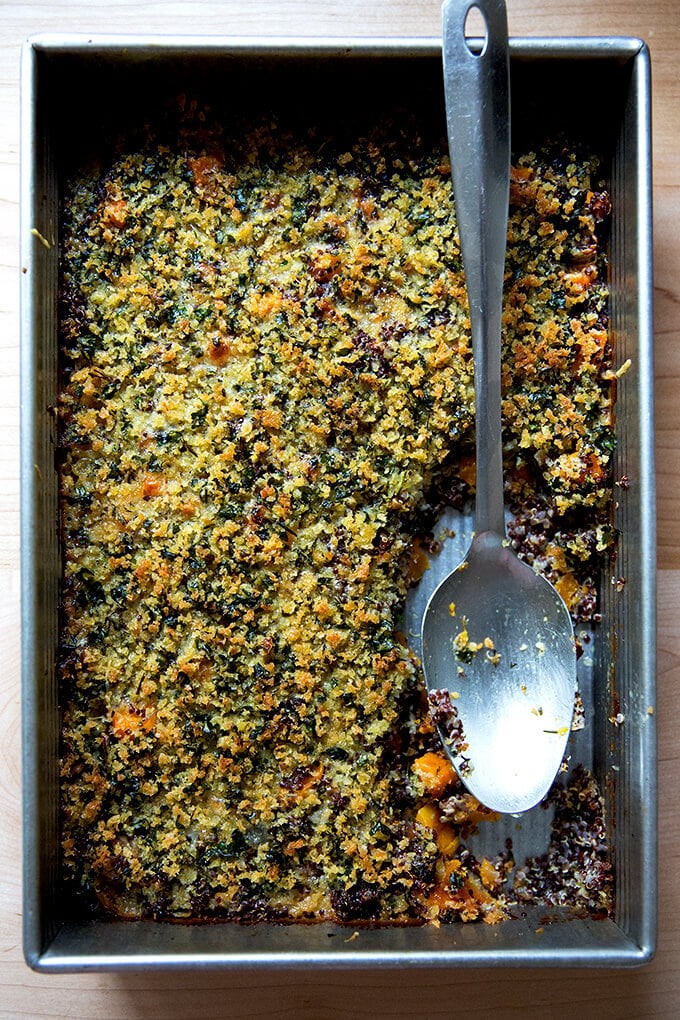
I like this combination: roasted onions and butternut squash, a mix of Gruyère and parmesan, and ALL the Thanksgiving herbs: sage, rosemary, and thyme.
- 1 cup quinoa (I like red for visual appeal)
- 3 1/2 teaspoons kosher salt, plus more to taste
- 6 tablespoons extra-virgin olive oil, divided plus more for greasing
- 4 cups 1/2-inch cubes butternut squash (about), 1.25 lbs. post peeling
- 2 cups diced red onion
- 2 tablespoons finely minced herbs, any combination of thyme, sage, and rosemary
- 1 cup milk, any milk fat you like (I use whole)
- 4 ounces grated Gruyère cheese (about 1 1/4 cups)
- 1 1/2 cups fresh breadcrumbs
- Preheat the oven to 400°F. In a medium saucepan, combine the quinoa, 2 cups of water, and 1 teaspoon kosher salt. Bring to a boil over high heat. Reduce heat to low, cover, and let cook for 15 minutes. Remove pan from heat.
- Meanwhile, grease a rimmed sheet pan lightly with olive oil. Place cubed squash and diced onion on pan. Drizzle with 3 tablespoons olive oil, sprinkle with 1 to 2 teaspoons kosher salt (depending on your tolerance — if you are sensitive, use 1 teaspoon), and toss to coat. Spread vegetables out into an even layer. Transfer to the oven and roast for 25 to 30 minutes or until squash and onions are just beginning to brown. Remove pan from oven. Increase oven temp to 425°F.
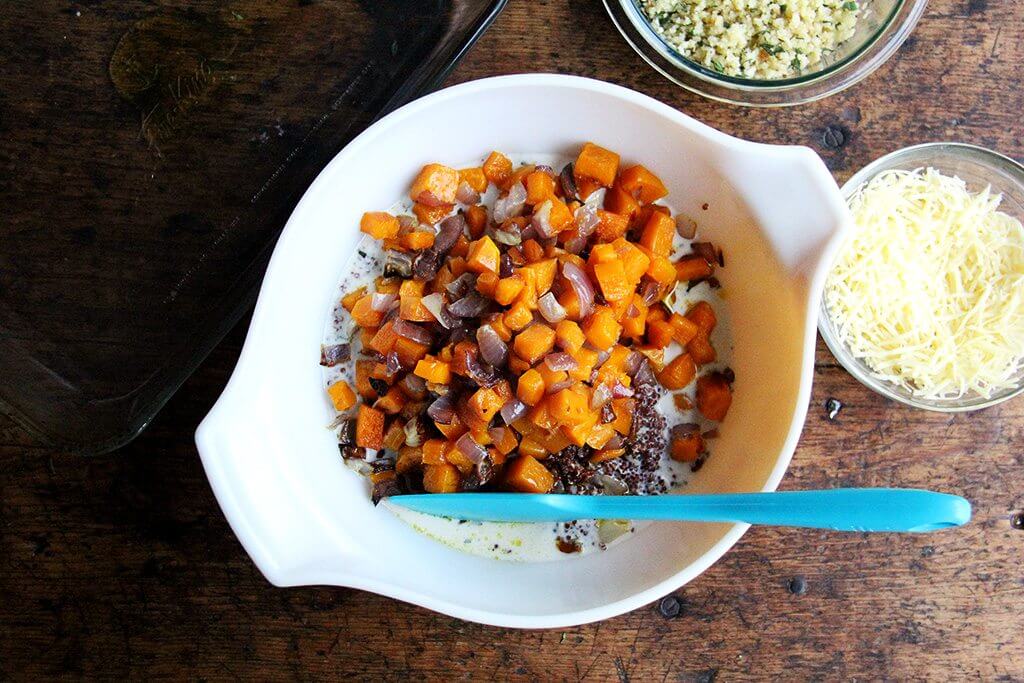
- Uncover quinoa pan and fluff with a fork. Add 1 tablespoon of the herbs, the milk, and half of the cheese, and mix with a spatula to combine. Transfer to a large bowl. Add the roasted squash and onions and fold gently to combine. Transfer mixture to a lightly greased 9×13-inch baking dish. Cover evenly with the remaining cheese.
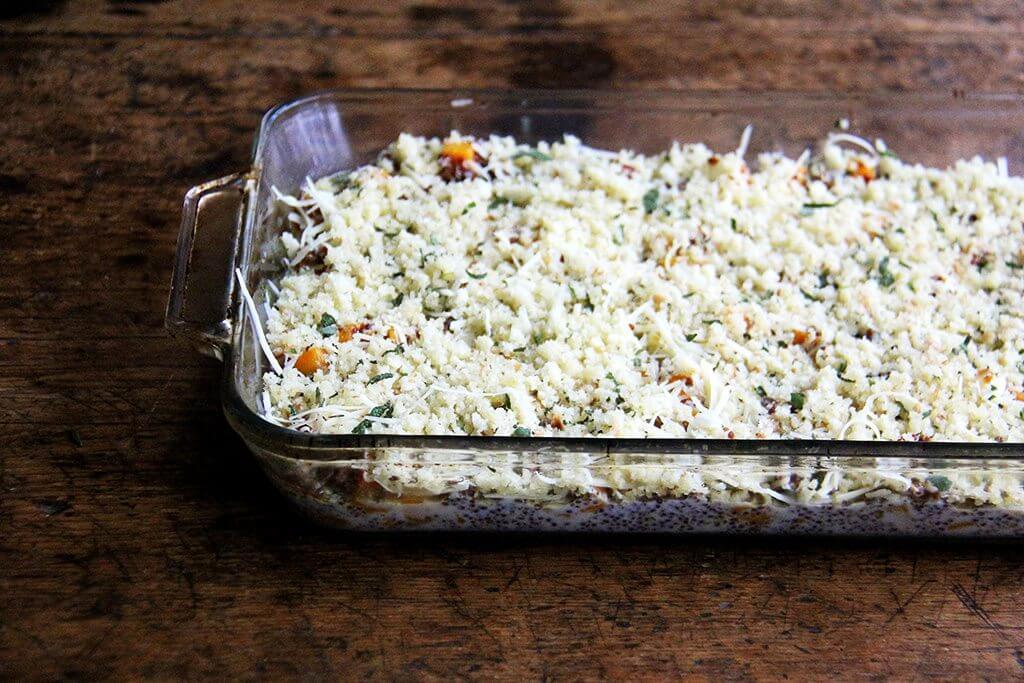
- In a small bowl, combine the breadcrumbs, the remaining 3 tablespoons of olive oil, the remaining herbs, and the remaining 1/2 teaspoon salt. Toss with your fingers until the breadcrumbs are fully saturated and seasoned. Spread this evenly atop the cheese. At this point, the pan can be stashed in the fridge for as long as a day (maybe longer) and baked when needed. Bake for 20 to 25 minutes or until evenly golden. Let cool briefly before serving.
- Prep Time: 30 minutes
- Cook Time: 1 hour
- Category: Dinner
- Method: Oven
- Cuisine: American
