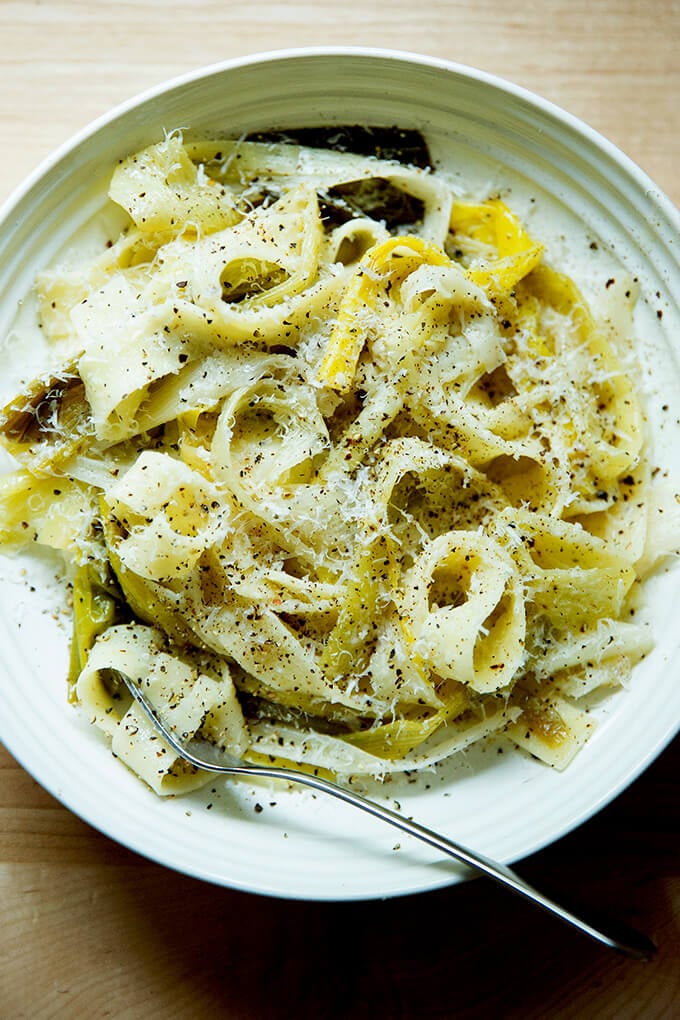
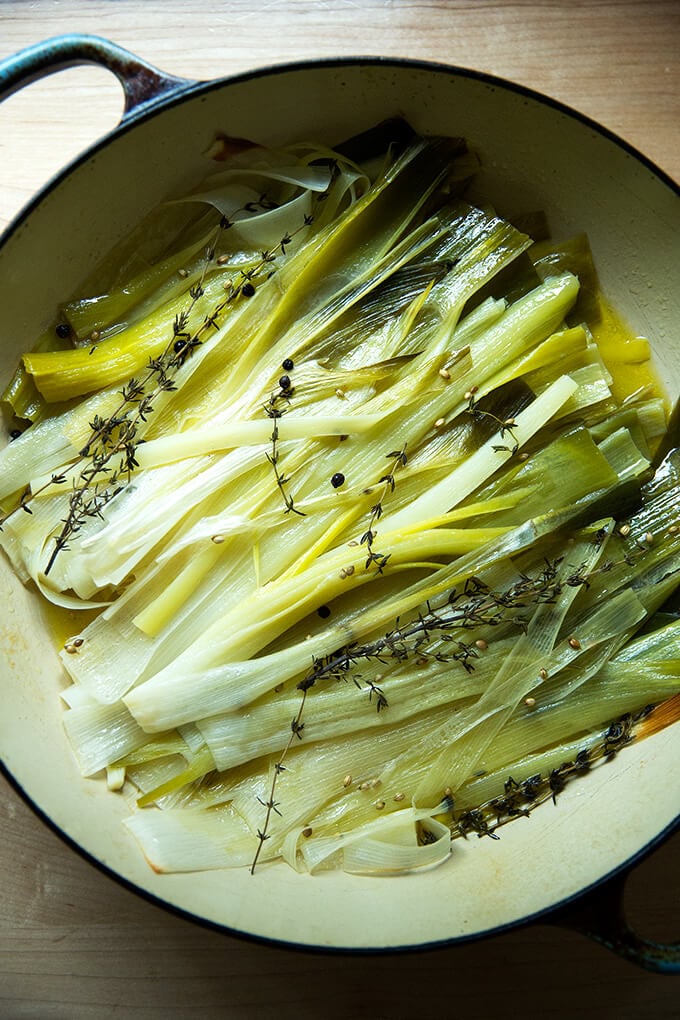
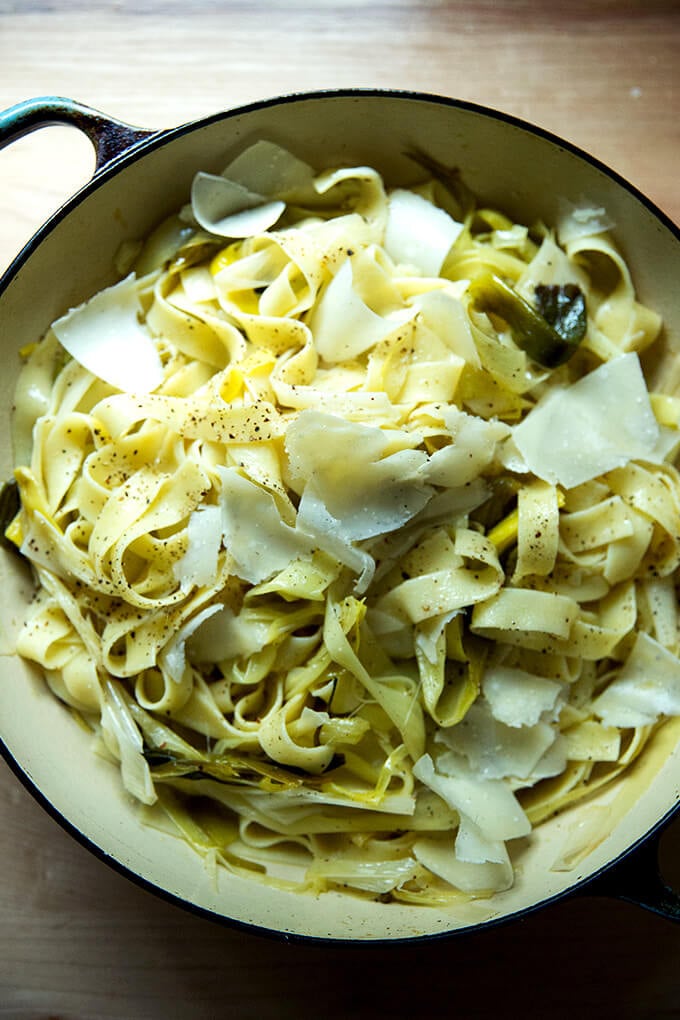
When braised, leeks release a ton of water, which causes them to shrink and become meltingly tender. When braised with white wine, olive oil, a little butter, and thyme, they emerge swimming in an especially fragrant broth, which can be used as a base for soup, as a sauce for pasta, or a side dish to roast chicken (or any number of meats).
Ronna Welsh, author of The Nimble Cook, where I discovered this recipe, has other ideas, too: chop them up and stuff them into a quiche, layer them on a sandwich, toss them with shaved cabbage for a salad, use them as a flavoring in pork meatballs. I’m eager to try spreading them atop pizza or focaccia .
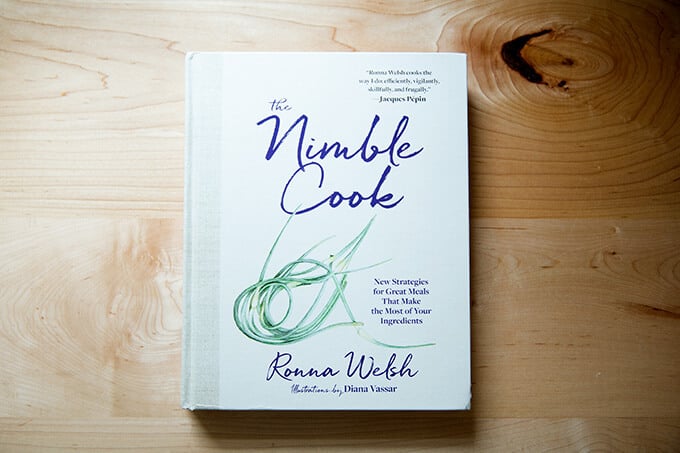
This is the spirit of The Nimble Cook , which emphasizes ingredients and techniques more than recipes (though there are plenty of recipes to guide you along). Ronna’s goal is to give you building blocks, which when you have on hand, allow you to be nimble in the kitchen. Throughout the book, she offers lots of tips on how to prep foods so they are easier to cook when you are pressed for time. She also tells you how best to store the foods as well as how long the foods will last in that state. So helpful.
Highlights From The Nimble Cook:
- Ronna’s dedication to using every part of everything. This woman does not like waste. For this recipe for instance, she offers a recipe for blanched leek greens, which you can then use to make dill-and-leek-greens pesto or creamed leek greens or leek greens cream cheese. She also has a recipe for cucumber-peel kimchi, and one for white watermelon-rind gazpacho.
- Simple preparations that transform ingredients. When the book first arrived, I made her shaved collard salad every day for a week: In short, it calls for tossing (but not massaging!) thinly sliced collard greens with a little salt and sugar (interesting, right?), letting them sit for 10 minutes, then tossing them with a sharp vinaigrette . When I think collards, I think: braised for hours with bacon and vinegar. This preparation was so refreshing.
- Interesting techniques. In her recipe for the pasta with braised leeks, she calls for adding savory ricotta custard, which is a recipe she developed to double the shelf life of fresh ricotta, which is highly perishable. In short, you mix the ricotta with eggs and pecorino, and bake it. Once cooled, it can be sliced and used on sandwiches, crumbled into pasta, served on a cheese plate, or served as a dessert with compote. Cool, right?
Braised Leeks with Pasta: A Few Tips
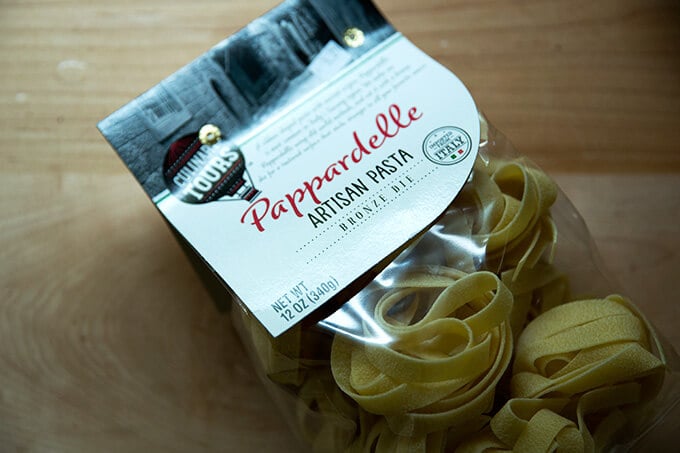
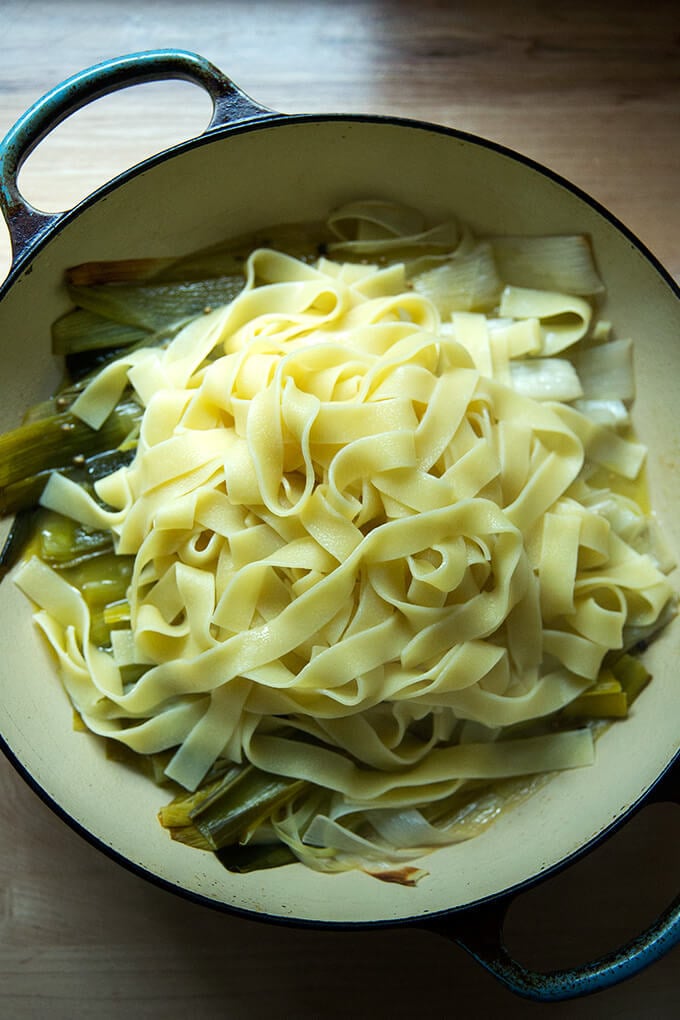
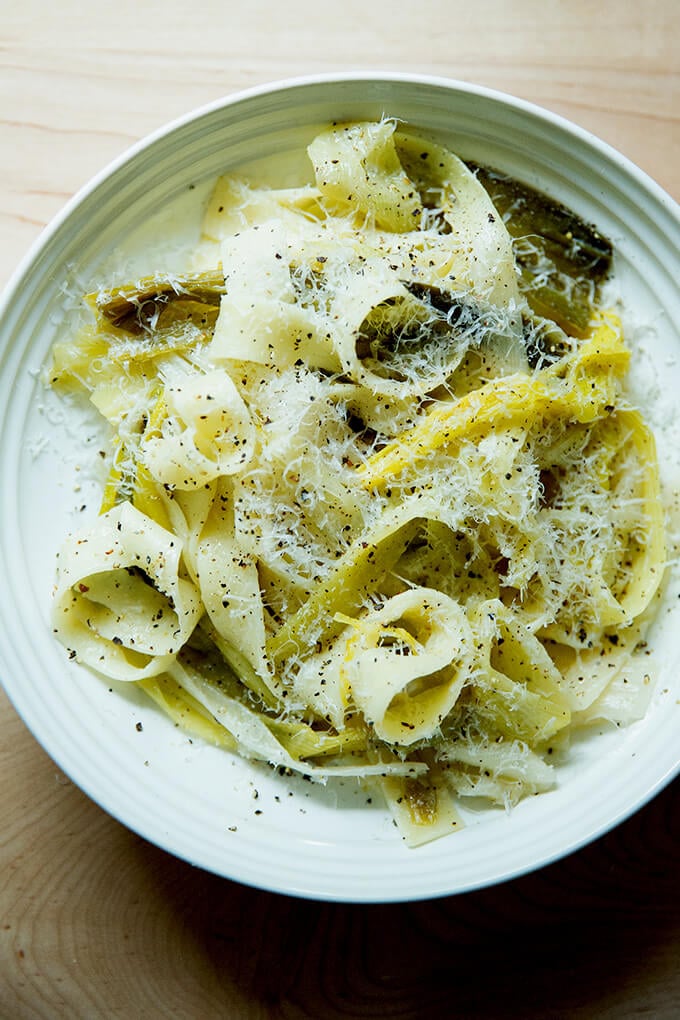
- You can use any long noodle here — spaghetti, linguine, bucatini — but if you can find pappardelle, use it! It’s such a fun shape for this dish because the shape of the leeks mimic the shape of the noodle, and the two tangle so nicely together. I found this Culinary Tours brand at the Nisky Co-op, and I really liked it, and when I went back the next day, they were out! So stock up.
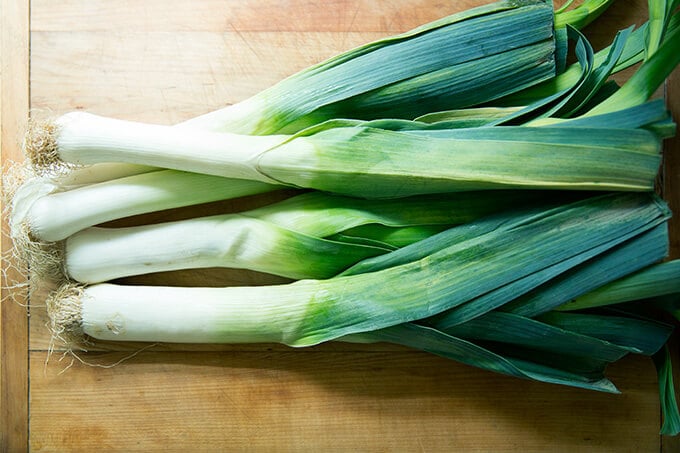
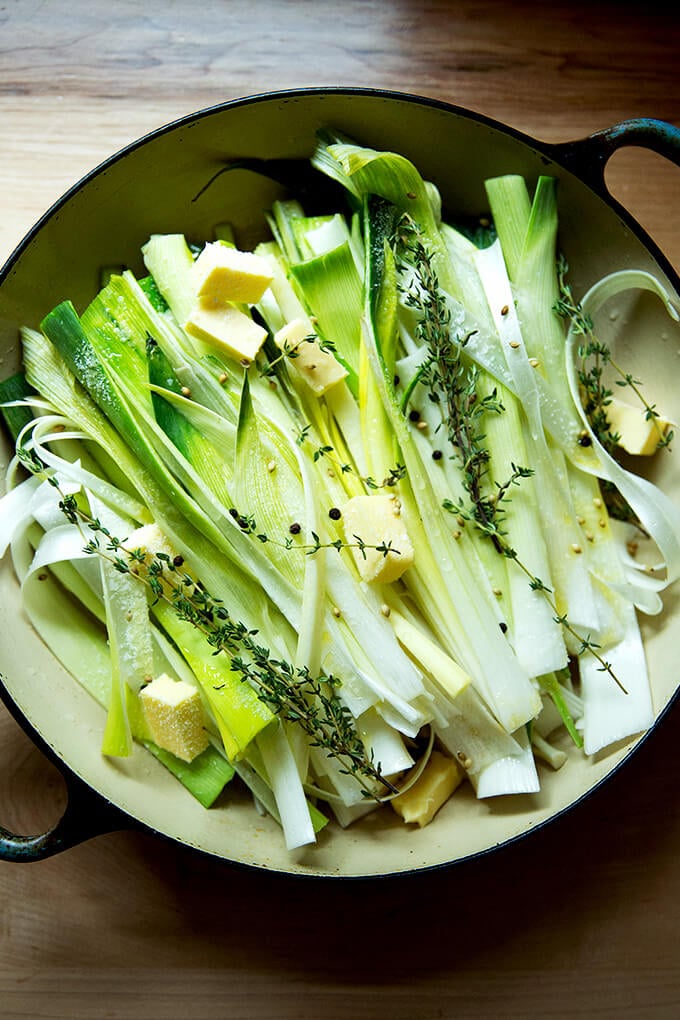
- Be sure to use only the whites and very light green parts of the leeks. The green parts, even after 50 minutes in the oven, are very hard to chew.
- If you are making the braised leeks to serve as a side dish, trim off only the very end of the root so that the leeks still stay intact once quartered. When prepping the leeks to be used for the pasta, trim off the root completely, so that the leeks do not stay intact — it helps them tangle with the noodles more easily.
- Start to finish, I would say this takes about an hour, but it’s a meal in itself — no side dish necessary — and it tastes like spring.
That’s it! Braise some leeks! Boil some noodles! Toss them together! Call dinner done.
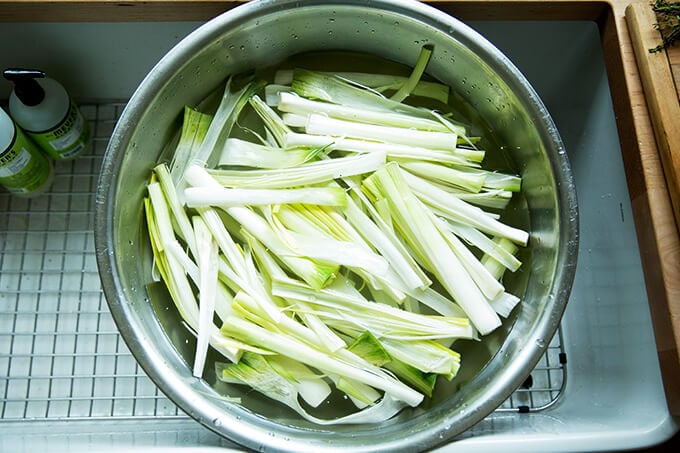
If you have the space, I can’t recommend enough this 20-qt bowl . For soaking greens and other produce from the farm share, the little bowls just don’t do the job.
Description
From Ronna Welsh’s The Nimble Cook
A few notes:
- Be sure to use only the whites and very light green parts of the leeks. If you don’t the leeks are just a little harder to chew — not impossible, though it might require a knife-and-fork treatment.
- If you are making the braised leeks to serve as a side dish, trim the root so that the leeks will still stay intact once quartered. Having made this a few times now, I think, when prepping the leeks for pasta, it’s best to trim the root off of the leeks completely, so that the leeks do not stay intact — it helps them tangle with the noodles more easily.
For the braised leeks:
- 4 to 5 large leeks, white and light green parts only
- 3 tablespoons extra-virgin olive oil
- 3 tablespoons water
- 1/3 cup crisp white wine
- 4 tablespoons butter, cut into bits
- a few sprigs thyme
- 2 teaspoons kosher salt
- 5 peppercorns, optional
- 10 coriander seeds, optional
For the pasta:
- 12 -oz pasta, such as pappardelle
- shaved Parmigiano Reggiano to taste
- freshly cracked black pepper to taste
- optional herbs: finely chopped parsley or chives, to taste (this is mostly for color)
- flaky sea salt, such as Maldon, to taste
- Heat oven to 325ºF. Trim the leeks of any roots. Slice each leek lengthwise through the bulb, then once more to make quarters — if you are only making the braised leeks, it’s OK to keep the leek end intact; if you are making the pasta, cut enough of the root off so that the leek does not stay intact (see notes above). Fill a large bowl with water and submerge the leeks in it. Swish them around and carefully bend the pieces, using your fingers to release any dirt trapped between the layer of the bulbs.
- Once clean, lift out the leeks, drain, and place in a snugly fitting roasting pan or Dutch oven — ideally something that can go on both the stovetop and oven if you plan on making the pasta — no more than two layers deep. If your leeks are extra long, cut them to fit.
- Add the remaining ingredients. Cover and place in the oven. Braise until the leeks have dulled in color and are quite tender to a knife, and bend and flex effortlessly, about 45 – 50 minutes. Taste for salt. Cool to room temperature before storing. Store in the fridge for up to 1 week or in the freezer for 3 months.
- Meanwhile, if making the pasta, bring a large pot of water to a boil. Add 2 tablespoons kosher salt. Cook pasta al dente (times will vary according to package). Reserve at least a cup of pasta cooking liquid — I like to transfer the noodles from the pot using my spider or tongs, thereby reserving all of the cooking liquid. The extra pasta cooking liquid is so nice to have on hand for heating up day-old pasta.
- Place the pan of braised leeks on the stovetop over low heat. Transfer the cooked noodles to the pan with the leeks and toss with tongs to combine. Add pasta cooking liquid as needed — I’ve been adding at least 1/2 cup. Shave parmesan to taste over top and season with fresh cracked pepper to taste as well. If you seasoned your pasta cooking liquid as directed, you should barely need any salt here, but taste, and adjust seasonings as desired.
- If using herbs, add them, and toss to coat. Serve, shaving more parmesan and cracking more pepper over each serving if desired.
- Prep Time: 15 minutes
- Cook Time: 45 minutes
- Category: Pasta
- Method: Stovetop
- Cuisine: French, Italian
Description
From Ronna Welsh’s The Nimble Cook
A few notes:
- Be sure to use only the whites and very light green parts of the leeks. If you don’t the leeks are just a little harder to chew — not impossible, though it might require a knife-and-fork treatment.
- If you are making the braised leeks to serve as a side dish, trim the root so that the leeks will still stay intact once quartered. Having made this a few times now, I think, when prepping the leeks for pasta, it’s best to trim the root off of the leeks completely, so that the leeks do not stay intact — it helps them tangle with the noodles more easily.
For the braised leeks:
- 4 to 5 large leeks, white and light green parts only
- 3 tablespoons extra-virgin olive oil
- 3 tablespoons water
- 1/3 cup crisp white wine
- 4 tablespoons butter, cut into bits
- a few sprigs thyme
- 2 teaspoons kosher salt
- 5 peppercorns, optional
- 10 coriander seeds, optional
For the pasta:
- 12 -oz pasta, such as pappardelle
- shaved Parmigiano Reggiano to taste
- freshly cracked black pepper to taste
- optional herbs: finely chopped parsley or chives, to taste (this is mostly for color)
- flaky sea salt, such as Maldon, to taste
- Heat oven to 325ºF. Trim the leeks of any roots. Slice each leek lengthwise through the bulb, then once more to make quarters — if you are only making the braised leeks, it’s OK to keep the leek end intact; if you are making the pasta, cut enough of the root off so that the leek does not stay intact (see notes above). Fill a large bowl with water and submerge the leeks in it. Swish them around and carefully bend the pieces, using your fingers to release any dirt trapped between the layer of the bulbs.
- Once clean, lift out the leeks, drain, and place in a snugly fitting roasting pan or Dutch oven — ideally something that can go on both the stovetop and oven if you plan on making the pasta — no more than two layers deep. If your leeks are extra long, cut them to fit.
- Add the remaining ingredients. Cover and place in the oven. Braise until the leeks have dulled in color and are quite tender to a knife, and bend and flex effortlessly, about 45 – 50 minutes. Taste for salt. Cool to room temperature before storing. Store in the fridge for up to 1 week or in the freezer for 3 months.
- Meanwhile, if making the pasta, bring a large pot of water to a boil. Add 2 tablespoons kosher salt. Cook pasta al dente (times will vary according to package). Reserve at least a cup of pasta cooking liquid — I like to transfer the noodles from the pot using my spider or tongs, thereby reserving all of the cooking liquid. The extra pasta cooking liquid is so nice to have on hand for heating up day-old pasta.
- Place the pan of braised leeks on the stovetop over low heat. Transfer the cooked noodles to the pan with the leeks and toss with tongs to combine. Add pasta cooking liquid as needed — I’ve been adding at least 1/2 cup. Shave parmesan to taste over top and season with fresh cracked pepper to taste as well. If you seasoned your pasta cooking liquid as directed, you should barely need any salt here, but taste, and adjust seasonings as desired.
- If using herbs, add them, and toss to coat. Serve, shaving more parmesan and cracking more pepper over each serving if desired.
- Prep Time: 15 minutes
- Cook Time: 45 minutes
- Category: Pasta
- Method: Stovetop
- Cuisine: French, Italian
Find it online : https://alexandracooks.com/2019/05/30/braised-leeks-with-pappardelle-parmesan/

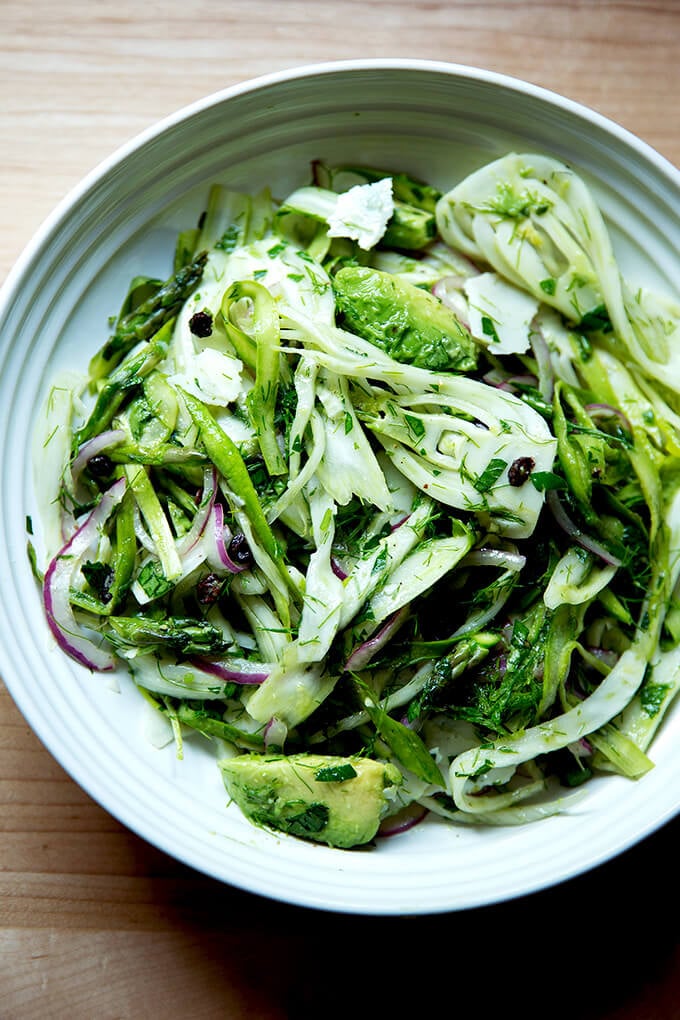
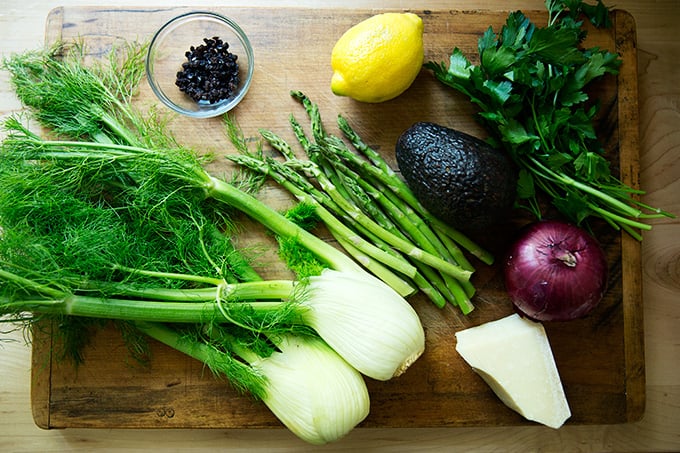
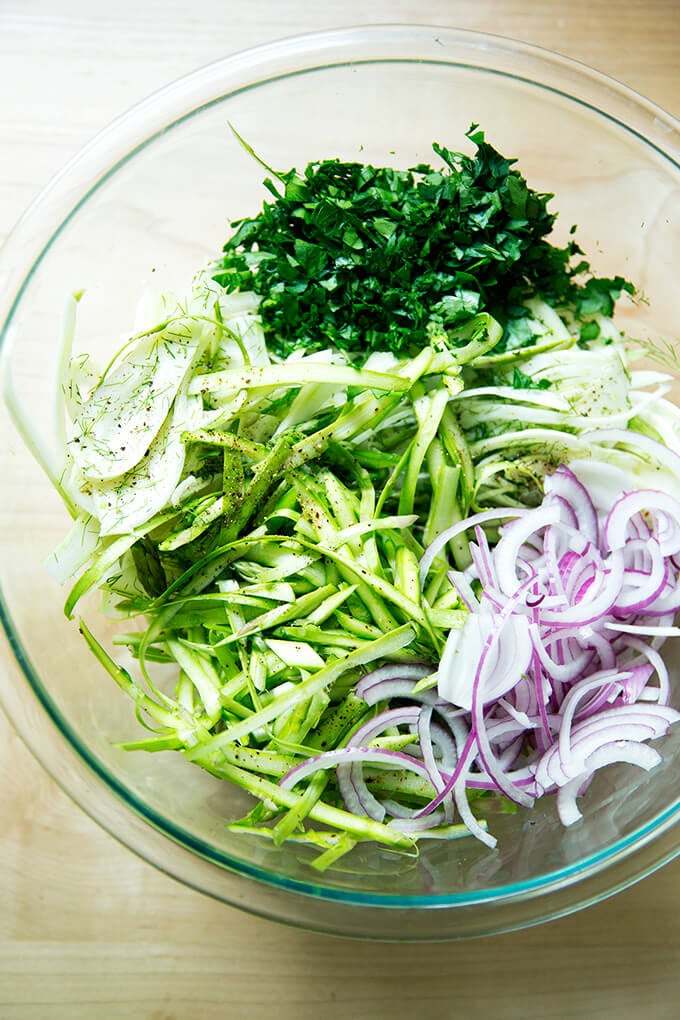
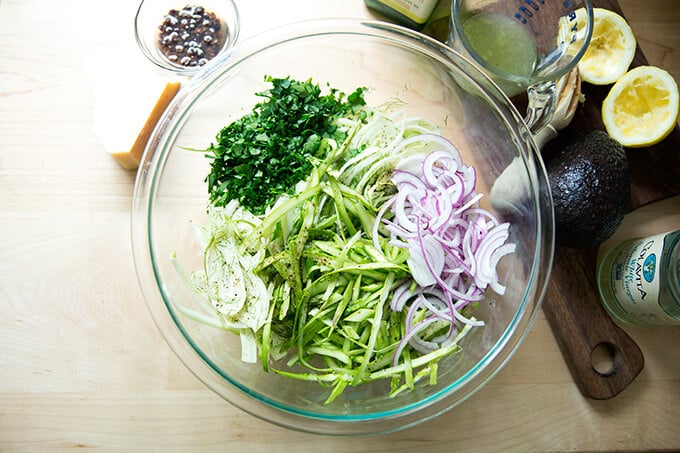
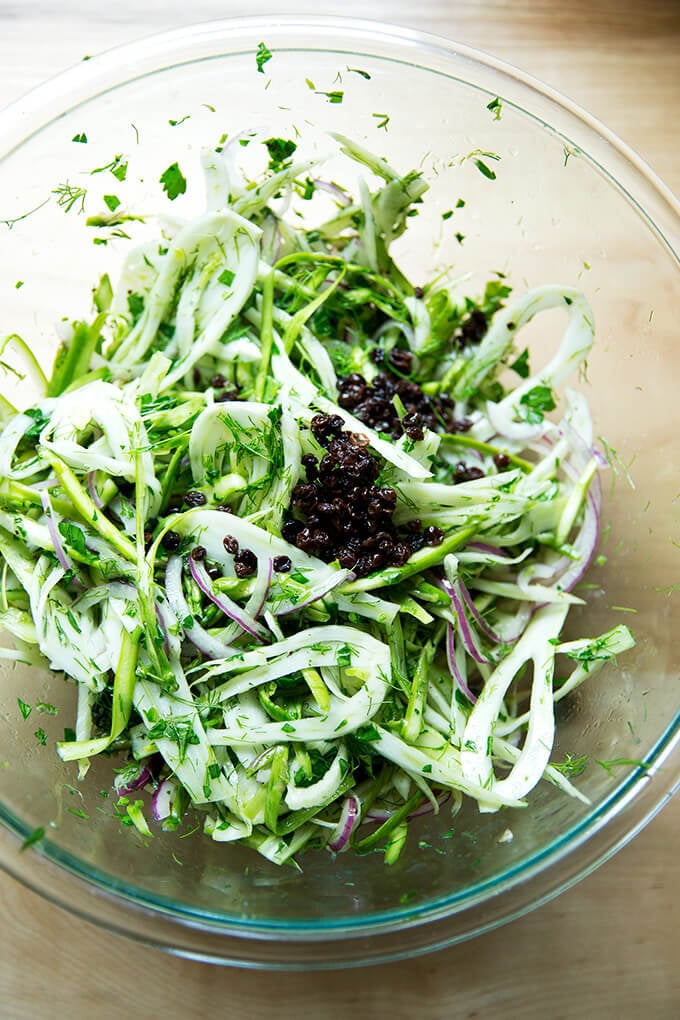
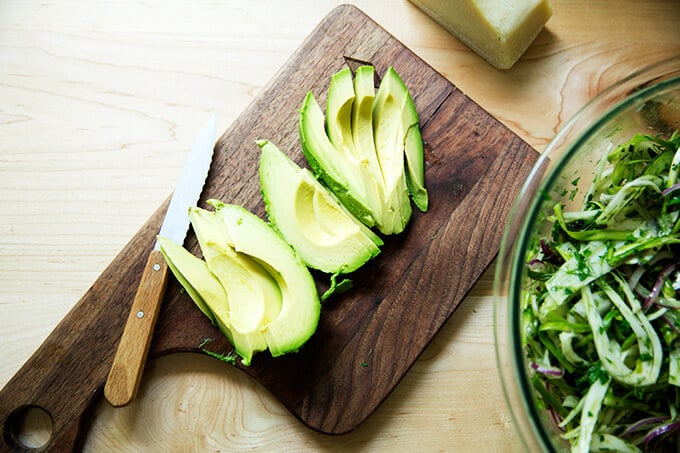
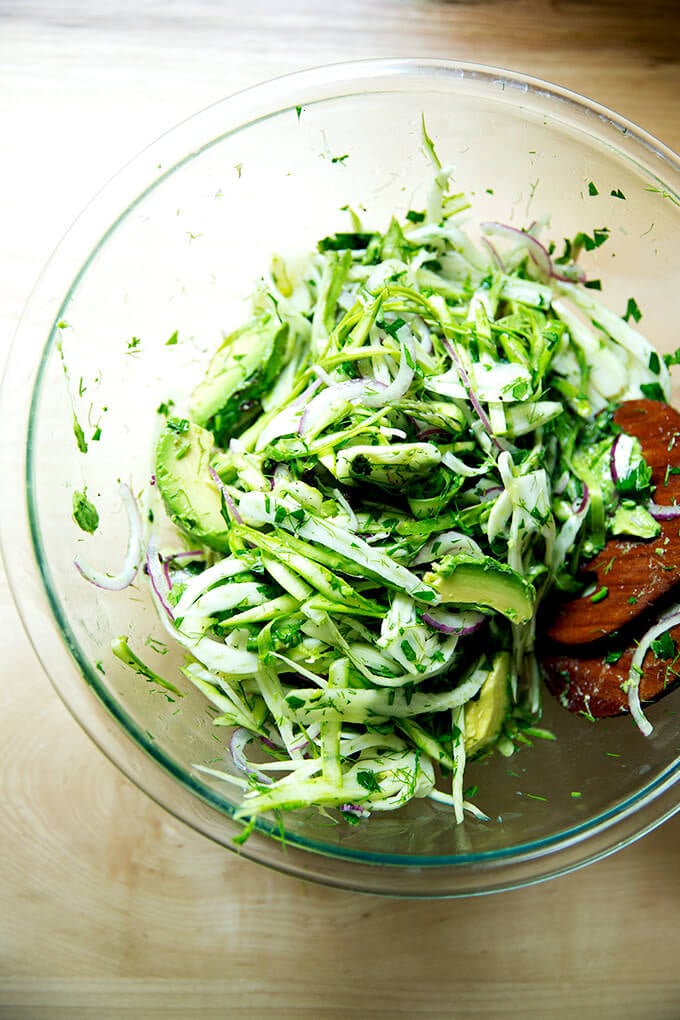
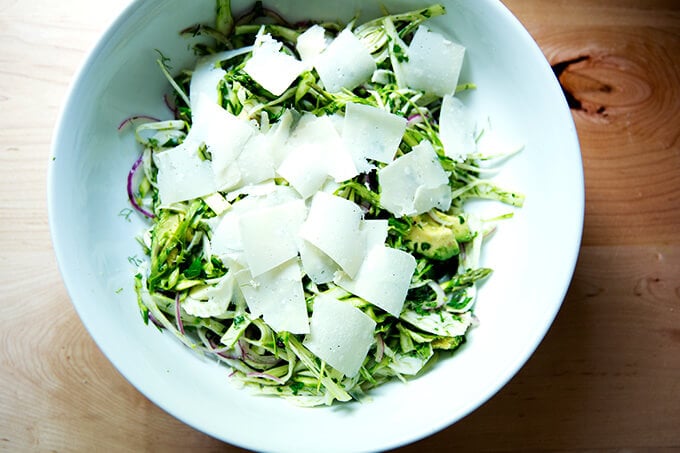
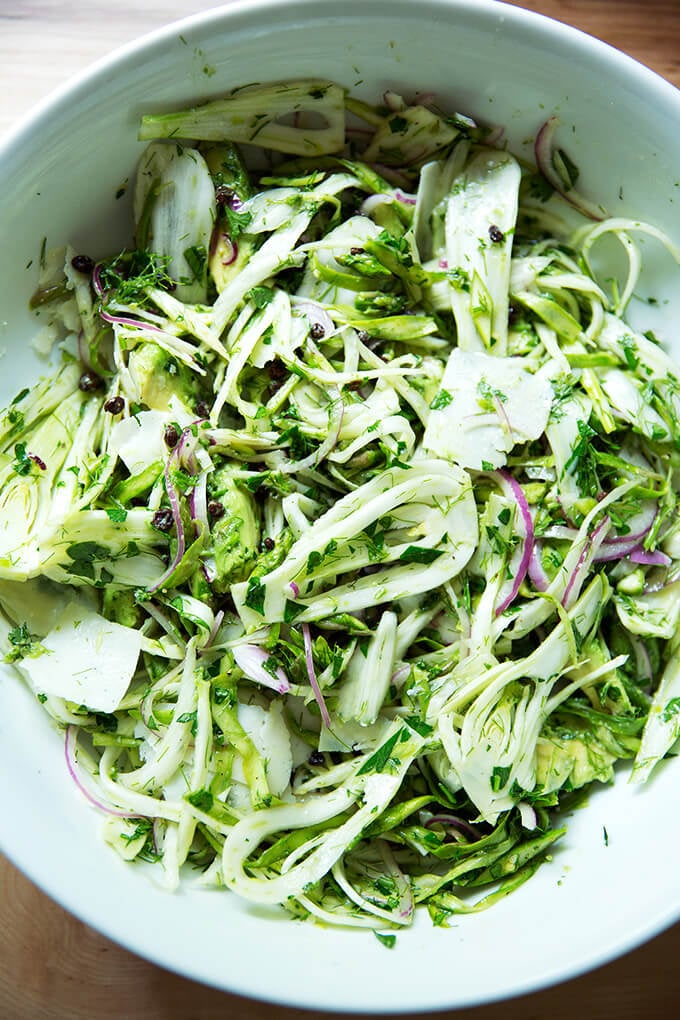
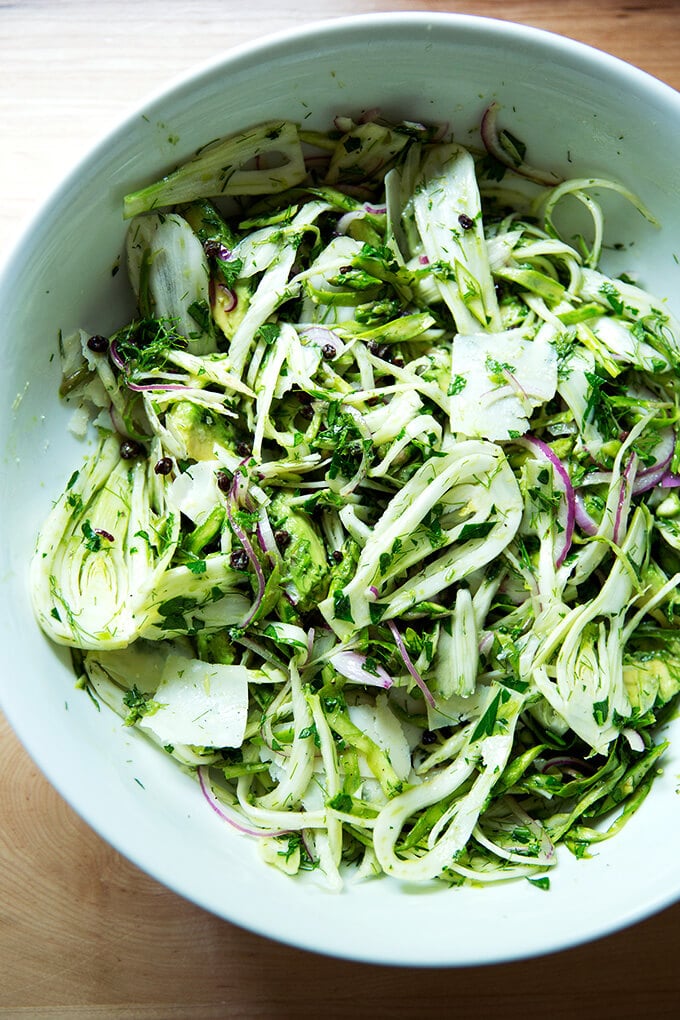
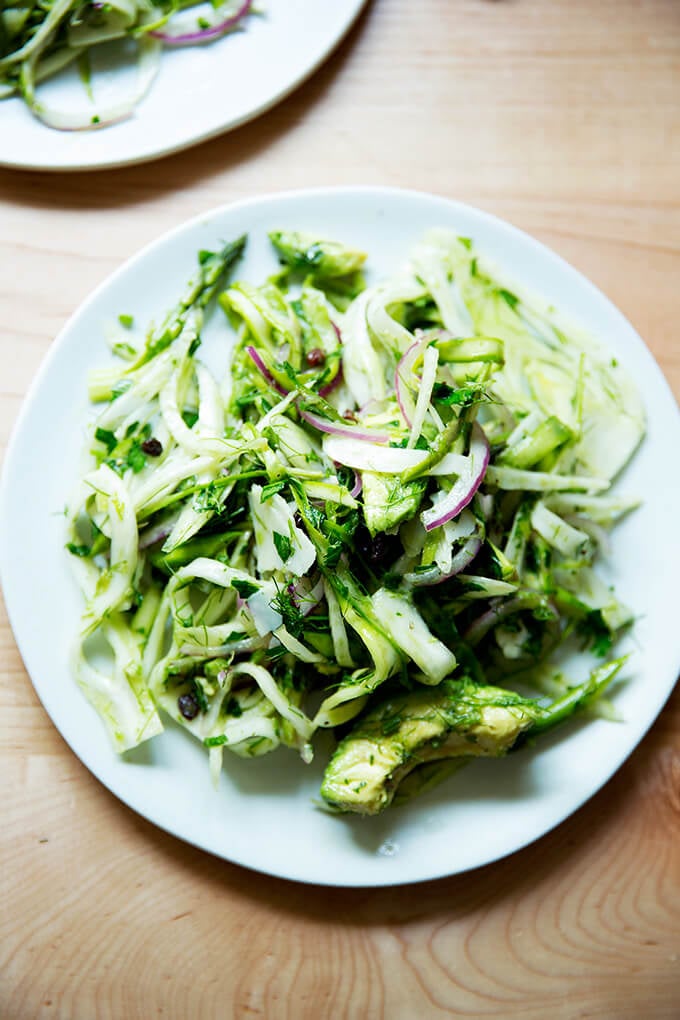
Meet spring in a bowl: shaved fennel and asparagus, sliced avocado, chopped parsley, red onion, dried currants, and parmesan all dressed with lemon juice and olive oil.
Forgive me if I say this too often: I could eat this salad every day.
But I mean it: the combination of textures and flavors just tastes so fresh. It’s raw and crisp meets creamy and rich meets sharp and sweet… a foolproof formula, really.
As you might imagine, this salad makes most sense as a side dish — I’ve been serving it aside these black lentils with spinach — but it’s amazingly filling and satisfying on its own. With a hunk of bread on the side, I can call dinner done.
The recipe comes from Stacy Adimando’s Piatti , a cookbook all about plates and platters for sharing inspired by Italy, which I am loving. When the book arrived, I made the roasted escarole with labne and pistachios, which was incredibly delicious, and a few days later, when my parents were visiting, I made the above-mentioned black lentils, which, incidentally, are garnished with buratta.
Days after my parents left, each texted me separately about the lentils — Friends, these lentils are memorable — and each sent along photo-evidence of the lentils continuing to be enjoyed back in CT.
Stacy, if you are unfamiliar, is the editor-in-chief of Saveur and the co-author of a number of cookbooks including the James Beard Award-winning Nopalito . She comes from a big American family of Southern Italian lineage, and knows a thing or two about assembling “generous, abundant, rustic, and seasonal” spreads to feed the masses.
I’ll share more about Stacy and Piatti when I get that lentil recipe up, but first:
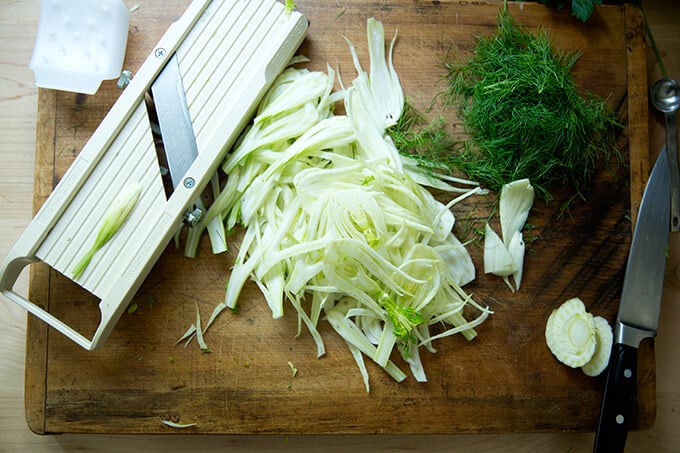
- A mandoline is not essential, but I find it very helpful for slicing the fennel thinly. I recently bought a new Benriner mandoline — my old one was ancient — and wow: what a difference. Highly recommend: $34. It comes with a guard, too. What I love about using a mandoline for this recipe, is that there’s no need to core the fennel bulbs — when shaved thinly, the core is fine left intact.
- If you soak the currants in a little bit of hot water and vinegar — this is something I learned from the Zuni Cafe Cookbook — they will soften/plump up a bit.
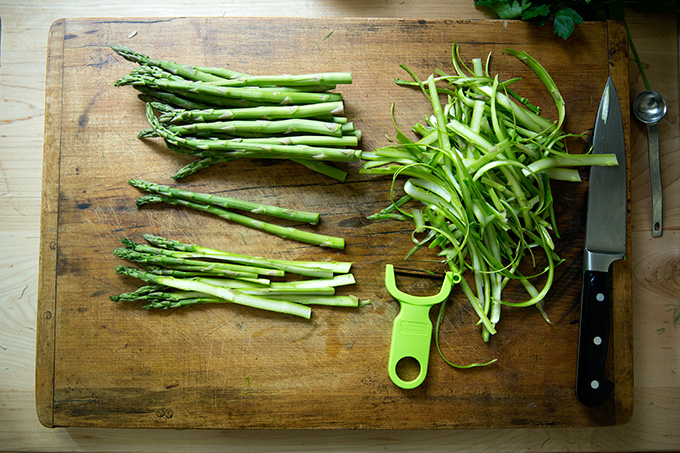
- The original recipe calls for snap peas, which I used, and which I loved. Snap peas, however, can be tricky — when they’re good, they’re amazing; when they’re not good, they’re stringy and tough. When I couldn’t find good snap peas, I subbed in raw, shaved asparagus, and they worked beautifully. Later in the summer, raw, shaved zucchini will be a nice option here, too.
- Swap in other herbs for the parsley: mint, chives, or dill would all work nicely here.
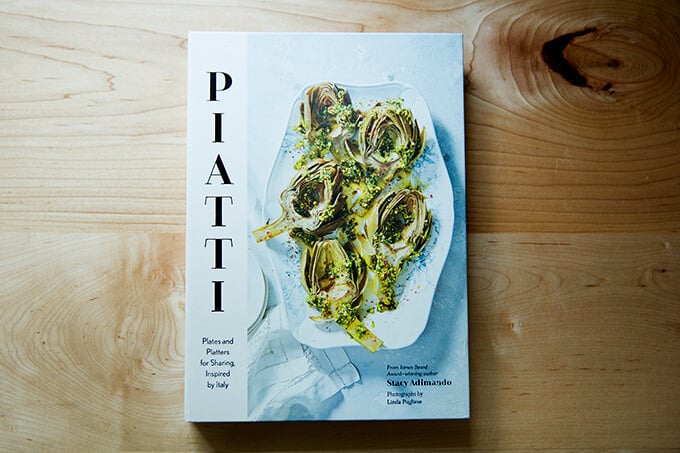
Stacy Adimando’s Piatti:
Description
Adapted from Stacy Adimando’s Piatti
A few notes:
A mandoline is not essential, but I find it very helpful for slicing the fennel thinly. I recently bought a new Benriner mandoline , and wow: what a difference. Highly recommend: $34.
1 tablespoon dried currants
splash white balsamic vinegar
2 fennel bulbs, sliced thinly on a mandoline or with a knife
1/4 cup (or more) loosely packed fennel fronds
1/4 lb. asparagus, peeled with a peeler, see notes above or snap peas ( 100 g ) snap peas, stemmed and sliced on the diagonal
1/2 small red onion, thinly sliced
1/4 – 1/2 cup finely chopped parsley
3 tablespoons fresh lemon juice, plus more to taste
2 tablespoons olive oil, plus more to taste
salt, I’ve been using Maldon sea salt
freshly cracked pepper to taste
1 avocado, thinly sliced
Parmigiano-Reggiano cheese or Pecorino Romano, shaved with a vegetable peeler
- Place the currants in a small bowl. Splash in some vinegar (maybe a teaspoon) and then cover with hot tap water — about a tablespoon. Set aside.
- In a large bowl, combine the fennel, fronds, asparagus or snap peas, onion, and parsley. Season with a pinch of salt and pepper. Toss. Add the olive oil and fresh lemon juice and toss again. Taste. If it’s too tart, add more olive oil by the tablespoon till it tastes right. If it needs more dressing, add more olive oil and lemon to taste. If it’s not tart enough, add more lemon (or a splash of vinegar).
- Drain the currants and add to the bowl. Add the avocado, and toss again. Shave in Parmigiano-Reggiano to taste. Toss. Taste. Adjust seasonings as necessary, and serve.
- Prep Time: 25 minutes
- Category: Salad
- Method: Dress & Toss
- Cuisine: Italian, American
