Homemade English Muffins: Yes. You. Can. Make this batter at night; then griddle away in the morning. These English muffins make the best egg sandwiches and eggs Benedict, but they are also a treat simply spread with softened butter and jam. 🍞🍞🍞
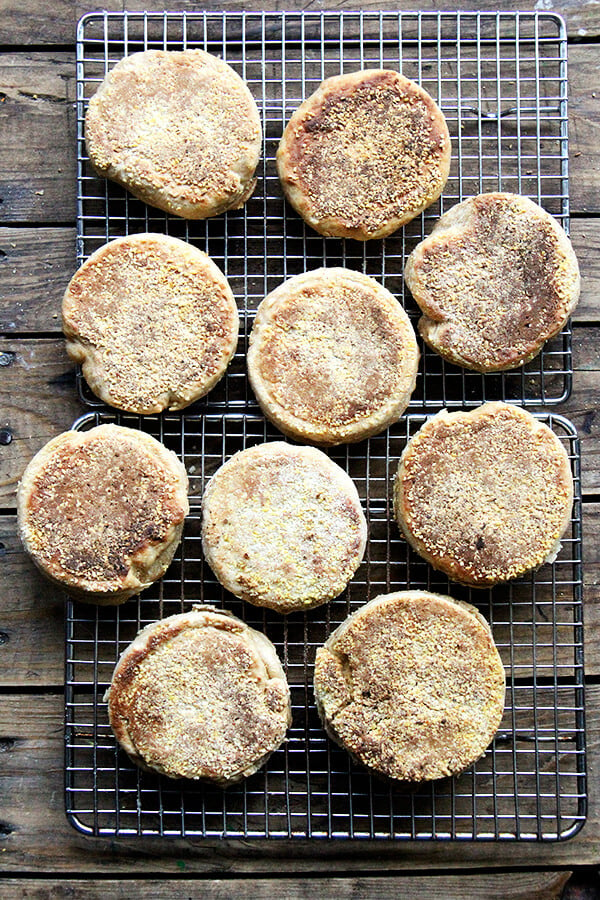
In an attempt to make my homemade bread a little more nutritious, I began incorporating white whole wheat flour into my breads, from the peasant bread to Jim Lahey’s No-Knead bread to these English muffins.
Milled from white winter wheat seeds, which lack some of the pigmentation in the bran layer contained in the red wheat berry (from which traditional whole wheat flour is milled), white whole wheat flour is lighter in color and milder in taste — the pigment from red wheat carries a bolder flavor. What’s more, it’s as nutritious as traditional whole wheat flour.
This English muffin recipe is simple overall, but it requires an overnight rise as well as English muffin rings (see notes below) because the dough is very wet. That said, it is fun to make, and the reward of a homemade egg sandwich, eggs Benedict, or simply a warm muffin spread with butter and jam is well worth the effort of planning ahead.
How to Make Whole Wheat English Muffins, Step by Step
First, make the dough and let it rise overnight:
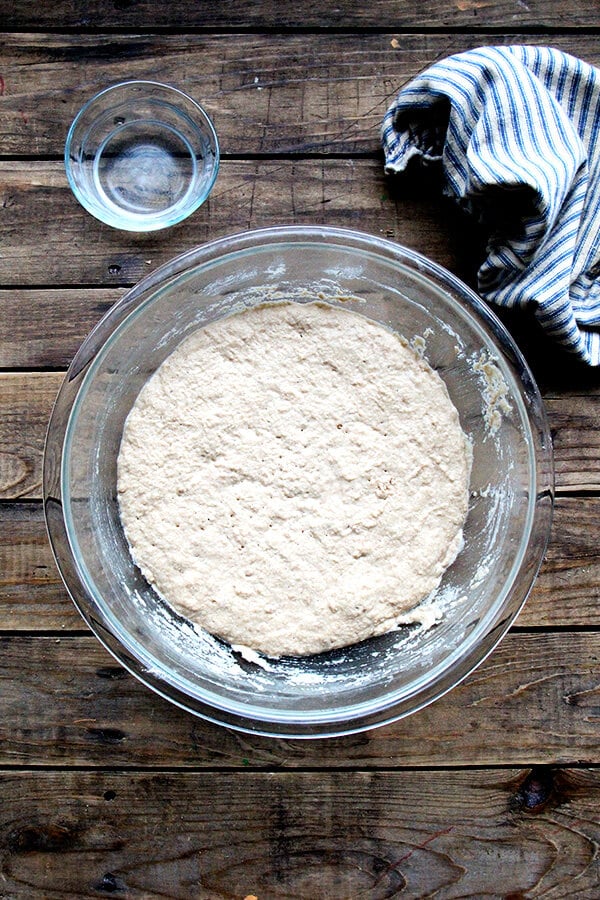
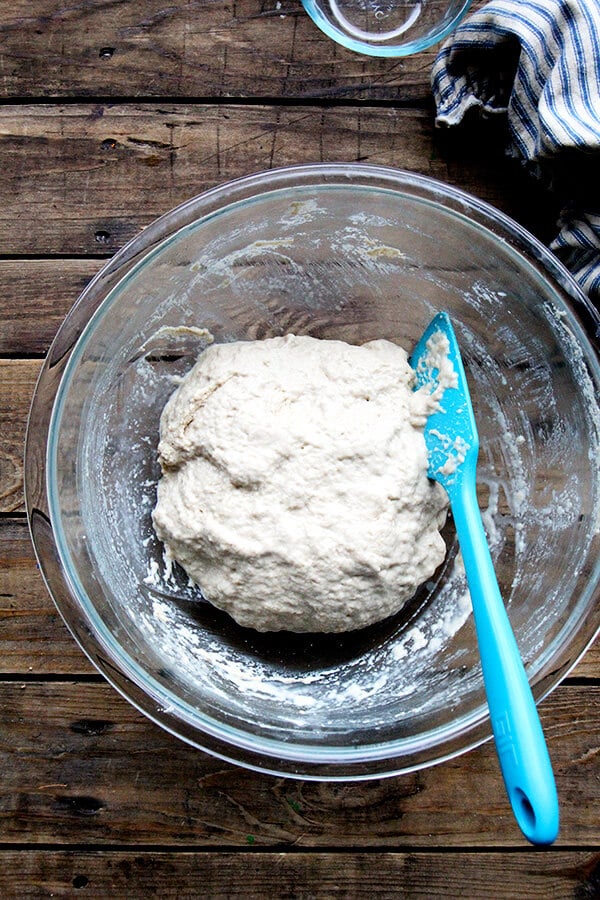
Next, deflate it.
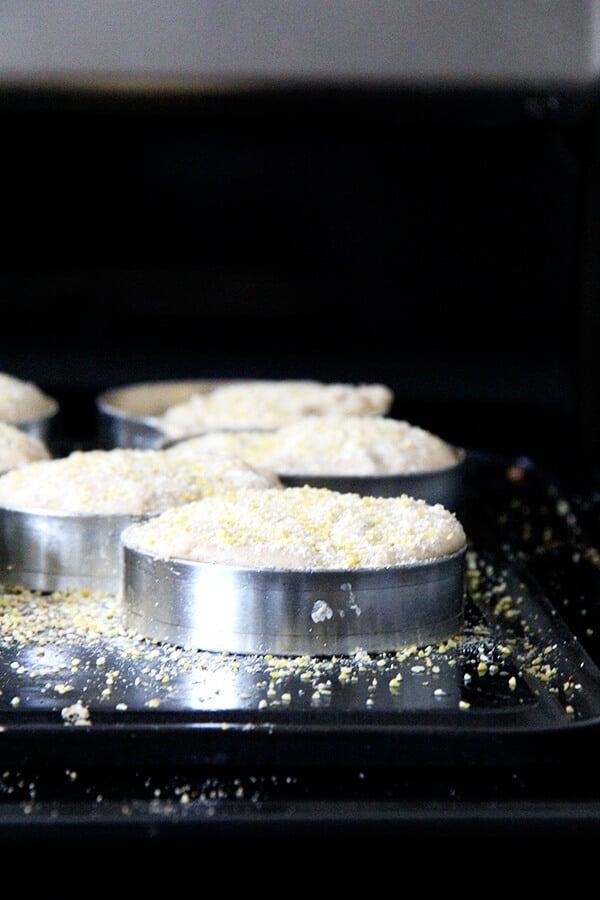
Then, using a 1/3-cup measure, portion the dough into the English muffin rings set on a griddle:
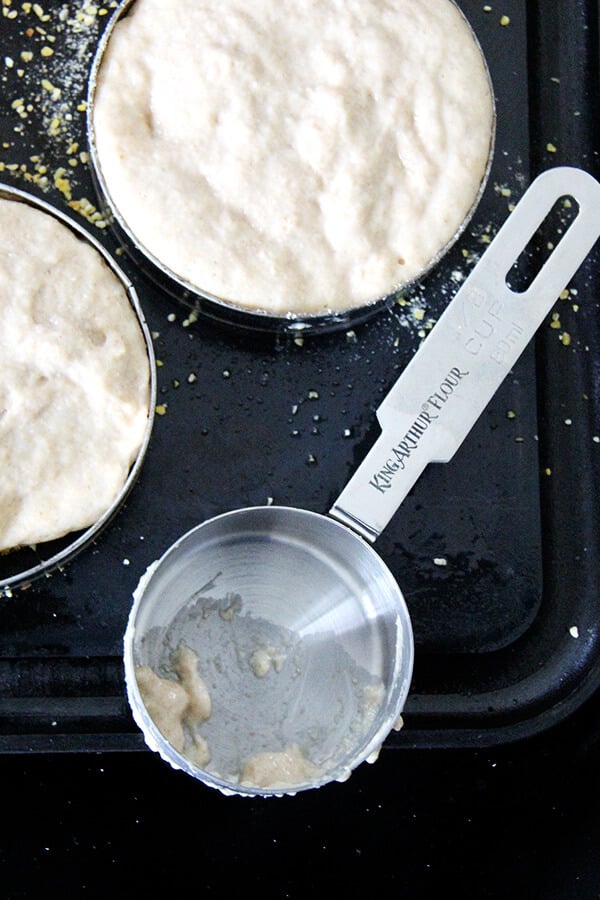
Cook until golden brown on the bottom…
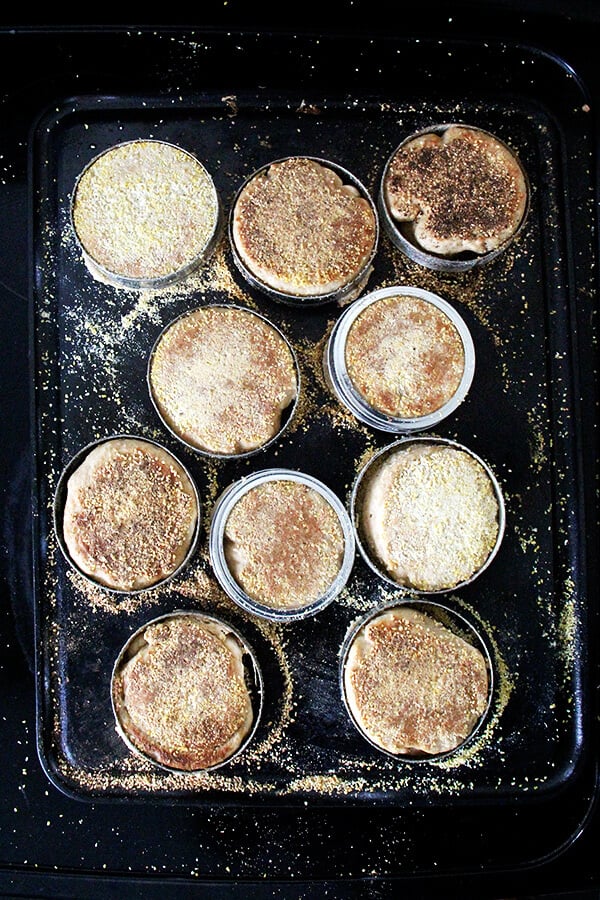
… then flip and cook again until the underside is golden brown.
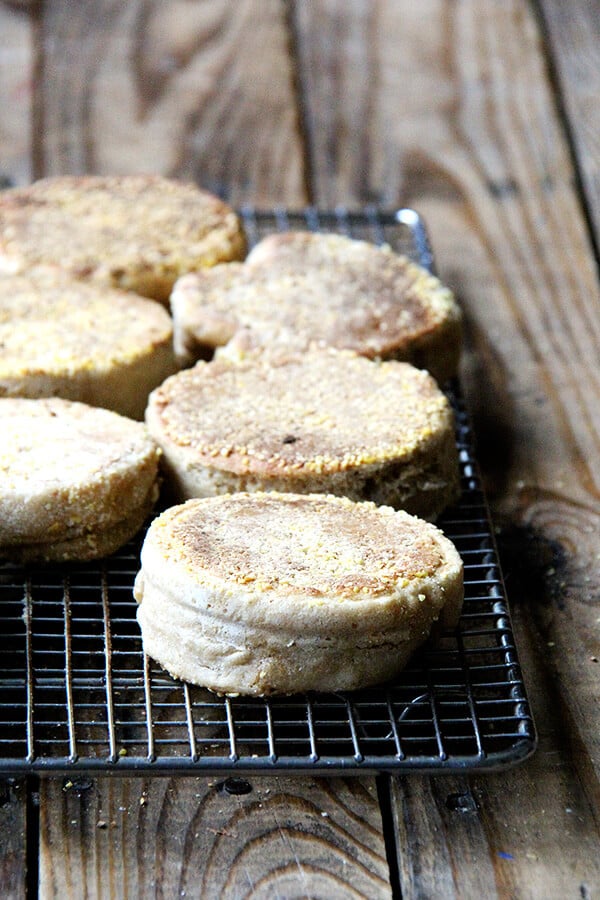
Transfer to a rack to cool.
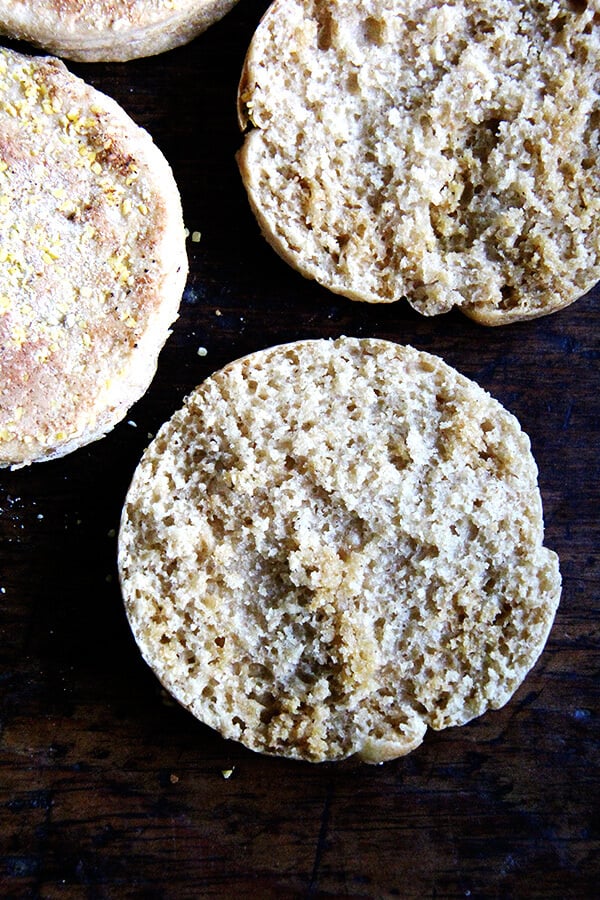
Then halve…
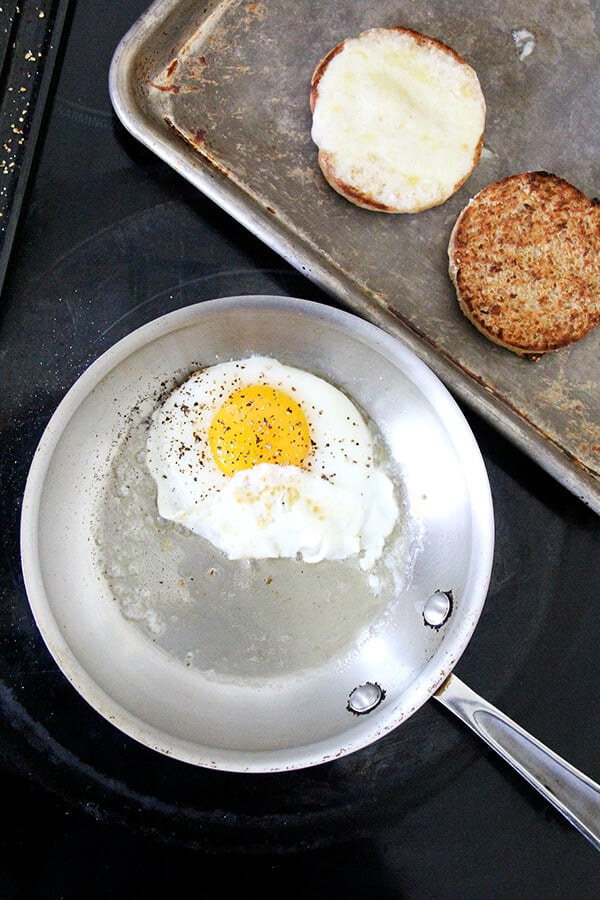
… and transform into the breakfast sandwich of your dreams:
Description
Homemade English Muffins: Yes. You. Can. Make this batter at night; then griddle away in the morning. These make the best egg sandwiches and eggs Benedict, but they are also a treat simply spread with softened butter and jam. 🍞🍞🍞
Adapted from Peter Reinhart’s Artisan Bread Every Day
This dough is very wet, like batter, so you will need English muffin rings or something similar (empty tuna cans, Ball jar rings, etc.) to constrain the dough.
The key with this recipe is to be sure to portion the dough into 10 rings. If you portion it into 8 rings or fewer, you will be disappointed — it’s very hard to cook the muffins all the way through on the griddle when they are on the large size. You will doubt the need to divide the dough into 10 rings as you portion it out — I do every time — but the dough spreads and fills the rings as it cooks slowly on the griddle.
With 100% white whole wheat flour, the texture isn’t quite like that of a Thomas’ English muffin (see photo of halved muffin above), but it is still light and airy.
2⅔ cups ( 12 oz | 340 g ) white whole wheat flour, such as King Arthur or other
1¼ teaspoons kosher salt
2 teaspoons instant yeast
1½ cups ( 12 oz | 340 g ) lukewarm whole or nonfat milk
1 tablespoon honey
1 tablespoon olive oil
For finishing:
- 3 tablespoons warm water
- ¼ teaspoon baking soda
- cornmeal for dusting
- In a large bowl, whisk together the flour, salt, and instant yeast. Add the milk to the bowl, followed by the honey and oil. Stir with a rubber spatula until combined. Cover bowl with a tea towel or plastic wrap, and place in the refrigerator overnight or up to 4 days.
- On baking day: remove the dough from the refrigerator 2 hours before you plan to bake the English muffins. After 2 hours, dissolve the baking soda in the warm water. Add it to the batter and stir to combine. Let the dough rest 10 minutes.
- Meanwhile, heat a griddle or cast-iron skillet (or other skillet) over medium heat. Mist the griddle and the inside of the rings with spray oil, then dust the inside of the rings with cornmeal (I dunk each ring into a bowl filled with cornmeal.) Cover the cooking surface with as many rings as it will hold, then dust the pan inside the rings with more cornmeal. Lower the heat to low or medium-low—you’ll have to use trial and error to find the right temperature.
- Using a ⅓ cup measure, scoop dough into the rings. It’s OK if the dough doesn’t fill the ring completely initially — it will spread and rise as it cooks. Sprinkle tops of dough with more cornmeal. Cook for 10 to 12 minutes, peeking underneath with a spatula every so often to ensure griddle is not too hot. If muffins are browning too quickly, turn the griddle down. Flip muffins, and cook for another 10 to 12 minutes. (This will feel interminable. Be sure to have a crossword puzzle nearby.) When both sides are evenly golden brown and crisp, transfer muffins to a cooling rack. Let cool briefly (enough for rings to cool), then pop out rings. Let the muffins cool for at least 20 minutes before splitting them open with a fork.
- Prep Time: 18 hours
- Cook Time: 25 minutes
- Category: Bread
- Method: Griddle, Stovetop
- Cuisine: American
Homemade English Muffins: Yes. You. Can. Make this batter at night; then griddle away in the morning. These English muffins make the best egg sandwiches and eggs Benedict, but they are also a treat simply spread with softened butter and jam. 🍞🍞🍞
In an attempt to make my homemade bread a little more nutritious, I began incorporating white whole wheat flour into my breads, from the peasant bread to Jim Lahey’s No-Knead bread to these English muffins.
Milled from white winter wheat seeds, which lack some of the pigmentation in the bran layer contained in the red wheat berry (from which traditional whole wheat flour is milled), white whole wheat flour is lighter in color and milder in taste — the pigment from red wheat carries a bolder flavor. What’s more, it’s as nutritious as traditional whole wheat flour.
This English muffin recipe is simple overall, but it requires an overnight rise as well as English muffin rings (see notes below) because the dough is very wet. That said, it is fun to make, and the reward of a homemade egg sandwich, eggs Benedict, or simply a warm muffin spread with butter and jam is well worth the effort of planning ahead.
How to Make Whole Wheat English Muffins, Step by Step
First, make the dough and let it rise overnight:
Next, deflate it.
Then, using a 1/3-cup measure, portion the dough into the English muffin rings set on a griddle:
Cook until golden brown on the bottom…
… then flip and cook again until the underside is golden brown.
Transfer to a rack to cool.
Then halve…
… and transform into the breakfast sandwich of your dreams:
Description
Homemade English Muffins: Yes. You. Can. Make this batter at night; then griddle away in the morning. These make the best egg sandwiches and eggs Benedict, but they are also a treat simply spread with softened butter and jam. 🍞🍞🍞
Adapted from Peter Reinhart’s Artisan Bread Every Day
This dough is very wet, like batter, so you will need English muffin rings or something similar (empty tuna cans, Ball jar rings, etc.) to constrain the dough.
The key with this recipe is to be sure to portion the dough into 10 rings. If you portion it into 8 rings or fewer, you will be disappointed — it’s very hard to cook the muffins all the way through on the griddle when they are on the large size. You will doubt the need to divide the dough into 10 rings as you portion it out — I do every time — but the dough spreads and fills the rings as it cooks slowly on the griddle.
With 100% white whole wheat flour, the texture isn’t quite like that of a Thomas’ English muffin (see photo of halved muffin above), but it is still light and airy.
2⅔ cups ( 12 oz | 340 g ) white whole wheat flour, such as King Arthur or other
1¼ teaspoons kosher salt
2 teaspoons instant yeast
1½ cups ( 12 oz | 340 g ) lukewarm whole or nonfat milk
1 tablespoon honey
1 tablespoon olive oil
For finishing:
- 3 tablespoons warm water
- ¼ teaspoon baking soda
- cornmeal for dusting
- In a large bowl, whisk together the flour, salt, and instant yeast. Add the milk to the bowl, followed by the honey and oil. Stir with a rubber spatula until combined. Cover bowl with a tea towel or plastic wrap, and place in the refrigerator overnight or up to 4 days.
- On baking day: remove the dough from the refrigerator 2 hours before you plan to bake the English muffins. After 2 hours, dissolve the baking soda in the warm water. Add it to the batter and stir to combine. Let the dough rest 10 minutes.
- Meanwhile, heat a griddle or cast-iron skillet (or other skillet) over medium heat. Mist the griddle and the inside of the rings with spray oil, then dust the inside of the rings with cornmeal (I dunk each ring into a bowl filled with cornmeal.) Cover the cooking surface with as many rings as it will hold, then dust the pan inside the rings with more cornmeal. Lower the heat to low or medium-low—you’ll have to use trial and error to find the right temperature.
- Using a ⅓ cup measure, scoop dough into the rings. It’s OK if the dough doesn’t fill the ring completely initially — it will spread and rise as it cooks. Sprinkle tops of dough with more cornmeal. Cook for 10 to 12 minutes, peeking underneath with a spatula every so often to ensure griddle is not too hot. If muffins are browning too quickly, turn the griddle down. Flip muffins, and cook for another 10 to 12 minutes. (This will feel interminable. Be sure to have a crossword puzzle nearby.) When both sides are evenly golden brown and crisp, transfer muffins to a cooling rack. Let cool briefly (enough for rings to cool), then pop out rings. Let the muffins cool for at least 20 minutes before splitting them open with a fork.
- Prep Time: 18 hours
- Cook Time: 25 minutes
- Category: Bread
- Method: Griddle, Stovetop
- Cuisine: American
Description
Homemade English Muffins: Yes. You. Can. Make this batter at night; then griddle away in the morning. These make the best egg sandwiches and eggs Benedict, but they are also a treat simply spread with softened butter and jam. 🍞🍞🍞
Adapted from Peter Reinhart’s Artisan Bread Every Day
This dough is very wet, like batter, so you will need English muffin rings or something similar (empty tuna cans, Ball jar rings, etc.) to constrain the dough.
The key with this recipe is to be sure to portion the dough into 10 rings. If you portion it into 8 rings or fewer, you will be disappointed — it’s very hard to cook the muffins all the way through on the griddle when they are on the large size. You will doubt the need to divide the dough into 10 rings as you portion it out — I do every time — but the dough spreads and fills the rings as it cooks slowly on the griddle.
With 100% white whole wheat flour, the texture isn’t quite like that of a Thomas’ English muffin (see photo of halved muffin above), but it is still light and airy.
2⅔ cups ( 12 oz | 340 g ) white whole wheat flour, such as King Arthur or other
1¼ teaspoons kosher salt
2 teaspoons instant yeast
1½ cups ( 12 oz | 340 g ) lukewarm whole or nonfat milk
1 tablespoon honey
1 tablespoon olive oil
For finishing:
- 3 tablespoons warm water
- ¼ teaspoon baking soda
- cornmeal for dusting
- In a large bowl, whisk together the flour, salt, and instant yeast. Add the milk to the bowl, followed by the honey and oil. Stir with a rubber spatula until combined. Cover bowl with a tea towel or plastic wrap, and place in the refrigerator overnight or up to 4 days.
- On baking day: remove the dough from the refrigerator 2 hours before you plan to bake the English muffins. After 2 hours, dissolve the baking soda in the warm water. Add it to the batter and stir to combine. Let the dough rest 10 minutes.
- Meanwhile, heat a griddle or cast-iron skillet (or other skillet) over medium heat. Mist the griddle and the inside of the rings with spray oil, then dust the inside of the rings with cornmeal (I dunk each ring into a bowl filled with cornmeal.) Cover the cooking surface with as many rings as it will hold, then dust the pan inside the rings with more cornmeal. Lower the heat to low or medium-low—you’ll have to use trial and error to find the right temperature.
- Using a ⅓ cup measure, scoop dough into the rings. It’s OK if the dough doesn’t fill the ring completely initially — it will spread and rise as it cooks. Sprinkle tops of dough with more cornmeal. Cook for 10 to 12 minutes, peeking underneath with a spatula every so often to ensure griddle is not too hot. If muffins are browning too quickly, turn the griddle down. Flip muffins, and cook for another 10 to 12 minutes. (This will feel interminable. Be sure to have a crossword puzzle nearby.) When both sides are evenly golden brown and crisp, transfer muffins to a cooling rack. Let cool briefly (enough for rings to cool), then pop out rings. Let the muffins cool for at least 20 minutes before splitting them open with a fork.
- Prep Time: 18 hours
- Cook Time: 25 minutes
- Category: Bread
- Method: Griddle, Stovetop
- Cuisine: American
Find it online : https://alexandracooks.com/2016/04/07/king-arthur-flours-white-whole-wheat-flour/
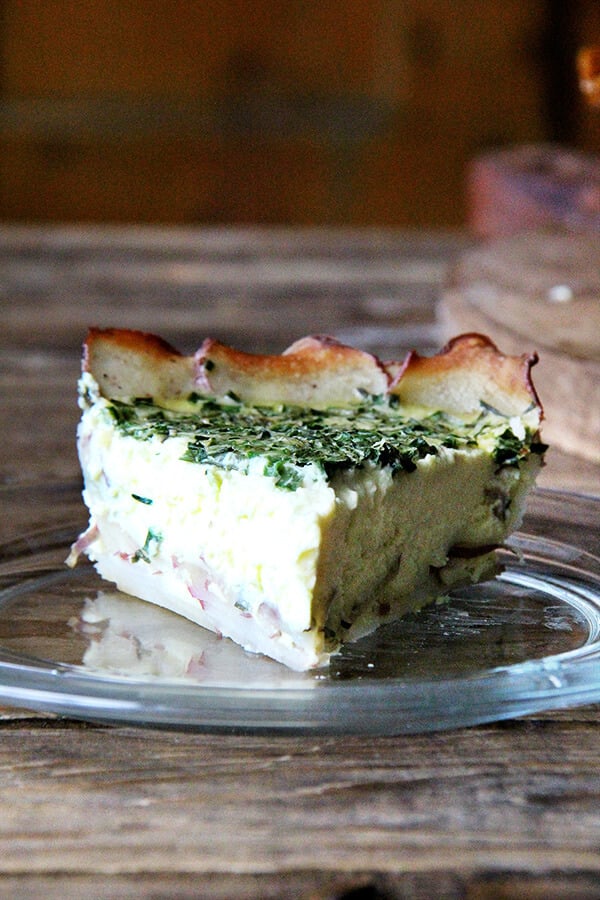
A few weeks ago, while in Oakland for the Bread Toast Crumbs photoshoot (more on this soon!), my mom and I stumbled upon Farley’s, a cafe located a few blocks from the studio.
During our first few visits, we sampled the coffee, scones, and kouign amann, but one morning we arrived just as a frittata was making its way from the kitchen to the counter. Shingled with crispy-edged potatoes, like chips begging to be plucked (see photo below), it was impossible to pass up, and it soon became a morning ritual.
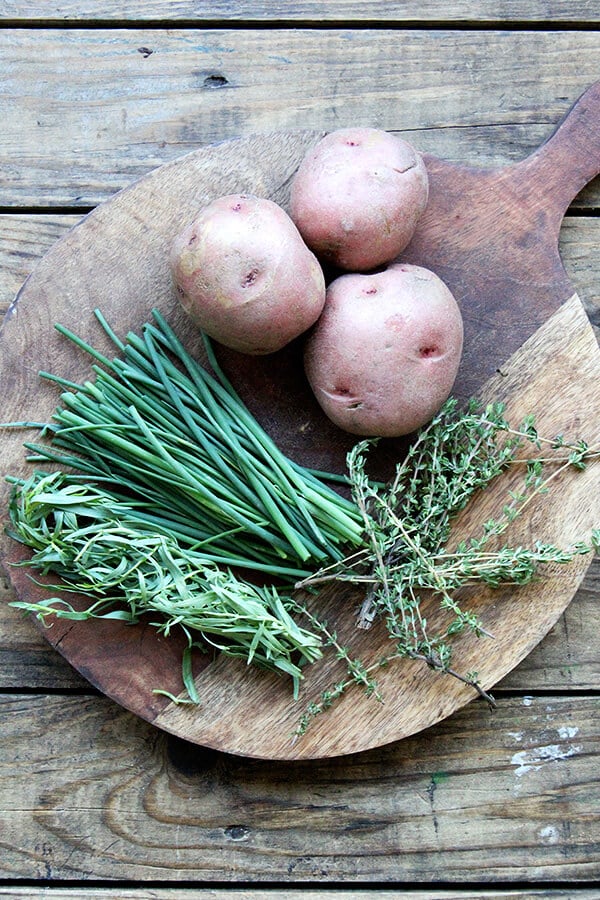
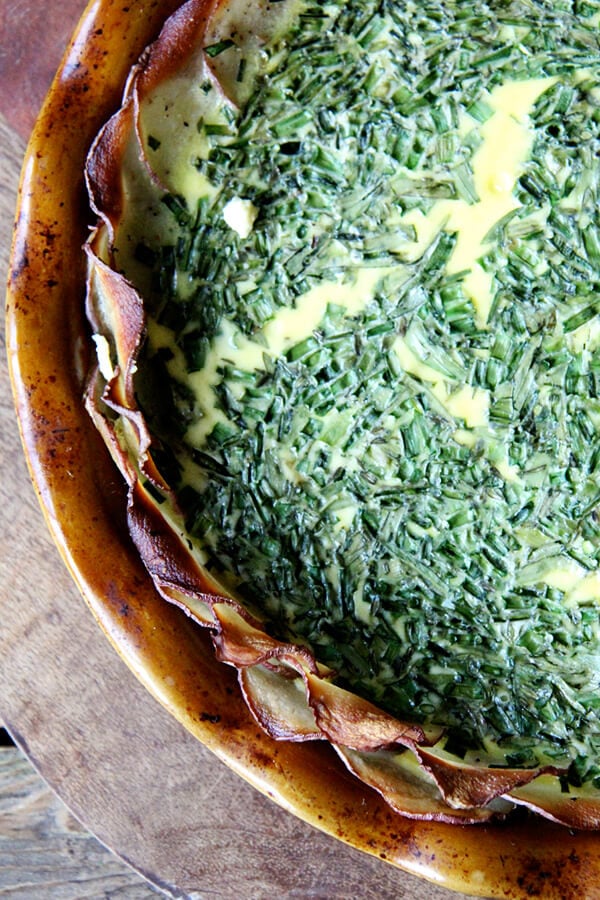
As soon as I returned from CA, I began experimenting. First I made one similar to Farley’s, which was loaded with vegetables, but I’ve since been keeping it simpler. Instead of partially cooking the eggs stovetop as you do for a frittata, I’ve been filling the potato shell with the Tartine quiche custard, a long-time favorite , and using herbs, a mix of chives, thyme, and tarragon, in favor of vegetables and cheese.
Tartine’s Quiche
The Tartine quiche method, which Liz Prueitt and Chad Robertson learned while apprenticing at a bakery in France, is bizarre: whisk 1 egg with 3 tablespoons of flour, then whisk in the remaining 4 eggs, then strain the eggs into a crème fraîche-milk mixture. It’s the silkiest, most beautiful, tastiest custard imaginable, which is why herbs alone as add-ins work.
In any incarnation — made in its entirety with a flaky, buttery pastry shell or without a crust altogether and loaded with kale — the Tartine quiche is a treat. But this latest variation, which is just slightly more work than its crustless predecessor, may be my favorite yet. The potato crust is so tasty, so pretty, and, if you own a mandoline , easy to assemble, too.
One note: Plan ahead. There is nothing tricky about making this quiche, but the timing is as follows: potato crust bakes for 20 minutes alone, custard then bakes in the potato crust for 40 minutes, and then the whole thing rests for 20 minutes before cutting. It also tastes great at room temperature, so if you are able to make it ahead, go for it.
PS: Crustless Quiche, Loaded with Kale
PPS: Tartine’s Ultimate Quiche
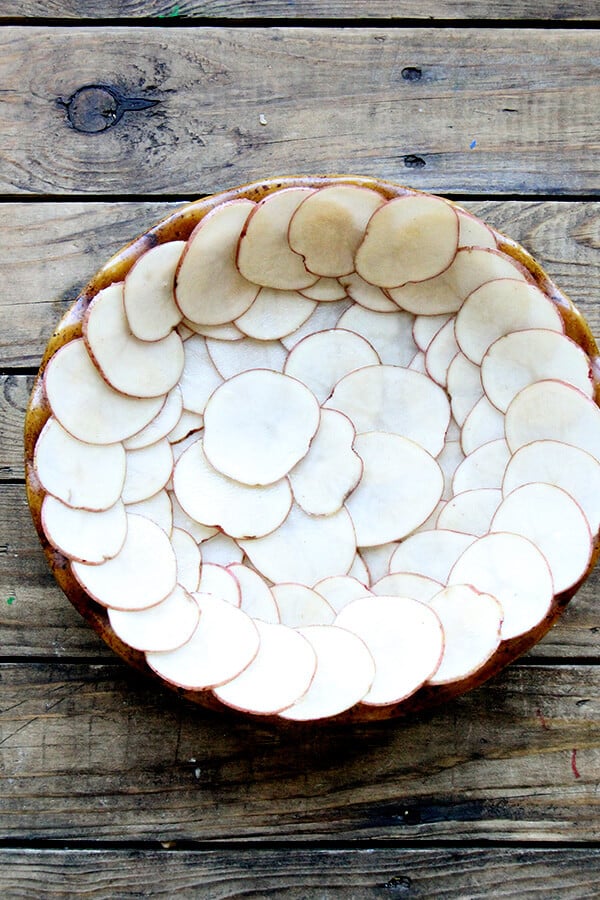
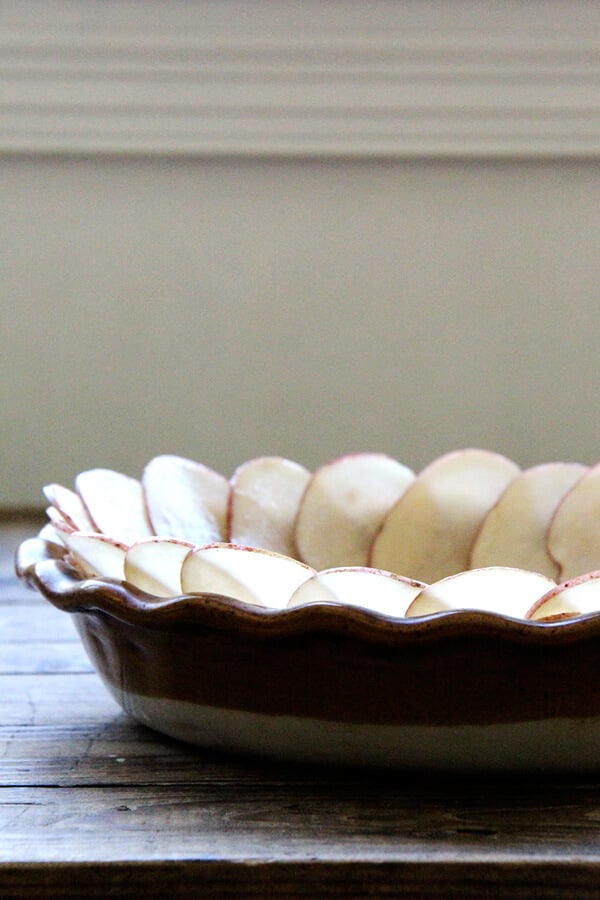
Here’s an outline of the process: line a pie plate or skillet with thinly sliced, oiled potatoes, then bake for 20 minutes:
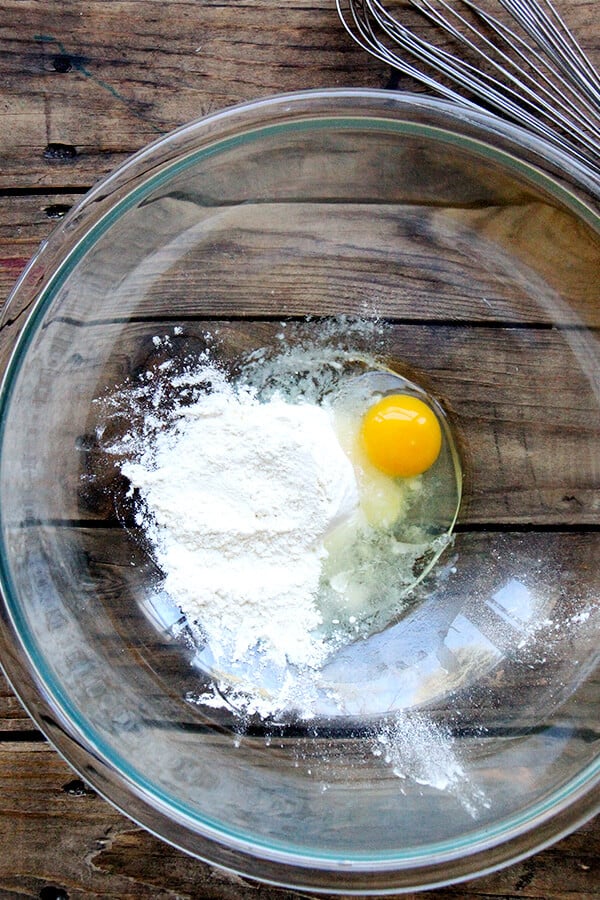
Meanwhile, whisk 1 egg with 3 tablespoons of flour:
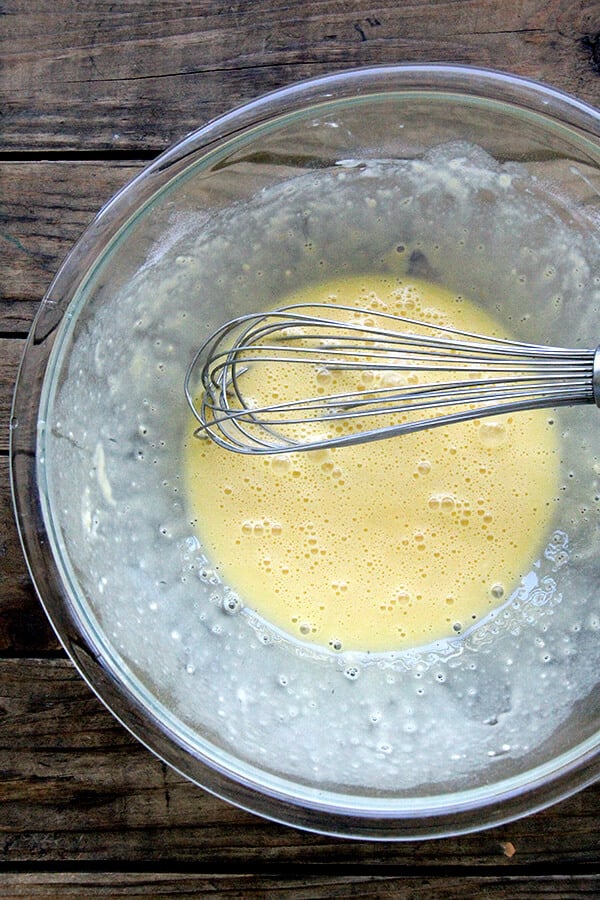
Then whisk in the remaining 4 eggs:
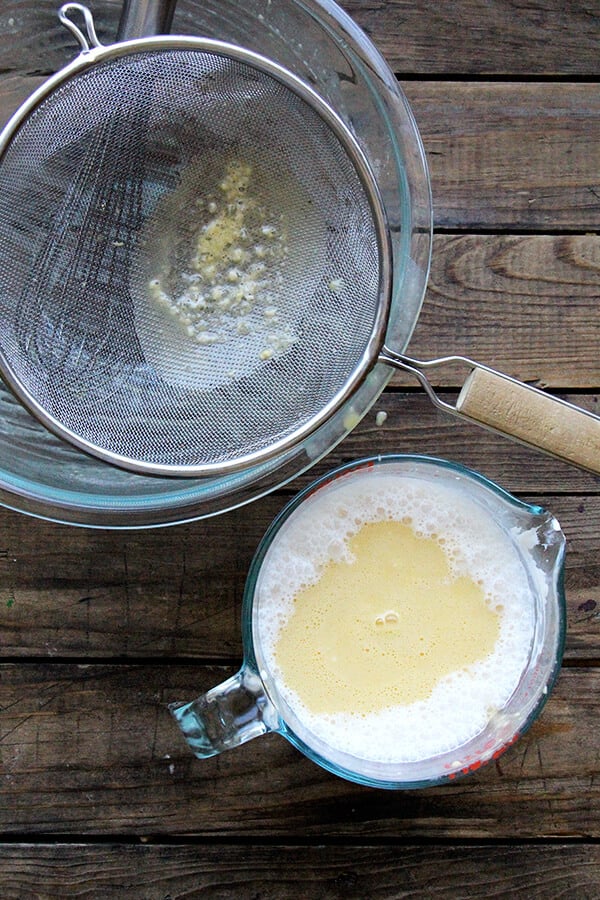
Then strain the eggs into a mixture of 1 cup whole milk and 1 cup crème fraîche:
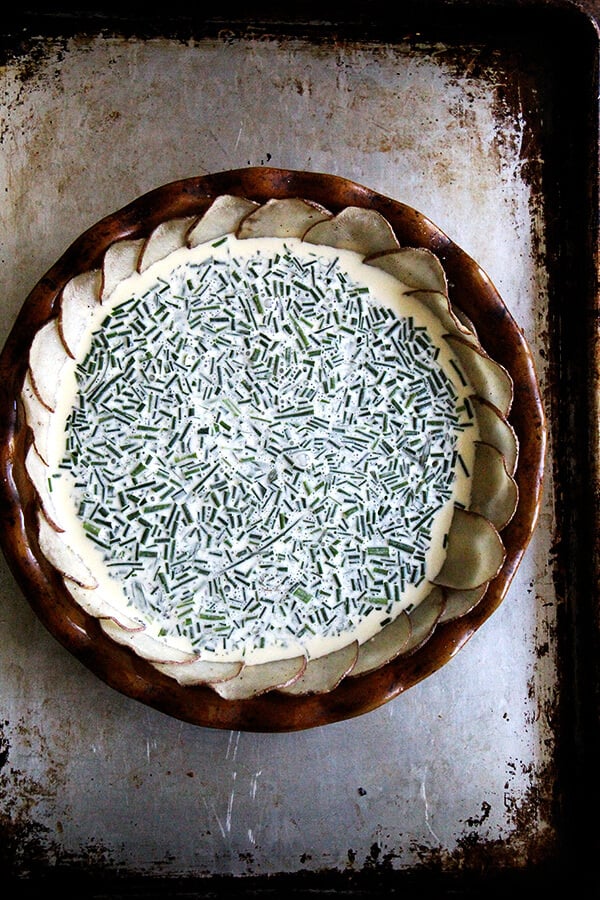
Add herbs, salt and pepper to the custard, then pour into the par-cooked potato crust:
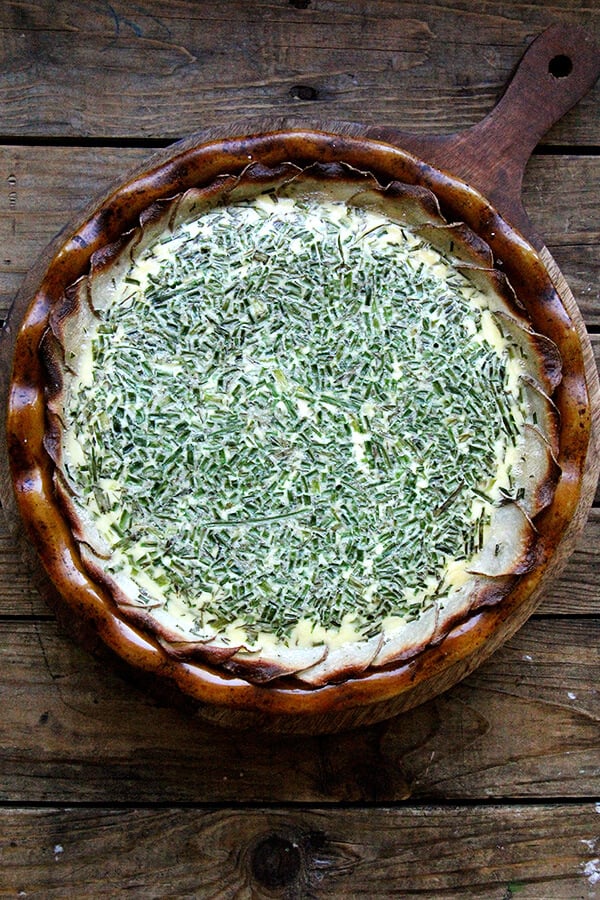
Bake for 40 minutes:
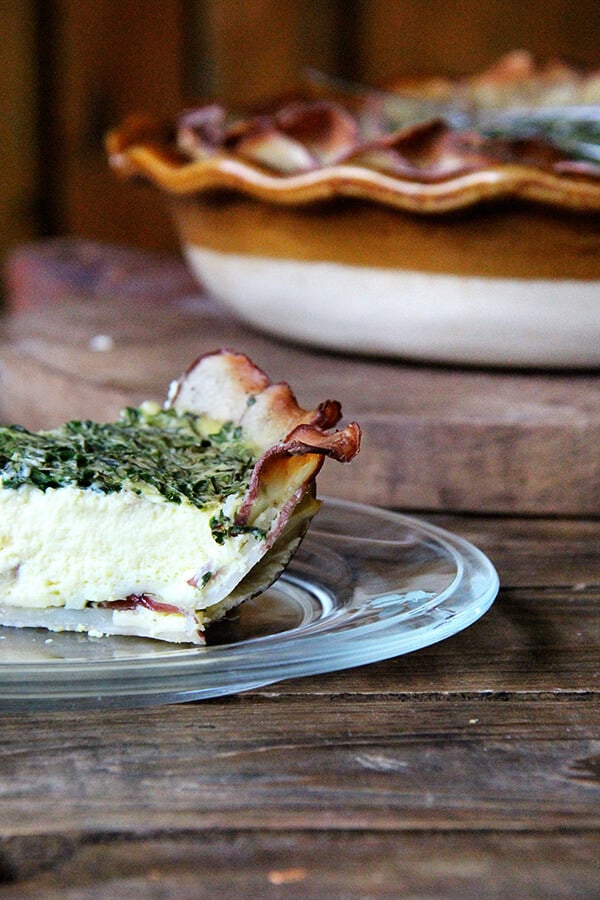
Let cool 20 minutes before cutting:
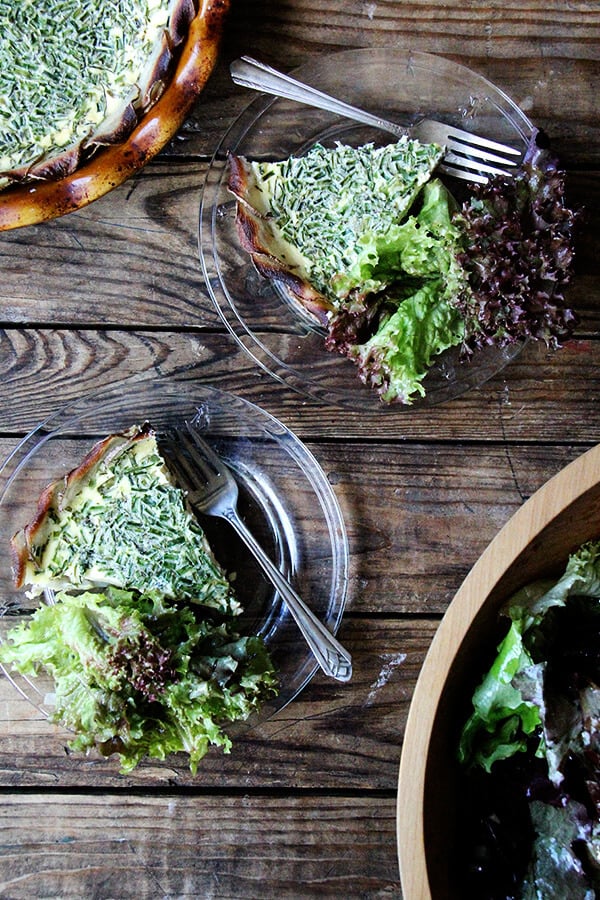
Serve with a simple salad for a nice spring dinner:
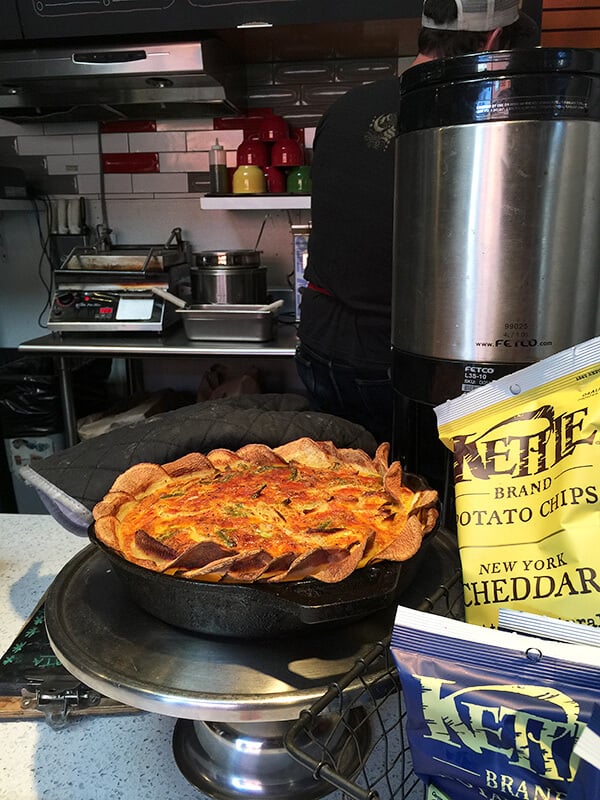
The frittata at Farley’s.
Description
This quiche is inspired by a frittata served at Farley’s 65th in Oakland, CA.
The custard recipe comes from Tartine and as noted above is the most delicious quiche custard you will ever make.
Other variations: With a pastry shell and raw chard or crustless and loaded with kale . A mandoline is helpful here.
- about a pound of red-skinned (or other) potatoes
- extra-virgin olive oil
- kosher salt and pepper to taste
- 5 large eggs
- 3 tablespoons all-purpose flour
- 1 cup crème fraîche
- 1 cup whole milk
- 1 tsp . kosher salt
- ½ tsp . freshly ground black pepper
- Mix of finely chopped herbs, such as: 1/2 cup chives, 2 teaspoons fresh thyme, 1/4 cup fresh tarragon
- Preheat the oven to 350ºF. Thinly slice the potatoes using a mandoline or sharp knife—they should be 1/8-inch thick or thinner. Place them in a large bowl and toss them with olive oil (at least a couple of tablespoons) and with a generous pinch of salt and pepper. Line the quiche pan (pie plate, cast iron skillet, etc.) with the potatoes, overlapping them as you arrange them—see the photos above for a reference. Be sure the layer of potatoes closest to the edge extends above the rim—again, see photo. Place the pan on a sheet pan and transfer to the oven. Bake for 20 minutes.
- Meanwhile, place 1 egg and the flour in a large bowl and whisk until smooth. Whisk in the remaining 4 eggs until blended.
- In a medium bowl, whisk the crème fraîche until smooth. Whisk in the milk. Pour the egg mixture through a fine mesh sieve held over the milk mixture. Whisk in the salt, pepper and herbs.
- Pour the egg mixture into the par-cooked potato crust. Reduce the oven temperature to 325ºF and bake until the filling is just set, about 40 minutes. The center of the quiche should still feel slightly firm, rather than liquidy, when touched. Let cool on a wire rack for at least 20 minutes to allow the custard to set up, so that it will slice neatly. It can be served warm or at room temperature. To serve a fully cooled quiche warm, cover it with aluminum foil and reheat it in a 325ºF for about 15 minutes.
- Prep Time: 15 minutes
- Cook Time: 1 hours
- Category: Breakfast
- Method: Oven
- Cuisine: American, French
